
Quick report
- Cracking
- Observed
- Collapsing
- specific
Still a spooky and talkative persistent slab problem out here, evidenced by recent naturals, numerous collapses, and unstable pit results. We bailed on our ascent of Teo when we reached a moderately angled slope (~30 degrees) with high consequences, a terrain feature that doesn't normally give me pause. On southerly aspects, semi-supportive crusts a couple of inches thick this morning softened to carvey wet snow as the day warmed up, capable of shallow wet loose avalanches in very steep terrain.
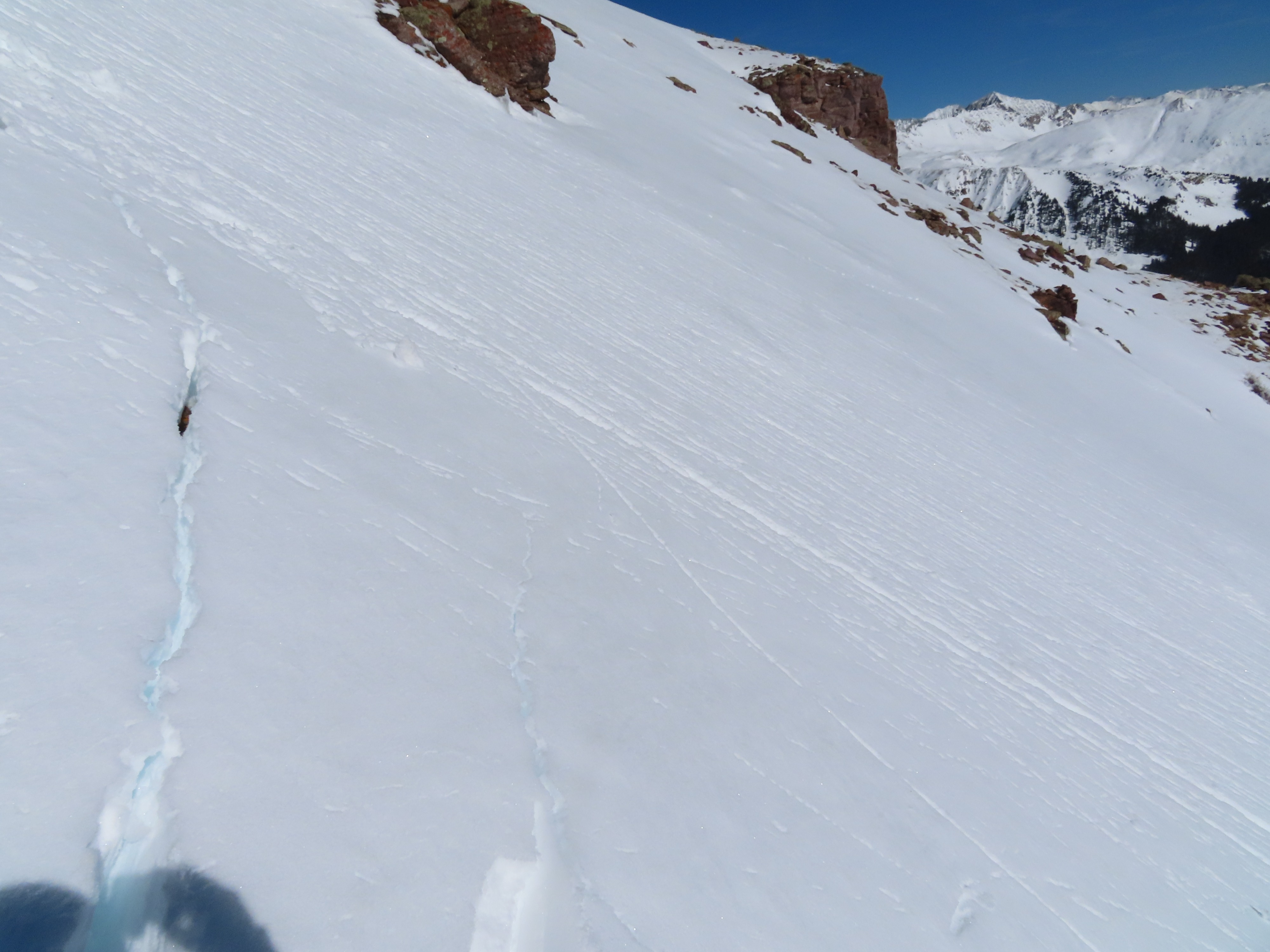
About 10 collapses and shooting cracks at all elevations while traveling in relatively shallow or rocky slopes. Collapses appeared to radiate about 40 to 80 feet on average. Slabs were 1 to 2' thick above the January facet/crust layers. The top 3" to 4" became wet enough for pinwheels, and we were able to push shallow wet sluffs down small test slopes.Weather
- Air Temp
- Warm
- Cloud Cover
- clear
- Wind Loading
- none
- Recent Snowfall
- 0
- Snow Avail For Transport
- small smounts
Unseasonably warm temps above valley inversions. Could still feel the cold air pool on our way back to the TH this afternoon.
Snowpack
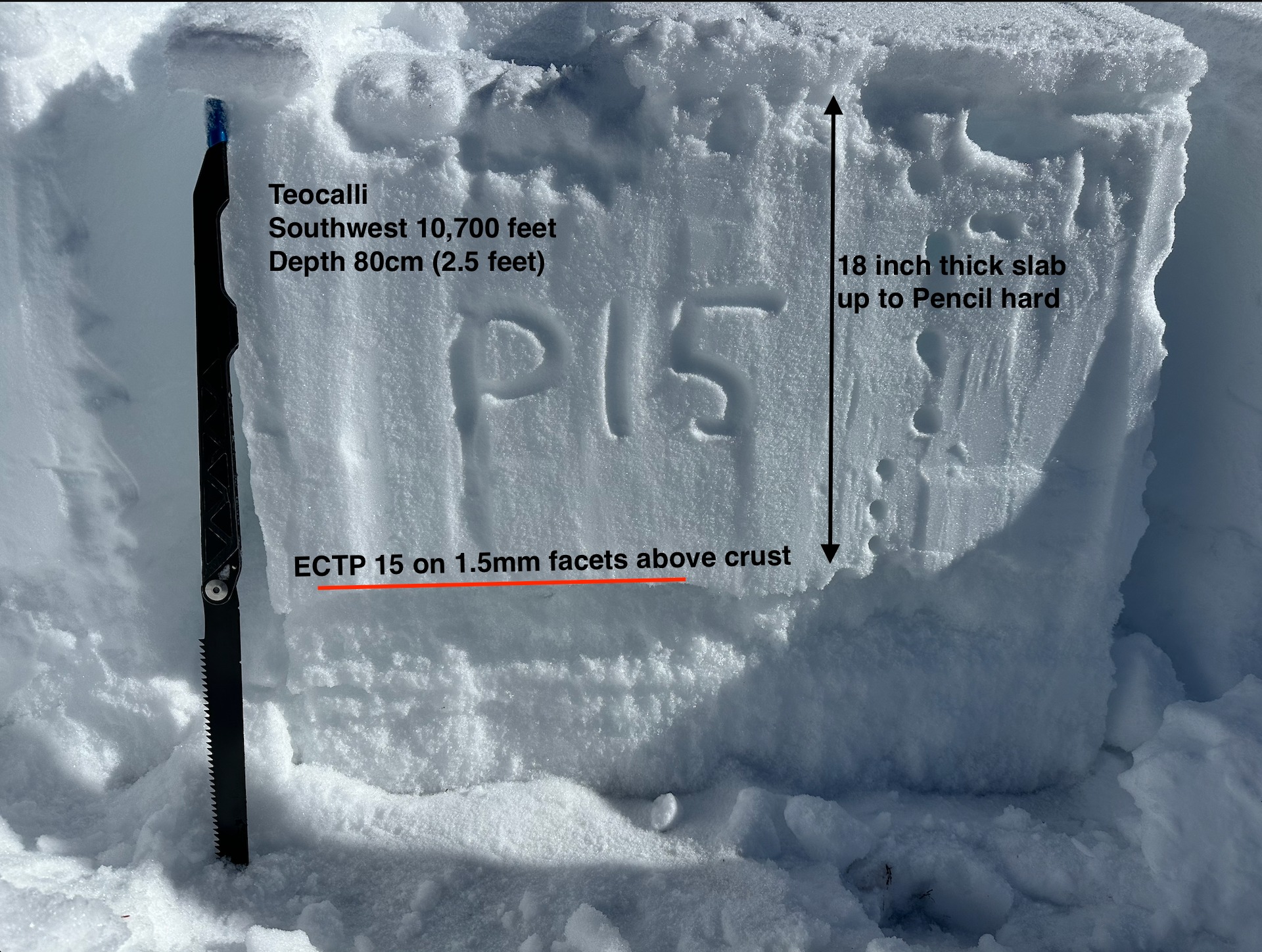
@10,700, SW aspect: ECTP15 down 18" on 1.5 mm facets above a crust. We triggered several collapses at all elevation bands on similar snowpack structures.
Avalanche
- Size
- D1.5
- Count
- 14
- Aspect
- SW
- Trigger
- N
- Elevation
- 12600 ft
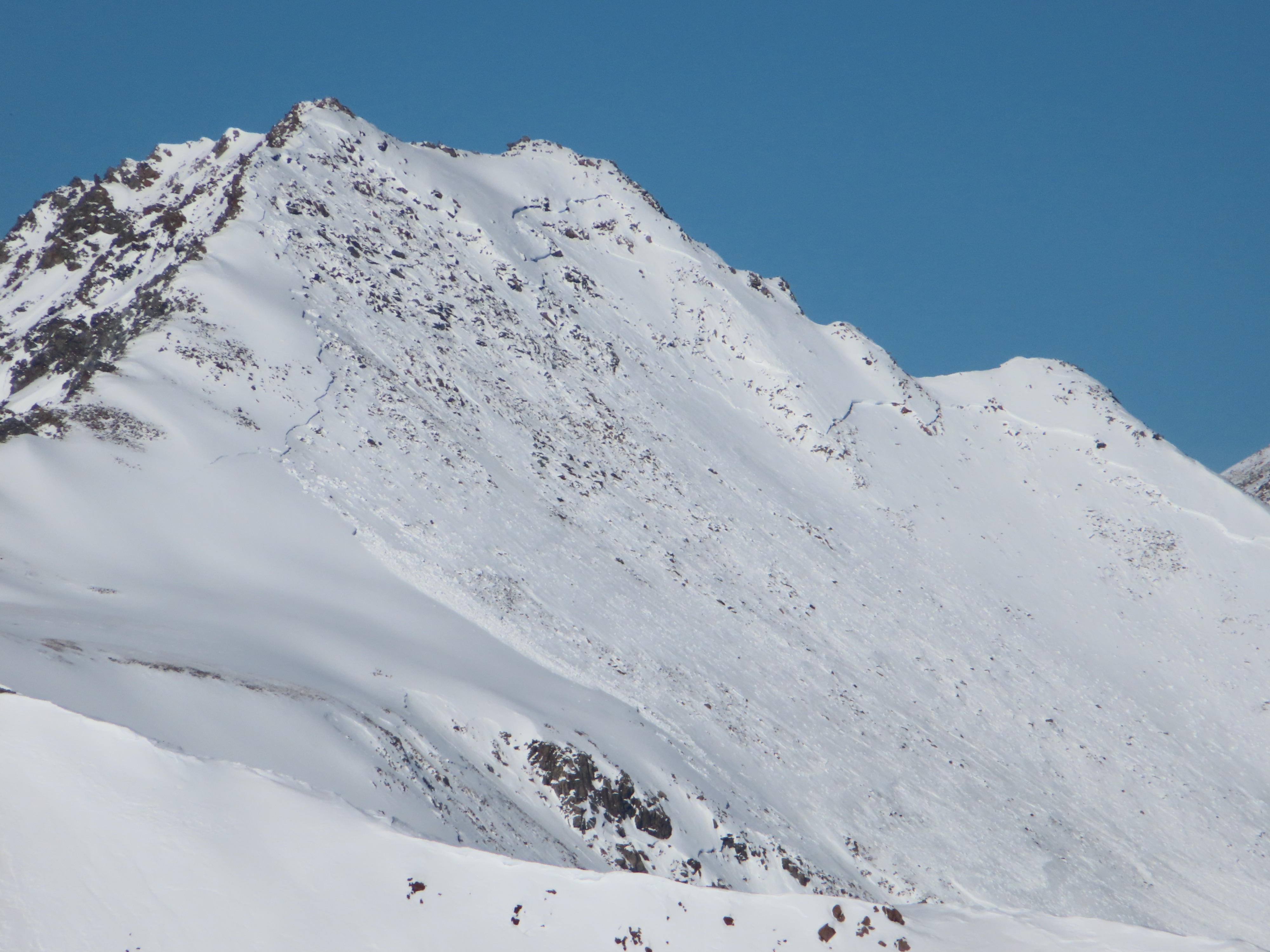
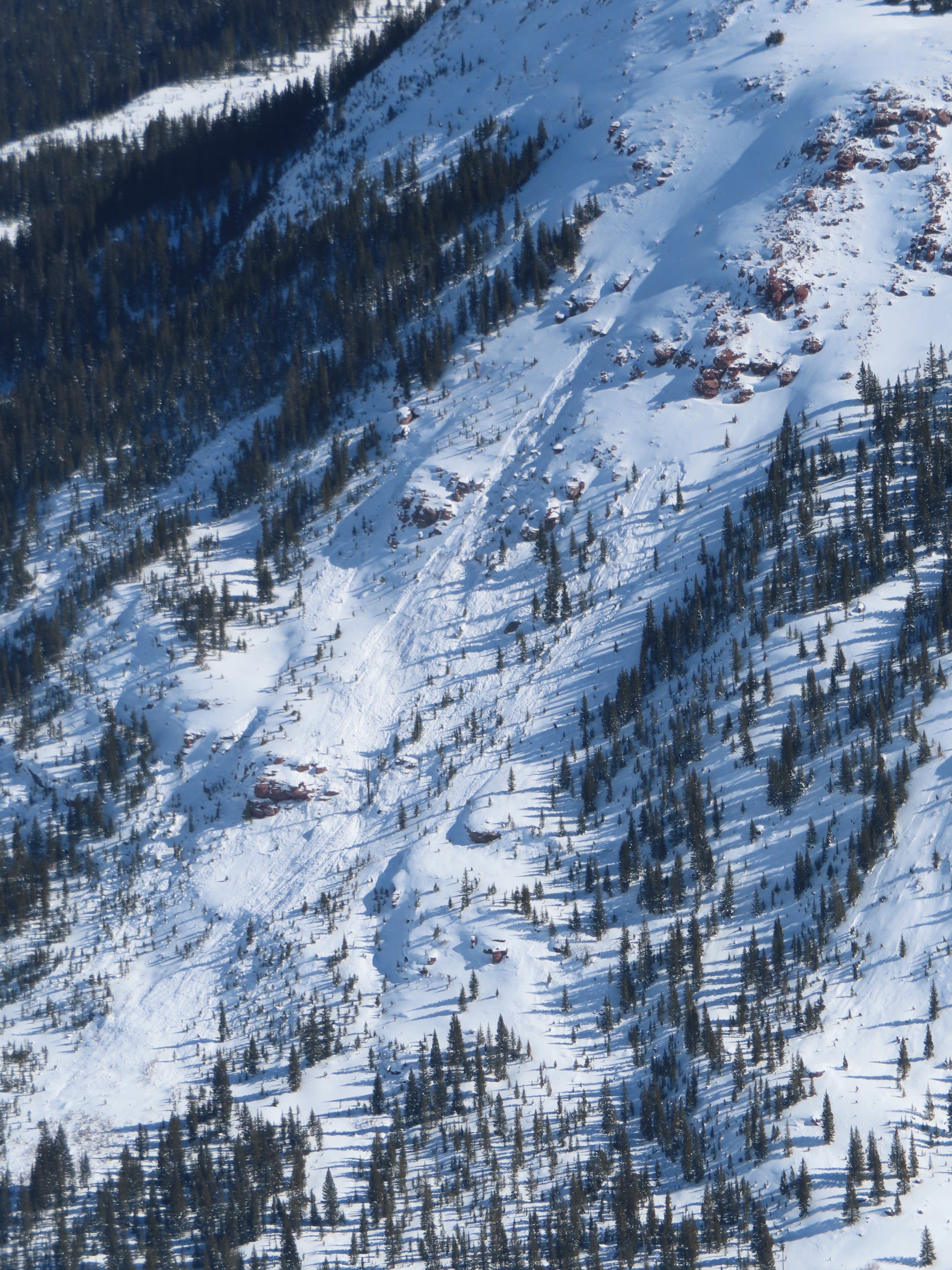
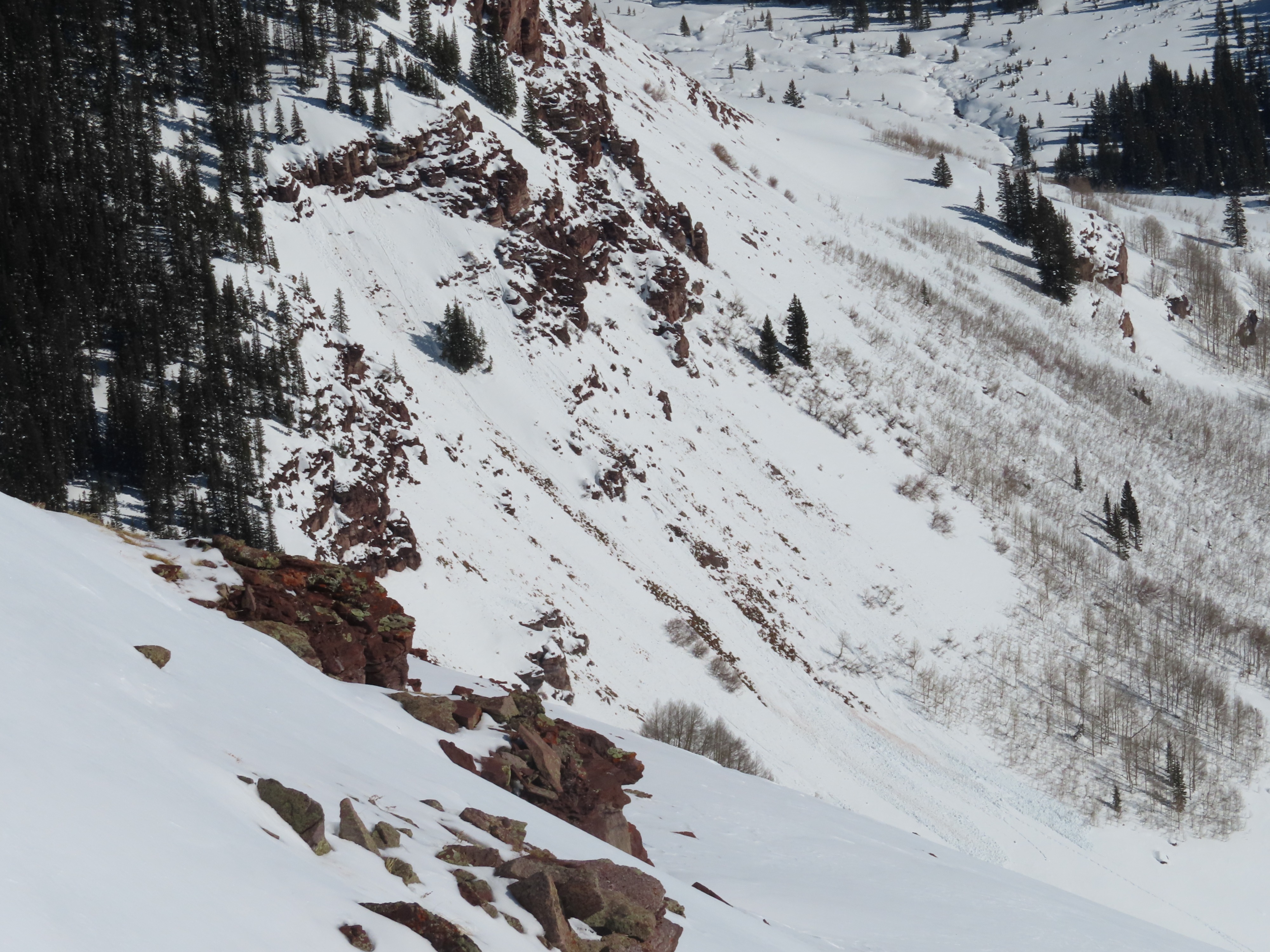
A handful of small wet loose avalanches ran naturally today on hot, rocky slopes (southerly facing, all elevations). We observed about a dozen recent-looking persistent slabs that have run since the stormy period ended on January 18th. It's very difficult to estimate what dates they ran because it hasn't snowed in about 10 days, and natural activity has been ongoing during this timeframe due to both warming and small drifting events. Some likely ran yesterday due to wind drifting. See photos, failure dates are best estimates.