
Quick report
We toured up Sunburst to approximately 3,100 ft with the objectives of assessing surface conditions and viewing a remote triggered avalanche reported the previous day.
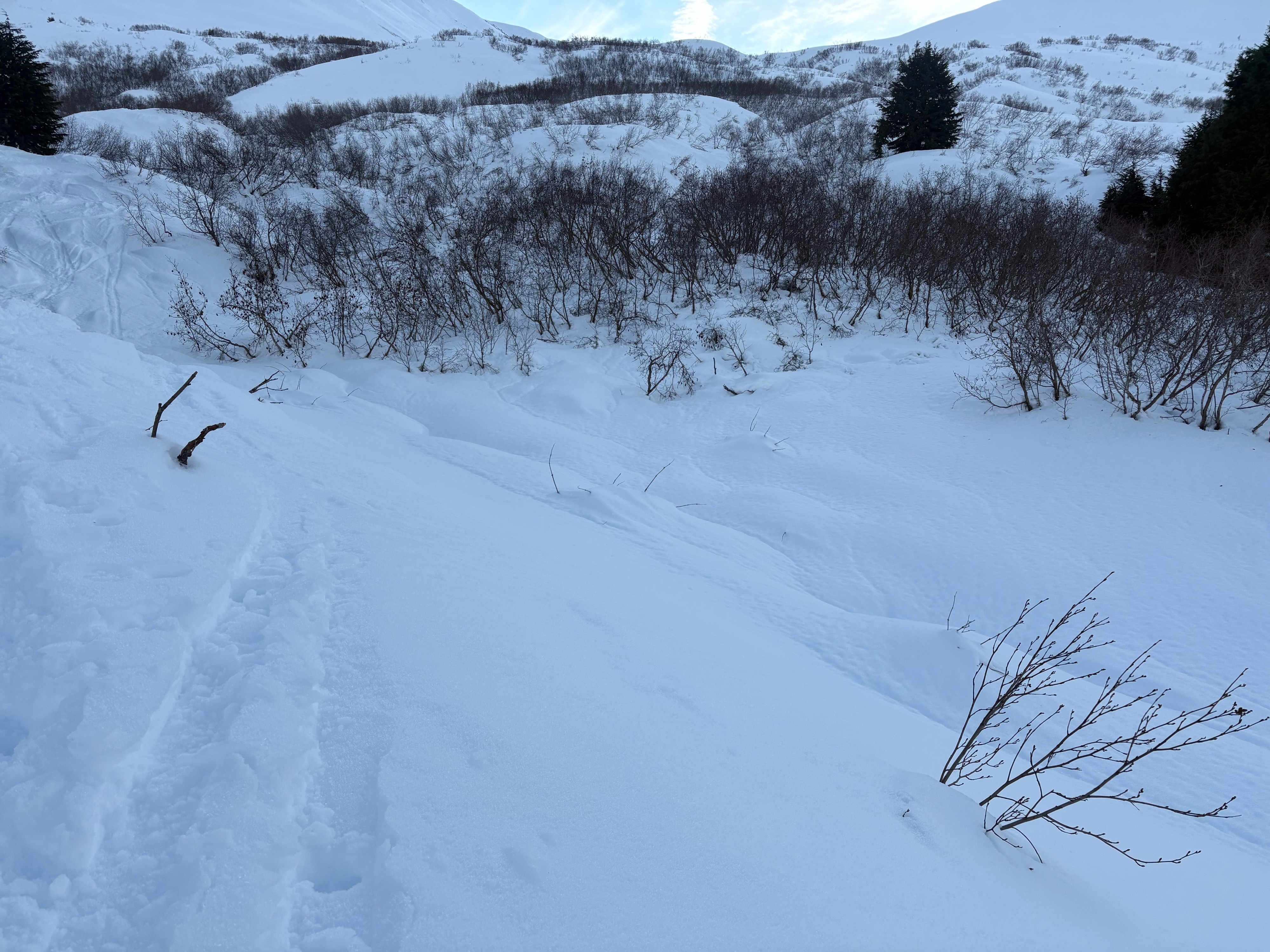
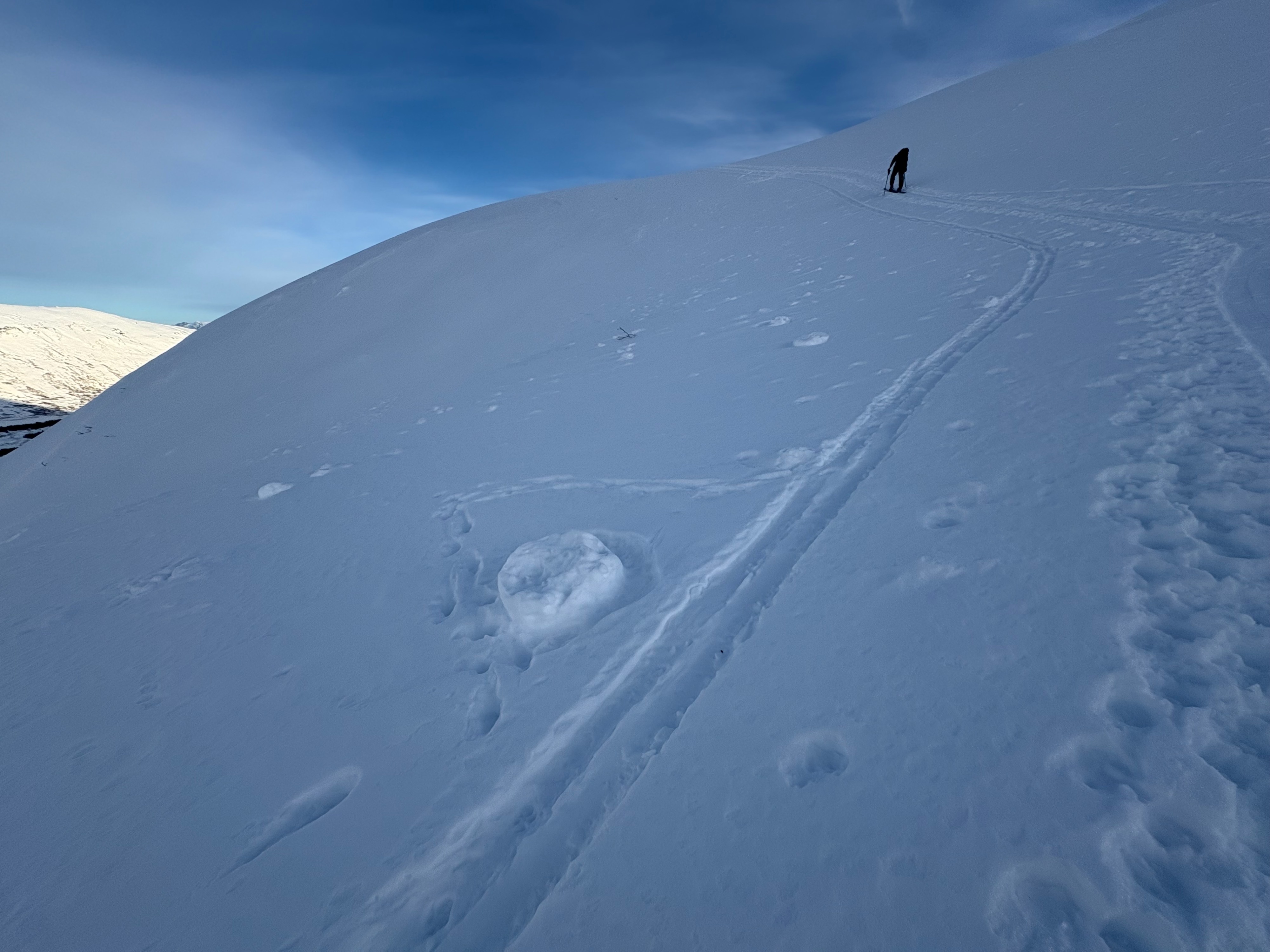
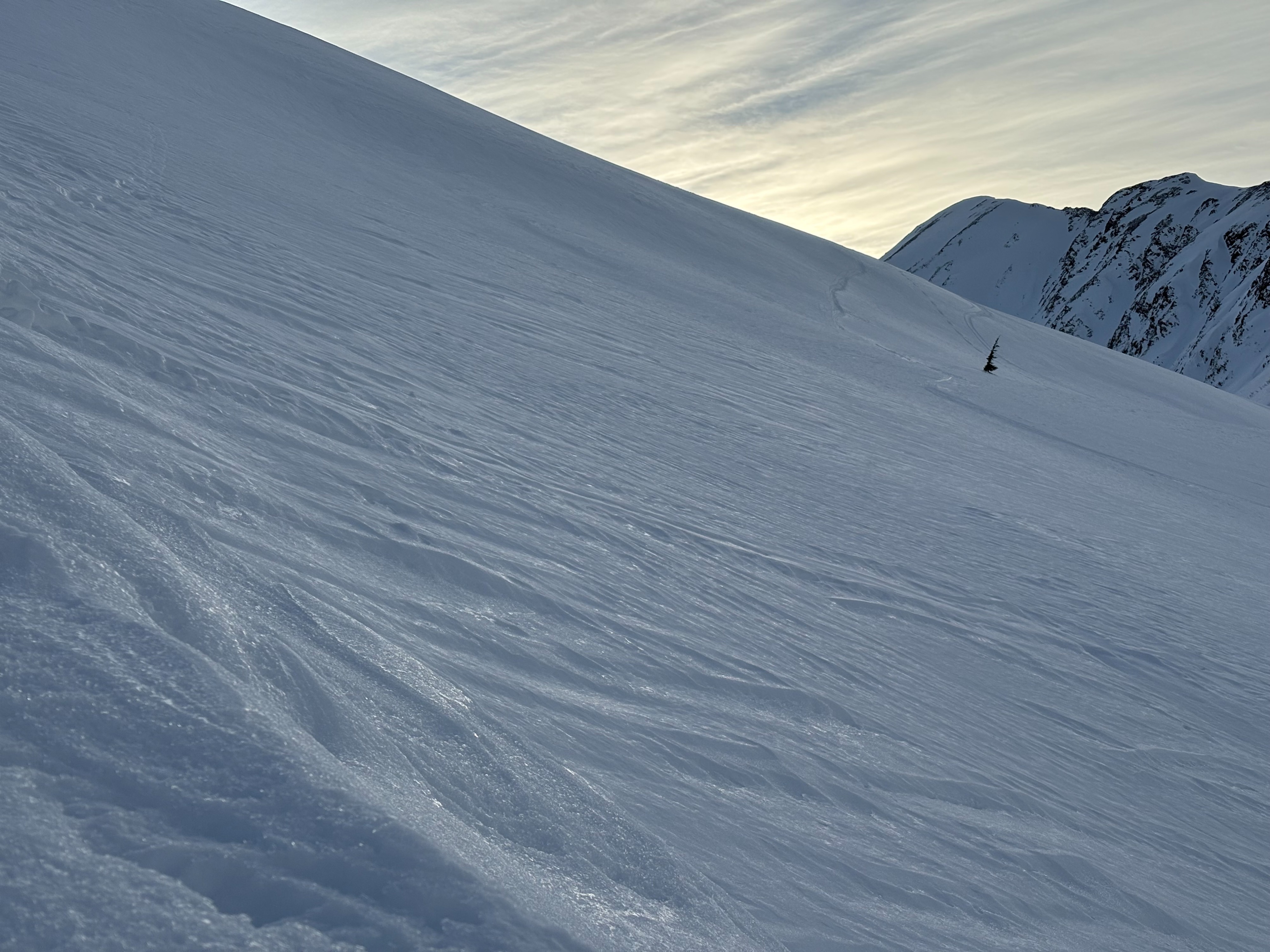
Surface conditions up to 1,900 ft consisted of a stout melt-freeze crust that varied between supportable and breakable. Between 1,900 and 2,300 ft, the crust was generally supportable and above 2,300 ft, the crust was paper thin, visible but largely unnoticeable while traveling uphill or downhill. While not powder skiing, upper elevation slopes allowed for fast, mellow turns in warm, spring like conditions.
We dug a snowpit at 3,100 ft near the reported avalanche and identified the primary layer of concern as the still intact mid December facet layer, which has been responsible for numerous recent avalanches in Turnigan Pass. While we did not observe unstable test results in this pit, the snowpack structure remained concerning, with strong, wind affected snow overlying the December facets.
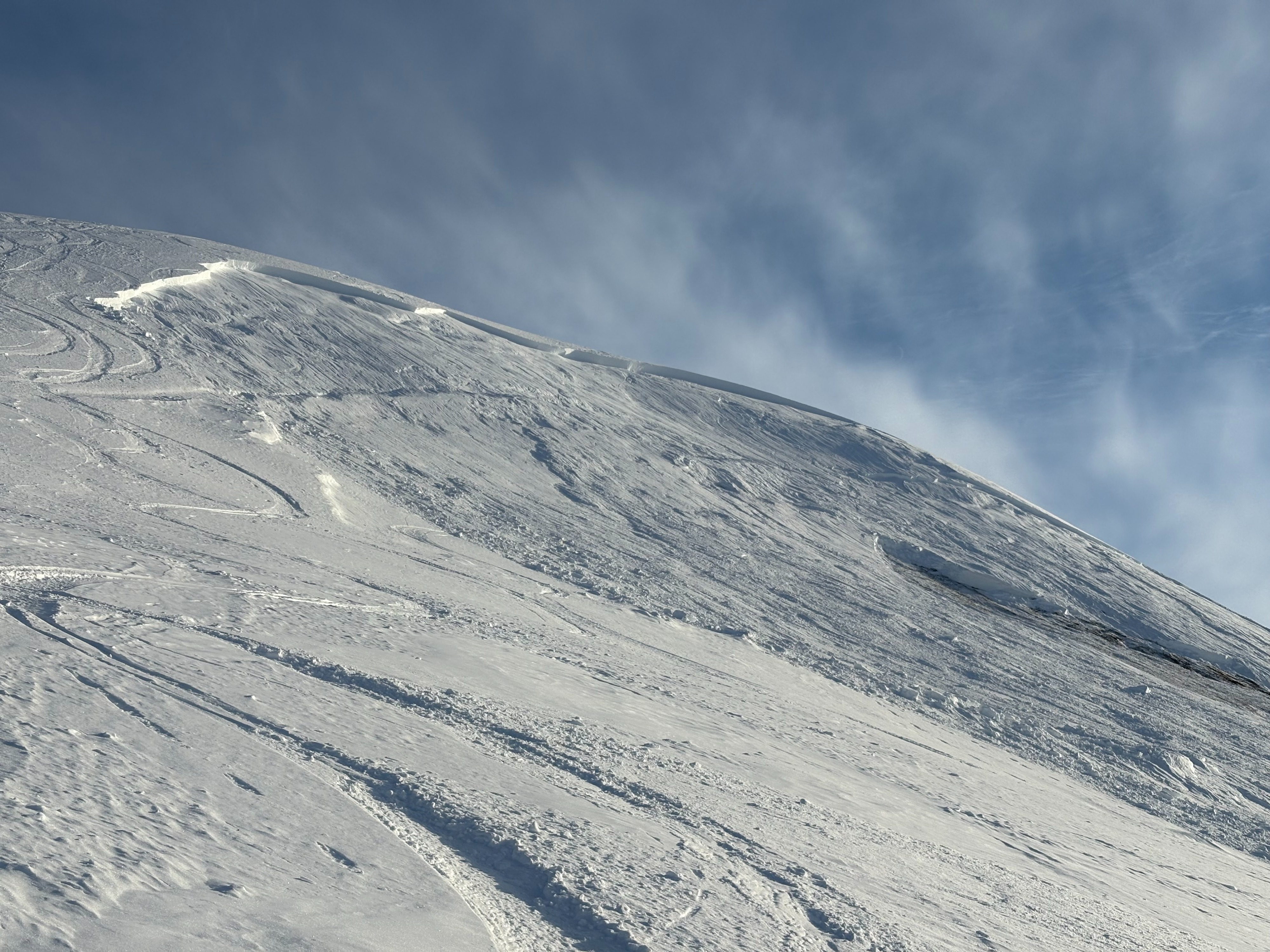
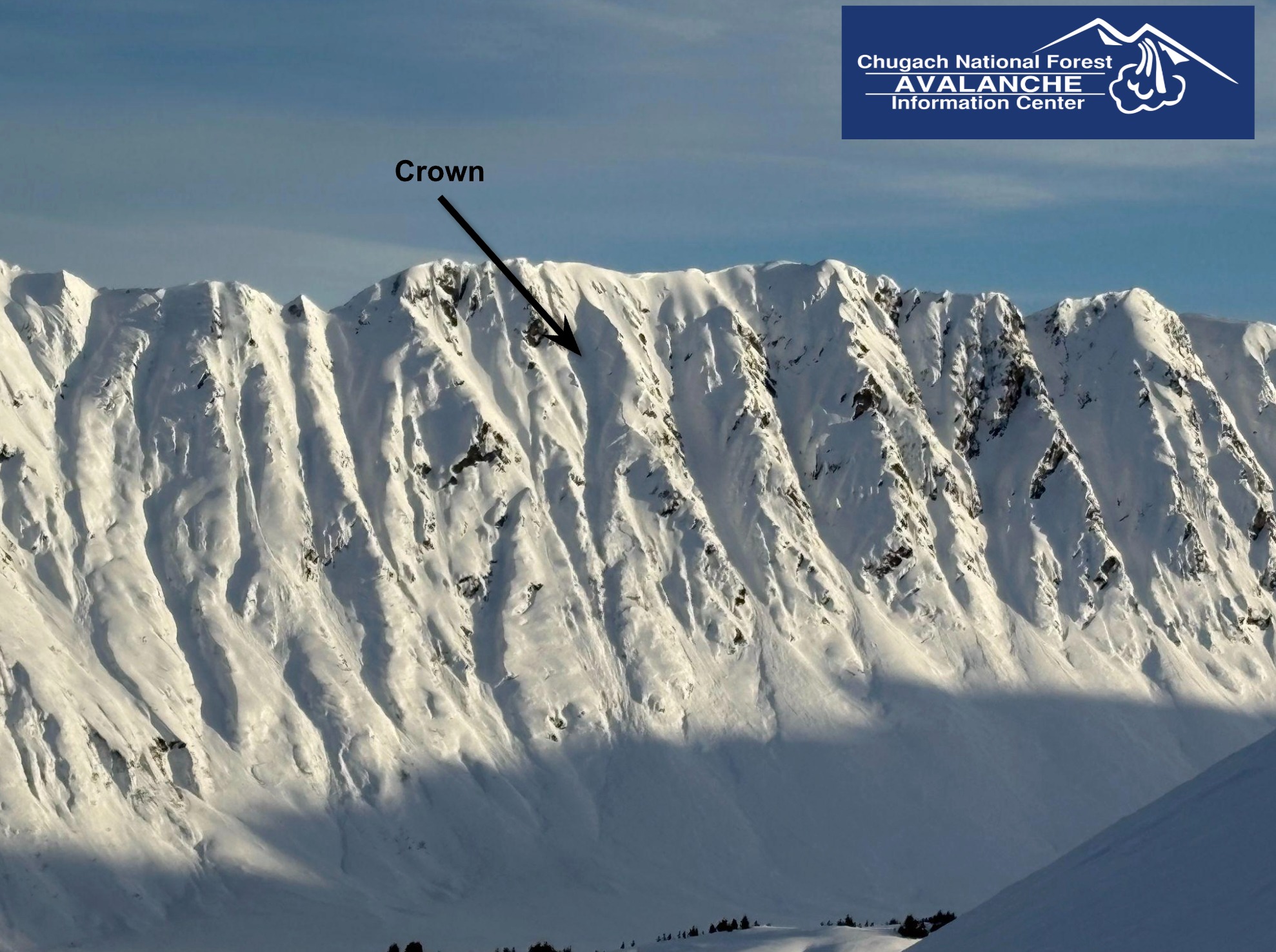
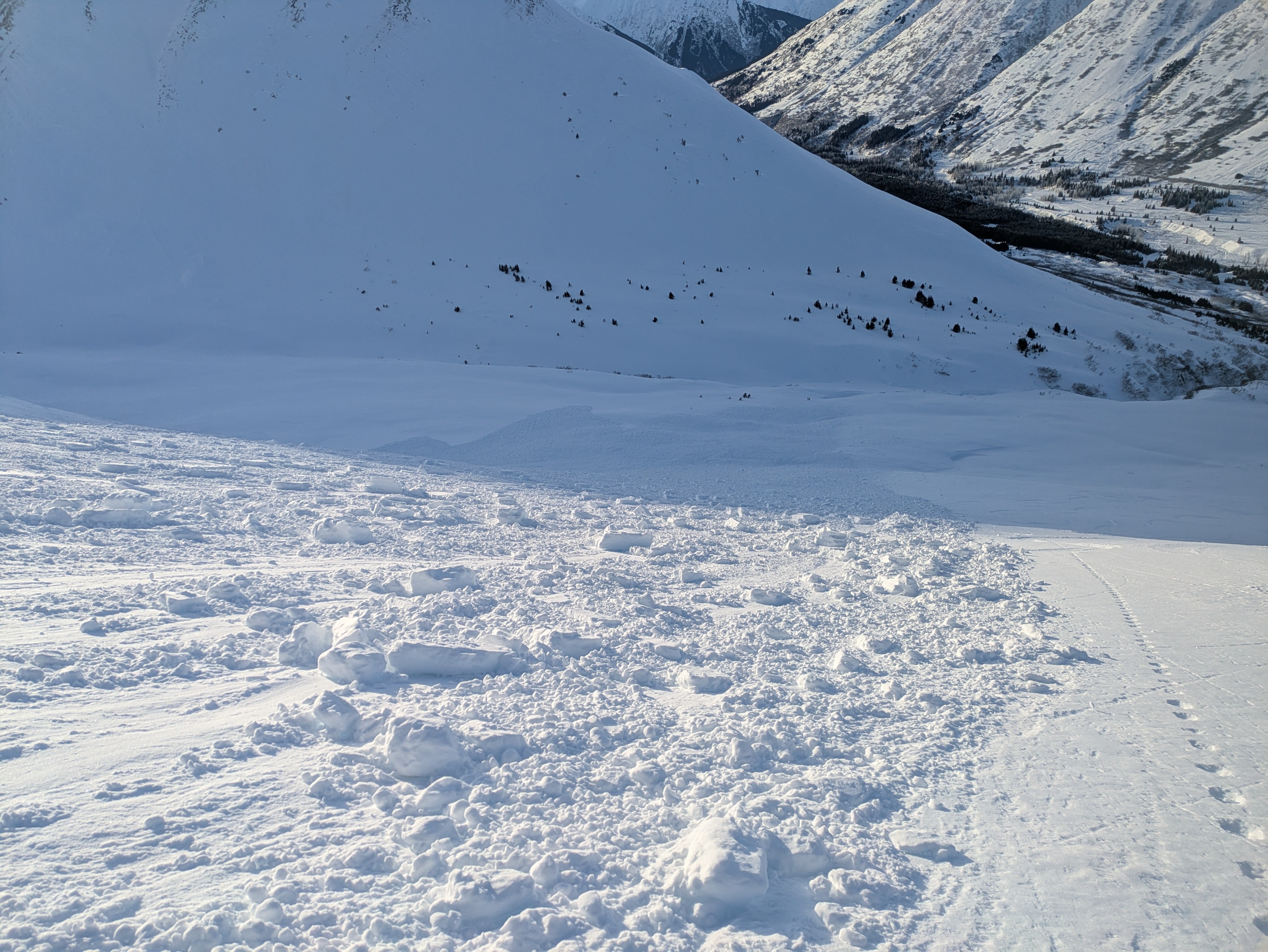
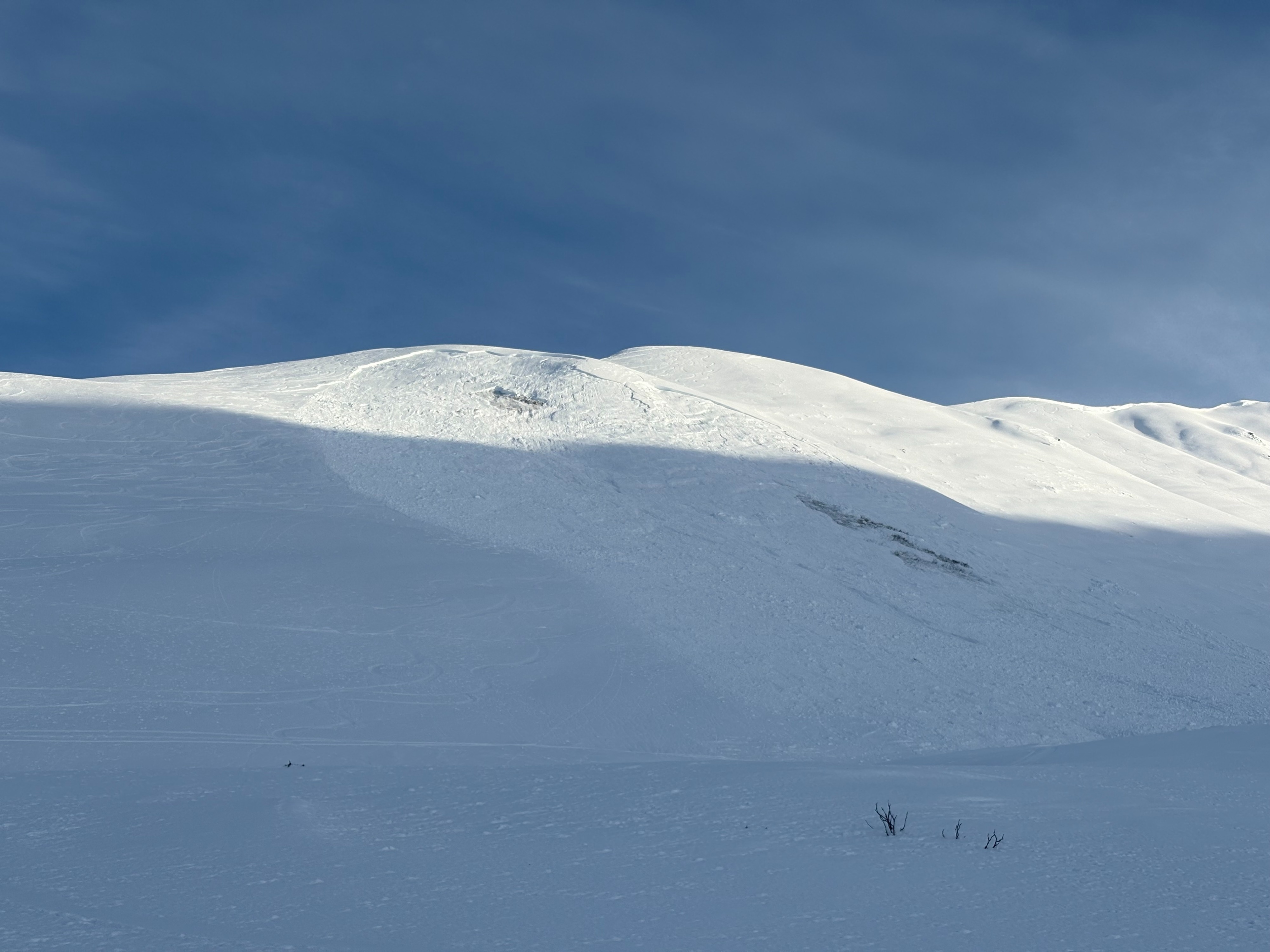
The avalanche reported yesterday covered at least half a dozen ski tracks and ran to the flats, stopping just shy of Taylor Creek at approximately 2,200 ft. We were able to view the crown from multiple angles but due to overhead hazard, we did not complete a crown profile.
We ventured off the established skin track numerous times to probe and listen for whumpfing. Pole probing indicated poor snowpack structure at upper elevations; however, we did not experience any whumpfs during the tour.
Weather
- Air Temp
- 20 at the car and lower 40s above treeline
- Cloud Cover
- scattered
- Wind Loading
- none
- Snow Avail For Transport
- small smounts
Temps were in the 20s at the car, but higher on Sunburst we experienced t-shirt weather with temperatures in the lower 40s.
Snowpack
We dug two snowpits along our route up Sunburst with the goal of targeting the December facet layer (the likely culprit of the recent avalanche on Sunburst)
In our first pit, on a west aspect at 1,900 ft, we found a 1 inch surface crust over approximately 30 inches of 1 finger hard rounds with the December facets below. We had a stable Extended Column Test result in this pit; however, a light shovel pry near the top of the column caused a fracture to propagate through the December facet layer and the column easily slid off.
We dug an upper elevation snowpit at 3,100 ft on a westerly aspect near the site of the recent avalanche. Total snow depth was 81 inches, and the structure was similar to the lower elevation pit, with strong rounds and wind-packed particles overlying the December facets, located approximately 37 inches down. Although this weak layer is deep and harder to trigger in a location such as this, a person could more easily trigger a slab from a shallower spot where the layer is closer to the surface. This was likely the case for the avalanche triggered yesterday, which failed on the same facet layer and had a crown measuring 1 to 2.5 ft deep.
Avalanche
- Size
- D2.5 R2
- Type
- SS
- Aspect
- SW
- Trigger
- AS
- Elevation
- 3000 ft
The avalanche was witnessed, but the trigger remains unconfirmed. Likely a remote trigger from a skier/rider on the ridge.