
Quick report
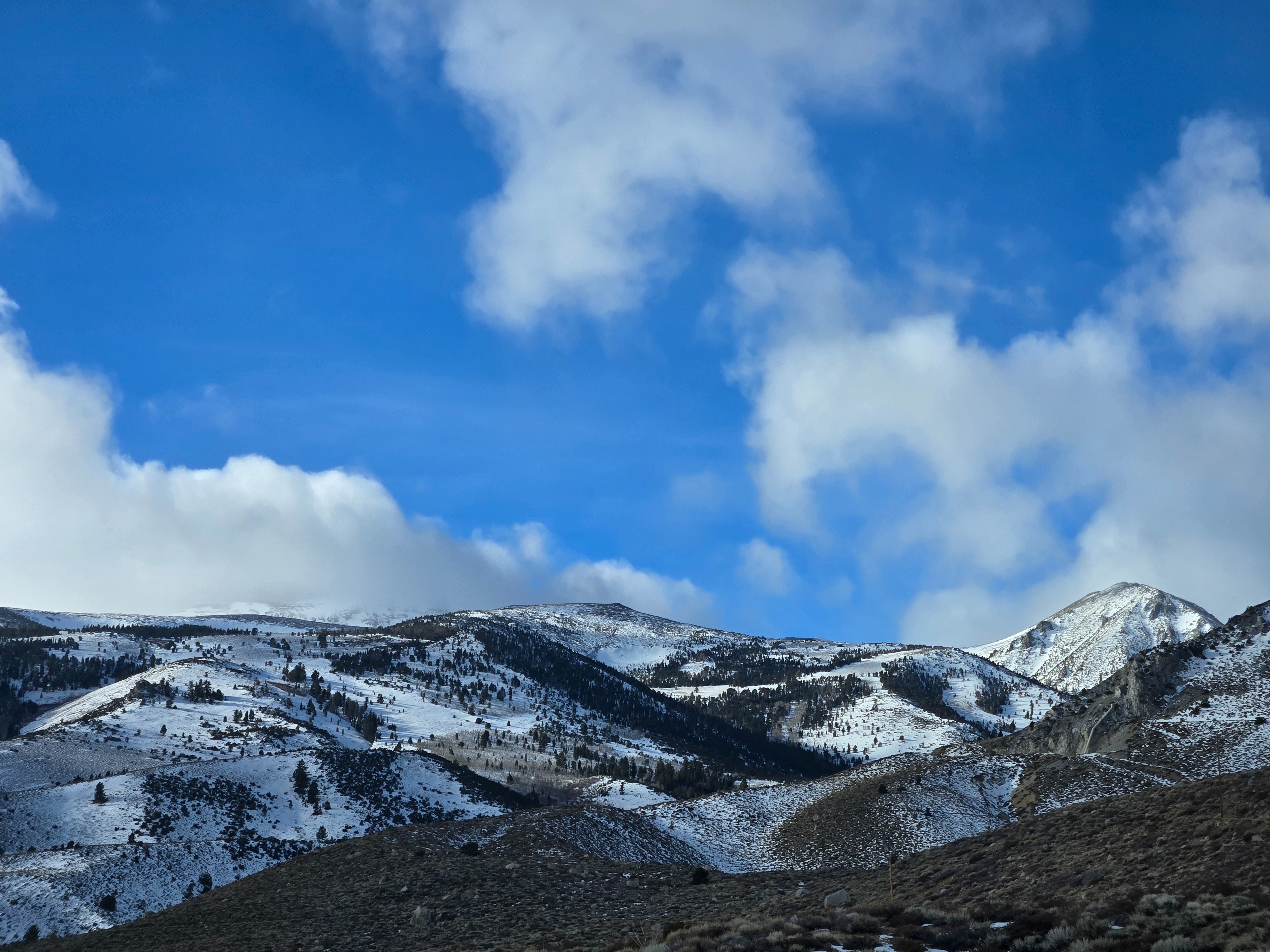
You've got to want it to recreat in Lundy canyon right now. But I didn't let thin mushy snow down low or wind-whacked snow near treeline stop me from looking at the current wind slab problem and assessing for what the weak storm slated for tomorrow might bring.
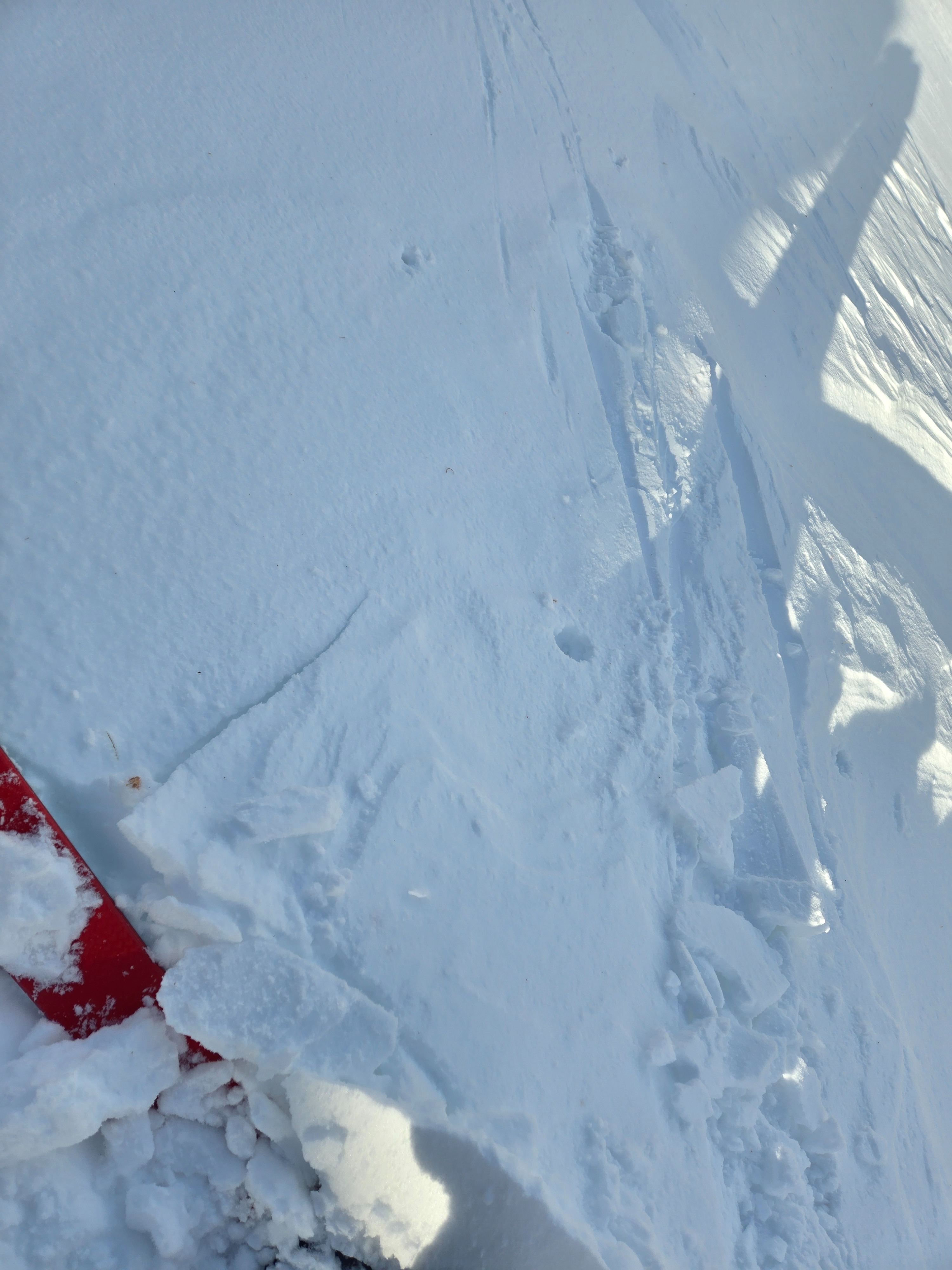
- I saw no recent avalanches and could only make hard stubborn wind slabs crack under me after undercutting them.
- Recent wind slabs were small and did not stretch very far down slope.
See snowpack section for more details.
Weather
- Air Temp
- Above Freezing
- Cloud Cover
- broken
- Wind Loading
- none
- Recent Snowfall
- 0
- Snow Avail For Transport
- small smounts
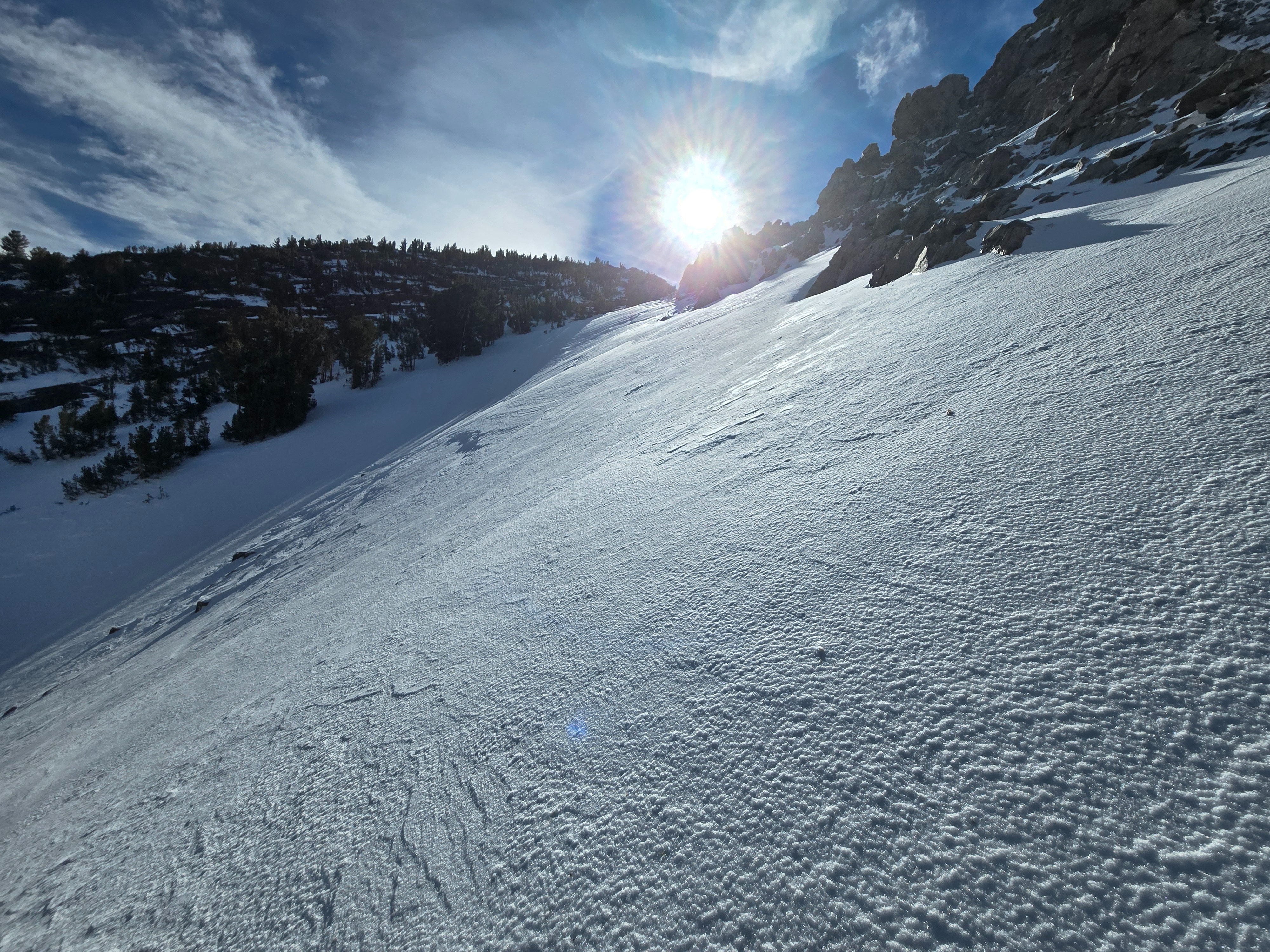
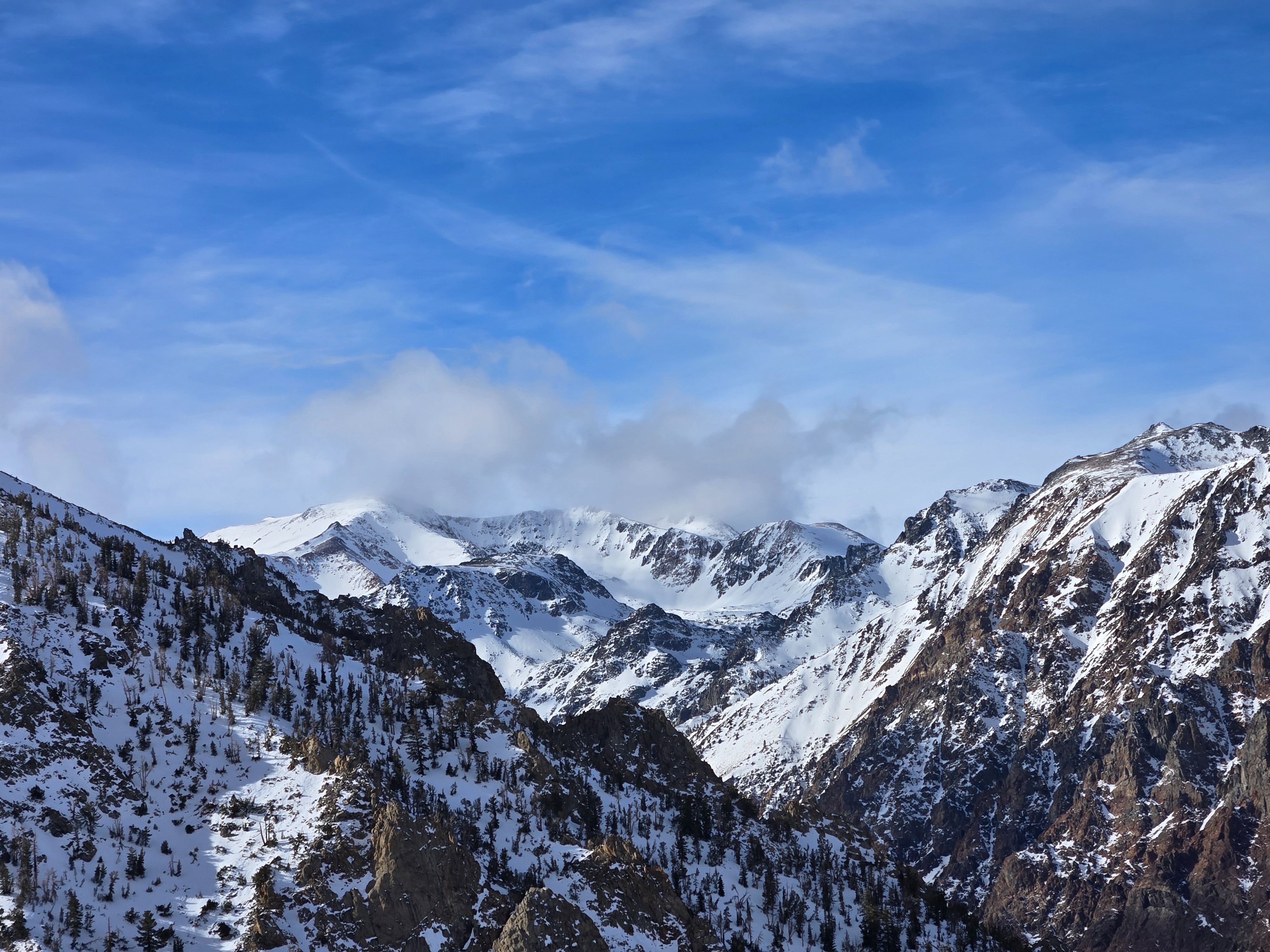
It was mostly cloudy with warm temperatures and increasing southwest wind. I saw isolated blowing snow near and above treeline, but there was very little snow available for transport.
Snowpack
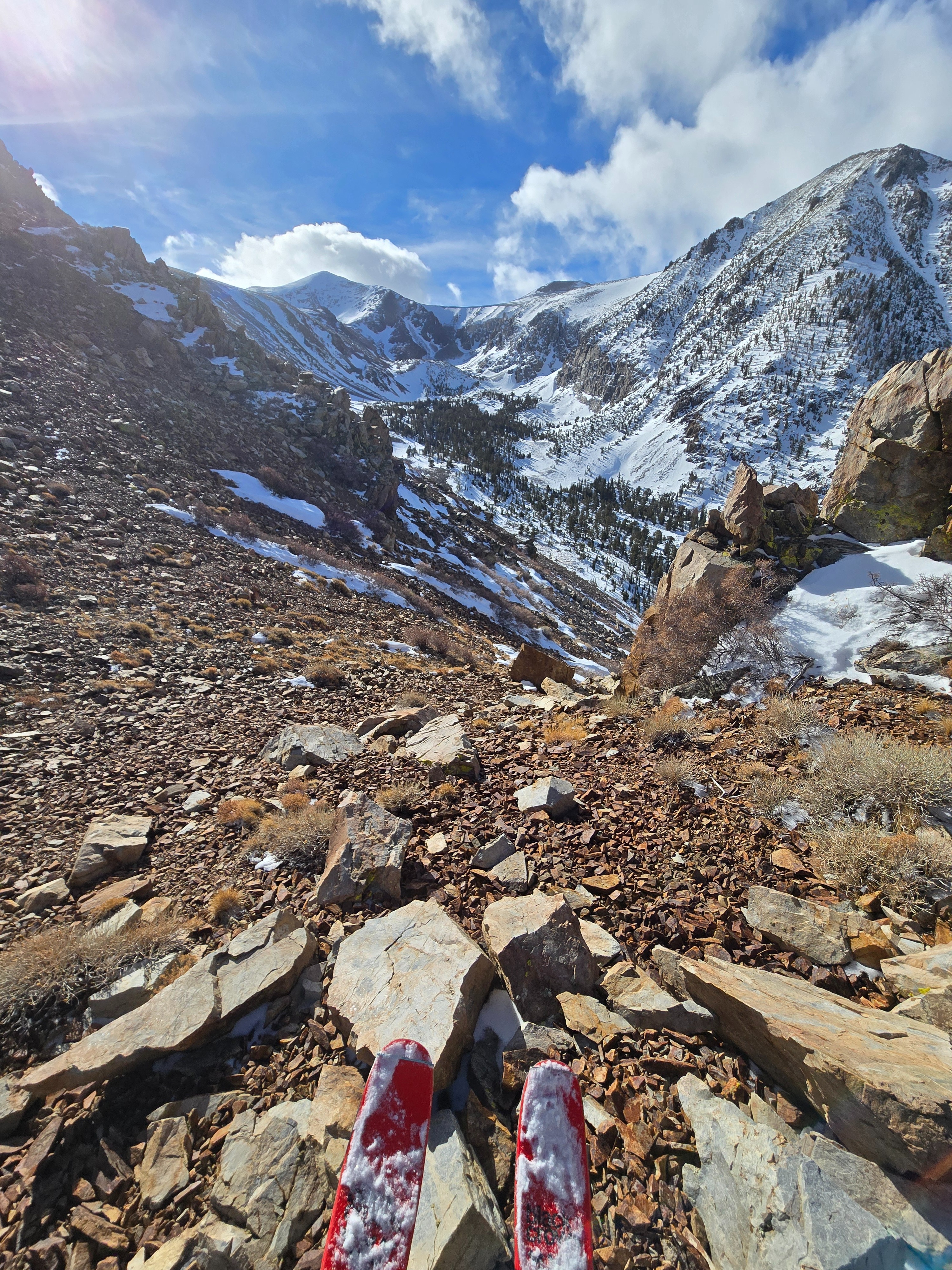
Coverage: There is snow cover on all aspects near the Sierra Crest. The further east you go, the harder it is to link continuous patches of snow.
Elevation: The upper snowpack was moist to wet on all aspects below about 9500 ft. While this made for challenging travel, it did not result in any instability that I could see.
Aspects: Windward slopes facing southwest and west were mostly stripped bare where I was. Northerly and easterly slopes that are typically downwind had wind-hardened surfaces or were also stripped.
Wind slabs: Slabs were hard (1F to P) and stubborn: I could get them to crack, but only after undercutting them. I did get some snowpack test results indicating that there was lingering instability in recent wind slabs, but a lack of direct feedback on a slope scale points toward stubborn slabs healing under warm temps. Almost every surface was hard and wind-compacted.
Snowpack: I found poor structure where I dug a snow pit on a northeast aspect near treeline at 9500 ft. I had unrepeatable propagating results on a layer of facets buried 2 ft. below the surface under very hard layers. Pole probing confirmed that the middle and bottom of the snowpack was weak almost everywhere I went. However, the snowpack was so shallow and discontinuous that it would be hard to imagine the concerning structure stretching across whole slopes. The hard wind-compacted layers above the facets are also probably stopping people from triggering this deeper layer, for now.