
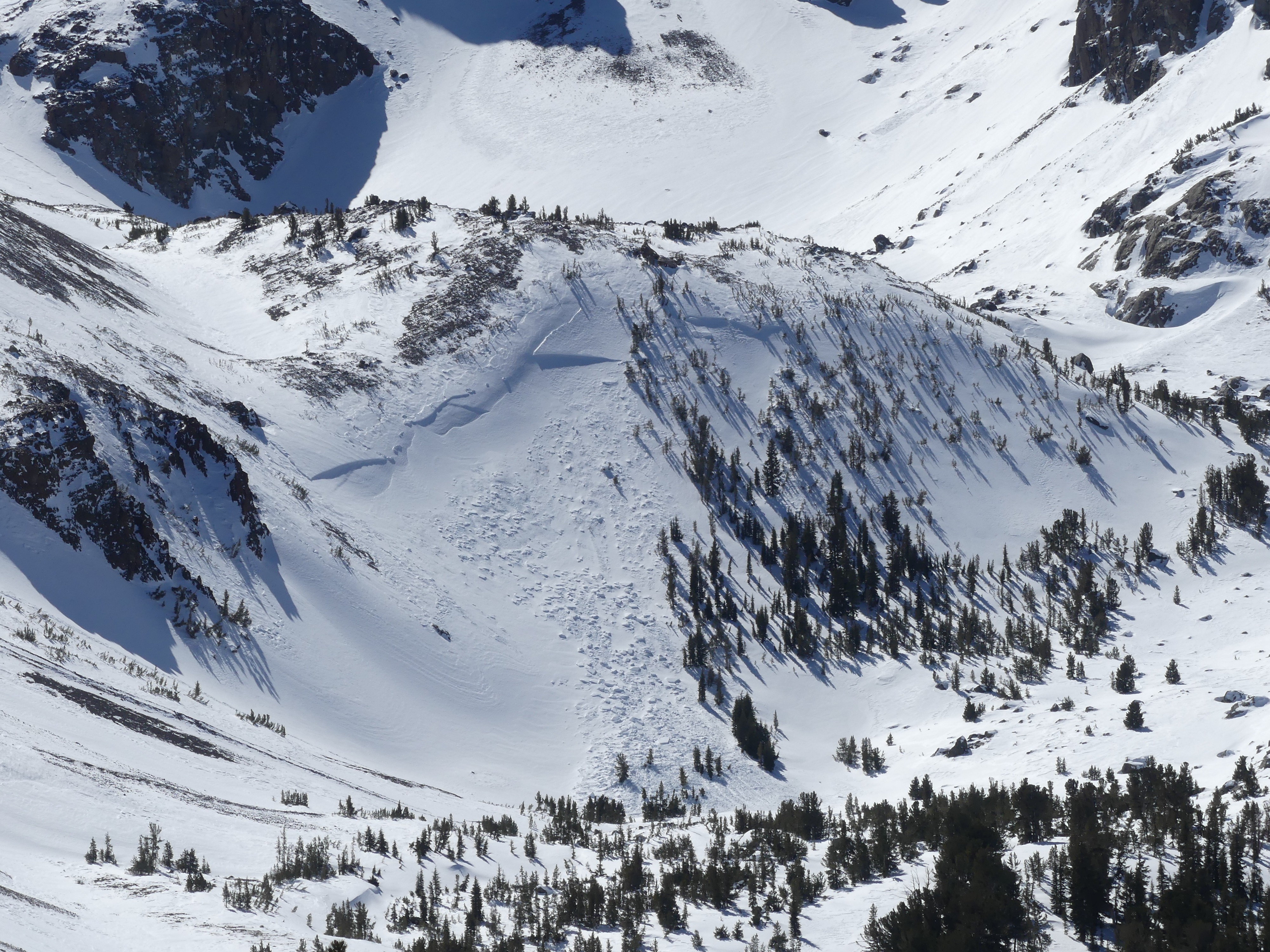
Quick report
- Cracking
- isolated
I went to the northern tip of the forecast area to get a pre-storm surface and snowpack survey before a heavy round of new loading this weekend.
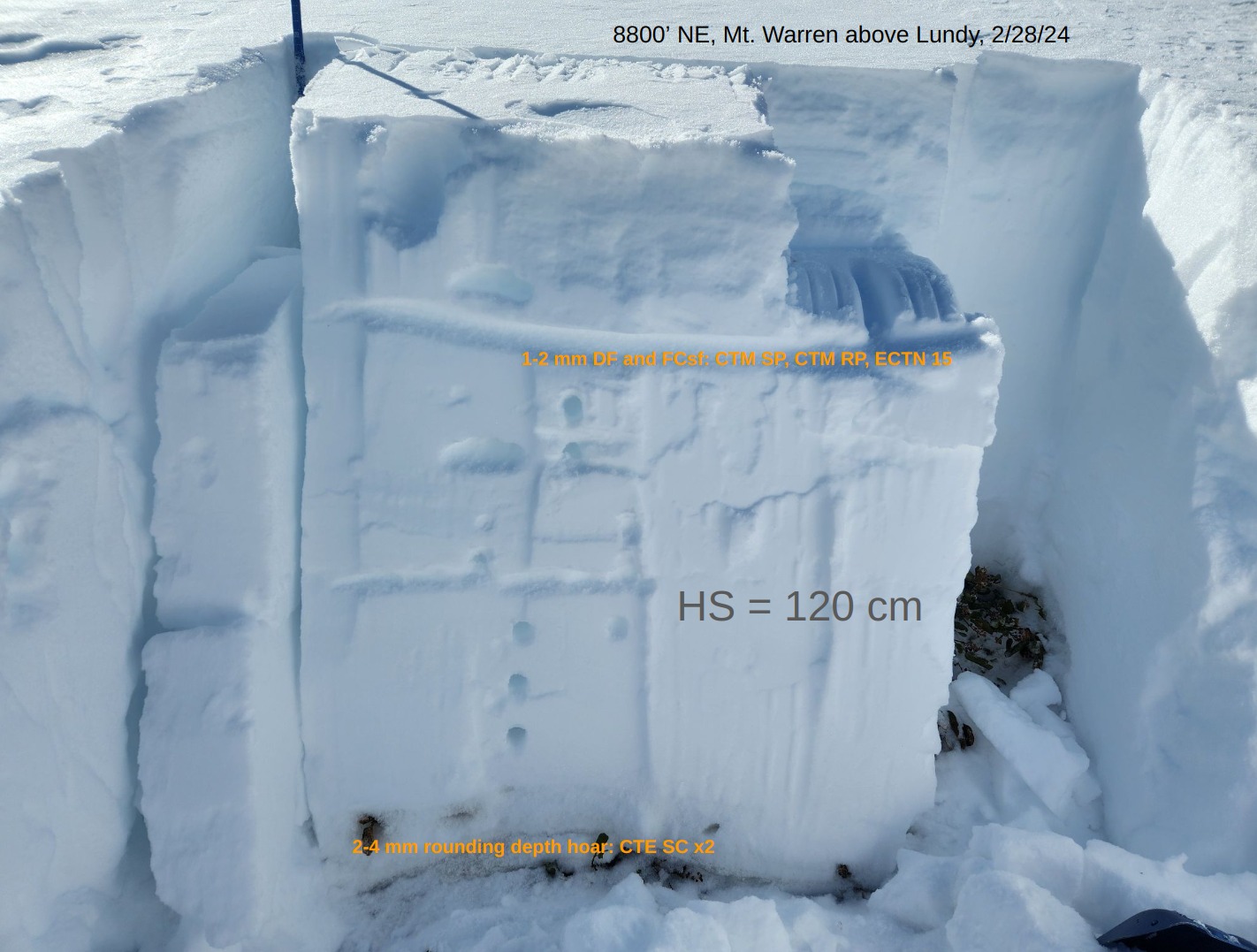
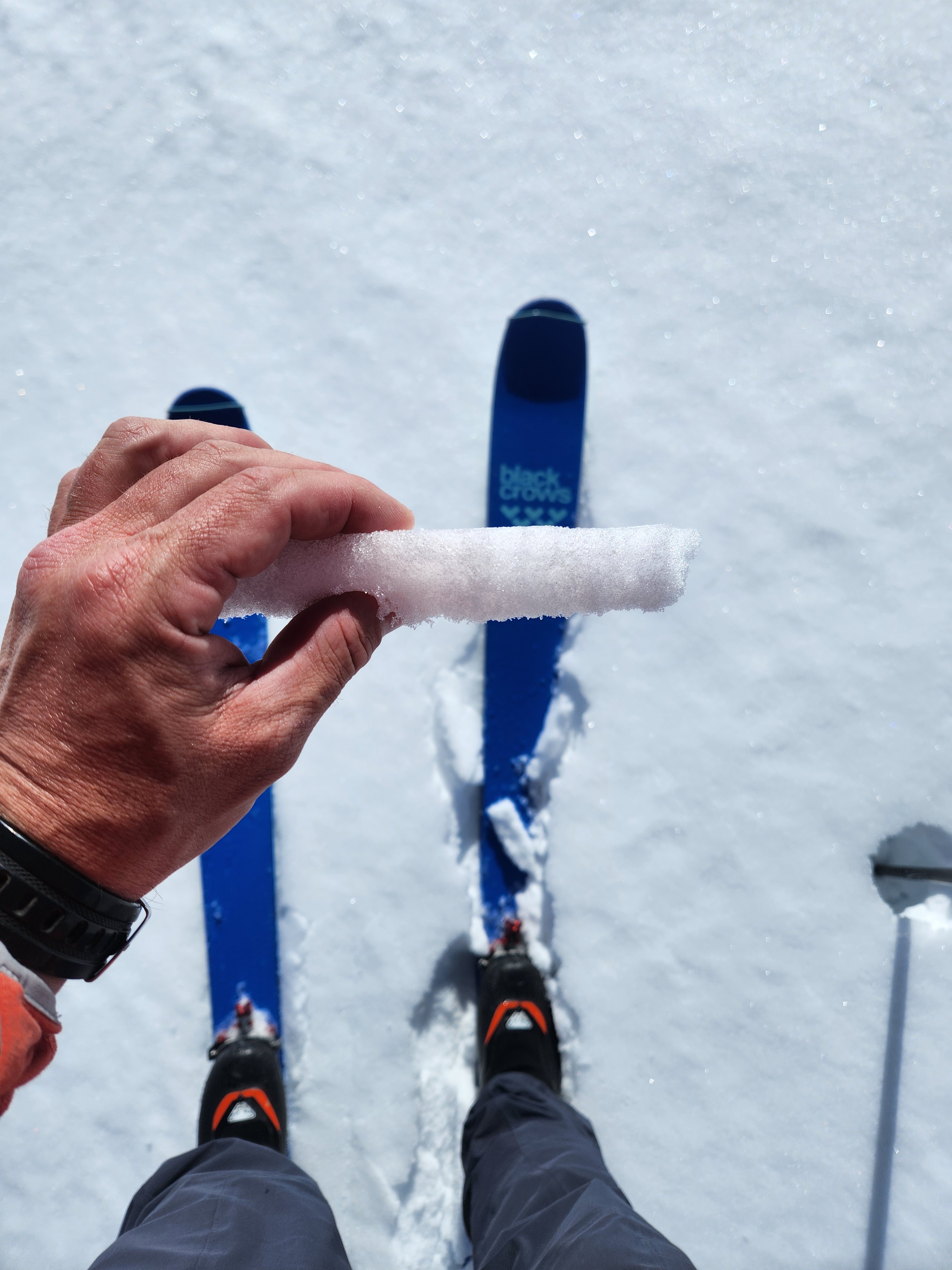
New snow will fall and drift onto a variety of hard crusts. Near-surface facets are also common in this area. My snow pits identified a layer of broken snowflakes mixed with facets about 8 inches below the surface as a potential weak layer. I also got small column test results on the depth hoar near the ground. Neither of these layers propagated in tests.
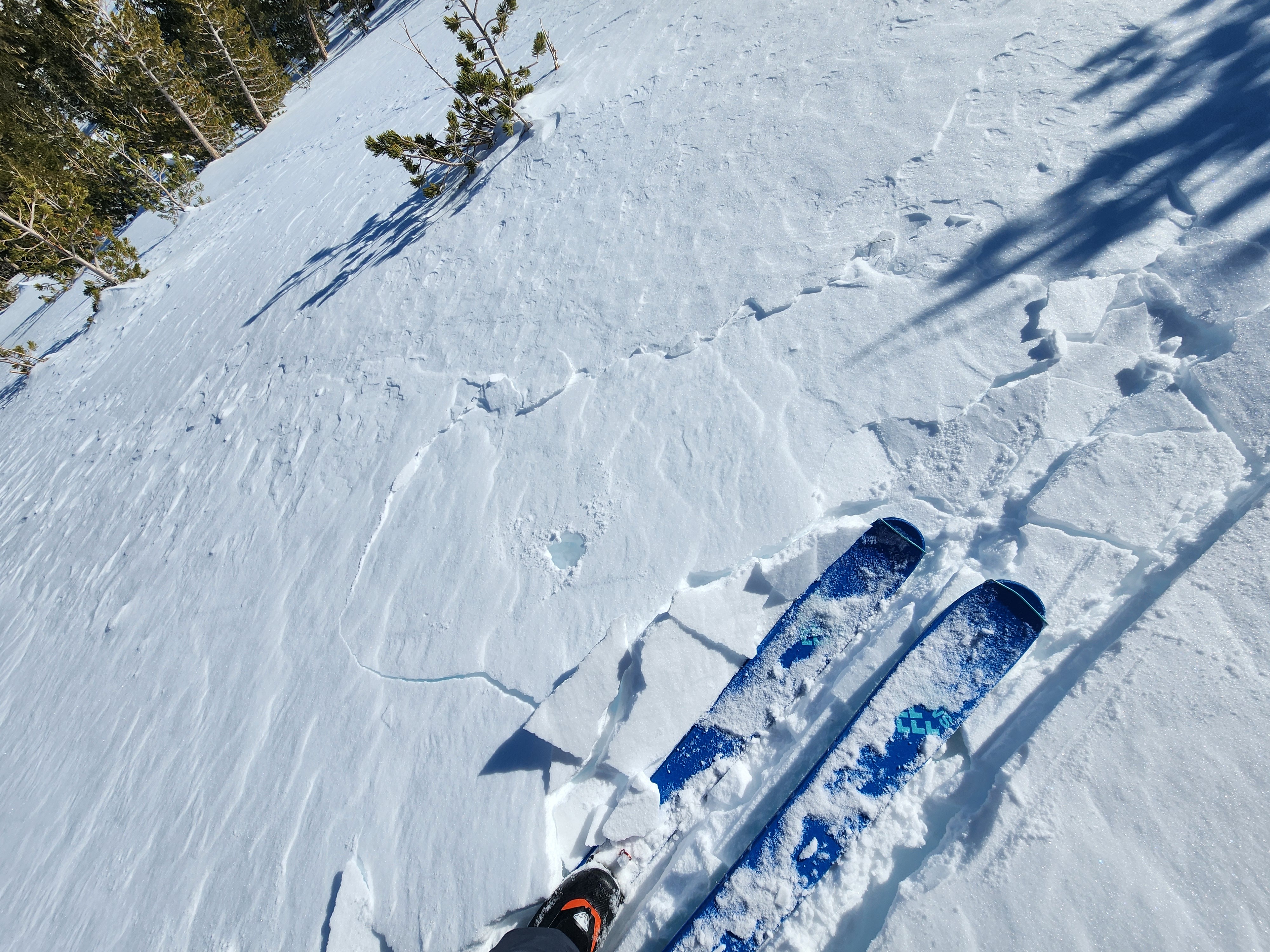
Localized cracking where hard wind slabs overlaid near-surface facets near and above treeline on slopes facing north and northeast.Weather
- Air Temp
- 28
- Cloud Cover
- few
- Wind Loading
- previous
- Snow Avail For Transport
- none
Gradually increasing clouds. Winds were calm at the trailhead, but noticeably strong and cold on the plateau. Unsure if it increased with elevation or throughout the day. No blowing snow as fetches were bare. However, I did see isolated wind loading over Parker Pass on my drive home late afternoon.
Snowpack
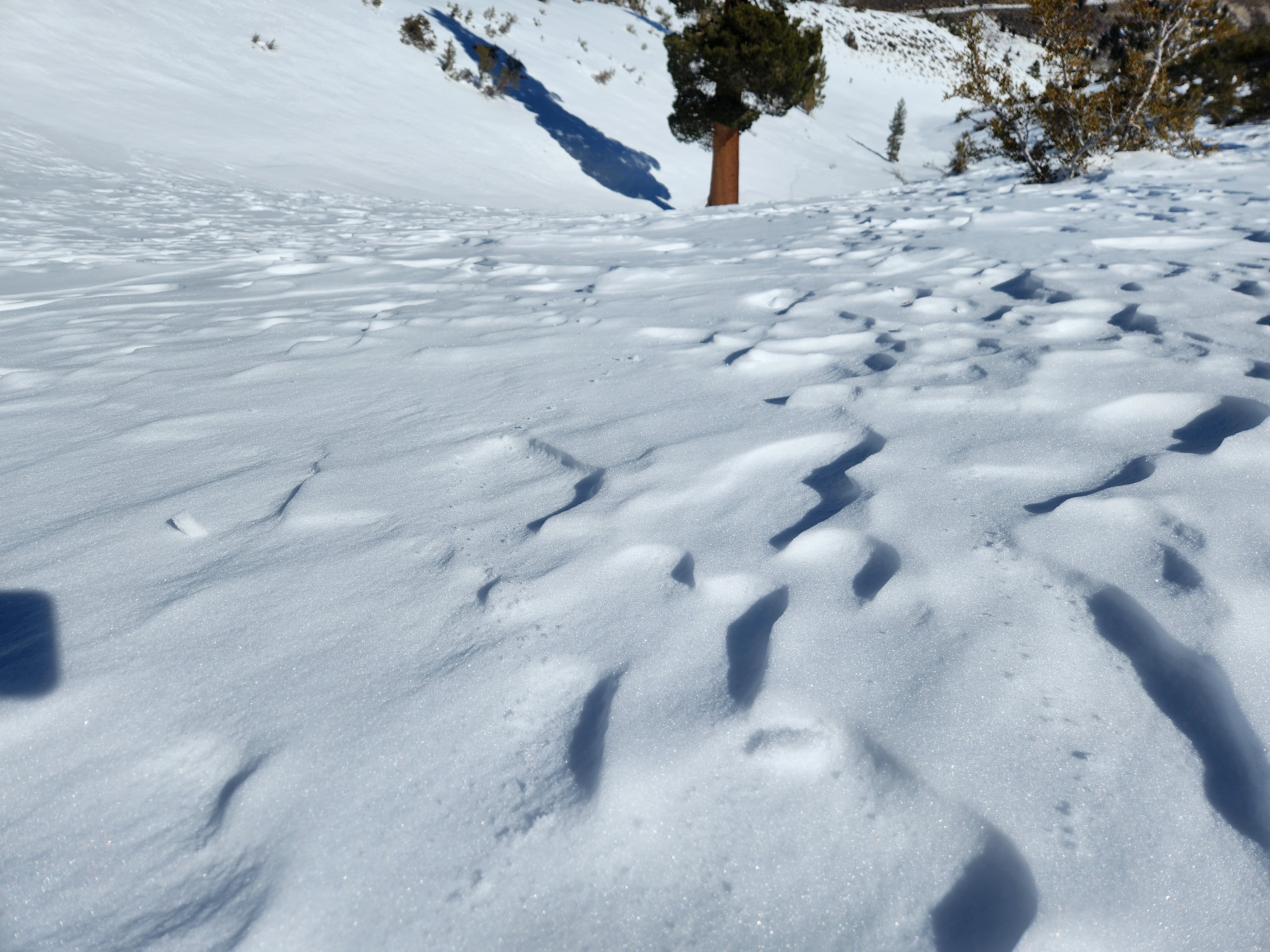
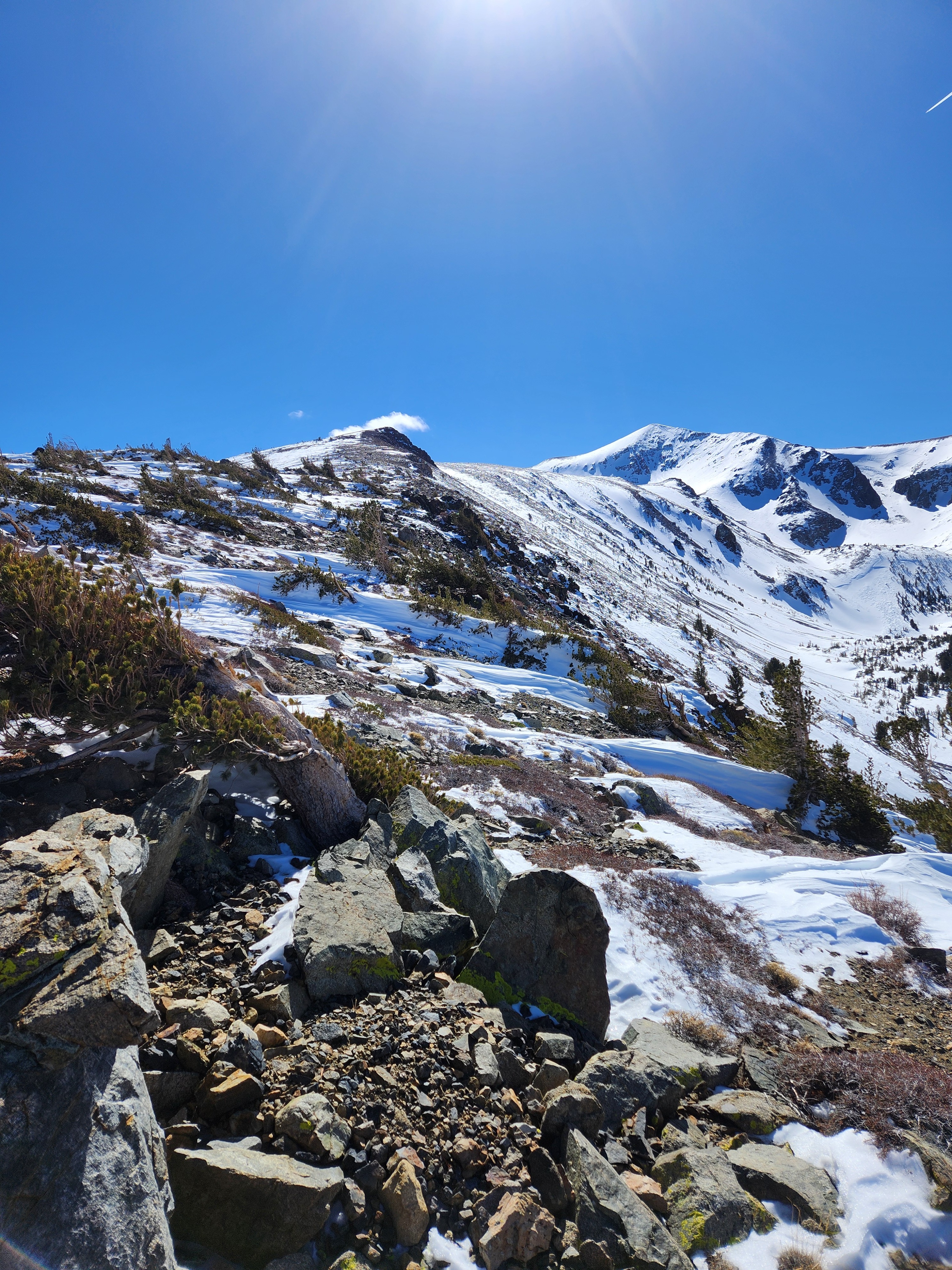
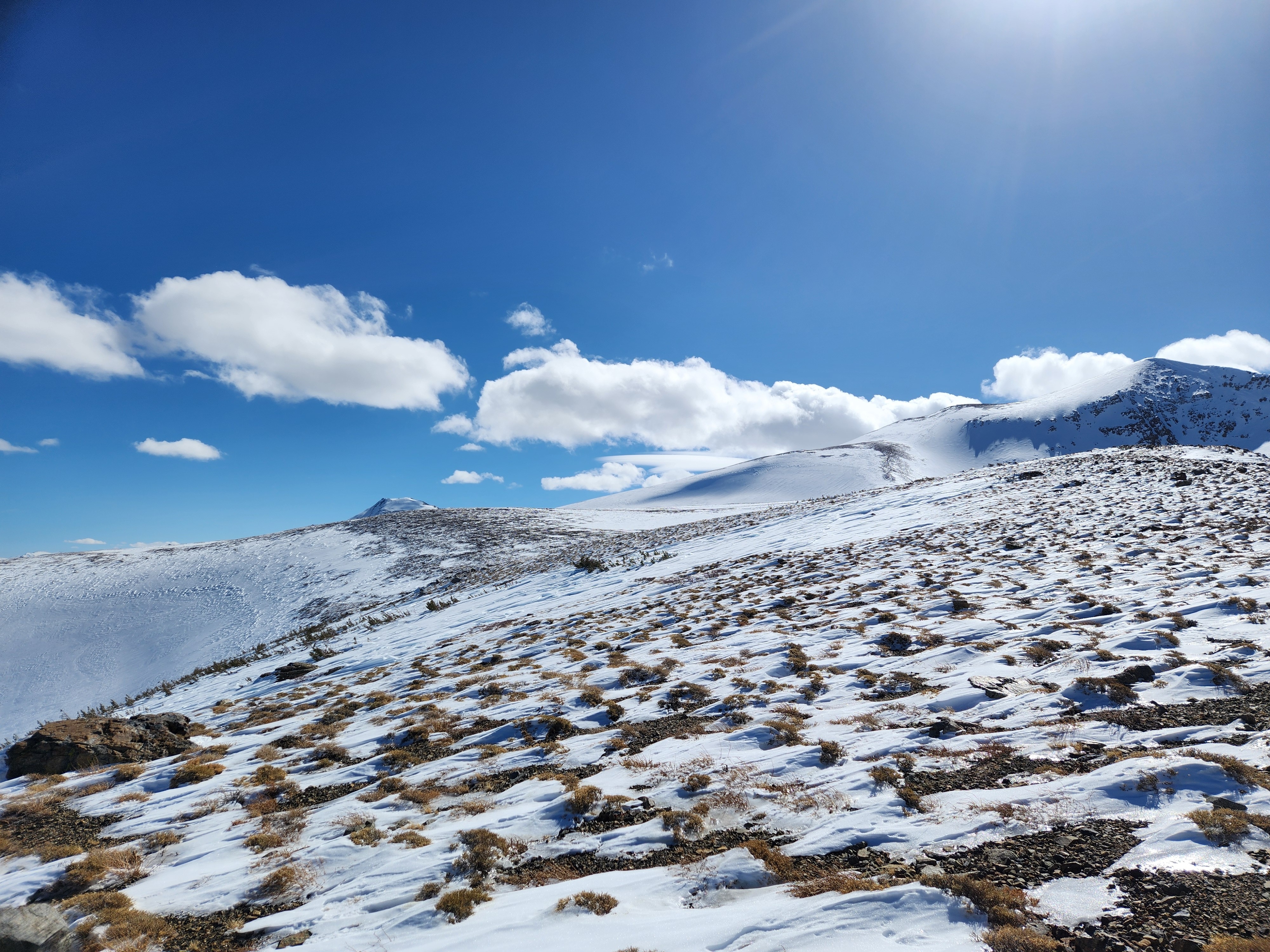
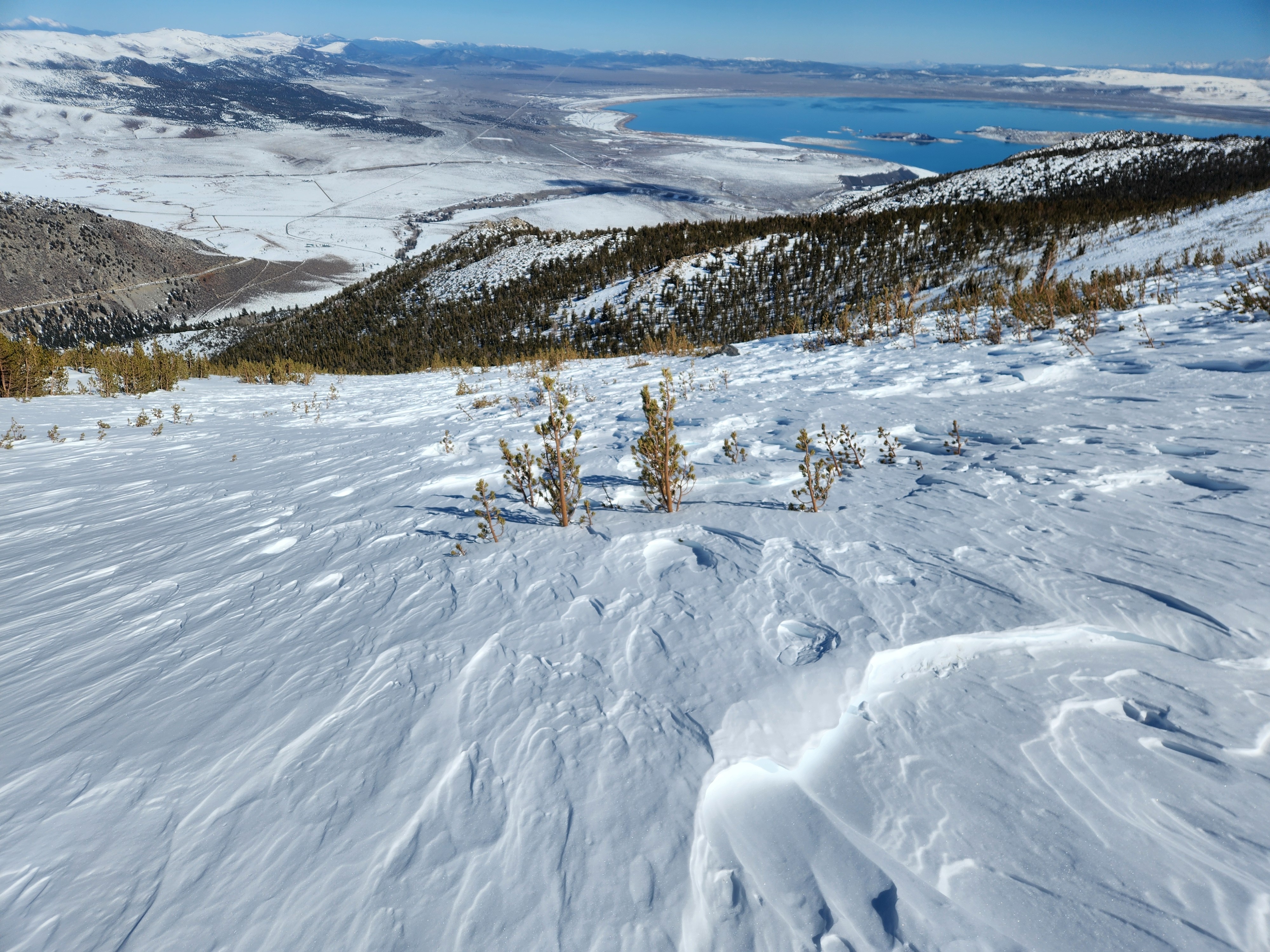
Almost all slopes that had snow cover were crusty. Melt-freeze on sunny slopes and hard wind-packed surfaces on polar slopes. Sheltered areas - open forest and the middle of gullies - had near-surface facets. West-facing fetches, the tops of ridges, and even the tops of northerly start zones were stripped to the ground by extreme winds on the 26th. There is a lot of wind-sculpted sastrugi where there is still snow in wind-affected areas. Many of the crusts were starting to form small facets at the surface.
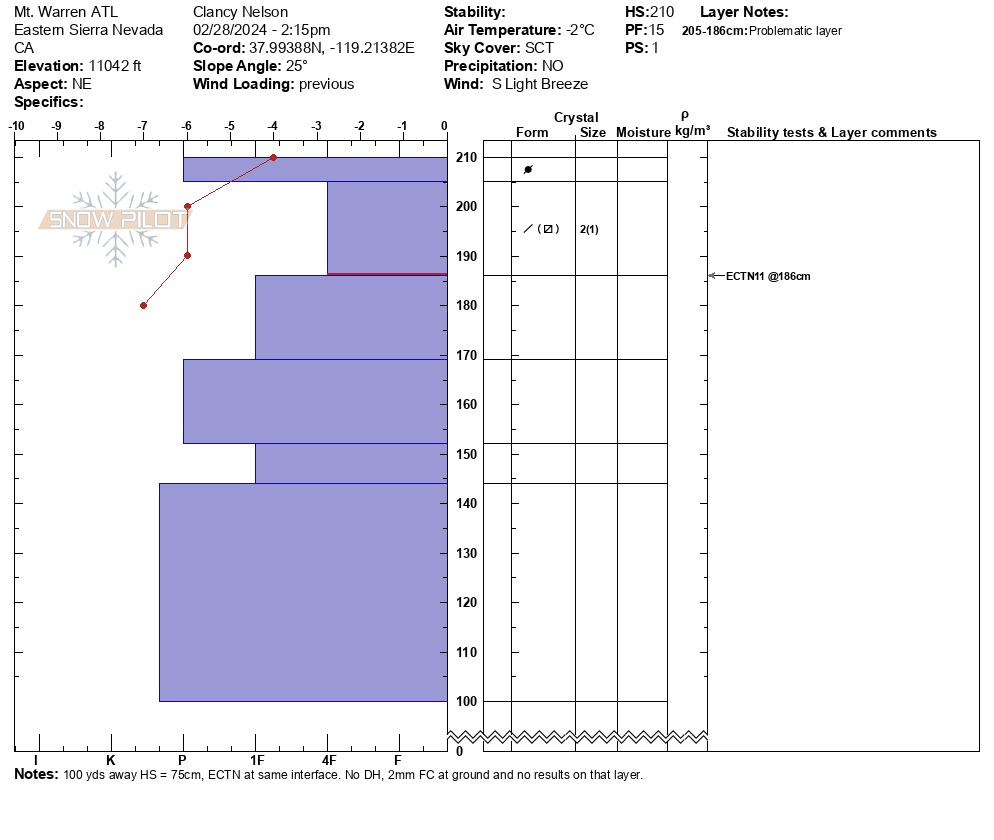
My snowpack test near treeline identified 2 layers: a mix of decomposing-fragmented grains and near-surface facets under the most recent hard wind slabs, and the rounding depth hoar that still exists at the ground. Neither of these layers propagated in extended column tests, but I did get easy to moderate sudden collapse (depth hoar) and resistant planar (surface facets) results in compression tests. Probing above treeline on typically wind-loaded slopes the snowpack was thick and hard and I couldn't identify the depth hoar at the ground. Again, the near-surface facet layer buried on the 26th was notable under hard wind-affected snow at the surface.
Temperature profiles in the upper snowpack indicated that faceting is happening during the colder parts of the evening and morning, while the gradient is moderated during the warmest parts of the day. That's reflected in the fact that I could identify near-surface facets in my snow pits, but did not get propagation in my large column tests.
Avalanche
- Size
- D2 R2
- Type
- U
- Aspect
- NE
- Trigger
- N
- Elevation
- 10800 ft
Likely a hard wind slab avalanche that failed during the extreme wind even on 2/26.