
Quick report
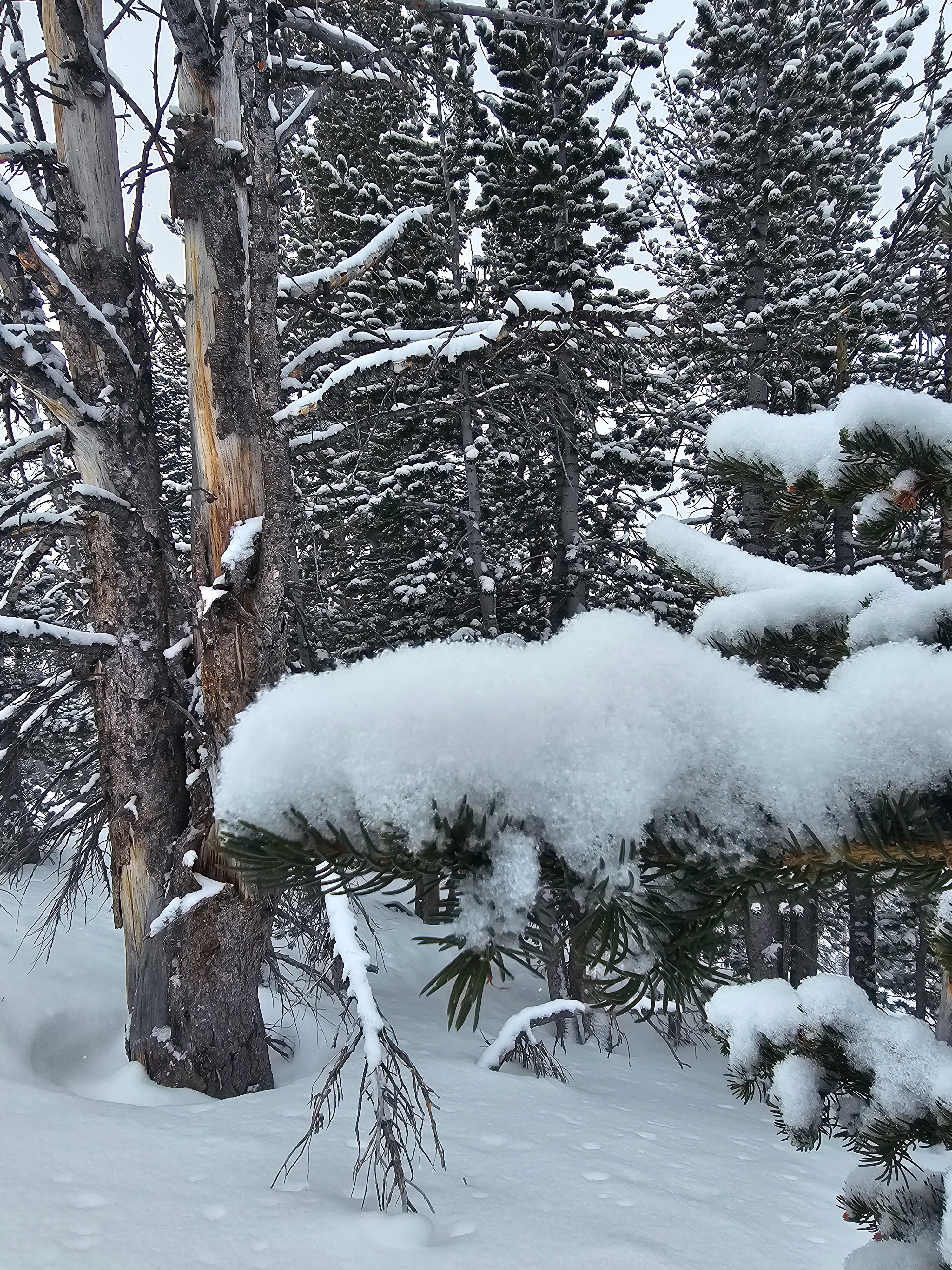
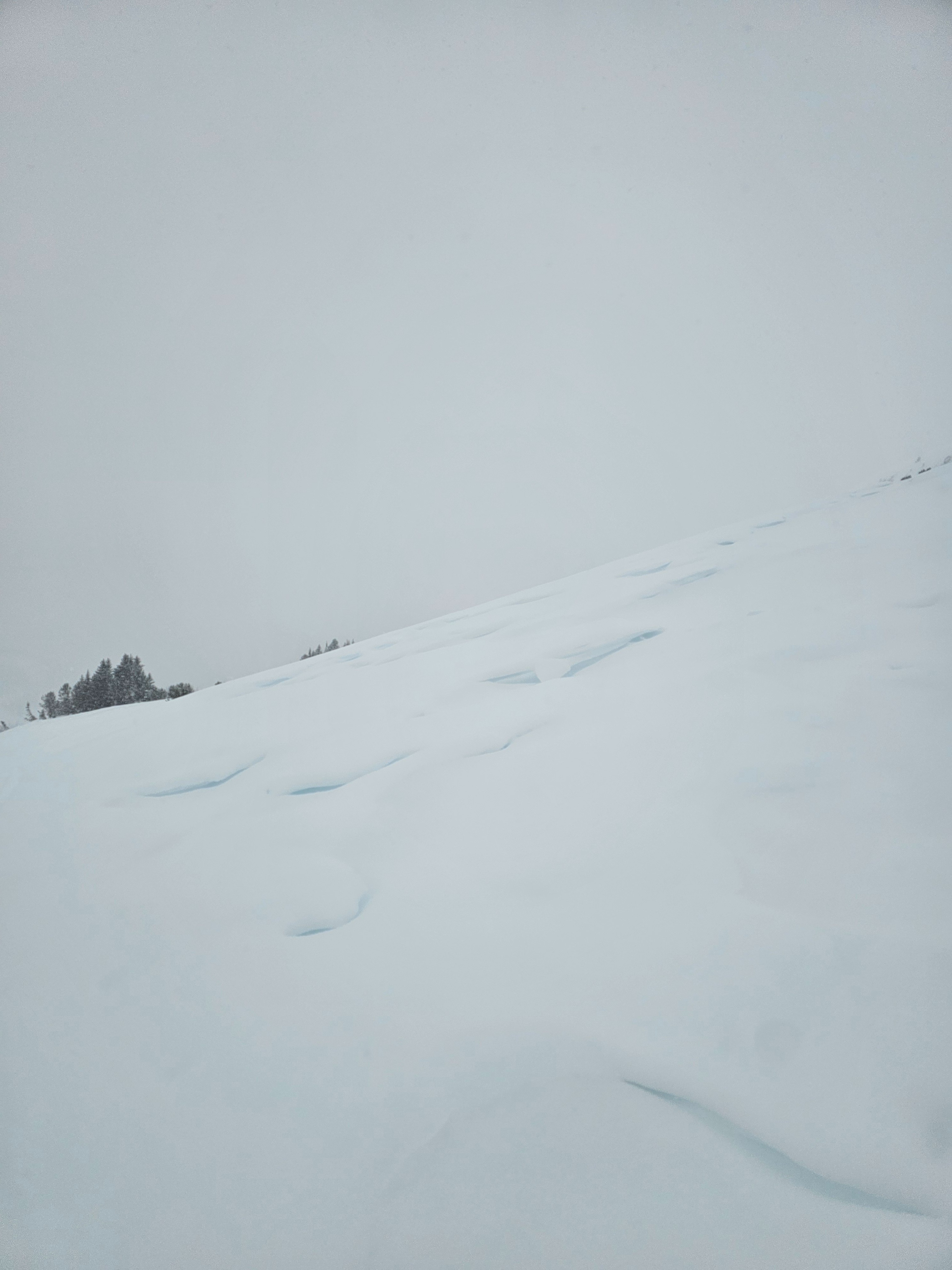
I travelled to the north side of Breccia. The 2-4 cm of new snow improved travel on skis, but it also made spotting old tracks and wind effect a little bit more challenging.
Height of snow ranged from 3-5 feet in the upper elevations. Steep south facing slopes have a breakable sun crust below the new snow and previously wind effected areas have some variety of windboard.
New snow came in with almost zero wind in the areas I travelled. My main concern with this is if the new snow preserved the snow surface that has weakened from our weeks of high pressure. I did not note preservation in my travels, but it is something I would like to further investigate.
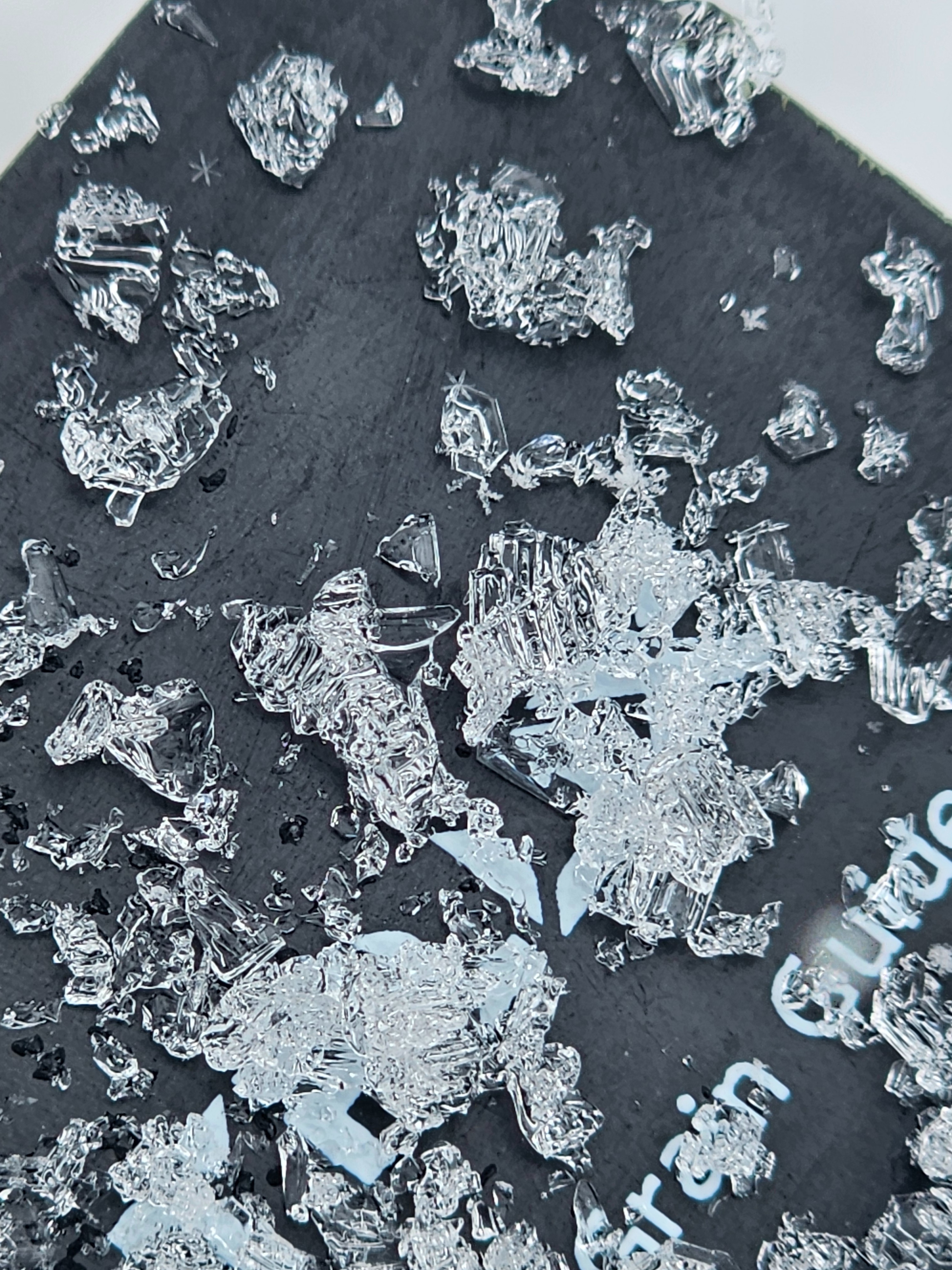
Digging in a thin alpine area I noted weak snow formed in November at the ground, see my Snowpack discussion below.
Weather
- Air Temp
- 13 at the car at 0930
- Cloud Cover
- obscured
- Wind Loading
- none
- Recent Snowfall
- 5cm by 1200
- Snow Avail For Transport
- small smounts
It snowed! there was 2-3cm of snow when I arrived and 4-5cm by the time I left. Low and mid level clouds were moving through the high peaks. Winds were light from the west and in many places they were totally calm.
Snowpack
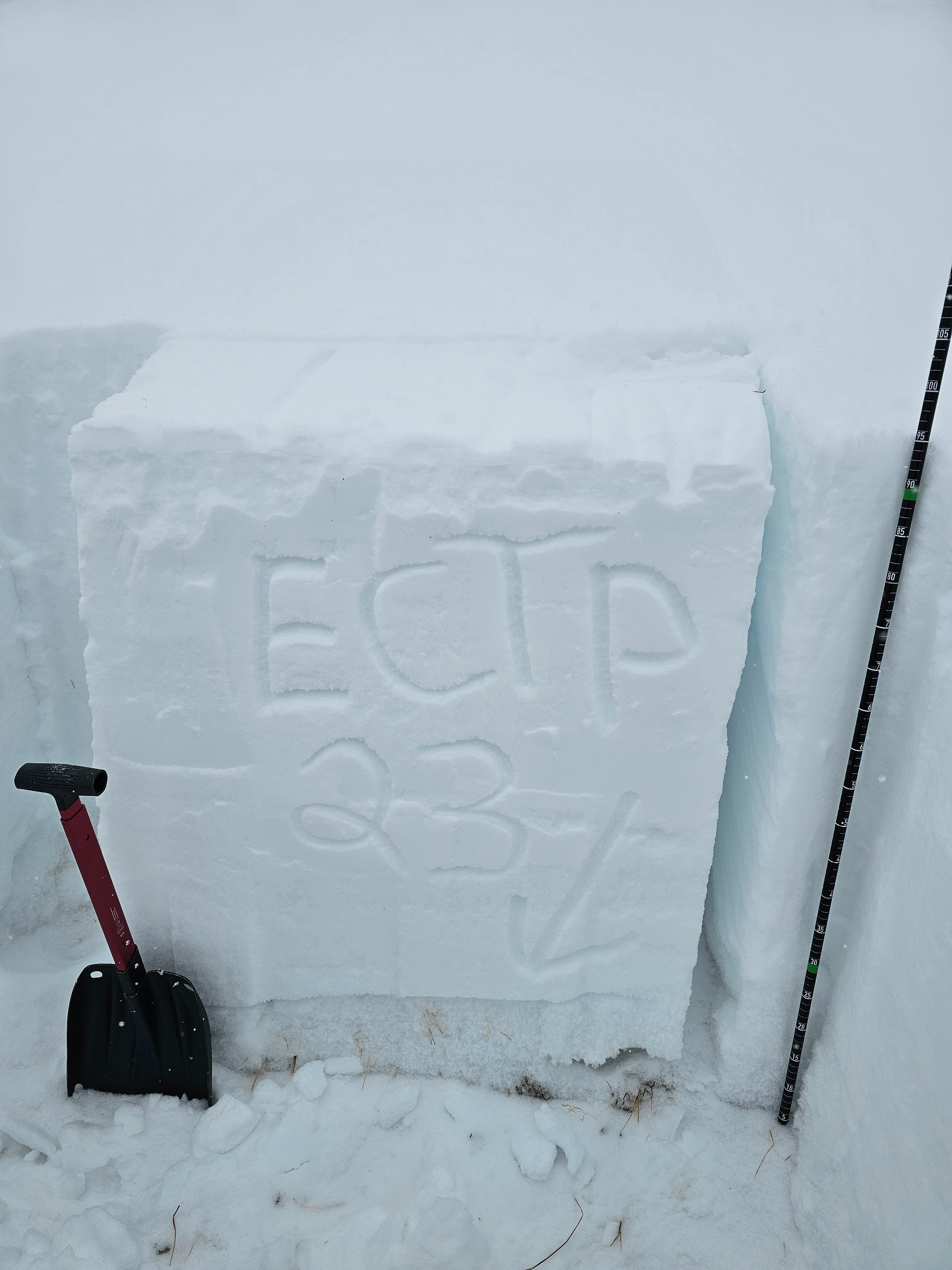
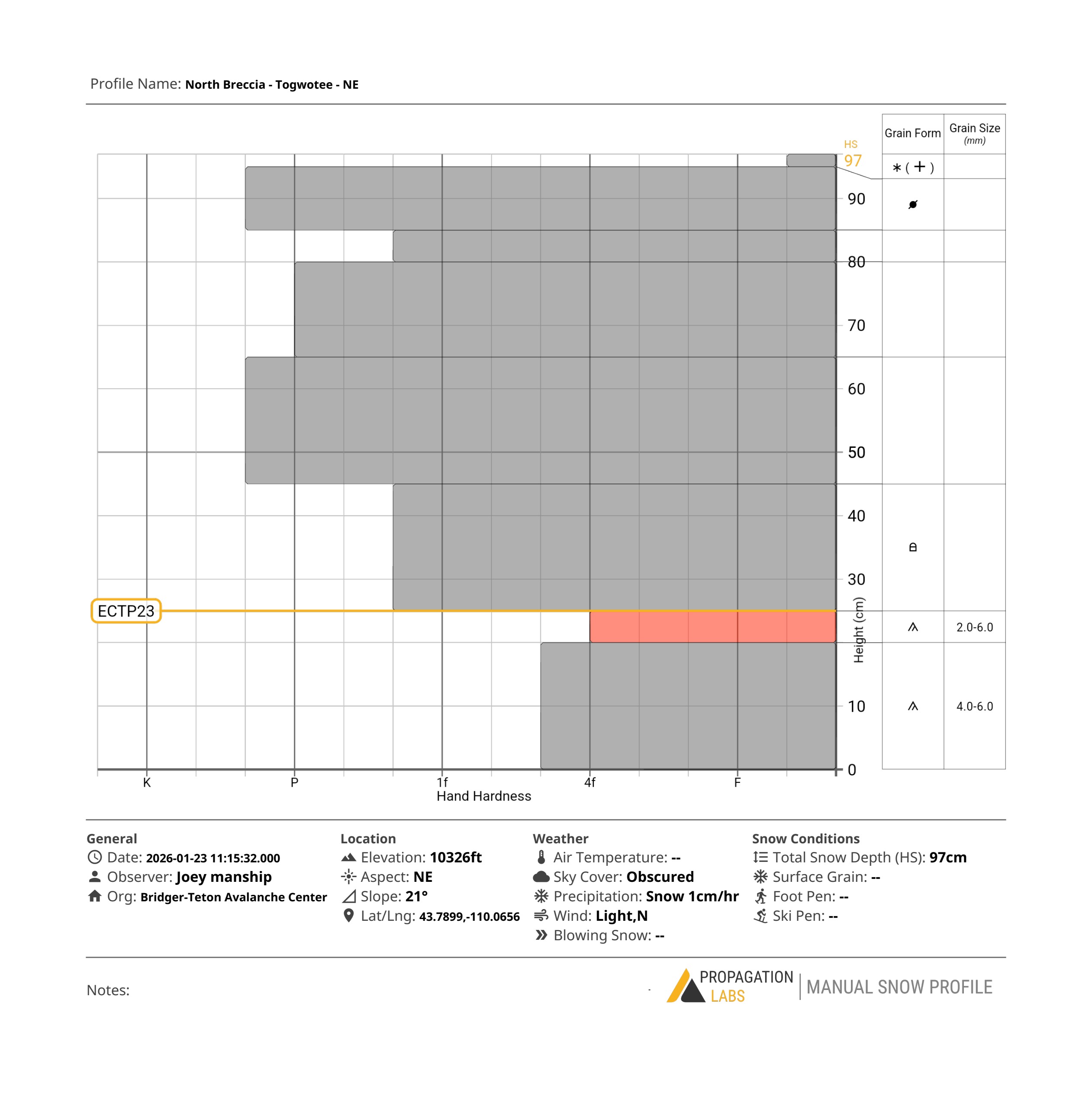
I went looking for a weak shallow snowpack to get an idea of what the snow might look like in extreme and outlier terrain. I found it. I dug on a NE slopes at 10,300', this zone has been hammered by the wind on multiple occasions so the snowpack is relatively thin.
I found three things: 1) 2cm of fresh blower snow on top. 2) 80% of the snowpack is 1F-P+ wind board, aka really hard. 3) Weak faceted snow at the ground that formed in November.
I got propagation in an extended column test (ECTP23 @25cm on 4-6mm depth hoar). While the depth hoar it failed on is large and developed it is somewhat cohesive and 4F hard at the weakest.
I don't think that this snowpit is representative of the vast majority of terrain in the Togwotee Pass area, hence Low Danger. But it is something I would take into account before heading into outlier terrain that is thin, high elevation, very steep, rocky and unsupported. Avalanches failing on this layer are unlikely, but there is still a small possibility in the terrain I just described.