
Quick report
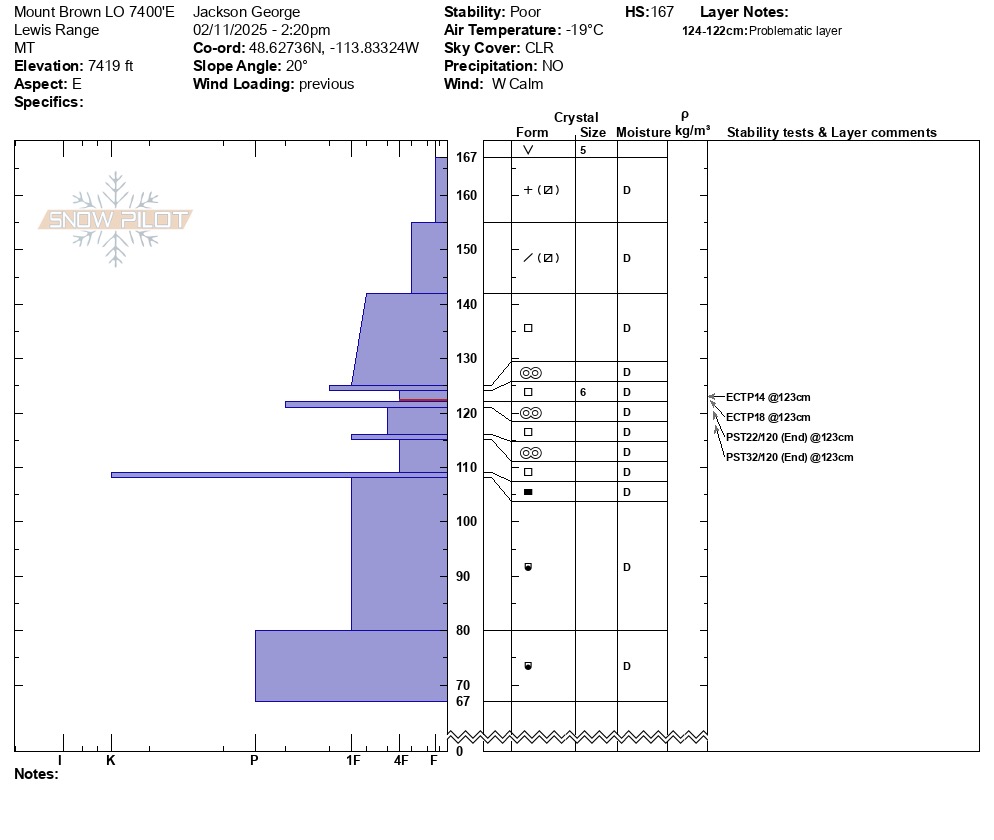
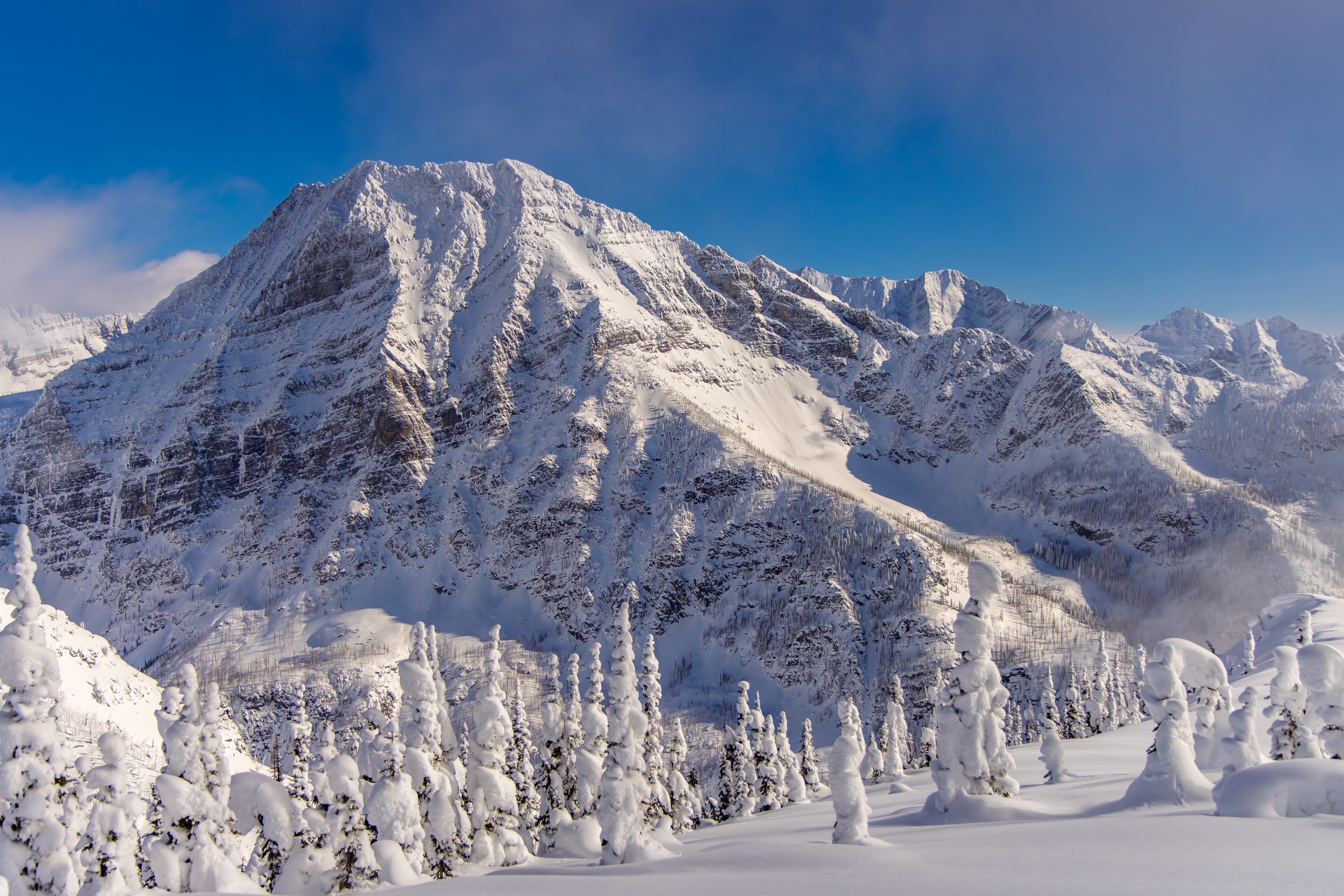
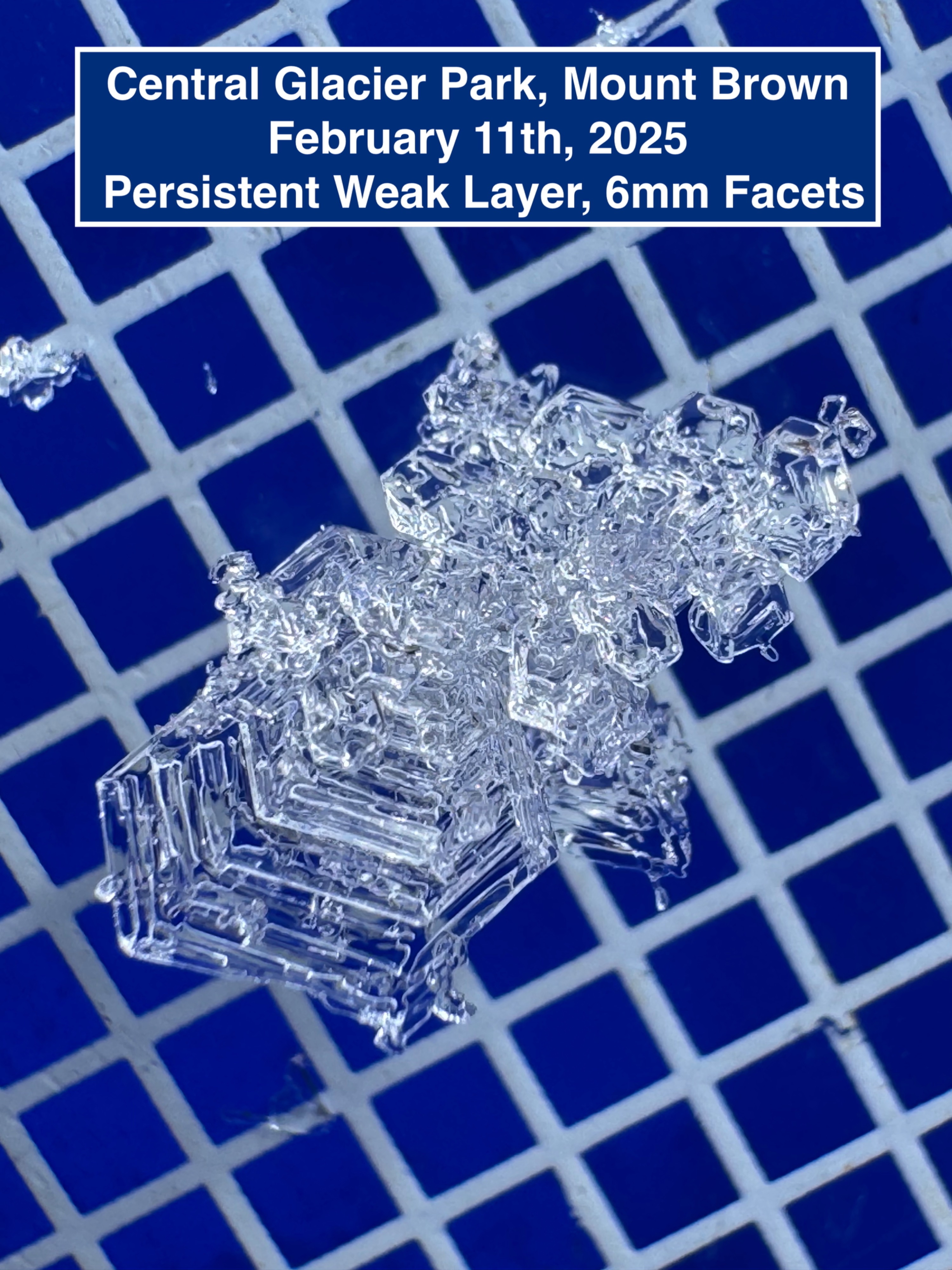
"Keep your face to the sunshine, and you cannot see the shadows." In an effort the get closer to the sun and out of the arctic shadows, we climbed thousands of feet to the historic Mount Brown Lookout. • Objectives were to scan nearby terrain for recent avalanches and search for areas that may be harboring sensitive weak layers and reactive slabs. • Nearby avalanche terrain was abundant and visibility was clear, however we came up empty handed with no recent avalanches spotted. • An east facing pit site at ~7400' revealed a brewing persistent slab problem that I think we all knew was imminent. The only question was when? Our stability tests today suggests, perhaps right now? • There's no shortage of facets to look at. But today, all of our tests kept pointing to one layer in particular. Roughly 1-2 feet below the surface, we observed a thin layer of large (6mm) facets tucked in between two thin crusts. Our tests prodded at this sleepyhead, and each time the layer jolted wide awake. -Two Extended Column Tests yielded propagating results with moderate force. ECTP14 & ECTP18. (44cm below the surface) -Two Propagation Saw Tests on the same layer. PST 22/120 (END) & PST 32/120 (END). Both of these results are recognized as unstable results. • This was more than enough evidence for us to take a few big steps back in our mindset for the day. Moving forward, we will be favoring slopes less than 30º in steepness and giving ourselves very wide margins. • We will continue to search for more evidence to better understand the reactivity and distribution of this problem. All stability tests at an upper elevation pit site yielded unstable results. ~7400' East Facing. • ECTP14, ECTP18, PST 22/120 (END), and PST 32/120 (END). • All failures occurred 44cm below the surface within a layer of faceted grains (6mm).
Weather
- Air Temp
- -2
- Cloud Cover
- few
- Wind Loading
- none
- Recent Snowfall
- 0
- Snow Avail For Transport
- moderate amounts
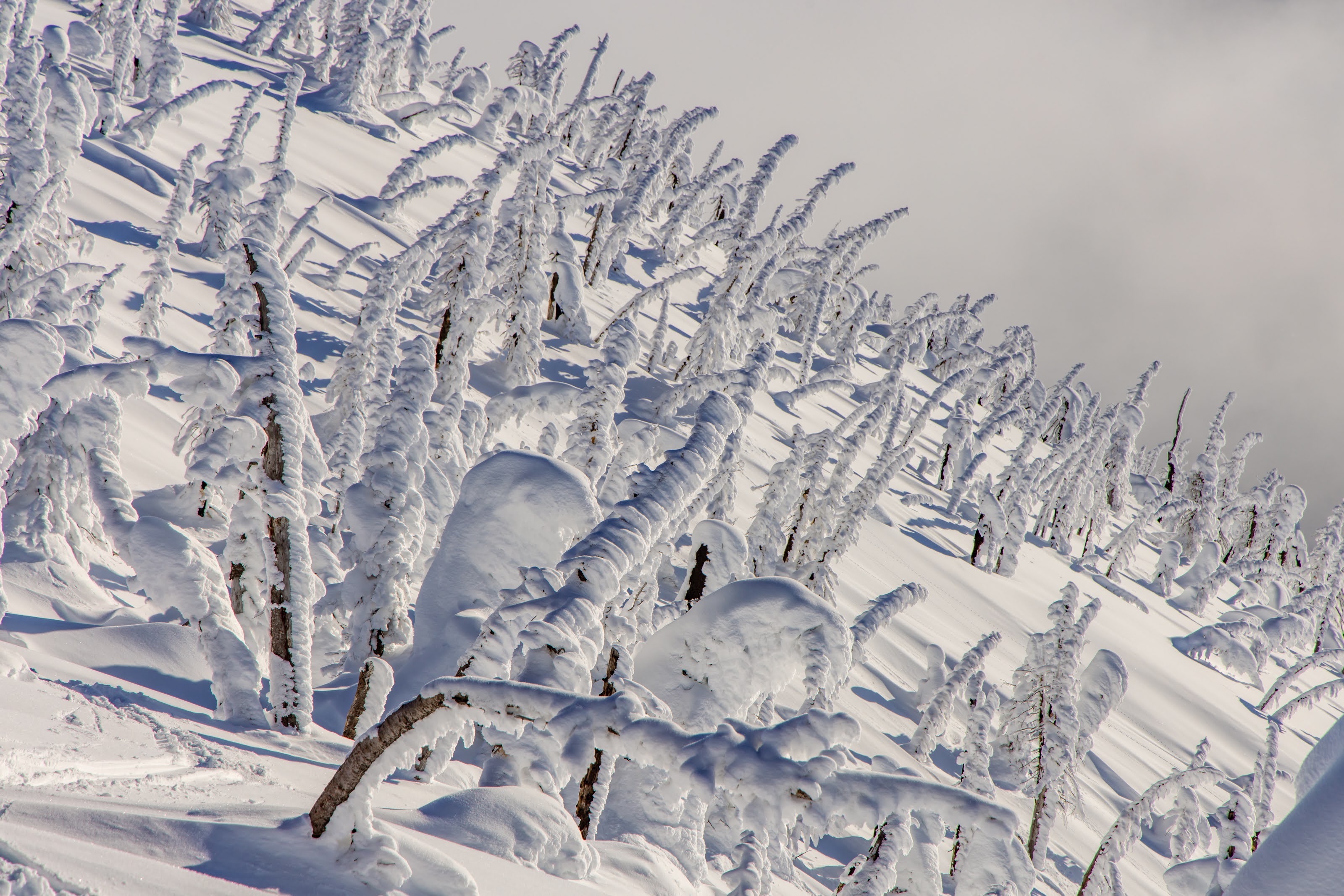
Clear, Cold, and Dead Calm up high. Our morning started under a a fragmented inversion of the McDonald Valley. As we climbed higher, temperatures moderated. And even though it was below zero all day. The complete absence of wind allowed the sunshine to really warm up our faces and lift our spirits. All while keeping the surface powder bone dry. It was quite the treat.
Snowpack
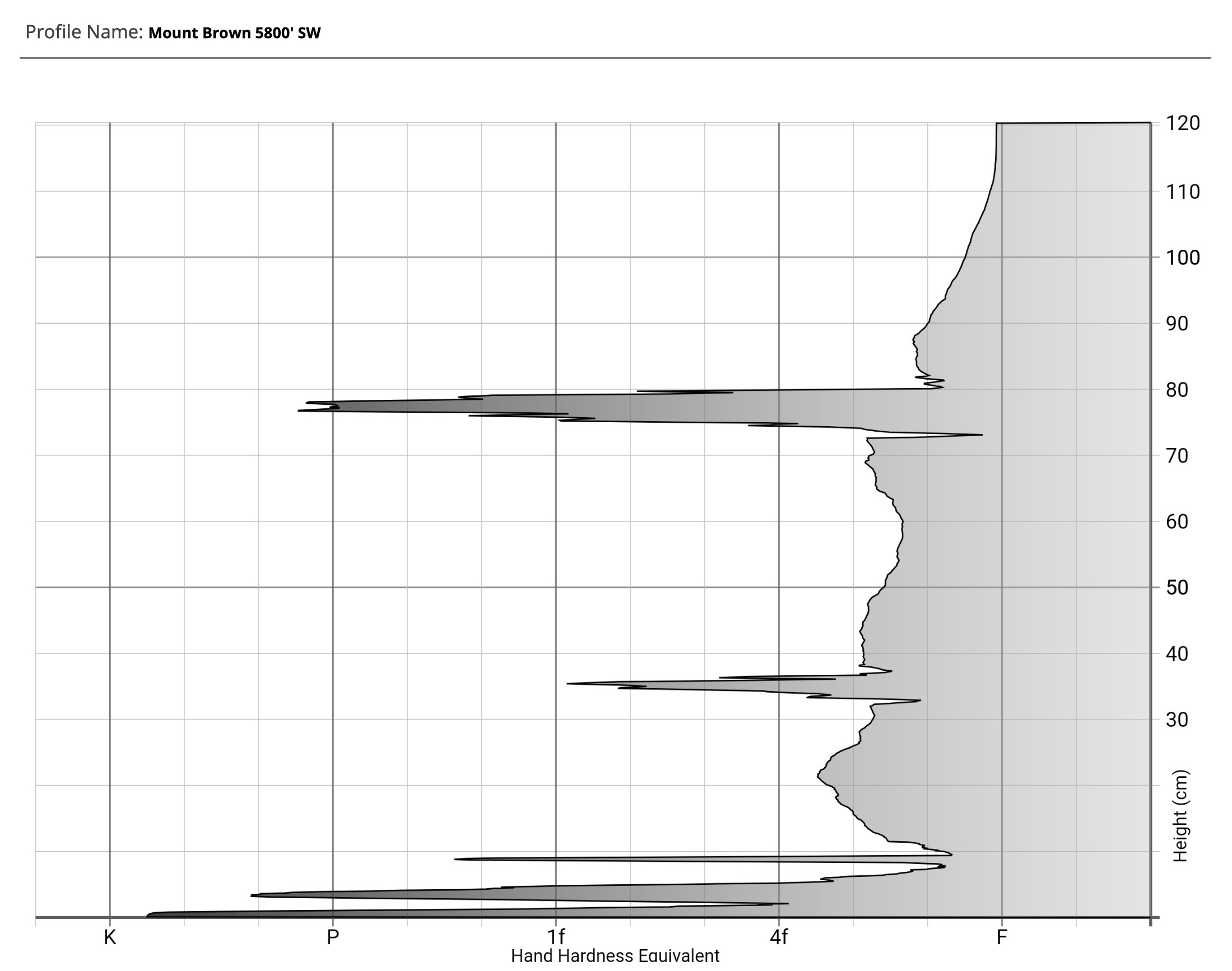
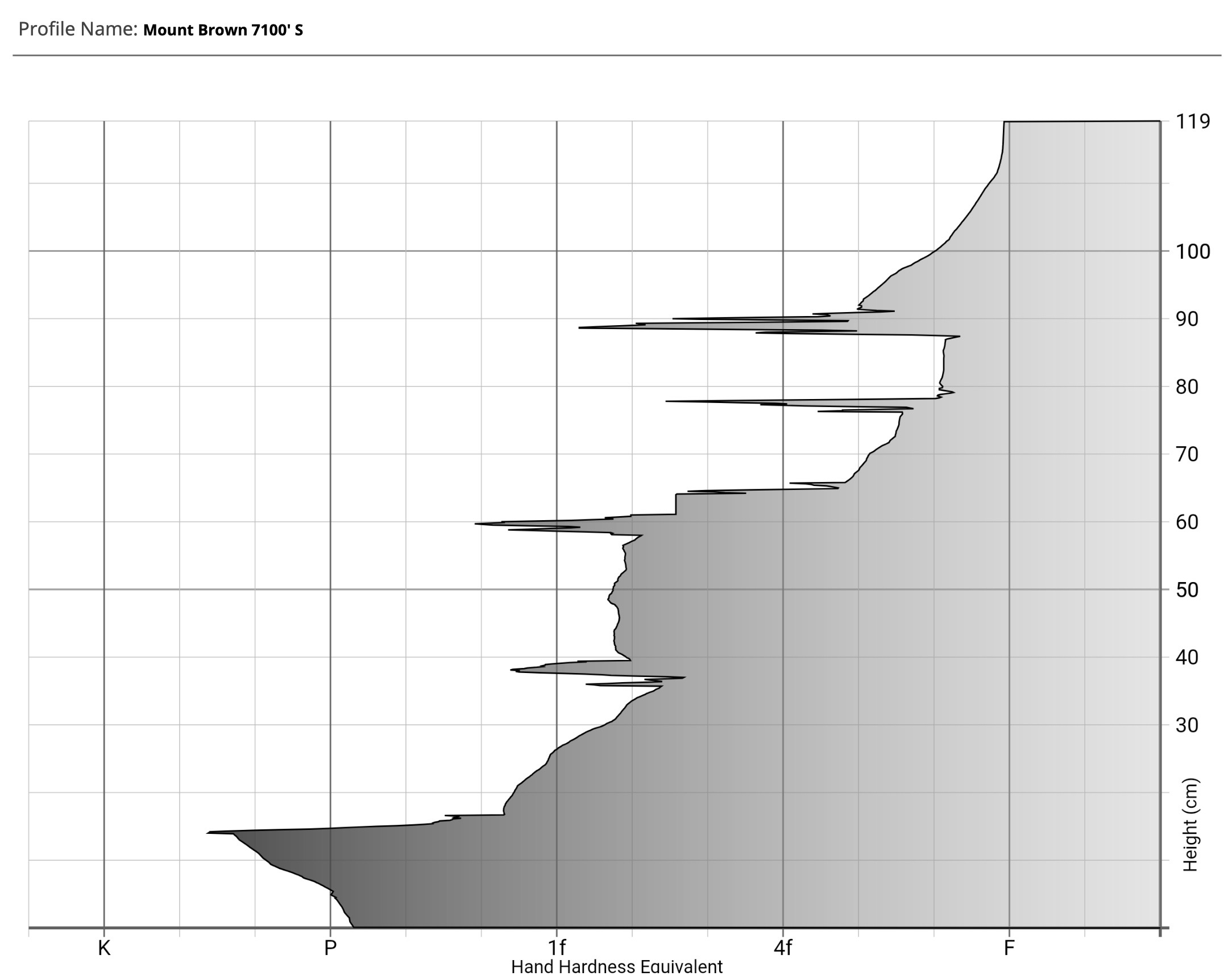
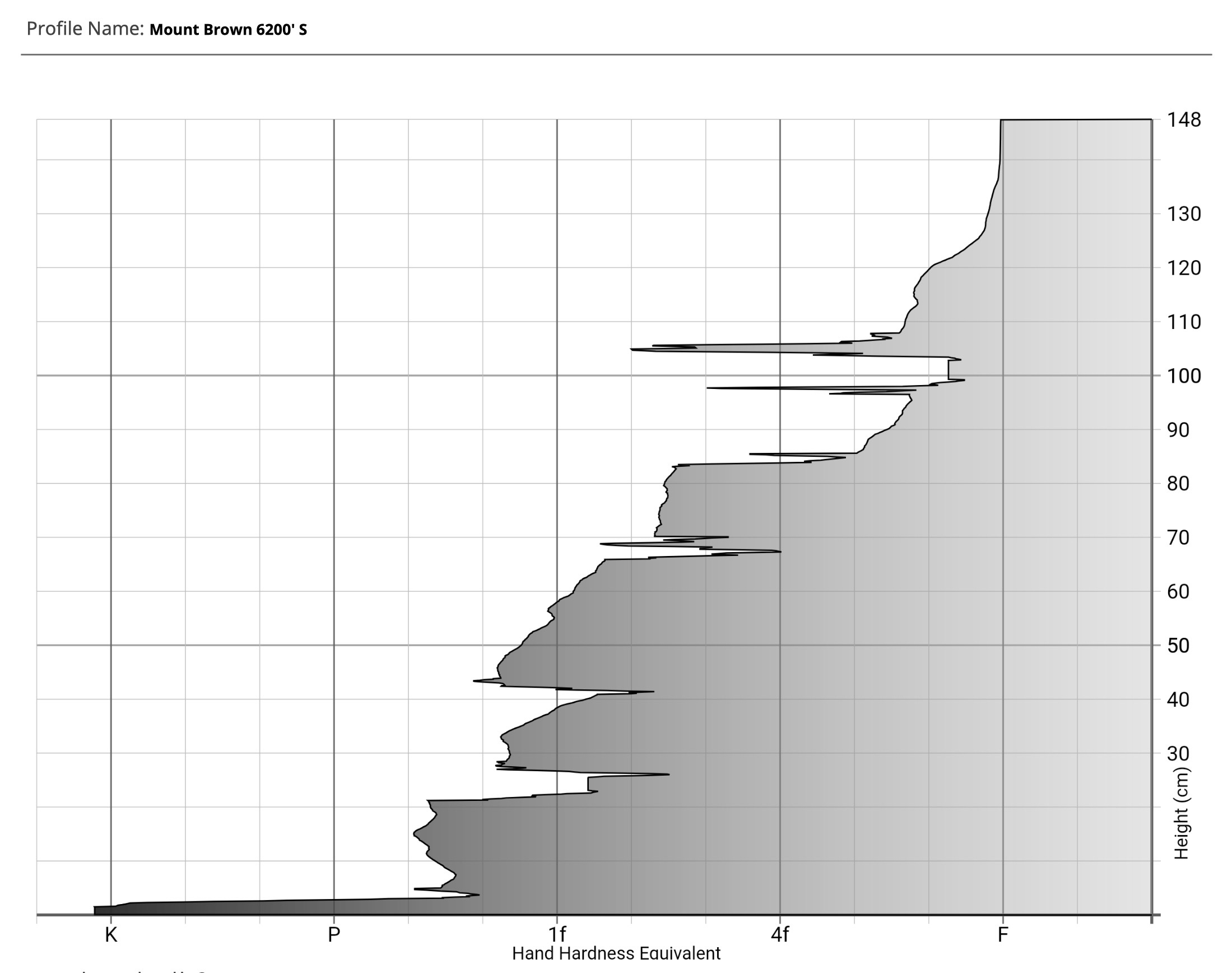
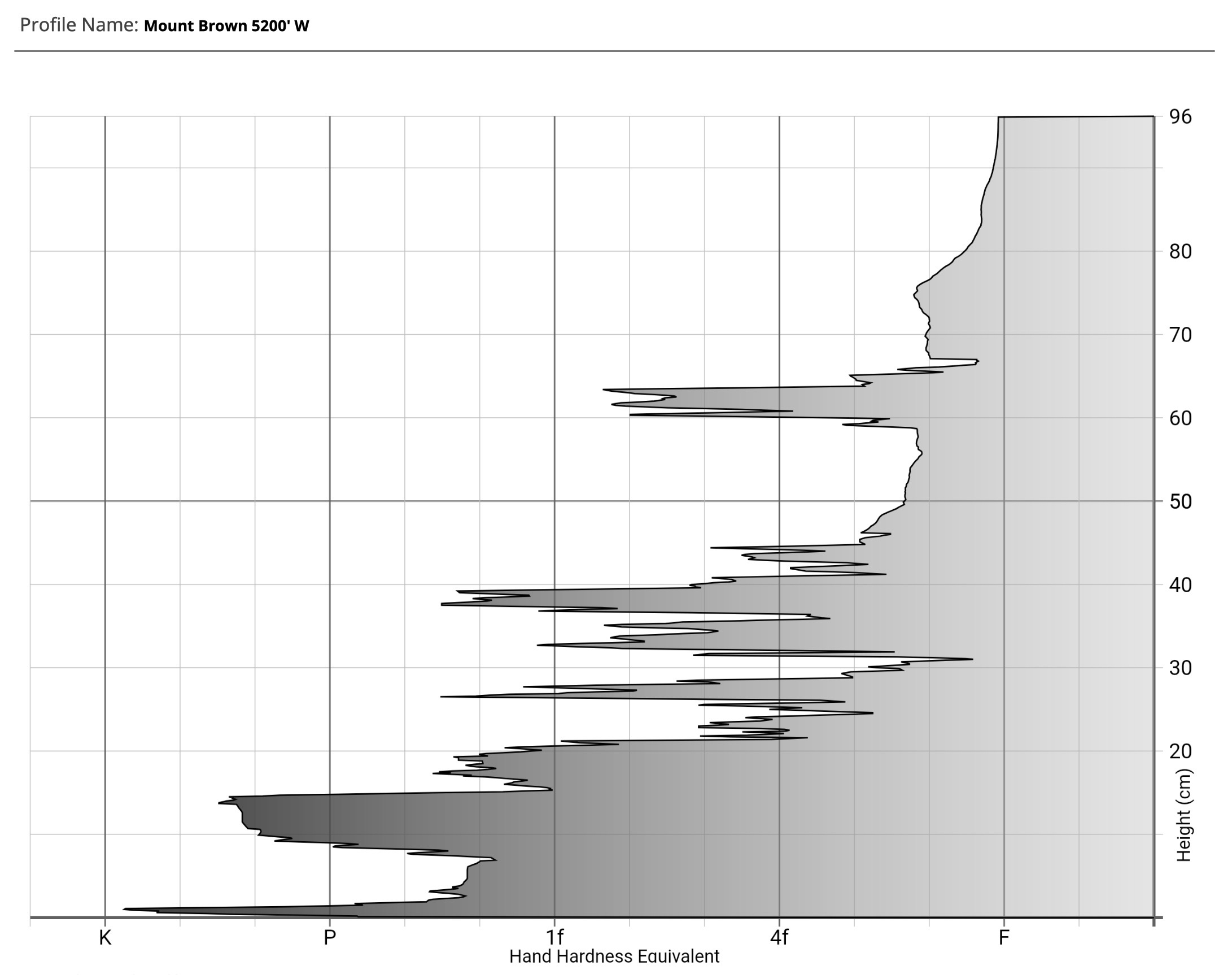
One pit dug on an east facing slope at ~7400'. • We observed a very faceted snowpack with multiple future problems brewing. • The layer of greatest concern today was a thin layer of large (6mm) facets 44cm below the surface. • Snowpilot graph with details attached. • Several Snowscope Hardness Profiles gathered on solars between ~5200' and ~7500'. A few of these profiles attached.