
Quick report
- Cracking
- specific
- Collapsing
- specific
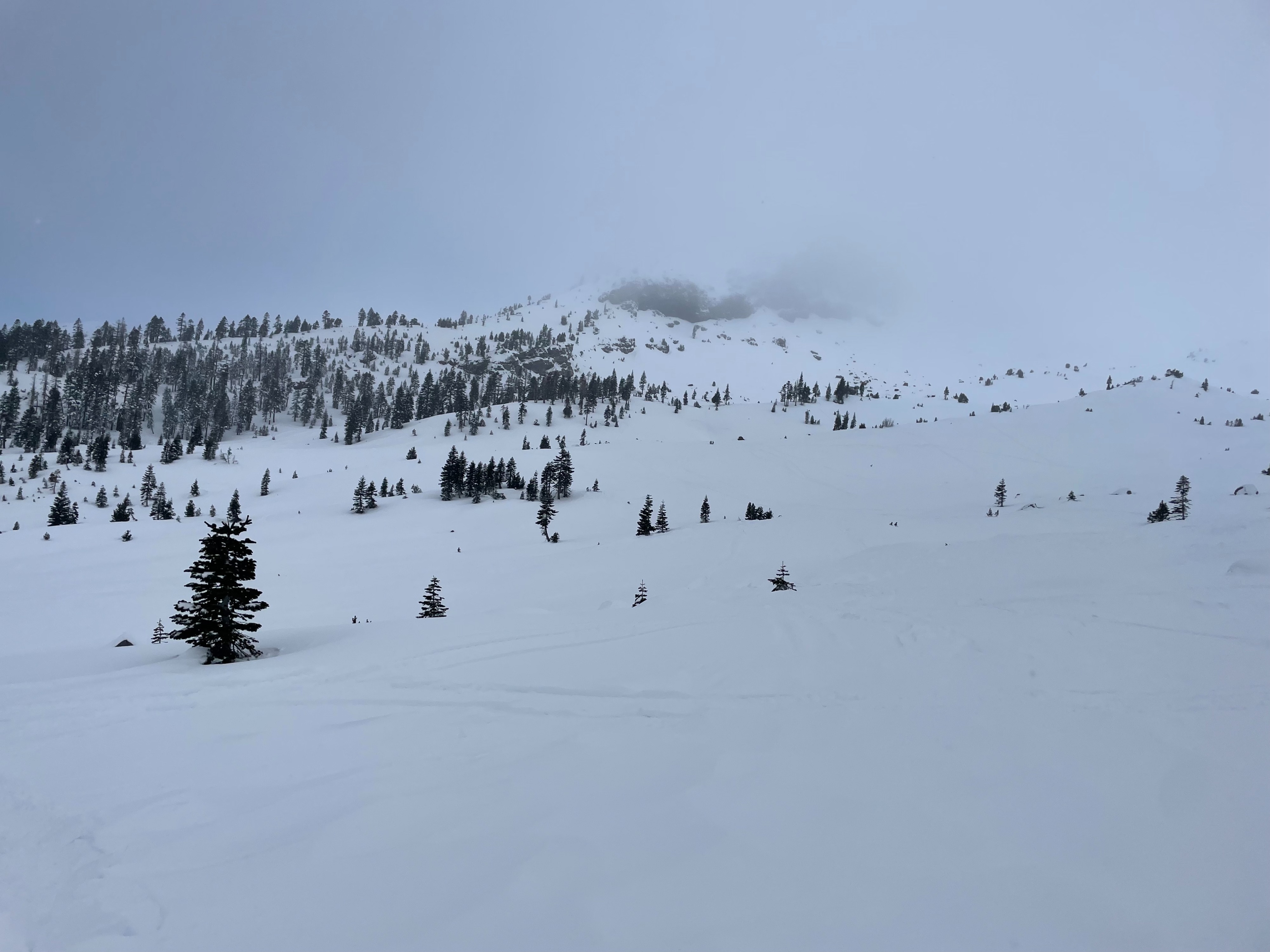
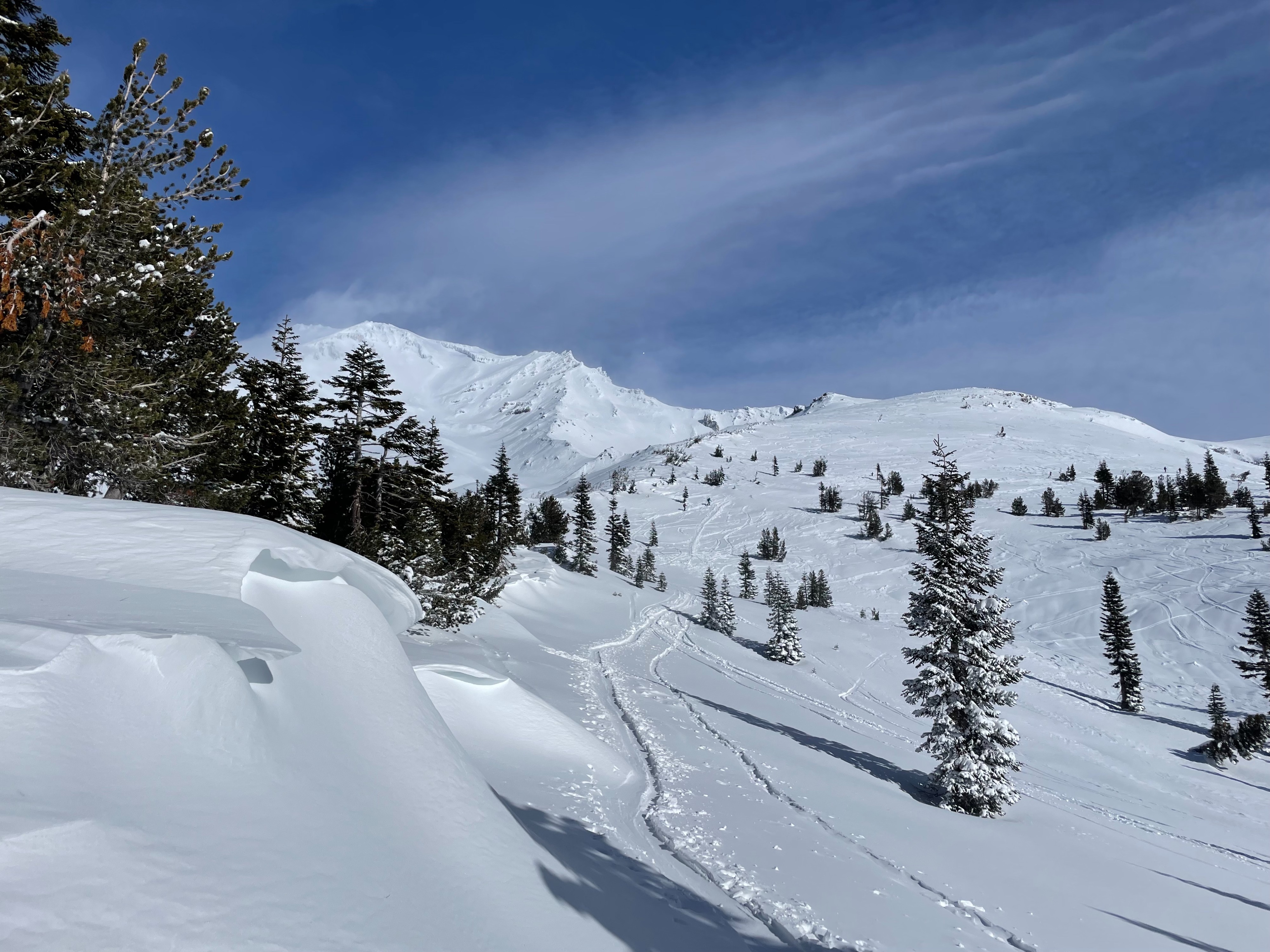
The goal for today was to get eyes on the upper mountain, and assess trends of the current wind slab problem. For the most part, the strong/extreme northwesterly winds have stripped the upper mountain down to an old snow crust. The recently fallen soft snow has been transported into gullies, chutes, and leeward slopes. In some areas, more rock is exposed compared to before this weekend's storm. The wind slab problem is currently confined to upper mountain, leeward aspects. Near and above treeline, wind slabs can still be triggered under the weight of skis.
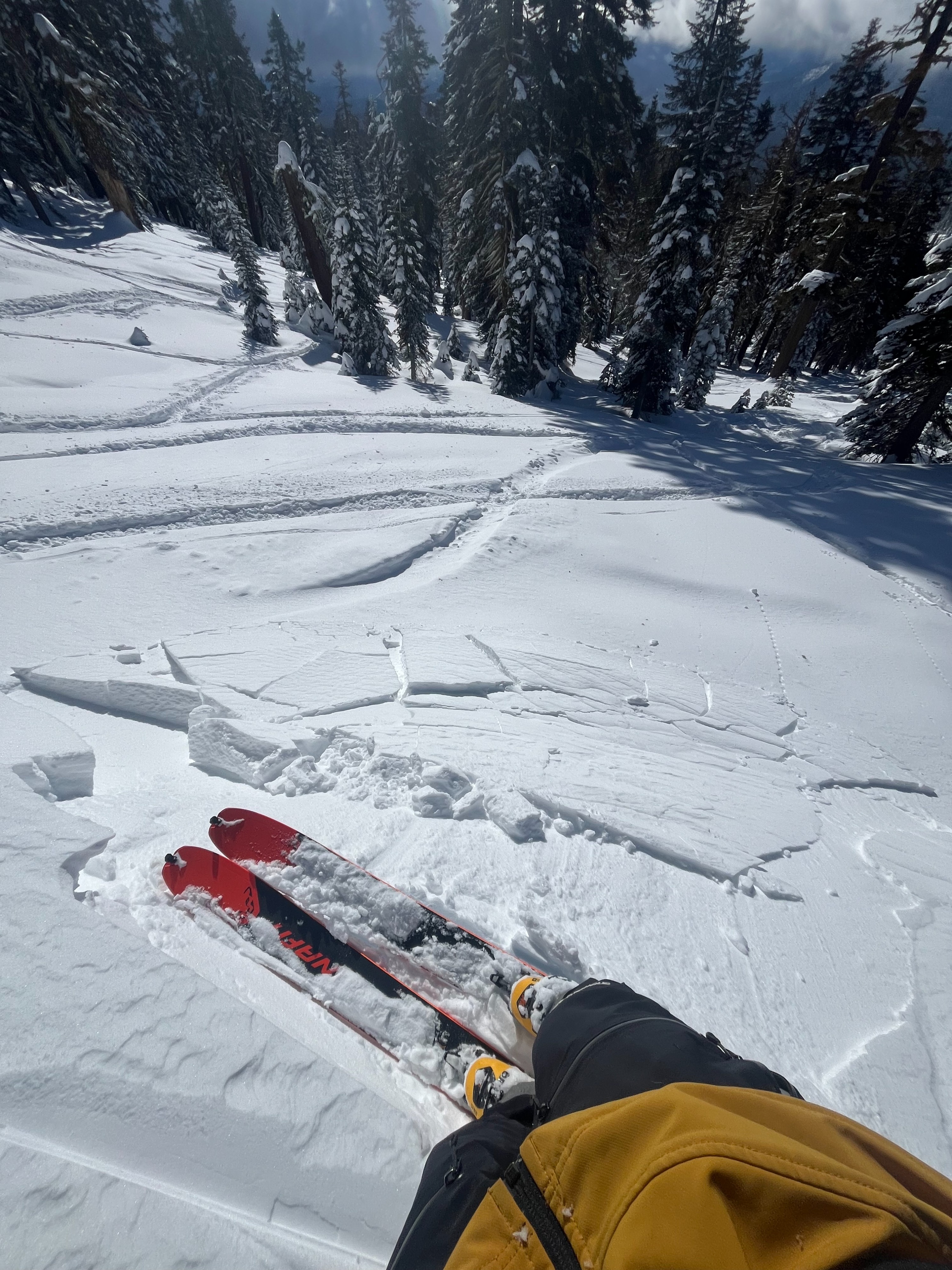
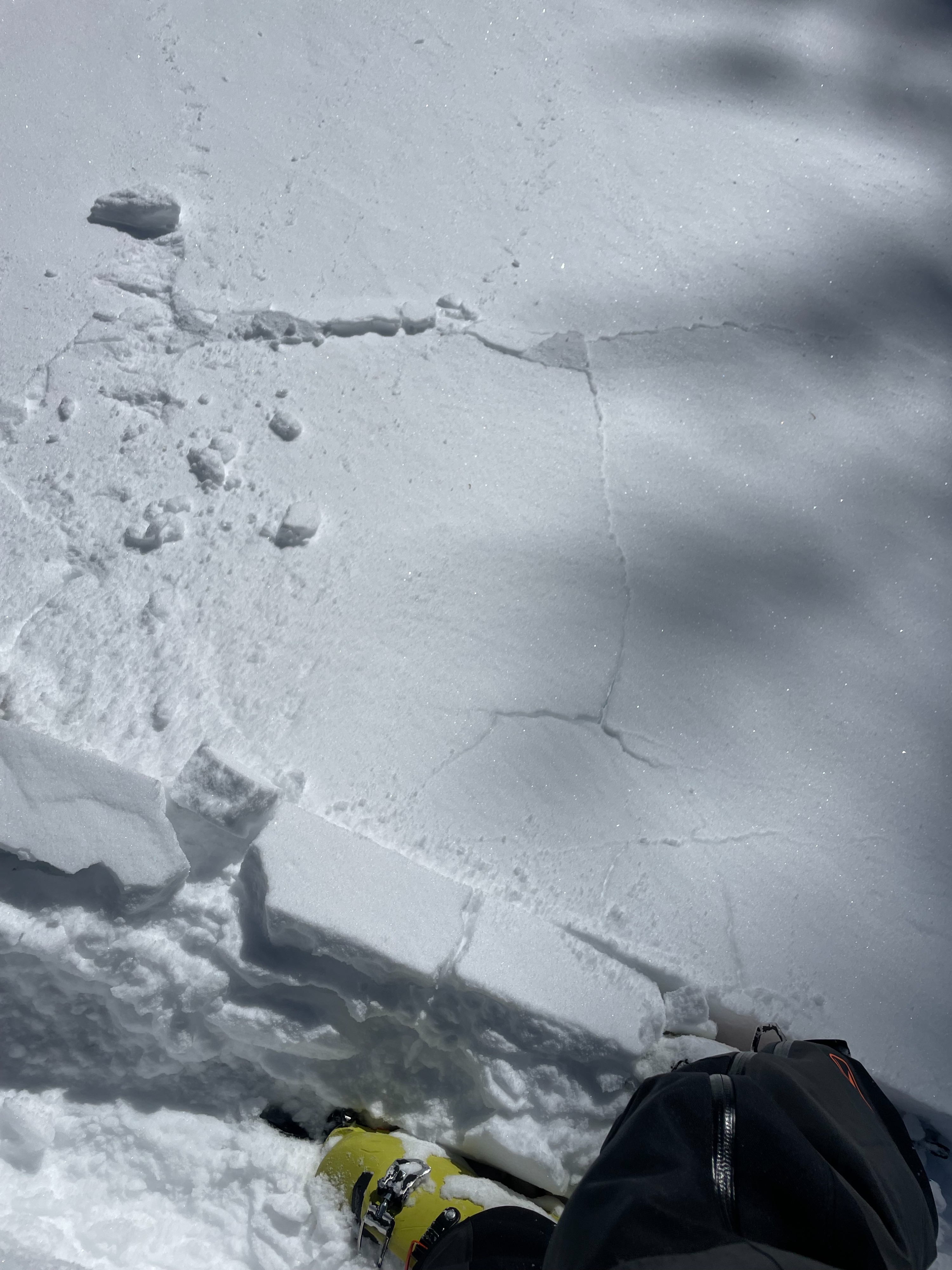
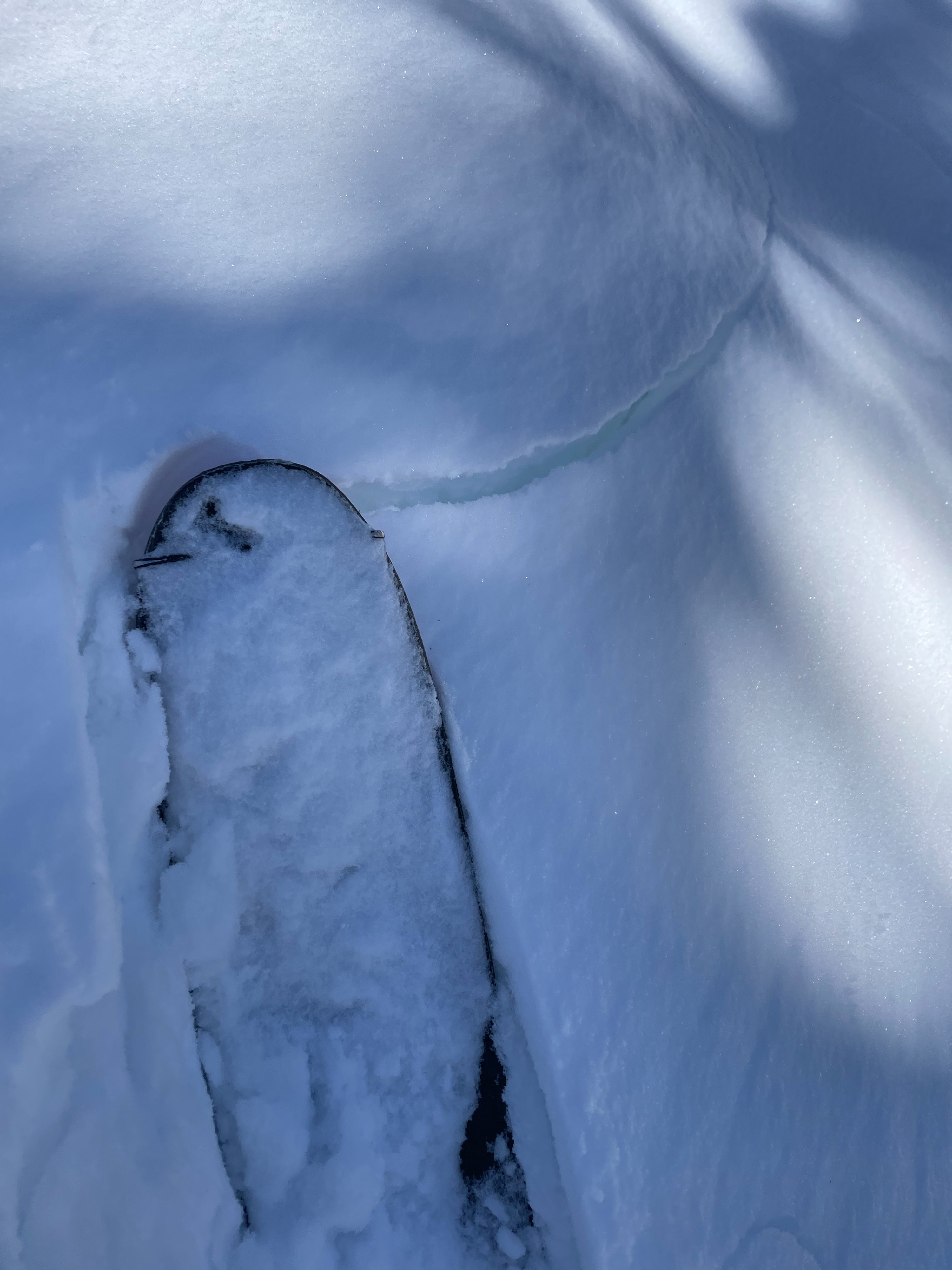
Collapsing and shooting cracks could be triggered on wind loaded slopes near and above treeline. These wind loaded slopes could be found exclusively on S-SE-E aspects. A firm step or jump would initiate failure. Most test slopes triggered slabs of about 6 inches deep and 5–8 feet wide. A skier initiated multiple whumpfs traveling uphill on a south aspect below Green Butte.Weather
- Air Temp
- 20
- Cloud Cover
- few
- Wind Loading
- light
- Rain Elevation
- 2,500
- Recent Snowfall
- ~2
- Snow Avail For Transport
- moderate amounts
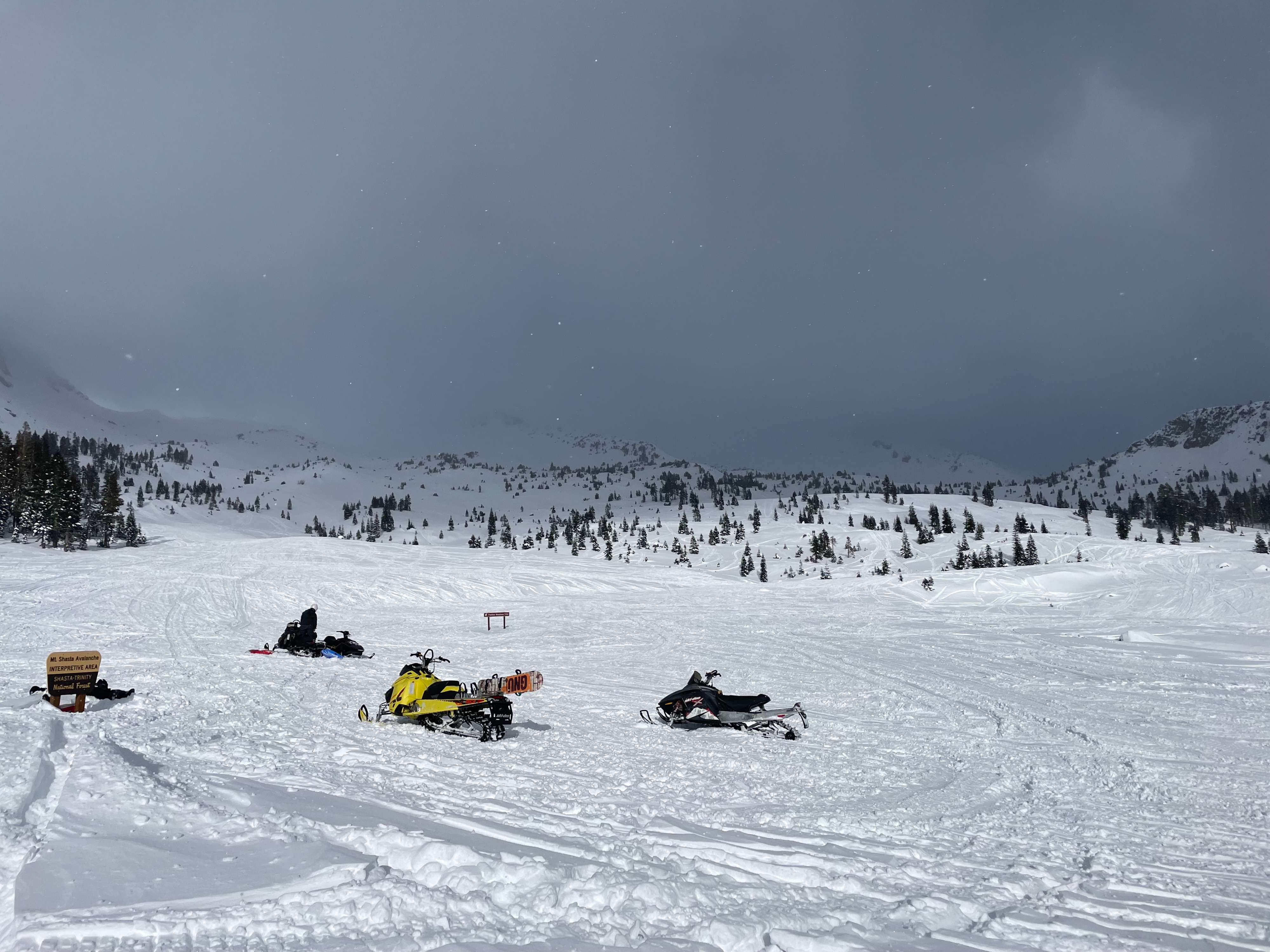
The clouds parted this morning, providing mostly sunny skies and cold temperatures all day. Winds continued to blow strong to extreme out of the northwest, before shifting to light and southerly midday. Clouds began to build around Mount Shasta in the late afternoon.
Snowpack
Below treeline, the new snow has begun to settle and stabilize. Yesterday's touchy wind loaded pockets showed far less reactivity today, often showing no signs of instability. Near treeline, reactive wind slab pockets could still be initiated with ease under the weight of skis. The incessant, strong northwesterly winds have stripped exposed ridges and slopes. This has created variable snow surfaces including wind board, soft snow, surface crusts, and sastrugi. Above treeline, exposed slopes and ridges have been stripped down to the old snow crust, often completely devoid of the new snow. Other areas such as gullies, chutes, and bowls appear to have collected the wind transported snow.