
Quick report
- Collapsing
- isolated
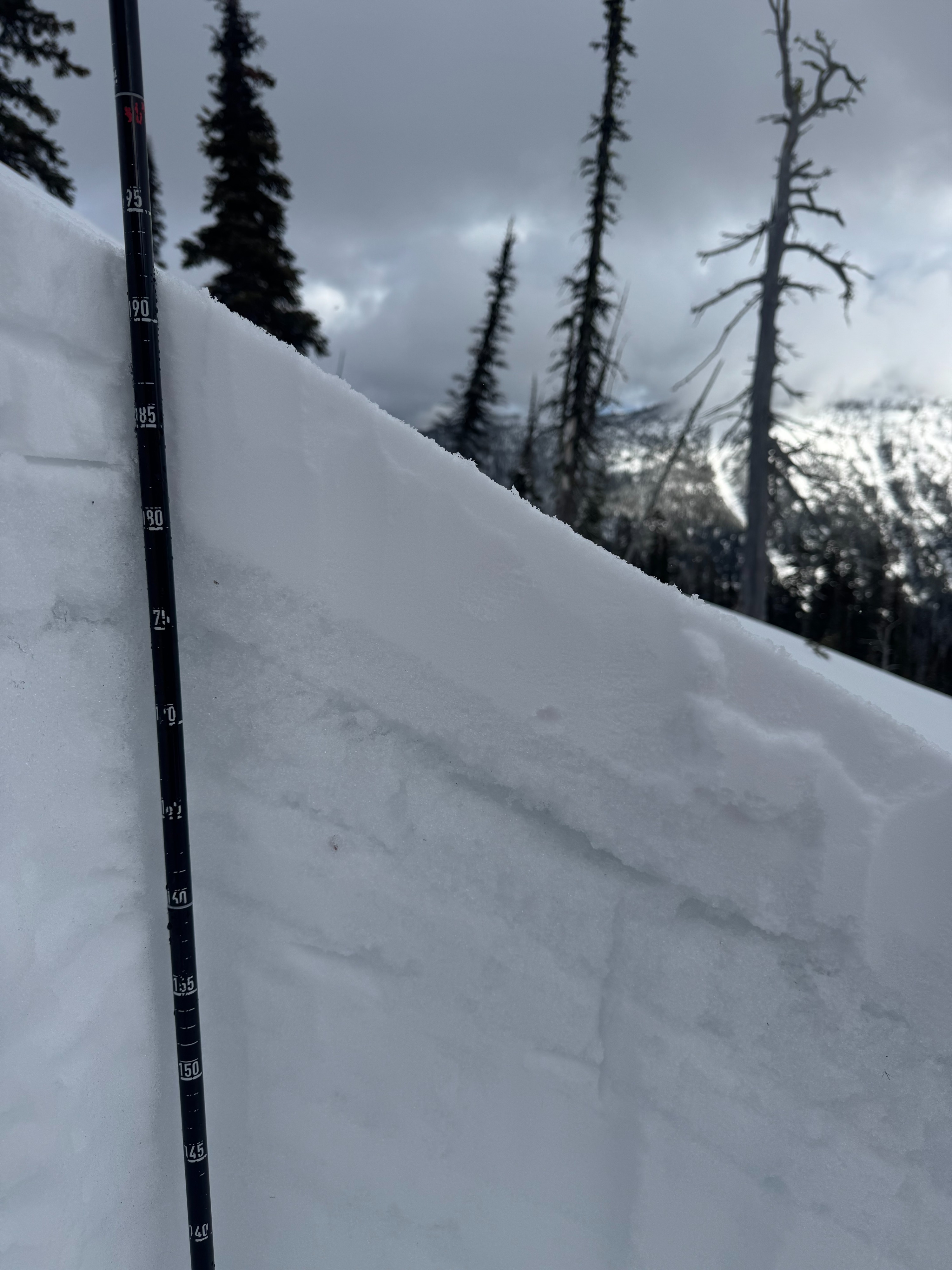
We continue to find and collapse areas where buried surface hoar is upright and intact. This typically lies above about 5,400 feet where recent wetting rains have not disturbed these looming feathers. As we climbed into the alpine, the surface hoar was void in multiple spots and the main layer of conern are small faceted grains on top of a stout rain crust from January. With limited snowpack data around 7,000 feet and above, we continue to travel with caution as lots of weak snow existed in these upper elevations before snowfall returned in late January.
Audible collapses observed were likely associated with the January 28 surface hoar layer. First collapse occured on a shelter east-facing slope near 5,500 feet and the second collapse occurred a few hundred feet higher on a sheltered southeast-facing slope. The weak layer was about 30 cm (12 inches) below the surface.Weather
- Air Temp
- 27
- Cloud Cover
- broken
- Wind Loading
- previous
- Rain Elevation
- 5500 (Feb7 rainline)
- Recent Snowfall
- trace
- Snow Avail For Transport
- small smounts
Mixed bag conditions with moments of sun, clouds, and fog. Winds were generally light and of westerly orientation. Today's sunshine did little to soften previously refrozen surfaces below the snow line.
Snowpack
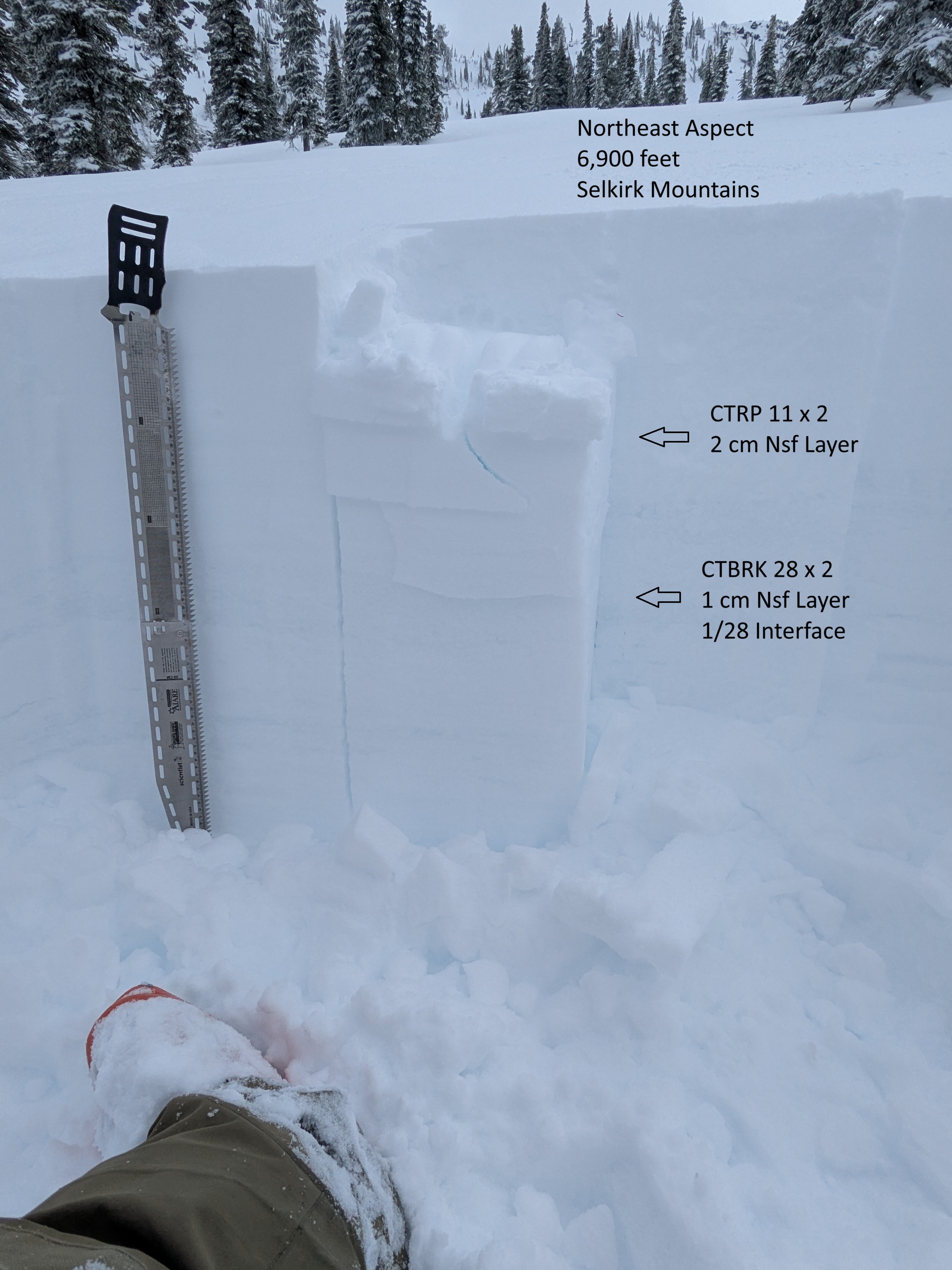
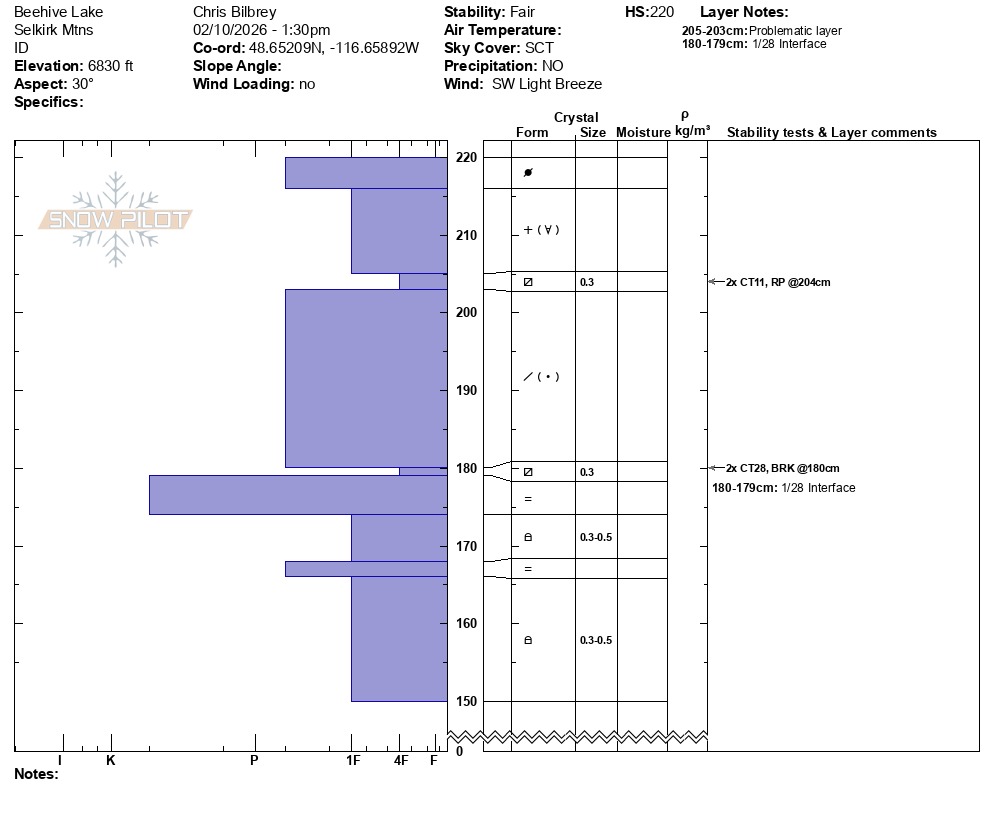
We targeted southerly slopes at middle elevations and slopes around 7,000 feet. In our south-facing snowpit around 6,300 feet, we found much more wetting/ sun affect in the top two to three feet from the surface than what we've seen on shadier slopes recently. Older crust layers are becoming sandwiched together and surface hoar lurking below has seen water and appears a less likley concern now. In our upper elevation snowpit on a northeast aspect around 6,900 feet we did not find the 1/28 surface hoar layer. Instead, we did find a thin (1 cm) layer of near-surface facets on top of a thick (5 cm) and extremely stout rain crust around a foot deep. This layer produced hard force break results in Compression Tests. Closer to the surface, a melt-freeze crust that we've been finding in most other places from a warming moment between stormy periods did not exist. However, a 2 cm layer of near-surface facets exists in its place. This layer produced resistant planar results in Compression Tests and will be something to monitor if snowfall returns and a slab forms above. The rain-snow line from last weekend was around 5,400 feet leaving a hard but fast-traveling surface crust at elevations below that.
Avalanche
none observed