
Quick report
- Cracking
- widespread
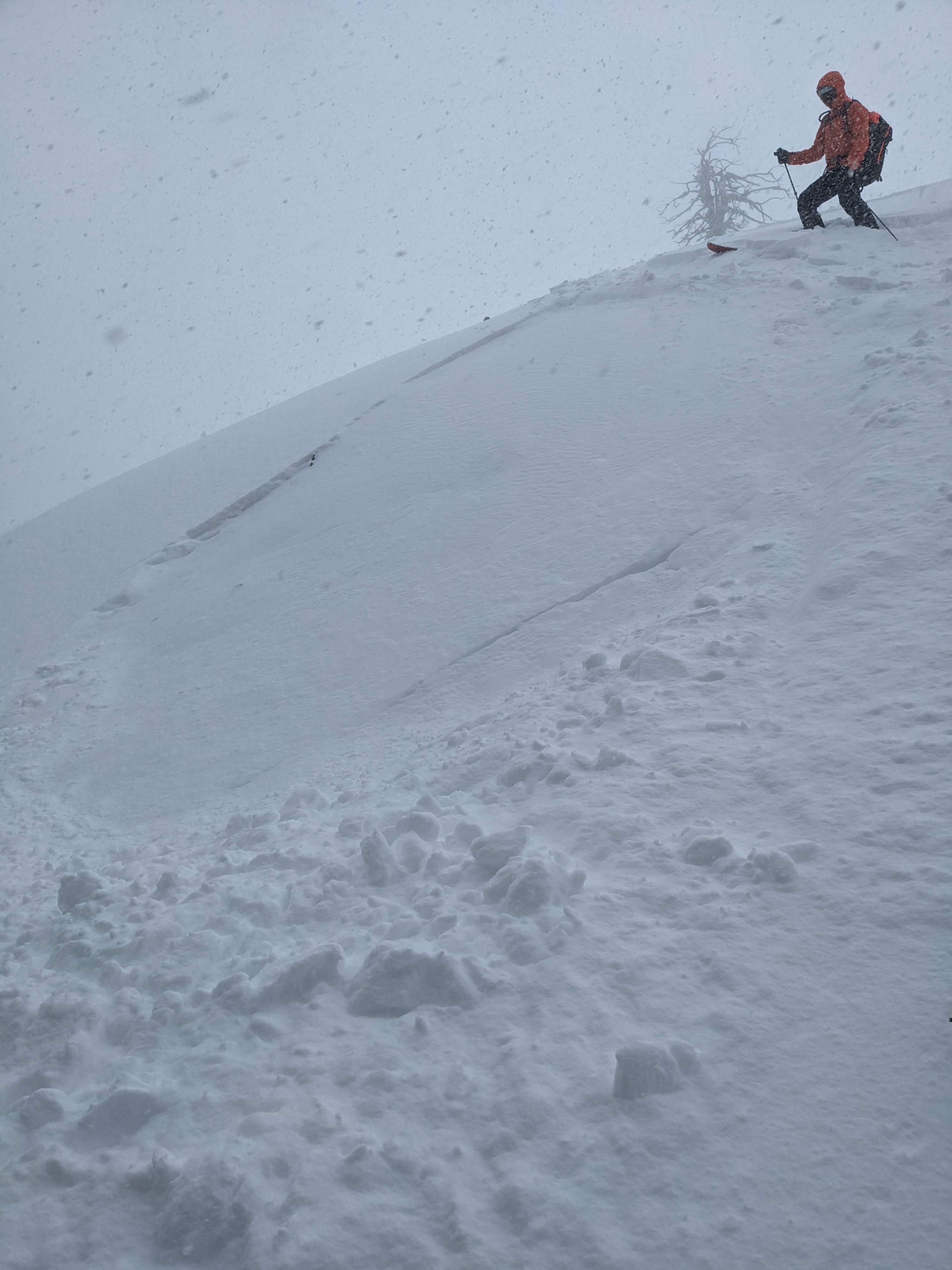
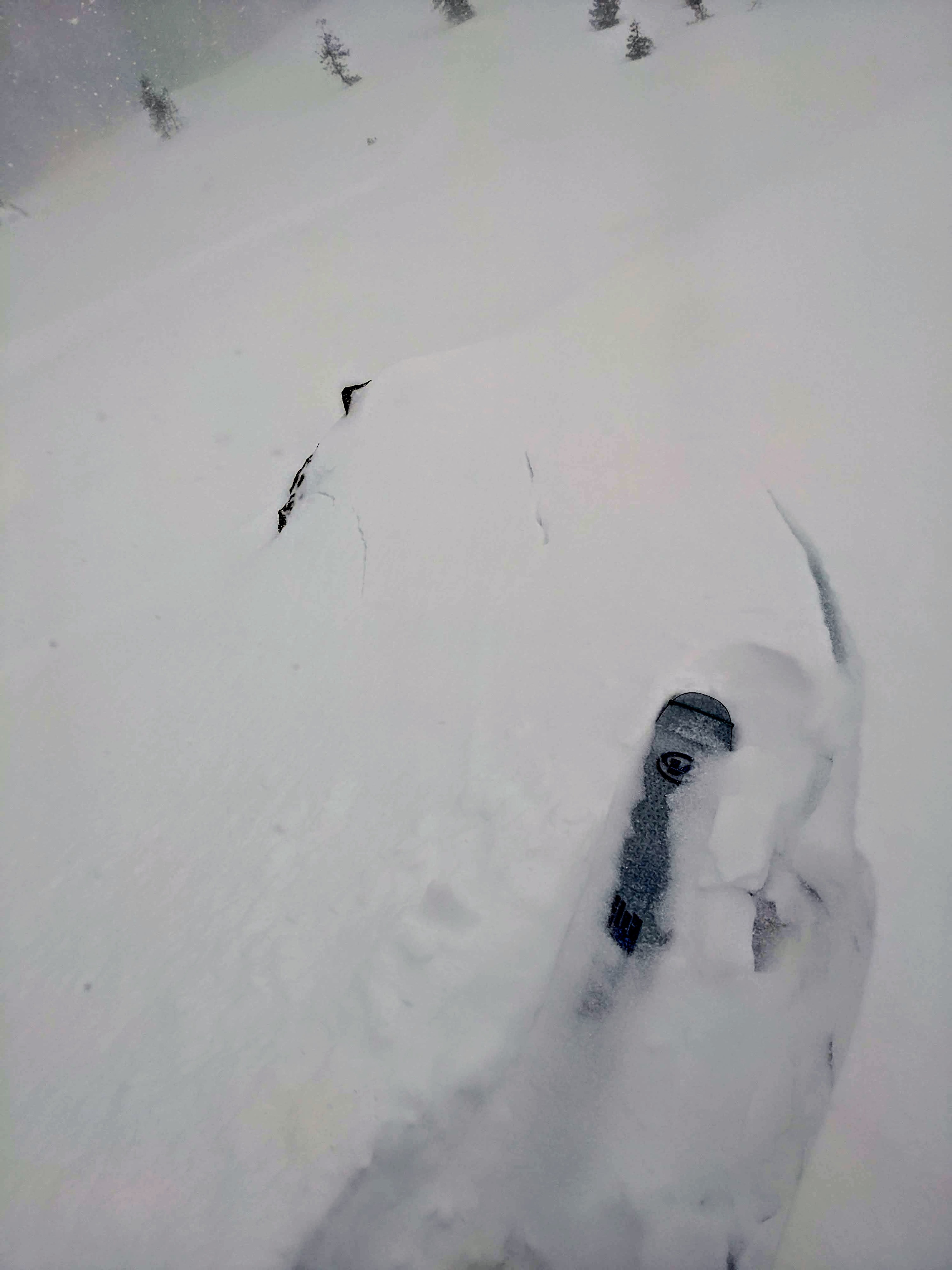
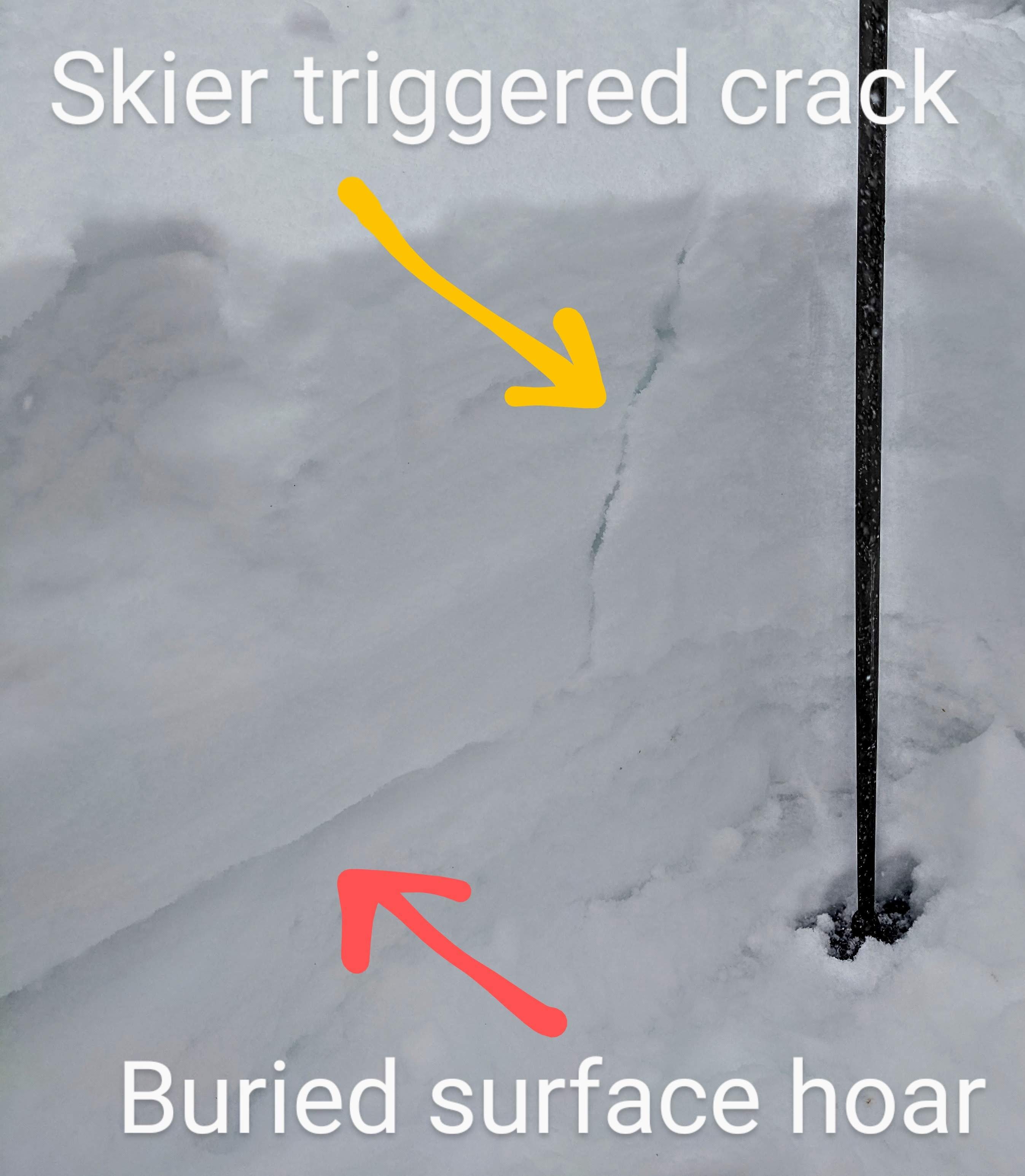
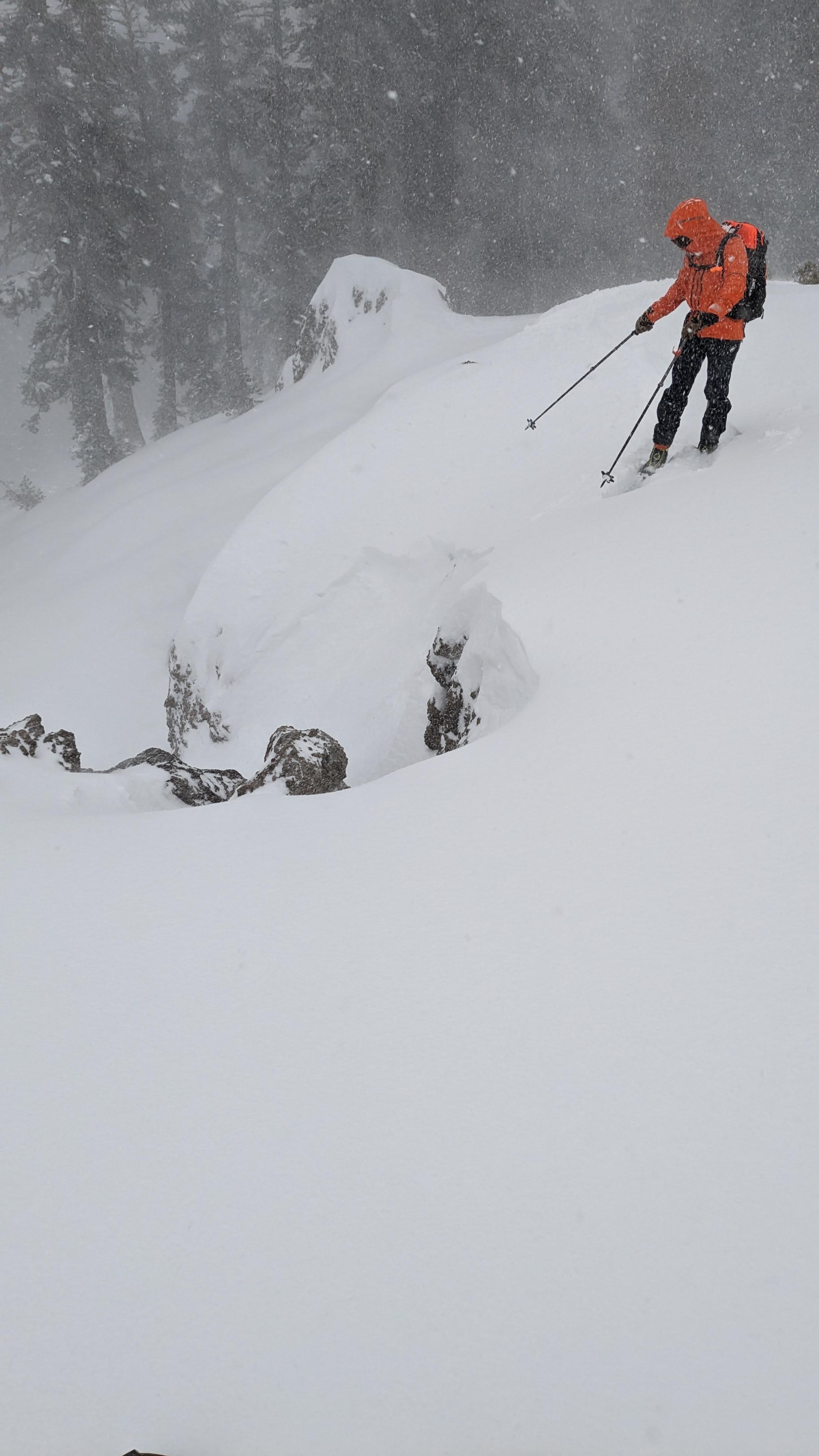
We started to see signs of unstable snow almost as soon as we started our tour. By noon, rapid snow accumulation and blowing snow had already formed unstable wind slabs on wind-loaded slopes, and the first wind-loaded test slope we kicked failed easily. A few minutes later, we triggered shooting cracks that failed on surface hoar layer buried about 14 inches deep. We kept triggering shooting cracks and test slope failures to the top of Andesite Peak. These included wind slabs, cracks on buried surface hoar, and cracks on other buried weak layers like weak snow near crusts. The signs of unstable snow grew larger and more widespread during the afternoon. We used conservative terrain choices during our tour.
We triggered several test slope failures in wind-loaded areas. We also experienced widespread cracking that failed on weak layers in the old snow like buried surface hoar or weak sugary snow (facets) near crusts.Weather
- Air Temp
- 19
- Cloud Cover
- overcast
- Wind Loading
- intense
- Recent Snowfall
- 20
- Snow Avail For Transport
- large amounts
During our tour, snowfall rates reached at least 2 inches per hour. We experienced strong winds and intense blowing snow in exposed areas, and temperatures stayed in the teens.
Avalanche
- Size
- D1 R1
- Type
- SS
- Aspect
- E
- Trigger
- AS
- Elevation
- 7890 ft
We intentionally triggered a small wind slab avalanche with ski kicks at the top of this path on Andesite Peak. We also triggered test slope failures on other small test slopes. In the most wind-loaded areas on the ridge, the wind slabs were ~ 30 - 35 cm thick. In the less wind-loaded places like this, they were only 10-15 cm thick. Sometimes, the cracks that formed as the wind slab failed went deeper into the snowpack, down to either a buried surface hoar layer or a layer of facets near a crust. See the attached ob for more details.