
Quick report
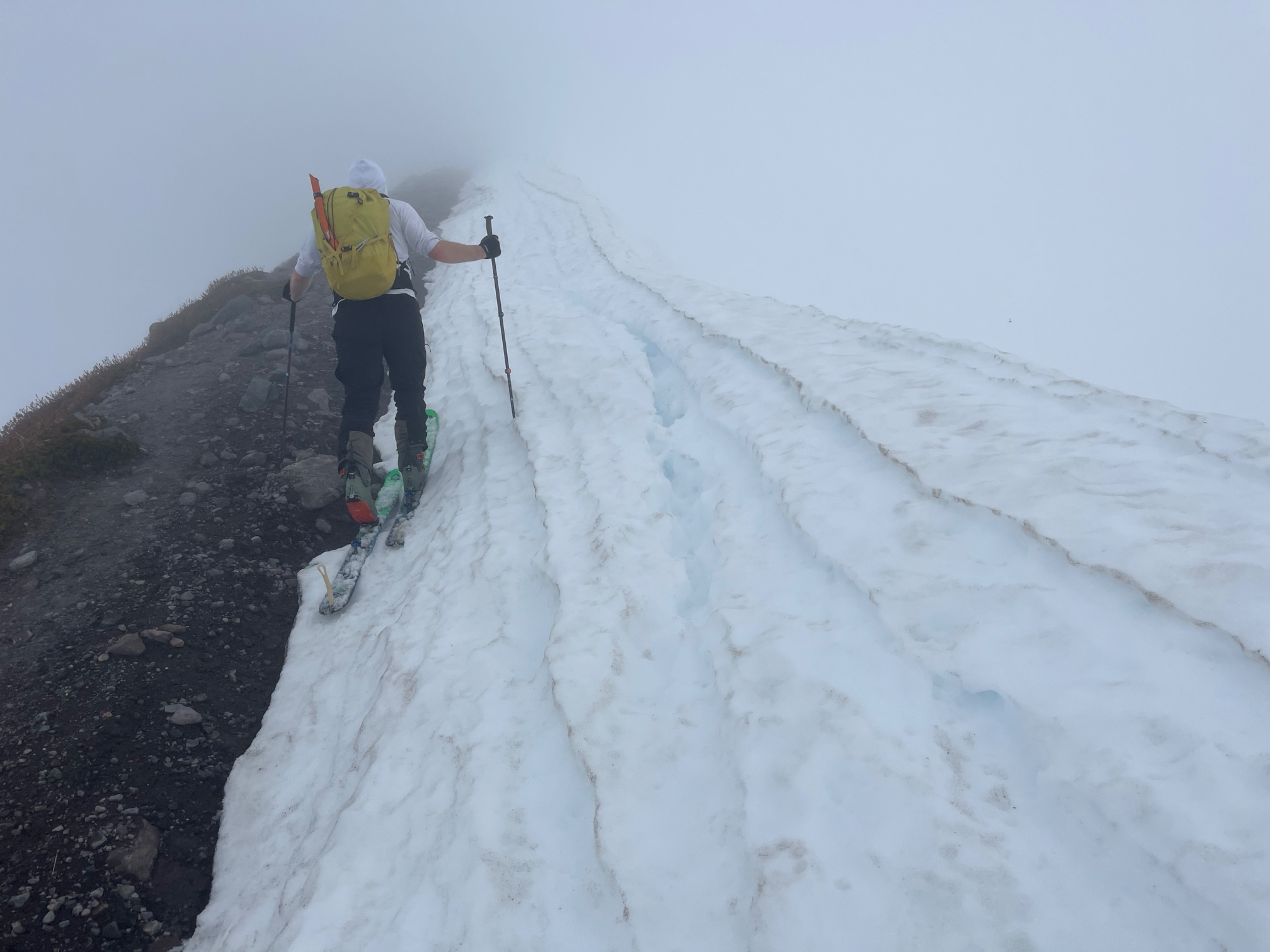
Conditions seemed a lot more like mid-June than early May, but after getting over the walk to access snow, the journey on skis was still a pleasant experience. Due to a shorter day and a perfectly-placed bathtub ring of clouds covering about 4000-6000ft, we chose to travel up and down the railroad grade to quickly get observations above the cloudline and retreat back the way we came.
The snow was well-transitioned to a spring snowpack everywhere we traveled. It was rapidly melting out at lower elevations and around rock and dirt patches at any elevation. Aside from patchy areas at lower elevations, snow was mainly supportable on foot, with steps sinking a variable 6 inches deep. Only the top 1-2 inches was impacted by skis.
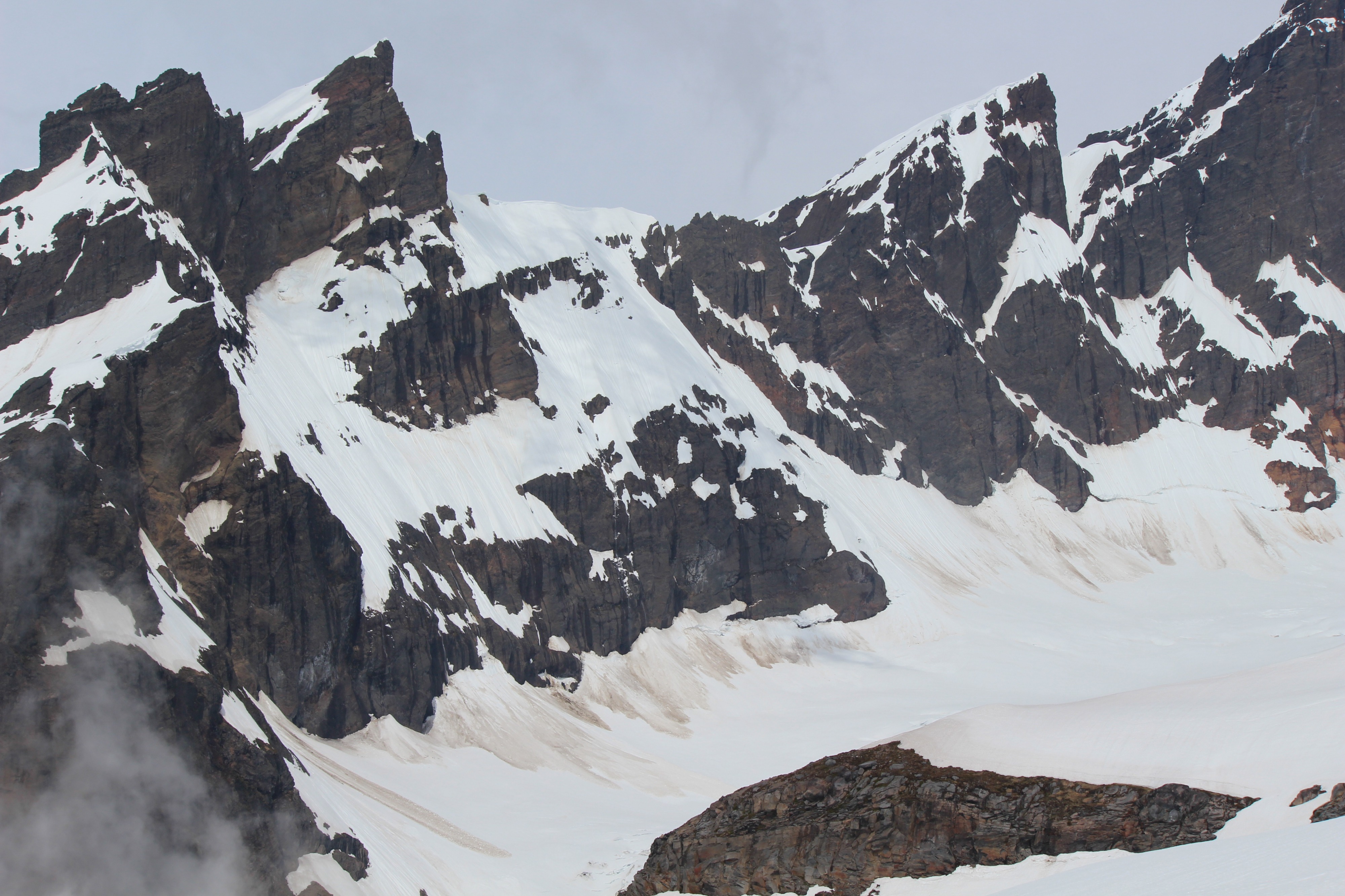
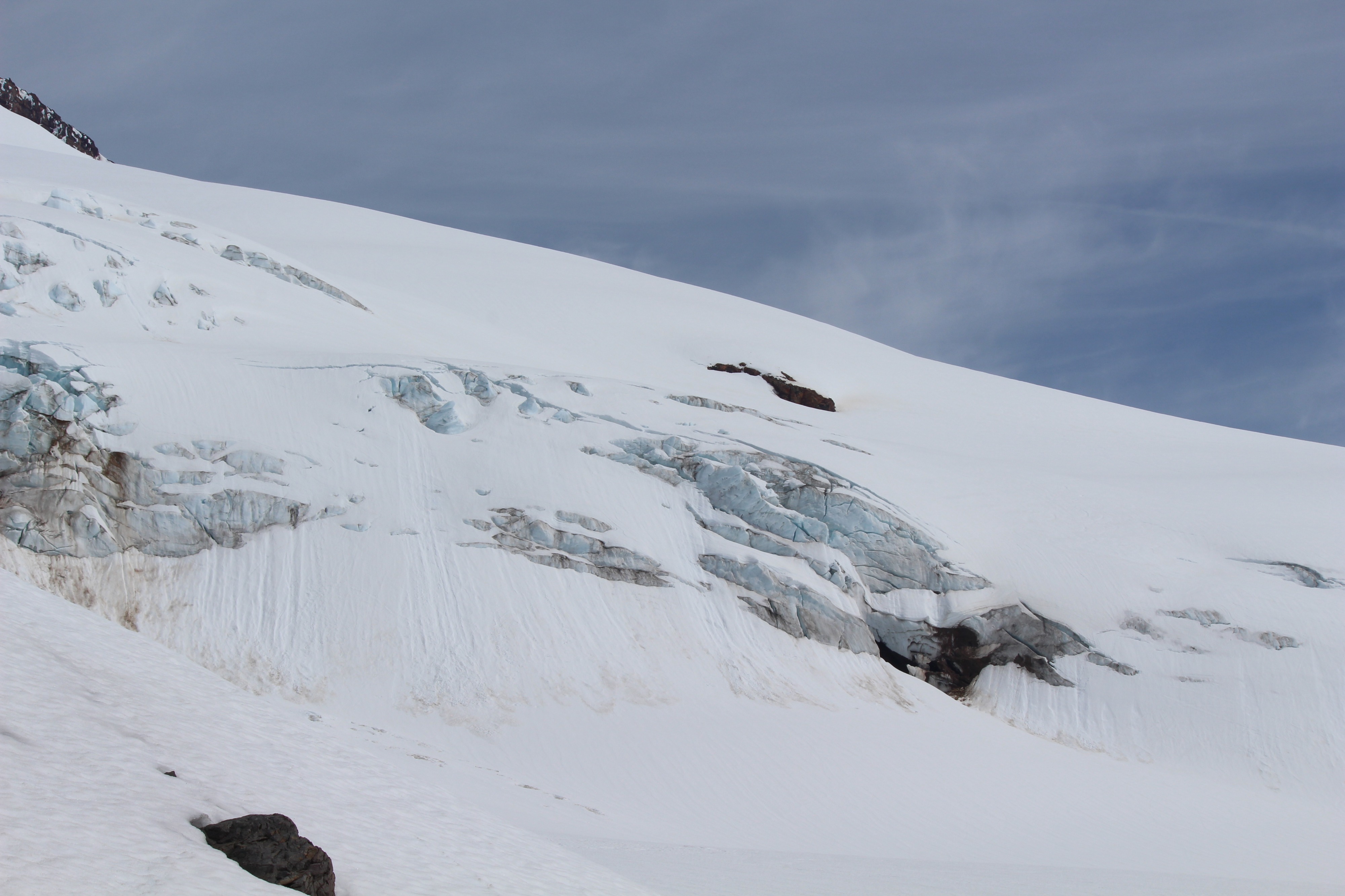
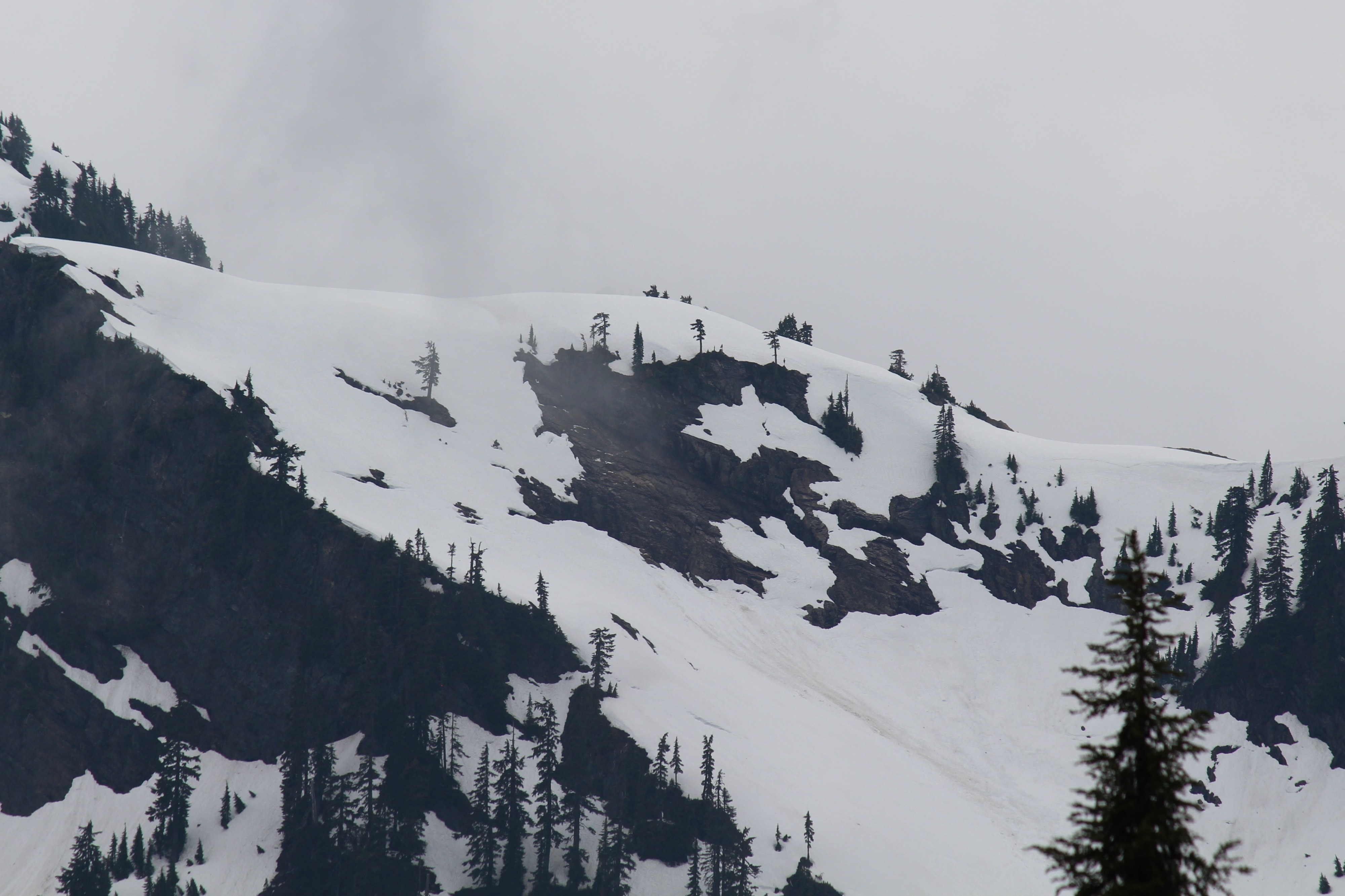
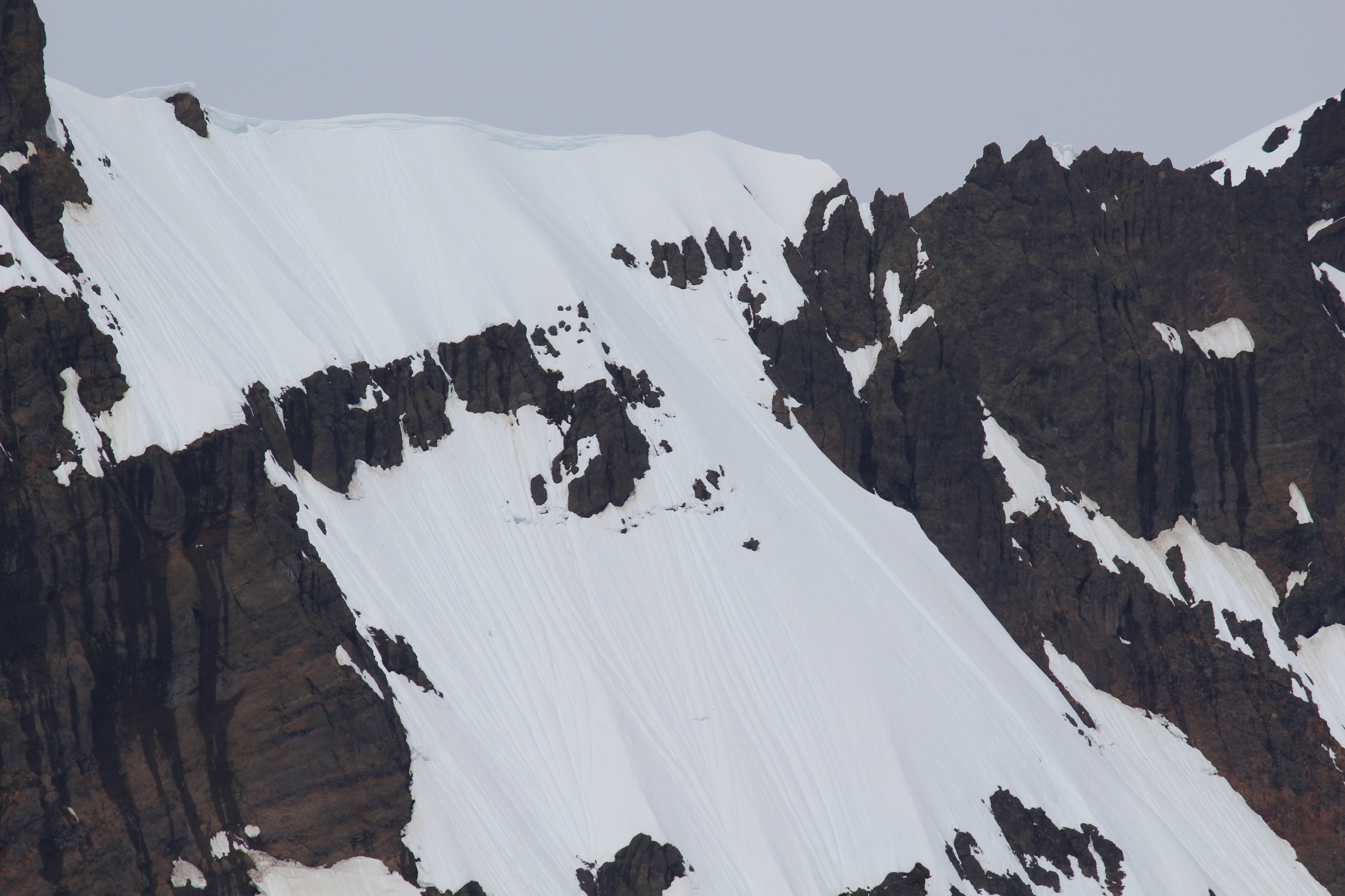
We mainly saw evidence of past wet loose avalanches and an old glide avalanche as well. During our outing, we witnessed a small cornice break that entrained small amounts of wet snow in extreme terrain, resulting in a "waterfall" of snow running over a cliff. Travel on steep slopes was limited, but we were able to push a tiny, slushy, wet loose avalanche on a smooth, steep surface. There was also a serac fall. We intentionally avoided traveling in areas with overhead hazards, as our main avalanche concerns were any variety of wet snow blobs or avalanches running down from extreme terrain above. Likelihood seemed low that we'd encounter one of these slides, but we still didn't want to risk it.
One witnessed small cornice failure with resulting small wet loose avalanche in extreme terrain.Weather
- Cloud Cover
- obscured
- Wind Loading
- none
- Snow Avail For Transport
- none
Low clouds were present from about 4000-6000ft for much of the day, with scattered high clouds above. A light breeze was present above about 5500ft. Temperatures were in the 50's.
Snowpack
All snow was well transitioned into large-grained melt forms where we traveled, with moist surfaces. Low clouds prevented an overnight freeze at mid and lower elevations, and as we made our way higher, snow remained similar, with a few inches of softening and moistening. Surfaces were textured with small sun cups and runnels, but the soft nature made any irregularities forgiving.
Snow at lower elevations was patchy, with variable boot penetration, where sometimes you only sunk a few inches deep and other times you punched through over a foot of snow with your step. At higher elevations, snow mostly remained supportable, where we sunk 6 inches or less into the snow on foot, except closer to rock patches where sometimes you punched through a foot or more of snow.
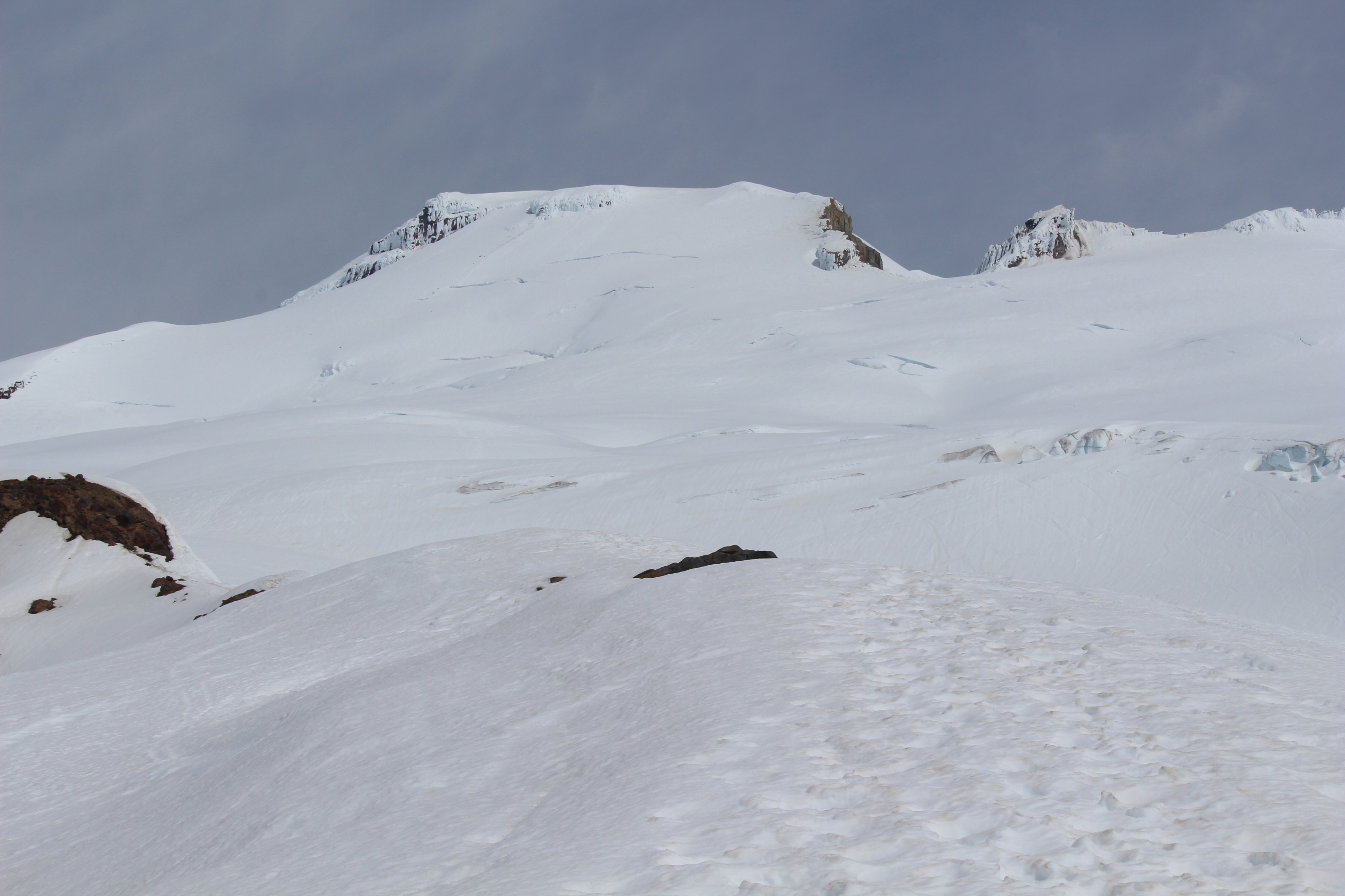
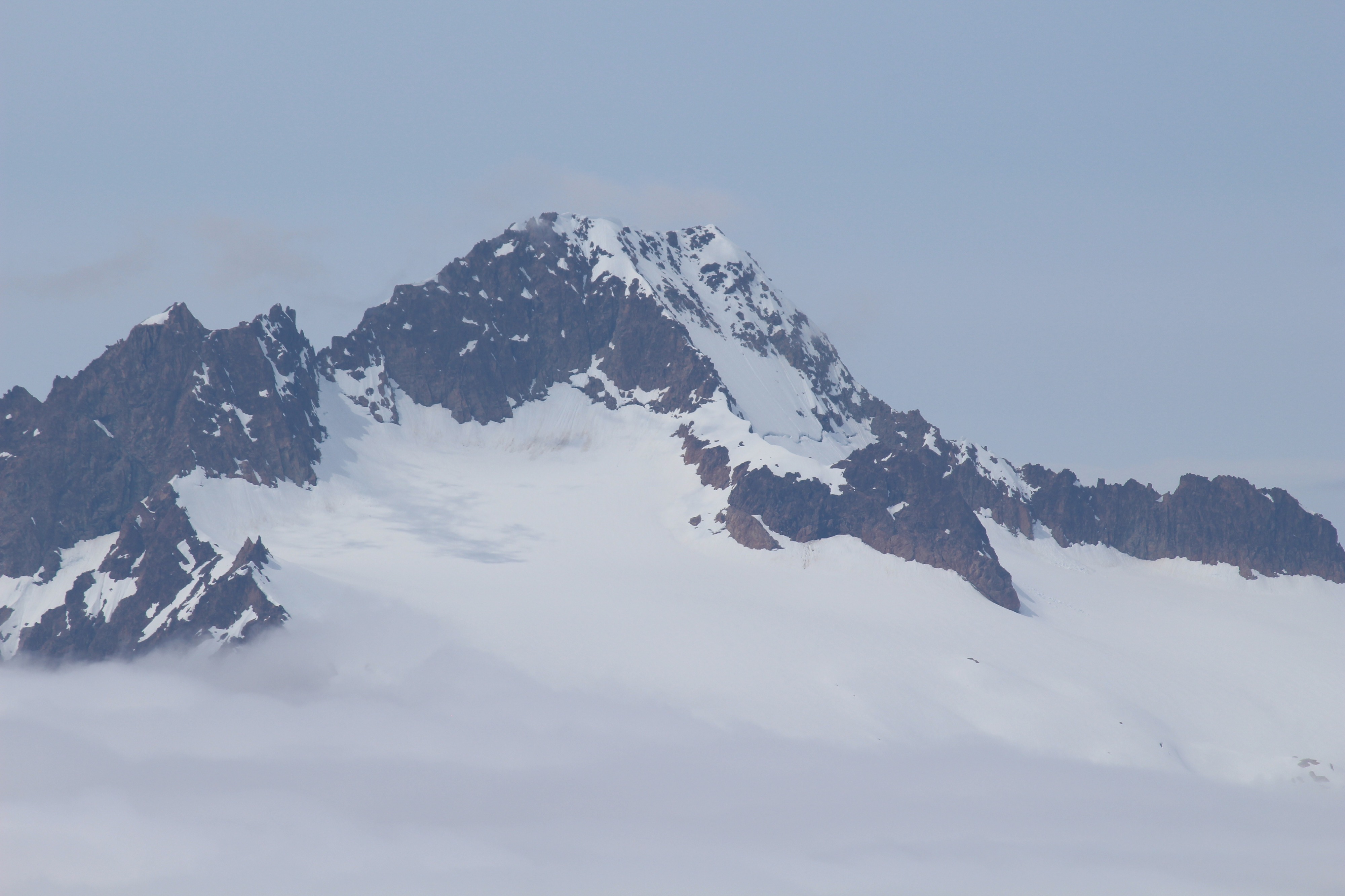
Snow patches began at just over 3000ft, and cover didn't become consistent until above treeline, at about 4500ft. Many crevasses were beginning to appear on the Easton Glacier, and rapid melting was evident everywhere. Despite this, skiing was reasonable enough, given the conditions, above treeline.
Avalanche
An isolated cornice failure in extreme terrain resulted in a small wet loose avalanche.