
Quick report
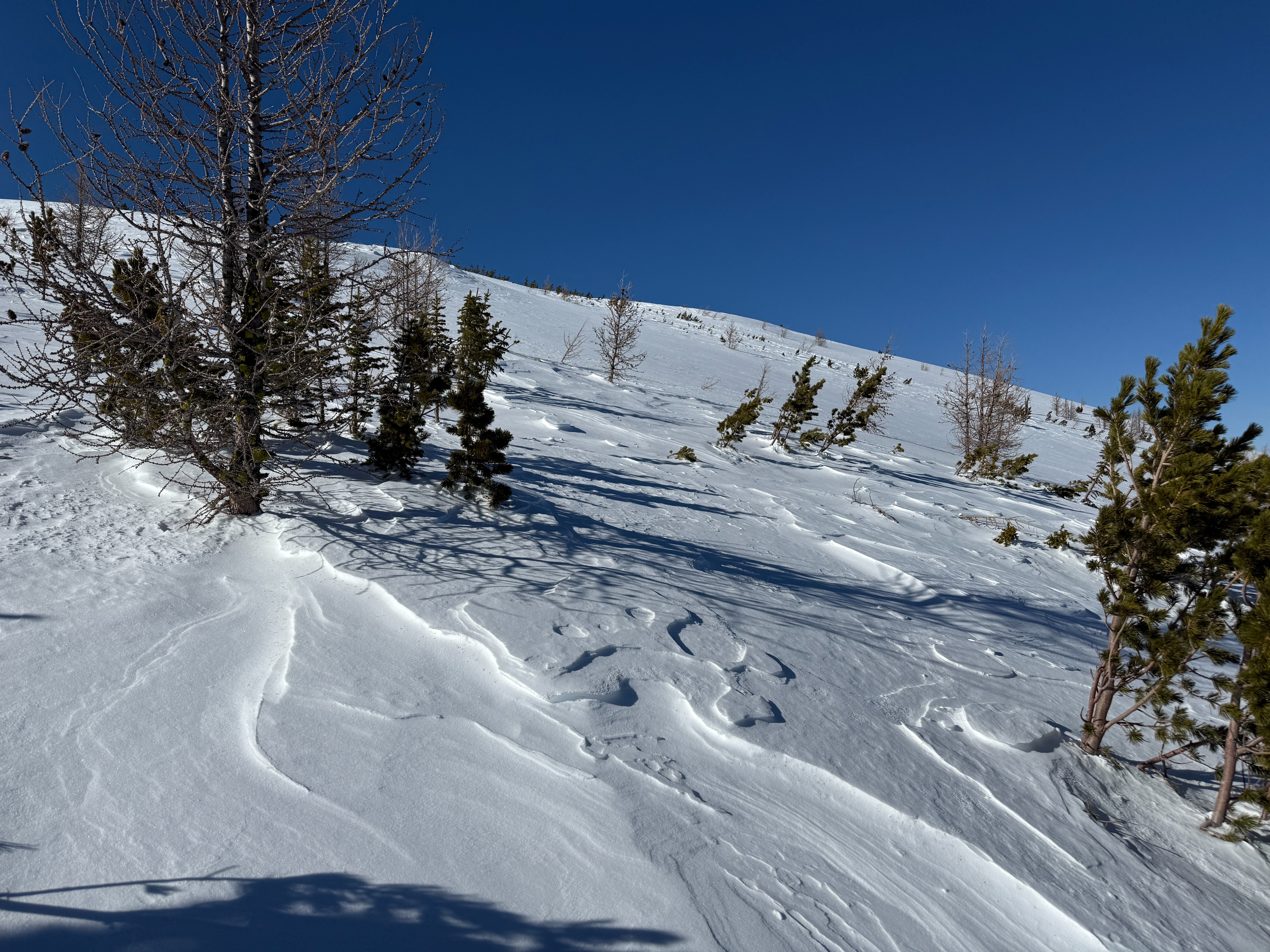
I think I encountered most types of snow conditions today, except for blower powder. Depending on elevation, aspect, and timing, there were supportable melt freeze crusts, breaker crusts, settled powder, soft sastrugi, wind board, corn, mashed potatoes, and unsupportable mashed potatoes. In other words, variable conditions leading to a variety of potential avalanche problems.
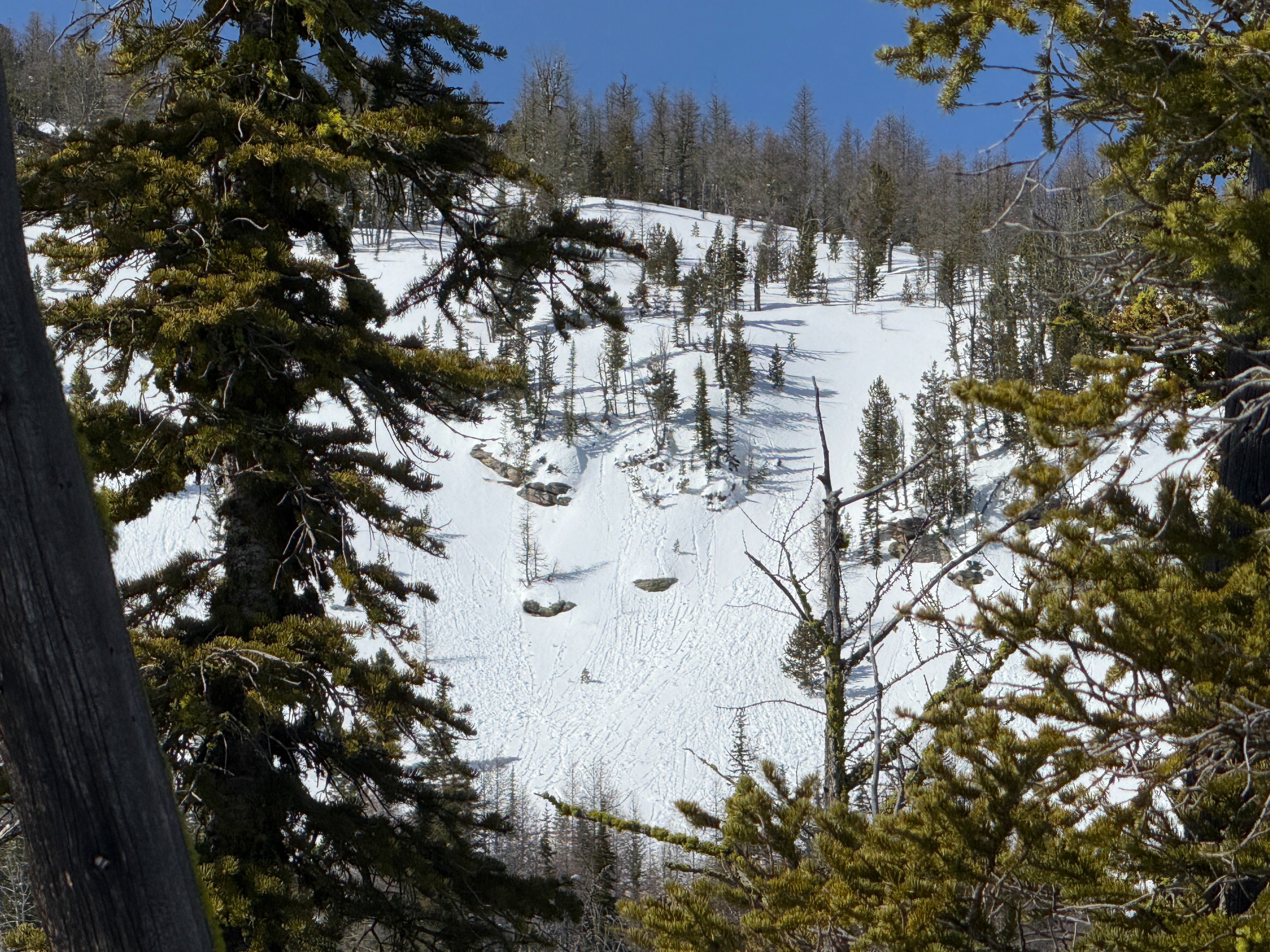
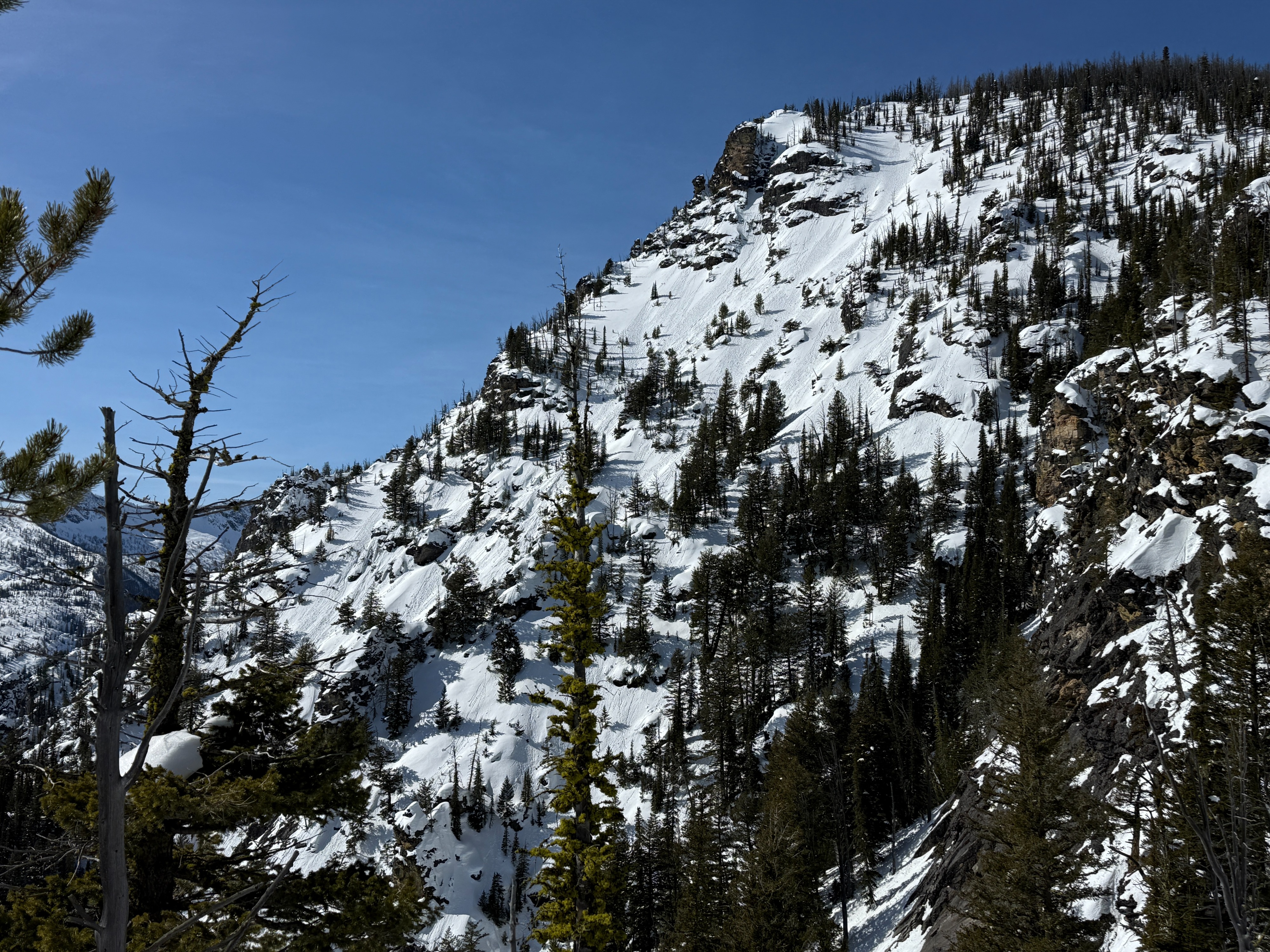
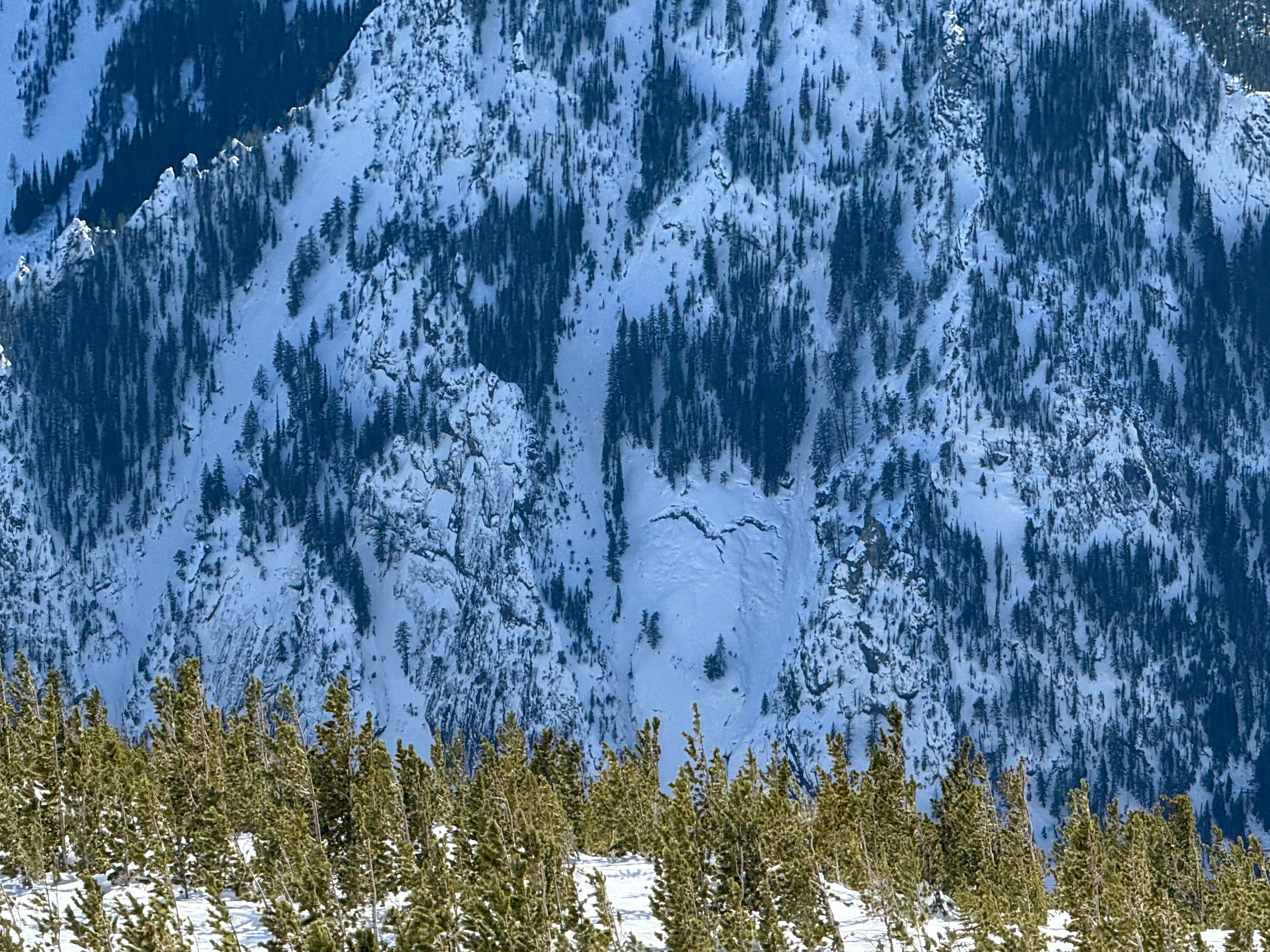
Loose wet avalanches were a concern on steep sunny slopes that were protected from the wind. I observed widespread natural rollerballs and several small wet loose avalanches.
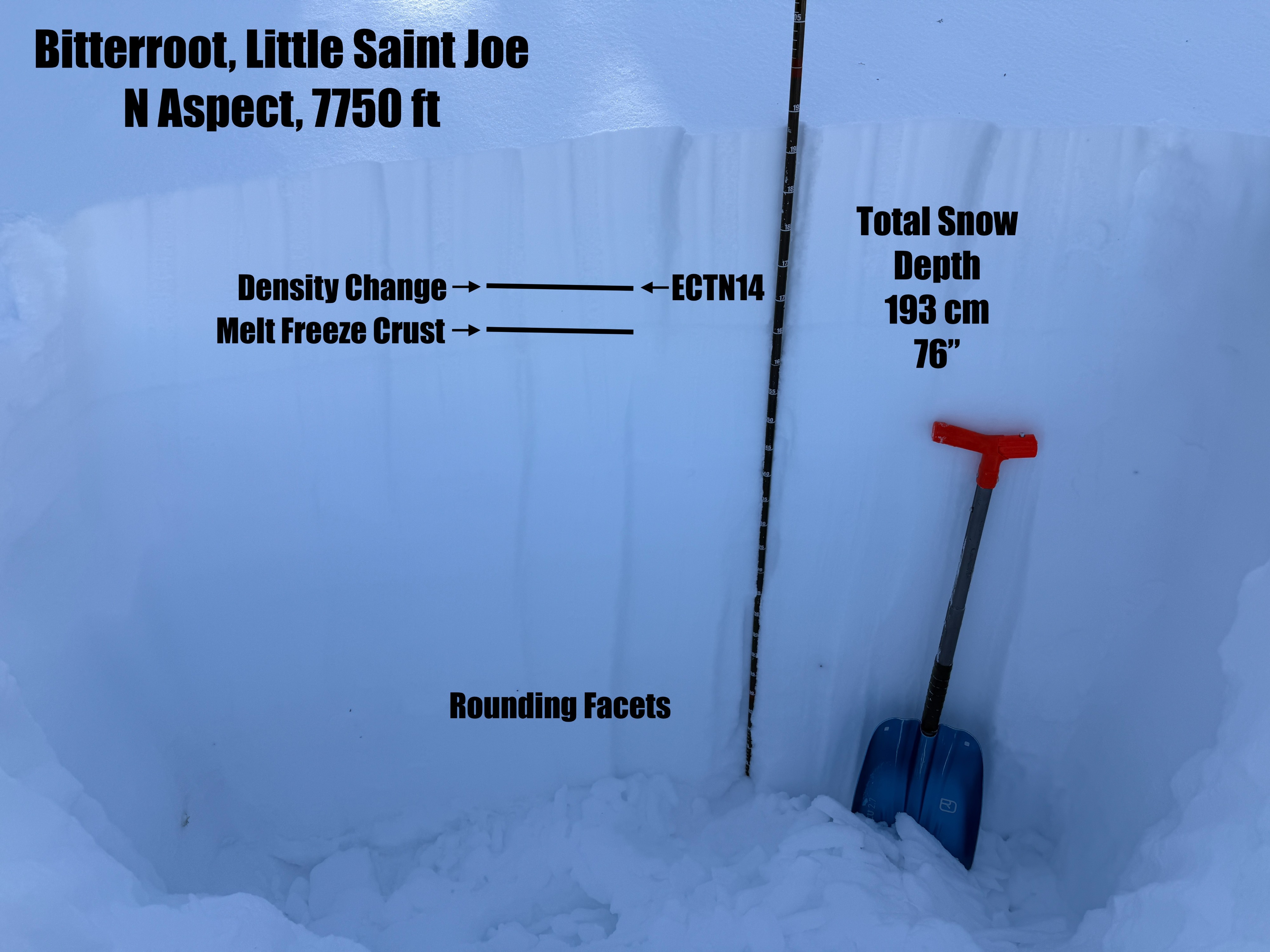
The spot that I dug a pit in today had a relatively strong snowpack without major layers of concern. I also didn't observe any whumpfs or cracking today. However, there are still some areas with poor snowpack structure and lingering persistent slab avalanche concerns, especially in thinner spots.
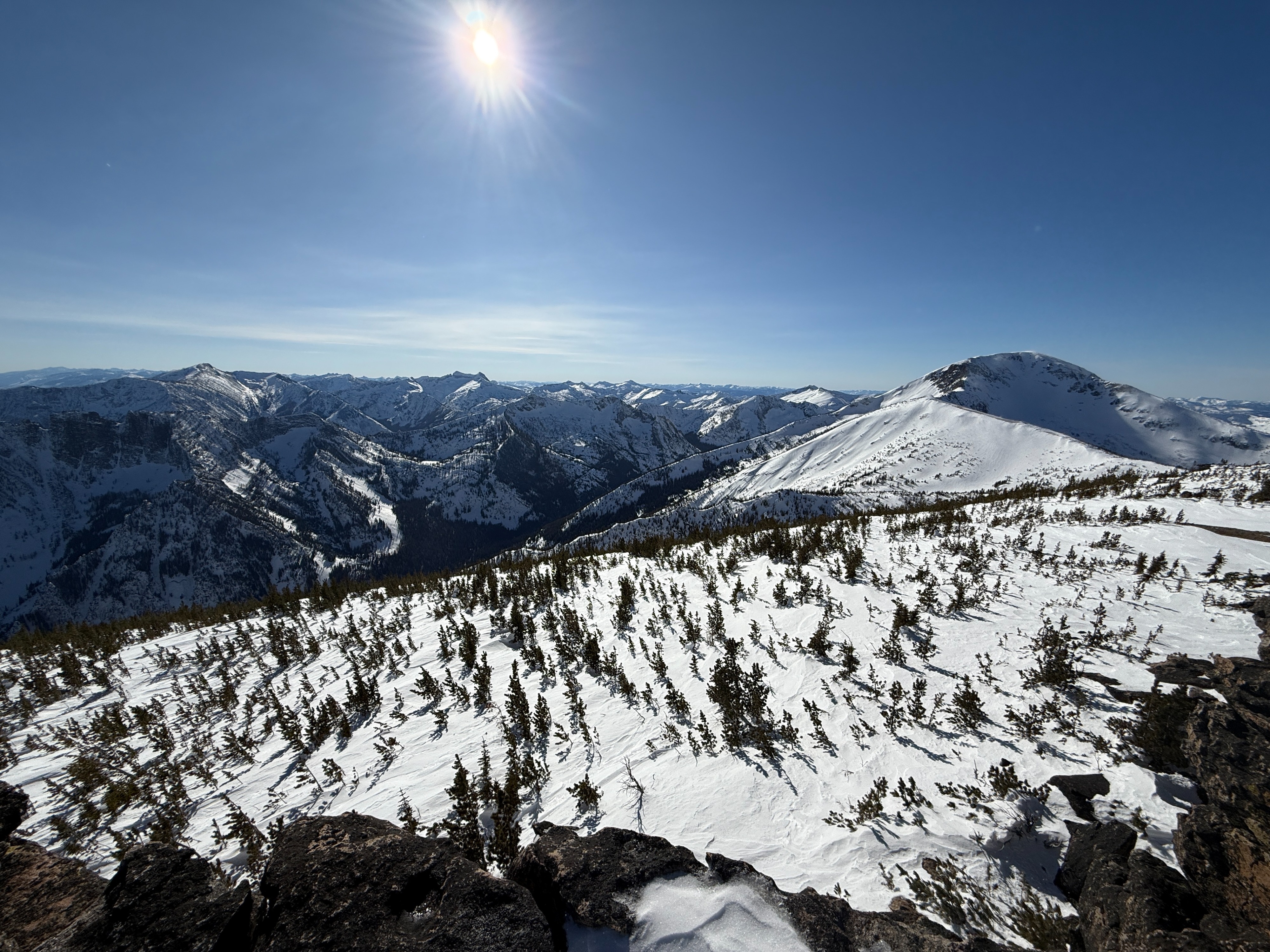
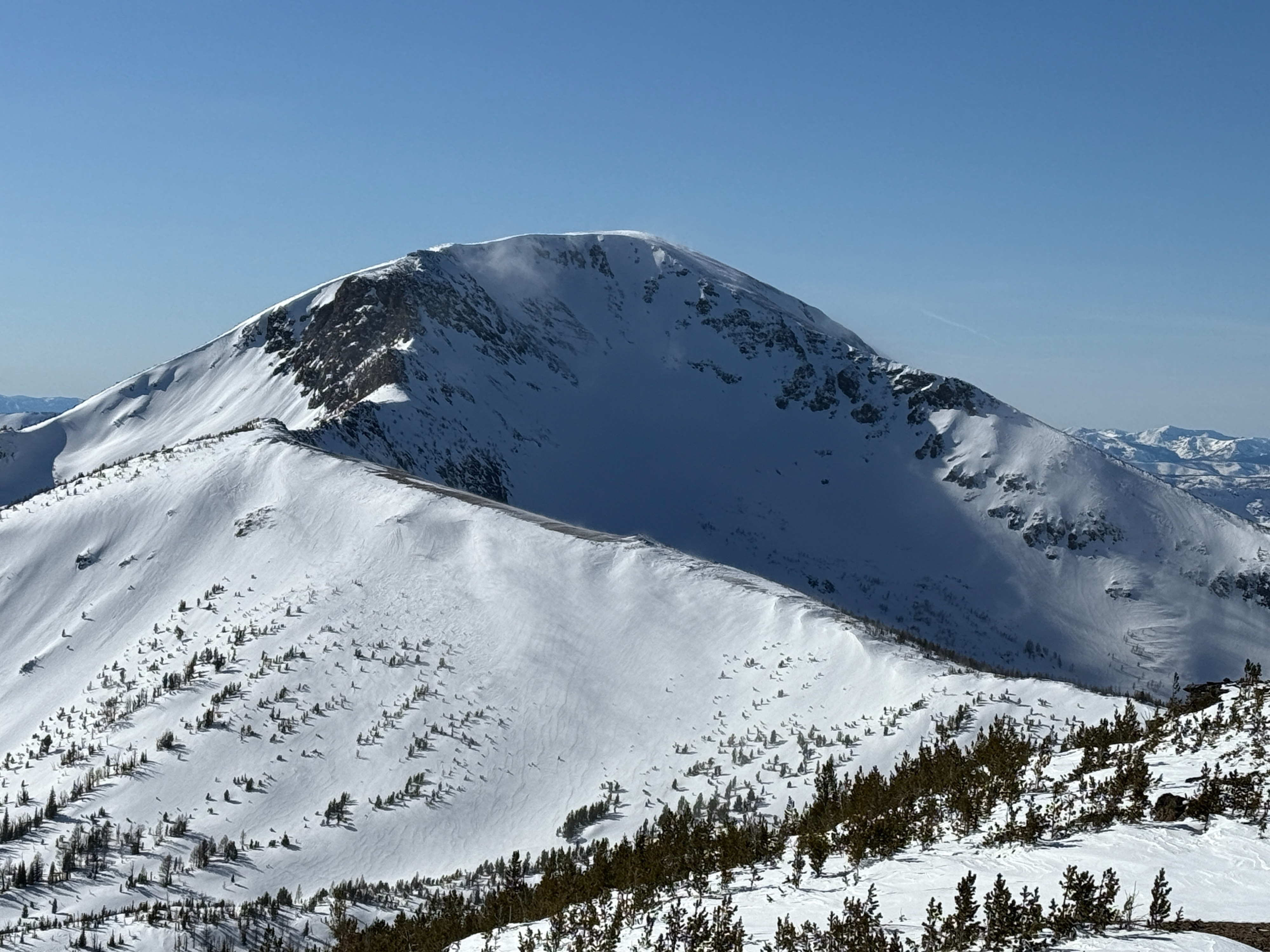
Even with little snow available for transport, the strong west winds were blowing snow around the highest peaks. It was hard to tell if much loading was occurring, or mostly just sublimating, but I suspect there are some small hard wind slabs you could trigger at the highest elevations.
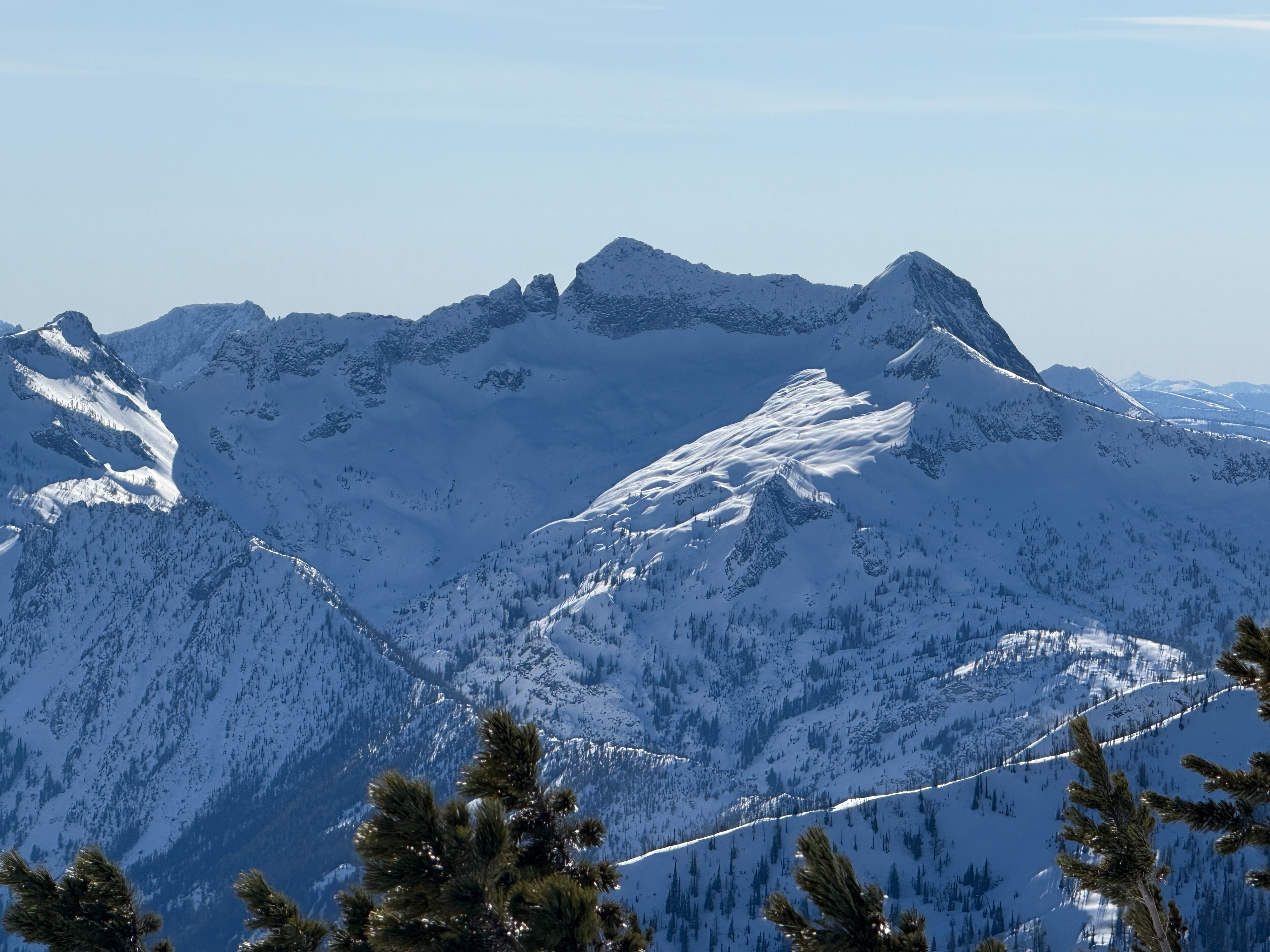
Some areas have large overhanging cornices. I think the wind was keeping them cool enough today to prevent failures, but keep an eye out in the future.
Weather
- Air Temp
- Warm
- Cloud Cover
- few
- Wind Loading
- light
- Snow Avail For Transport
- small smounts
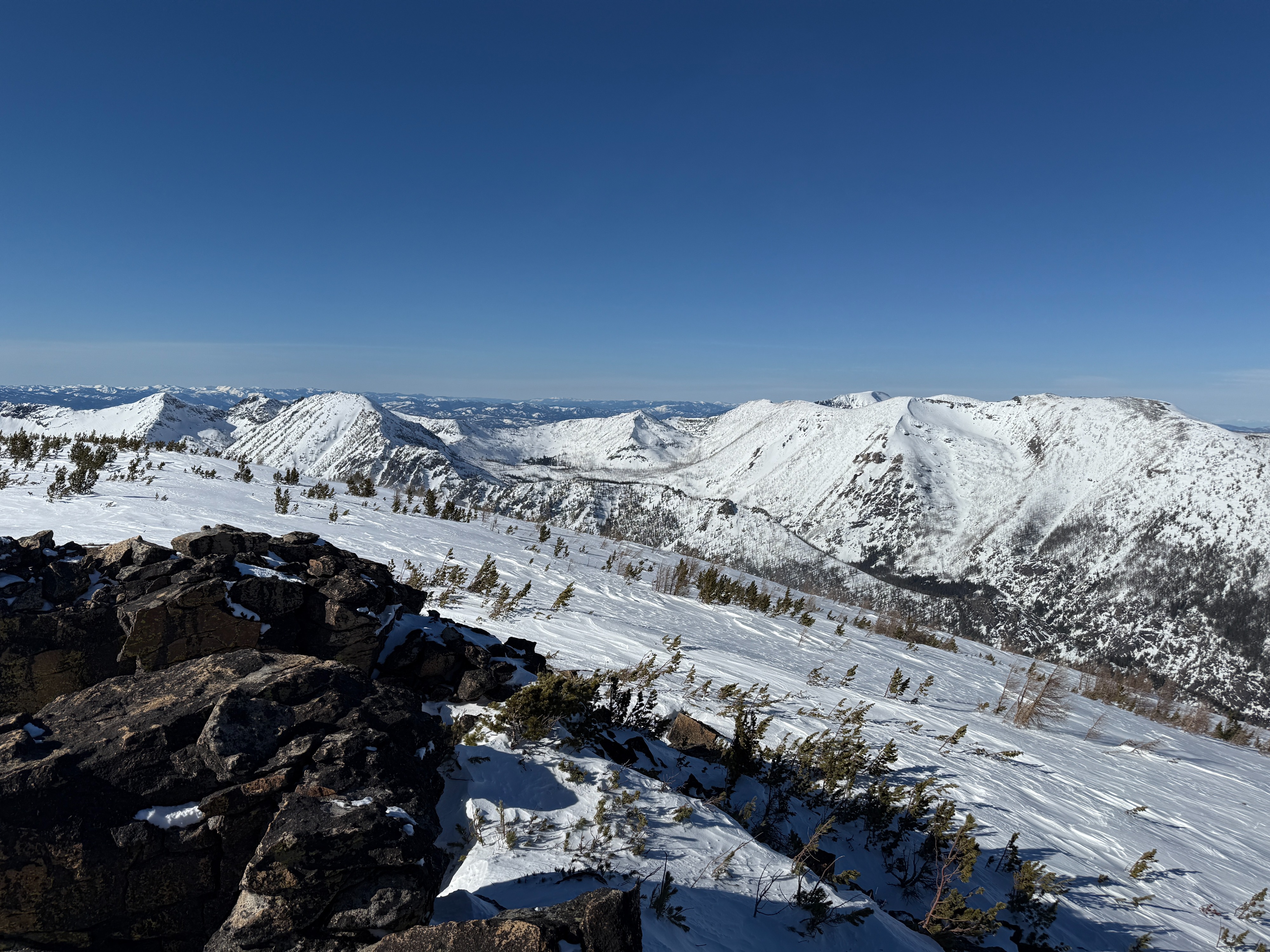
It was a gorgeous day with mostly sunny skies and warm temperatures. Surprisingly, winds were strong out of the west at the summit. Winds were light elsewhere.
Snowpack
I dug a snowpit on a north aspect at 7750 ft. It had a relatively strong snowpack without major layers of concern. There was a density change 20 cm deep in the recent snow that produced a non-propagating result on the 14th tap of an extended column test (ECTN14). There was a 1 cm thick melt freeze crust buried 26 cm deep that did not produce any results in an extended column test. This was likely from the rain/warm temps on Sunday/Monday. The near surface facets we've been talking about were buried 90 cm deep but were rounding and relatively strong in this location. They did not produce any results in an extended column test.
Avalanche
I observed several recent natural small wet loose avalanches on wind protected, steep, sunny slopes.