
Quick report
Today, we enjoyed boot-top soft snow, excellent (by this year's standard) ski conditions, and good stability. Though it snowed on and off all day, the weather was generally calm and mild.
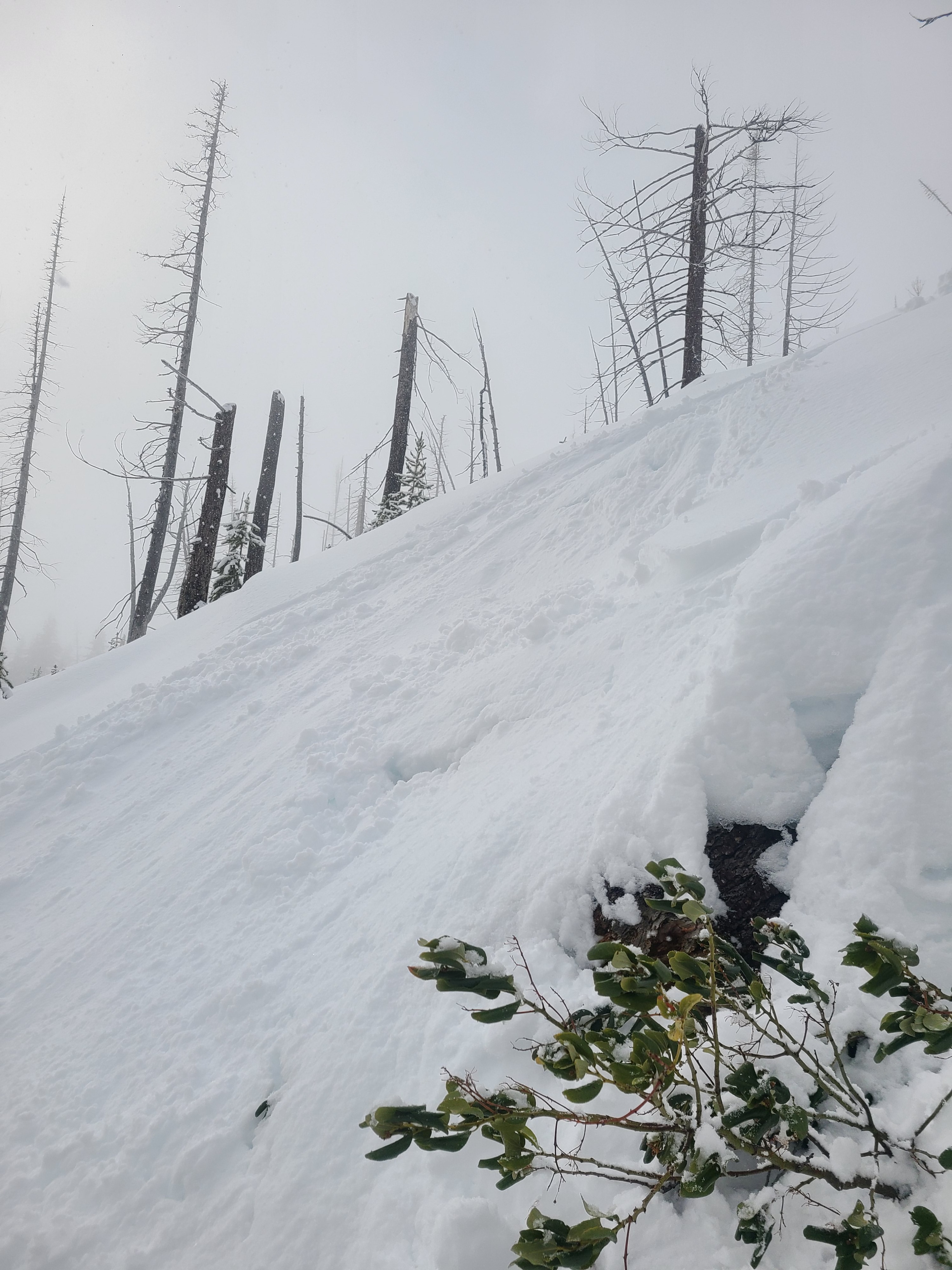
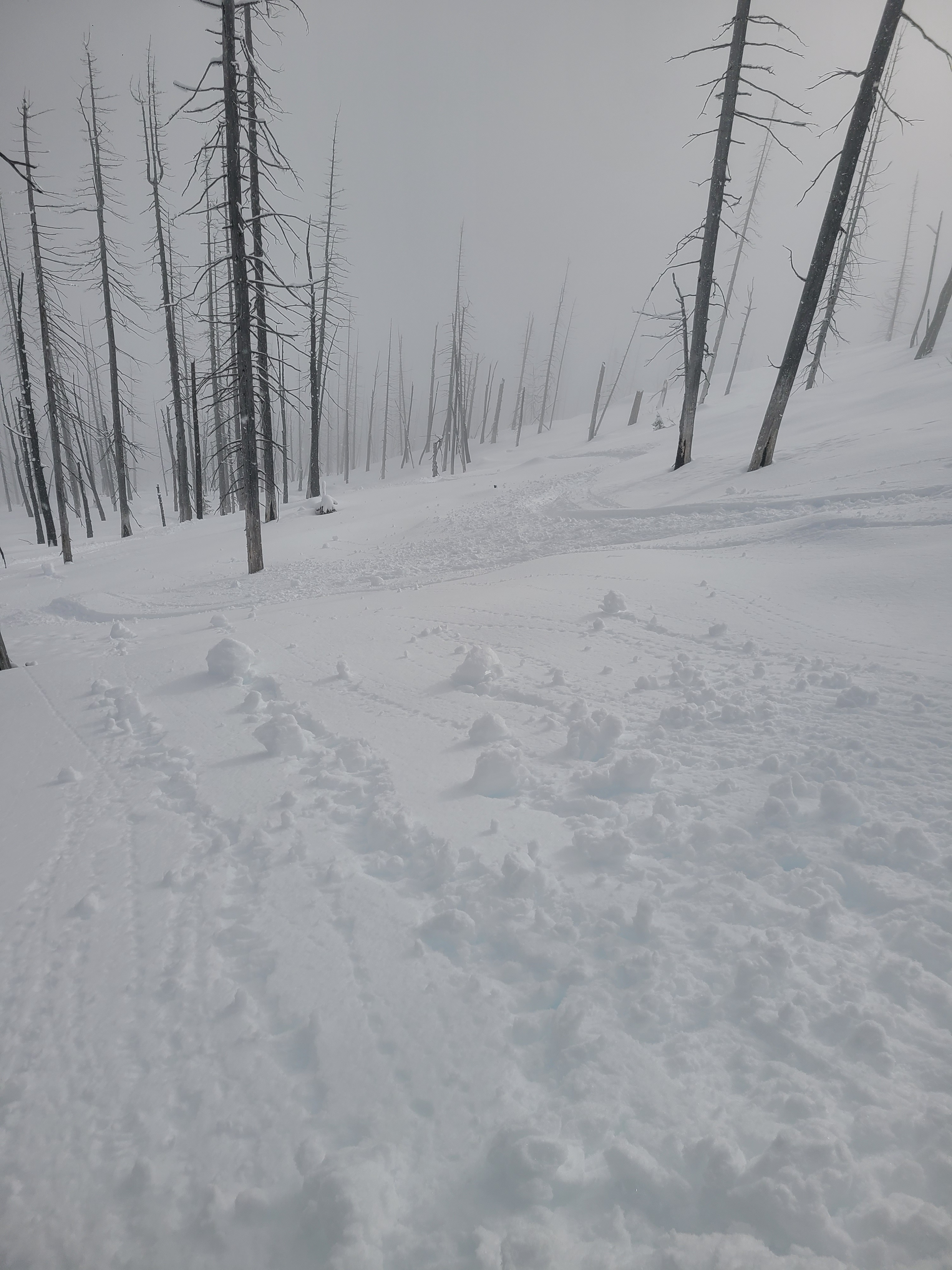
The snowfall over the past week has yet to develop much of a cohesive slab, but it was mostly deep enough to keep us off of the solstice crust. We saw no signs of recent wind loading of the storm snow, and other than localized cracking around our skis and a little surface snow movement on steep convex rollovers, we saw no obvious signs of instability.
There is some weak snow in the upper snowpack showing signs of potential reactivity that seem pertinent to watch moving forward.
Weather
- Air Temp
- 31
- Cloud Cover
- overcast
- Wind Loading
- none
- Recent Snowfall
- 11
- Snow Avail For Transport
- moderate amounts
Light winds, mild temperatures, and light snow on and off all day. The sun tried to make an appearance, but only succeded for about an hour at midday, coinciding with a brief warm-up. About 1 or 2" fell between 9 AM and 3 PM bringing the two-day total to about 5 or 6".
Snowpack
We found approximately 7" of new/recent snow from the past week sitting on a thin zipper crust from 12/30. Within the surface 7" lies the 1/2 interface, which has shown some signs of poor bonding and reactivity in tests over the past few days. However, it did not seem like the slab was deep or cohesive enough for propogation yet. Soft snow from 12/28 remains below the zipper crust and rests on the stout 3" thick solstice crust.
We observed no signs of previous or active wind loading of the recent snow. As the sun tried to poke out, the snow surface briefly moistened, and we saw just a few roller balls. When provoked on a steep convexity, we were able to move a bit of the surface snow on the 12/30 crust.
We dug a snow pit on an east aspect at approximately 5000 feet and found an HS of 32"/80 cm. The upper 16" of the snowpack contains a few different layer combinations of melt-freeze crusts and weak faceted crystals. Below that point, the snowpack is strong and consolidated. Any potential issues lie in the upper snowpack.
We tested these potential layers of concern, and though small column tests showed reactivity on a layer of weak facets below the solstice crust, a large column test did not produce a propagating result (CT 5, Q3 & ECTN 18). We'll keep the solstice crust, as well as the 12/30 and 1/2 interfaces, on our minds as new snow begins to stack up.