
Quick report
- Cracking
- isolated
- Collapsing
- specific
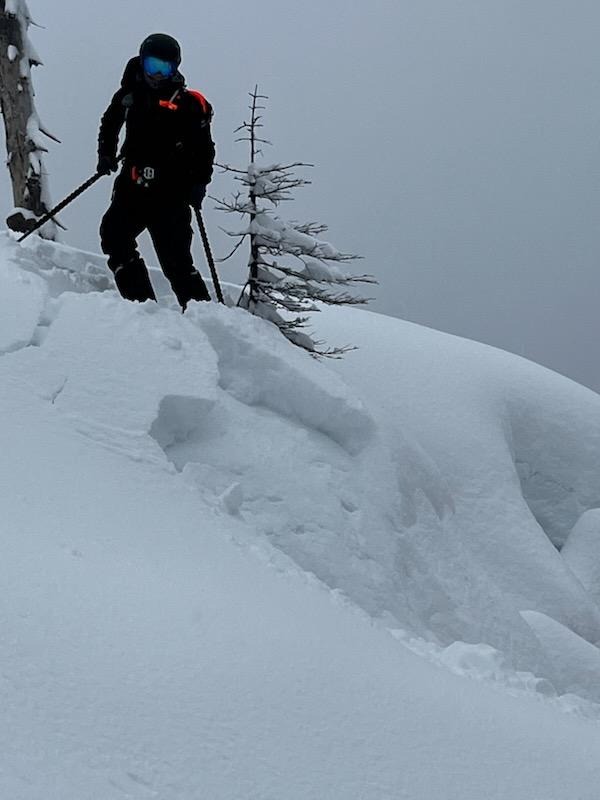
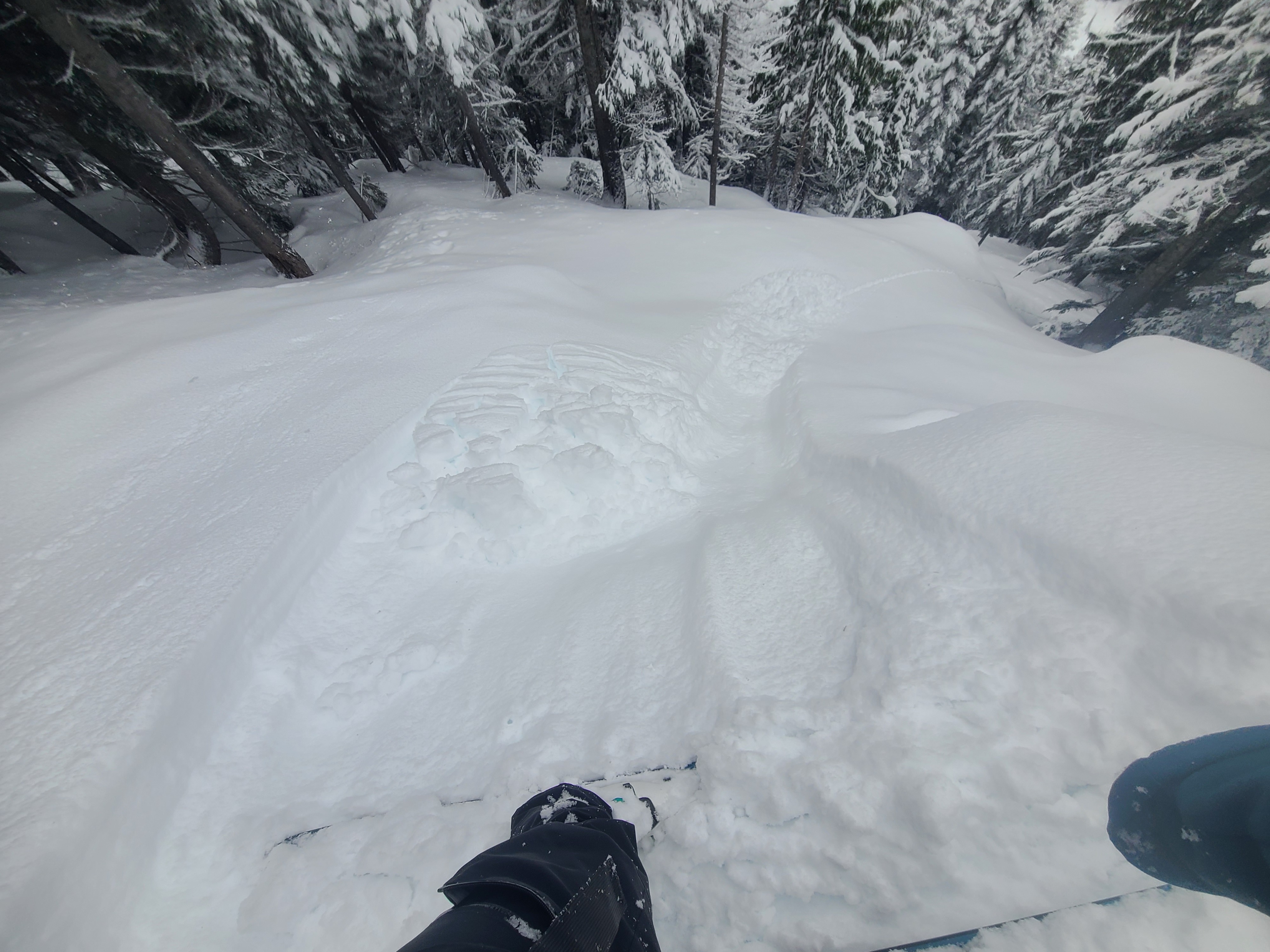
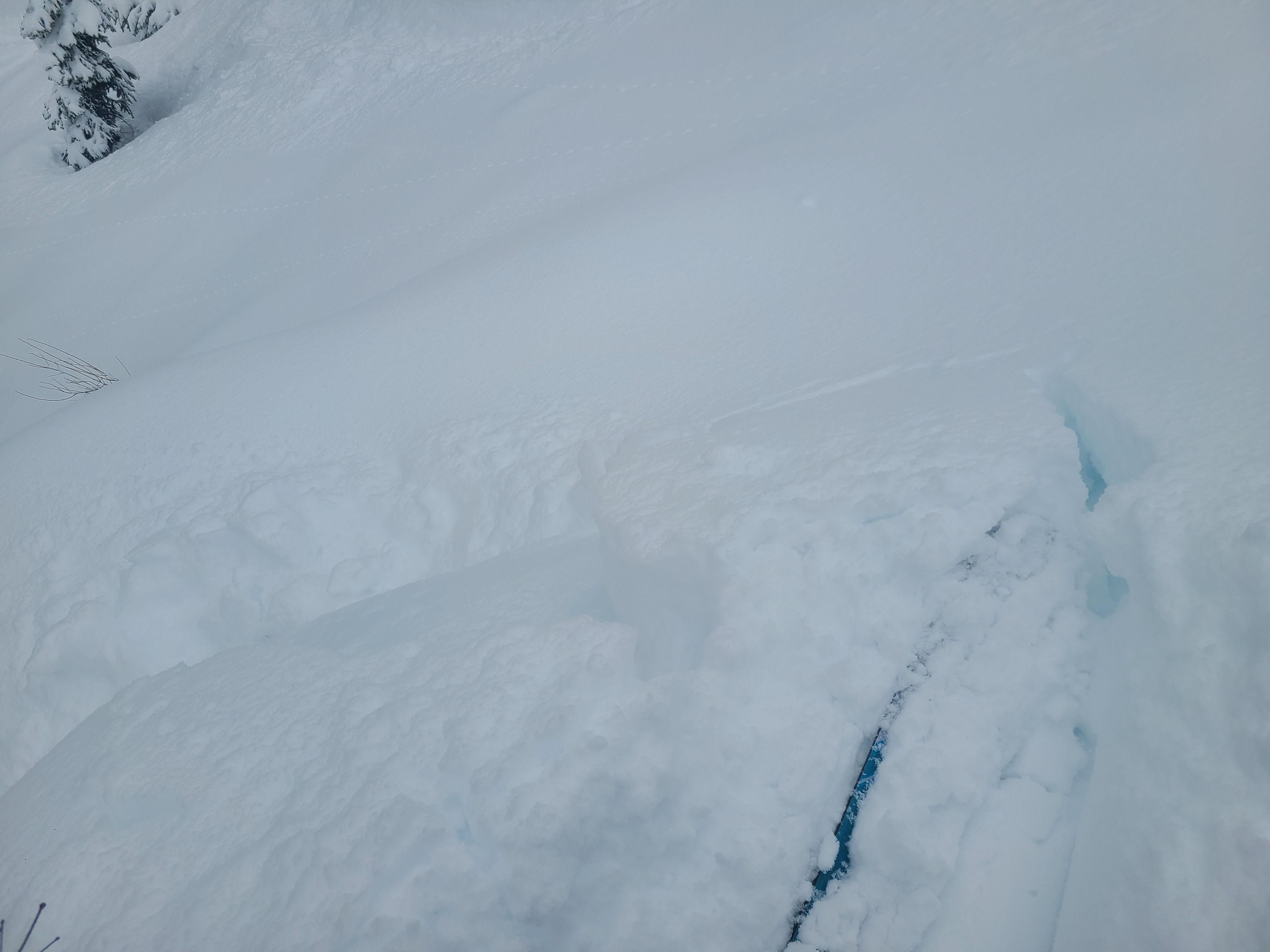
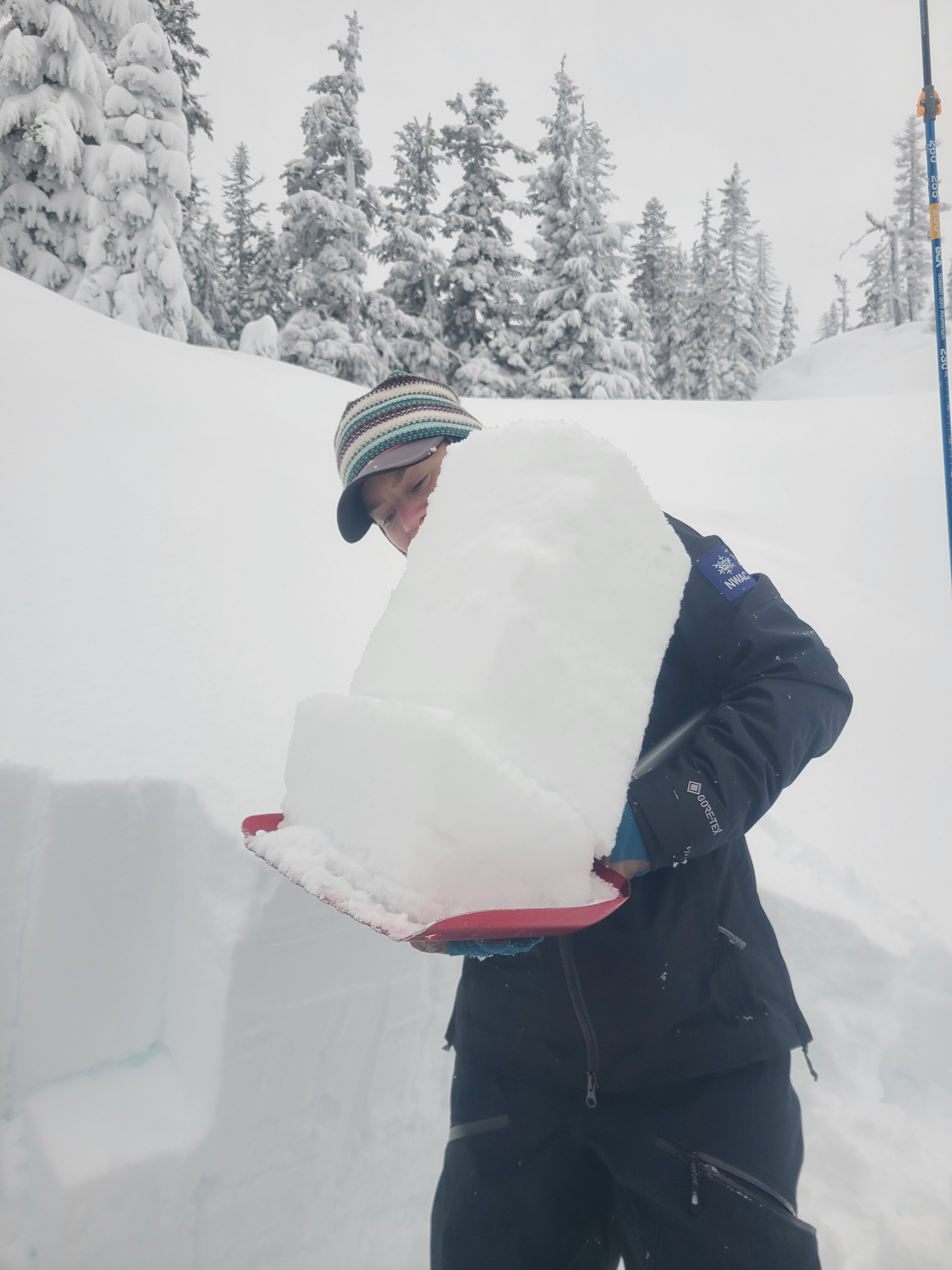
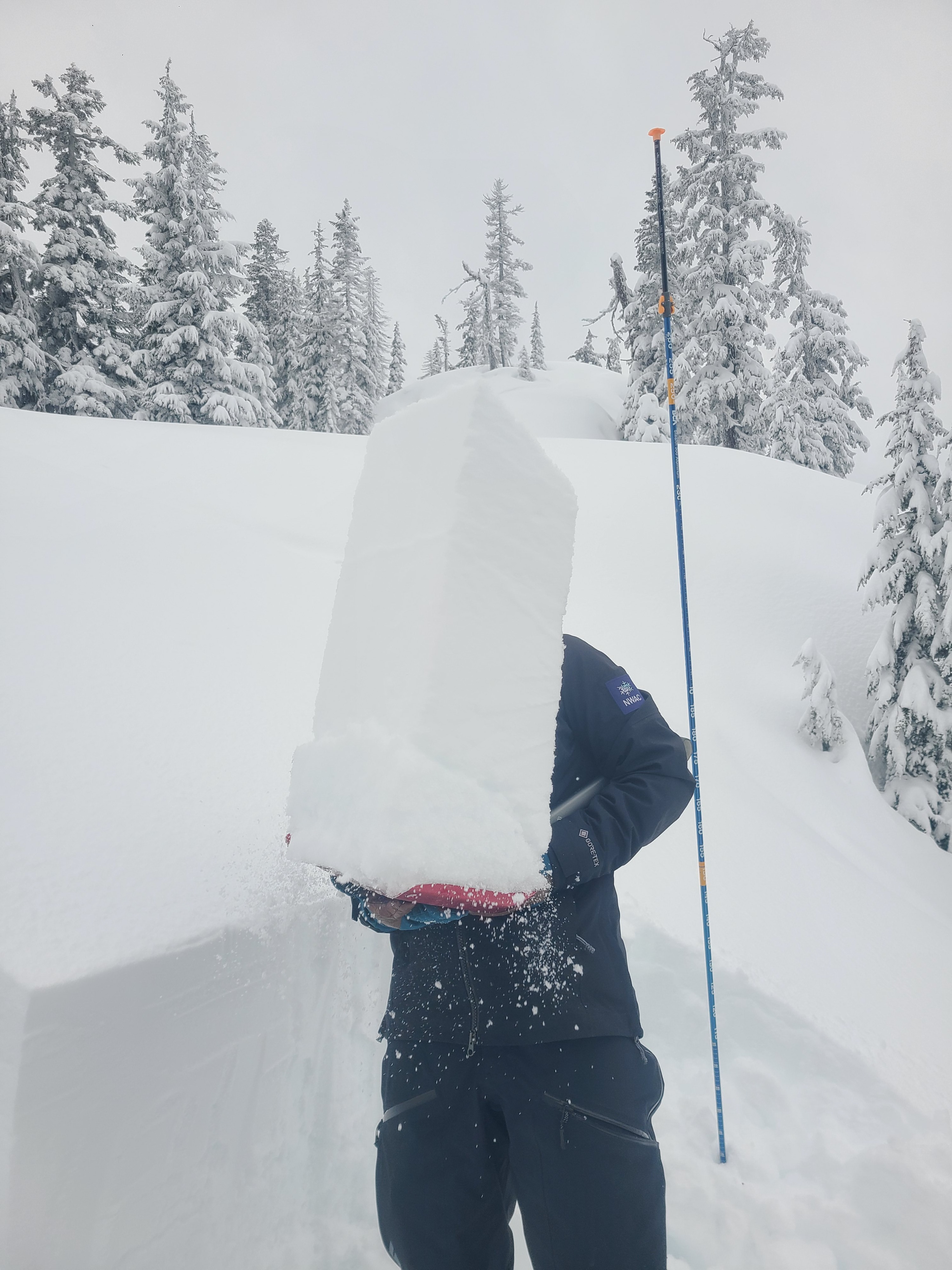
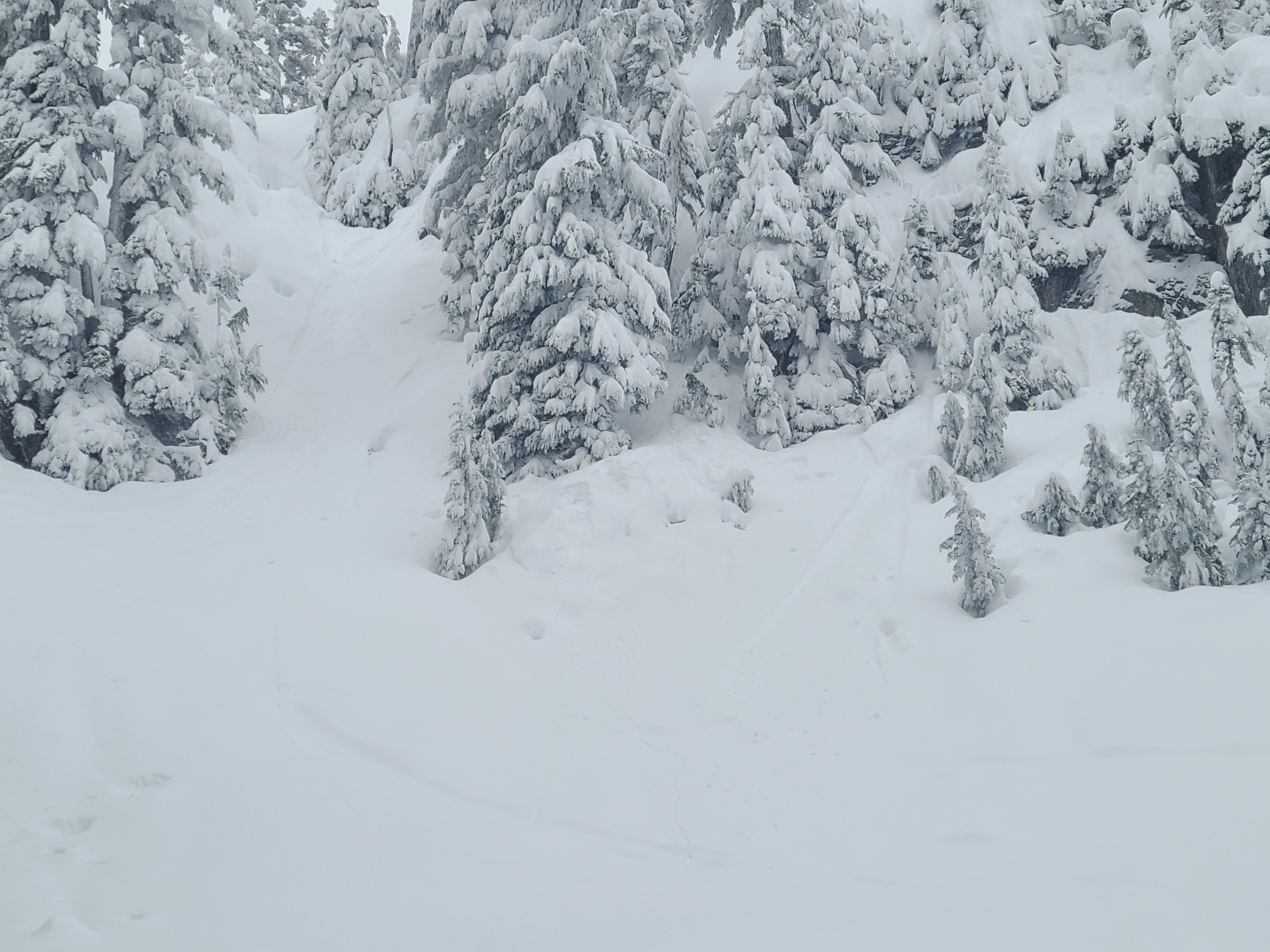
We went out today to investigate the new snow and assess how the weak snowpack structure is adjusting to the new snow load. We honestly thought signs of instability would be more widespread and consistent. Instead, the snowpack gave us mixed signals. We experienced loud collapses, which kept us off any large, steep slopes. However, snowpack tests yielded unremarkable results, and test slopes were stubborn, requiring very steep slope angles (>40°) to produce isolated cracking or small slabs. When test slopes failed, it was within a layer of weak, faceted snow over the 2/8 crust. The nature of these observations creates some uncertainty, but there are enough red flags to ensure we'll choose more conservative terrain for a while.
A sheltered north-facing aspect produced loud collapses. Cracking was isolated to just near ski tips and tails or on test slopes >40°Weather
- Cloud Cover
- overcast
- Recent Snowfall
- 20cm
- Snow Avail For Transport
- moderate amounts
Overcast skies, light winds, and minimal precipitation.
Snowpack
Snow Surface Summary
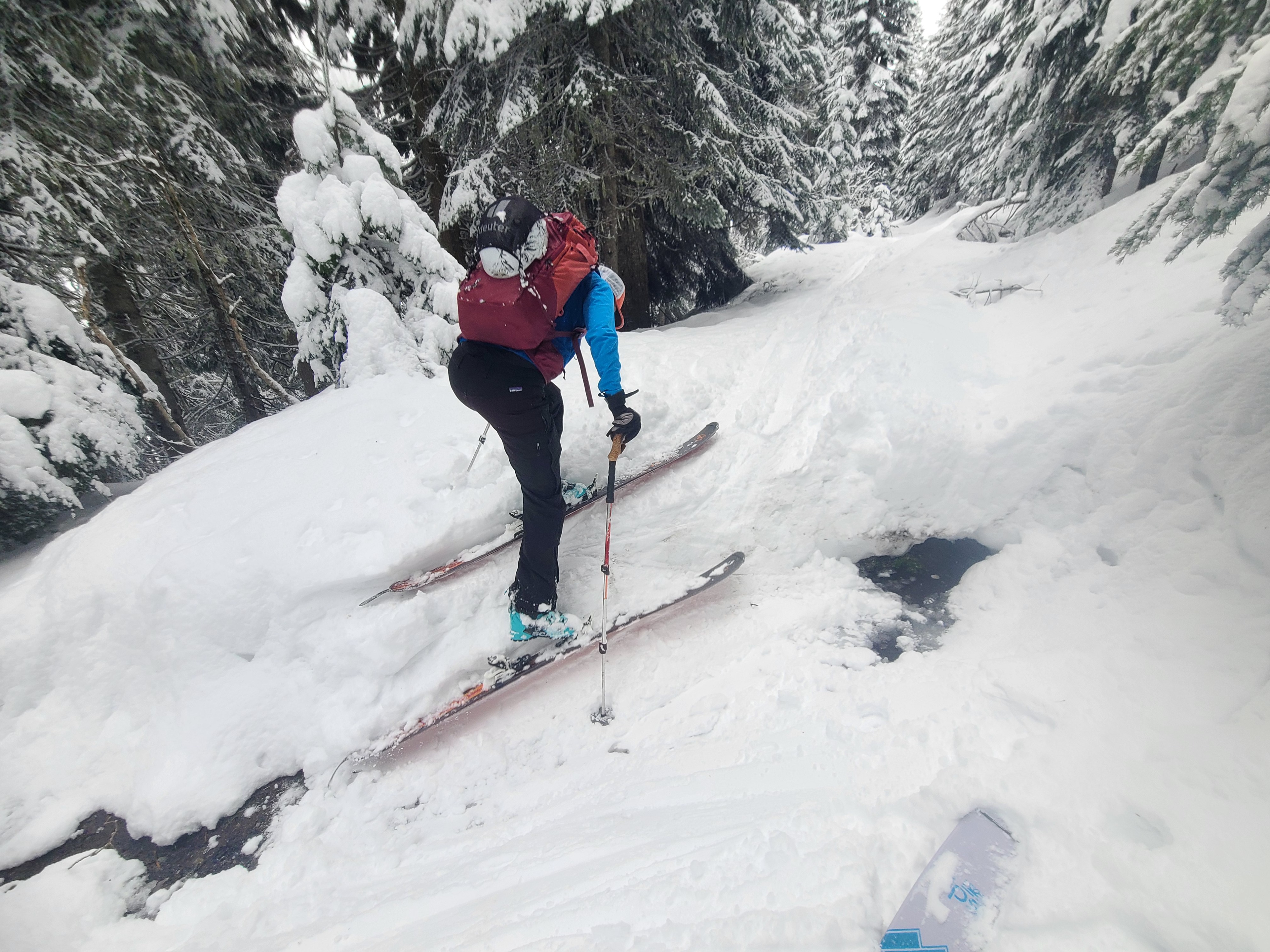
The recent snow has significantly improved conditions, and now all aspects and most elevations have soft snow surfaces. In forested areas, it's still easy to feel the underlying crust below your boots or equipment. Lower elevations still offer low snow cover obstacles to navigate as well.
Snowpack Summary
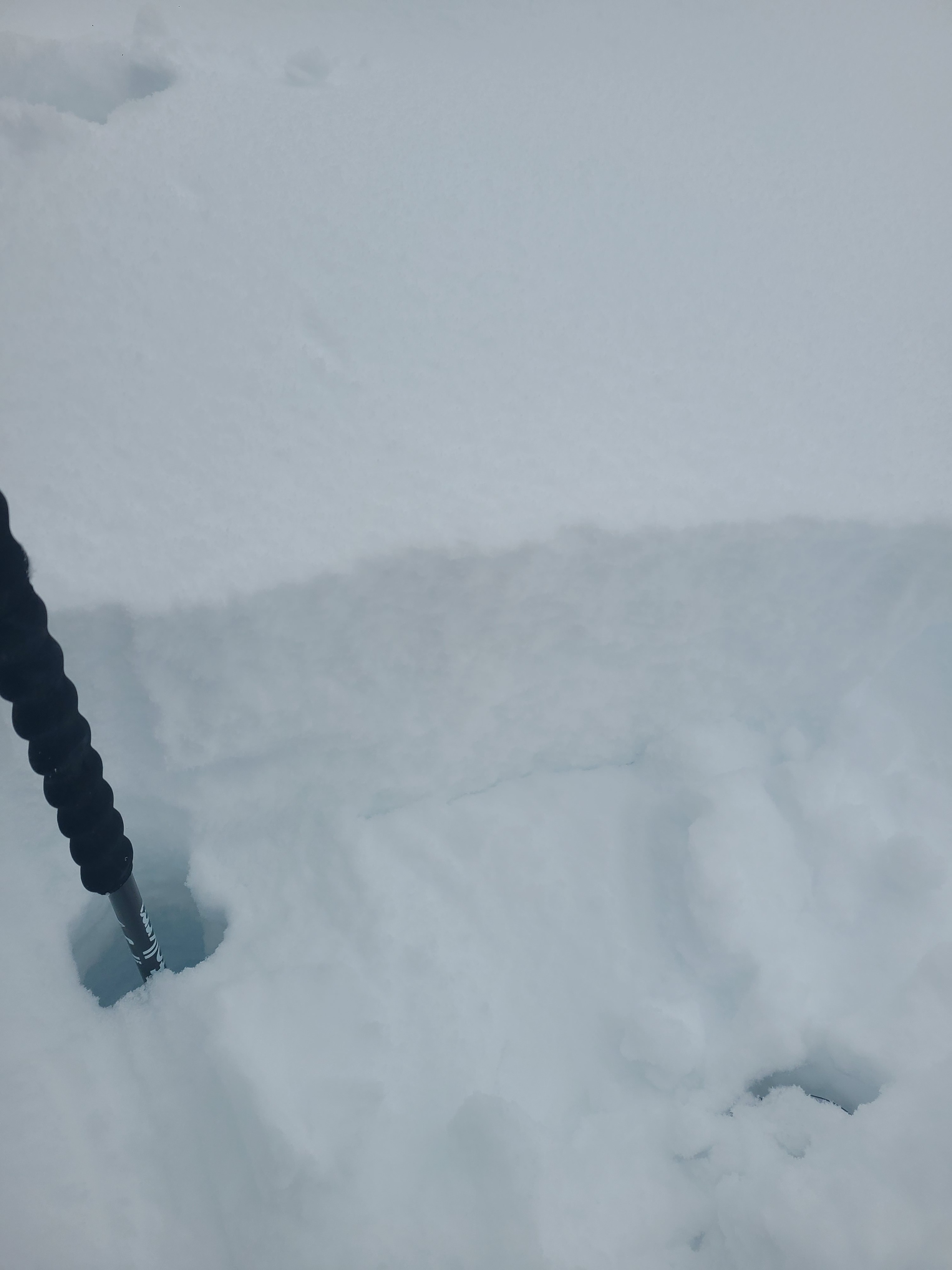
There is 20-30cm of new snow over a complex layer cake of faceted snow and buried surface hoar. This thick mix of weak snow layers is 12cm thick and consists of 1-2mm faceted snow interspersed with two different layers of buried surface hoar (↓35cm & ↓41cm). This all rests over the 2/8 melt-freeze crust, which is 1F hard and decomposing. Between the 2/8 and 2/7 crusts is a layer of well-developed facets. The 2/7 crust is pencil hard.
Snow Profile
5200ft, NE aspect
HS 250cm
CT11 SC ↓35
ECTN ↓35 & 47
PST SF 27/100 & 50/100 @45cm (faceted snow above the 2/8 crust)