
Quick report
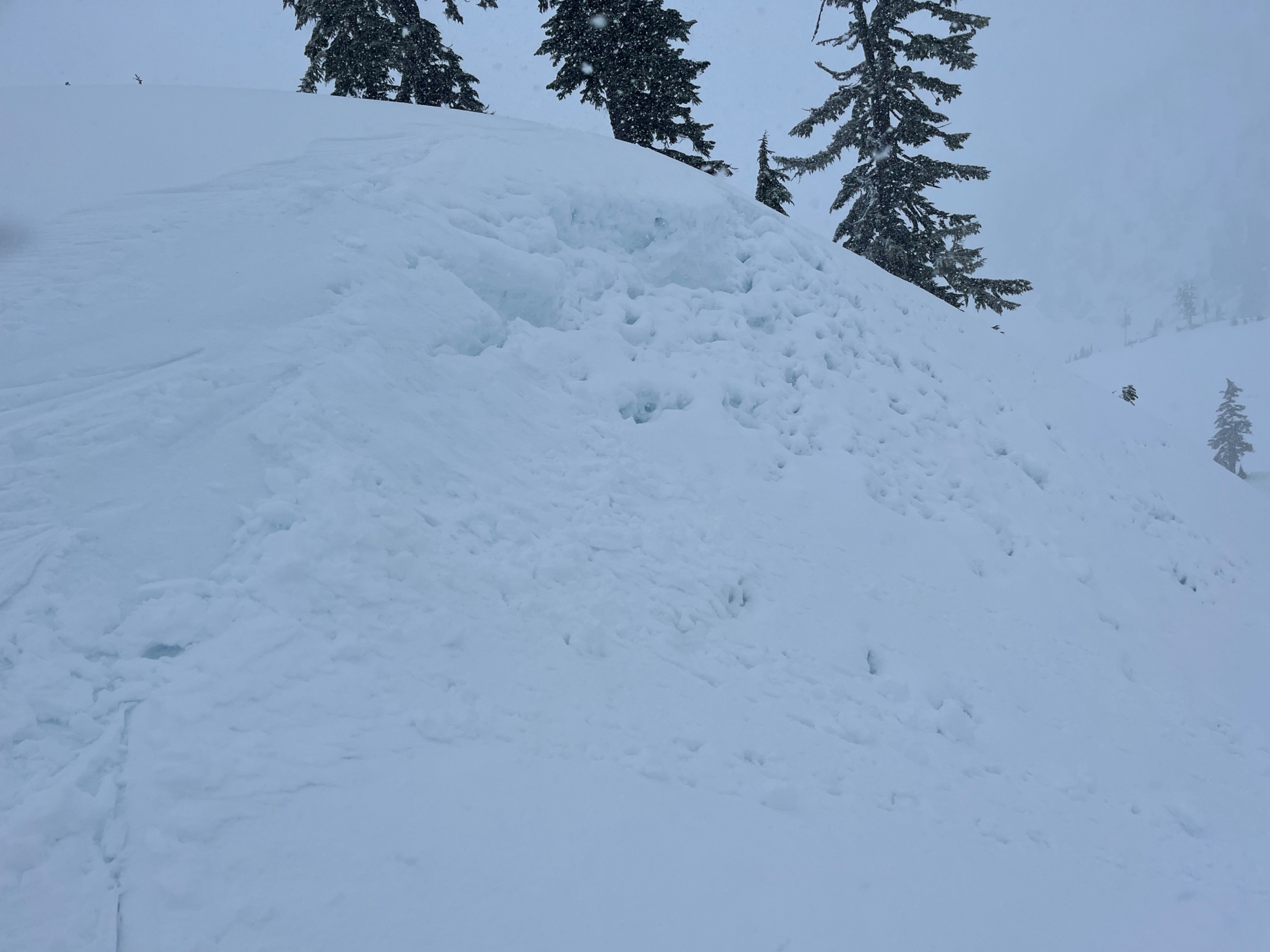
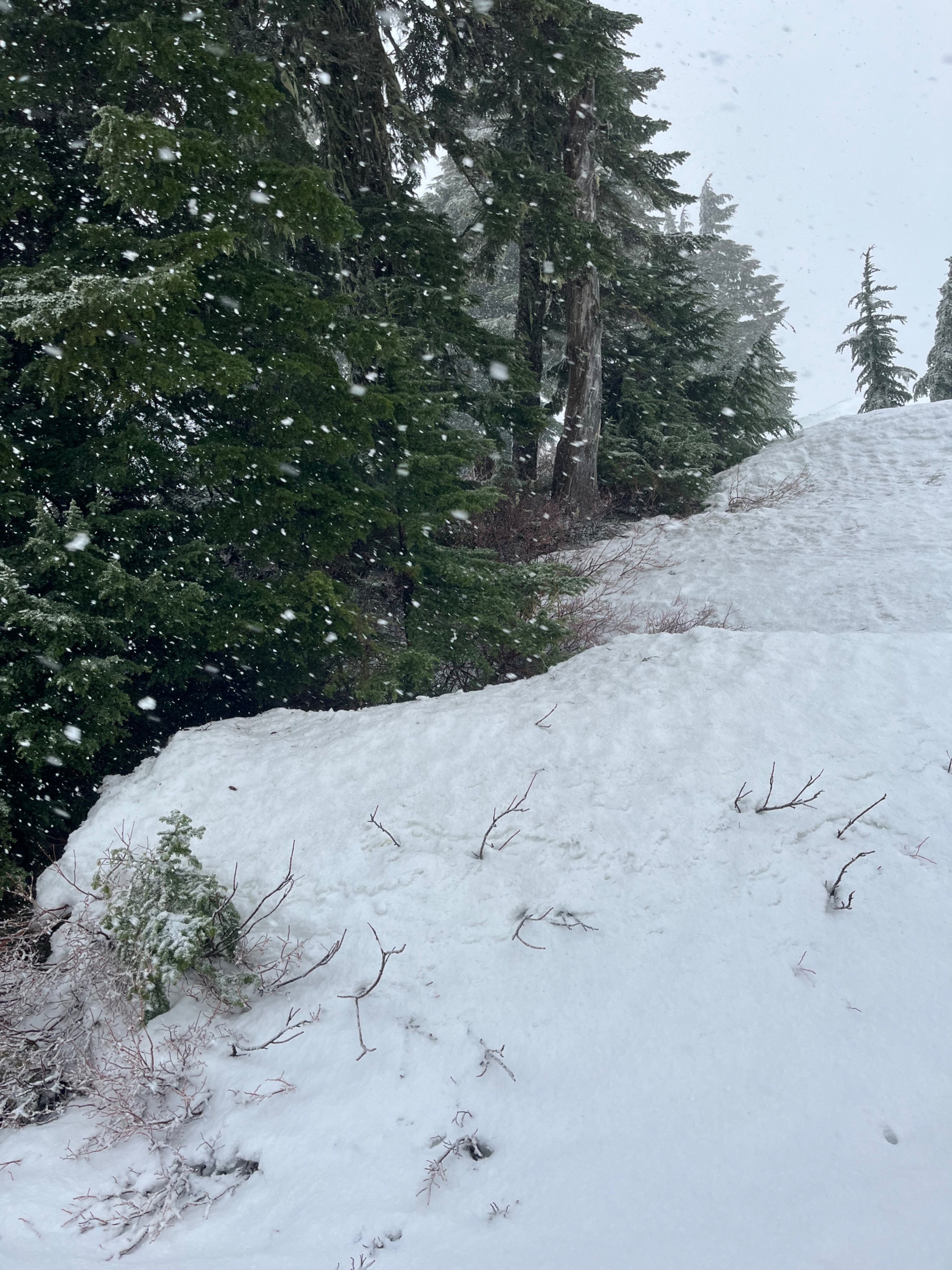
This feels like an unusually thin snowpack for early February. Snow was melted back in many areas, with large bare spots around trees and gaping cracks and signs of failure in the snow at steep breaks. Usually this time of year, I can't find the ground using my probe, but that's not the case this year.
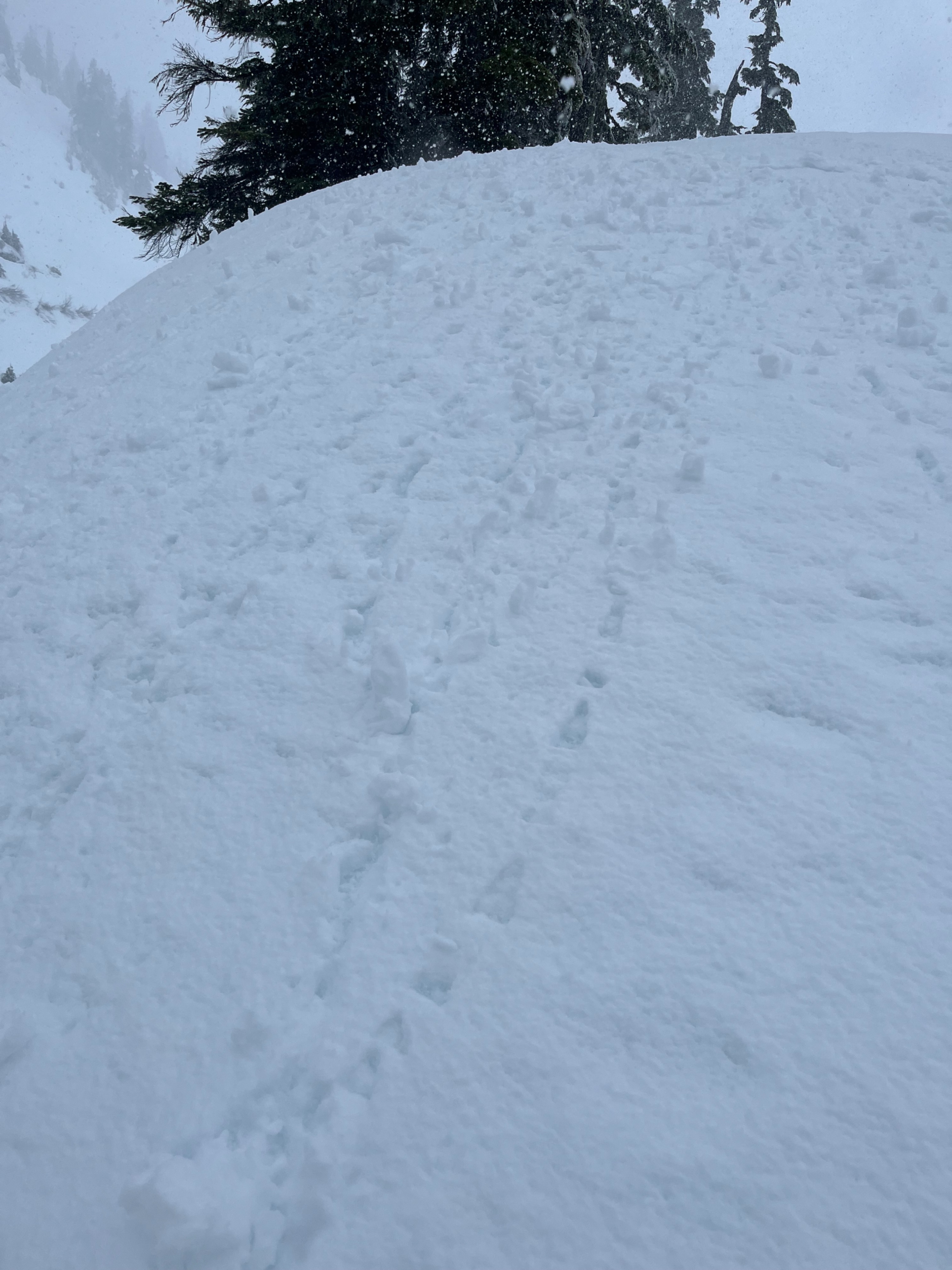
The falling snow was a welcome sight, since the old surface was a bumpy and featured rain-affected layer, which is what essentially the entire snowpack consisted of where I was.
The area I traveled- from 4300-5000ft, had significant variations from top to bottom, with a more layered snowpack that had distinct and more significant crust layers at the very top elevation, to a more homogenous, softer snowpack only a little lower in elevation.
I didn't observe any avalanches, although the amount of creep noted on steeper slopes made me hesitant to want to venture into steeper terrain. I wouldn't be surprised if a saturated cornice or slab of snow sitting over a steep rock would break free in these warm, wet conditions.
Weather
- Air Temp
- 32
- Cloud Cover
- obscured
- Wind Loading
- moderate
- Rain Elevation
- 4000
- Recent Snowfall
- 5
- Snow Avail For Transport
- small smounts
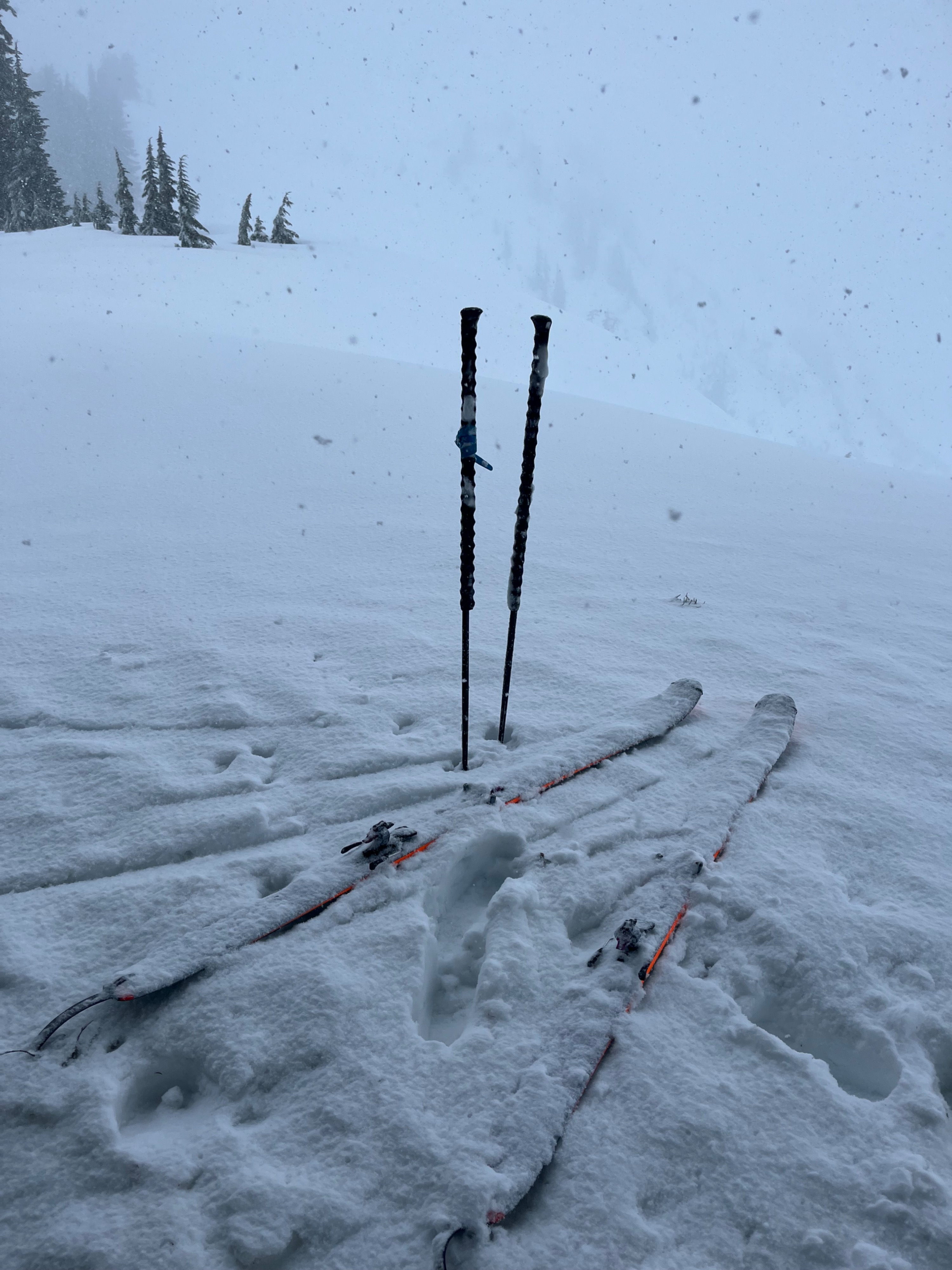
Snow began falling at Heather Meadows at about 1pm. By about 3pm there was almost 2 inches sitting on the previously wet but bare road. Wind was gusting moderate along ridgelines.
Snowpack
Snow surfaces: Beneath the new layer of snow, the old crust was supportable on skis during the entire outing- although near the bottom elevation, that was pretty borderline. At 5000ft, the surface was almost unpleasantly hard- but still edgeable.Boot penetration increased in depth as I went down in elevation. A semi-supportable surface for feet existed at 5000ft, and I only sunk 5cm deep. By 4800ft, my feet sunk 20-40cm down. At the bottom elevation, you easily went several feet through the soft, soggy snowpack on foot.
At 5000ft, I found distinct layers in a quick pit I dug. There was an obvious crust beneath the new snow, and then another crust about a foot down. I only dug as far as this hard crust, 30cm or 1ft deep, but above that, all layers were moist, large-grained melt forms, aside from the rapidly growing surface layer of new snow.
Only a little lower in elevation, at 4800ft, I was expecting to find something not too dissimilar, but I was wrong. The surface crust was not nearly as supportable on foot, and beneath the surface crust, any layers were hardly discernible- there was just one thick, almost homogenous layer of moist large-grained melt forms. Shoveling and probing through the layer (and probing all the way down to the ground) was easy and smooth. I probed around in several locations and aspects at that elevation and lower, and found this to be the case everywhere.
Intense afternoon snow quickly changed the landscape from old rained-on snow surfaces to a rapidly growing fresh white coating. In less than two hours of afternoon snowfall, over 2 inches of snow had fallen. This new coat did nothing, so far, to hide all the wrinkled snow I saw in very steep areas, and massive cracks that appeared on any very steep breaks in the snow.