
Quick report
Strong winds transported the recent snow and formed new wind slabs below ridges and steep terrain features. Open slopes had wind affect and a denser surface. Both buried surface hoar layers (2/14 and 1/28) are 2 to 4 feet below the surface, but still intact and propagating with hard force in snowpack tests. This is the beginning of a trend towards a lower likelihood, but high consequence situation. An avalanche that fails on either weak layer would be large to very large
Limited signs of instability, with isolated cracking between skis on wind-affected slopes that had a dense surface. One natural avalnche was observed below a wind loaded ridge line.Weather
- Cloud Cover
- scattered
- Wind Loading
- intense
- Rain Elevation
- Not Observed
- Recent Snowfall
- Not Observed
- Snow Avail For Transport
- moderate amounts
Broken cloud cover in the morning made way to bluebird skies with scattered clouds by the end of the day. Winds were strong and swirling, with active transport on the lee side of ridges.
Snowpack
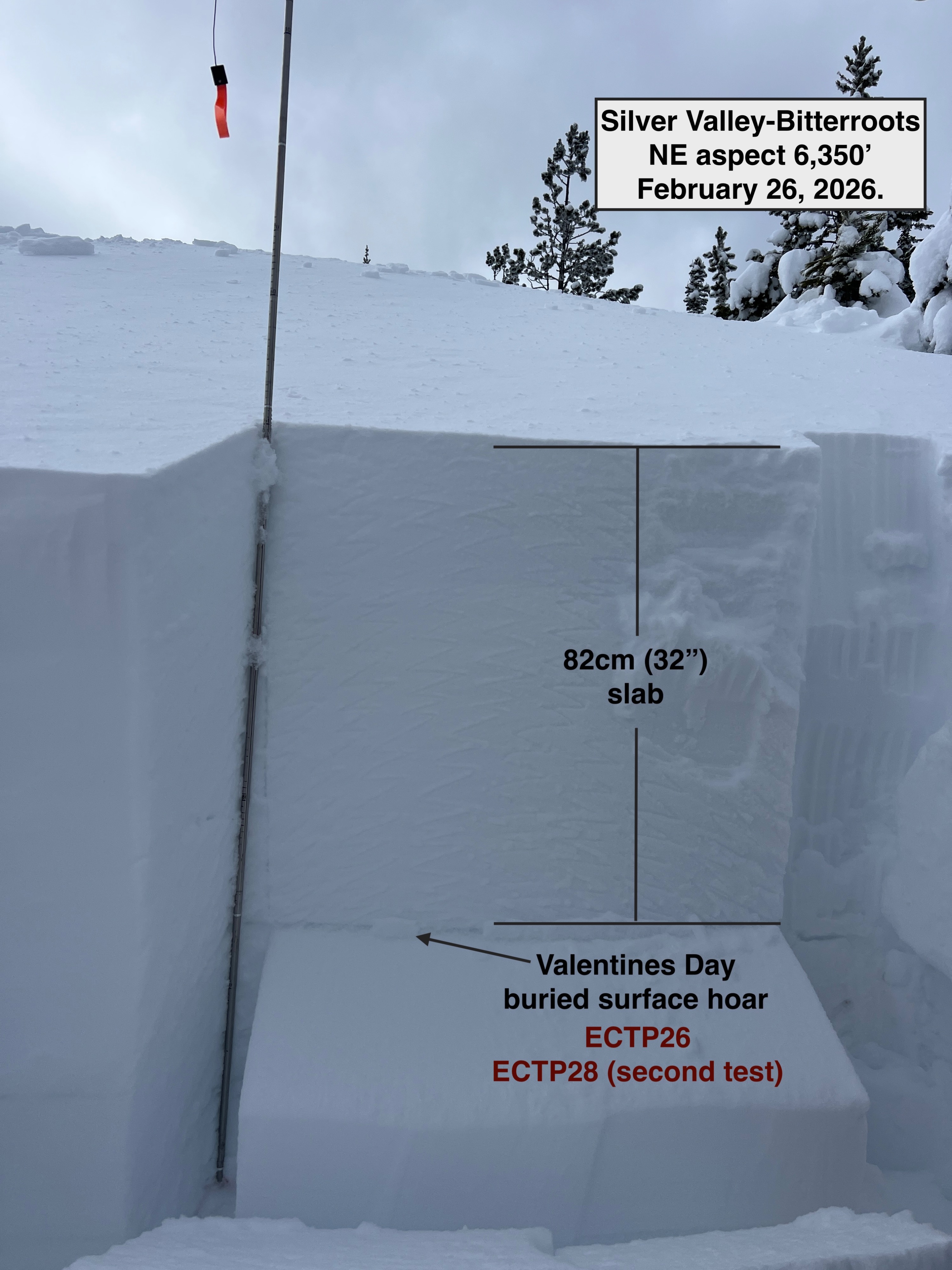
The 2/14 surface hoar is alive and well, despite a growing slab above. Depths have reached 2 to 4 feet, and in turn is becoming more stubborn to fail, but proved to still propagate in multiple ECTs across multiple aspects. On a NE aspect near 6,350', the V Day surface hoar was buried under an 82cm slab, and resulted in an ECTP26. Additionally, there was an ECTP28 on the 1/28 buried surface hoar down 108cm. We ran another set of tests and got similar results: ECTP26 @ V Day, ECTP25 @ 1/28.
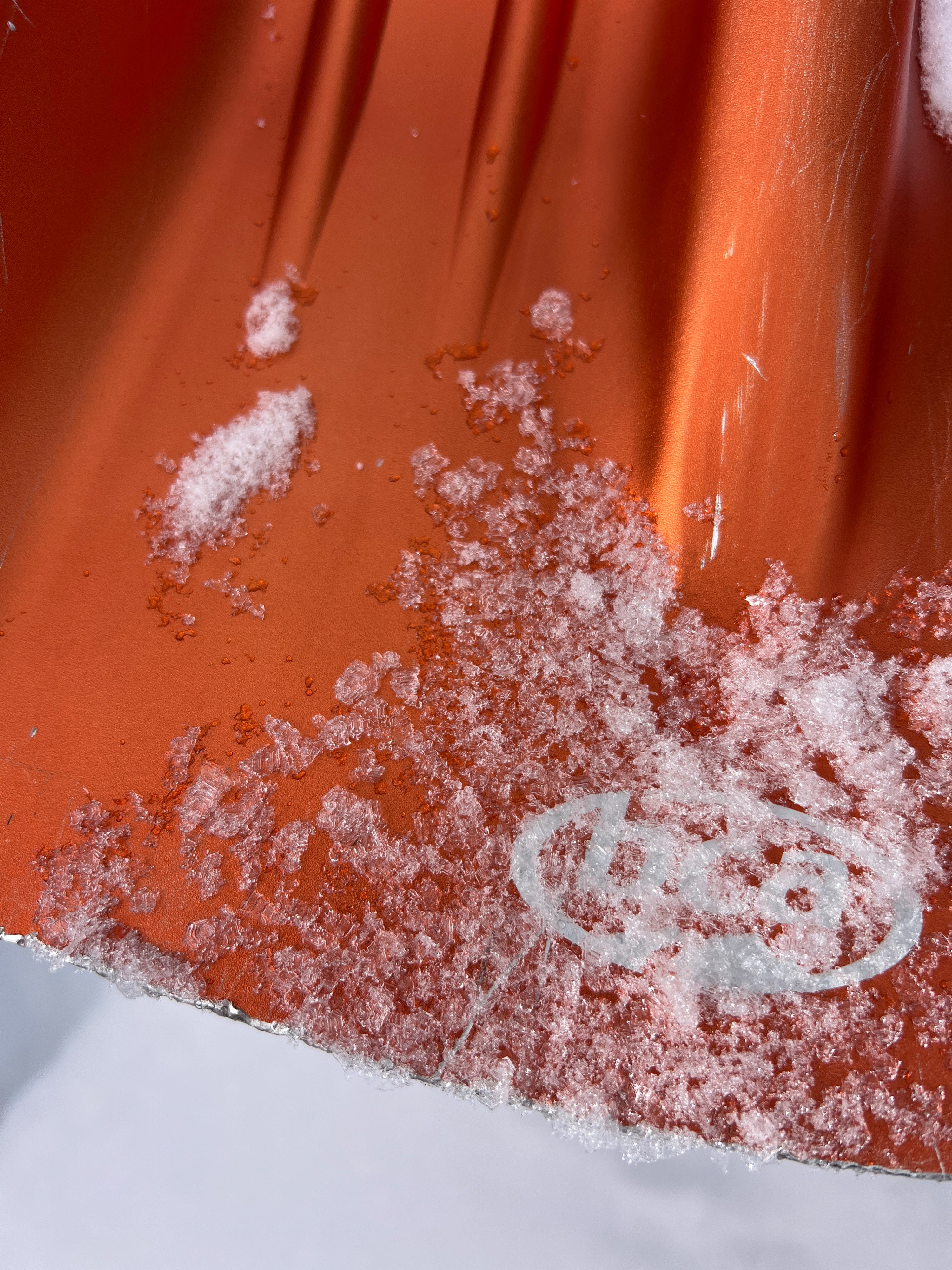
We conducted an ECT on an E/SE facing slope with similar elevation, and had similar results. The slab above was shallower, and the surface hoar grains were much smaller than those in the previous pit. The average grain size was 2mm, hard to make out, and sitting on a crust. ECTP23 down 67cm on V Day. The 1/28 was not observed here.
At 6,250' on a true N aspect with some wind loading, we found the V day buried surface hoar 115cm down. This weak layer did not propagate in our ECT, but failed with one more hard tap. We did observe an ECTP2 18cm down below a new wind slab.
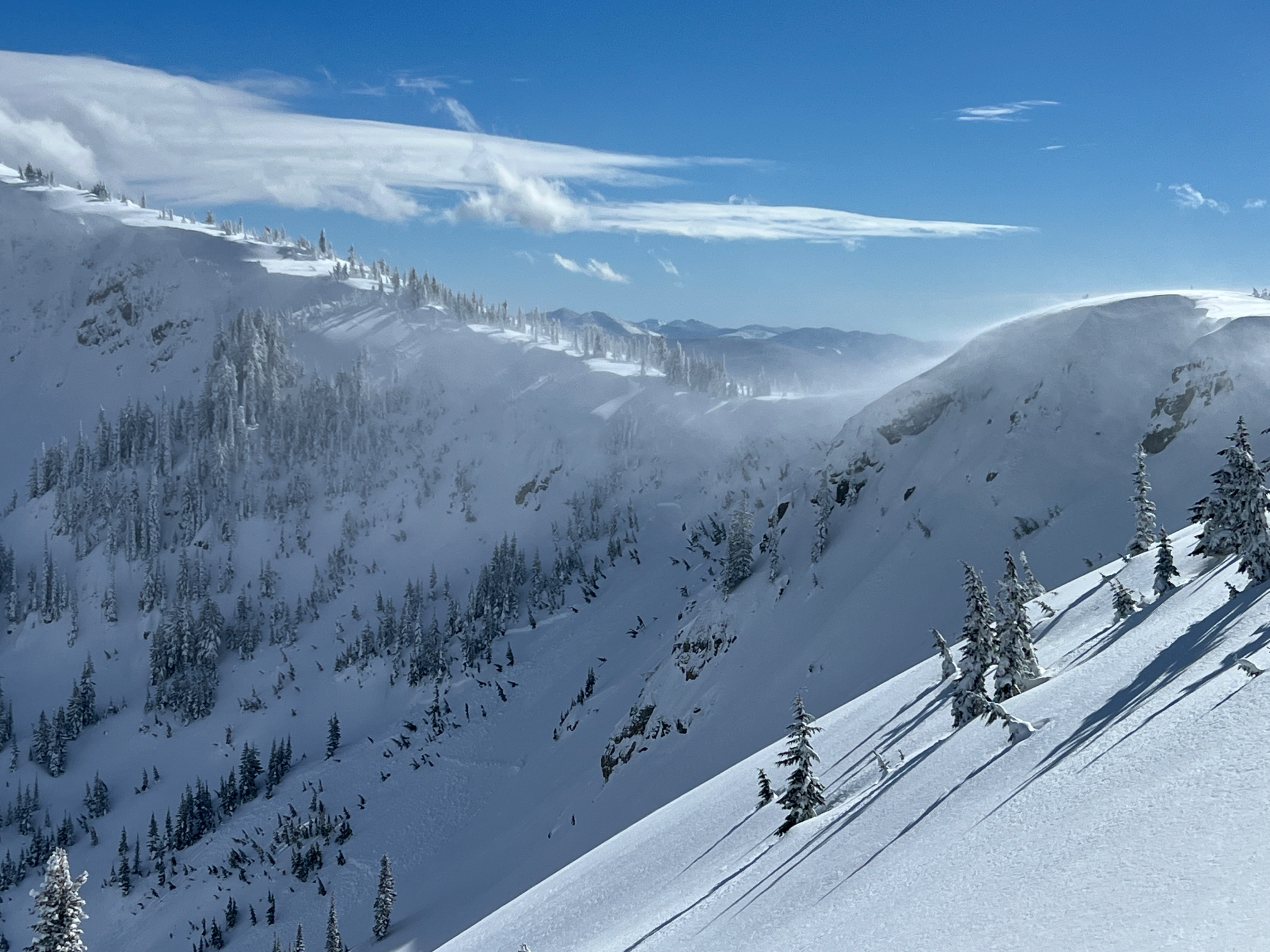
Winds were strong throughout the day, and we observed active transport taking place below ridgelines. Open slopes were also blasted by the winds, reaching down below the tree line. The wind direction swirled through the basin, but the ridgetop wind direction was W/SW.
Avalanche
- Size
- D2 R1
- Type
- SS
- Aspect
- NE
- Trigger
- N
- Elevation
- 6400 ft
We observed one avalanche that looked to be recent, estimated to have failed in the previous 24-48 hours. The avalanche initially failed below a large cornice from wind loading, but could have stepped down to deeper weak layers. From a distance, the maximum crown height was a couple of feet.