
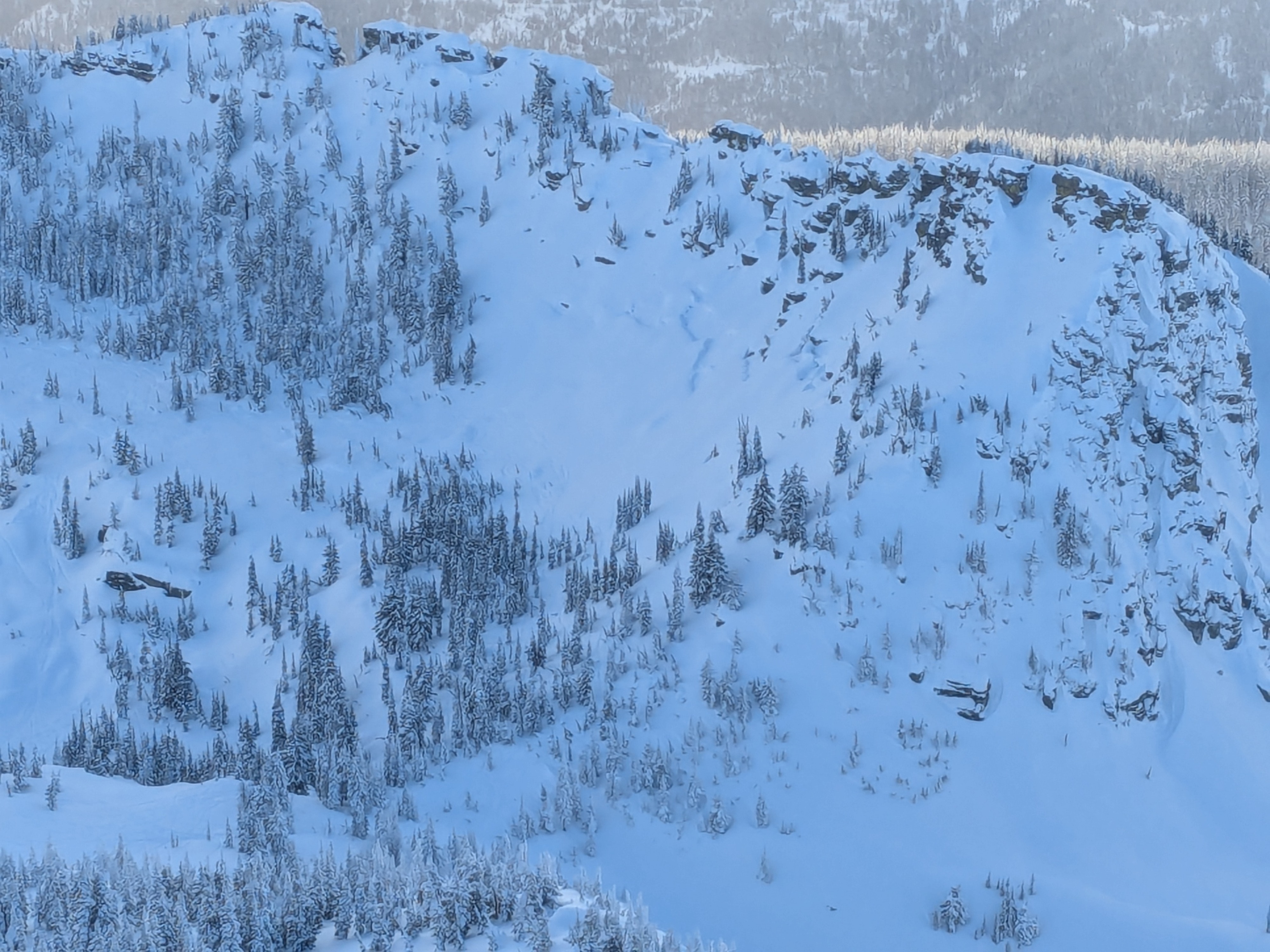
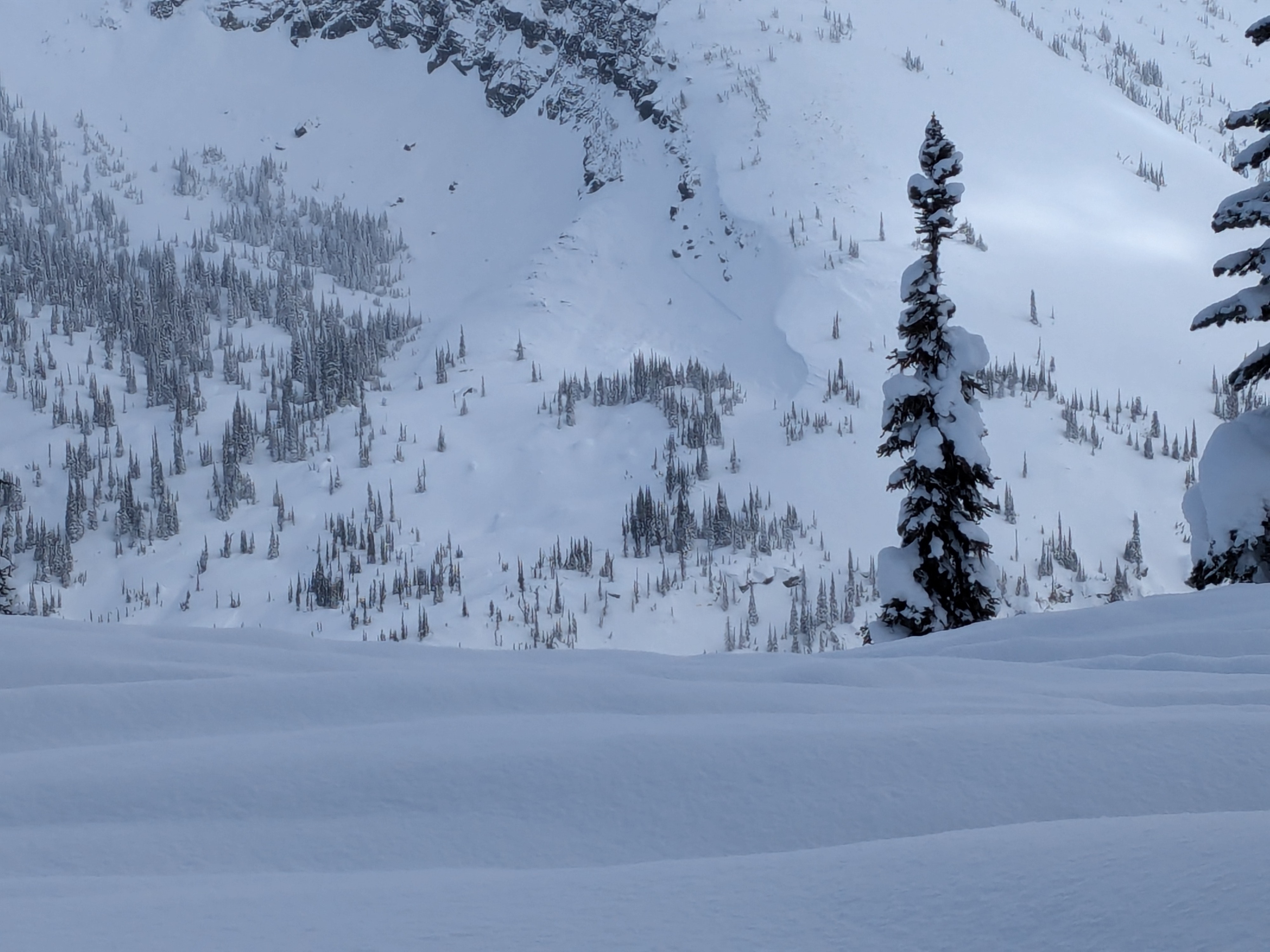
Quick report
- Collapsing
- specific
Avalanche conditions are slowly easing in the sense of less rumbling collapsing and long shooting cracks. Snowpack tests still confirm a dangerous slab-weak layer combination that on a steep enough slope or terrain feature, triggering an avalanche is very much on the table. Be mindful where you palce yourself and your group in relation to steeper terrain or bigger avalanche paths. A step back mindset is still appropriate.
Less audible collapsing today compared to more recent outings, but continues to produce on slopes with a buried faceted crust.Weather
- Cloud Cover
- few
- Wind Loading
- none
- Recent Snowfall
- 8
- Snow Avail For Transport
- moderate amounts
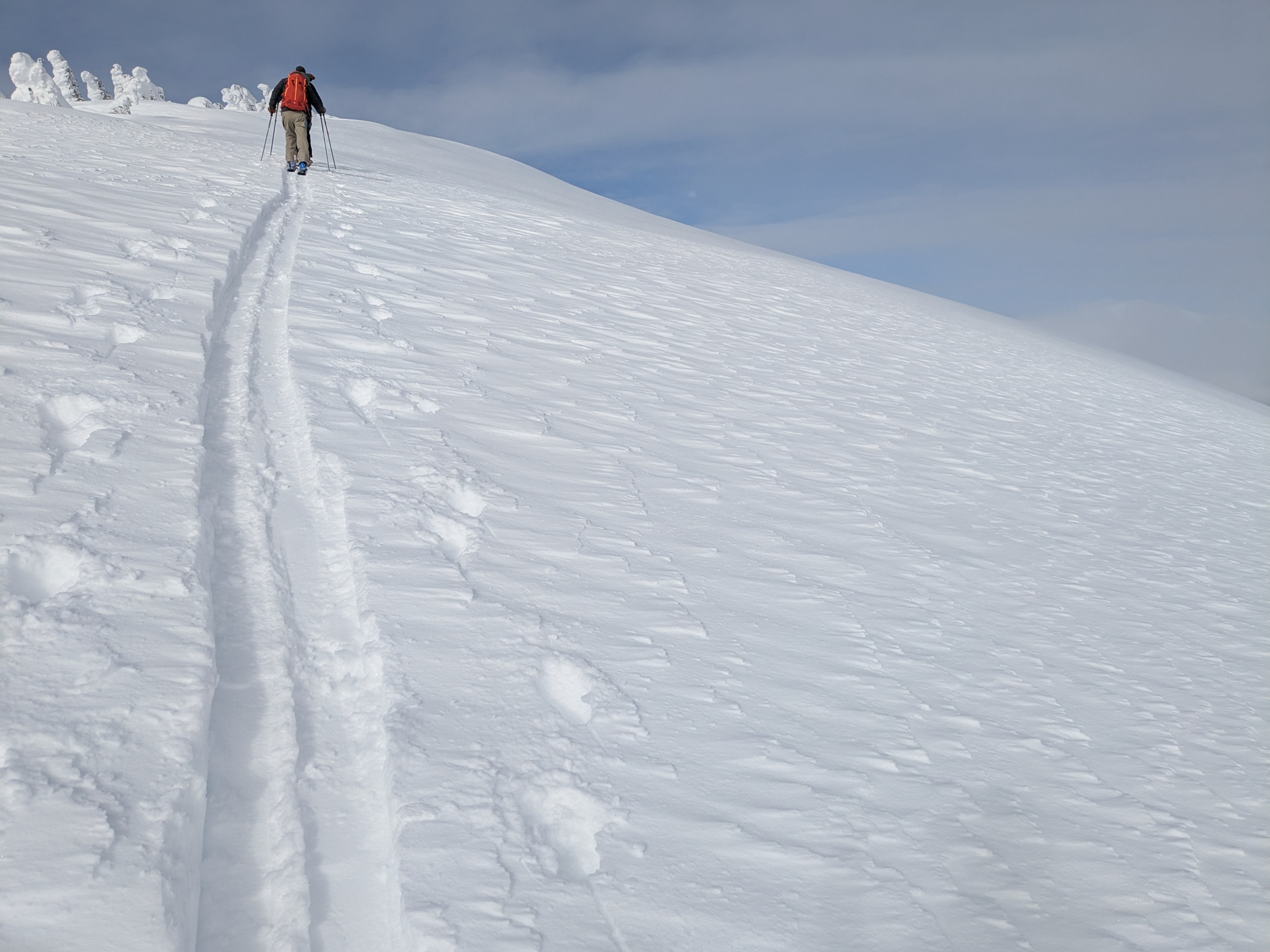
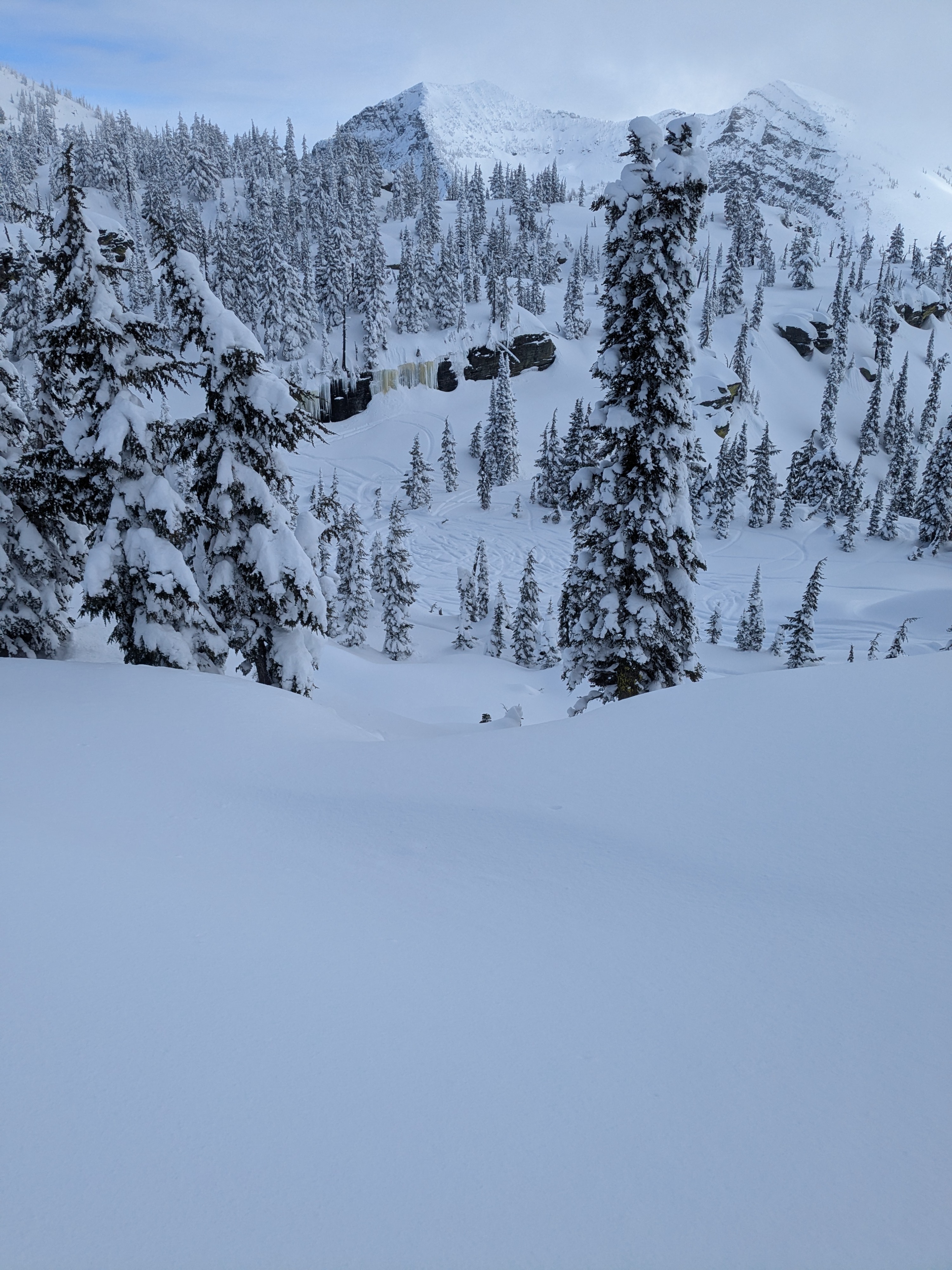
Cold, but beautiful sunny day in the mountains. A few passing clouds during the afternoon brough brief stints of foggy conditions which burned off/ passed over quickly. To our surprise, winds above the tree line were relatively calm with a very subtle breeze.
Snowpack
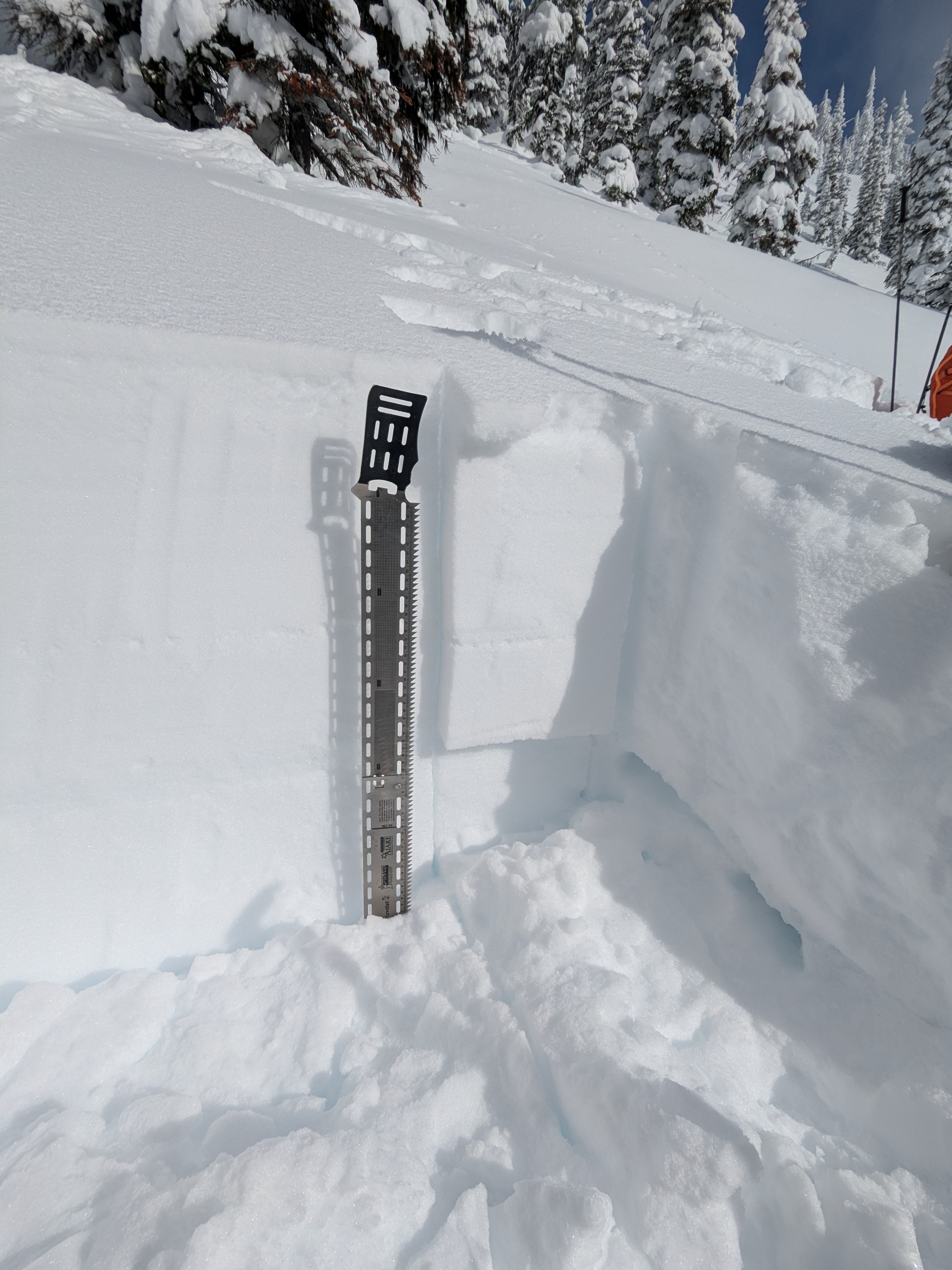
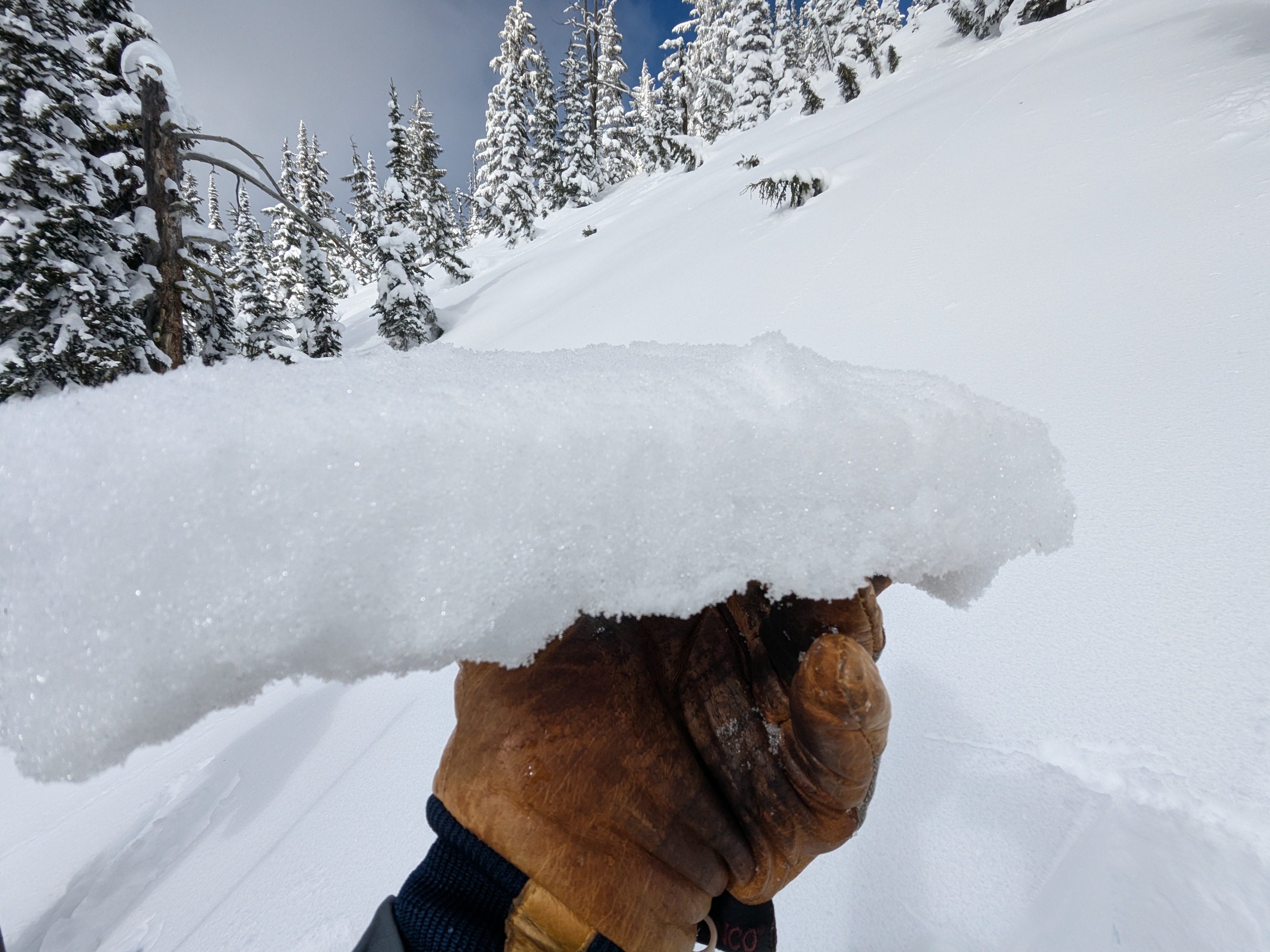
While signs of unstable snow are slowly becoming less frequent in number of occurences, we continue to find a concerning snowpack structure that is slow to heal. While traveling through the middle elevation band, we experienced several nerve-racking collapses that shook the snow off trees. Surface cracking is not what it was immediately after the storm and this is likely influenced by the cold temperatures softening the upper part of the slab. However, when isolating the slab-weak layer and performing tests, the slab still fails with remarkably few loading steps. As the slab has settled under its own weight, the lower layers have gotten harder. While this usually equates to hardening of the weak layer below and making them less worrisome, the cold temperatures and shallow burial depths keep these persistent grains preserved and ready to fail. This long, lingering instability is quite rare for North Idaho and warrants more patience and time than in most years. After numerous collapses above a faceted crust on a west-southwest aspect, we dug down to find a crust around 1 inch thick with facets above and below. The facets below were 0.5-1.5 mm in size, but some of the edges are starting to round. However, the storm snow sitting directly above has already started to facet during the current cold weather regime, and the slab failed in Compression Tests with 8 and 9 taps, and sudden planar results. When we performed an ECT, a crack propagated across the entire column with 10 taps in multiple tests. Once we climbed higher and above 7,000 feet, the slab above was stiffer overall likely from more drifting. We also didn't hear similar rumbling collapses as slightly lower in elevation. This change in slab properties still didn't prevent failures in tests, but tests did take more loading steps to fail. CTs still produced a sudden planar failure with 22 taps under a two-foot-thick slab. Where the slab is stiffer from more drifting or deeper overall depths, it will likely take finding the shallow spot where the slab tapers or is more scoured to impact these weaker layers. In the middle elevation band, it likely takes traveling on a slightly steeper slope or broad opening to find trouble. Those places are where surface hoar may be more widespread and well-preseved. It was tought to pinpoint a spatial pattern in these delicate feathers and at what elevation band they do and do not exist. They are more common on northerly and easterly aspects. This hodgepodge patchwork of weaker snow below makes diligent terrain management uber important at present.
Avalanche
- Size
- D2
- Type
- SS
- Aspect
- N
- Trigger
- N
- Elevation
- 6800 ft