
Quick report
- Cracking
- isolated
The latest round of snowfall dramatically improved snow coverage above 5,000 feet. Still too thin for adventerous over-the-snow travel off roads below that. Avalanche problems are currently confined to the fresh storm slab sitting above a rain crust. This crust is more supportive at upper elevations, while lower elevations its easier to punch through and harbors moist facets below. Small, isolated loose dry sluffs intiated with ski pressure on steeper slopes but did not travel far down the slope. We were pleasently greeted by Bullwinkle on our egress out who was taking advantage of supportive road conditions from multiple snowmobile tracks.
Isolated cracking in drifted areas around two feet deep. None produced long-running cracks. No audible collapses.Weather
- Cloud Cover
- obscured
- Wind Loading
- moderate
- Rain Elevation
- 4,200 feet
- Recent Snowfall
- 30 to 45 cm
Obscured skies with moderate southwest winds. Low cloud deck slowly began to lift in the afternoon, but not enough to give visibility into upper-elevation terrain. Temperatures were below freezing throughout the tour.
Snowpack
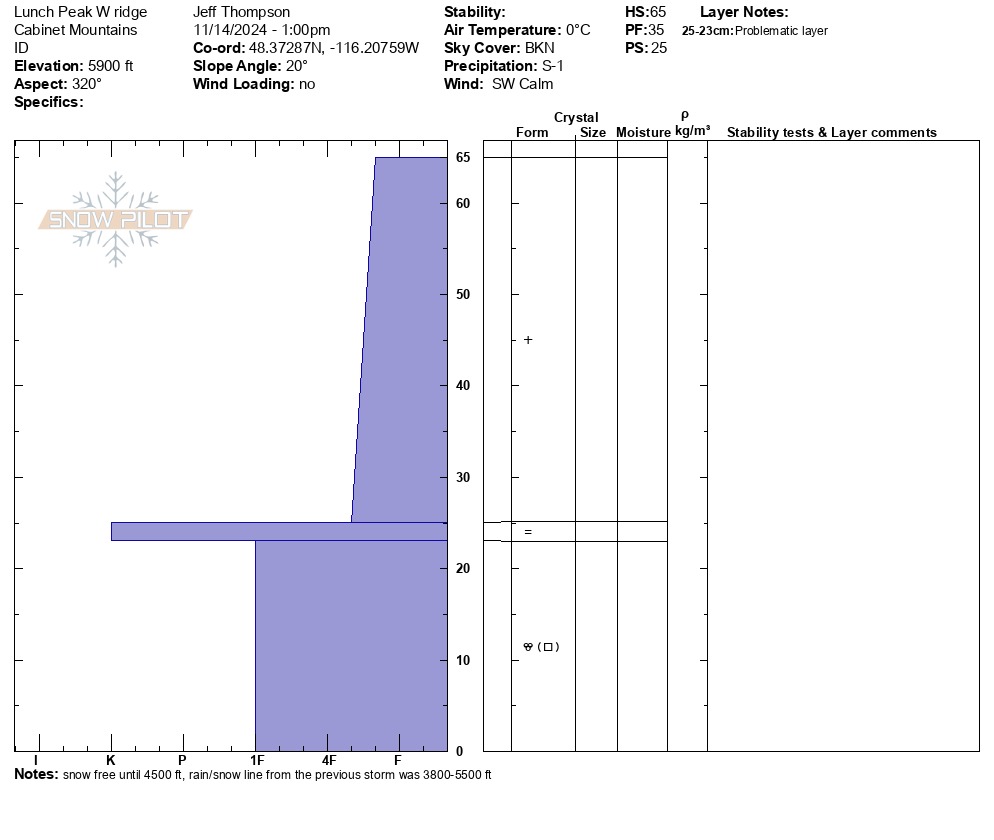
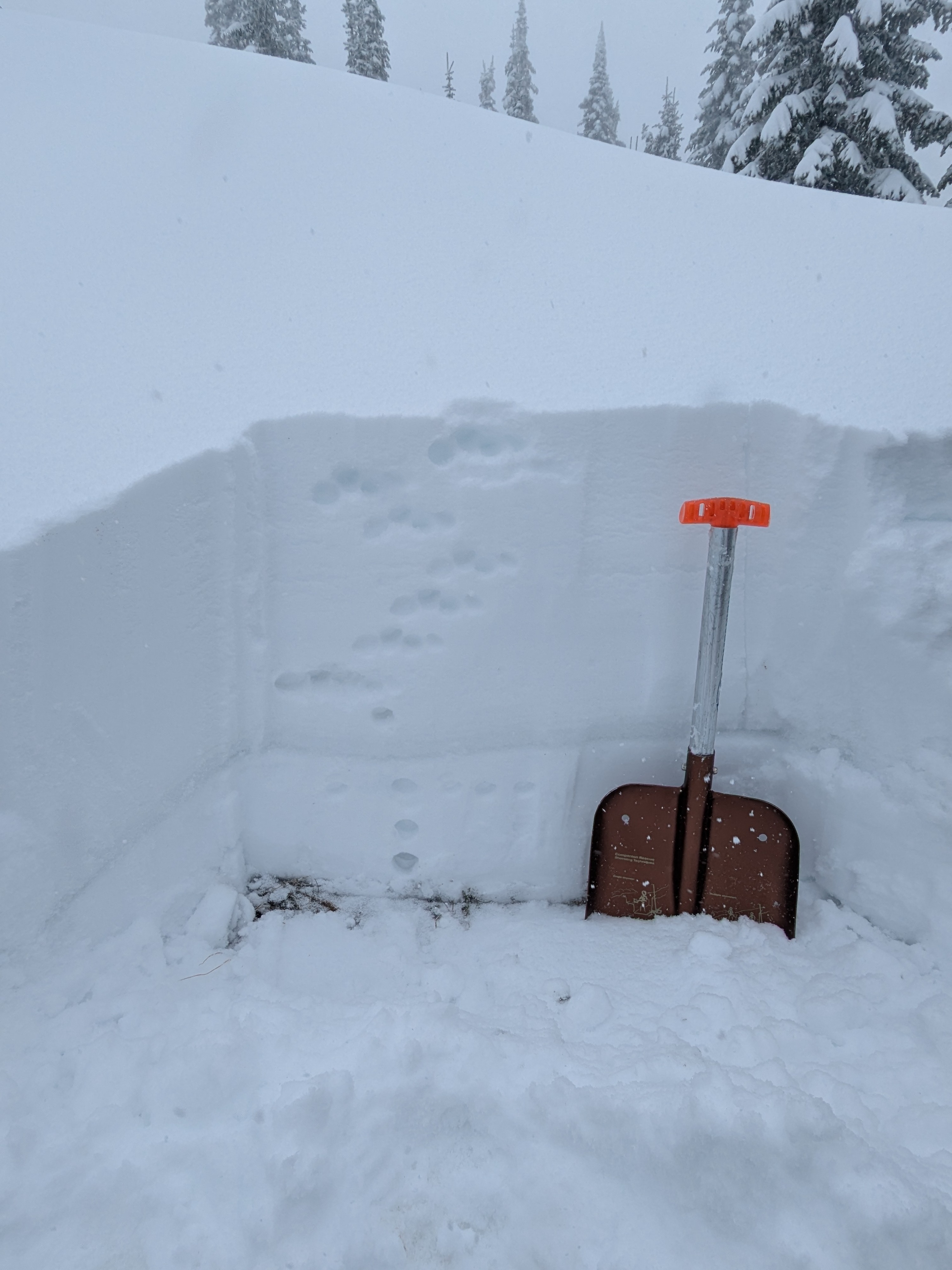
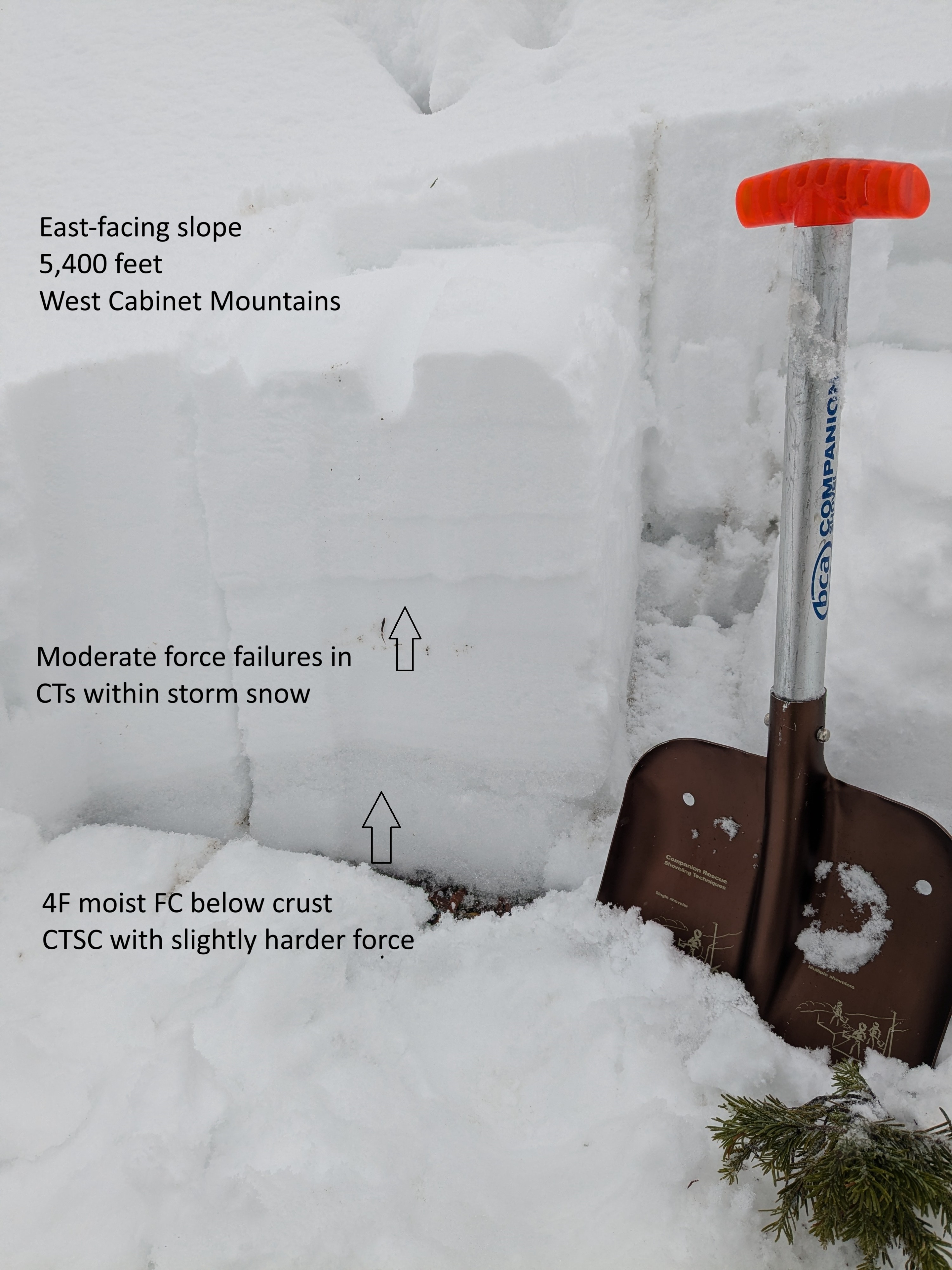
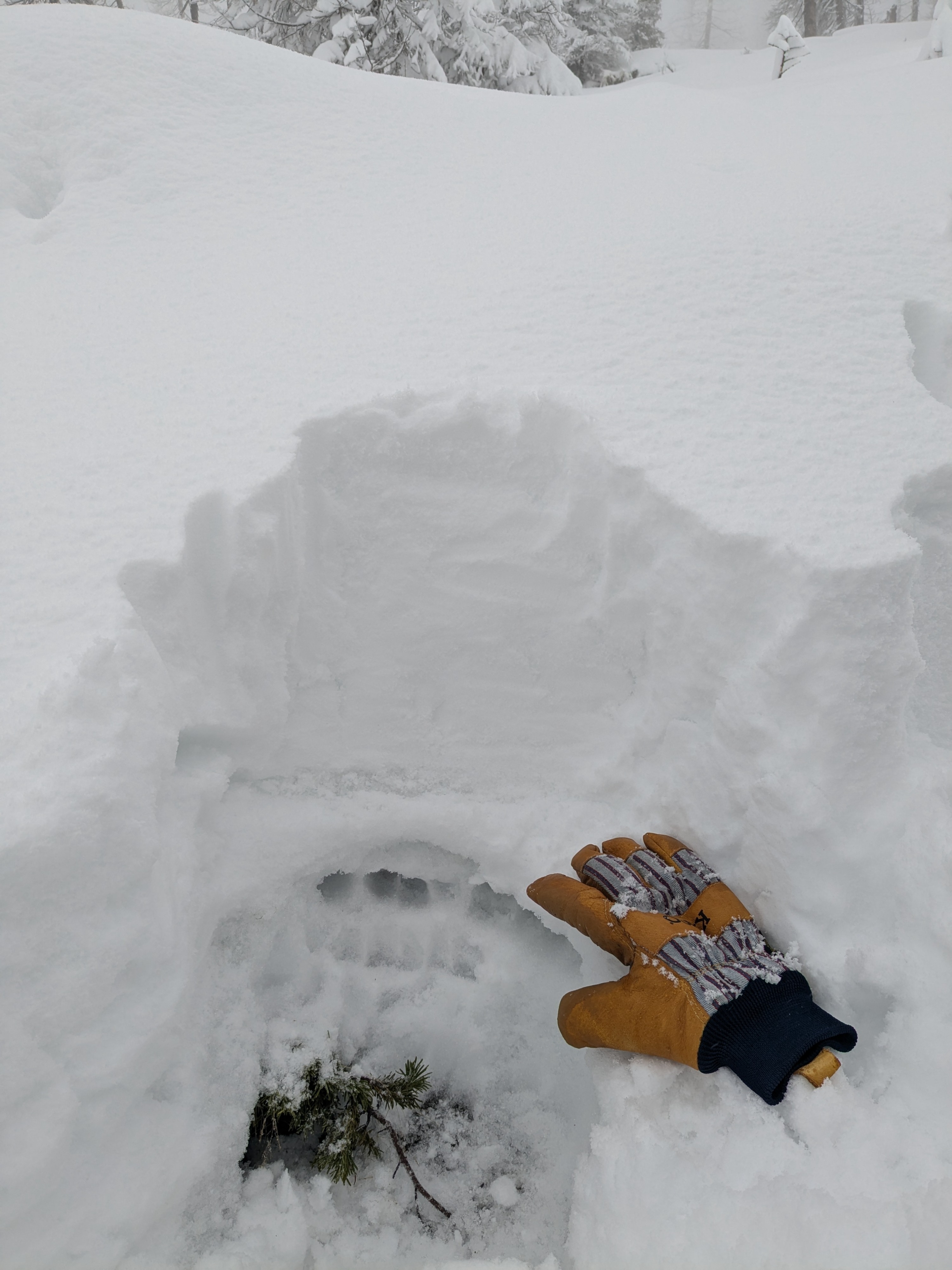
We found 12 to 18 inches of new snow over the last 48 hours. The storm snow fell right side up and sits on top of a rain crust that formed between November 9 to 11. There was evidence of light rain up to 6,500 feet, but we did not travel higher. Overall good bonding of the storm snow at mid-storm interfaces and to the rain crust. Warmer temperatures at mid and lower elevations at the onset of precipitation likely prevented a solid re-freeze of the moist, old snow surface below 5,500 feet. Add an insulating blanket of new snow above, and the moist facets below still show signs of transitioning from rounds to facets and could be a looming problem with subsequent storm loads. Pay attention to how supportive the crust is by stepping off your boards or machine to see how deep you sink. If you easily punch through investigate whats lurking below the curst before committing to slopes. Moderate winds with strong gusts easily formed deeper drifts around 3 feet deep along ridgelines. We observed isolated cracking in drifted areas but none of the cracks traveled far.
Avalanche
- Size
- D1
- Type
- L
- Aspect
- E
- Trigger
- AS
- Elevation
- 6000 ft
We triggered a couple of small, harmless loose snow sluffs running above a rain crust. They were confined to roll overs around 35 degrees and did not travel far down the slope.