
Quick report
- Cracking
- isolated
Today, we hunted for problems in a notoriously windy location that generally holds a shallow and weak snowpack.
- Observed no signs of instability and no recent avalanches. One exception was a shooting crack in a wind loaded pocket. This occured on the ascent just above a previous track.
- We ski cut short test slopes on the descent and got no results.
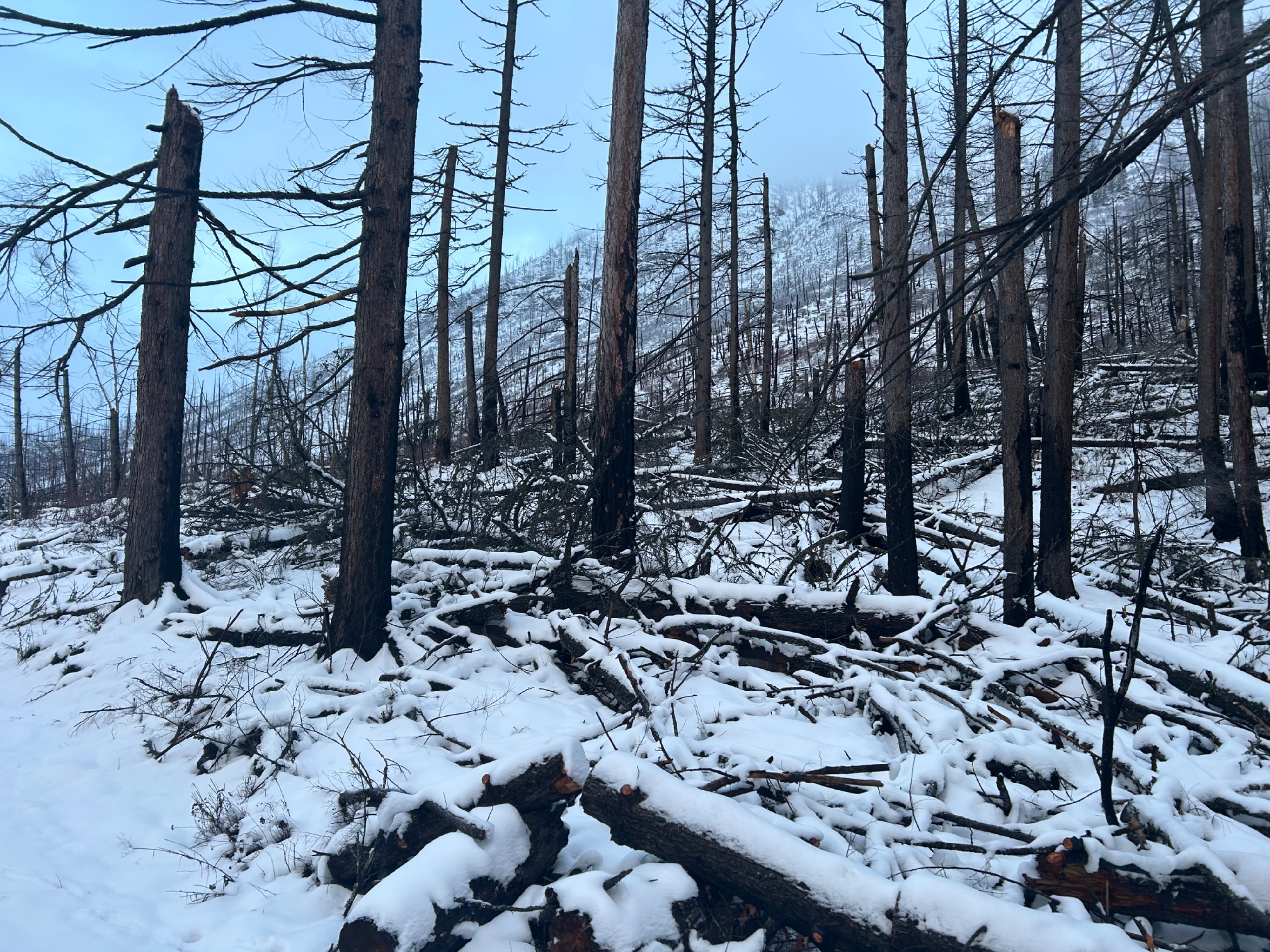
- A few inches of recent snow rests on a freezing rain crust. This crust thickened with elevation. Thankfully, it didn't impact ski quality. I suspect it will take a strong wind event to transport snow below the crust.
- The sun felt hawt. Like real hawt. And it felt good. We observed mini rollerballs, and trees started shedding snow on our descent at about 1 PM. Plan for a sun crust on southerly aspects in the days ahead.
We chose to ski the skin track back down the ridge. This decision was due to the exceptionally shallow snowpack below roughly 5500 feet. There are only about 6 inches of melting snow in the exits of the SW-facing terrain on Stanton.
We got 1 shooting crack on the skin track in a wind loaded pocket. No results with ski cuts during the descent.Weather
- Air Temp
- Below freezing
- Cloud Cover
- few
- Wind Loading
- previous
- Rain Elevation
- 3500
- Recent Snowfall
- 10
- Snow Avail For Transport
- moderate amounts
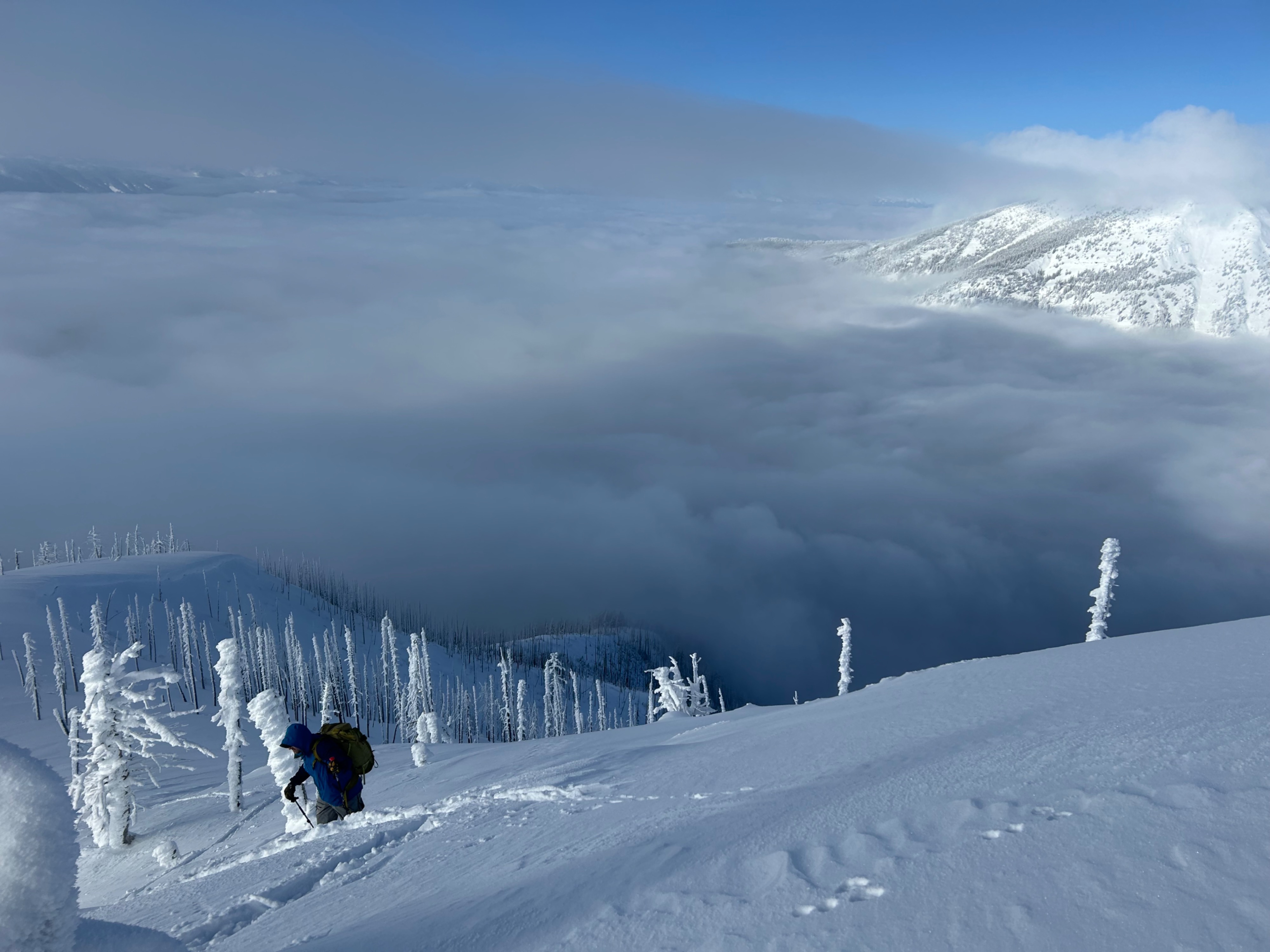
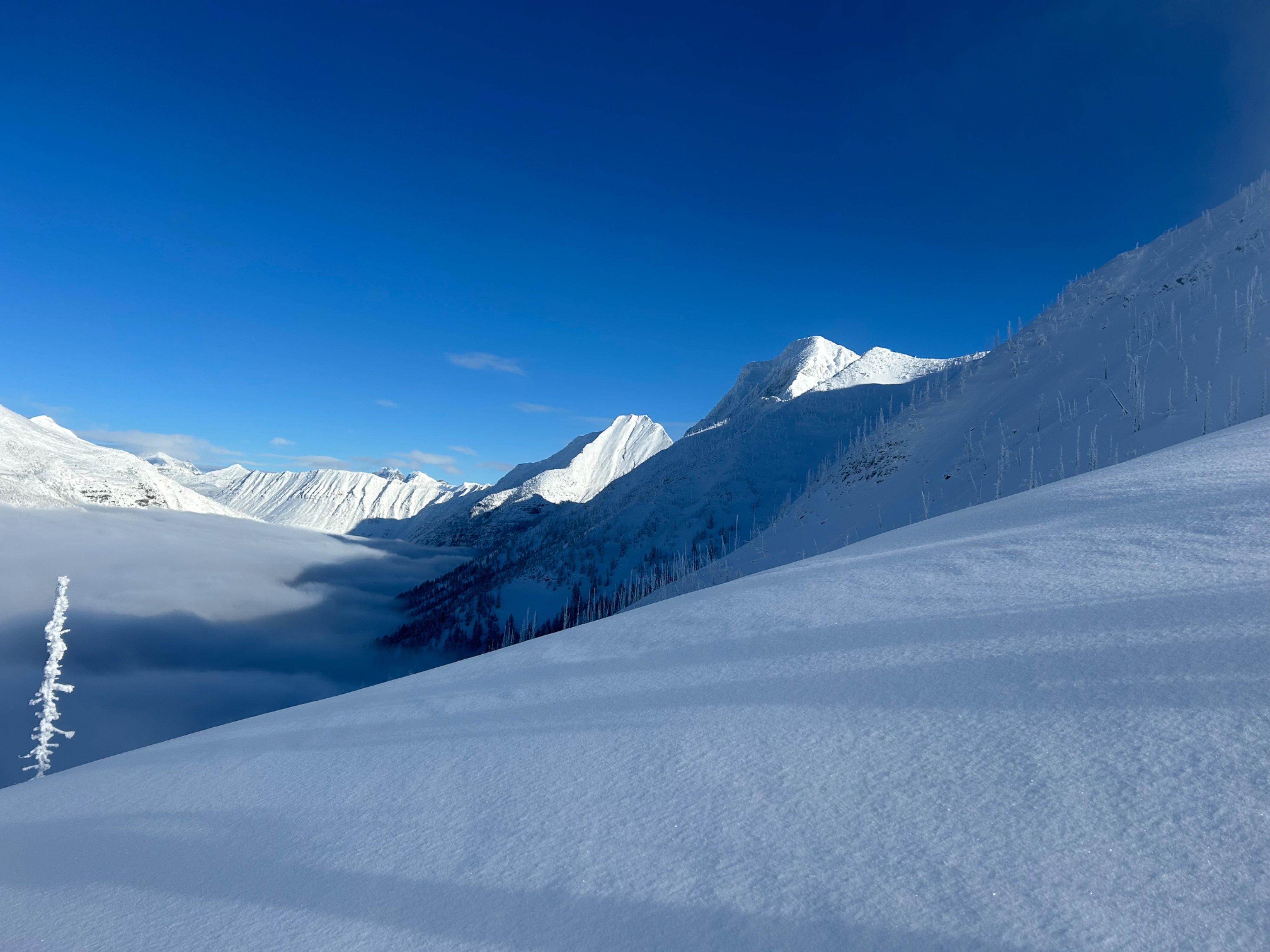
Beautiful day once above the clouds. The cloud deck was at roughly 6000 feet. Temps felt above freezing at Lake McDonald. Freezing levels seemed to be at around 4000 feet.
Snowpack
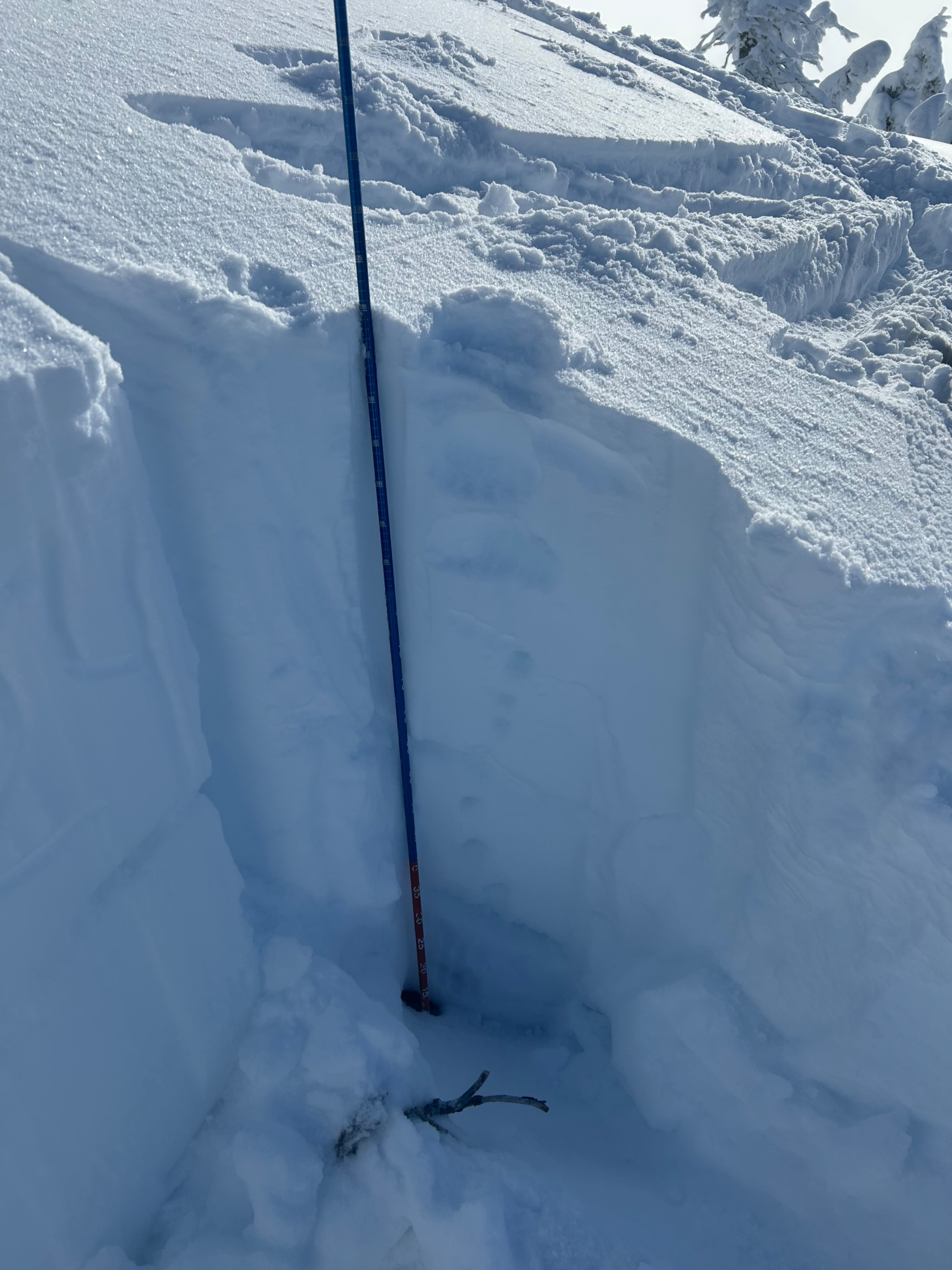
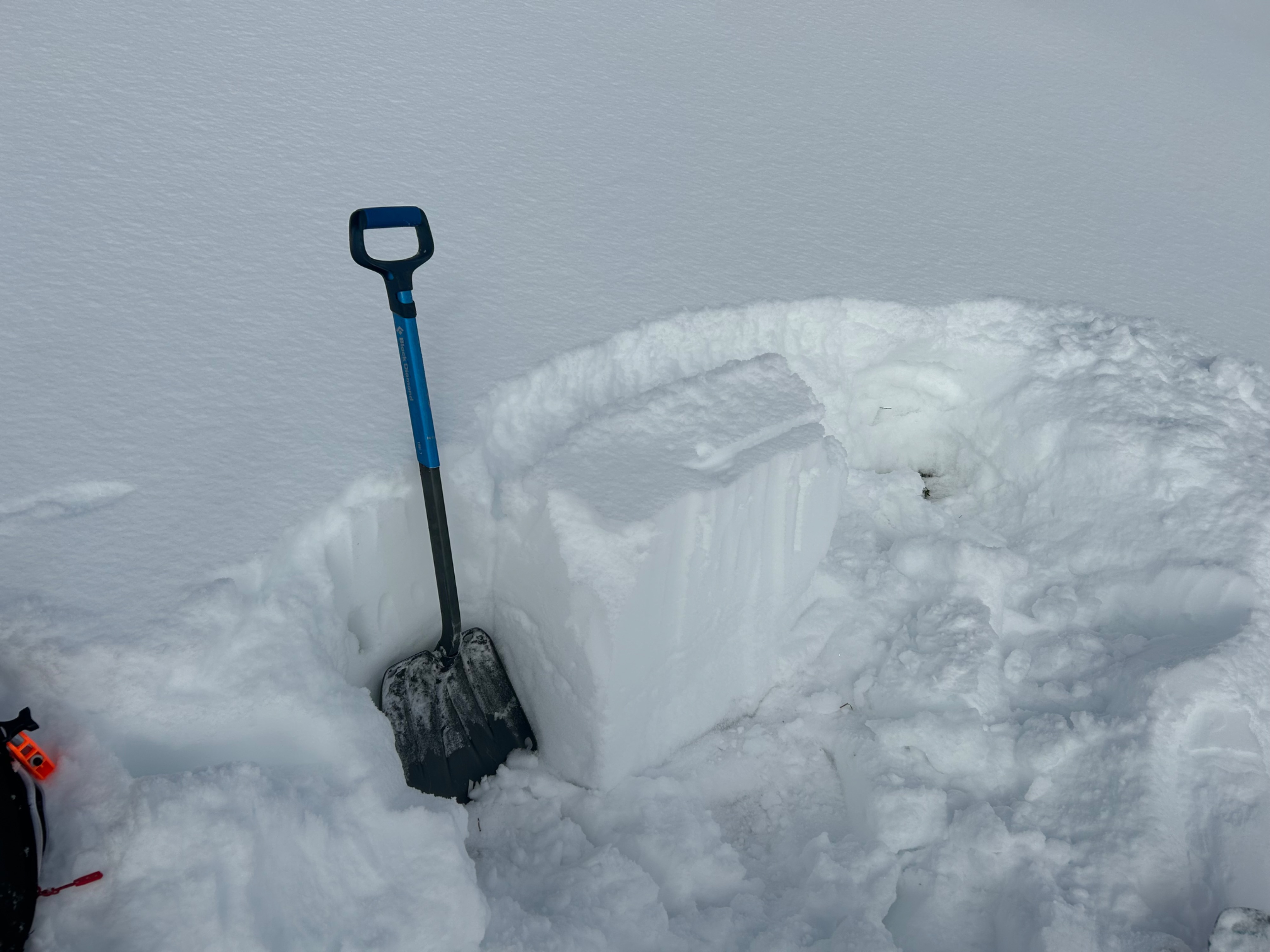
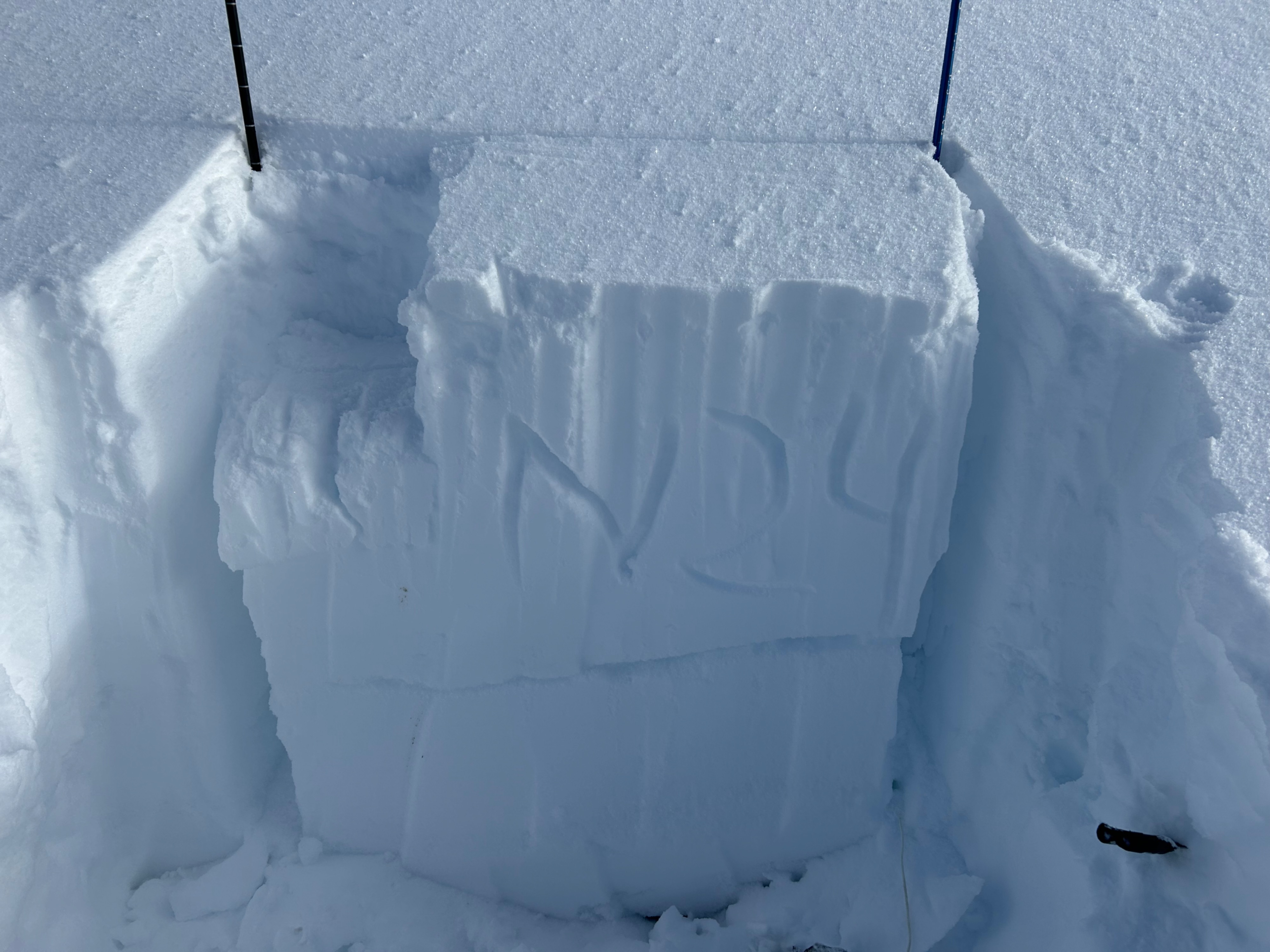
We dug two snow pits at approximately 6900 feet:
S aspect: snowpack is generally shallow with basal facets. Above the facets was a foot thick slab that was one finger hard. ECTN22. Basal facets show signs of rounding.
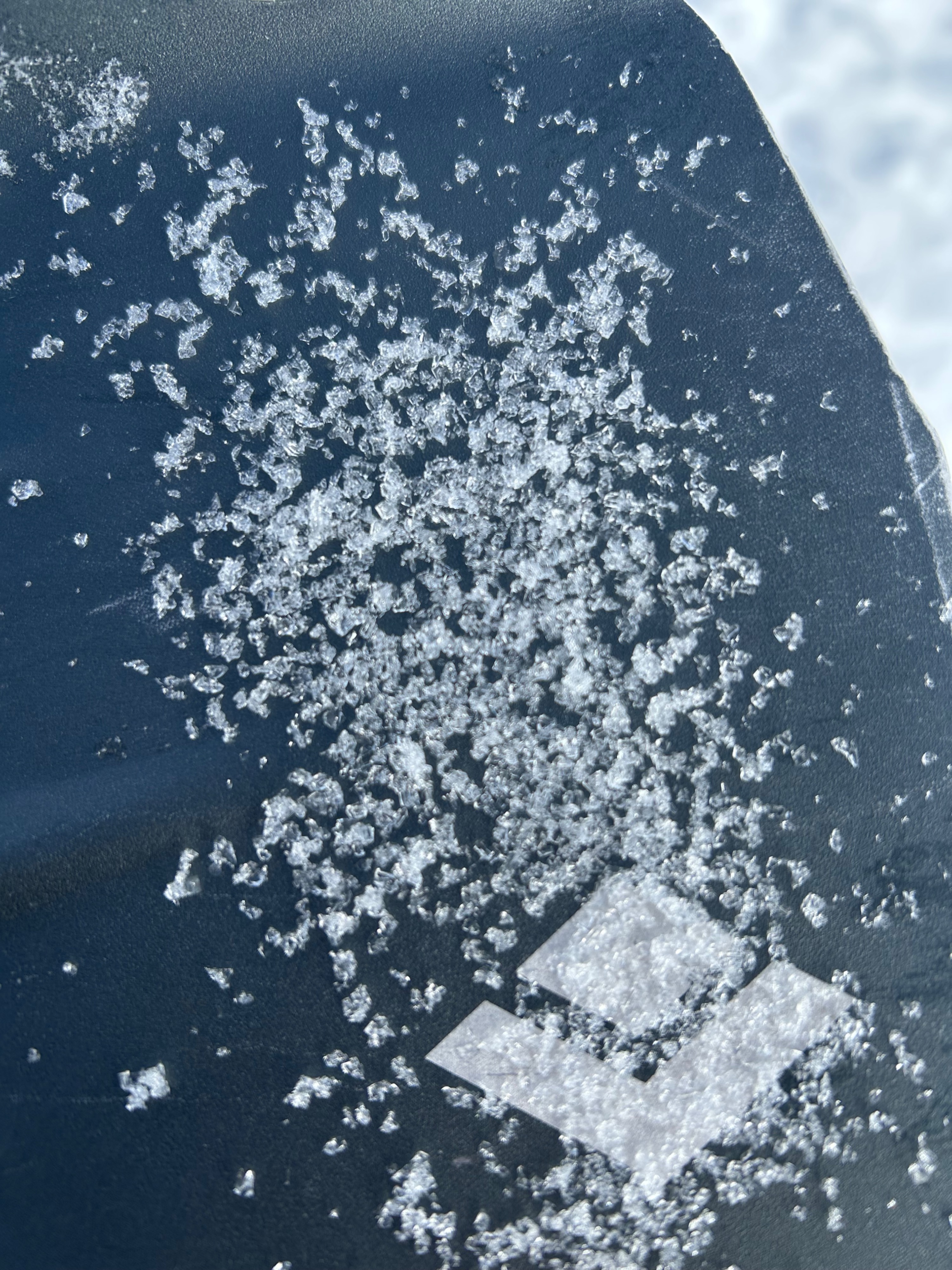
N aspect: HS 120. We found a distinct layer of facets and surface hoar (12/7 layer) approximately 2 feet below the surface. This layer is 2 cm thick and 4 finger hard. ECTN24 at this interface.