
Quick report
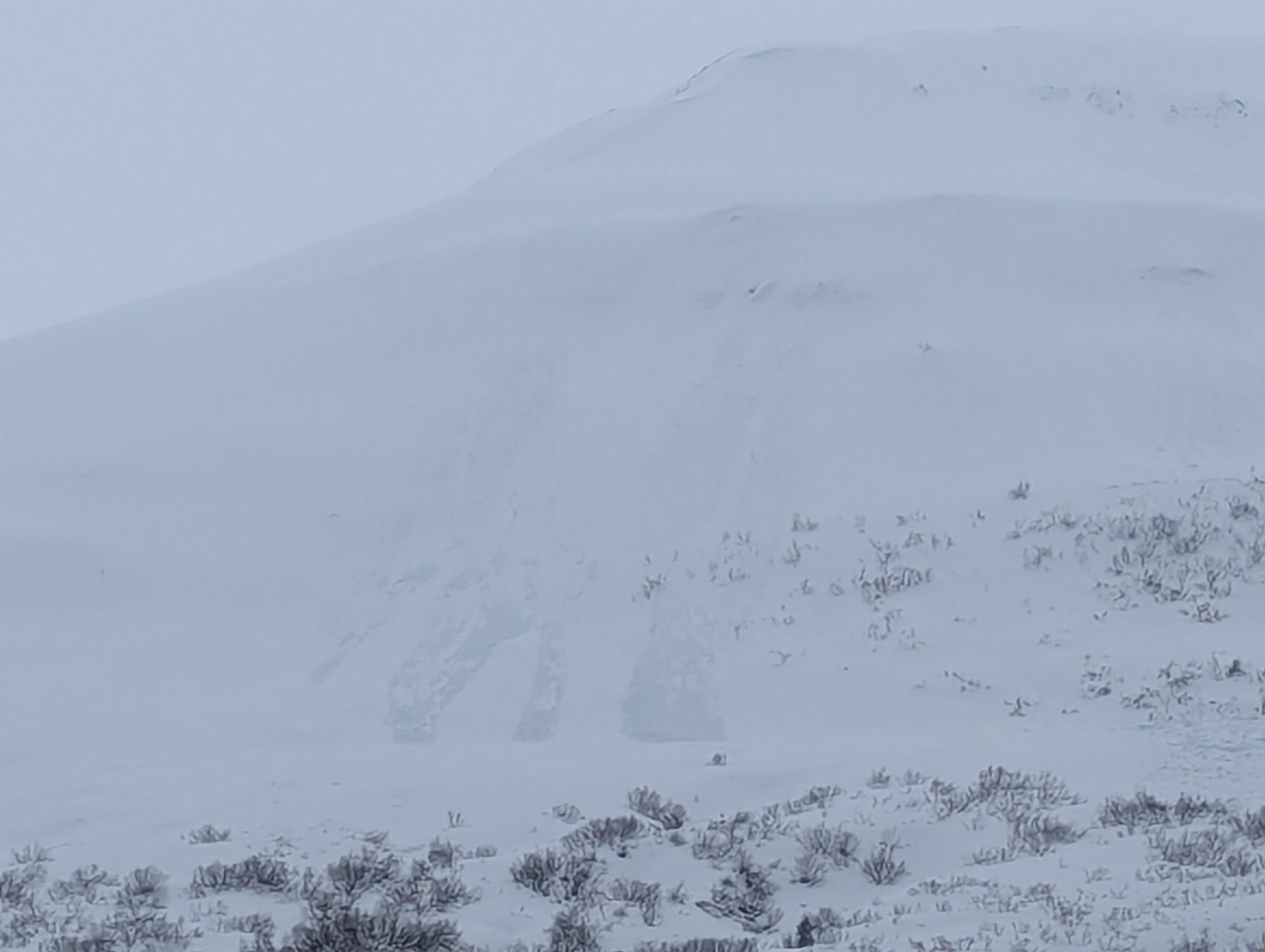
Overall, there is a mosaic of conditions out there right now. With wet snow problems at low elevation and on south aspects. Weak layers in the upper 2-3' of the snowpack at upper elevations, especially on northern aspects. And the potential for wind slabs within the new snow that has been falling in the current storm. During this period of active weather, it is important to monitor how much new snow and rain are falling and how cold it is getting at night. If the snowpack is not refreezing overnight, the chances of wet avalanches on buried weak layers increase.
Weather
- Air Temp
- 30s
- Cloud Cover
- obscured
- Wind Loading
- none
- Rain Elevation
- 1500
- Recent Snowfall
- 3-5 cm
- Snow Avail For Transport
- small smounts
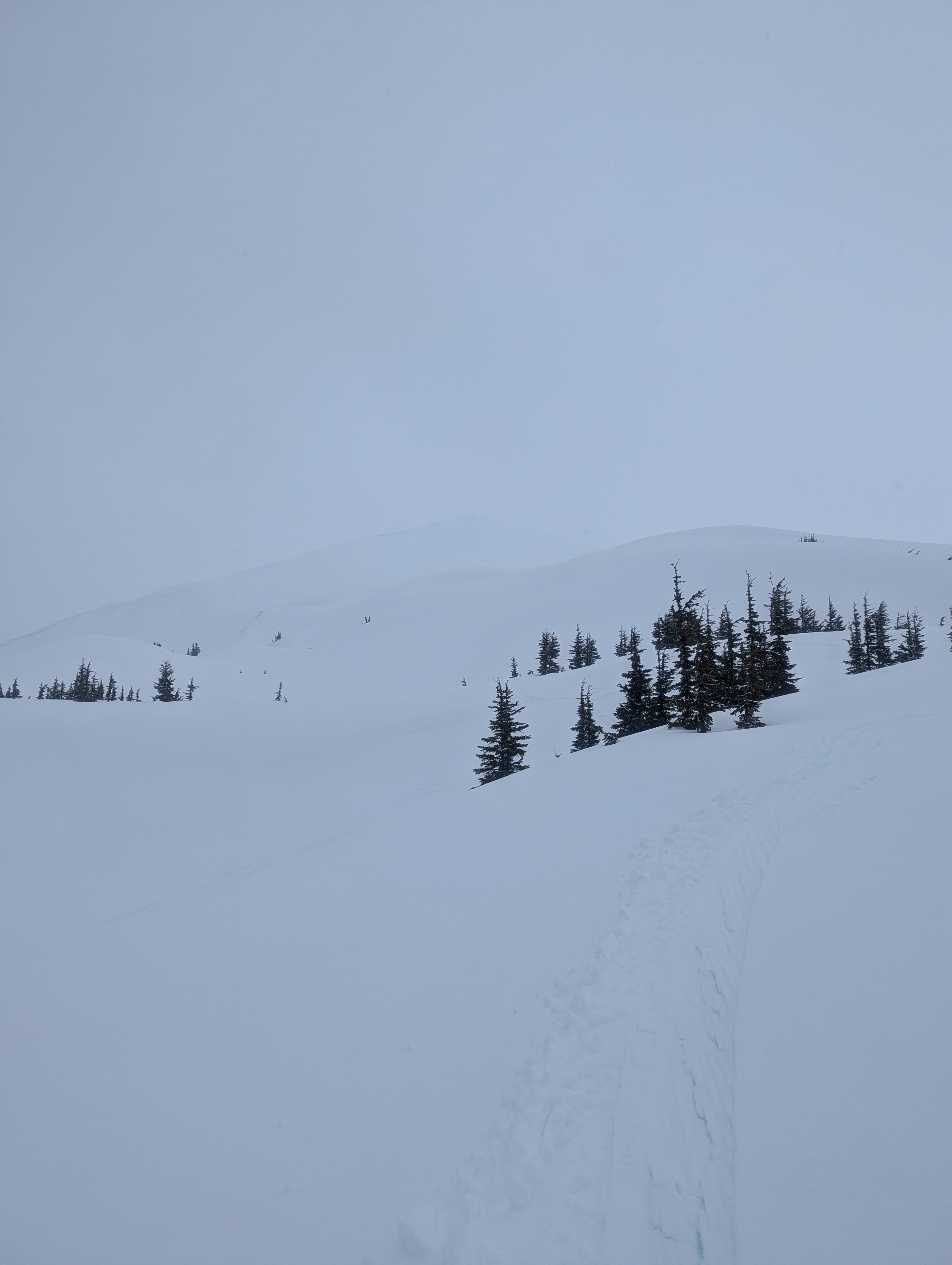
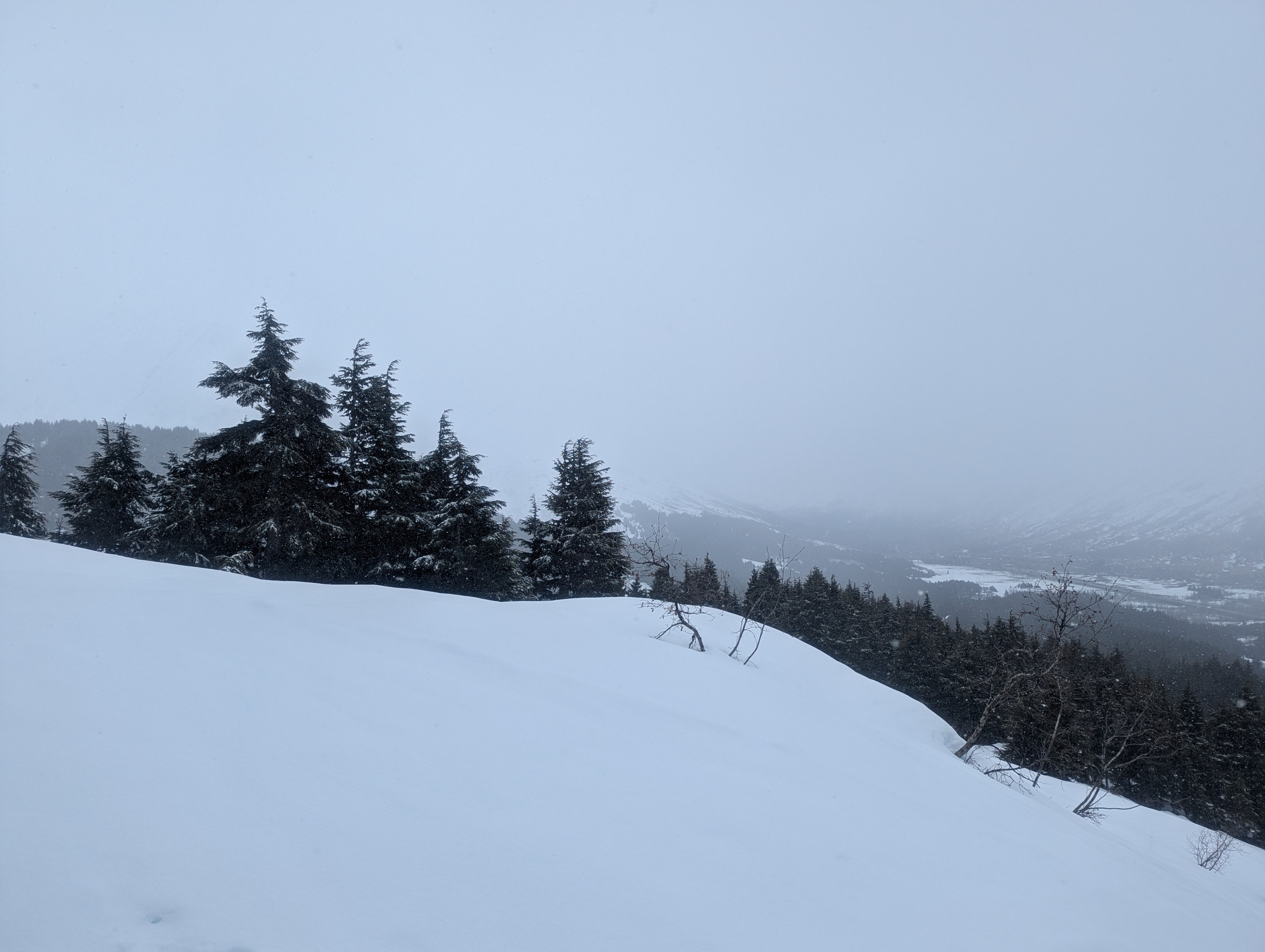
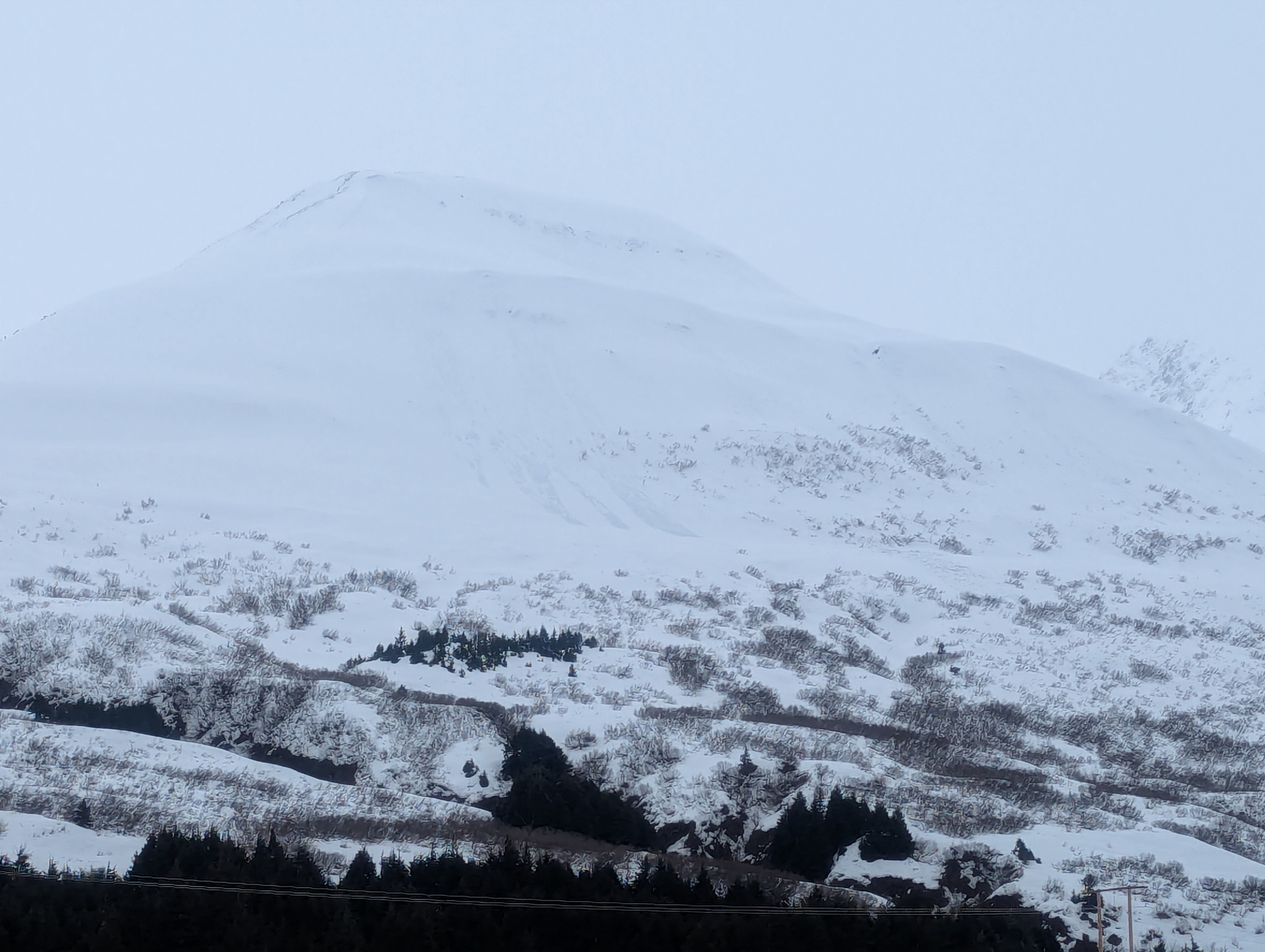
Rain up to 1500' with light snow above. Light winds at treeline. Visibility was poor, with occasional views of Tincan Common, but mostly whiteout conditions above treeline.
Snowpack
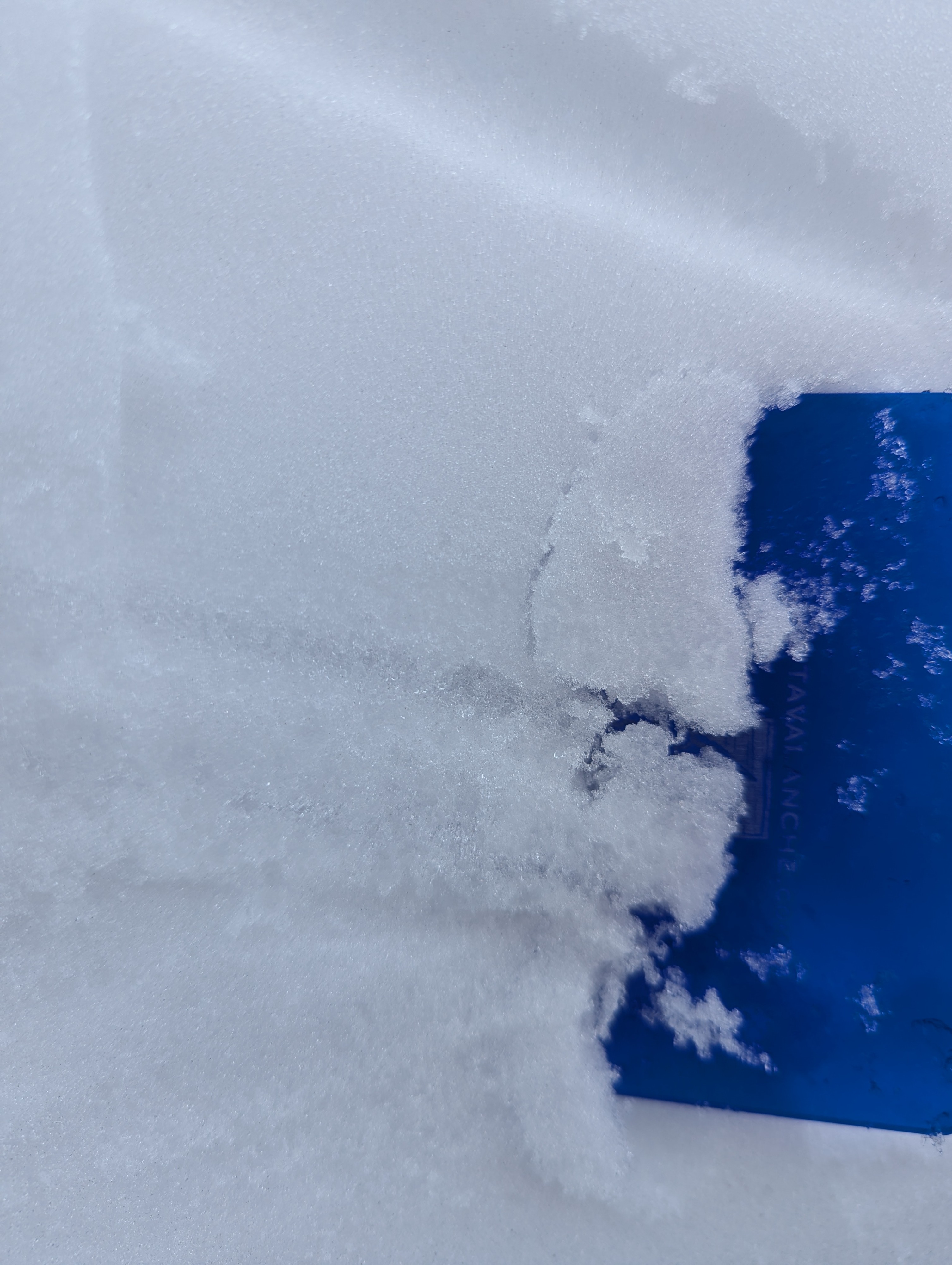
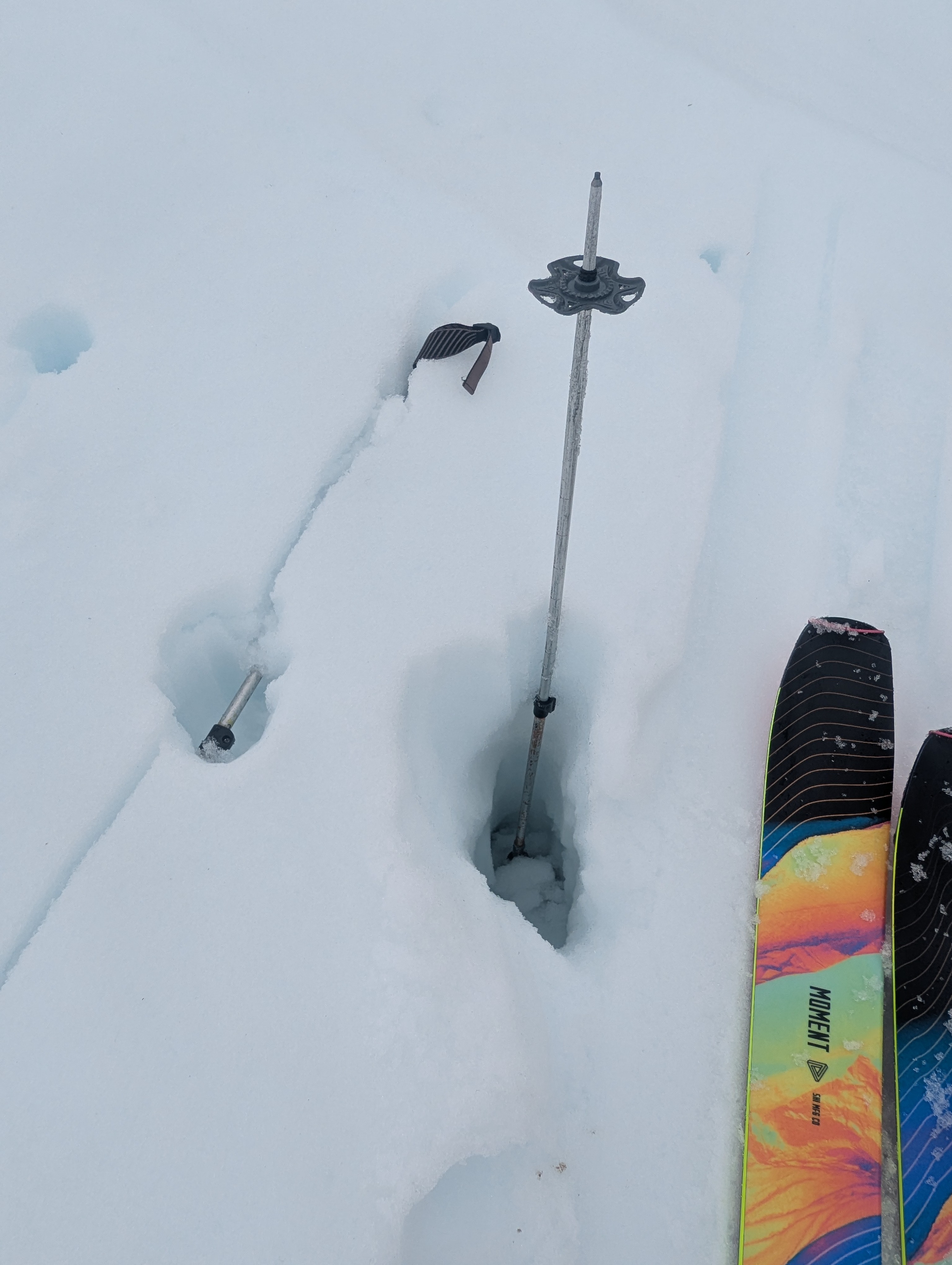
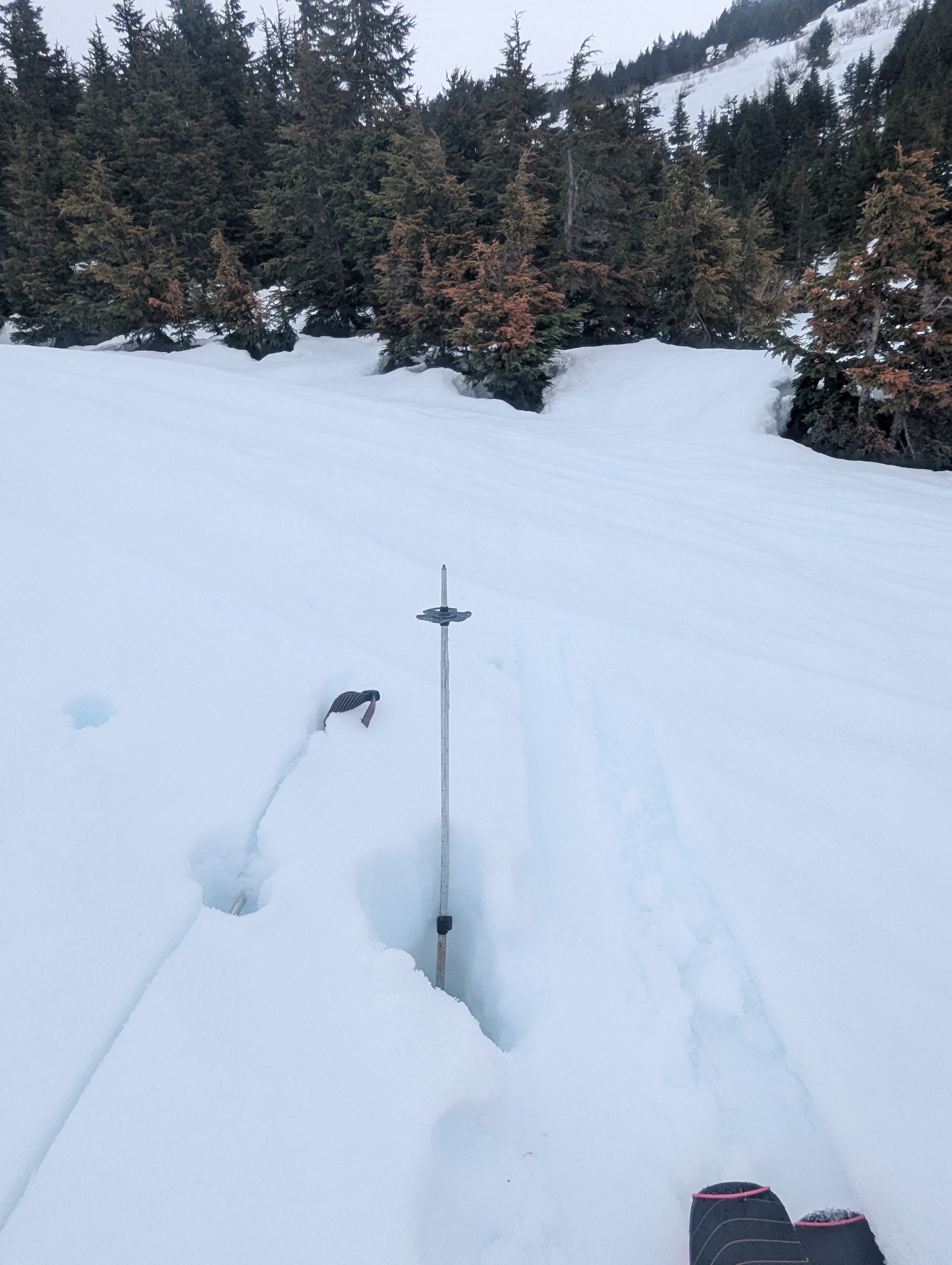
Below 1500', the surface snow was saturated, and I would sink in up to my hip or knee when stepping out of my skis. This is a bad sign for potential wet snow avalanches at low elevations. Above 1500', the melt freeze crust underneath 2-3" of new snow was mostly supportable.
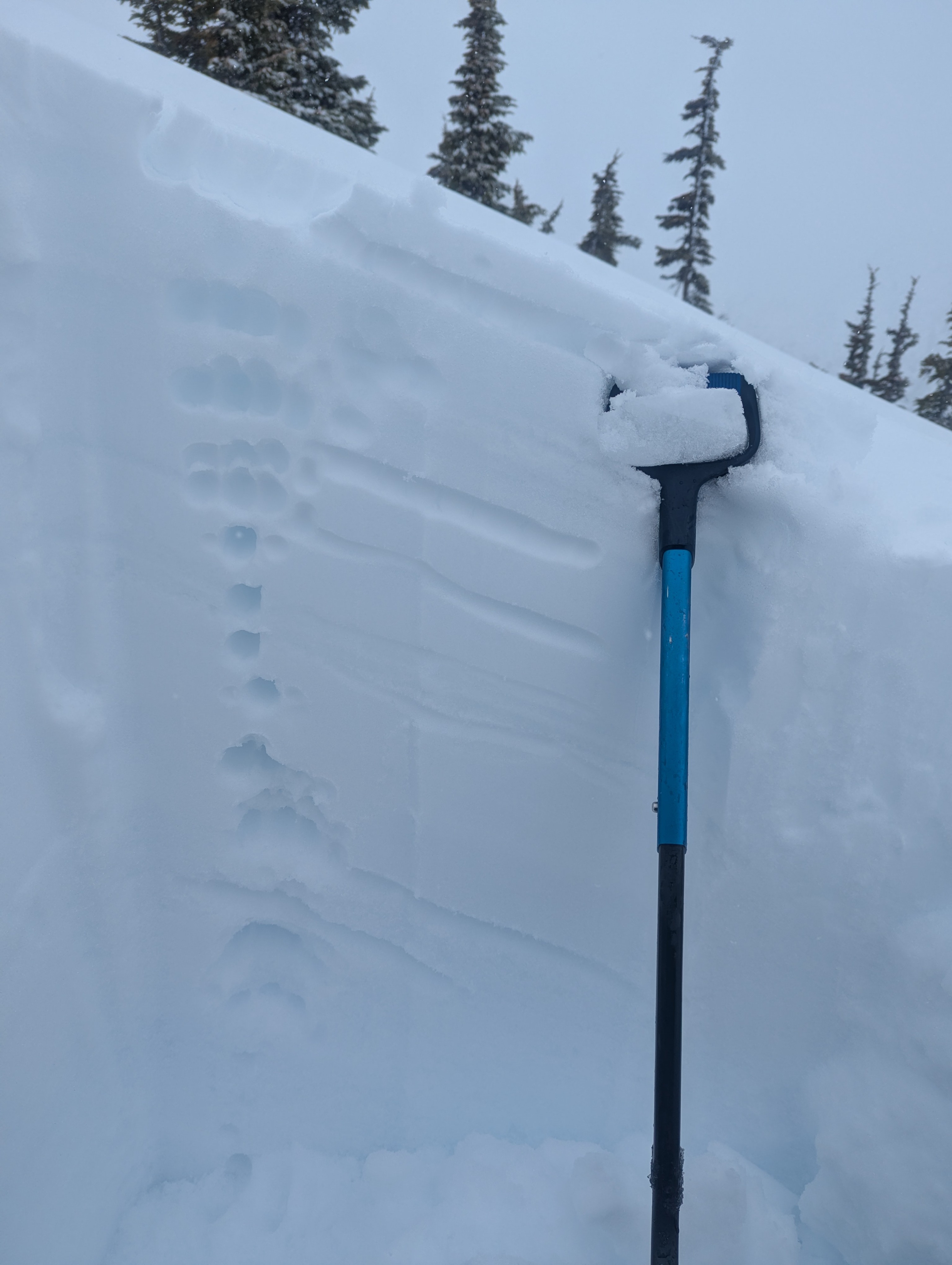
I dug a pit on a north aspect at 2100' and found a few concerning weak layers in the upper 2' of the snowpack. One layer that looked like buried surface hoar about 1' deep, and one layer of facets underneath an old melt freeze crust about 2' down. Both of these failed in my compression test (CT 12 on BSH, CT 26 SC on facets), and only the upper weak layer showed a partial failure in the extended column test (ECT N 16). These mixed results are not surprising for buried weak layers that have been sitting around for a while. At upper elevations where the snowpack is drier and there could be more new snow on top of the weak layers, I would be concerned with the potential for human-triggered or natural avalanches on these weak layers.