
Quick report
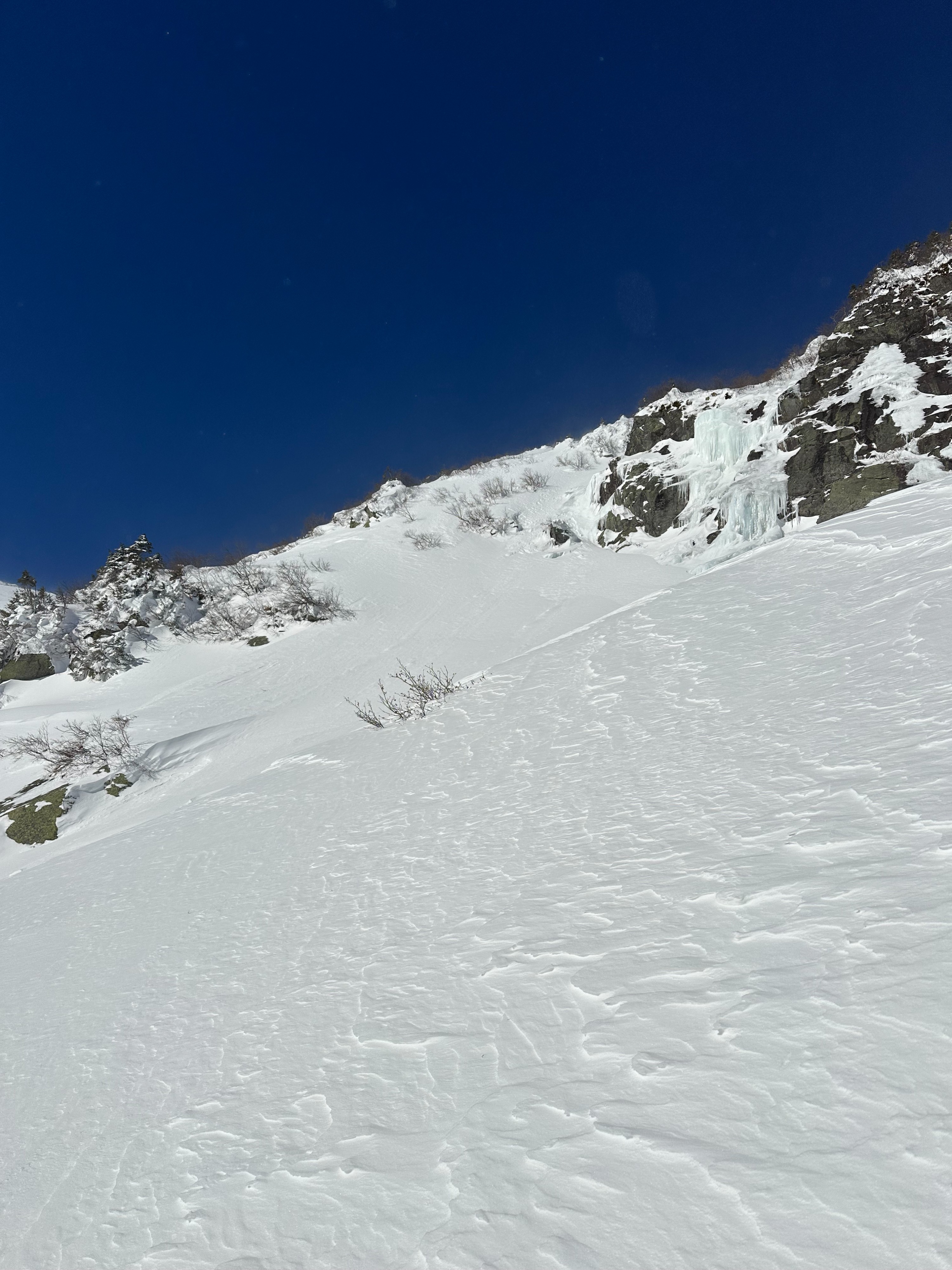
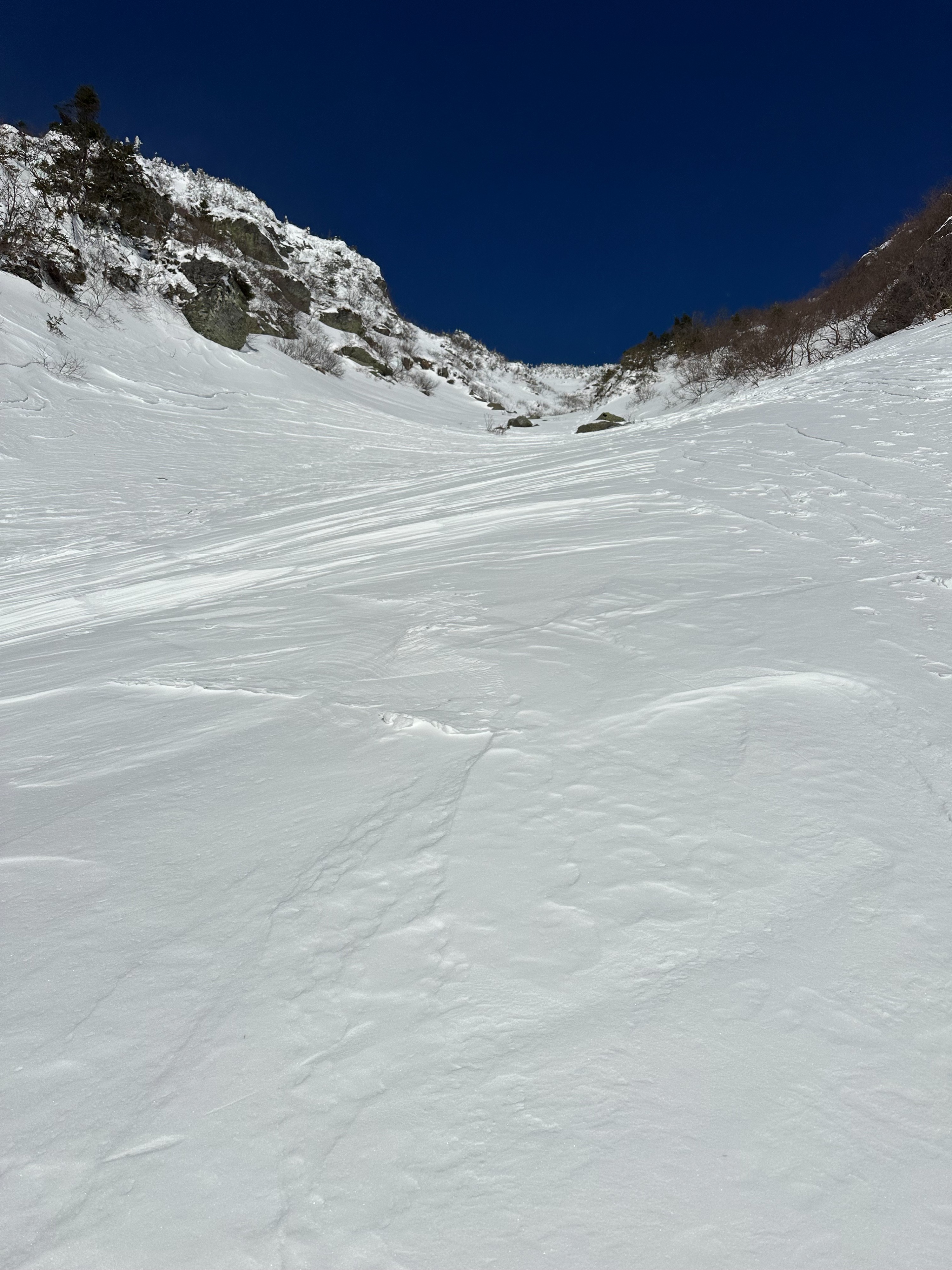
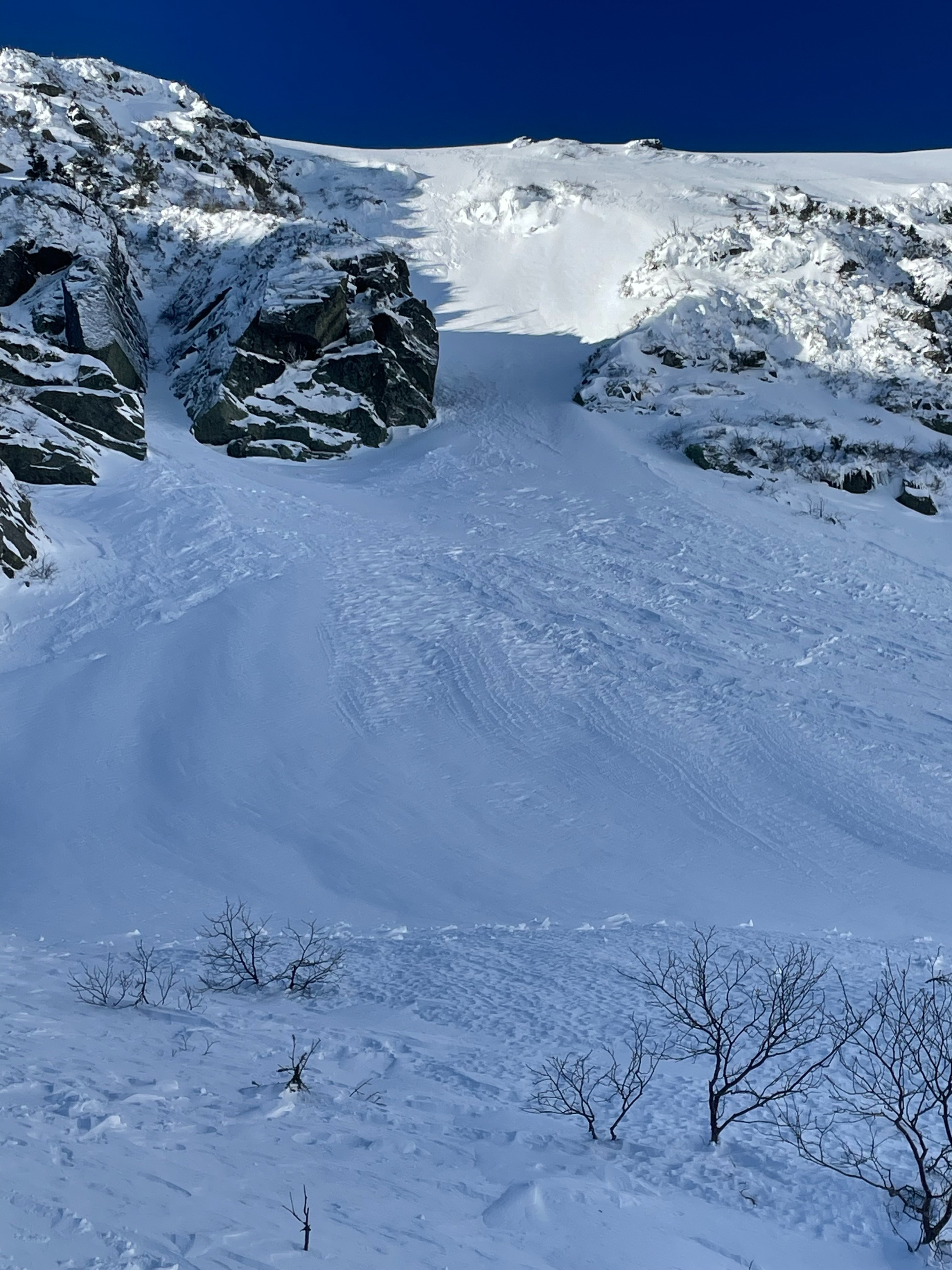
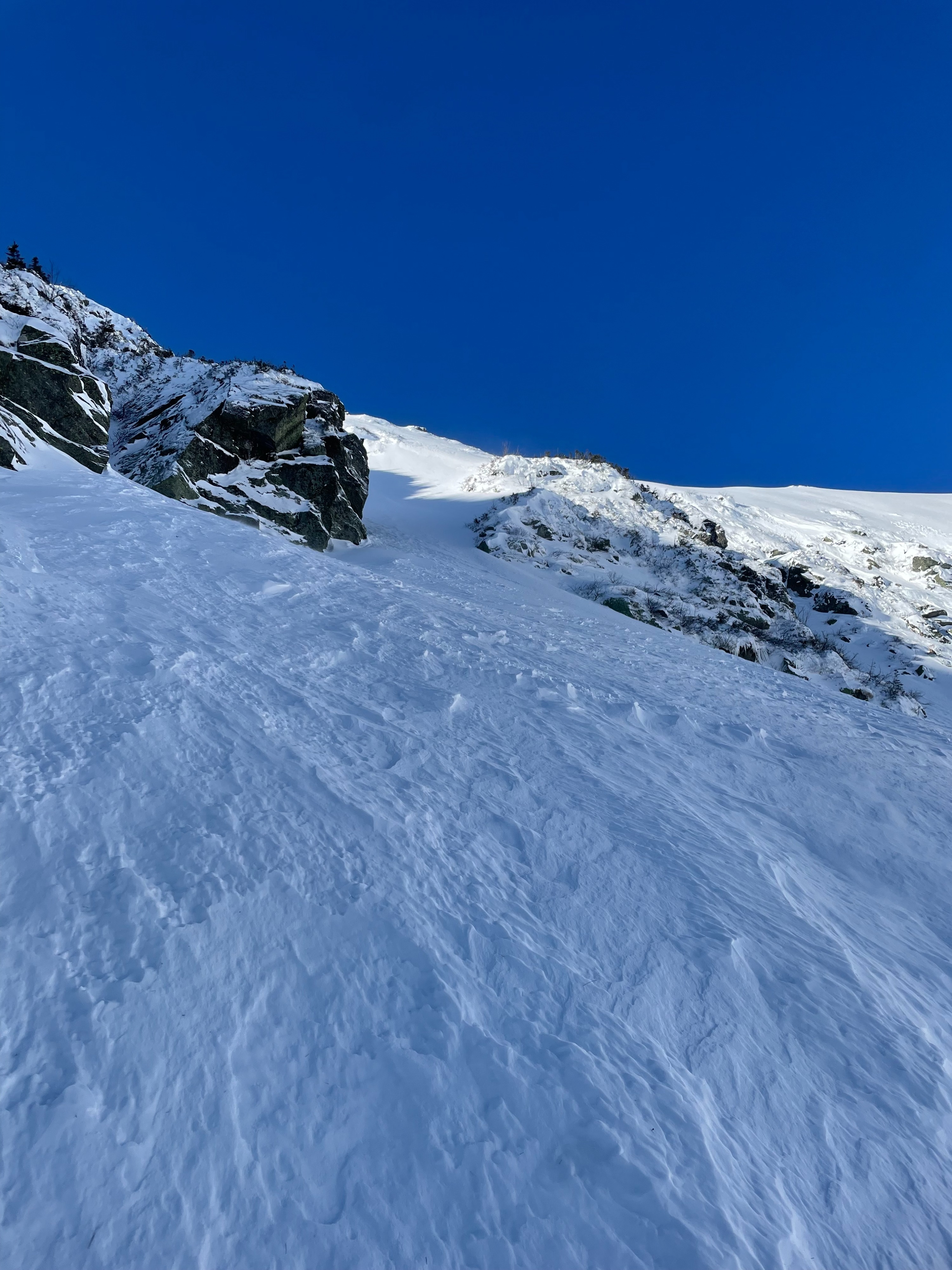
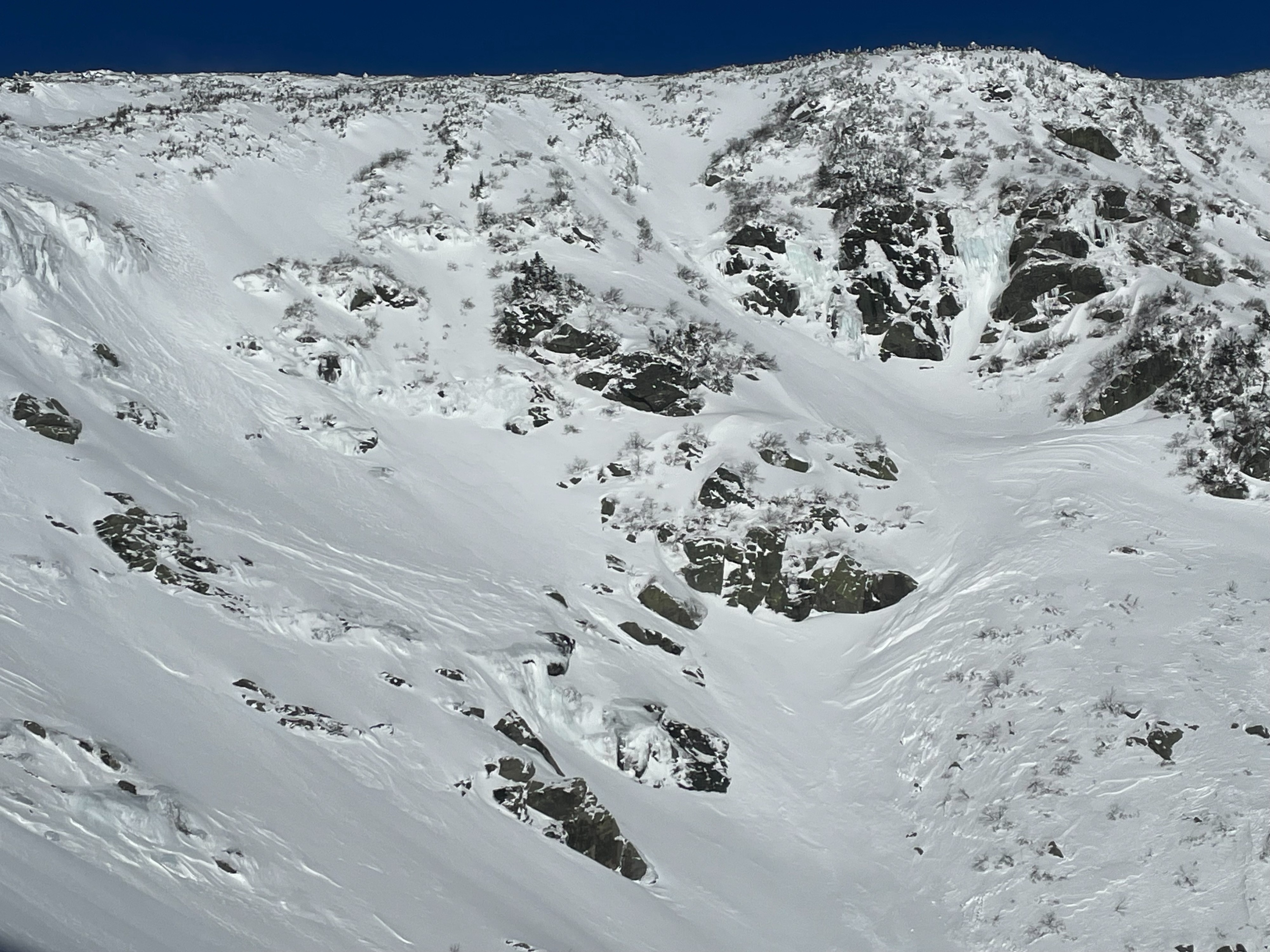
Generally good snowpack stability was observed with widespread old and wind-hardend snow surfaces. The exception to this was small pockets of sensitive wind slab on southeast and south aspects where steep terrain features provided additional shelter from the wind. Snow surface conditions were highly variable based on elevation, aspect, and wind protection. Finding stable snow today was easy, as a wind-hardened snow surface was widespread.
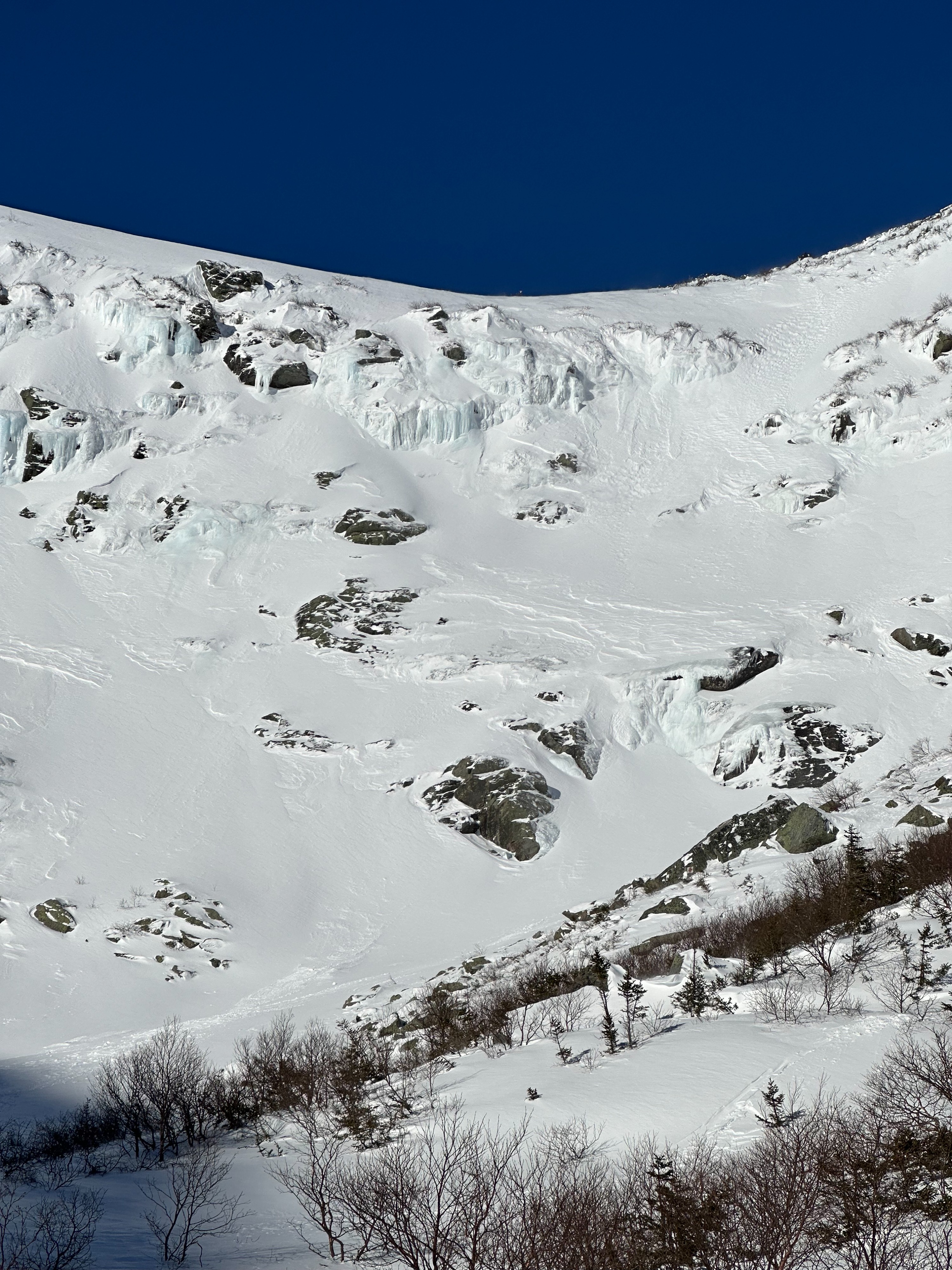
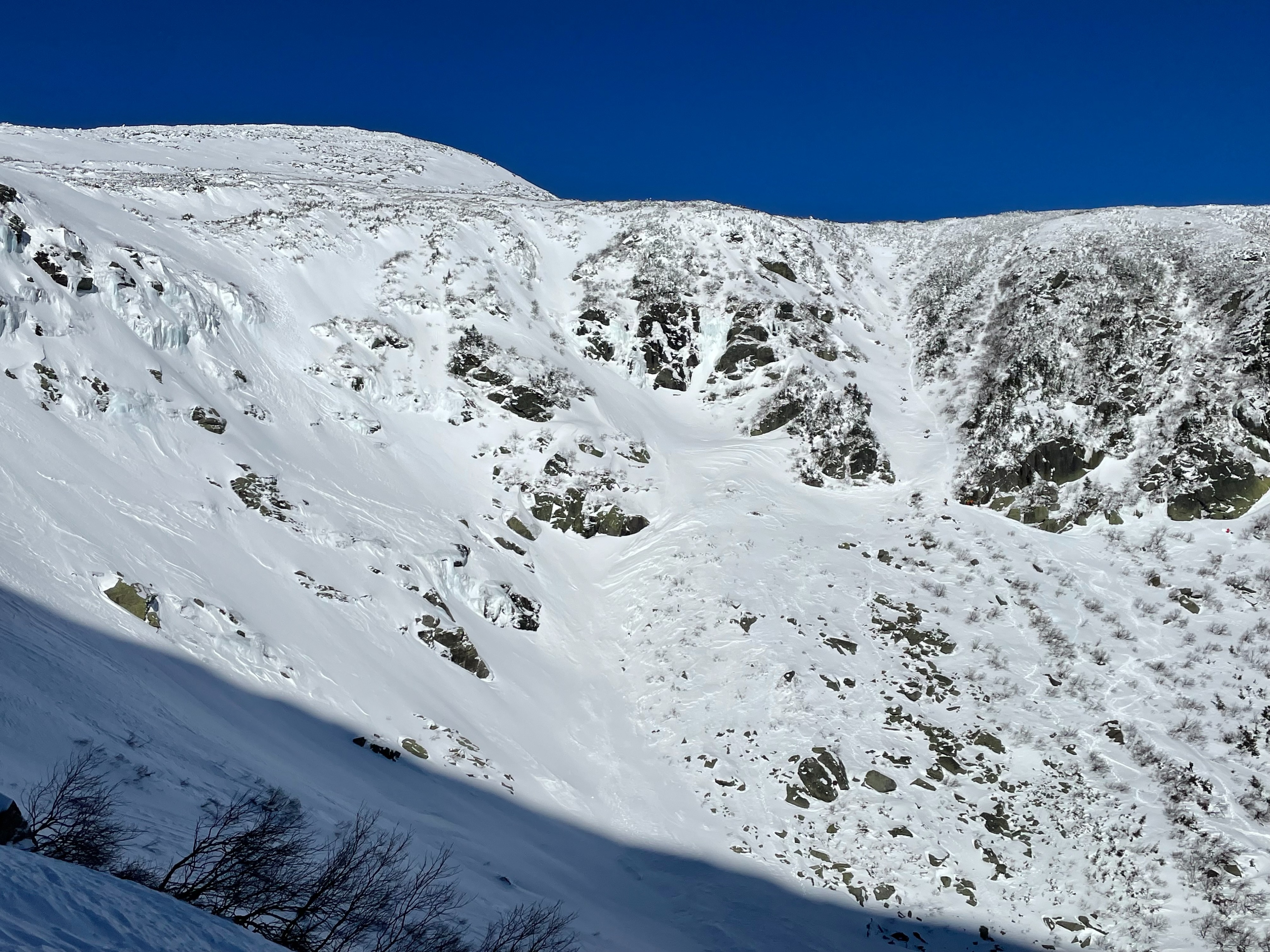
While snowpack conditions across the Presidential Range are generally shallow, with limited avalanche terrain development, avalanche terrain in Tuckerman Ravine is relatively well-developed with well-connected start zones and full path lengths in many areas. It's worth noting the potential for this terrain to produce large avalanches with the next significant snow event.
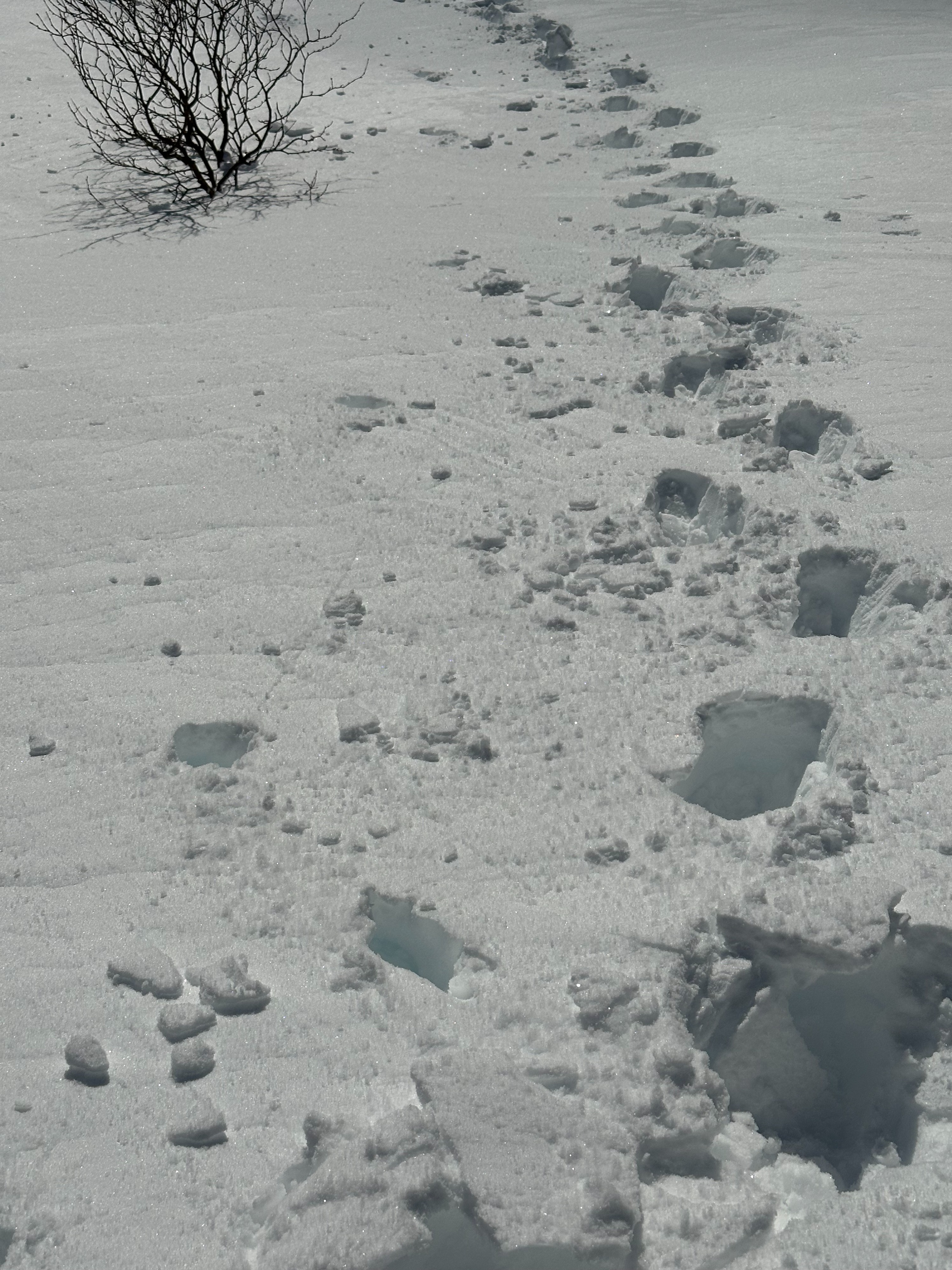
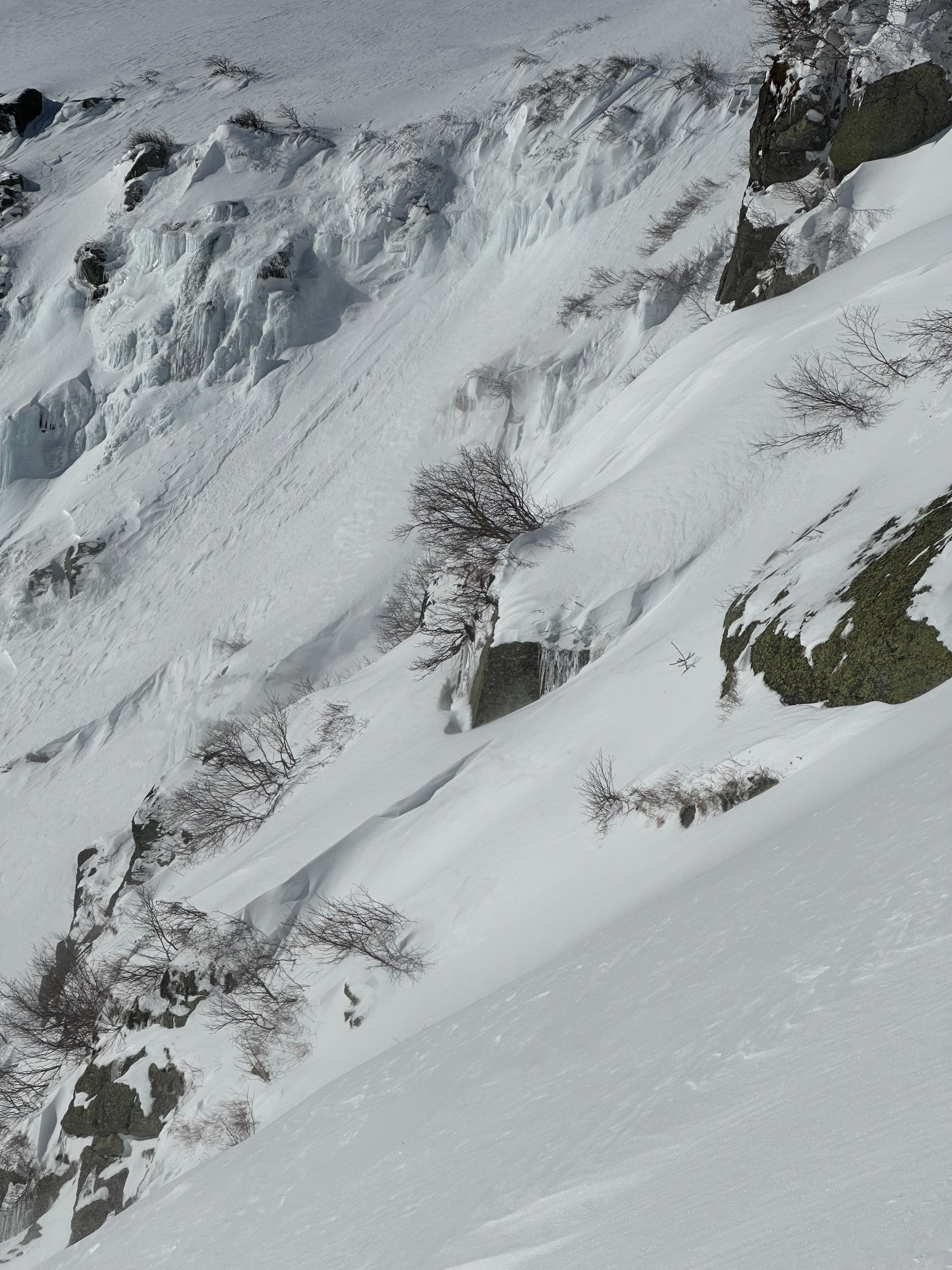
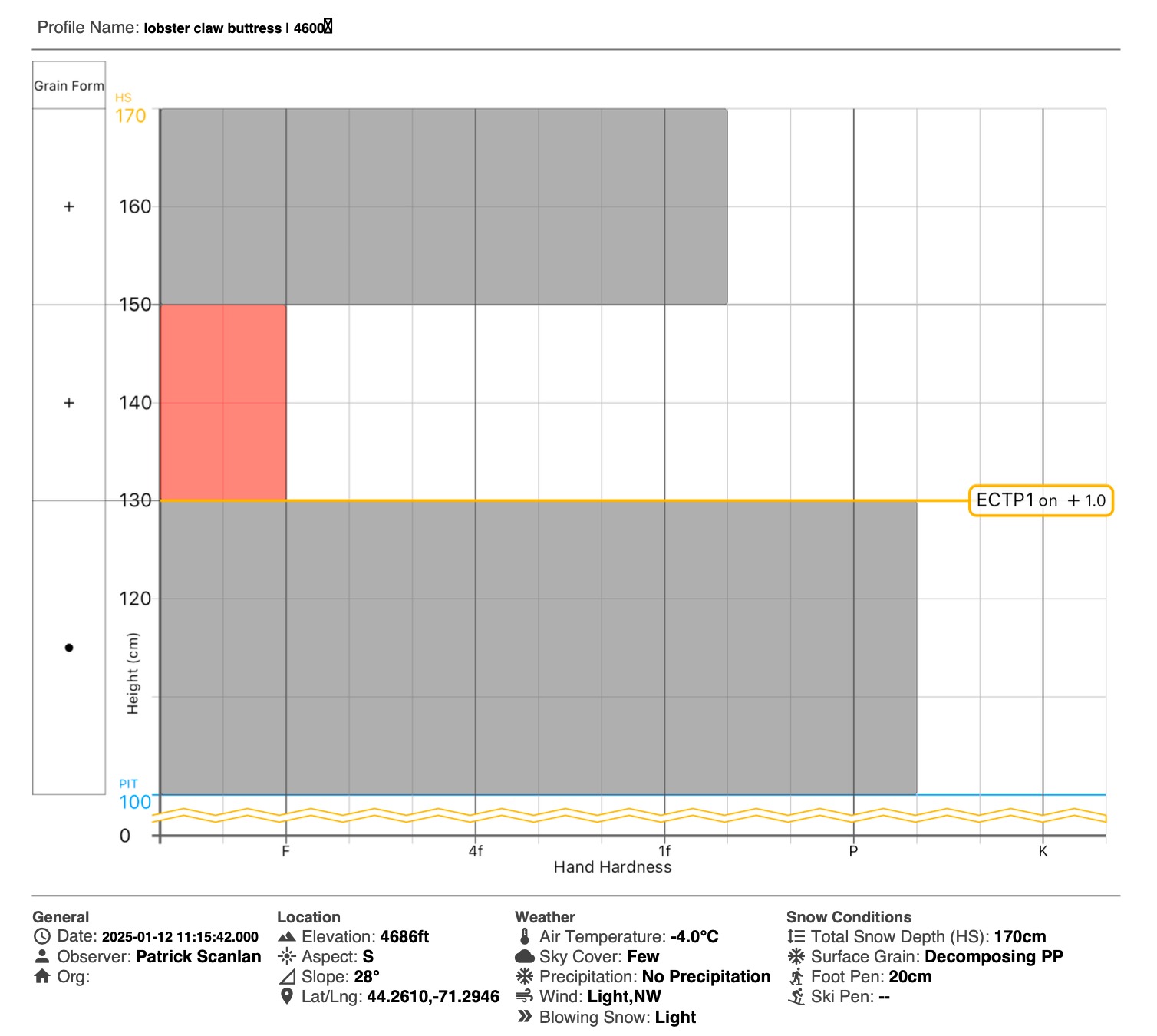
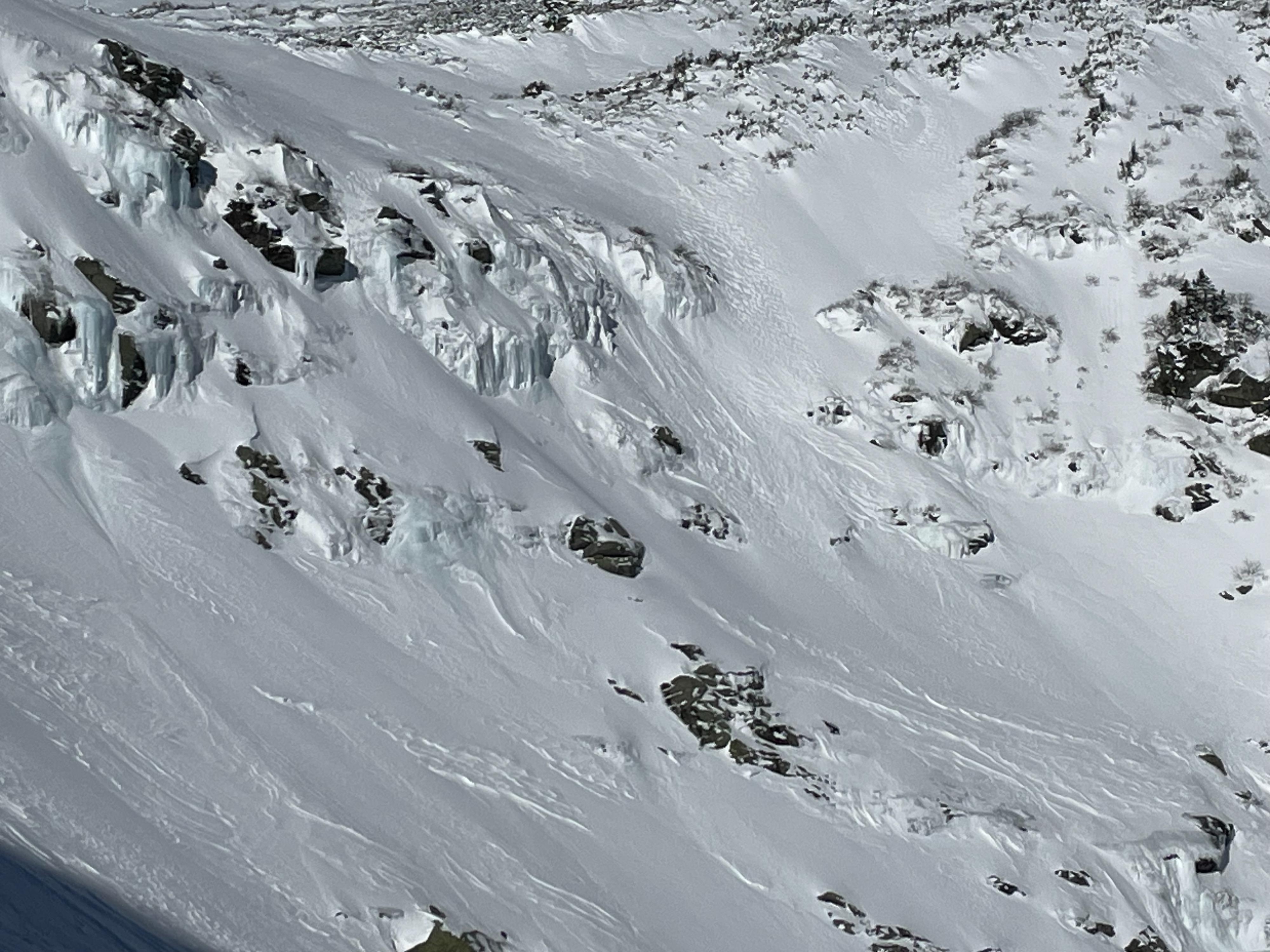
Isolated cracking was observed in small pockets of softer wind slab from the weight of a person. Cracks did not propogate more than 2 feet from any given step. Two propagating test results were scored at ECTP1 on a south-facing slope in a wind-sheltered area. A very small crown line from a natural wind slab avalance was seen in very steep southeast-facing terrain where wind drifted snow had collected on top of water ice.Weather
- Air Temp
- 24
- Cloud Cover
- few
- Wind Loading
- light
- Recent Snowfall
- 4.4
- Snow Avail For Transport
- small smounts
Sky conditions were generally clear with a few clouds lingering around 4000' in elevation. Winds were light and out of the northwest. Temperatures were mild in the mid-20s F.
Snowpack
North and northeast-facing terrain:
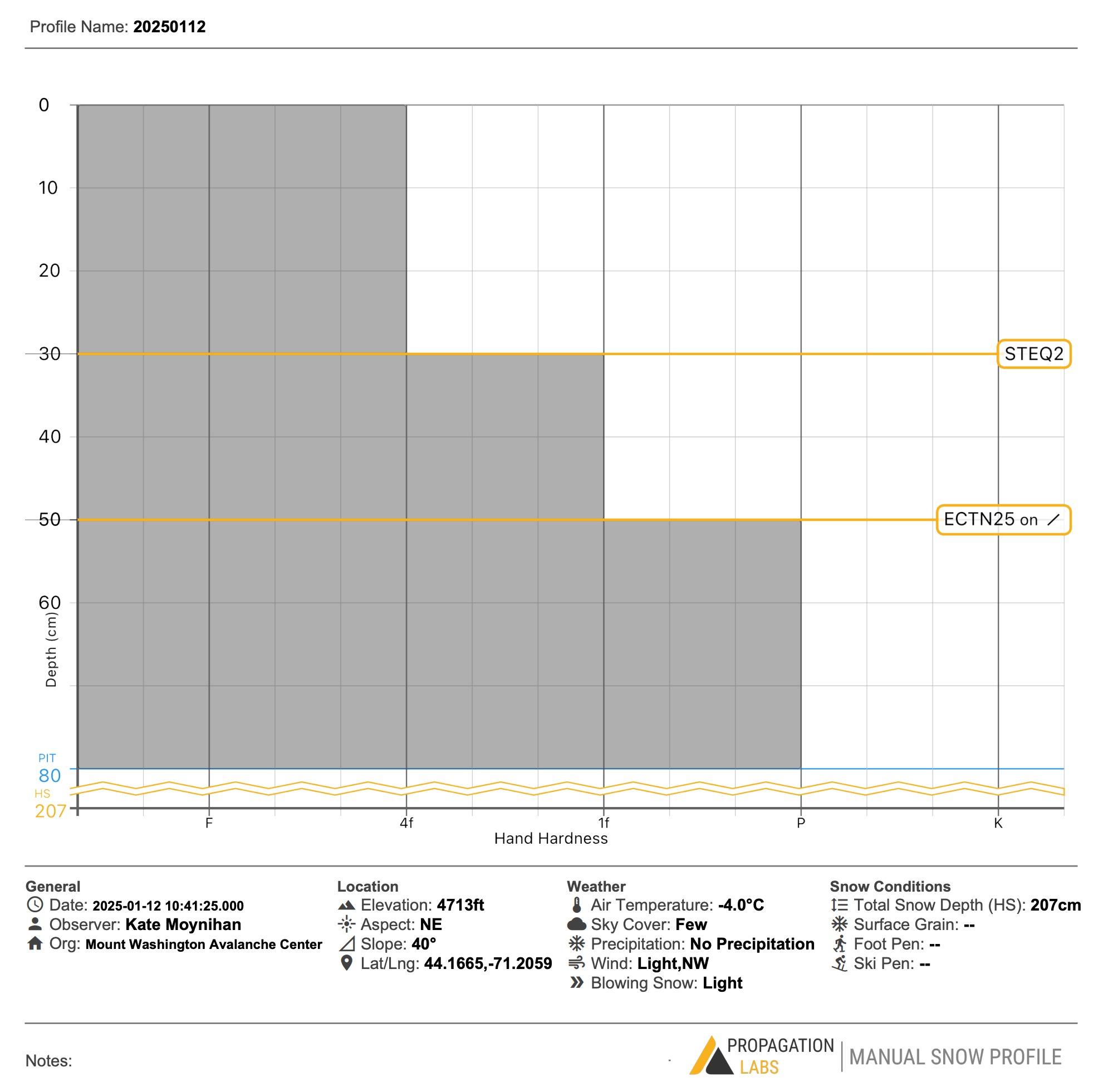
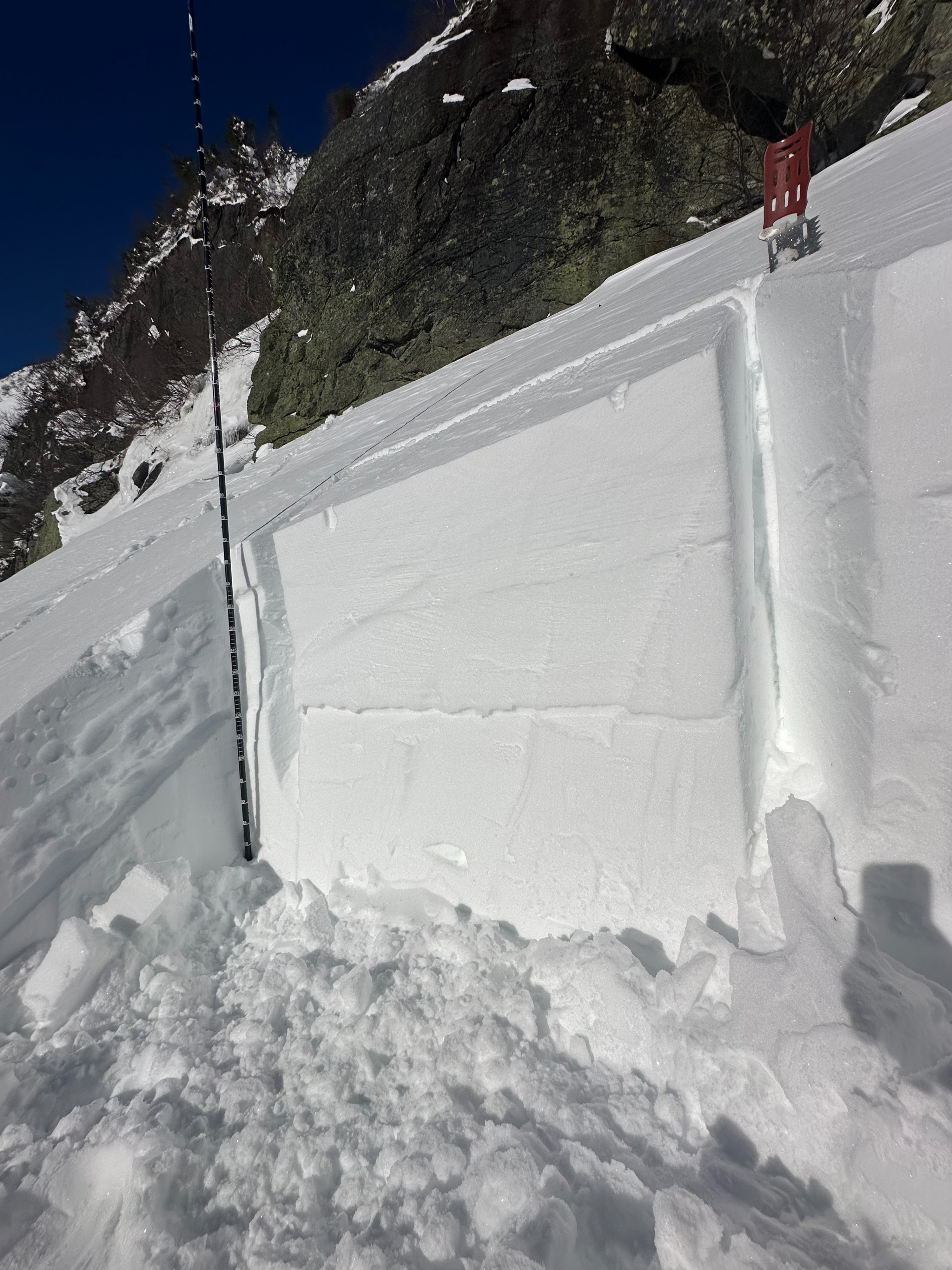
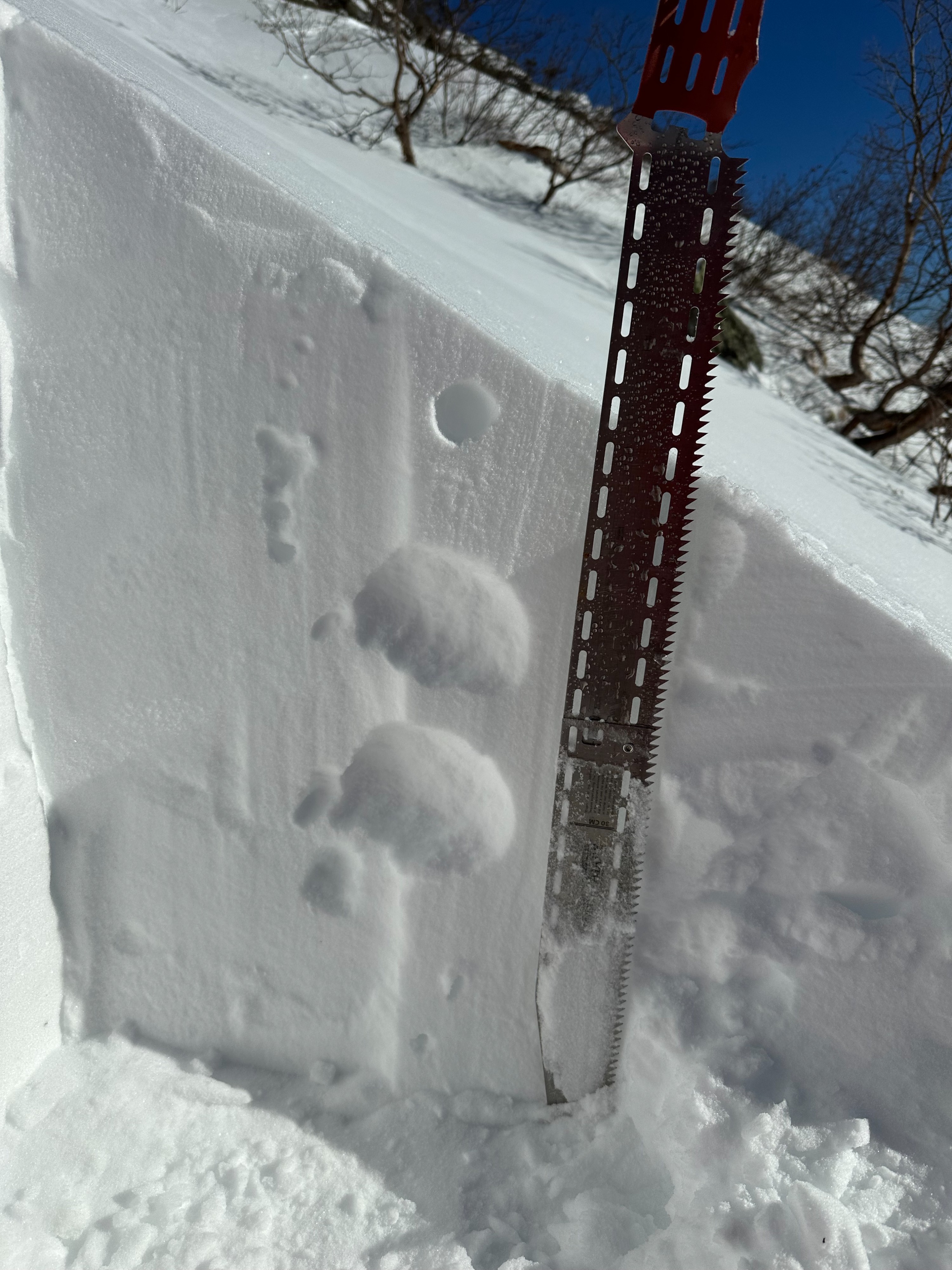
Old ice crust and hardened, wind-scoured snow is the primary snow surface across these aspects. Small and isolated areas of softer snow were found underneath steep rock buttresses. In the lower Chute area, the snowpack was 207cm deep in a wind-protected area that had collected snow as compared to the wind textured or wind scoured areas around it. In this area, the snowpack was right-side-up with ECT results of ECTN25. (See photo for snowpack structure) This test result was 50cm deep on a layer of decomposing crystals that likely collected earlier in the week. The top 30 cm was newer snow that was 4 finger to 1 finger in hardness. Many areas are scoured to the firm bed surface formed after the late December rain event.
East and south-facing terrain:
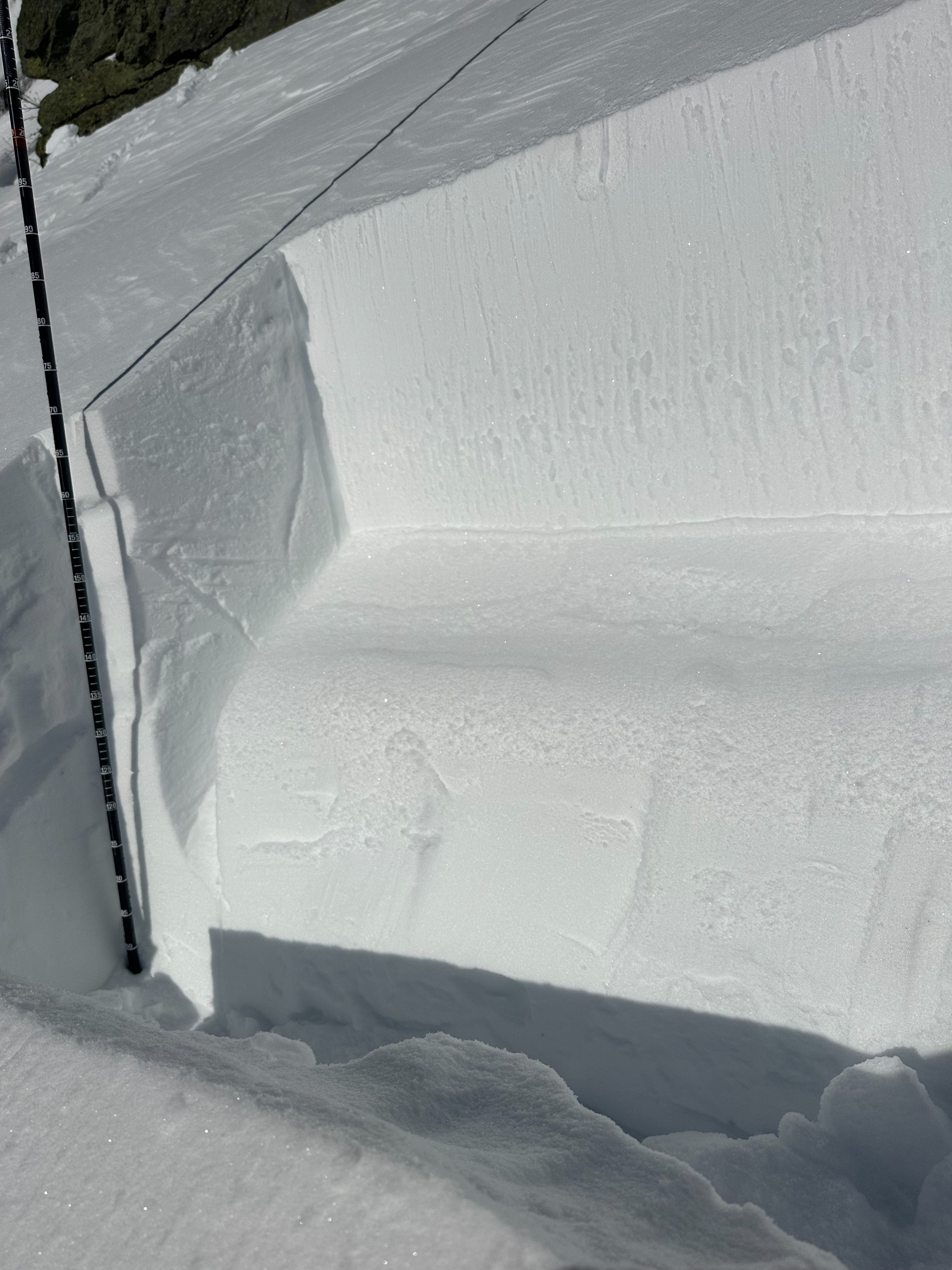
Firm, wind-harded snow is the primary snow surface across these aspects, but small, disconnected areas of softer and reactive wind slab were found in the steepest, most sheltered terrain. In one area of recently formed wind slab in the Lobster Claw area, there was a poor snowpack structure in the top 50 cm of snow on top of the widespread old snow surface, found across the rest of the ravine. Two test results scored ECTP1 down 40cm from the snow surface on a fist-hard layer of new snow. (See photo for snowpack structure). While this was an isolated result, it would have been possible to find similar results in other small windslabs on these aspects. Surface snow on steep south-facing terrain was becoming moist after a few hours of solar input and minimal wind.
Our overall impression was that stability was good except for isolated areas of small, reactive wind slab. We found identifying these areas to be easy when comparing the smooth, soft characteristics of the wind slab to the textured, hard characteristics of the old snow surface. Avoiding sensitive snow today was easy, but we agreed we would't want to trigger one of these areas in steep terrain with such a shallow, obstacle-ridden snowpack and a firm bed surface.