
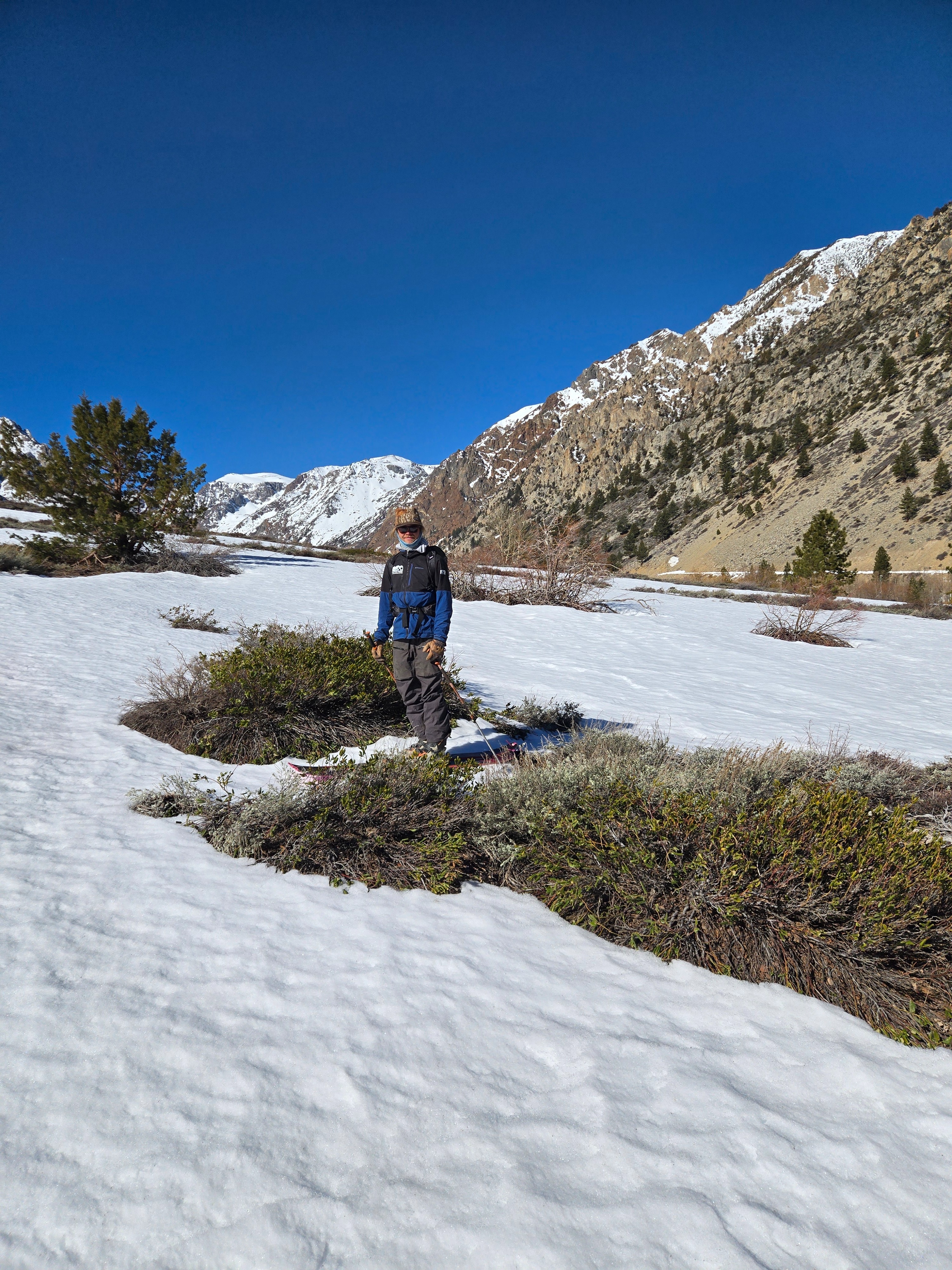
Quick report
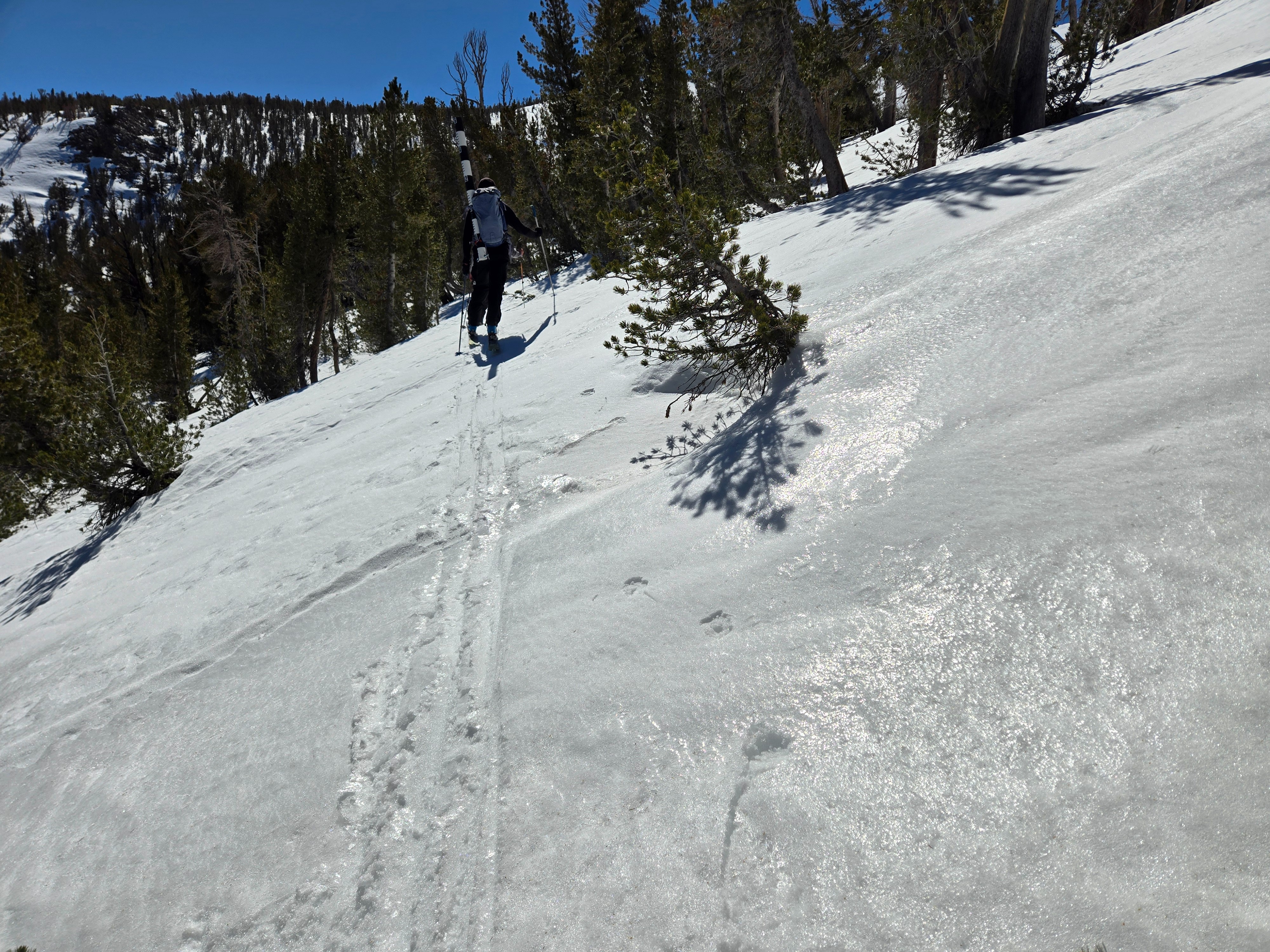
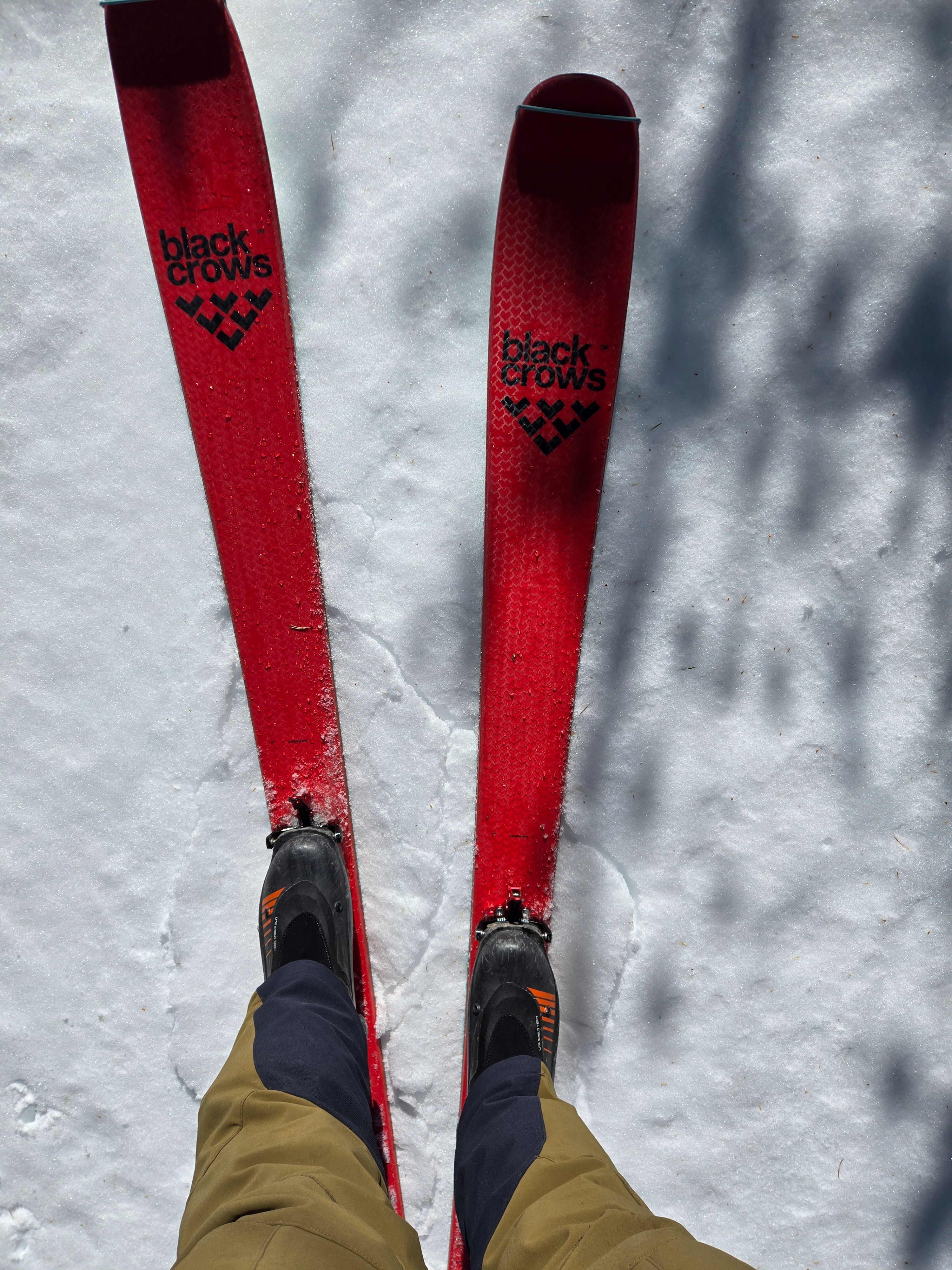
We ascended on firm, frozen crusts and found ski crampons useful today. We descended primarily on melt-freeze, chatter-y crusts, although the surface was edgable.
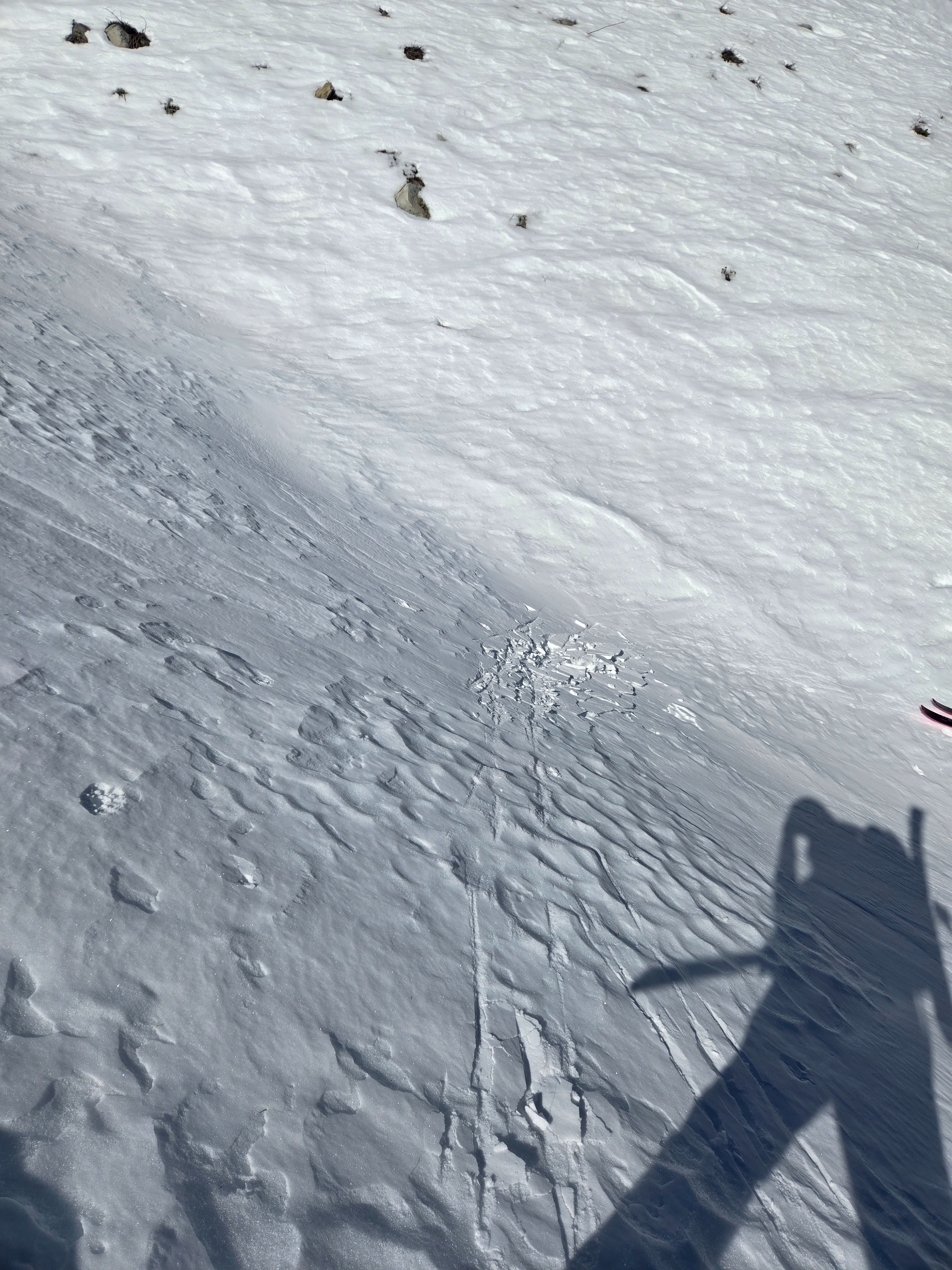
Surfaces are a mixed bag, but the dominating texture is planar, supportable crust. Runnels, old wet loose debris, and diminishing coverage interrupt the planar, especially at low elevations. All in all, it's not too bad, and we found conditions to be great for efficient travel.
We found no signs of instability. We popped onto a low-elevation, southeast-facing slope around 1 pm and found boot penetration to be 20cm. This snow was not concerningly wet.Weather
- Air Temp
- 32
- Cloud Cover
- few
- Wind Loading
- none
- Recent Snowfall
- 0
- Snow Avail For Transport
- none
Beautiful day with lighter-than-expected northeast winds, comfortable temperatures for touring, and minimal cloud cover.
Snowpack
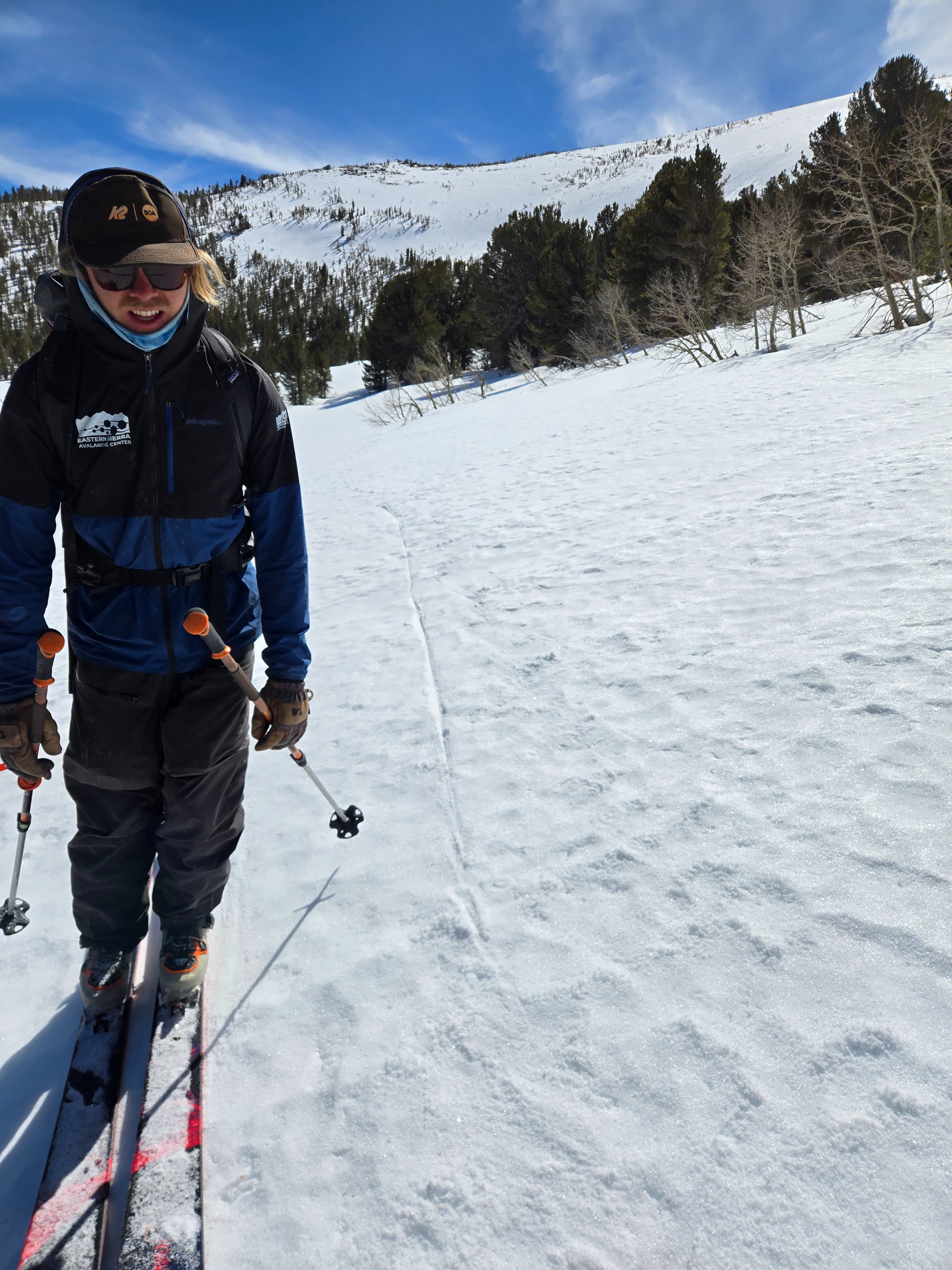
We found a supportable, surface crust capping the snowpack on all aspects and at all elevations that we travelled. This crust began to soften around 11 am on southeast-facing terrain and on low-angle slopes. We dug a hole at 9700' on a northeast aspect and found:
- The top 30cm is Pencil-Knife hard and composed of melt-freeze crusts, varying layers of refrozen meltwater, and small, compressed rounds. The top 30cm is all the snowfall that we have received since 2/10, and is a cohesive brick. Check out the attached photo to see just how supportable the upper snowpack is
- ~30cm down, the 4F hard 2/10 interface is dry and easily discernible. A crust capped the 2/10 interface in this location.
- The lower snowpack is dry and composed mostly of facets, with the 1/1 crust serving as a midpack melt-freeze crust time stamp.