
Snowpack
View on mapBishop Creek: Low Tide Facet Boogy
Clancy Nelson, Sean Smollen, Greg CunninghamEastside Region
Quick report
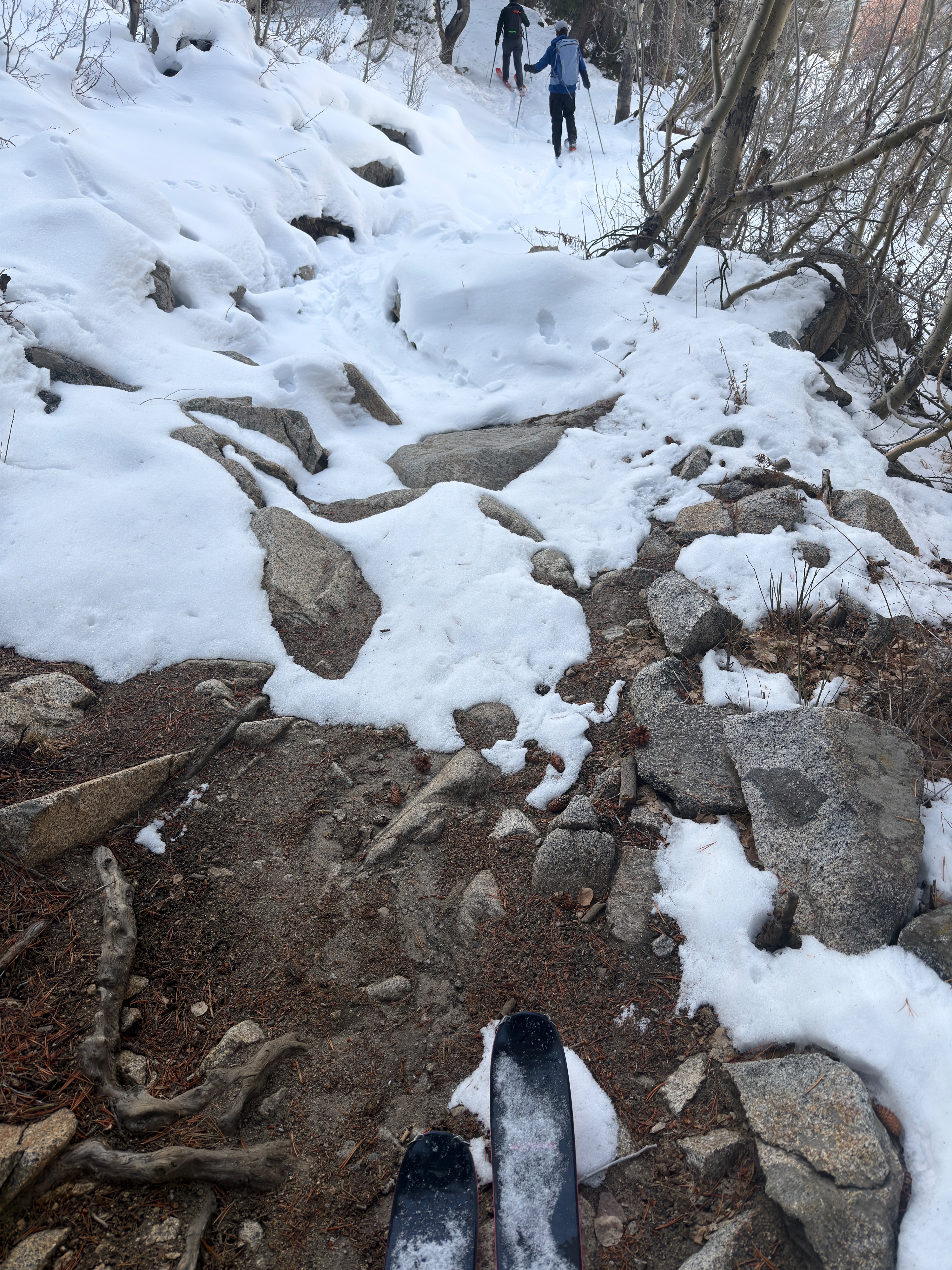
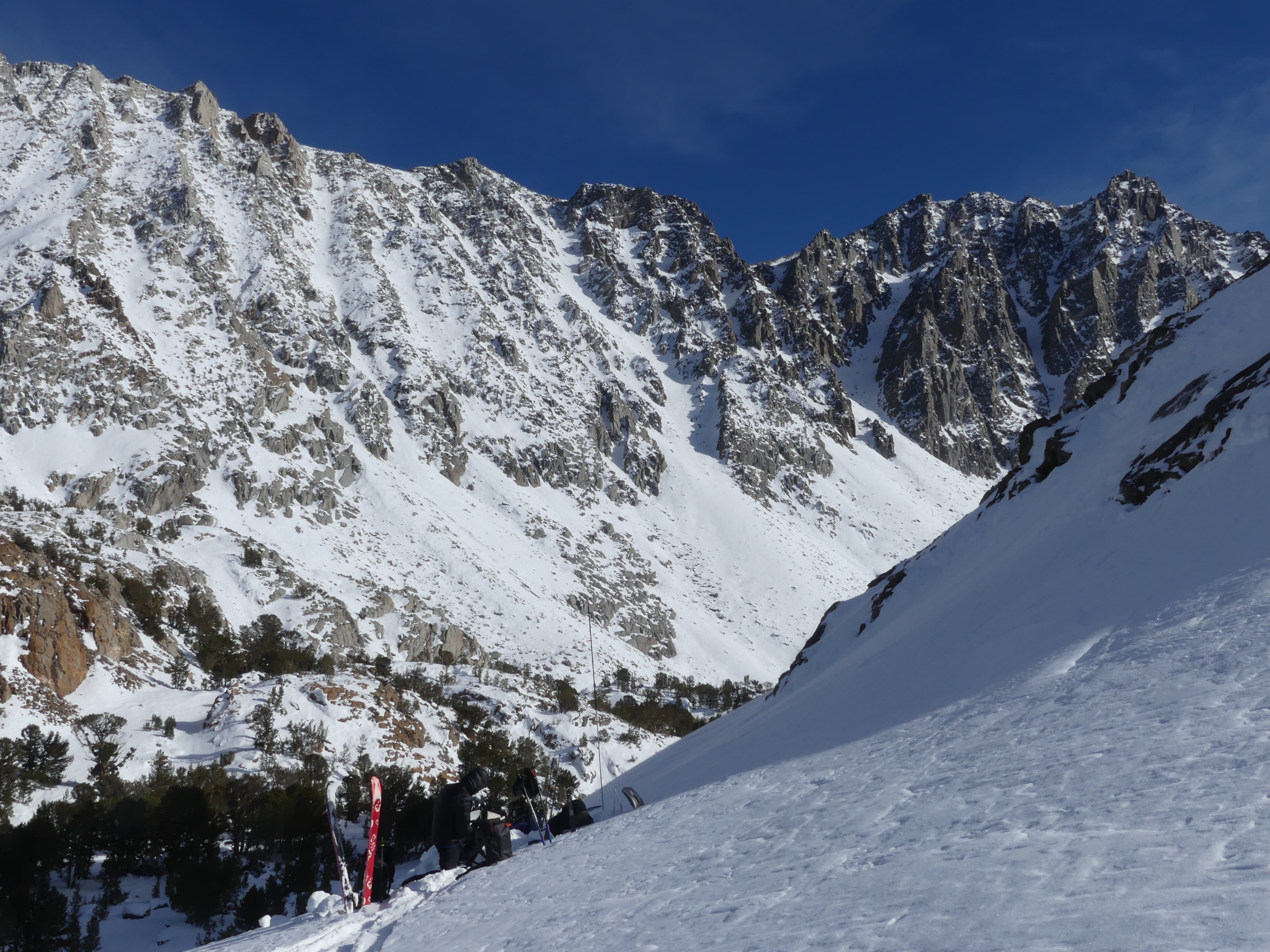
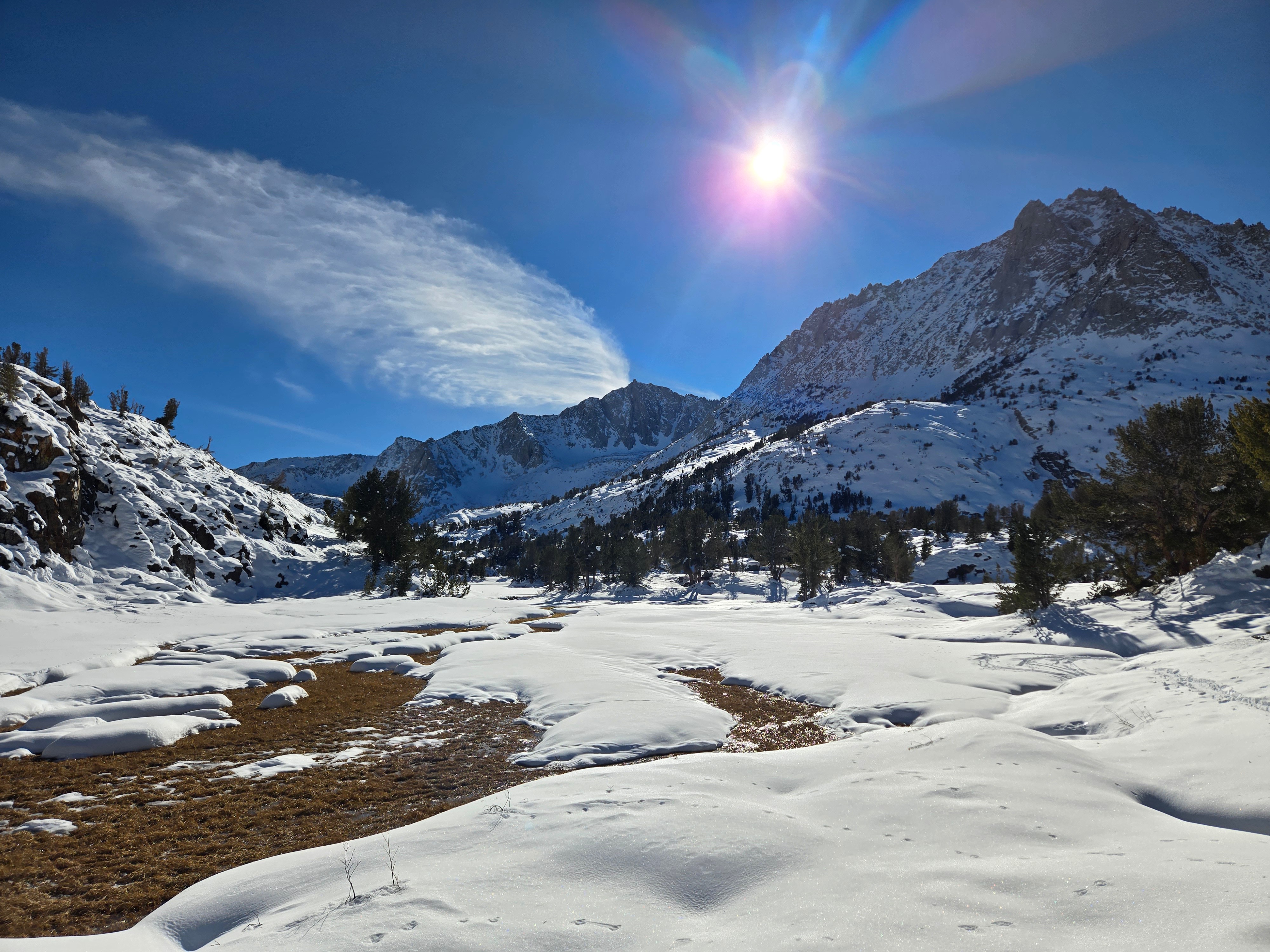
We braved shallow snow cover in the South Fork of Bishop Creek to get a baseline impression of the snowpack closer to the Sierra Crest.
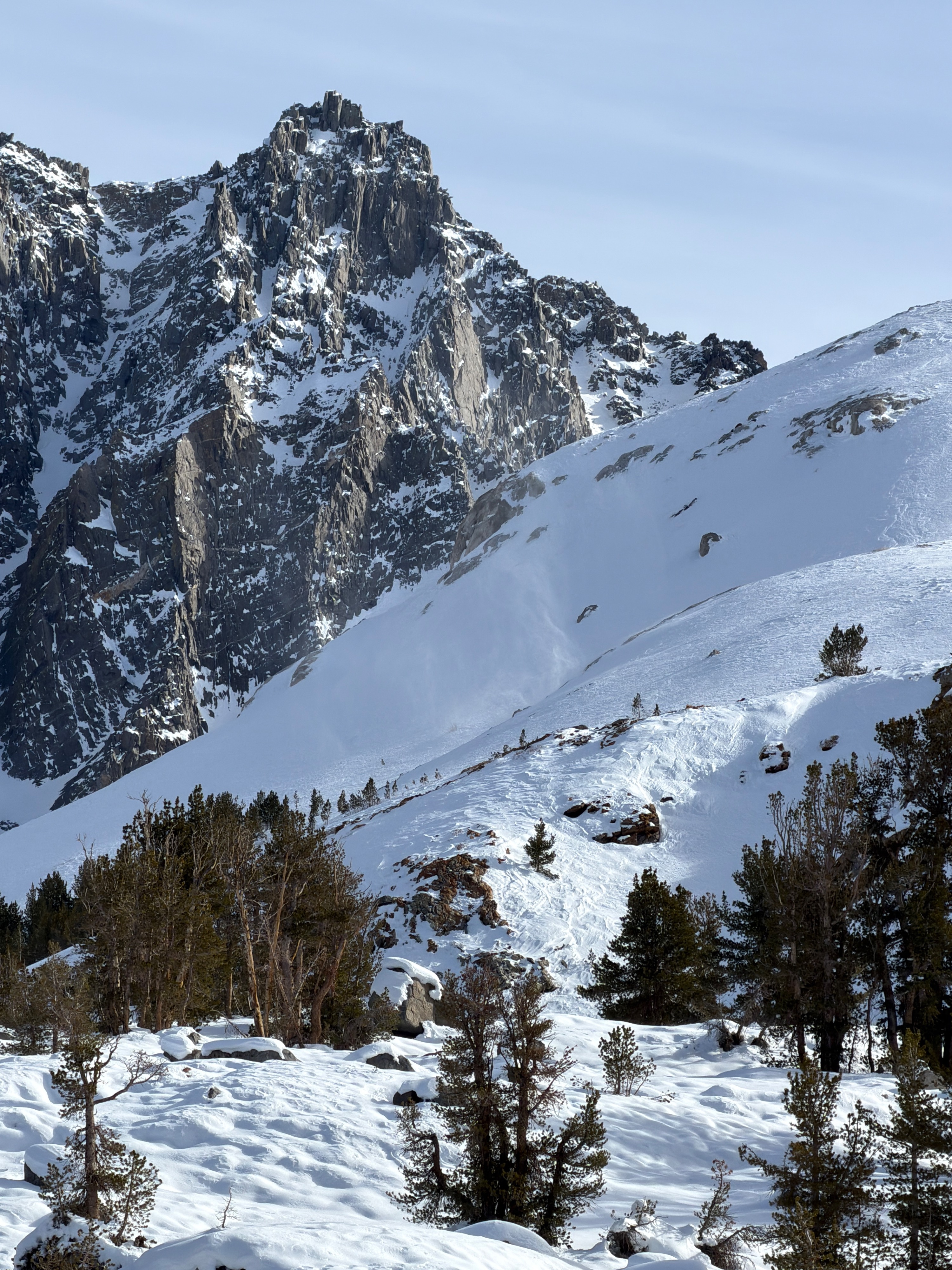
- We saw no signs of recent avalanches or instability. Instead, low tide and open creeks were our primary hazards.
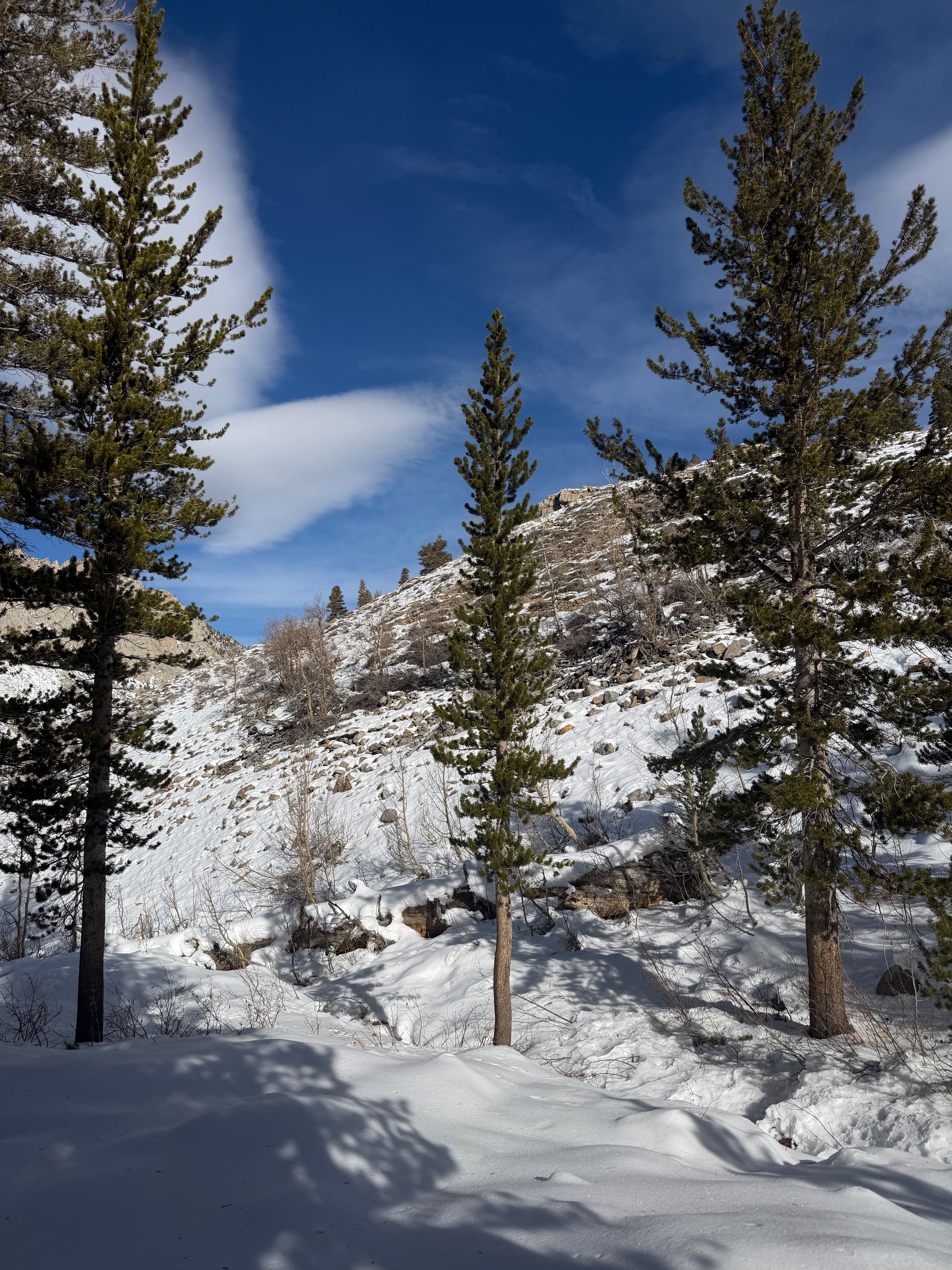
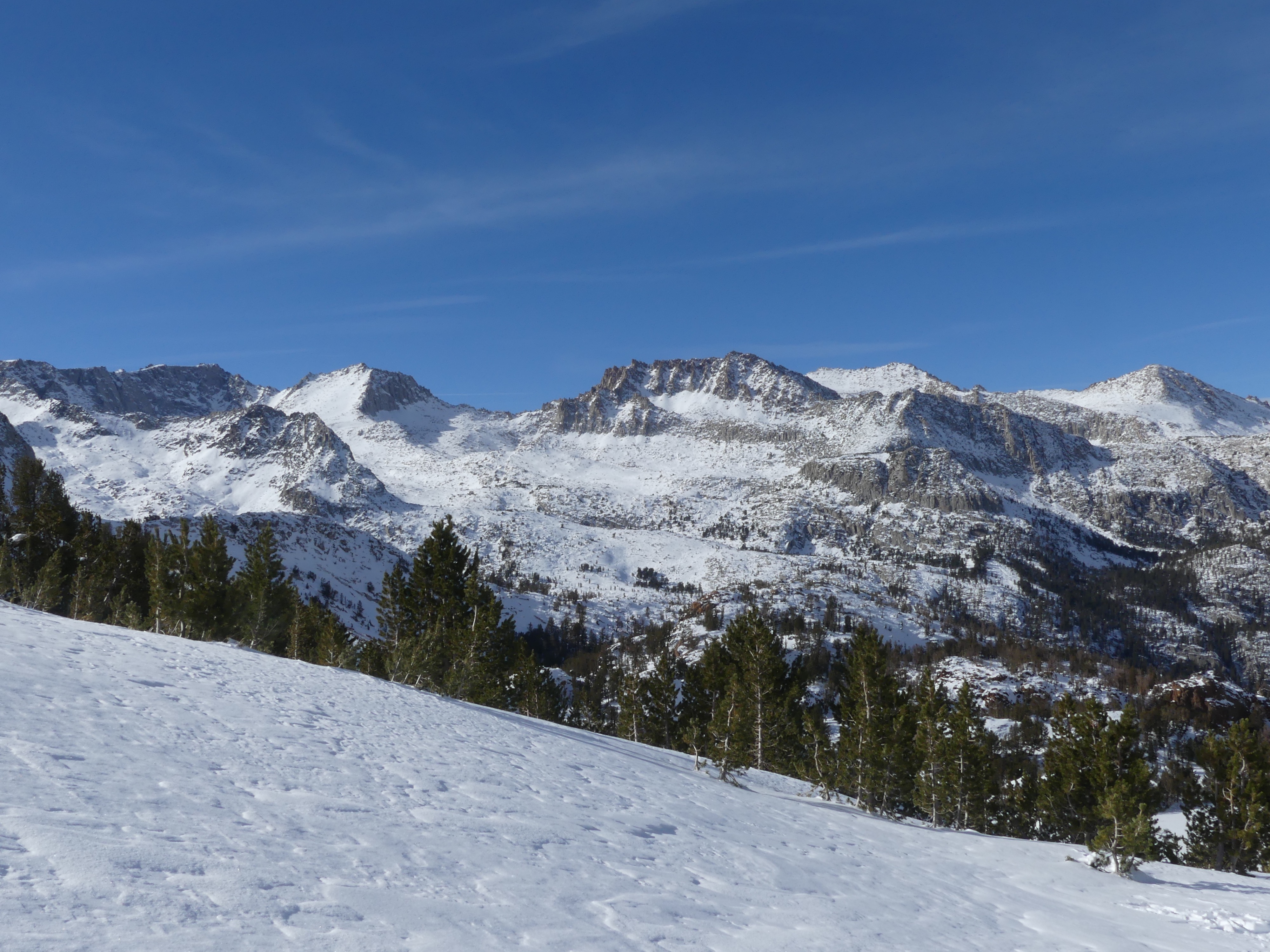
- Below 10,500 feet, coverage is thin and most continuous on north-facing slopes. Above there, it is decidedly more wintry: a little colder, a little windier, and a little better coverage.
- The weather was mostly calm and benign.
We carefully made a few turns where the snowpack was deepest, but mostly contoured and cautiously glided over rocks with our skins still on.
Weather
- Air Temp
- 30s and 40s F
- Cloud Cover
- broken
- Wind Loading
- light
- Rain Elevation
- NA
- Recent Snowfall
- 0
- Snow Avail For Transport
- small smounts
It was a beautiful day with warm air temperatures and partly sunny skies. There were light winds in alpine terrain, creating small areas of blowing snow.
Snowpack
Below 10,500 feet:
- Very thin snow cover with areas of exposed ground and early-season open water hazards. Snow depths from 0 to about 12 inches.
- North-facing slopes had the most continuous coverage, where we found a layered snowpack consisting of crusts and facets. The rain crust from the mid-November storm was evident near the ground.
- East-, south-, and west-facing terrain had patchy snow composed of large facets capped by melt-freeze crusts. The crusts thawed into moist melt forms in the afternoon.
Above 10,500 feet:
- Much closer to winter with colder temps, frozen lakes, blowing snow, (relatively) deeper snow cover, and (relatively) better coverage on all aspects. Snow depths up to 24 inches in open, sheltered terrain, and up to 30 inches where snow had previously drifted from the wind.
- The snowpack was generally right-side-up and faceted on slopes that are shaded during the day. Areas of thin, wind-stiffened snow littered the surface in wind-exposed terrain. Sun-exposed slopes had melt-freeze crusts that thawed to moist surface snow later in the day.
- In our 2nd snow pit on an alpine slope facing north, at 11,000 feet, we found no rain crust near the ground. Instead, dense, rounded grains made up the bottom of the snowpack with low-density facets in the upper pack.
We got no propagating test results that would indicate instability in any of our tests.