
Quick report
- Cracking
- widespread
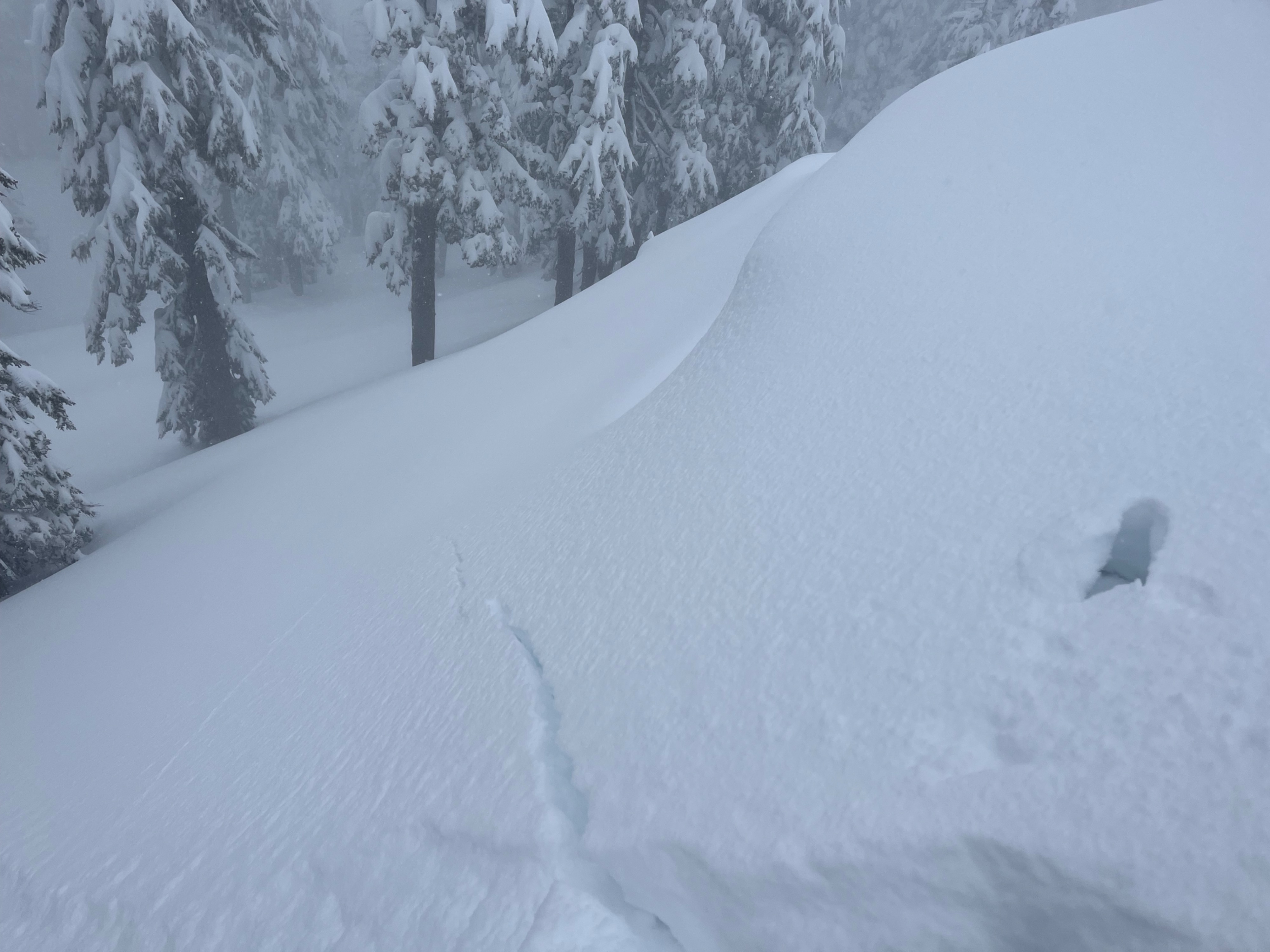
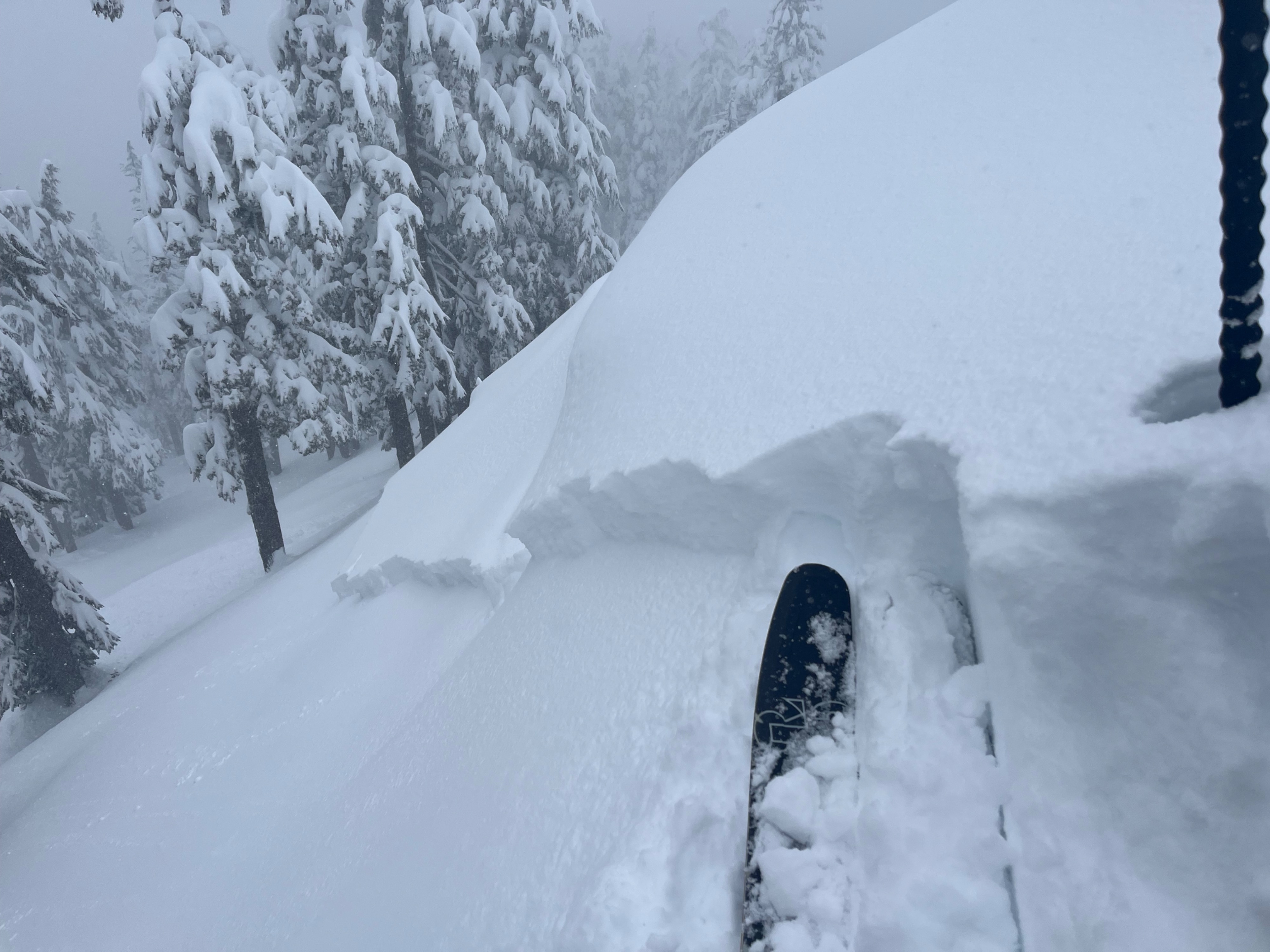
It was easier to trigger avalanches than expected. Skinning up, we didn't see any obvious signs of instability, and we didn't in pits either, as the surface layers were so low density. The main red flag was simply all the recent snow we just received. Only as we worked our way along the top of a small ridge to further investigate snow stability did we find that snow easily cracked out in front of our skis, and in steeper and less supported areas that snow slid. Avalanches were all small and uniform in crown depth, 10" deep. They were very soft slabs. We couldn't detect any wind-effect where these slabs were failing.
Test slopes that were steep- but not quite steep enough -produced cracks, but when they got a little steeper and less supported, small avalanches resulted. There were no obvious clues leading up to the point, aside from the large amounts of snow we'd recently received.Weather
- Cloud Cover
- overcast
- Wind Loading
- light
- Rain Elevation
- 1500ft
- Recent Snowfall
- 12
- Snow Avail For Transport
- large amounts
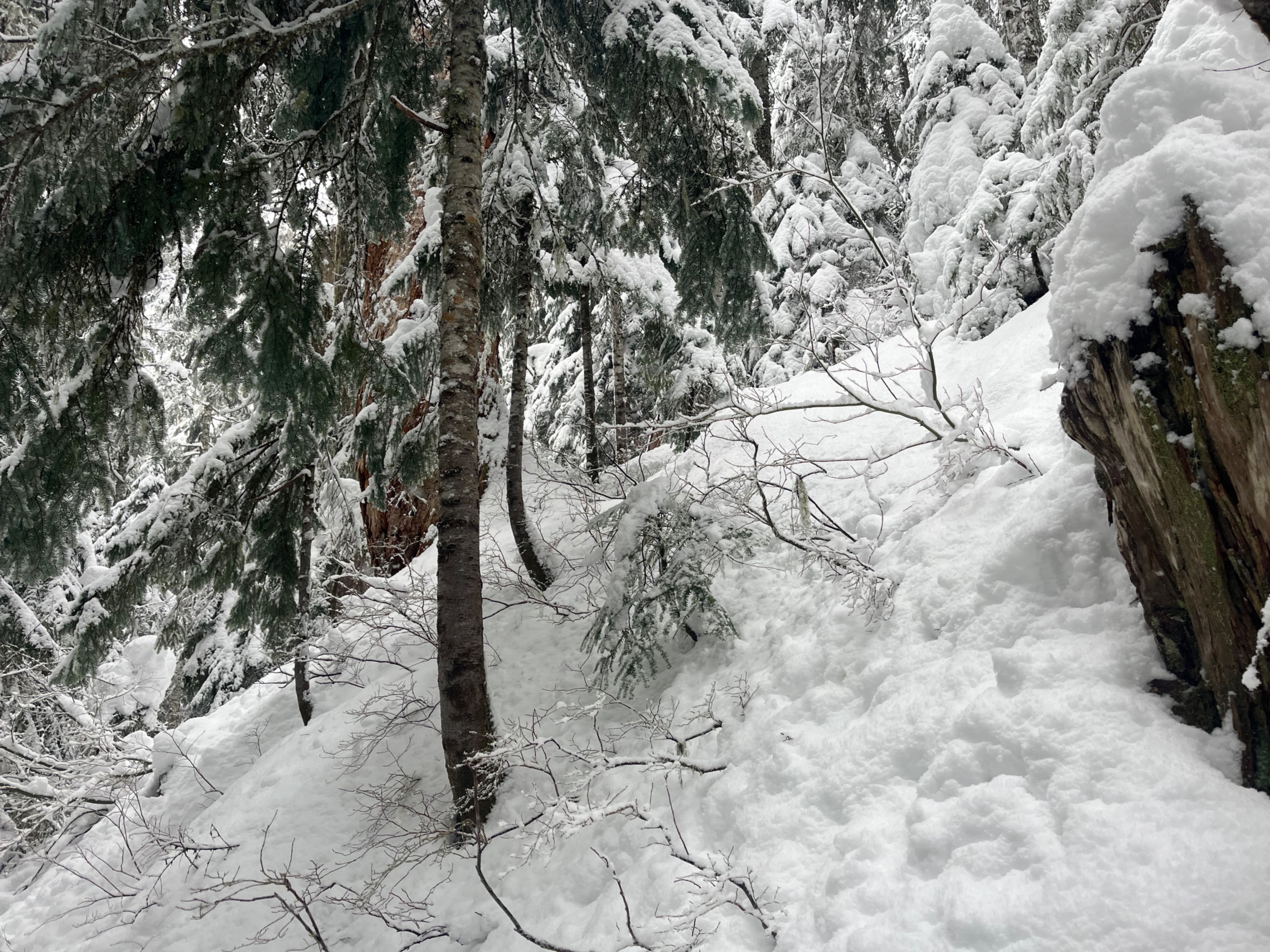
Fickle spring weather is upon us. Rain down low, squalls up high, one small patch of blue, then more squalls. It's hard to tell how much snow fell since yesterday- but I suspect it was 12cm, where the most obvious visible layer change was in the upper snowpack. Wind was calm to light and there was no current snow transport, although I suspect it occurred in light to moderate amounts in the last 24-48 hours. "Raining" upon my departure below about 3000ft from snow melting off trees. It was cold and everything was frozen above 4000ft.
Snowpack
From 2500ft there was 6" of snow, and there was over a foot by 3000ft. By 4000ft there was at least 6ft of snow.
I dug two pits at just over 4500ft on a north and south aspect. They both had the exact same snow depth surprisingly, 370cm (over 12ft). Both pits had the same depth down to the Atmospheric River crust, which was about 15cm (6") thick frozen melt forms, with large grained moist and soft melt forms beneath that.
The only major distinction was 2 thinner crusts from recent clear skies in the south-facing pit. In both pits for test results I found only shallow storm snow instabilities in the top foot of snow.
Avalanche
- Size
- D1 R1
- Type
- SS
- Aspect
- N
- Trigger
- AS
- Elevation
- 4500 ft
Human triggered D1 (small) soft slab avalanches triggered from the top of a small ridge. All the avalanches were very uniform, failing 25cm (10") deep.