
Quick report
- Cracking
- specific
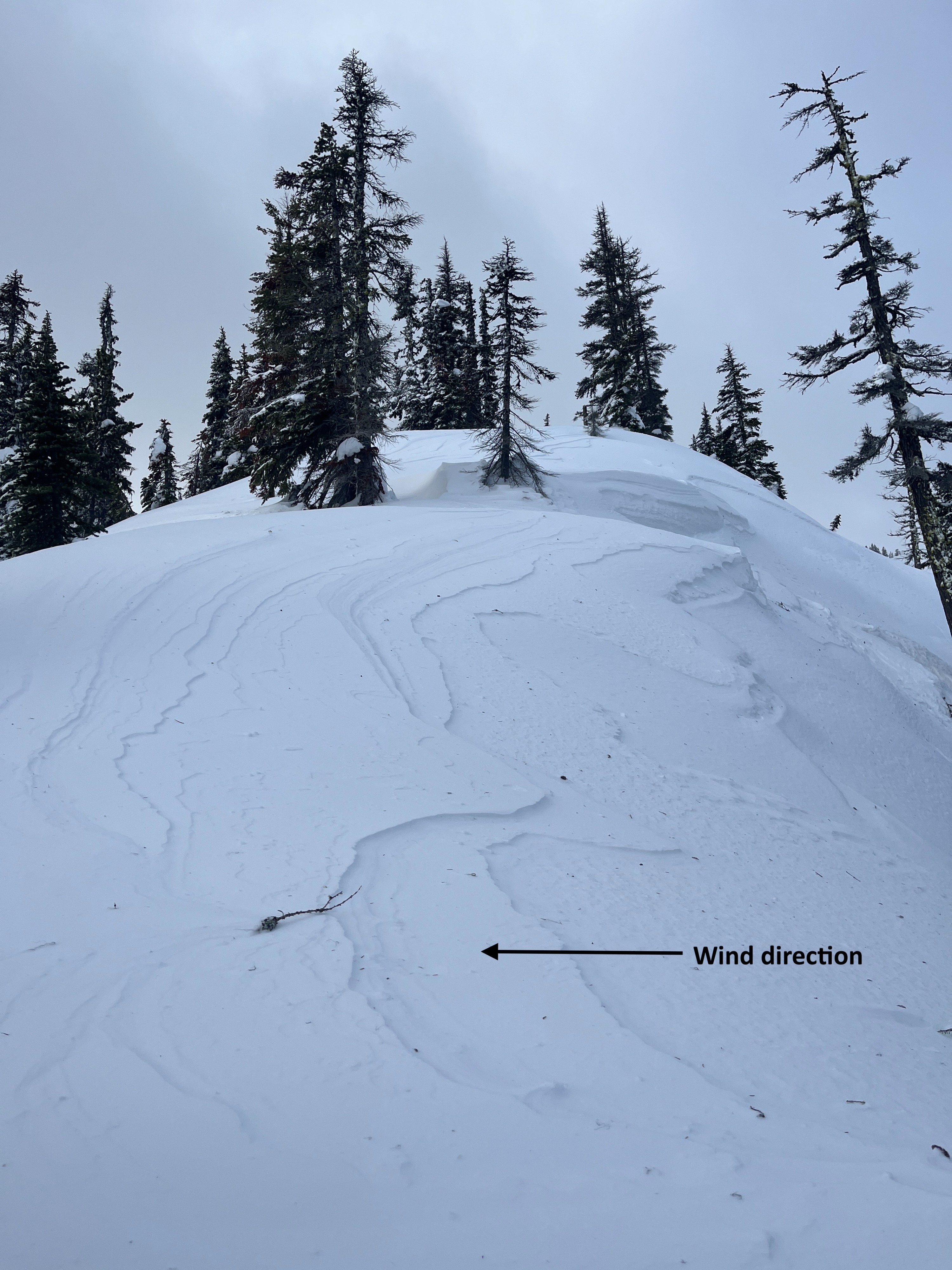
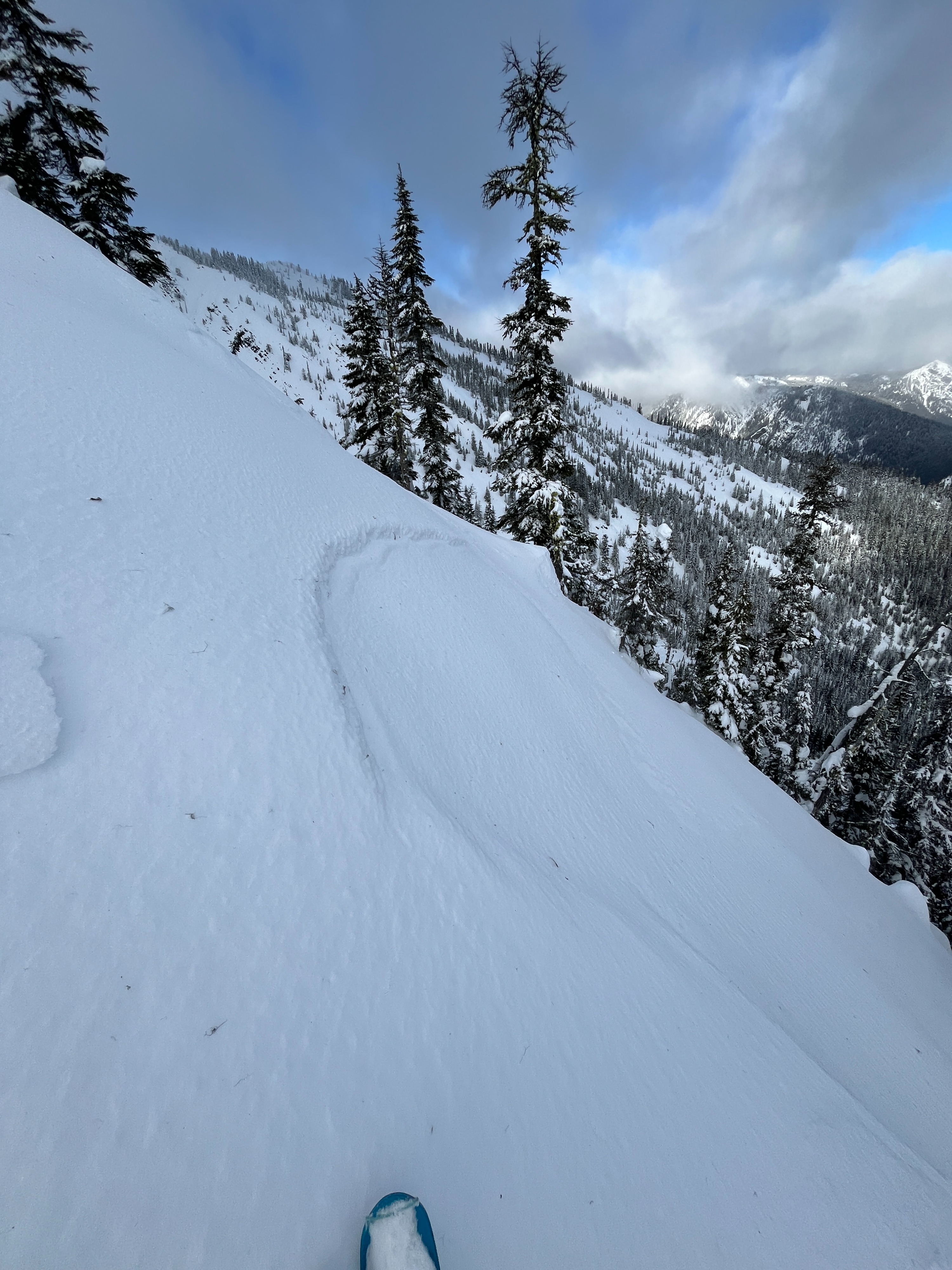
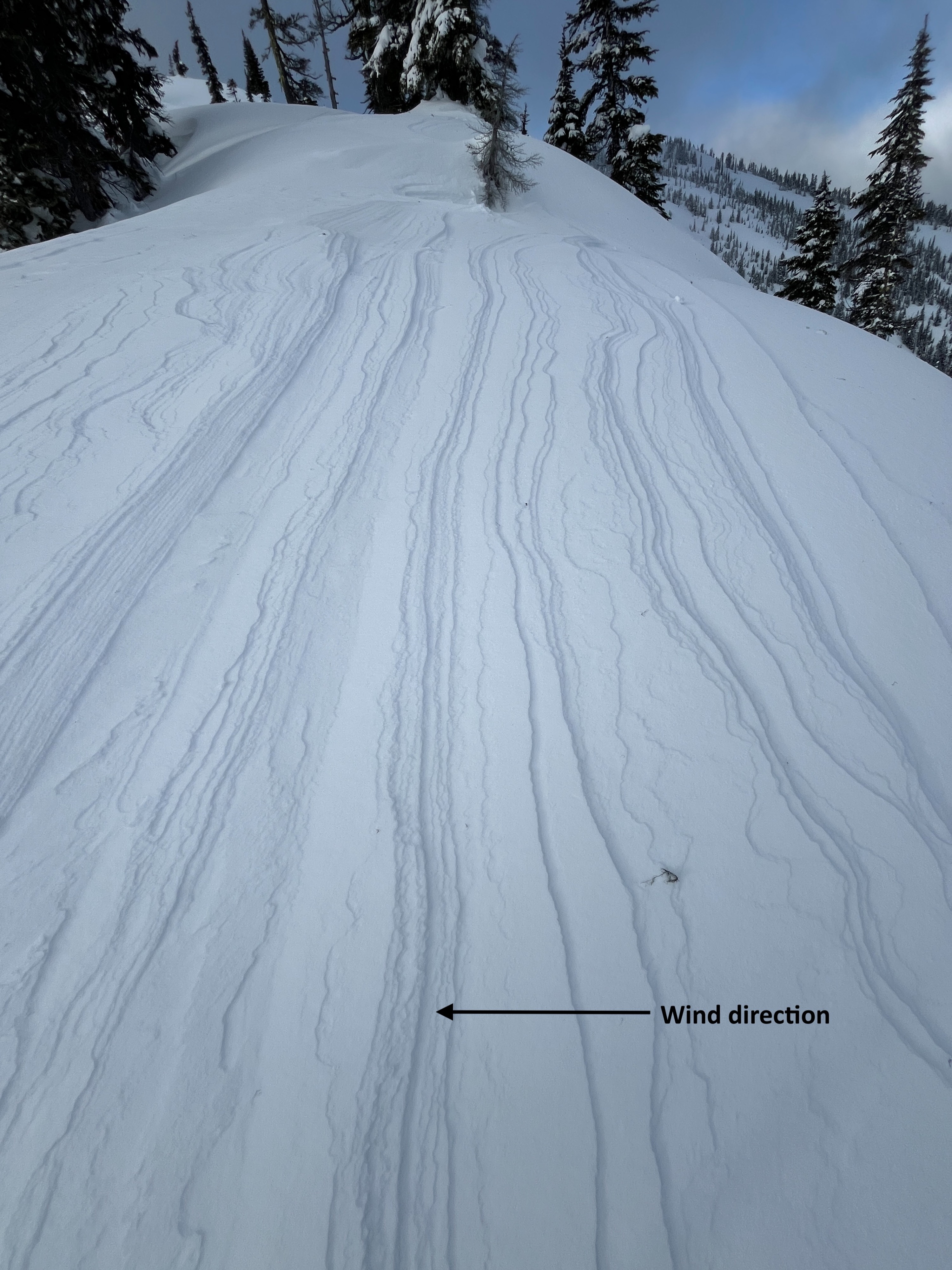
Good things come to those who walk is what we told ourselves today. While tight trees and tricky travel made it slow going at lower elevations, we were rewarded with some nice turns in dry snow at middle elevations. The wind slab problem was present on lee slopes but the slab generally lacked enough cohesiveness to be too problematic.
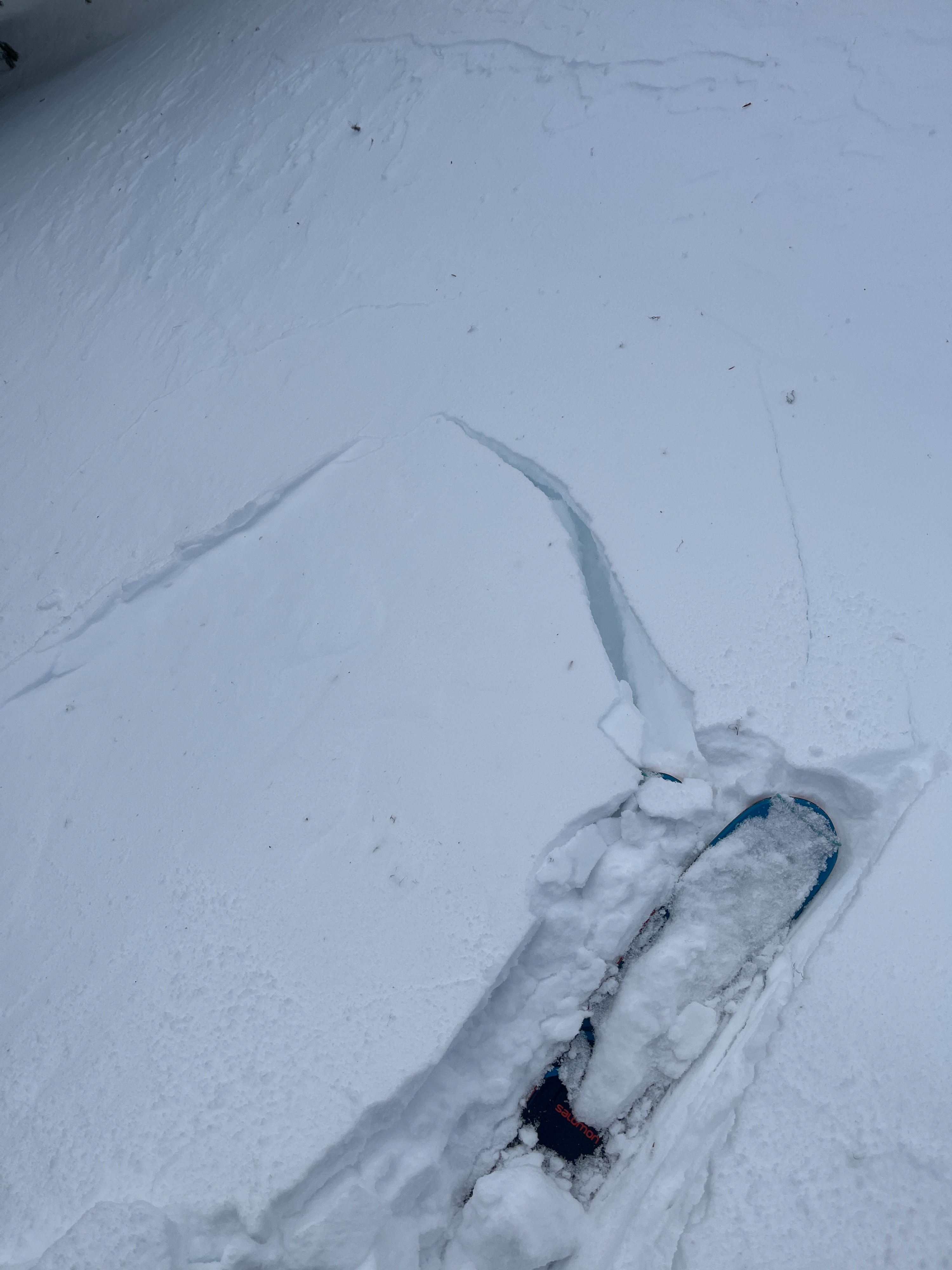
We were able to trigger stubborn short shooting cracks in exposed lee terrain at middle elevations. I suspect upper elevations were slightly more reactive.Weather
- Cloud Cover
- few
- Wind Loading
- previous
- Recent Snowfall
- 1-15
- Snow Avail For Transport
- none
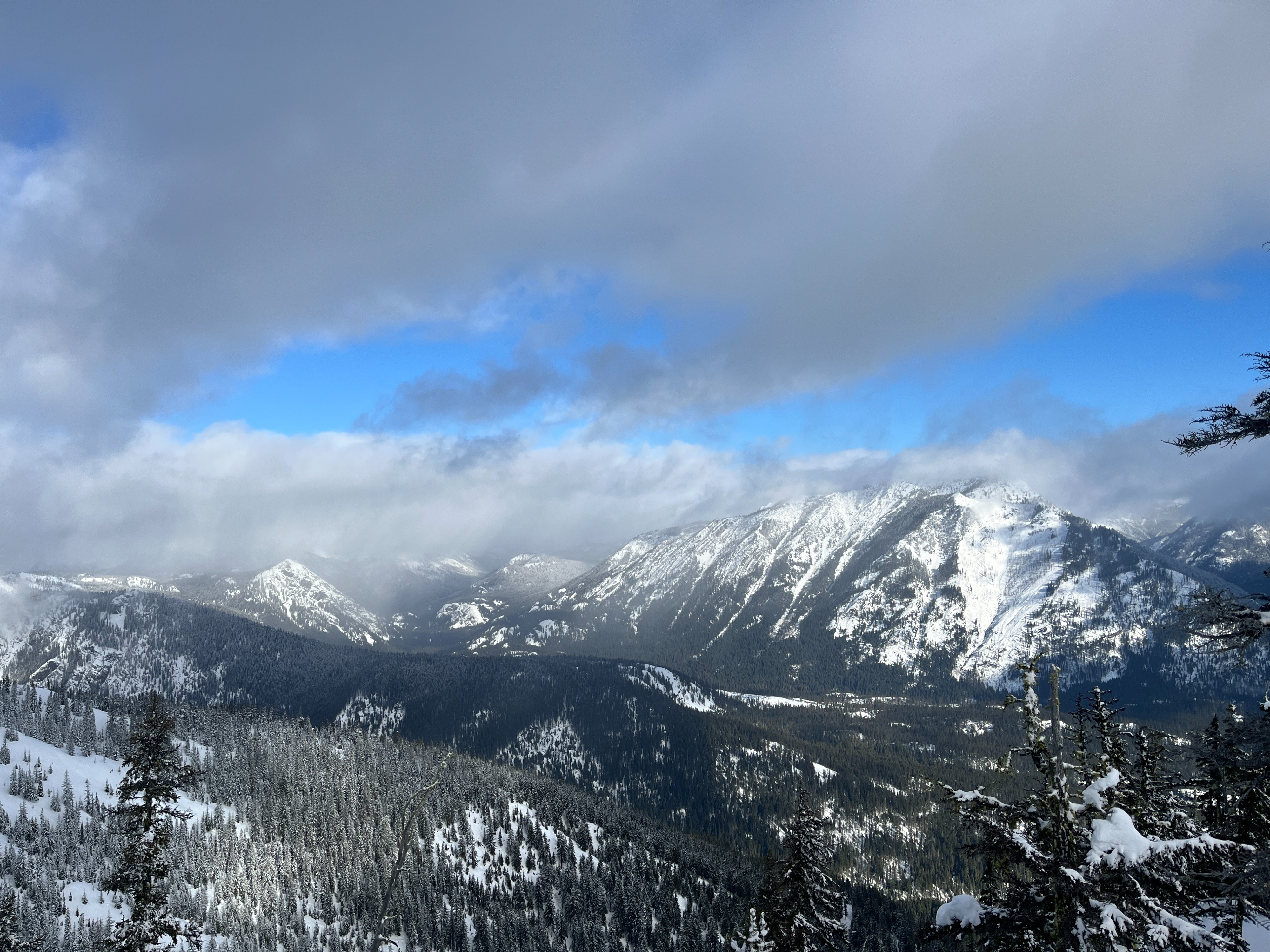
The cloud coverage was generally mostly clear but increased slightly in the afternoon upon our exit from the field. Temperatures felt warm. The wind was calm with a few light gusts from the NW at ridgeline. At lower elevations, we found 1cm of new snow gracing the surface. It was a bit hard to tell how much snow was new vs recent but we found up to 15cm above 5000 ft.
Snowpack
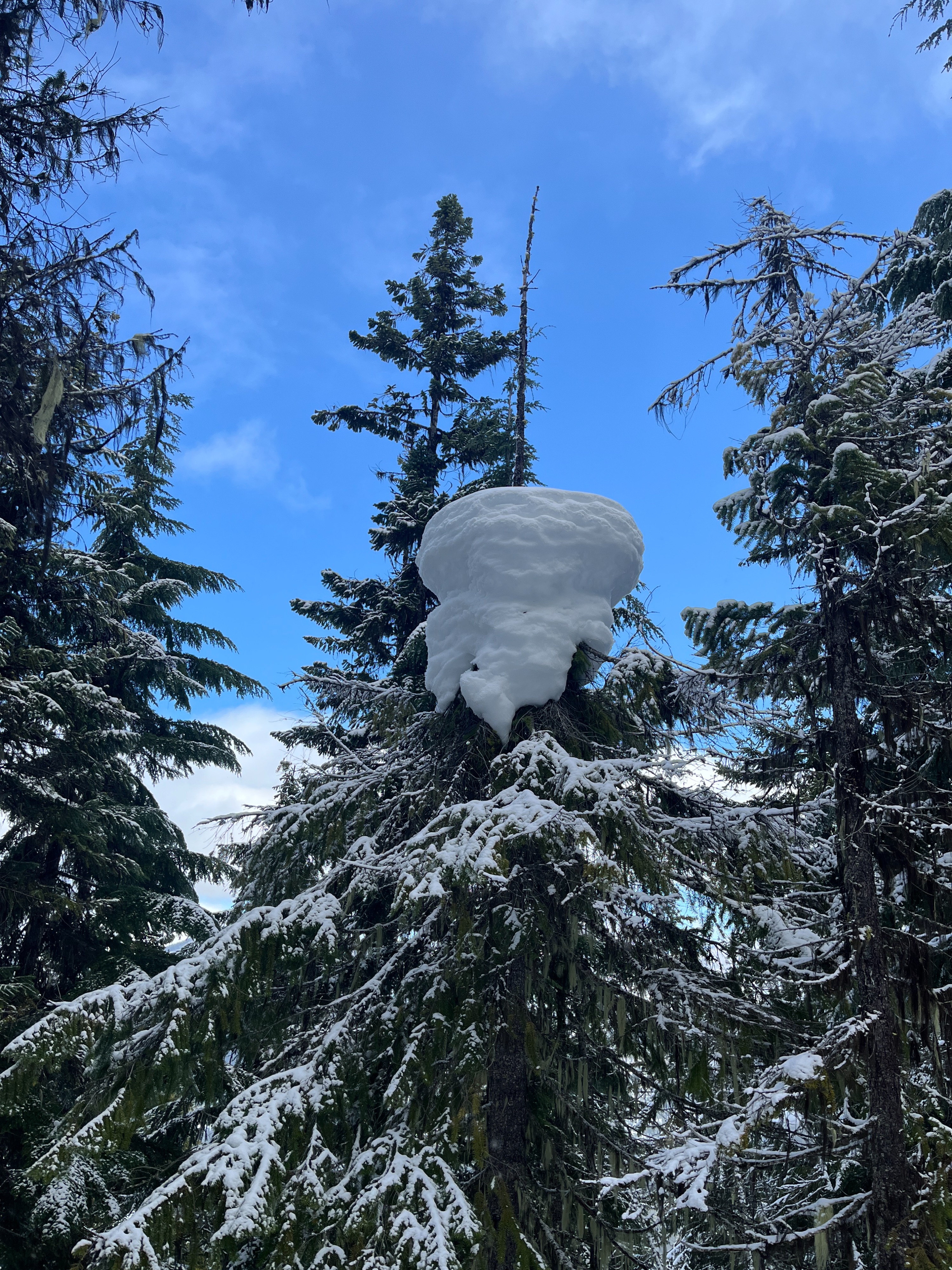
At lower elevations, travel is...difficult. Depending on if you were in the trees or out, the snow was either rock hard from snow falling off trees and refreezing into ice balls or was a softer breakable crust. We encountered these conditions until we reached about 4700 ft. Above this elevation, the snow was dry and pleasant to skin and ski. I noted some signs of warming on sunny slopes; we were able to trigger rollerballs. As we descended, the snow felt heavier and sticker than on the way up.
We dug a pit on a SE aspect at 5100 ft. The depth of the snowpack at this location was 93in/236cm deep and our pit was 60in/153cm. We found 6in/15cm of soft new/recent snow overlaying a 1F hard melt freeze crust. We found buried surface hoar 13in/32cm deep within layers of rounded grains. The Solstice Crust is buried 50in/126cm and had very small faceting rounded grains below it. We performed a quick shovel shear test that yielded moderate results within the slab of rounded grains (STM). An extended column test yielded an easy non-propagating result at this same interface (ECTN3) as well as a hard non-propagating result in the layer of buried surface hoar (ECTN21).
We dug another pit on a SE aspect at 5300 ft in a more wind loaded spot. The depth of the snowpack at this location was 75in/190cm and the depth of our pit was 35in/90cm. We found similar snowpack structure with new snow overlaying a 1F hard crust in the upper snowpack. We found another very tiny rain crust buried about 6in/15 below. We did not find buried surface hoar in this pit. A shovel shear test yielded an easy result on the crust (STE) and an extended column test yielded moderate non-propagating results at this same interface (ECTN12).
Avalanche
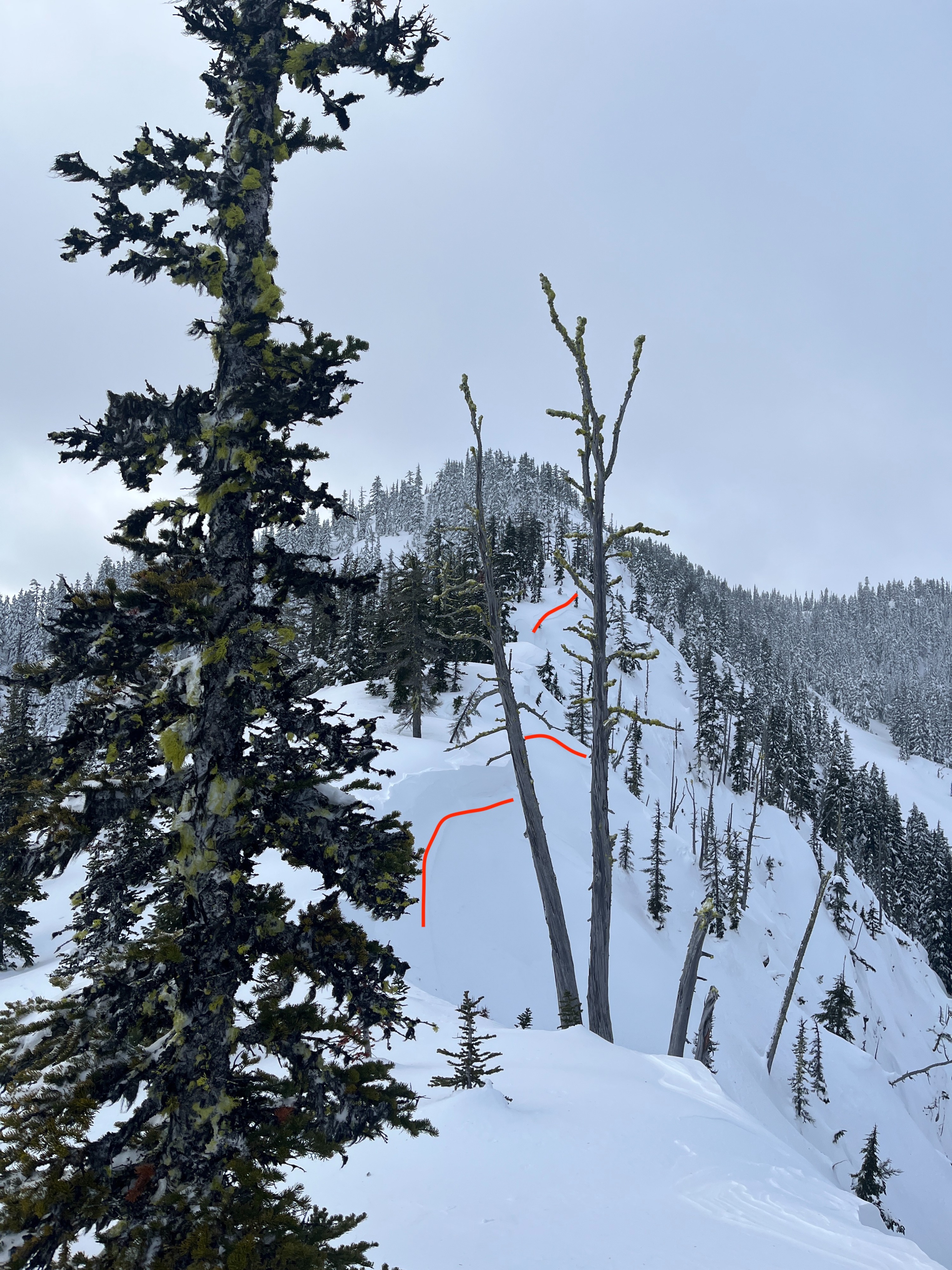
We observed some very old crowns of small wind slab avalanches just below the sub ridge we traveled up to.