
Quick report
- Cracking
- isolated
- Collapsing
- isolated
The much-needed incremental accumulation of recent storm snow has greatly improved ski quality. Some weak, persistent grain types may exist within the upper 40cm of the snowpack. These may include preserved surface hoar (probably near or above treeline sheltered terrain) and facets (in widespread association with various melt-freeze crusts). Though not problematic at present, it is worth being aware of these interfaces as the winter evolves.
We experienced very isolated cracking, with entire depth of recent HST susceptible to failure with ski cuts on very steep unsupported features, sliding above crust. We experienced isolated snowpack collapses, propagating perhaps a few meters, restricted within a very narrow elevation band (~5400'). Suspect collapse of thin layer of weak grains beneath crust, based on findings in snow profiles.Weather
- Air Temp
- 32
- Cloud Cover
- obscured
- Wind Loading
- none
- Recent Snowfall
- 25cm
- Snow Avail For Transport
- moderate amounts
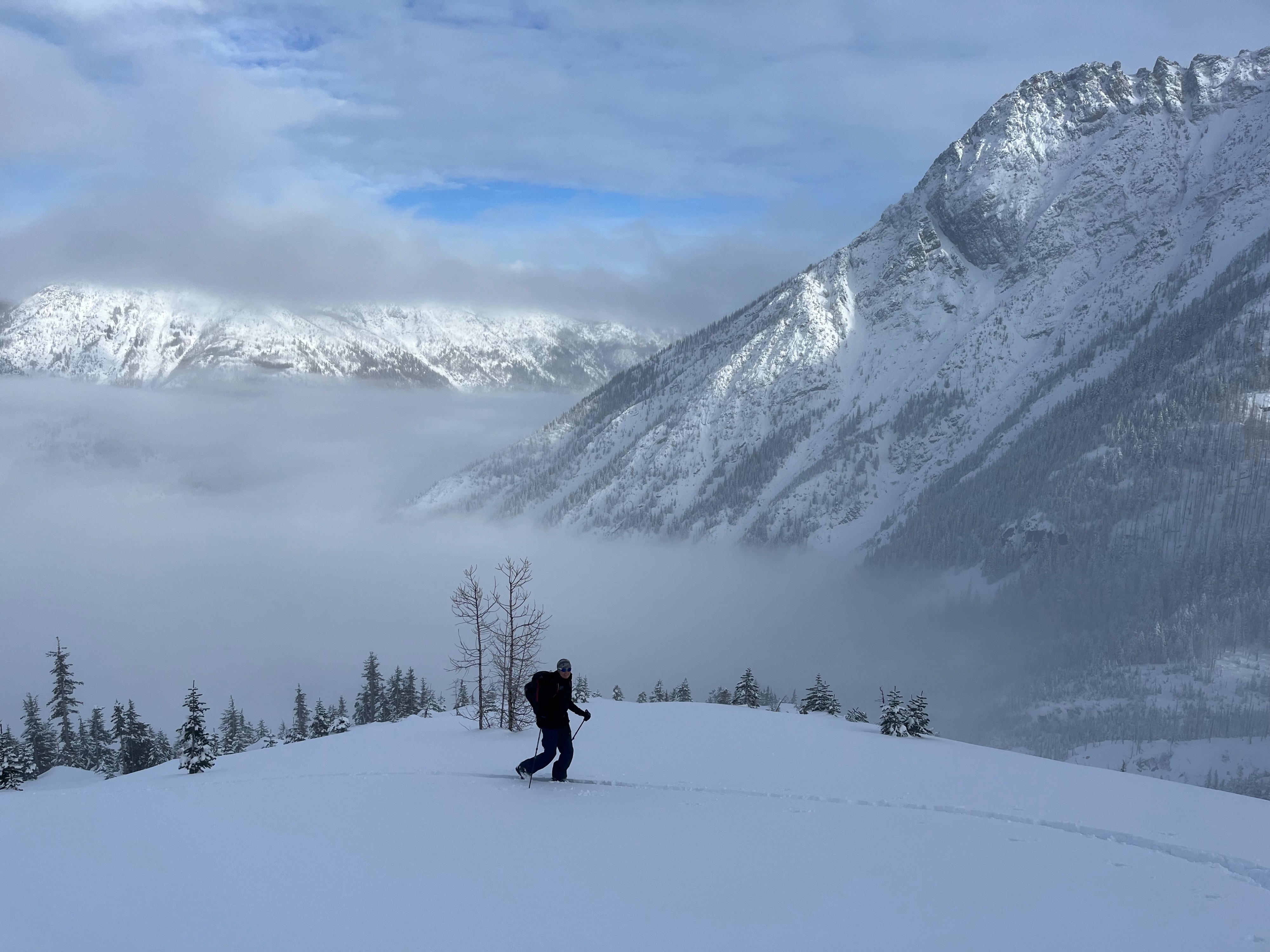
Valley cloud gathered, dispersed, and gathered again, persisting between 4500-5000'. A mild and humid day, with calm wind, and temps. hovering around freezing throughout. Some misty S-1 through the AM hours yielded to some nice clearing above the valley cloud during the PM.
Snowpack
Approx. 20-30cm recent storm snow observed throughout the zone, accumulated since Dec.25 or so. Heavy below 4000'; progressing from moist to dry with elevation. This overlies a few cms of previous storm snow (perhaps from around the solstice). This upper snowpack of 25-35cms overlies a ski-supportable melt-freeze crust which ranges in hardness from P to 4F, depending on aspect and elevation. A ~2cm thick layer of weak grains (F hard FCxr's) exists beneath this crust on both polar and solar aspects. In places, it may be embedded within layers from previous melt-freeze events. Though not problematic at present, this layer produced easy, sudden collapse results in various test pits. We also believe that collapses experienced while skinning originated within this layer. We identified this as a potential layer of concern that warrants monitoring through time, with future loading events.
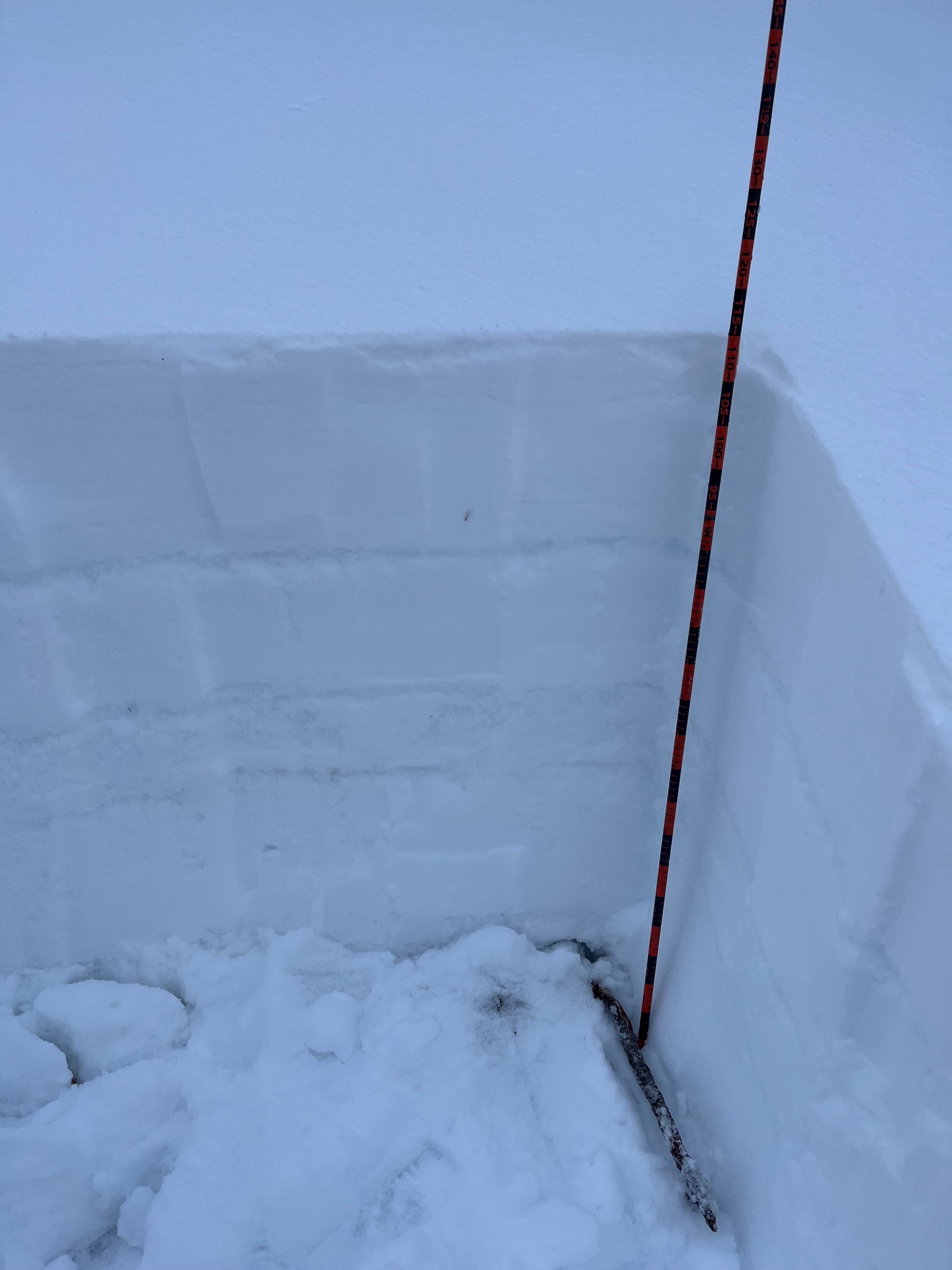
A profile on a NE aspect at 5050' held a depth of 115cm. In this location, the crust was down 28cm and weakening (4F hardness). Stability tests produced easy, sudden collapse results in small columns, but failed to demonstrate propensity for propagation in ECT's. We found no other layers of concern in this pit.
In a test pit at 5900', also on a NE aspect, we found preserved surface hoar down 35cm (possibly from around the solstice?, 2-4mm, lying flat). This thin interface produced moderate sudden planar results in small columns, but also failed to propagate across the column in an ECT. Snow depth was 130cm in this location. The crusts in the upper snowpack became very weak and began to disappear above this elevation.
On a S aspect below treeline, total snowdepth was 80cm and the uppermost crust was down 25cm. Similar results were found in stability tests as above, but we experienced no signs of instability with ski testing, albeit in limited terrain with very poor visibility (valley fog).