
Quick report
- Cracking
- isolated
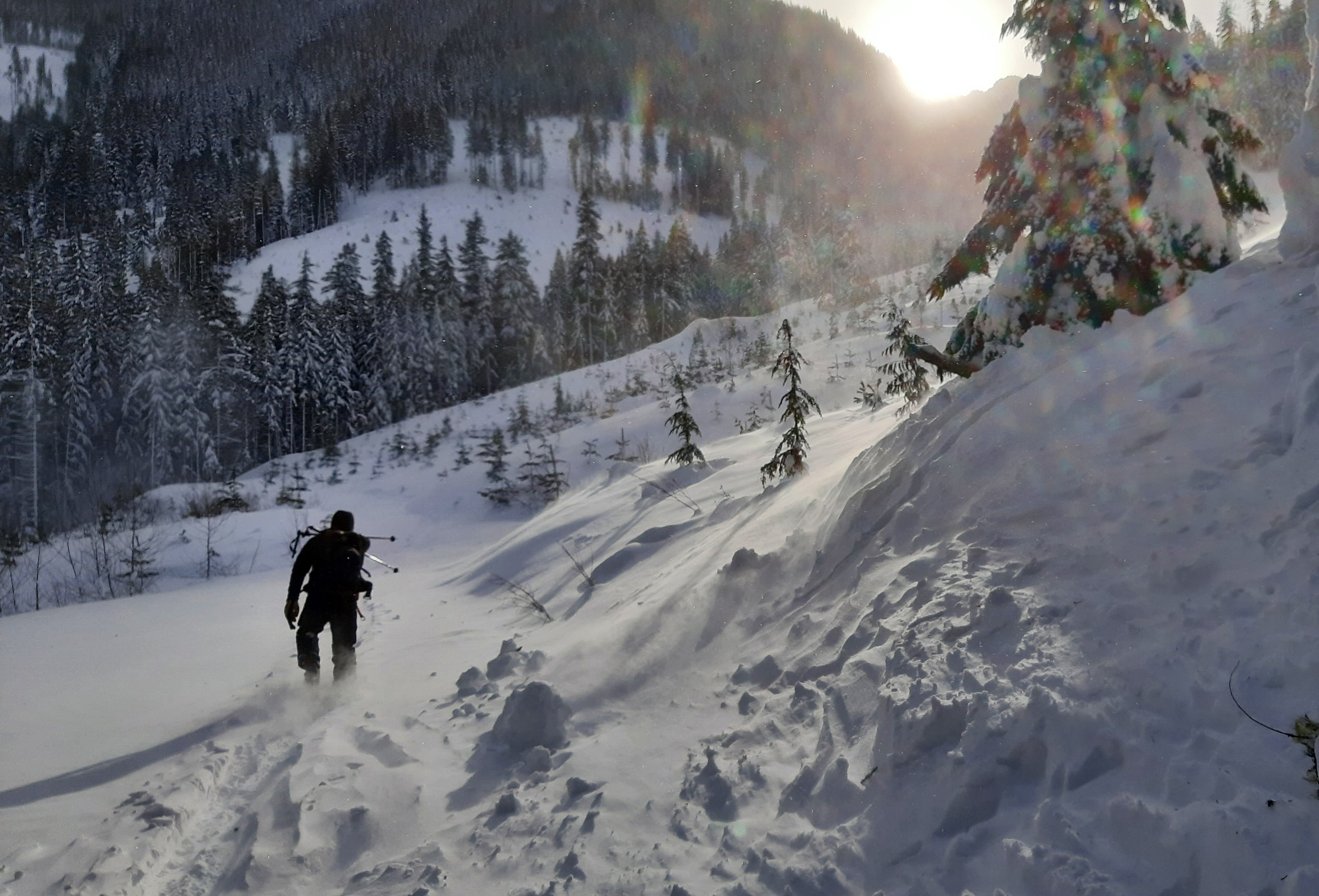
Very cold and windy with significant wind transport. Saw high peaks, recent avalanches, and impacts of the past week of storms. Found instabilities in actively forming wind-drifted slabs and deeper old layers within the Solstice crust matrix.
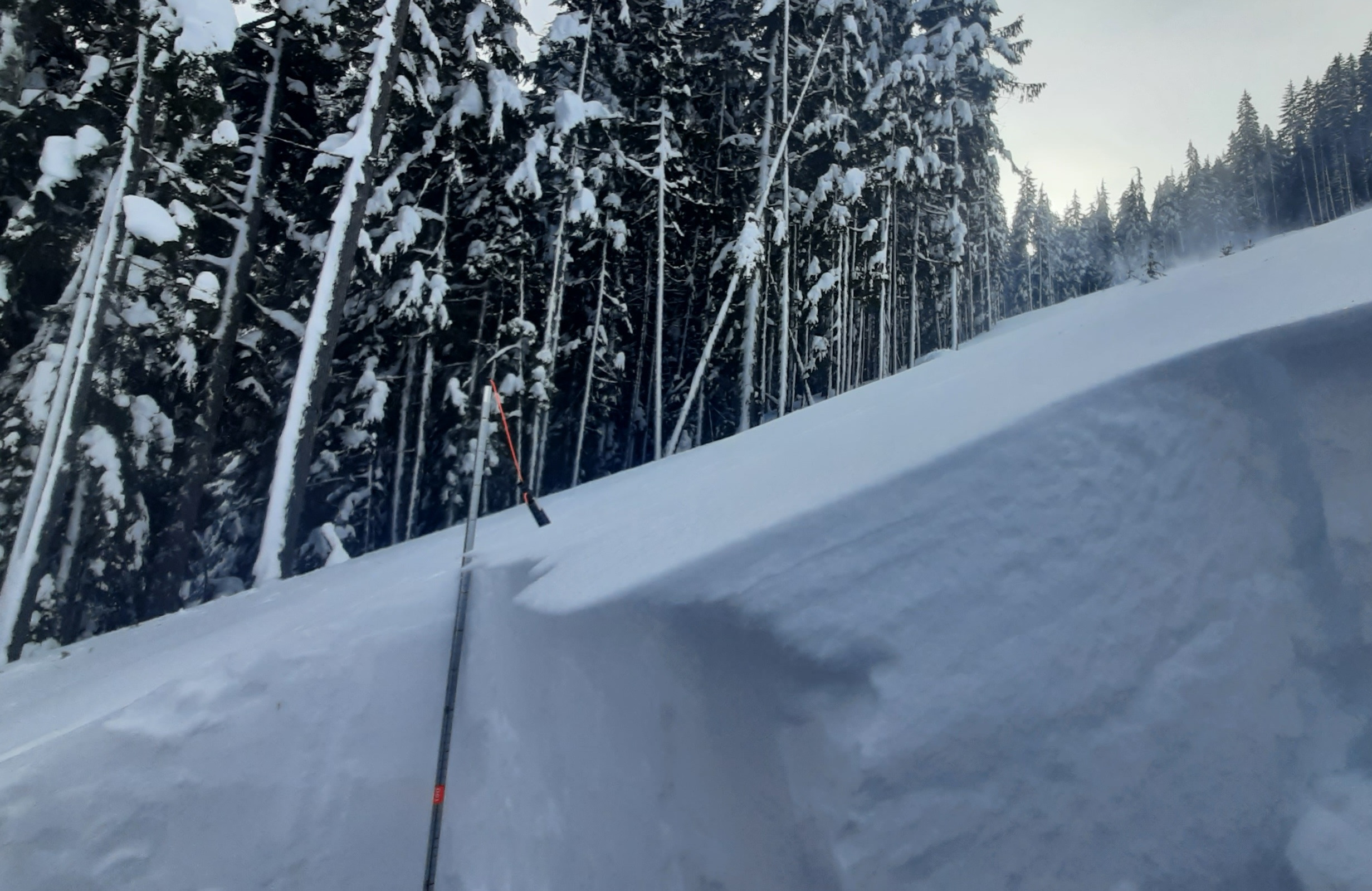
Minor cracking in areas of softer wind drifts. The longest was initiated in a weak area of trees, 8ft long in a 4ft radius around me. The more stout slabs were supportive and wouldn't crack.Weather
- Air Temp
- -21
- Cloud Cover
- broken
- Wind Loading
- intense
- Recent Snowfall
- 0
- Snow Avail For Transport
- large amounts
Very cold and windy. Intense wind transport on slopes exposed to east wind in major drainages and the highway corridor. Observed blowing snow along the highway, in open terrain 3,000-4,000ft, and on summit and high ridges of Rock Mtn. On the ridge between Henry and Lanham Creek, it was evident that slopes further from the highway corridor remained sheltered from wind. Clouds were high and thin.
Snowpack
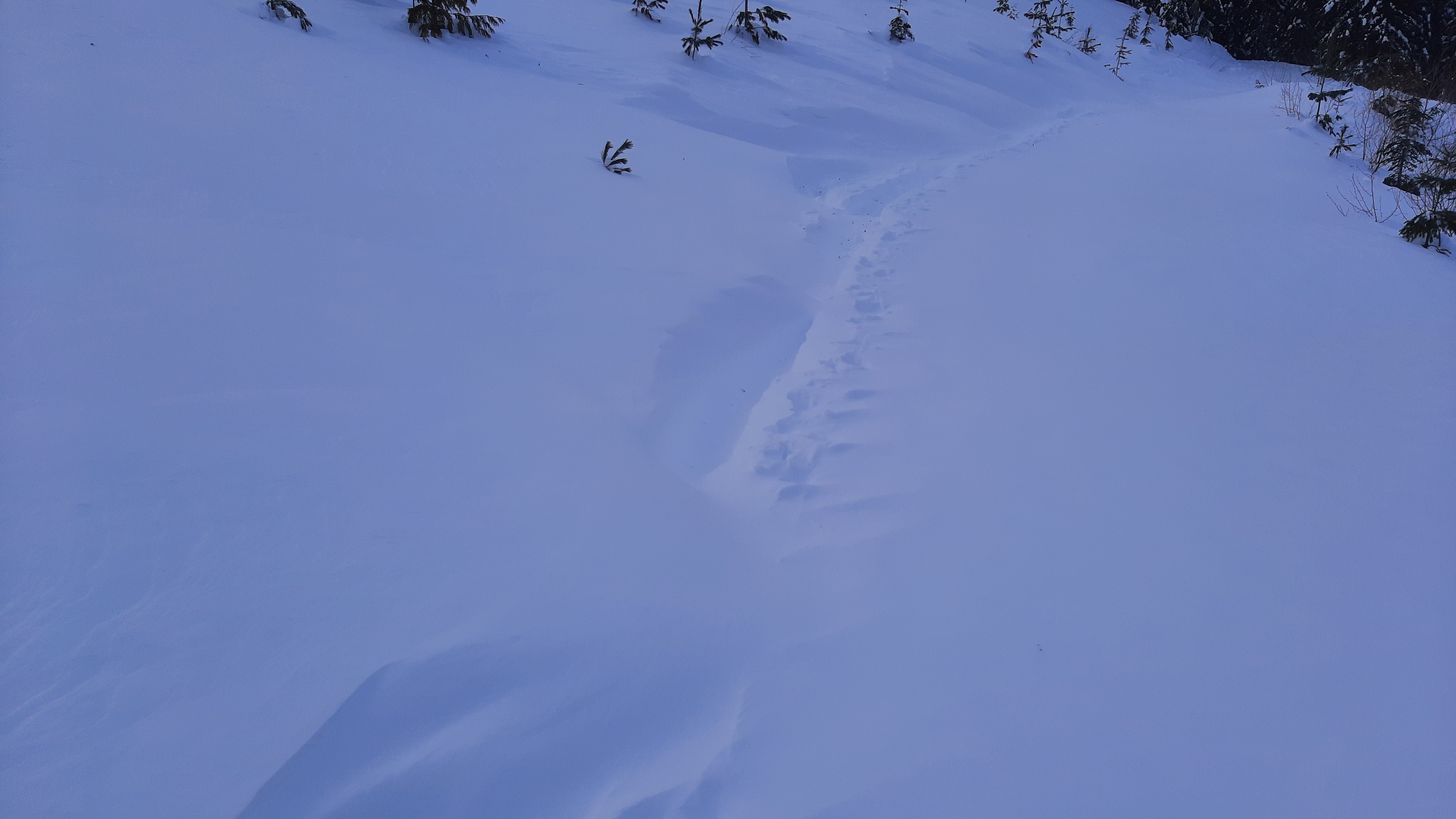
The most significant change to the snowpack in this location was active wind-loading from E winds. New drifts were mostly stubborn and only moderately reactive in isolated and typically weak pieces of terrain. We observed intense wind transport on the summit ridge of Rock Mtn. As typical most terrain set back from the highway corridor seemed to stay sheltered from the wind.
Snow surfaces were variable due to wind-loading. In softer snow, ski pen was near 1 foot. Overall, travel conditions and coverage were good. The majority of the stumps in the clearcuts were covered.
The depth of snow (HS 180cm @ 3,150ft) and gain since Jan 8th was impressive! At a low elevation profile site (3,150ft, NNE) we targeted known weak layers. Both the 12/30 crust and Solstic crust matrix produced sudden results in small column tests (CTM SC) and mixed results with larger columns (ECTN/X, PST 36/106 END ↓106cm within the Solstice crust). With the current structure, it seems unlikely that a person could trigger an avalanche on deeper layers. However, a thin, weak layer 3 feet below the surface and just below the top of the Solstice crust matrix has the most potential to be problematic with future loads.
Avalanche
- Size
- D2
- Aspect
- SE
- Trigger
- N
- Elevation
- 5600 ft
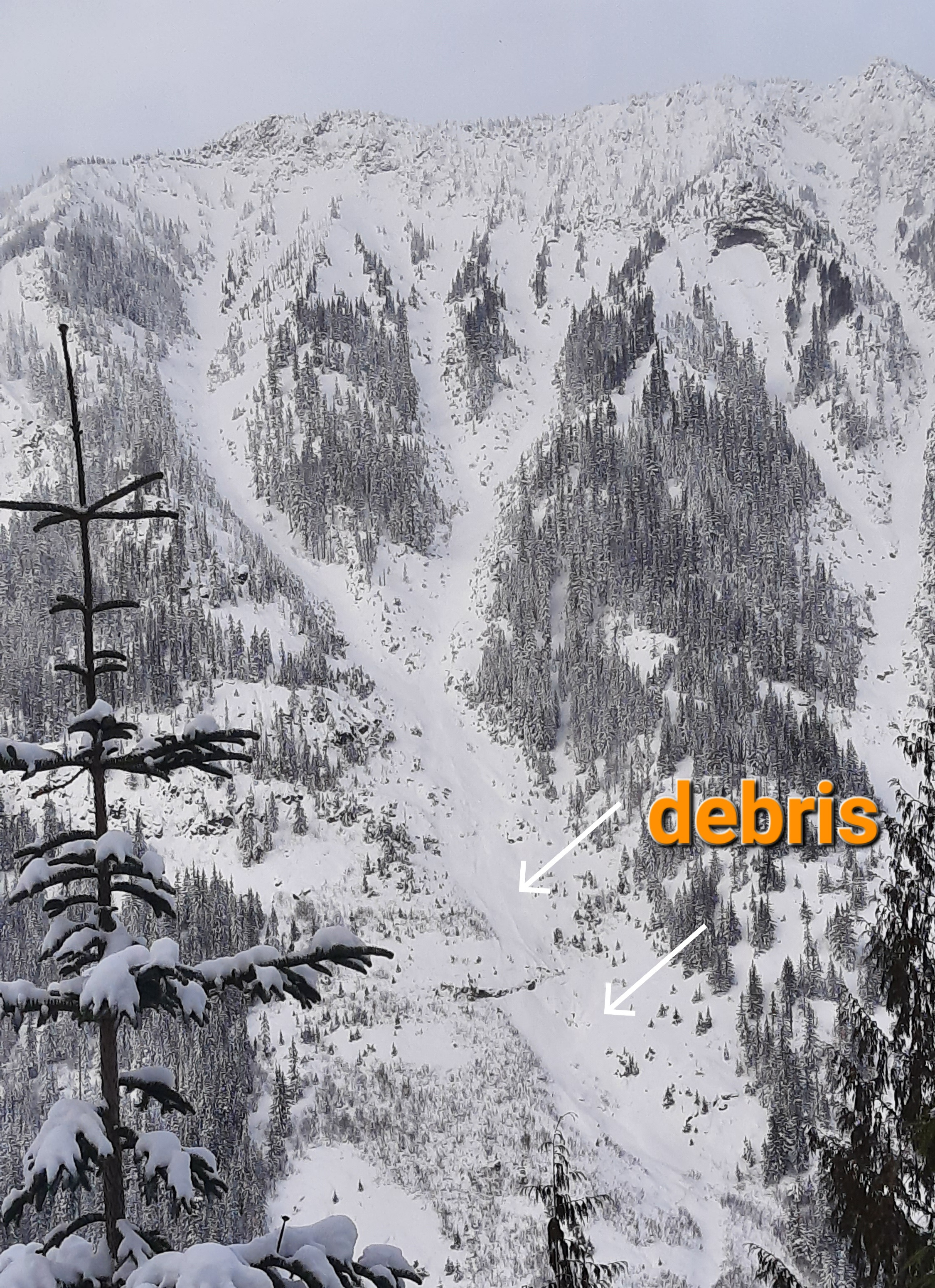
Natural avalanche (D2-2.5) that likely occurred either the 9th or 11th on Nason Ridge near Rock Mtn. Only saw debris, couldn't see crown.