
Quick report
- Cracking
- specific
It's a pleasant surprise that snowlines have shifted a little lower recently. We were able to skin up and ski all the way down (maybe we shouldn't have skied all the way down, considering the exceptional amounts of damage on our skis) to the truck at 2400ft. In typical Cascade fashion, we were able to get in about 1/4mi of slide alder schwacking through soft snow after we departed the road, just to guarantee this was a true PNW trip.
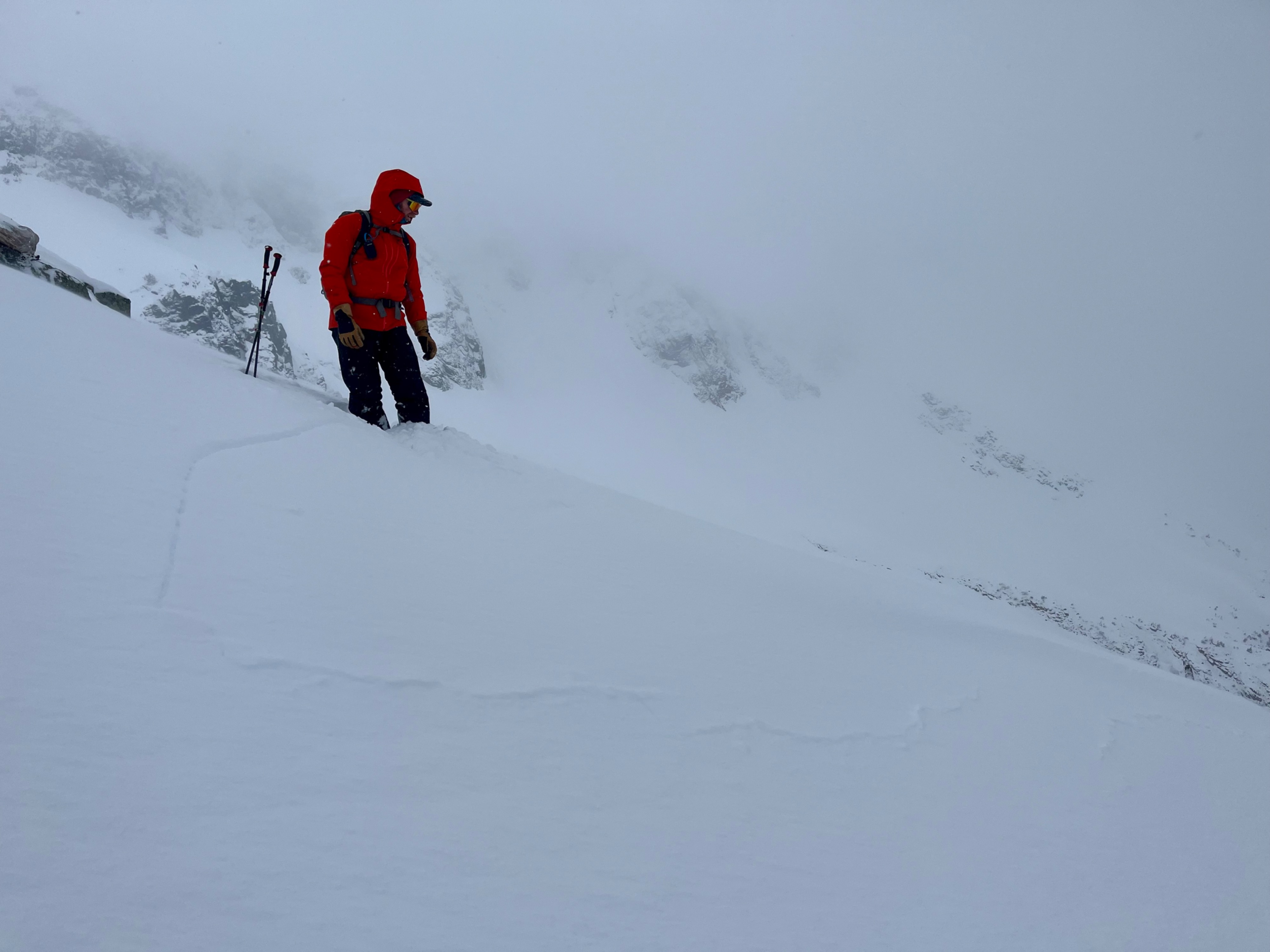
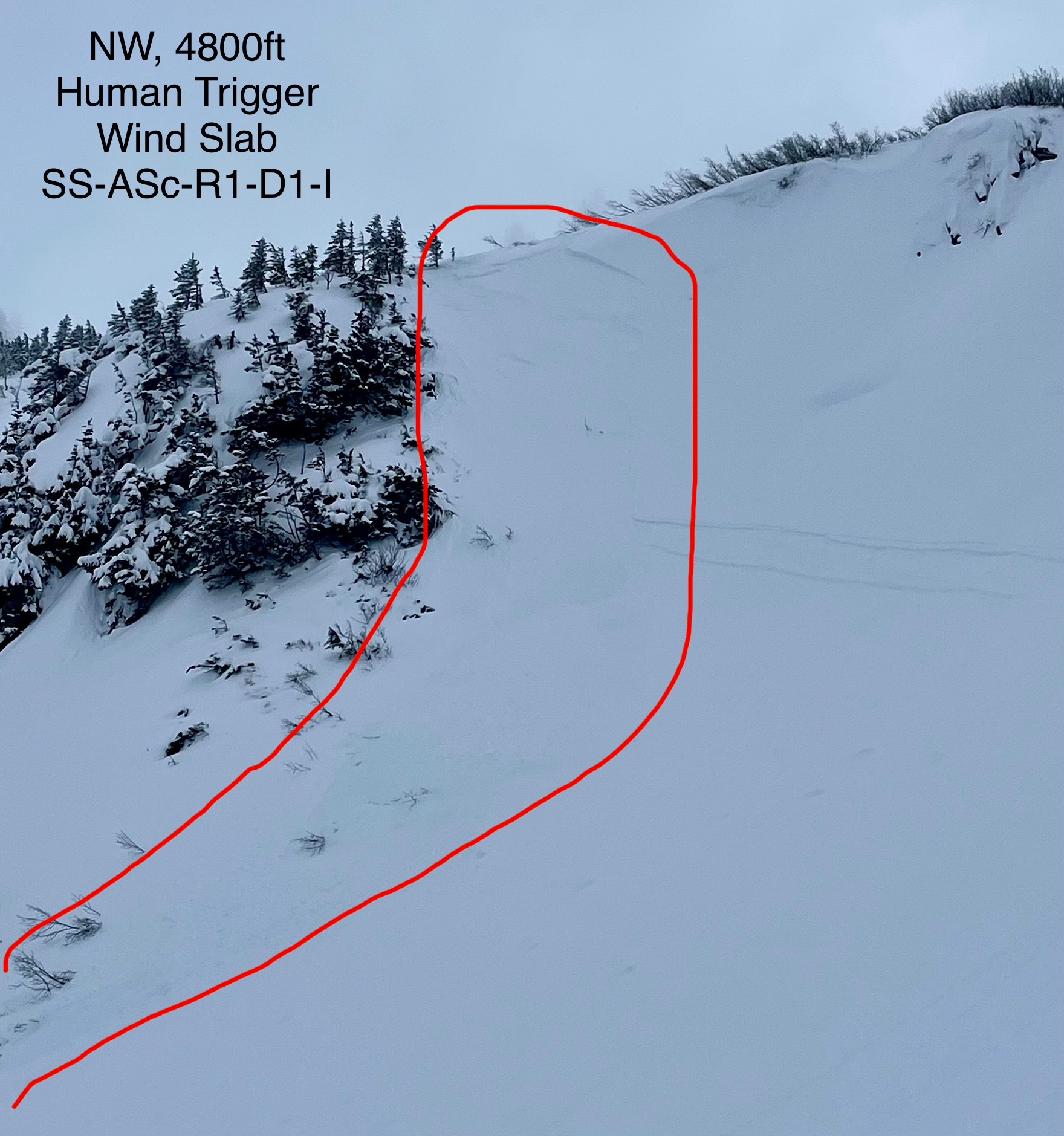
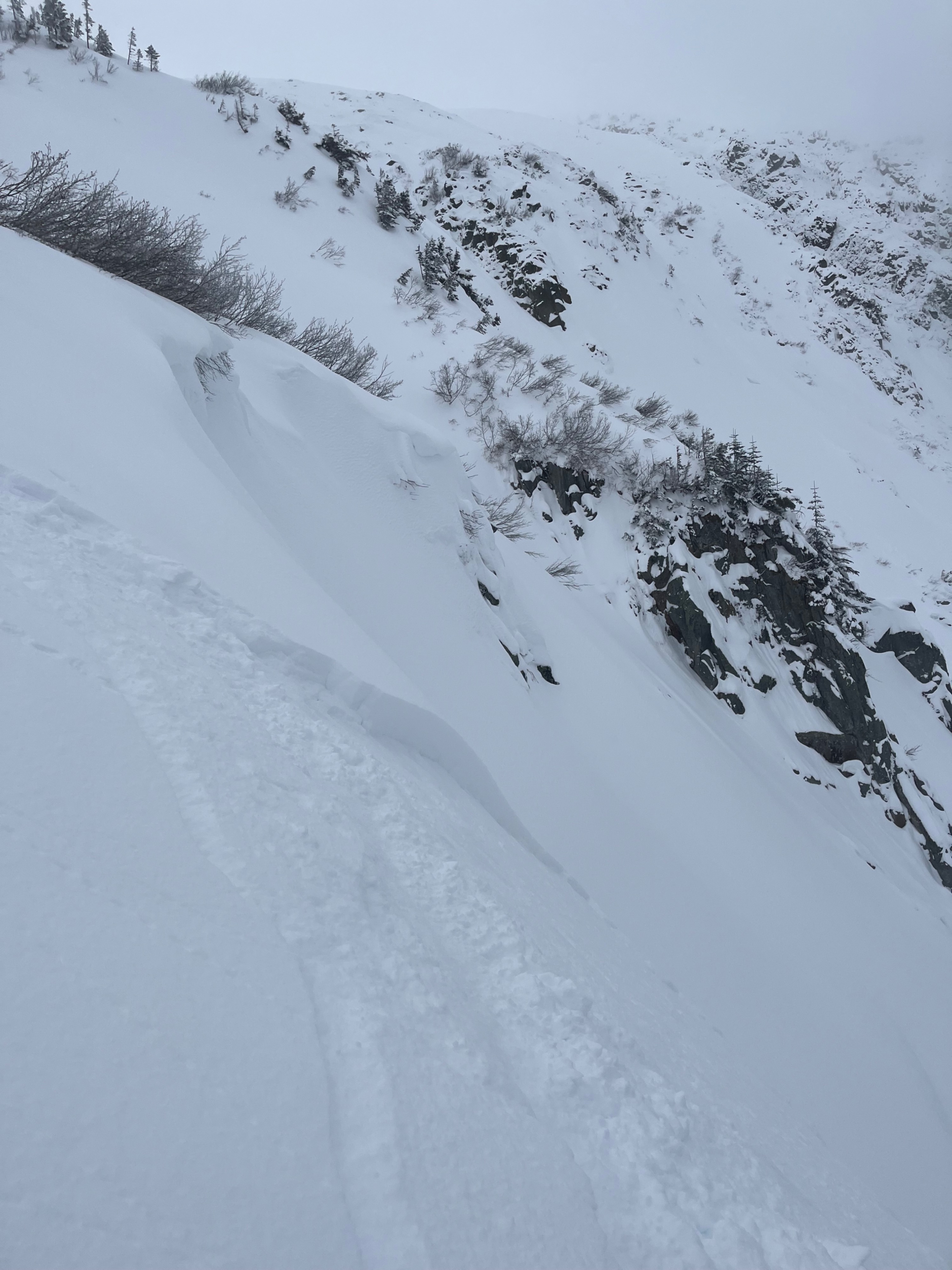
We wanted to see how much new snow there was over recent crusts and identify any avalanche concerns. There was a nice new layer of low-density snow, thanks to the cooler temperatures we've got right now, but it was highly wind-affected. It was easy to trigger small soft slab avalanches in wind slabs on steep, unsupported slopes. In lower-angle and non-wind-loaded terrain, there was pleasant soft snow for skiing- aside from areas where the wind had stripped most of the new snow away, resulting in rather treacherous "dust on crust" conditions.
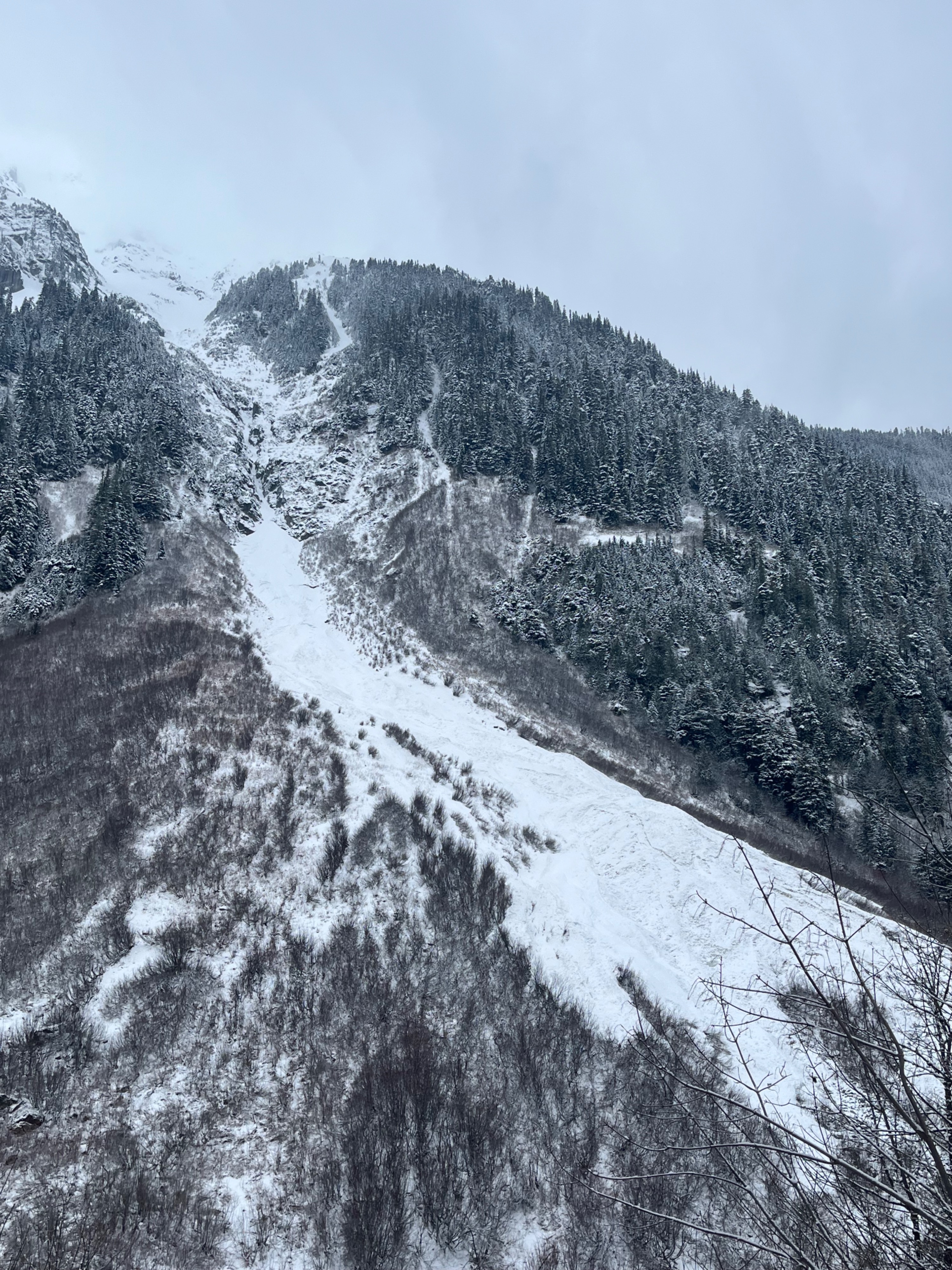
There were several old wet avalanches, up to D3, that likely ran many weeks to over a month ago out of the large avalanche paths into the basin. We were able to see large debris piles as a result.
We intentionally triggered a few small avalanches in steep, unsupported terrain and wind features.
Weather
- Air Temp
- 17
- Cloud Cover
- obscured
- Wind Loading
- moderate
- Rain Elevation
- 0
- Recent Snowfall
- 15
- Snow Avail For Transport
- moderate amounts
This was a day of fickle weather. At times it snowed intensely with large, fat flakes, occasionally it was graupeling, and at other times there wasn't any precipitation coming out of the sky. We watched ominous dark clouds- and subsequent snow- approach and engulf us several times, and infrequently we almost saw a snatch of blue, but at least had visibility of closer peaks open up a little for us. It was cold, and a slight wind and obviously wind-affected snow was first noticed at about 3800ft. Near the ridgeline, 5000-6000ft it was consistently moderate and affecting nearly all snow.
Snowpack
There was 1" of snow at the gate at 2400ft when we left in the morning. By the Cascade Pass Trailhead at 3600ft, there was about 6" of new snow, plus deeper old, crusty deposits in a few spots that hadn't melted away during the recent long warm stretches and rain. There was a highly variable 10-40cm (4-16") over what was mainly a stout crust or old avalanche debris in the main basin up to 4500ft. Above 5000ft, softer layers ranged from 30-60cm (1-2ft) over crusts. It snowed about 5cm (2") while we were out during the day, predominantly in the morning.
From 4000ft and up, snow surfaces were highly wind-affected, so soft snow depths over the crust varied constantly. At times, in areas with only a thin layer of low-density snow over the crust, it was difficult to get an edge while skinning up. As we approached 5000ft, wind and transport became more active, and firmer drifts and wind slabs were present.
While going uphill, it was more difficult to detect any obvious clues of instability in the new snow- there wasn't cracking or obvious failures in the many hand pits we dug. As we transitioned to ski down, cracking and failures became more present on steep, wind-drifted features. Before entering steep terrain, we intentionally tested the slopes at the top, resulting in small, shallow soft slab avalanches in any wind-loaded areas. These slides ran midway down to the crust layer, running on a slightly harder snow layer above the crust. No slides ran on the crust. There were also small loose dry sluffs running in non wind-affected surface layers.
We dug a couple pits and found similar structures in each of them, with a distinct, thick and hard 2/7 crust, and a much more subtle and thin crust above that. They were both wind-affected. In one pit, we found a thin layer of softer facets above the 2/7 crust, although we didn't get any propagation or failures on this layer in pit tests. In another pit, we found a thin, difficult-to-detect surface hoar layer about 15cm (6") below the surface. This was likely from before the last 48 hour's snow fell. We couldn't get any results on that layer, seeing as it was very close to the surface and very light snow was on top of it, so no slab was present.
Avalanche
A couple small soft slab avalanches were intentionally triggered in recently wind-loaded terrain. Due to the relatively minimal amount of new snow over crusts, there wasn't enough snow in these areas to produce more than a D1.5 avalanche. There were also small natural loose avalanches running from very steep terrain- mainly starting by rocks. We triggered a few very small loose avalanches as well.