
Quick report
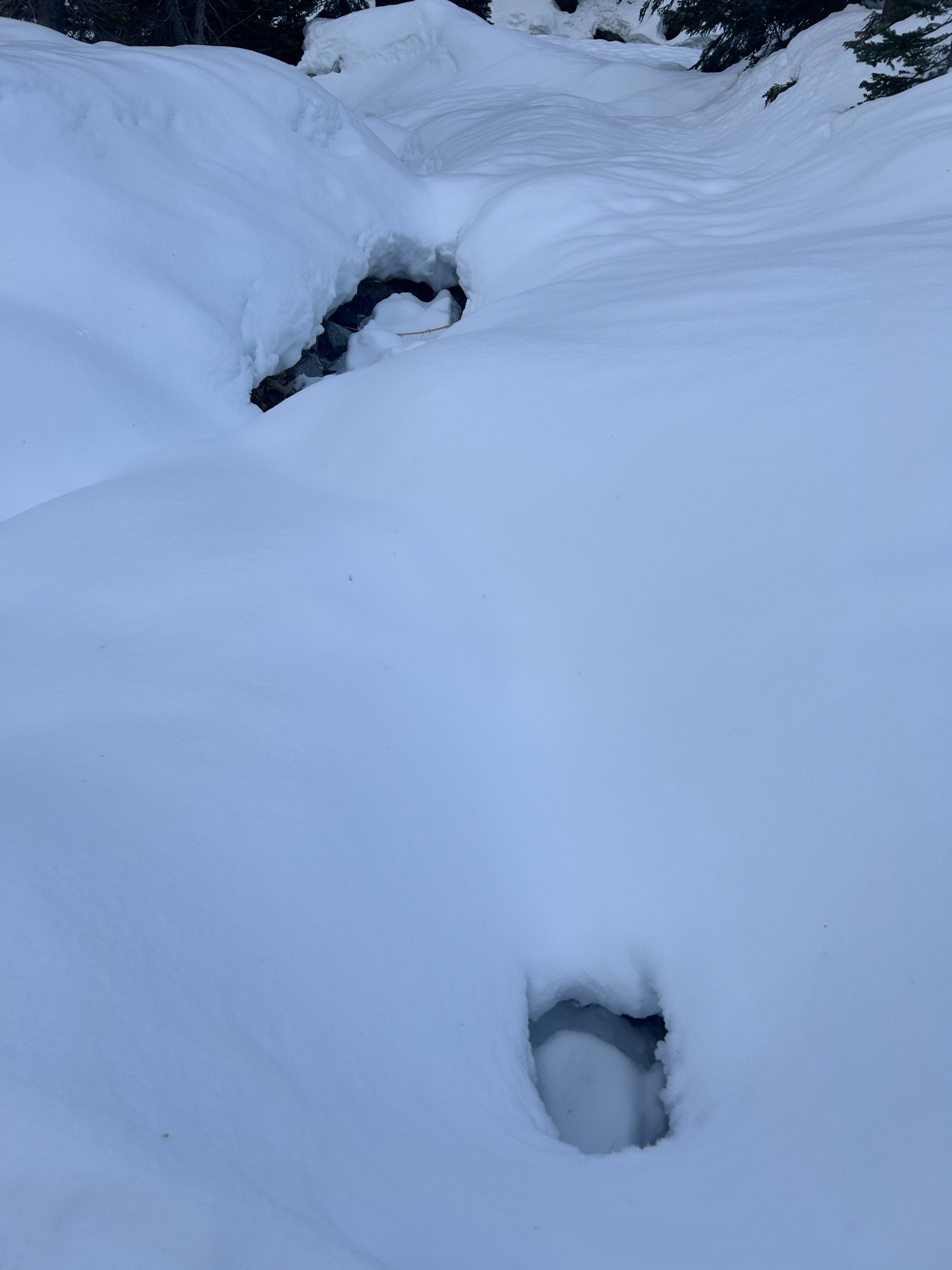
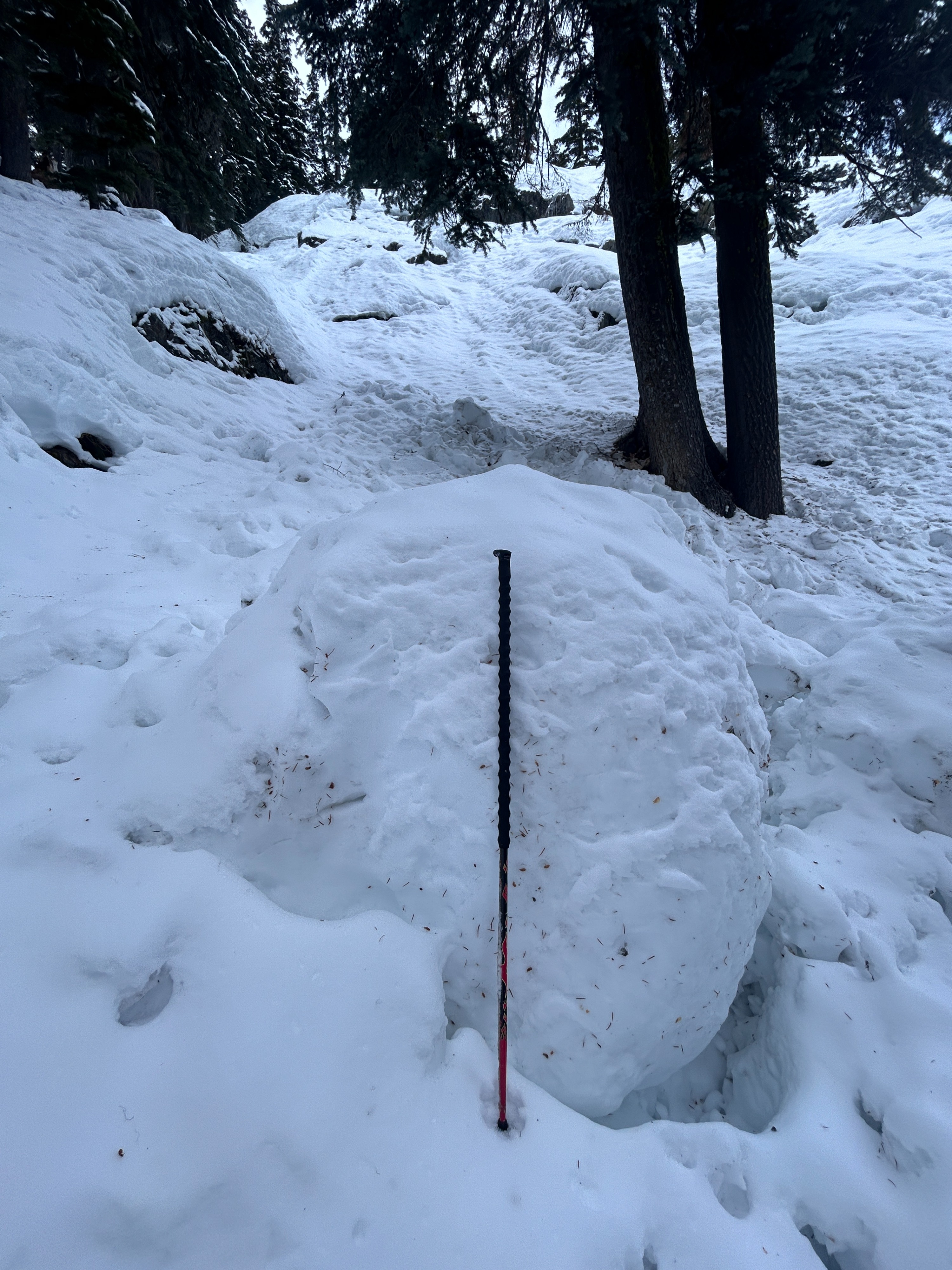
Traveling in and out of the Teanaway via a sled is still manageable despite patchy coverage and ice in places. There are numerous creeks to be forged once you get off road, but this too is manageable with a small amount of extra route finding. The snowpack improves starting around 5000 ft on shaded aspects. The middle and lower portion of the snowpack is strong and hard. The upper portion leaves much to be desired. Weak layers were observed both at the surface and just below. Time will tell if these layers handle incremental loading expected in the coming days.
I triggered a small amount of dry loose sluffing while descending a steep, north facing slope.Weather
- Air Temp
- 25
- Cloud Cover
- scattered
- Wind Loading
- light
- Recent Snowfall
- 10
- Snow Avail For Transport
- small smounts
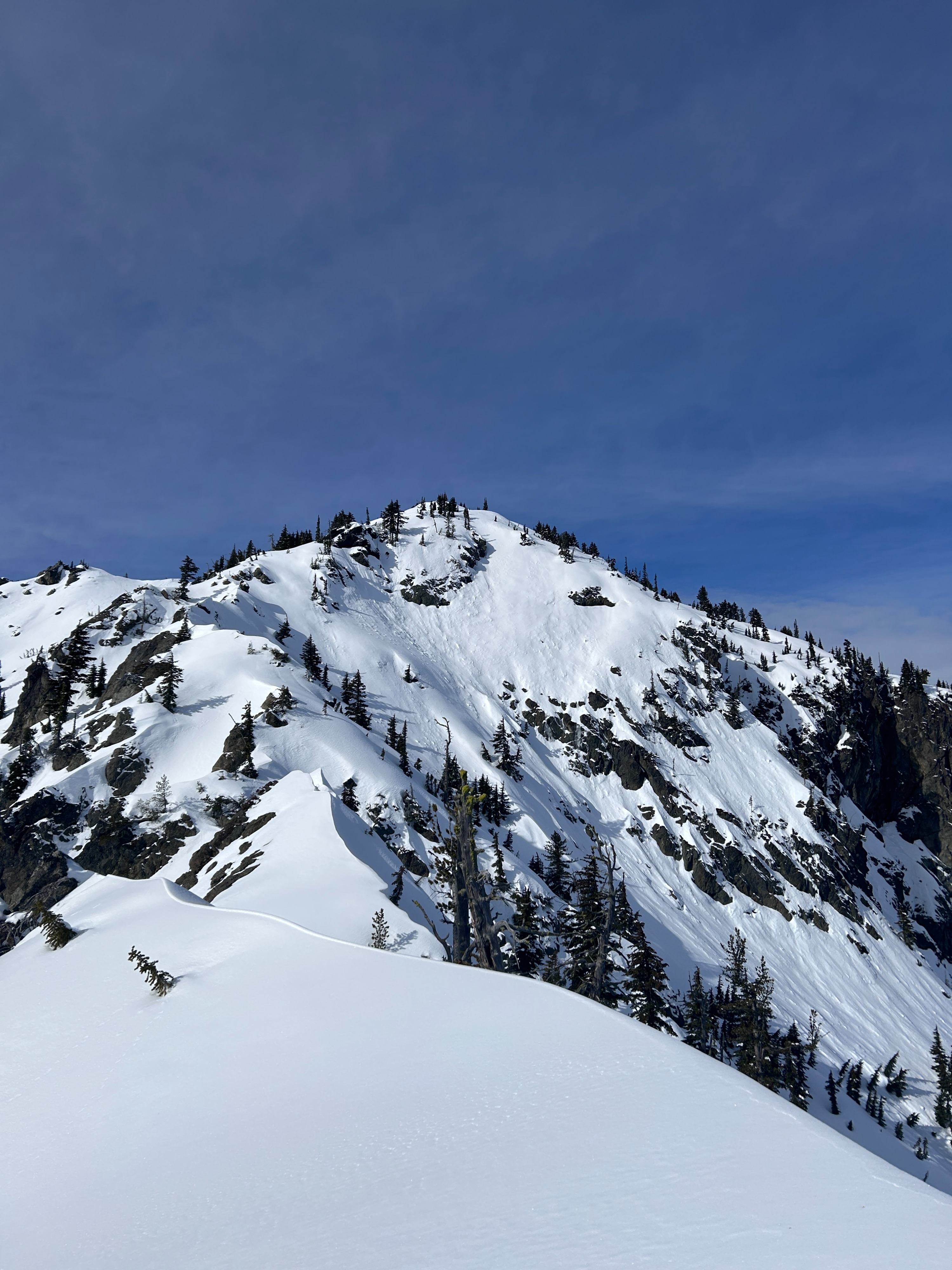
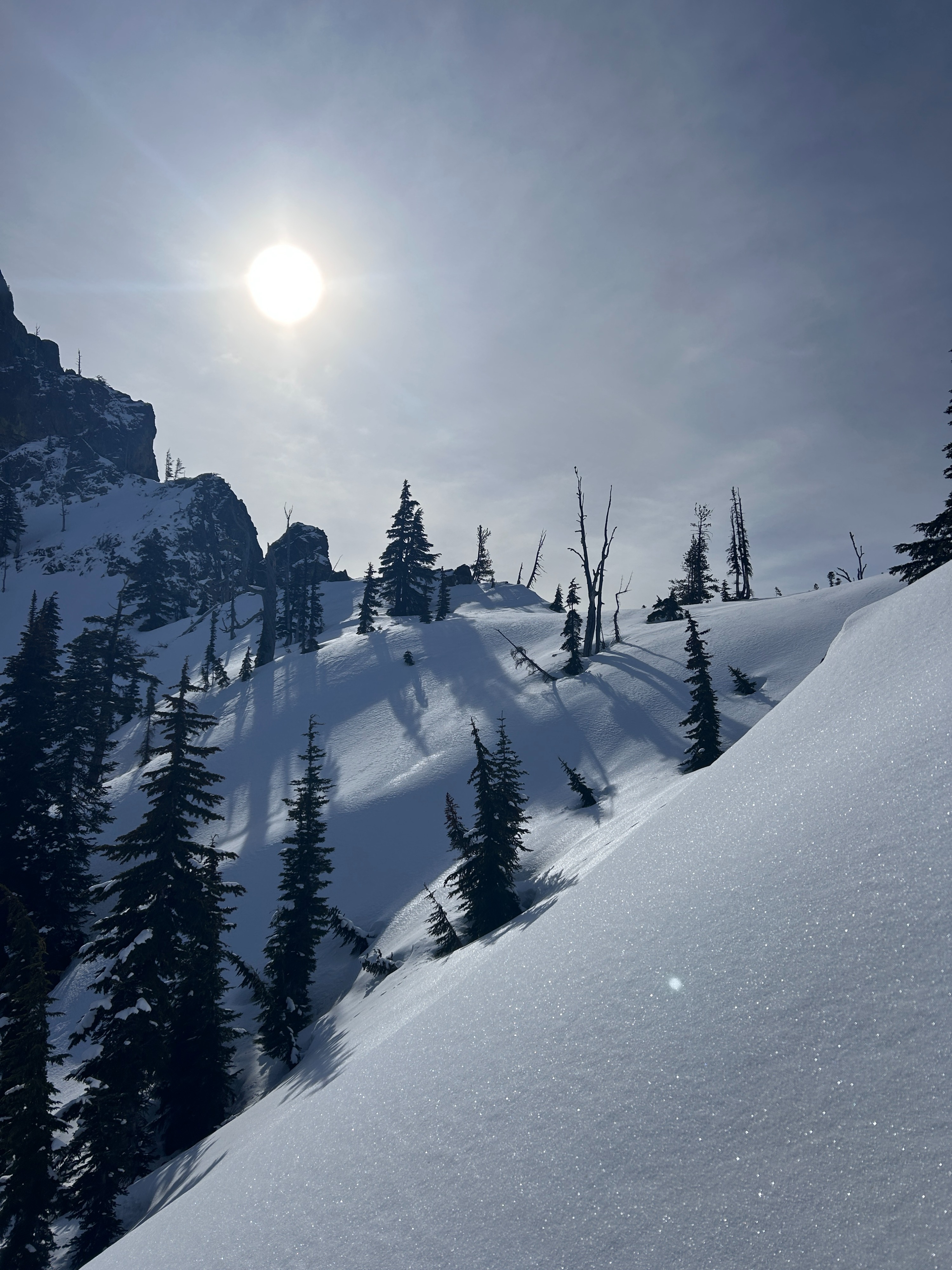
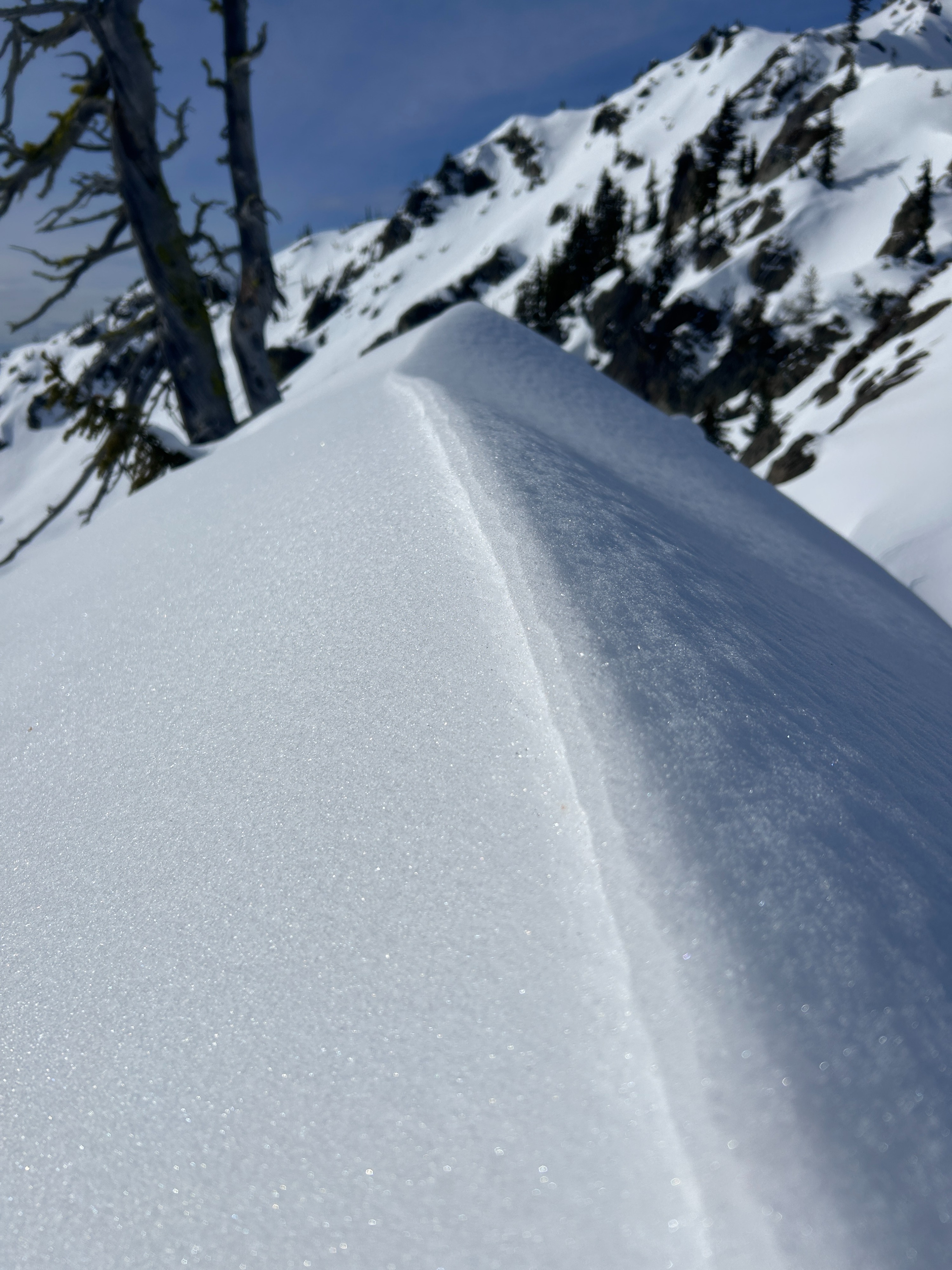
Most of the day, there was increasing cloud coverage. It wasn't until I exited the field that the sun came out. Temperatures were chilly in the morning and increased throughout the day. The wind was light and from the east. I observed a small amount of wind transport at ridgeline. There is 10cm of "recent" snow; it fell on Sunday so not really all that recent anymore.
Snowpack
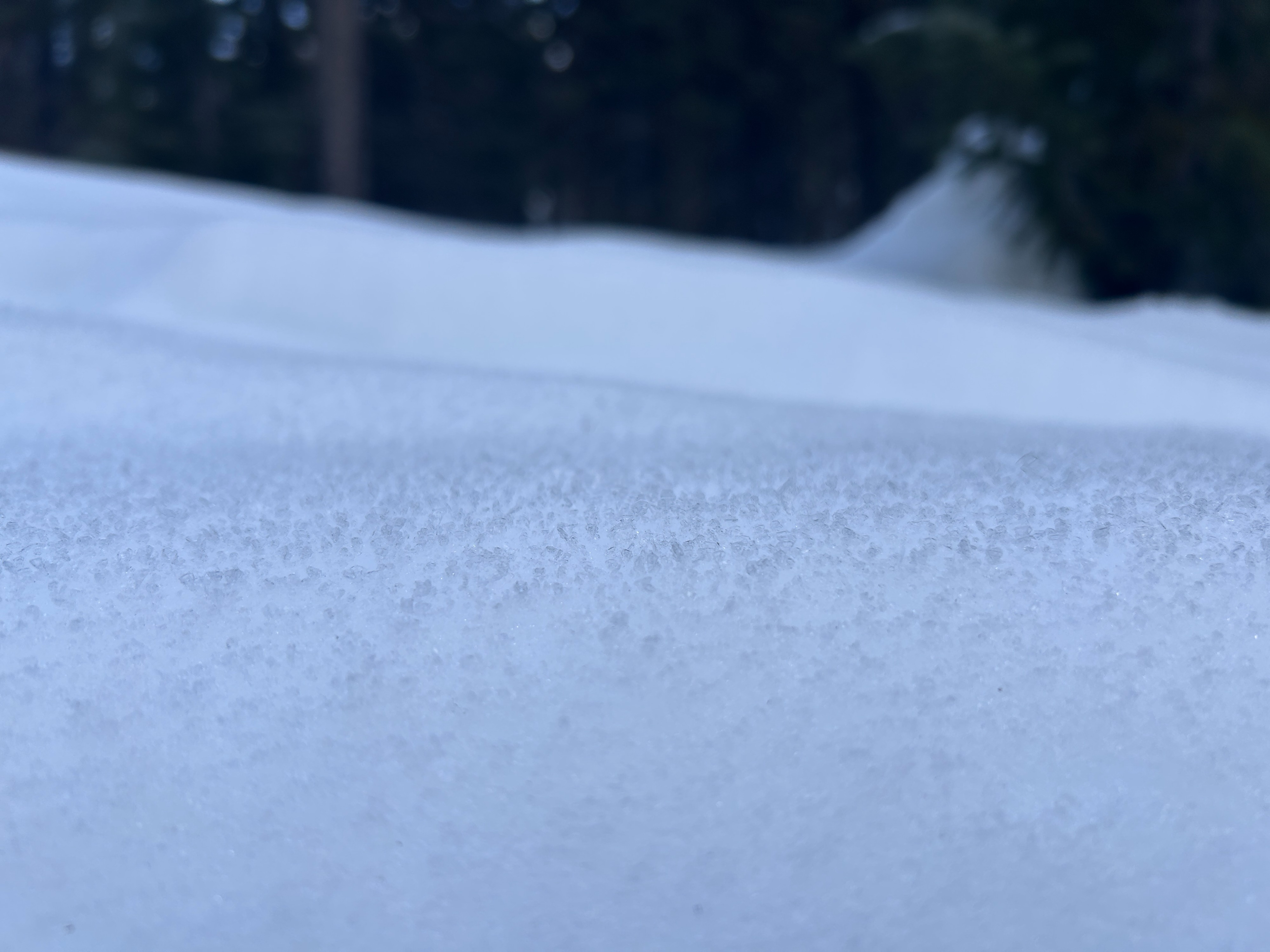
Lower elevations: where there is snow, there is a very hard and supportable crust on the surface. Sometimes this crust is all the snow there is. As is expected, directly underneath trees is uneven and chundery. There are many creeks to be forged to get where you're going. There was a dusting of recent snow starting at 4500 ft and I also began finding small grains of surface hoar around this elevation.
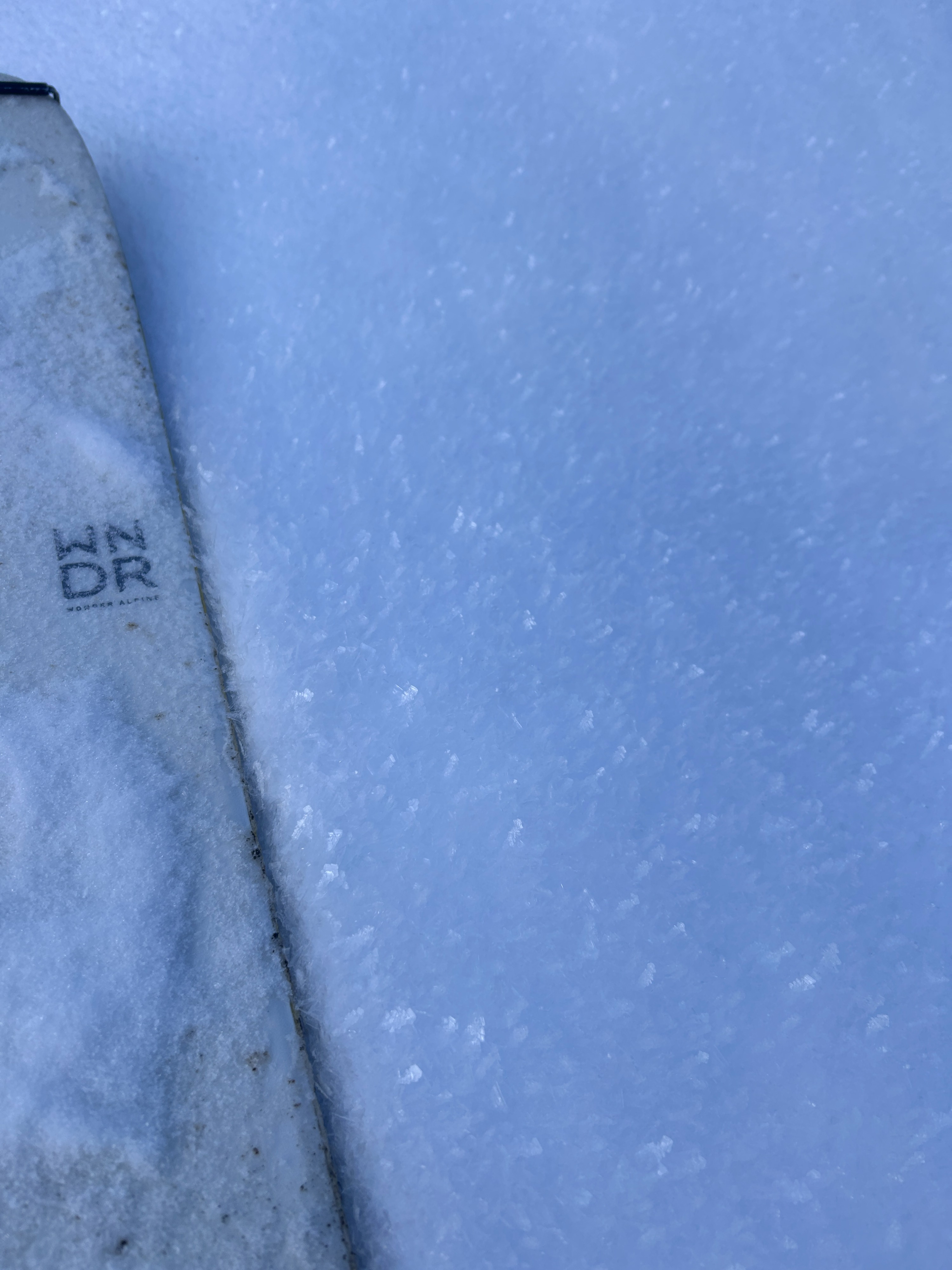
Middle-Upper elevations: at 5000 ft on northerly aspects, there is an average of 115cm (45in). By this elevation, you begin to move through a few cms of soft recent snow overlaying a similarly hard and supportable to skis crust. The recent snow was not bonded to the crust, and made for slick skinning conditions. By 6100 ft, I was finding up to 10cm (4in) of recent snow. I observed larger and more widespread surface hoar development on nearly all shaded aspects to the ridge.
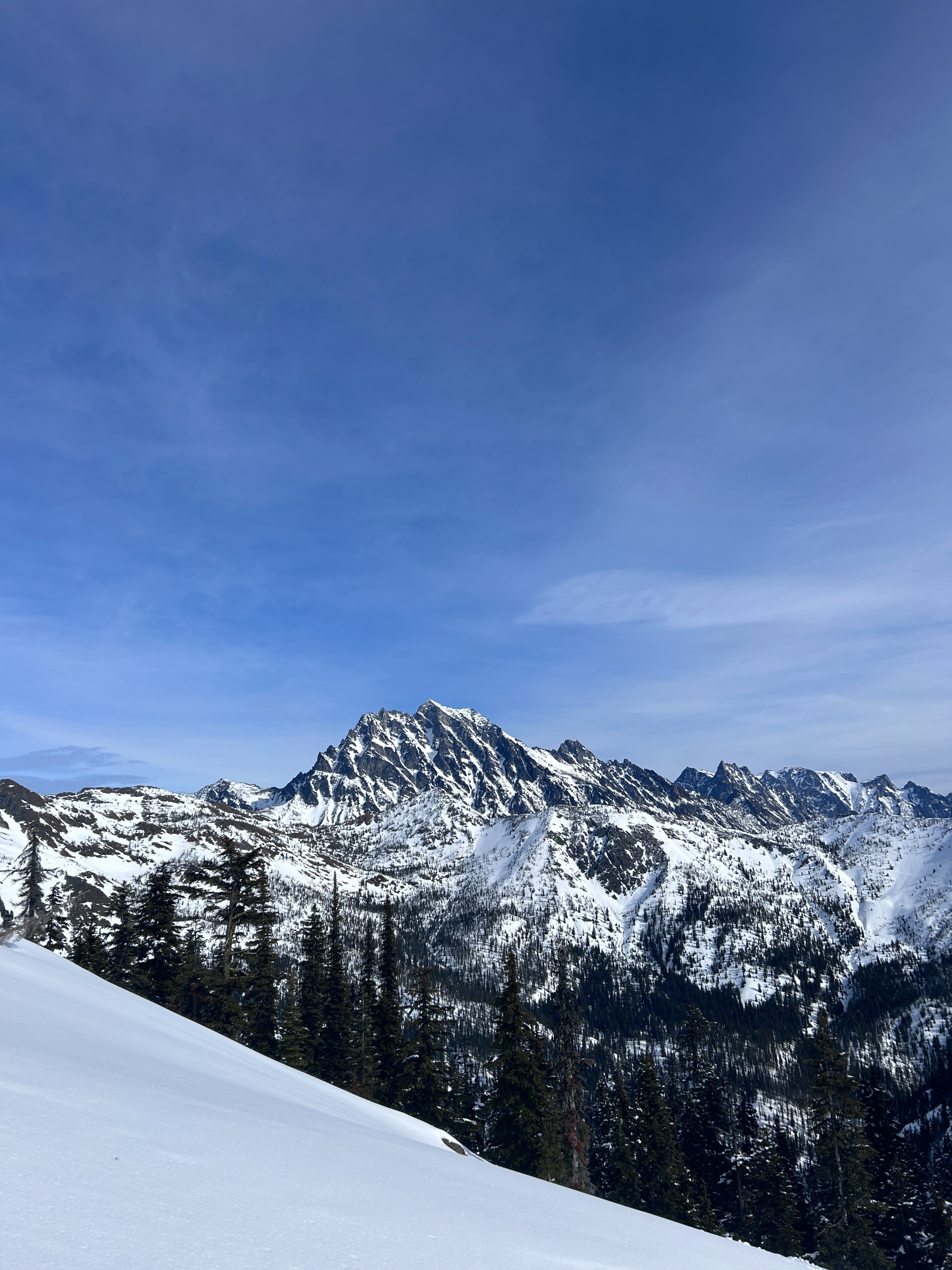
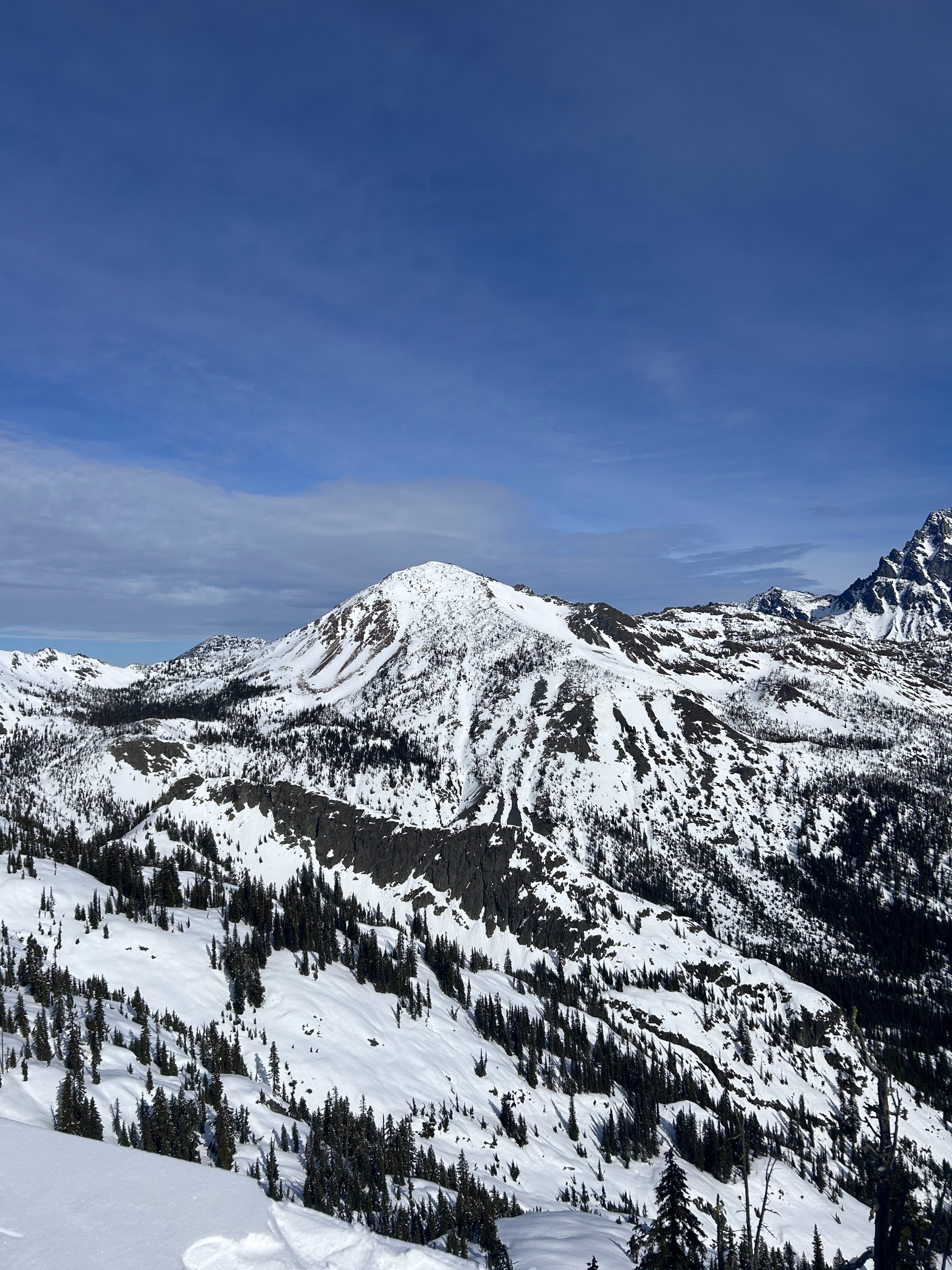
I didn't spend much time traveling on southerly aspects, but the snow surface was getting a bit warm from filtered sunshine throughout the day. Looking across the valley at other south facing slopes, I observed a lot of dry ground due to wind and sun exposure. I ran into a party that had skied the south side of Fortune Peak and they reported nice skiing conditions.
I dug a pit on an east aspect at 6100 ft. The depth of this pit was 191cm (75in). I found 3-5mm surface hoar grains at the surface, although about 50 ft to the left was wind textured surfaces. Below the 10cm of recent snow, I found complex melt freeze crust layering. The first crust was knife hard, the second was 1F hard and metamorphing into faceted snow, and the third was once again knife hard and stable. I found a very thin layer of uncompromised, dry rounded grains below all of this. The rest of the snowpack was made up of mostly more thick melt/freeze snow layers and rounded grains. I performed compression tests and got an easy resistant result within the recent snow, then a hard sudden result down at the interface between two layers, but it was not a planar shear (CT2PC down 7cm, CT28SC down 65cm). I performed an extended column test and got a hard non-propagating result within the faceting melt freeze crust layer in the upper portion of the snowpack (ECTN21 down 31cm).
Avalanche
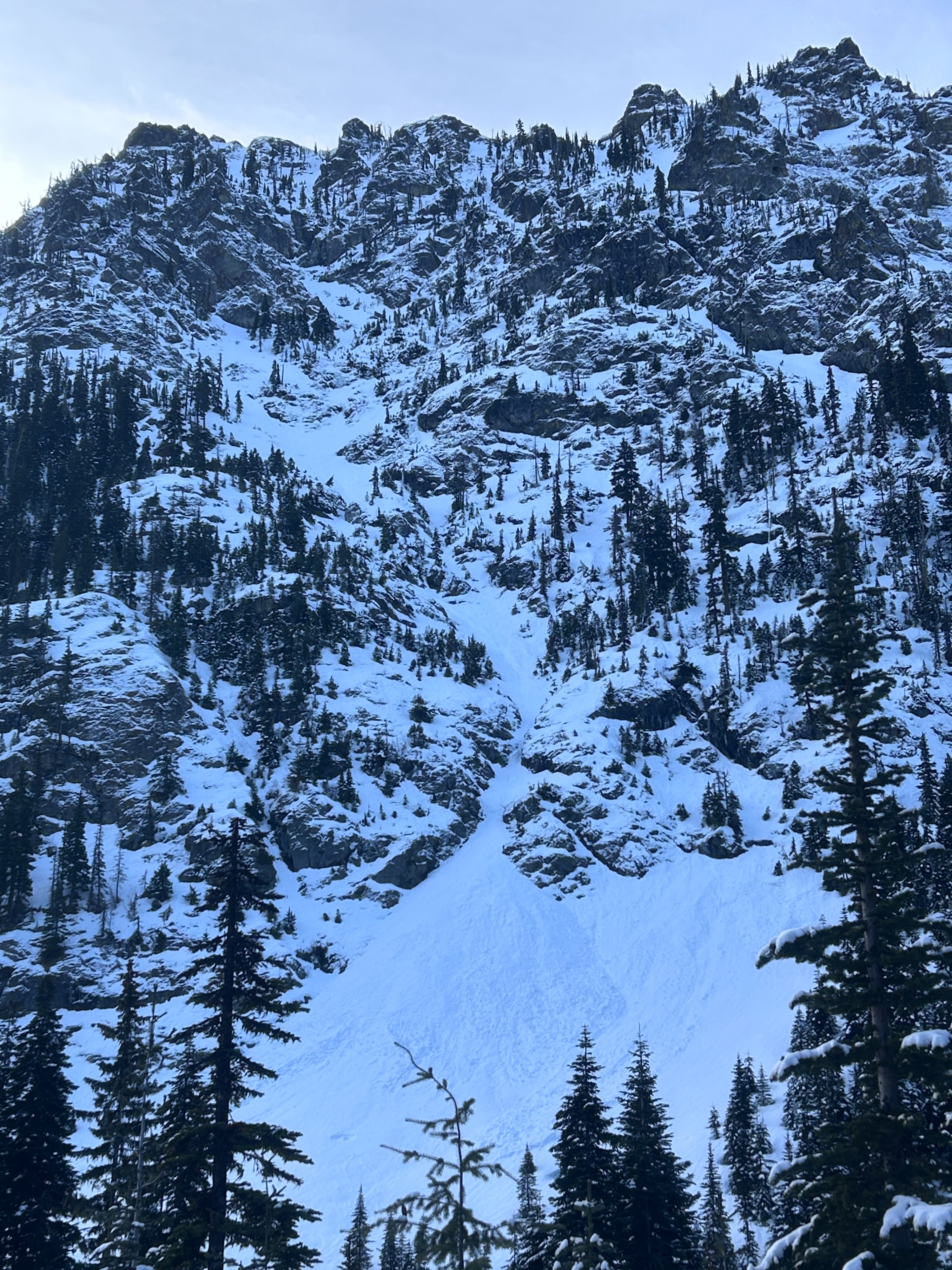
I observed many signs of very old wet loose avalanches. Some of these may have been from the January 12 atmospheric river event.