
Quick report
In the small area I traveled the only avalanche problem I observed was loose dry. There was evidence of previous wind loading from the west and south winds. I did not observe any reactive wind slabs.
I observed small (D1) loose dry avalanches off of steep north and northeast-facing slopes. I kicked some small cornices on an east-facing ridgeline and when they hit the slopes below they triggered loose dry avalanches. Skiing on slopes 30 degrees + that faced north and east, I triggered small loose dry avalanchesWeather
- Air Temp
- 22
- Cloud Cover
- overcast
- Wind Loading
- previous
- Recent Snowfall
- 30-45cm
- Snow Avail For Transport
- large amounts
At the beginning of my tour, it was bright and high overcast. Clouds rolled in and it started snowing. Visibility was rapidly reduced with the snowfall. Winds were light out of the west.
Snowpack
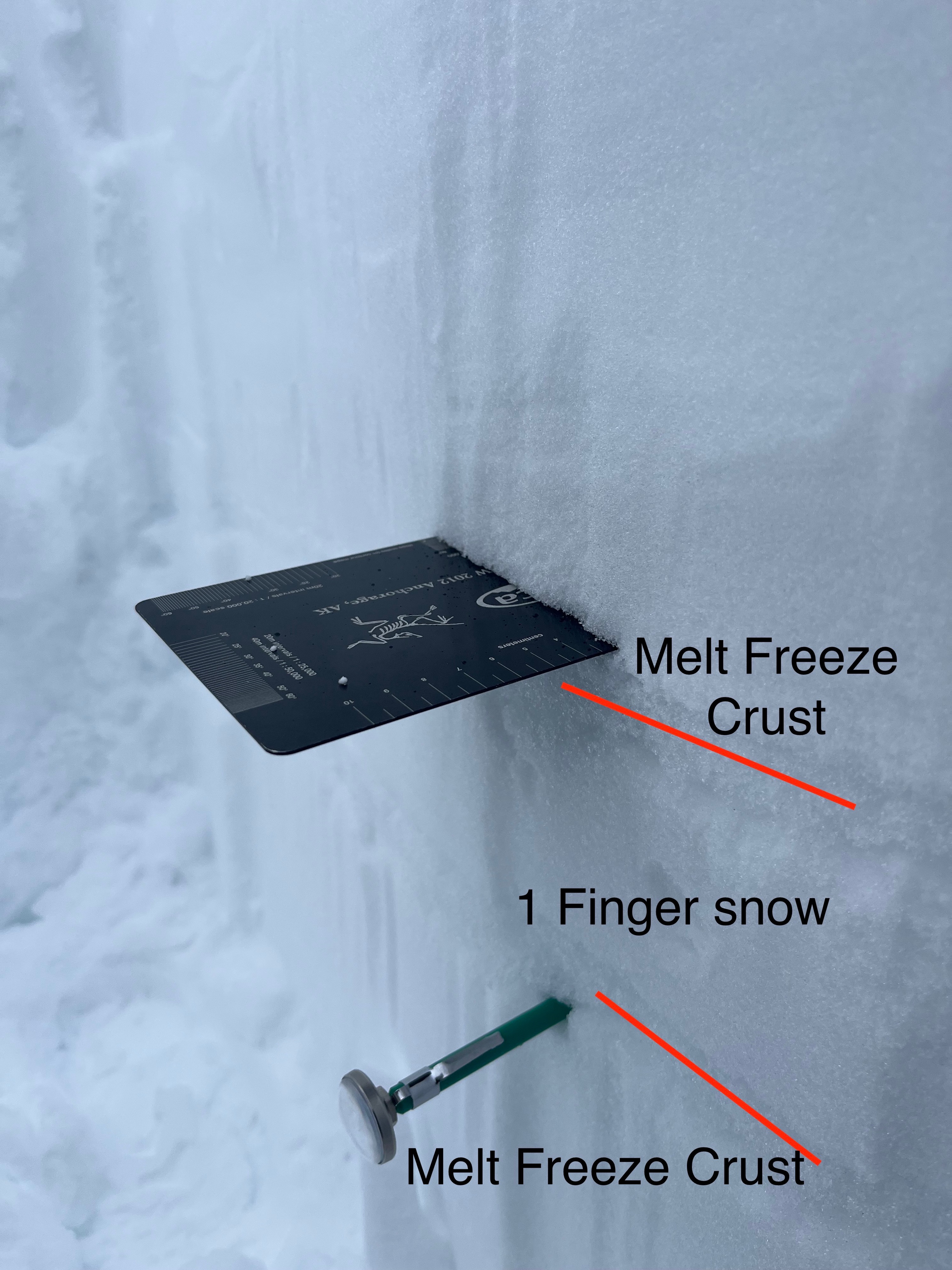
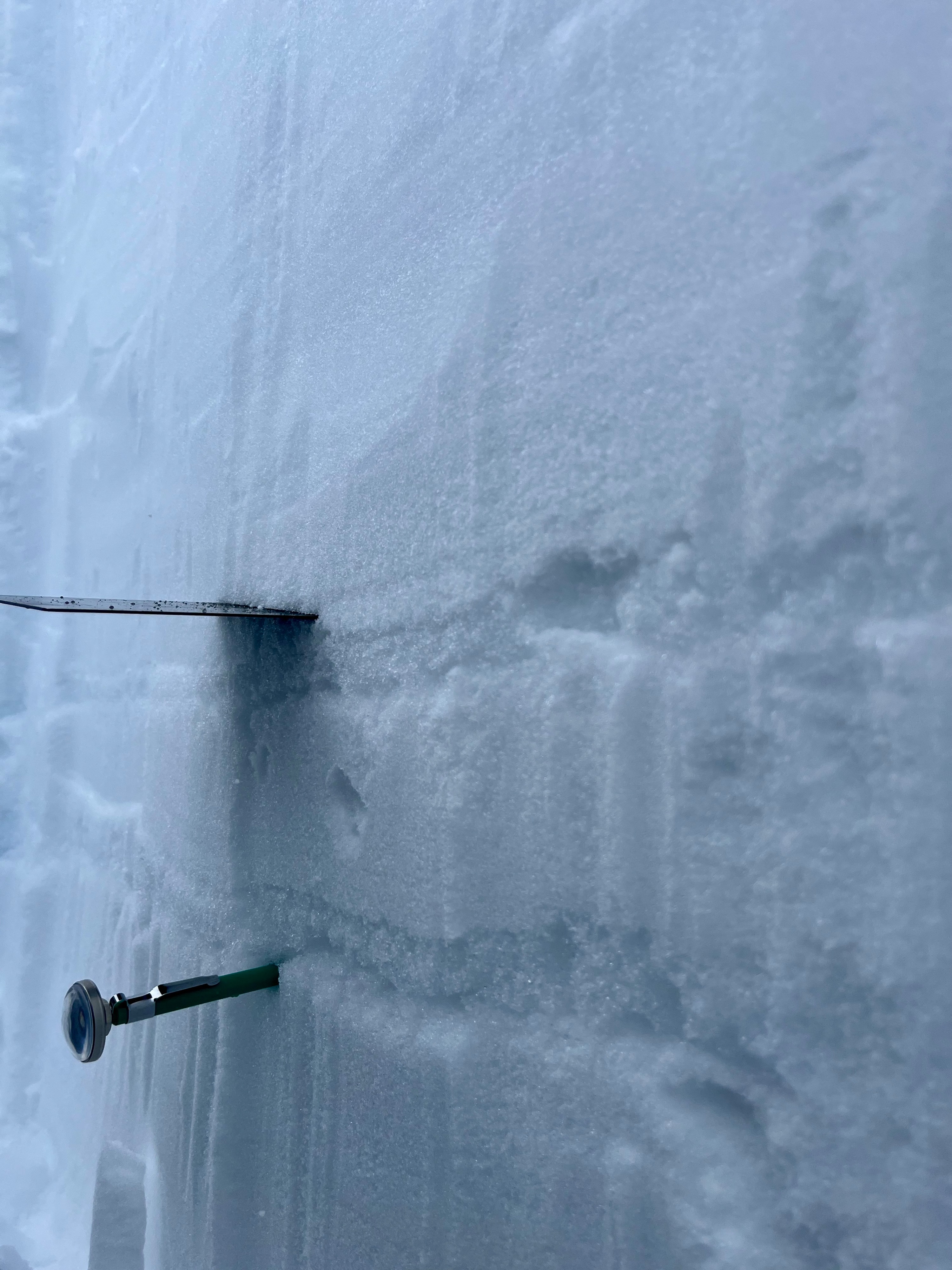
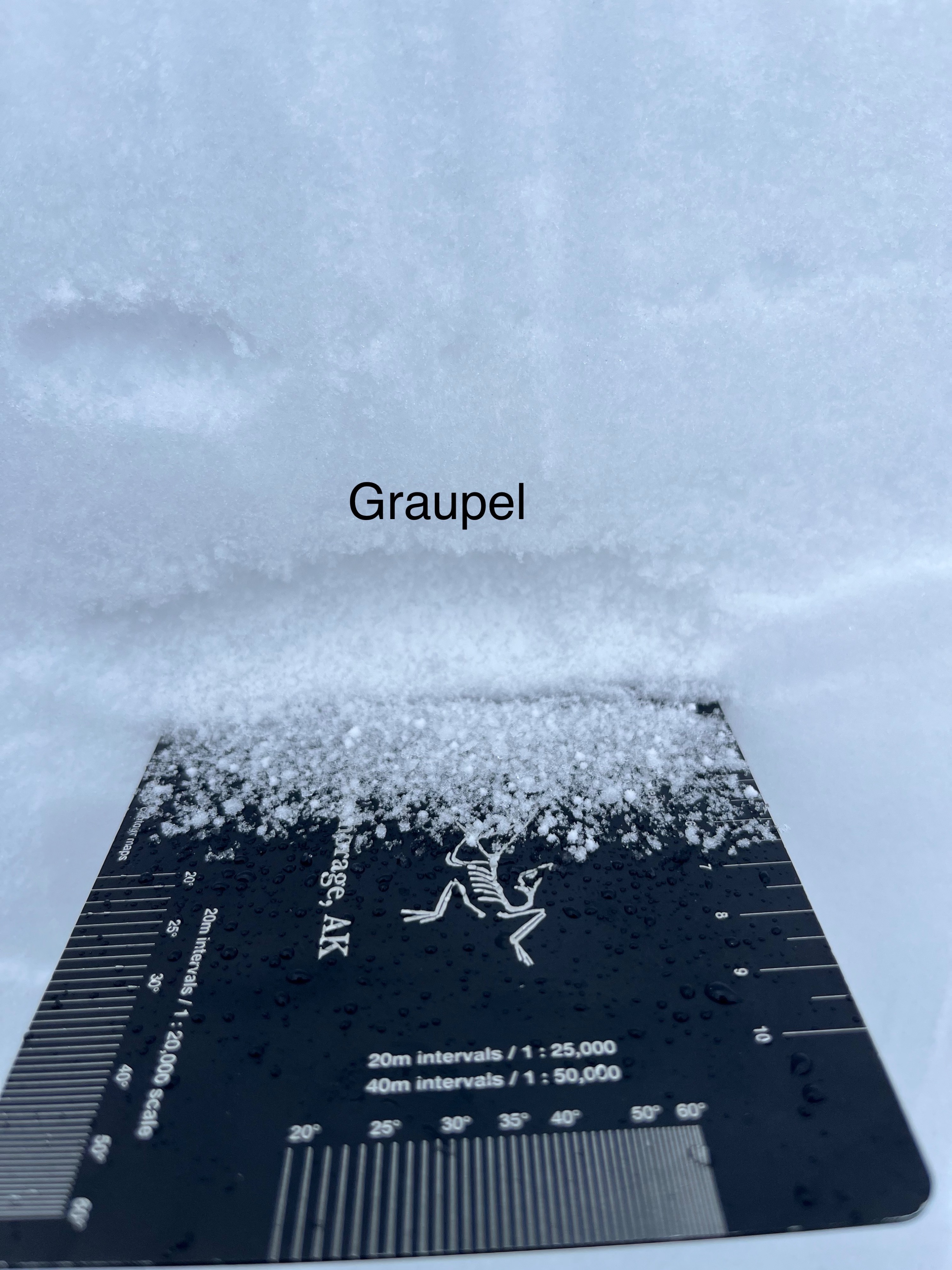
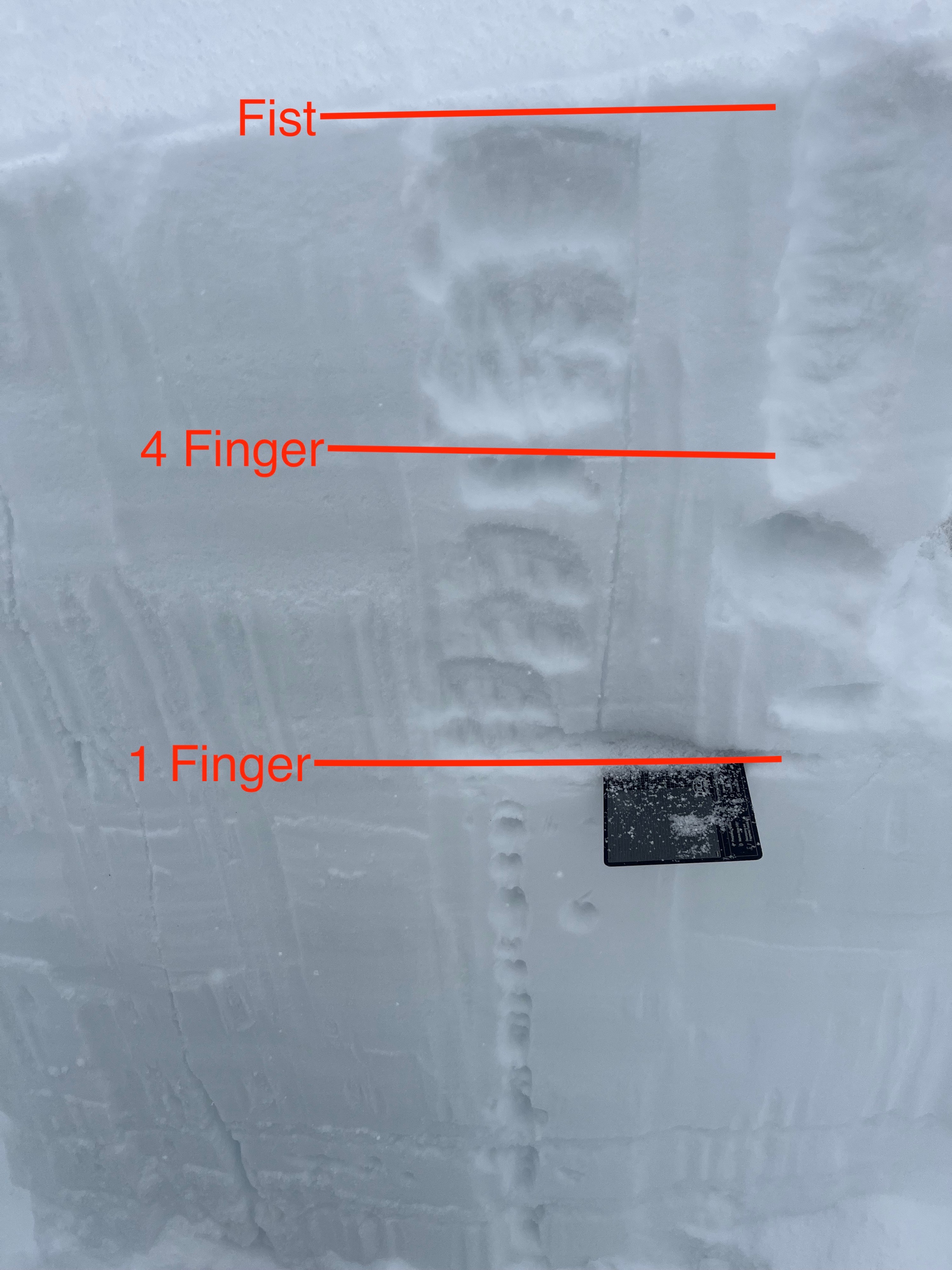
At 8100' on an east-facing slope, I found 320cm (10ft) of total snow. The snowpack was right side up - soft on top and getting progressively denser near the bottom. I found layers of graupel down 25cm and 40cm. There is a melt-freeze crust at 85cm with 5cm of dense snow (one finger hardness) and then another melt-freeze crust at 90cm.
In an extended column test, I found ECTN13 down 25cm. I continued to load the column and got ECTN 24 down 40cm. Both of the failures occurred on the buried layers of graupel. While the snow failed, the fracture did not propagate. The snow above and below these layers of graupel is soft (fist hardness). As the snow settles out and forms a slab over the next few days, these graupel layers could become the sliding surface for an avalanche.