
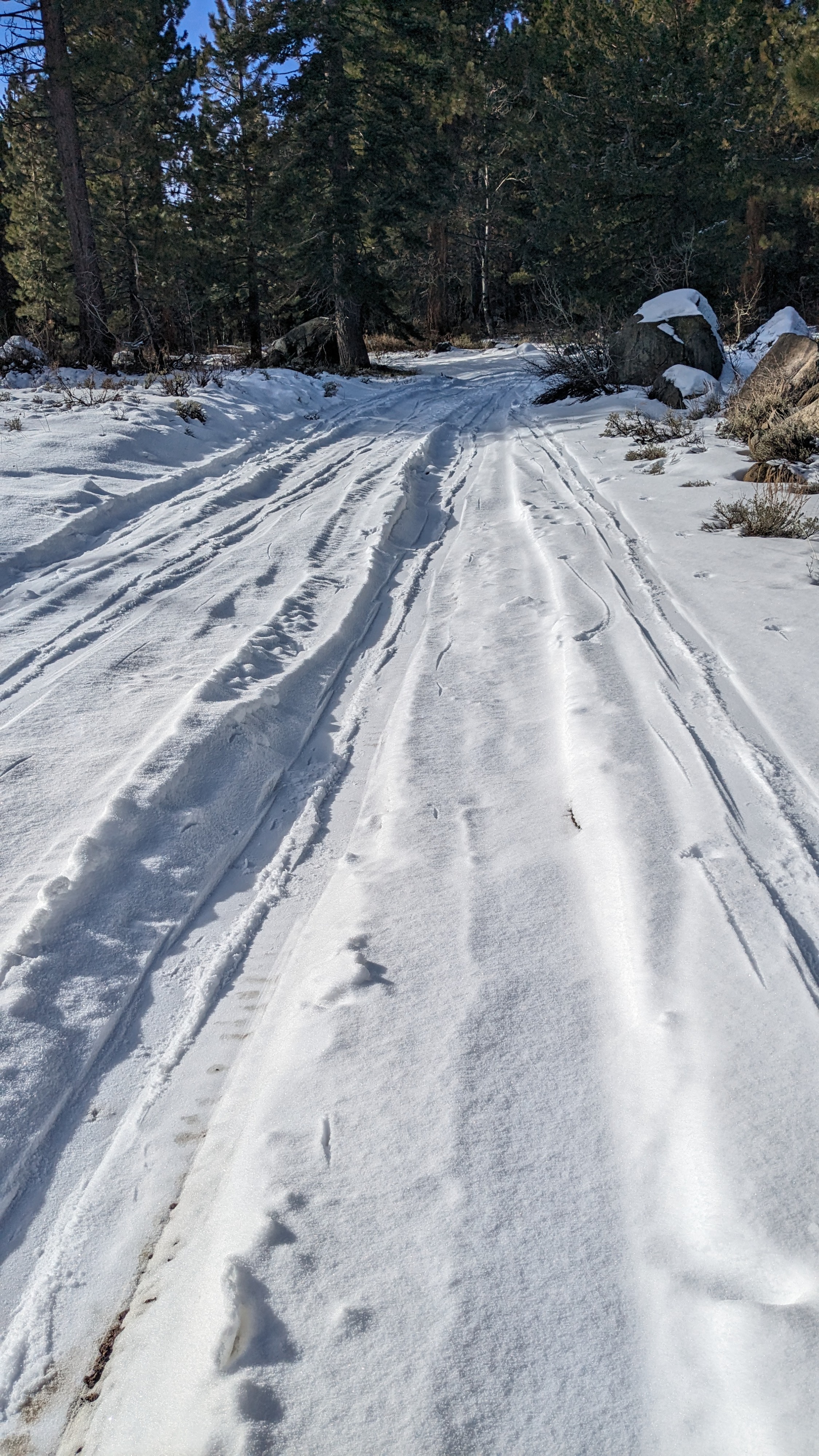
Quick report
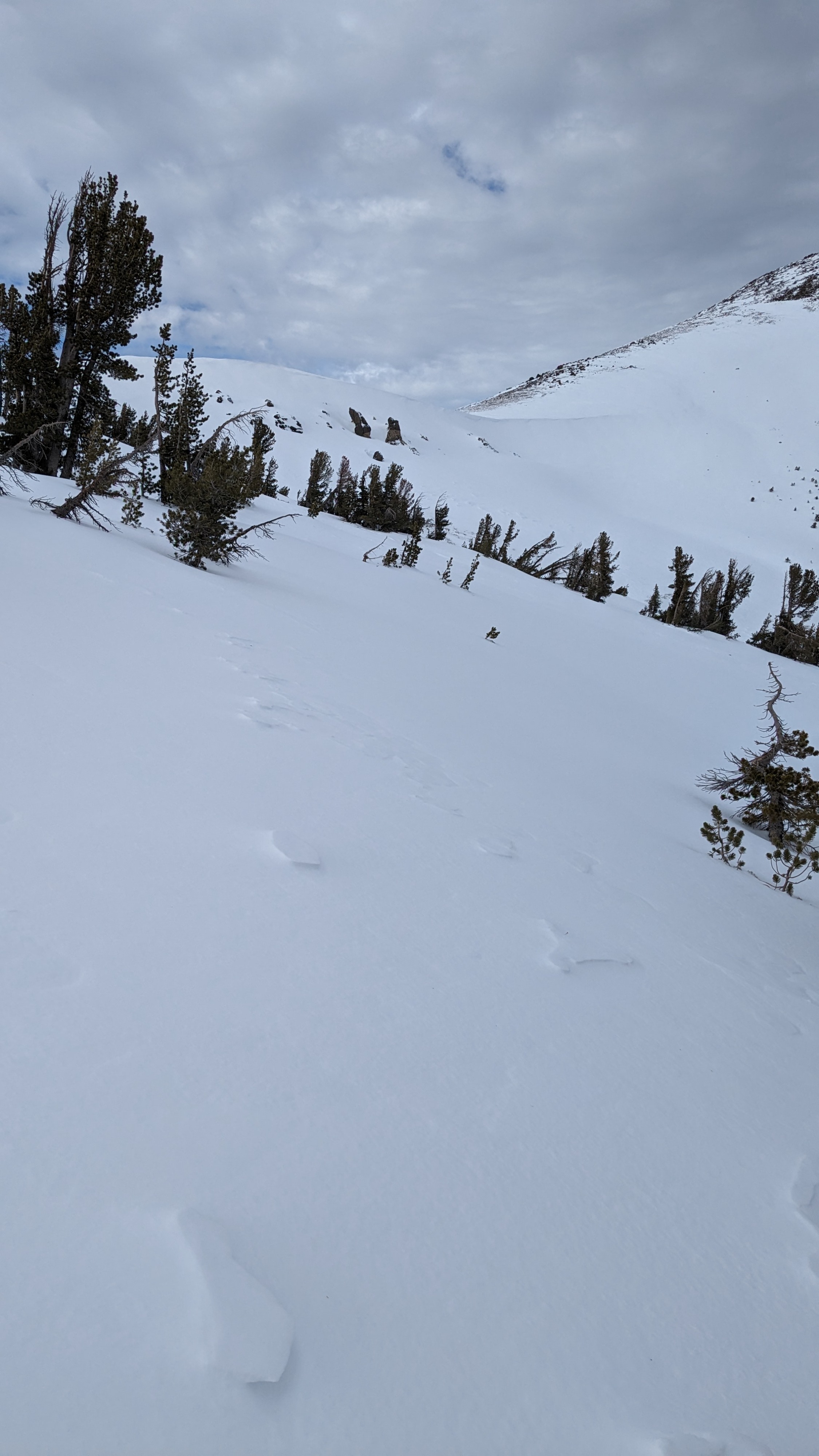
We traveled up to the head of the drainage between Red Lake Peak and Stevens Peak to look at wind loaded terrain similar to the start zone where a wind slab avalanche was triggered yesterday above nearby Crater Lake.
Along the way we stopped to dig a testpit to check in on the basal facet PWL. The PWL presented in a dormant state, unreactive to the ECT but still showing the potential to propagate in the PST. In the current state, this PWL would likely become reactive again with substantial new snow loading.
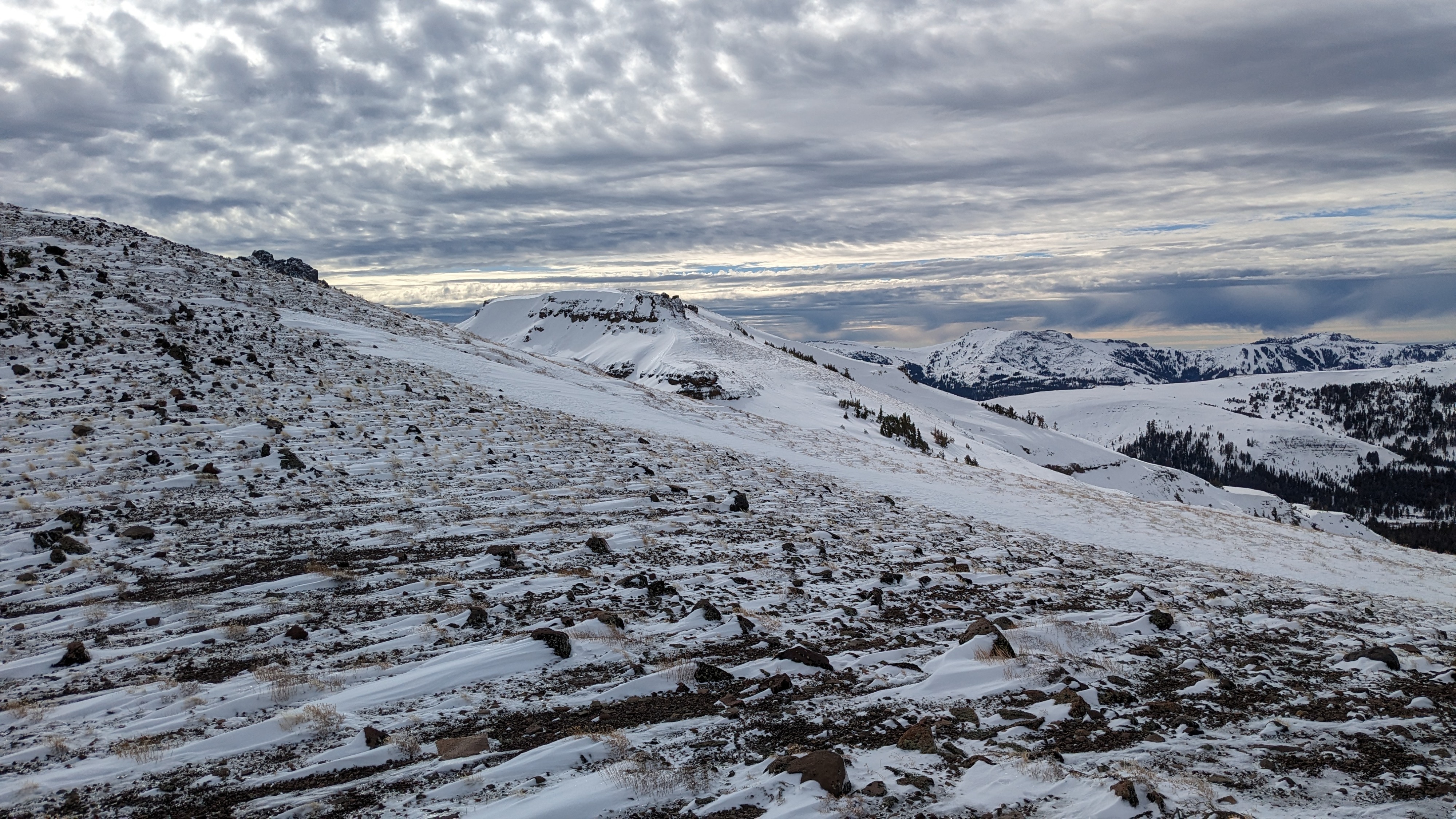
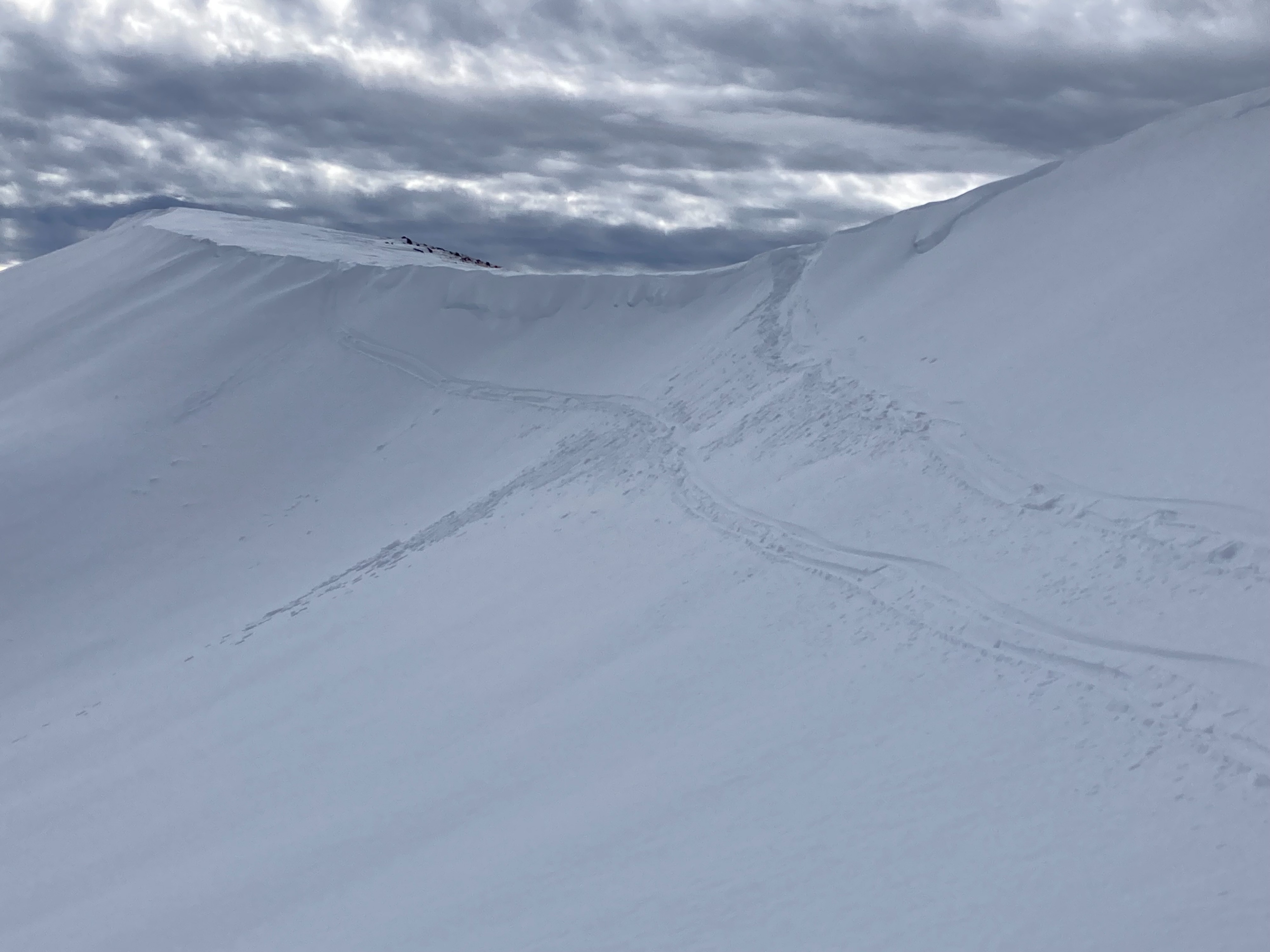
Once we got to wind slab terrain at the head of the drainage, wind slabs that had formed there yesterday were unreactive to ski cuts made today. Looking over to the west side (windward side) of the ridge it was clear that little to no snow remained available for drifting following the gale force SW wind event on Dec 27.
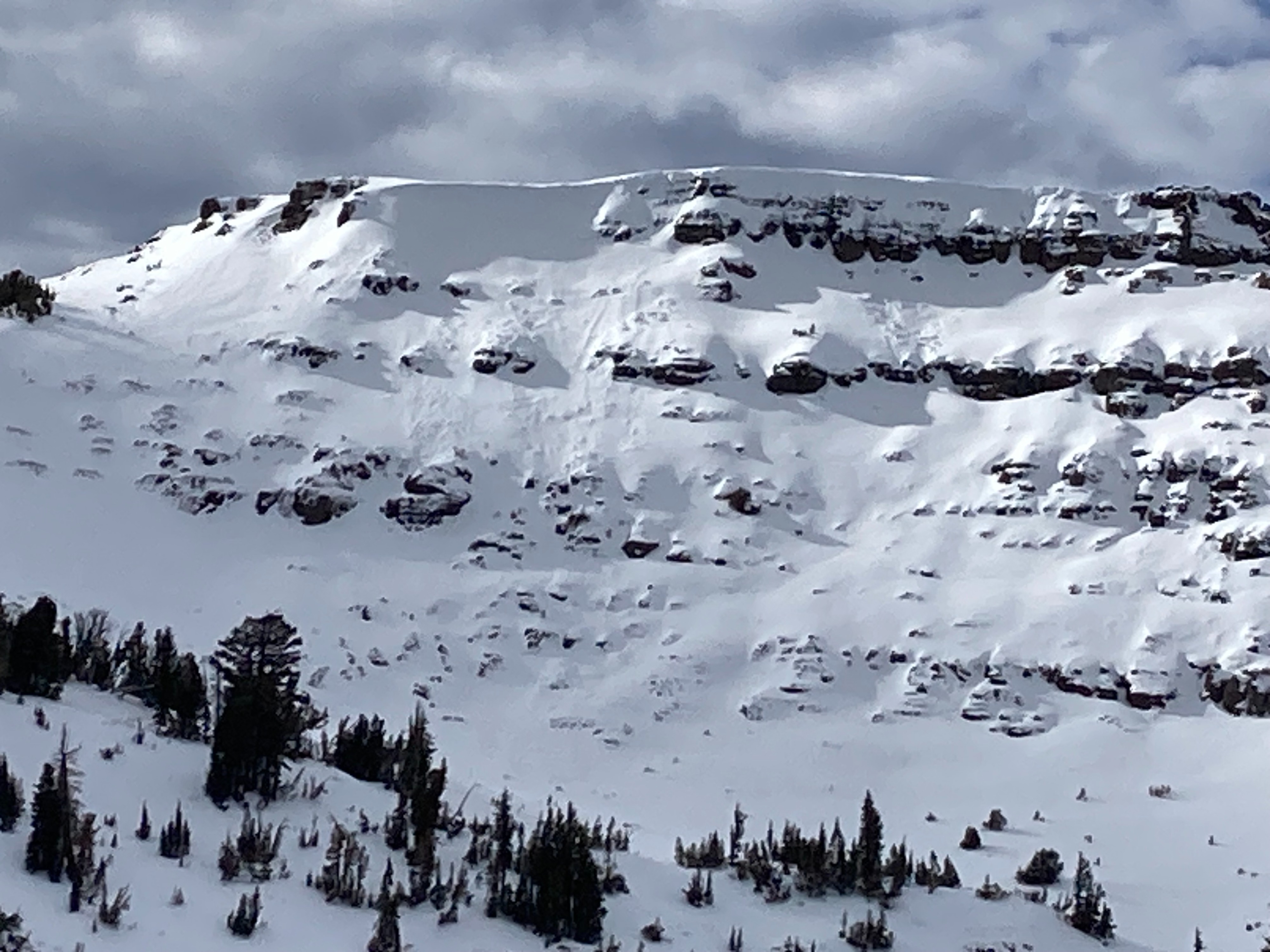
We were above to get a view of the wind slab avalanche triggered above Crater Lake on Dec 27. Of note, the crown line was in a midday shade pocket, indicating the potential for the presence of near surface facets at the bed surface.Weather
- Cloud Cover
- broken
- Wind Loading
- none
- Recent Snowfall
- 2
- Snow Avail For Transport
- small smounts
Mostly cloudy skies and above freezing air temperatures. Moderate speed SW winds limited to ridgetop areas with no drifting of snow observed.
Snowpack
Melt-freeze conditions and very thin snow cover were observed on SE aspects. Deeper snow cover on N-NE aspects. Basal facet PWL was moist in this area. We dug a testpit at the point in the attached screenshot, 9,000', 004 degree aspect, HS 69cm. In this testpit the slab was 1F hard snow with some P+ hard rain crust in the midpack. The lower snowpack was faceted with decreasing hardness from 4F below the slab to F+ near the ground. The bottom 17 cm was moist but still loose grain depth hoar. Test results were ECTX and PST 42/100 end at 10 cm. We interpreted these results as indications of a dormant PWL, awaiting additional new snow loading to reactivate.