
Quick report
- Cracking
- widespread
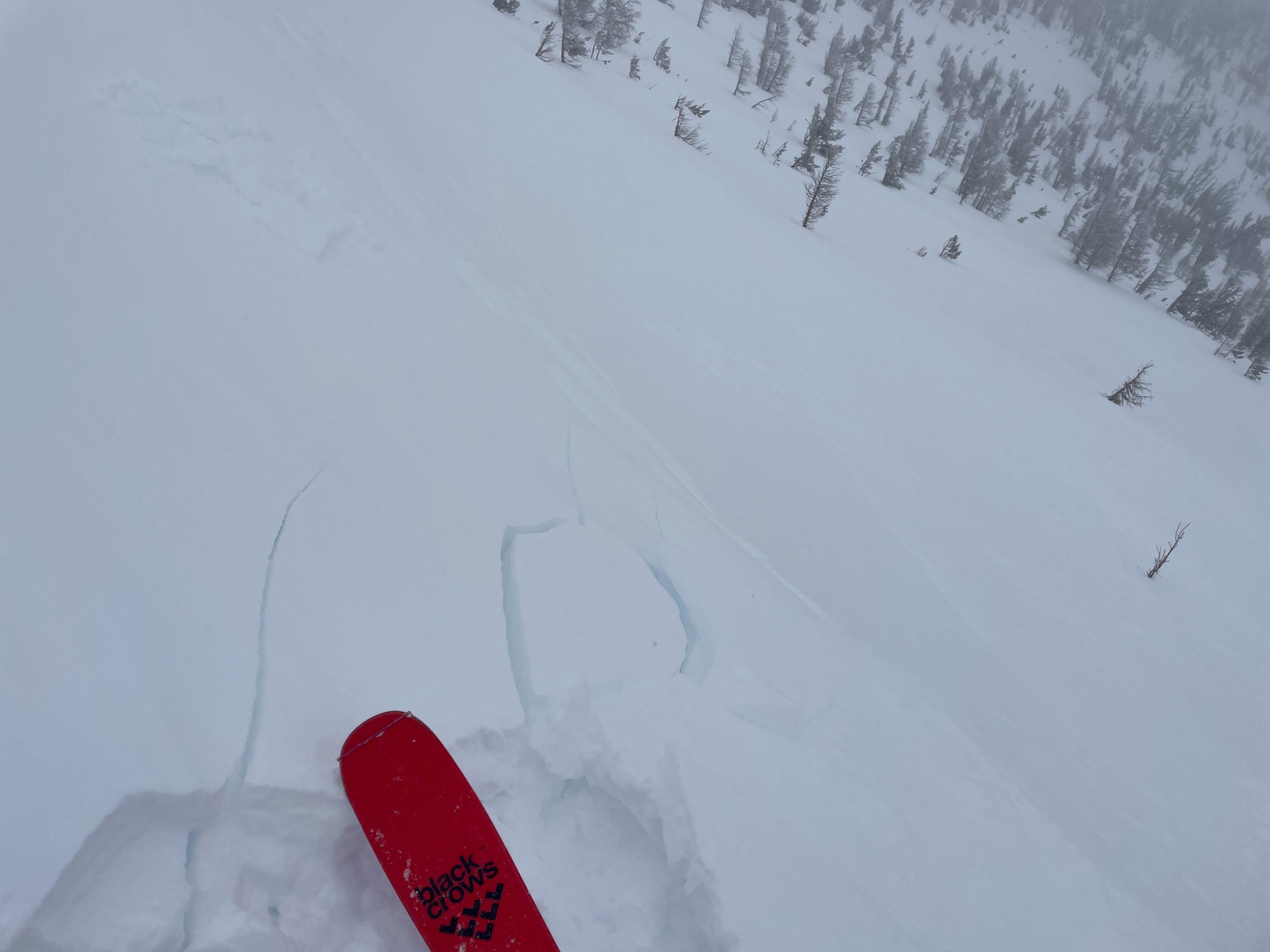
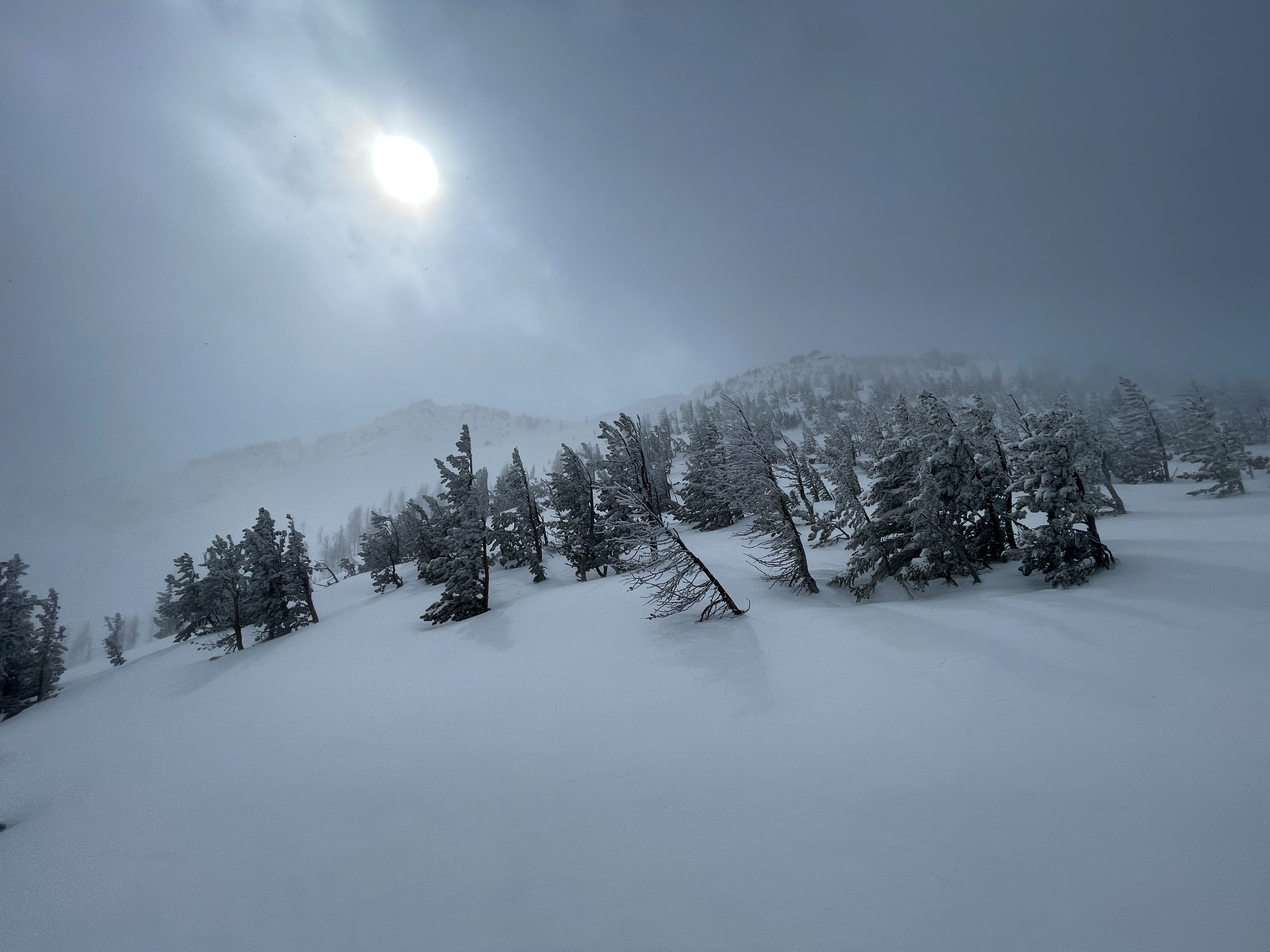
The primary problem we observed today was wind slabs at upper elevations. Moderate to strong swirling winds blew significant amounts of snow and loaded most aspects. We observed widespread cracking in the wind drifted snow.
We found the crust-facet persistent weak layer buried 2.5 feet deep, but it was unreactive in snowpit tests. There appears to be a low likelihood of triggering a persistent slab, but it would be high consequence.
We observed widespread cracking in the wind drifted new snow at upper elevations.Weather
- Air Temp
- 9
- Cloud Cover
- broken
- Wind Loading
- moderate
- Recent Snowfall
- 45
- Snow Avail For Transport
- large amounts
It was a cold day with temperatures in the single digits at upper elevations and moderate to strong gusty winds. The wind primarily blew out of the west but swirled and gusted around out of all directions at various points. There was ample snow available for transport, and we observed significant blowing snow. The shifting wind directions meant that some slopes got loaded by one gust and then scoured by the next.
Snowpack
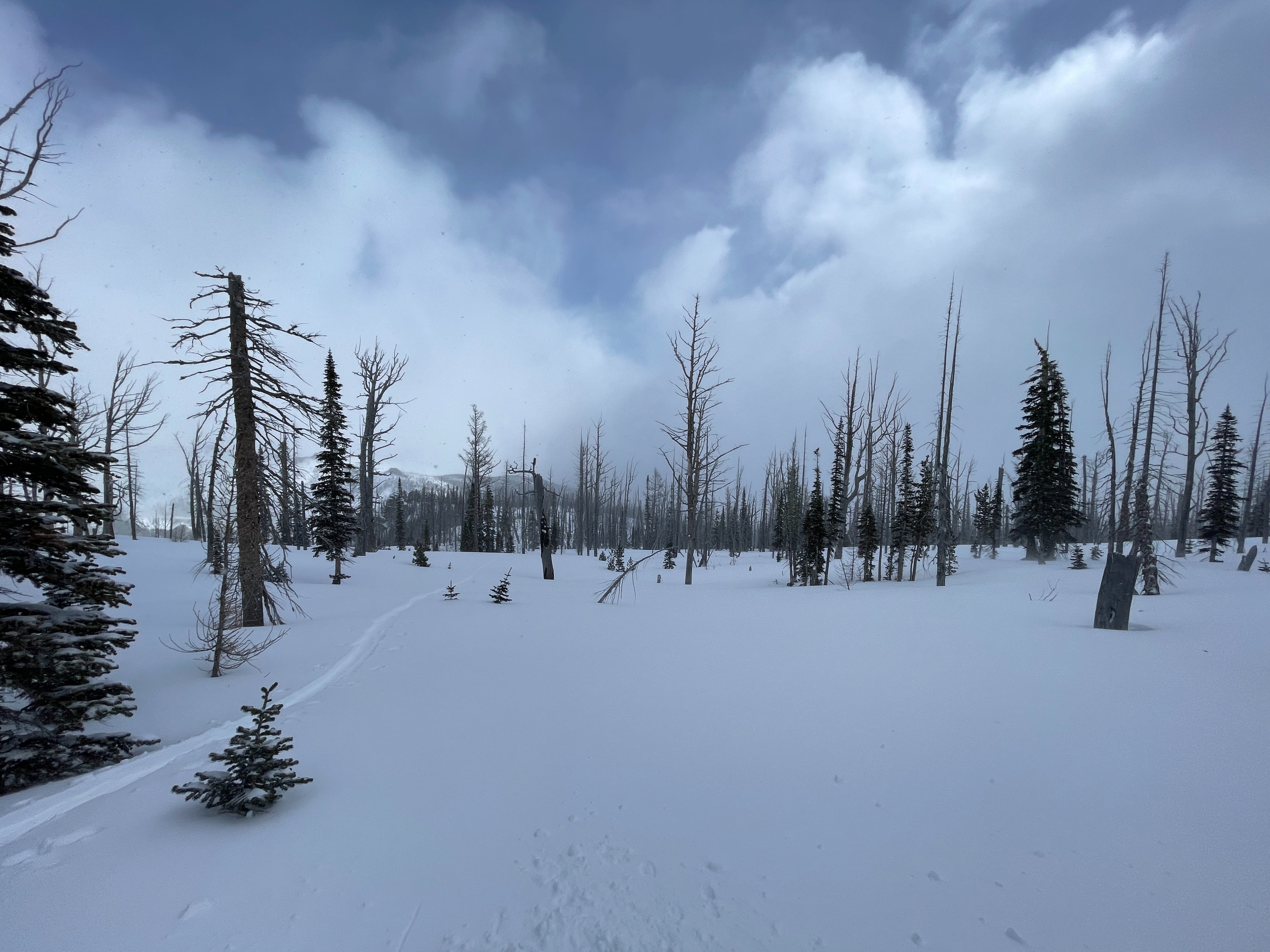
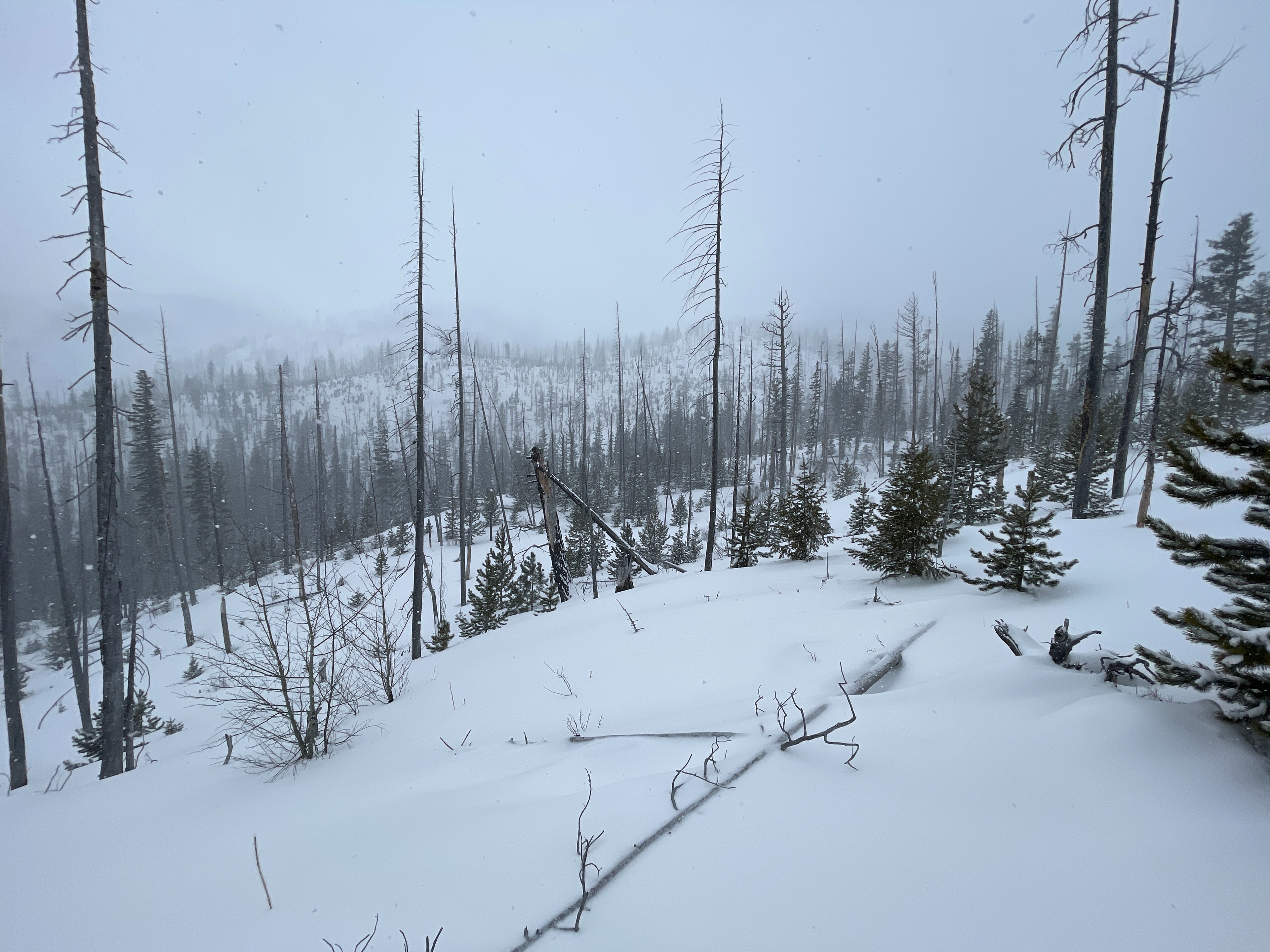
There was around 3" of new snow at the lower trailhead, 6" at the upper trailhead, 10" at 6000 ft, and 18" at upper elevations. We dug a snow pit on an east aspect at 7800 ft on the east ridge of Gash Point. The snow depth varied from 155 cm to 180 cm, averaging 165cm. There was 45 cm (18") of new snow that produced a non propagating ECT result at the interface with the old snow. The early February crust was buried 75 cm and had a thin layer of small facets underneath, but it did not produce any results in an extended column test.