
Quick report
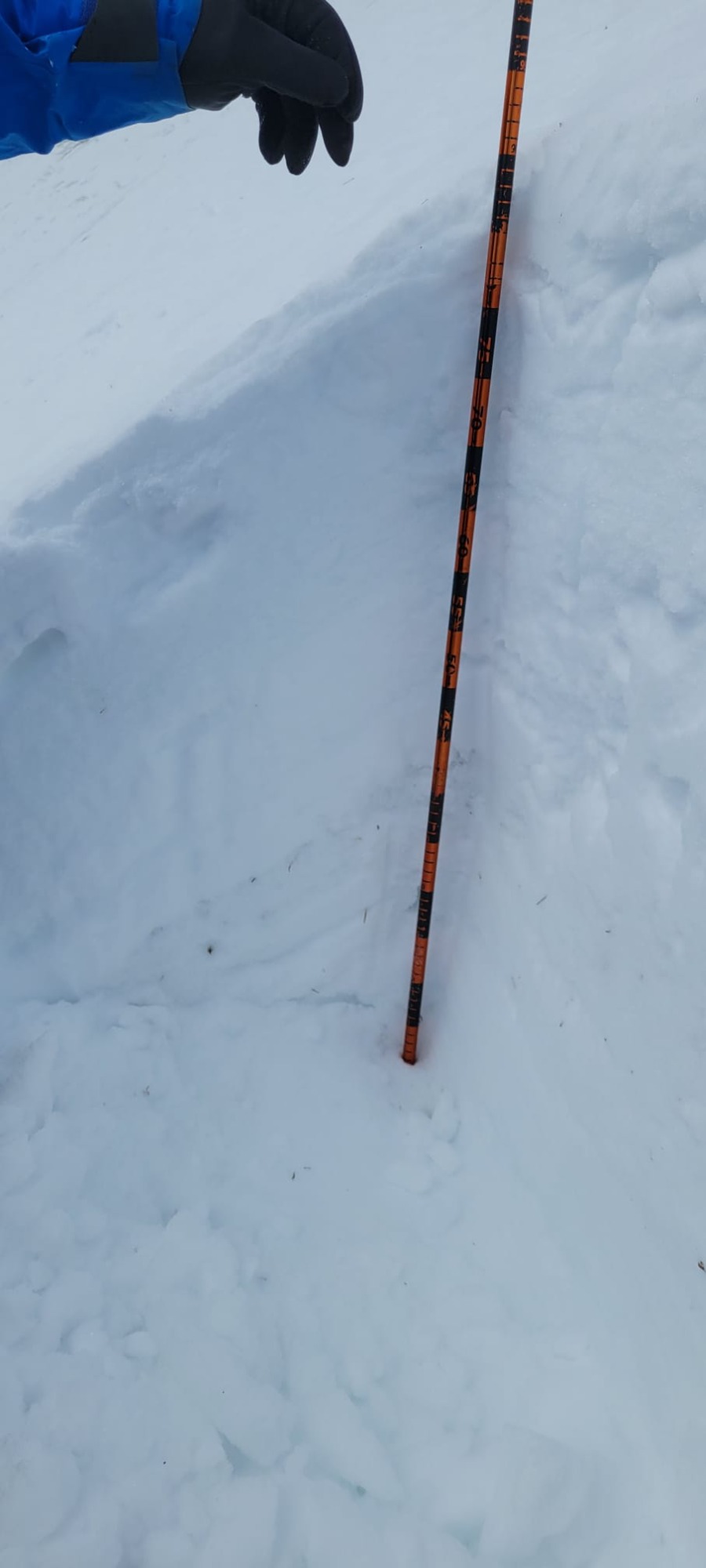
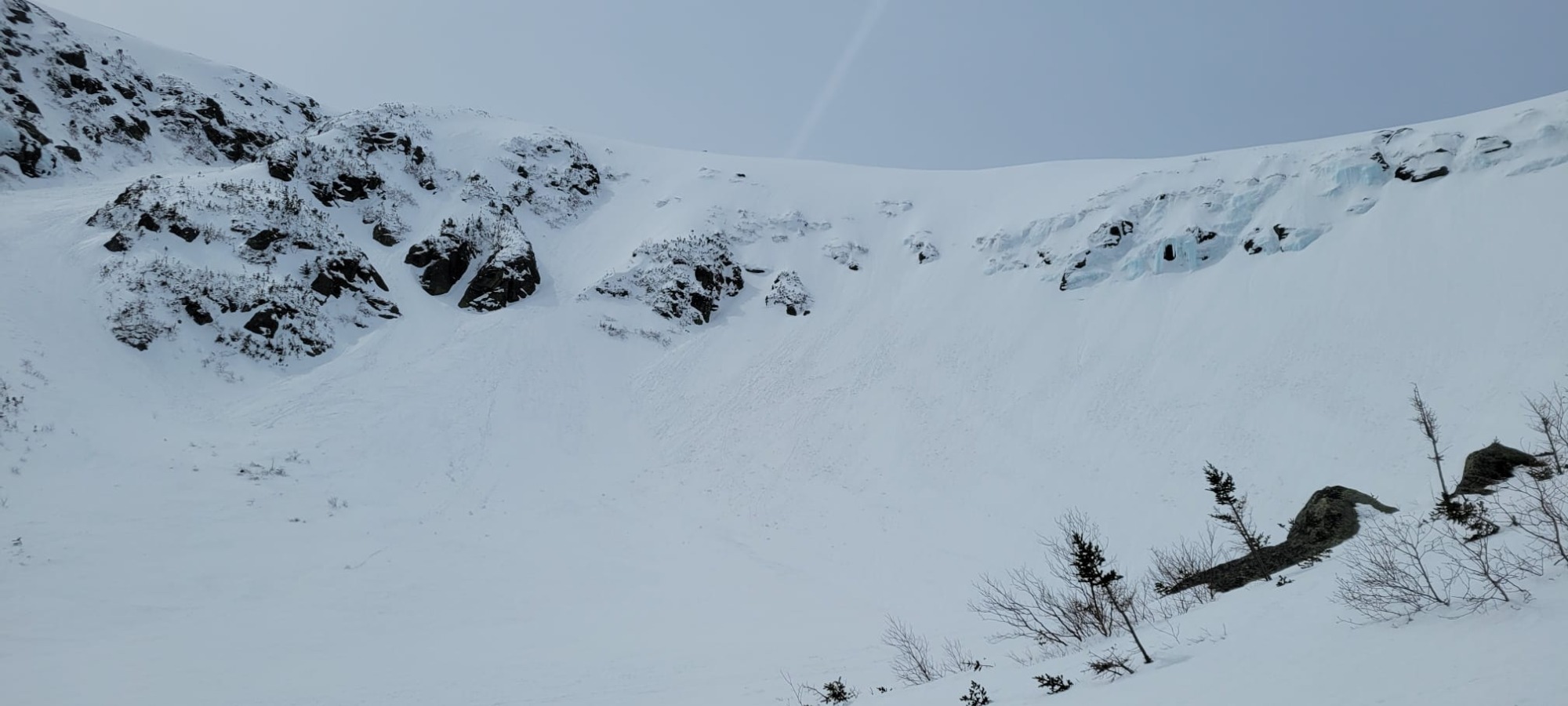
Snowpack across the Ravine was dominated by a knife hard crust, from the 4/1 rain/melt and subsequent freeze, that was largely boot supportable making for a good climbing surface but unenjoyable/dangerous skiing conditions. We had boot penetration of 0-3" into the crust. Soft, cold snow from last week's snowfalls existed below the crust with weak layers within and at the bottom of that soft snow. While these weak layers don't present an issue now given the bridgeable surface crust, they could become problematic when warmth/water sufficiently penetrates the snowpack.
Weather
- Air Temp
- 26
- Cloud Cover
- broken
- Wind Loading
- none
- Snow Avail For Transport
- none
The day started sunny with moderate winds but by 1130 clouds had filled in and winds increased from the SW, eliminating any chance for softening snow in the Ravine.
Snowpack
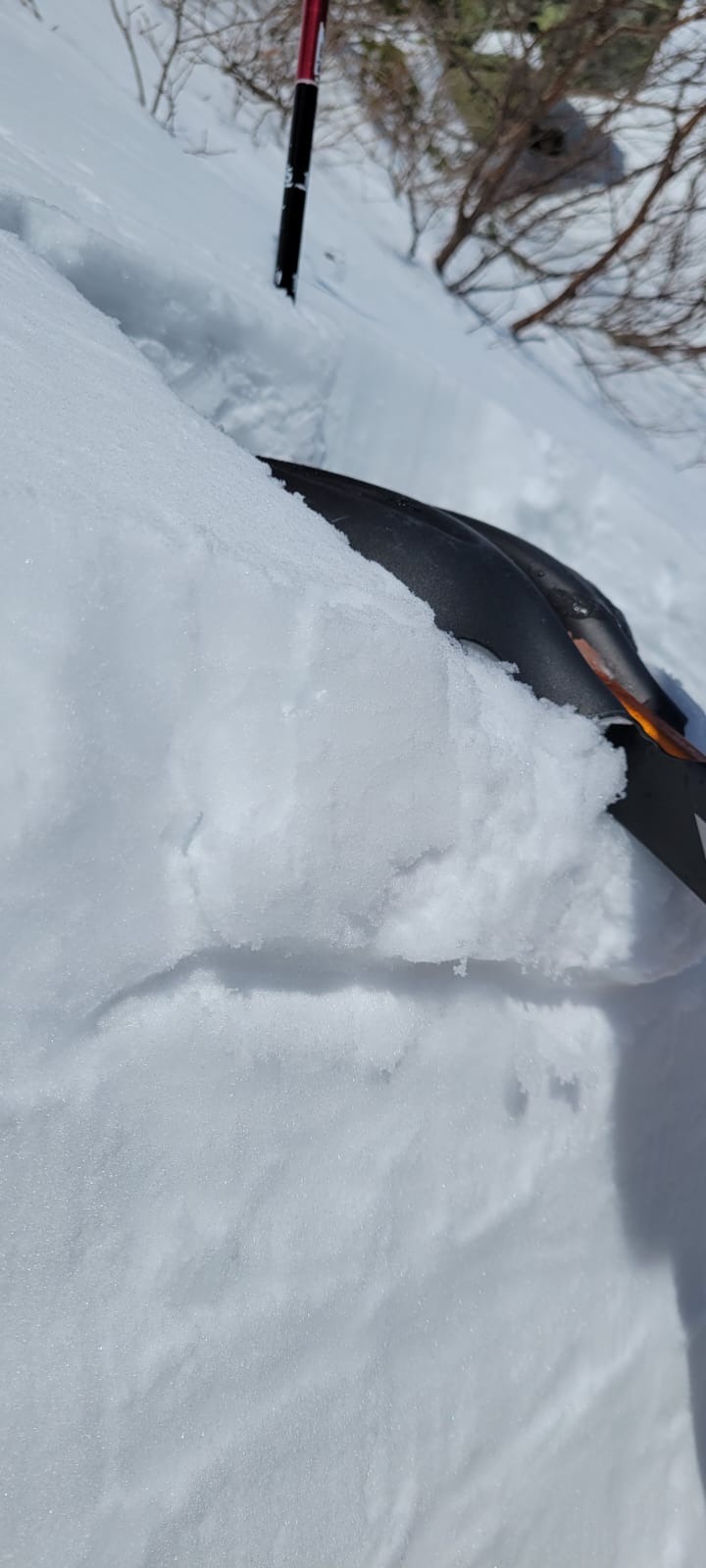
While the big concern today was long sliding falls, we were curious about examining what lay under the surface crust which might present future avalanche problems with enough warming/wetting. We found the surface crust to be knife hard and ~2" thick, with cold soft snow extending another 3" beneath that before reaching another knife hard crust (likely the crust that constituted the bed surface for last week's avalanche problem). While the layer of soft snow was thin here, we expected it to be much thicker elsewhere in the bowl where larger windslabs were built last week. We performed a CT with results of CT13(Q2), failing ~4" down on an interface within the soft snow layer.