
Quick report
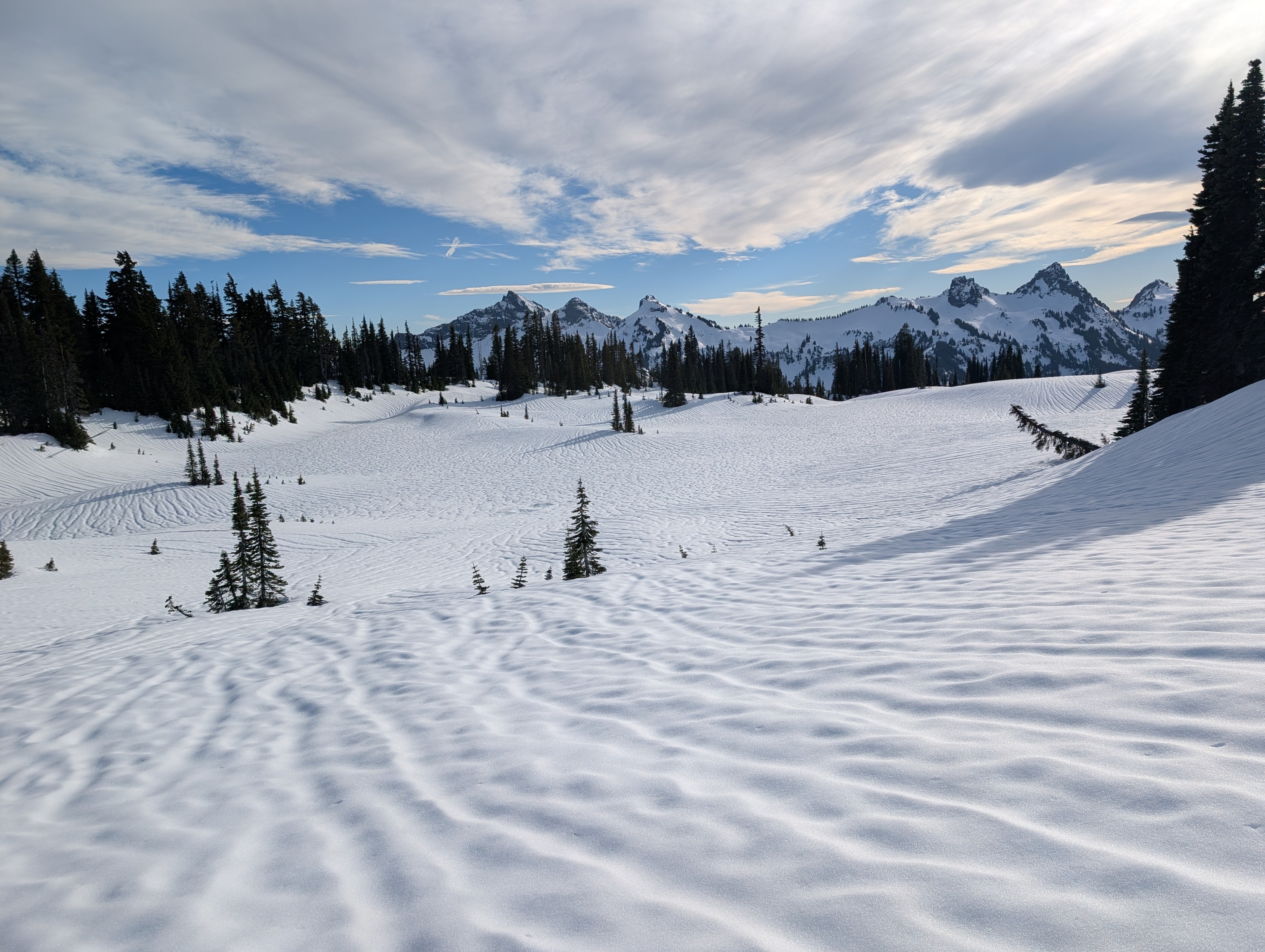
It was a gorgeous day for a walk on a volcano. I strolled up just above the top of our forecast zone (8000') on the Muir Snowfield before descending and wandering around the lower zones of Paradise to get a feel for how the snow was handling the heat.
In the morning, there was a firm surface crust from an overnight refreeze. Ski pen was essentially 0 cm. By the time I reached the bottom of Pan Point, slopes that receive direct sunshine were starting to soften just a bit. I used ski crampons on Pan Face as a precaution, but others made it up without them. File it in the "nice-to-have" category if you're questioning your skinning technique.
Skiing from 8400' at 12:30 produced excellent ski quality on the lower Muir Snowfield. There is a transition zone above McClure Rock (roughly ~7400' to 8000/8200') where the surface is nice and smooth. Above it, old wind texture is baking in the sun, creating some deeper smooey pockets and some bumps. Below, rain runnels are the story.
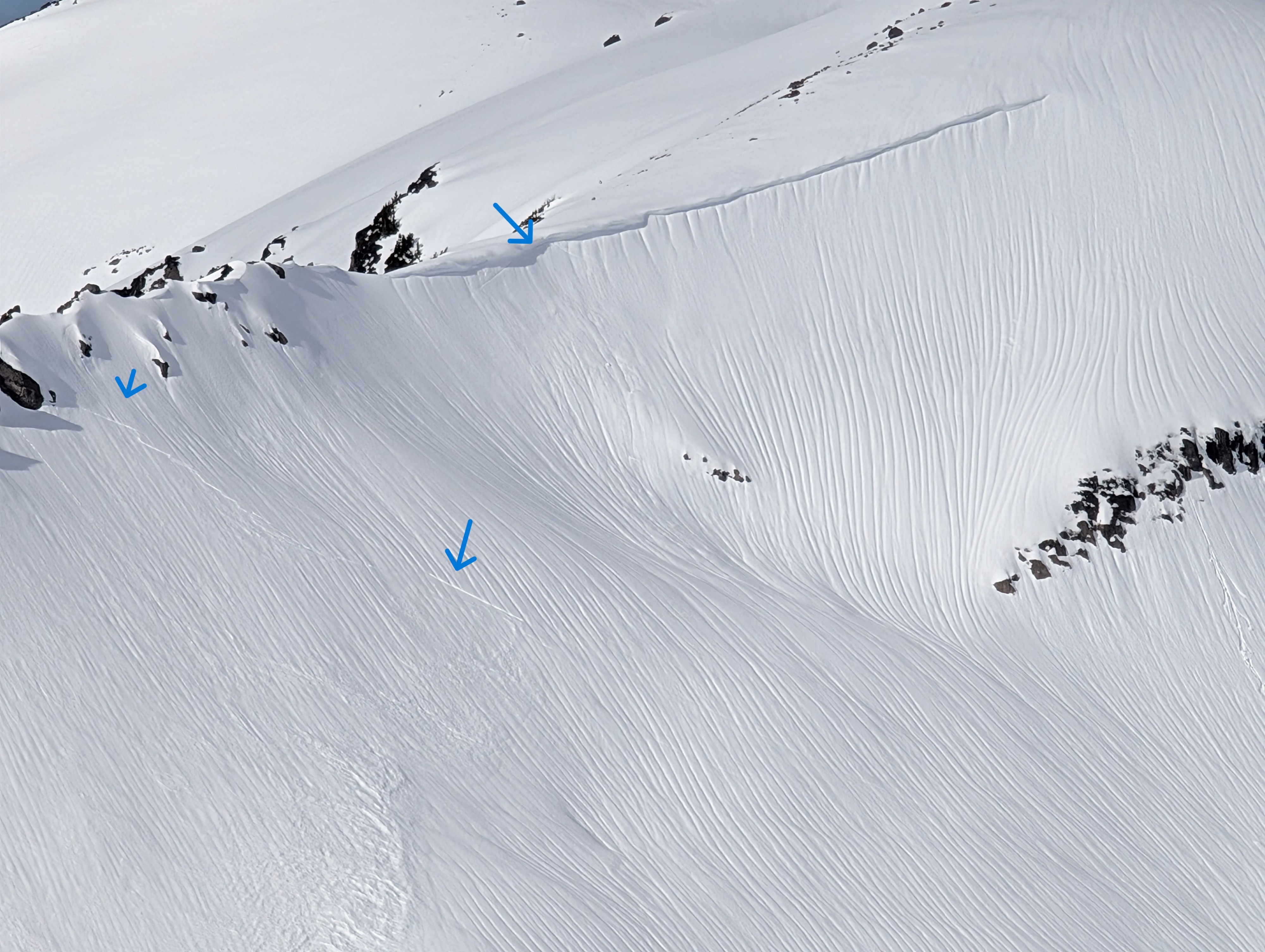
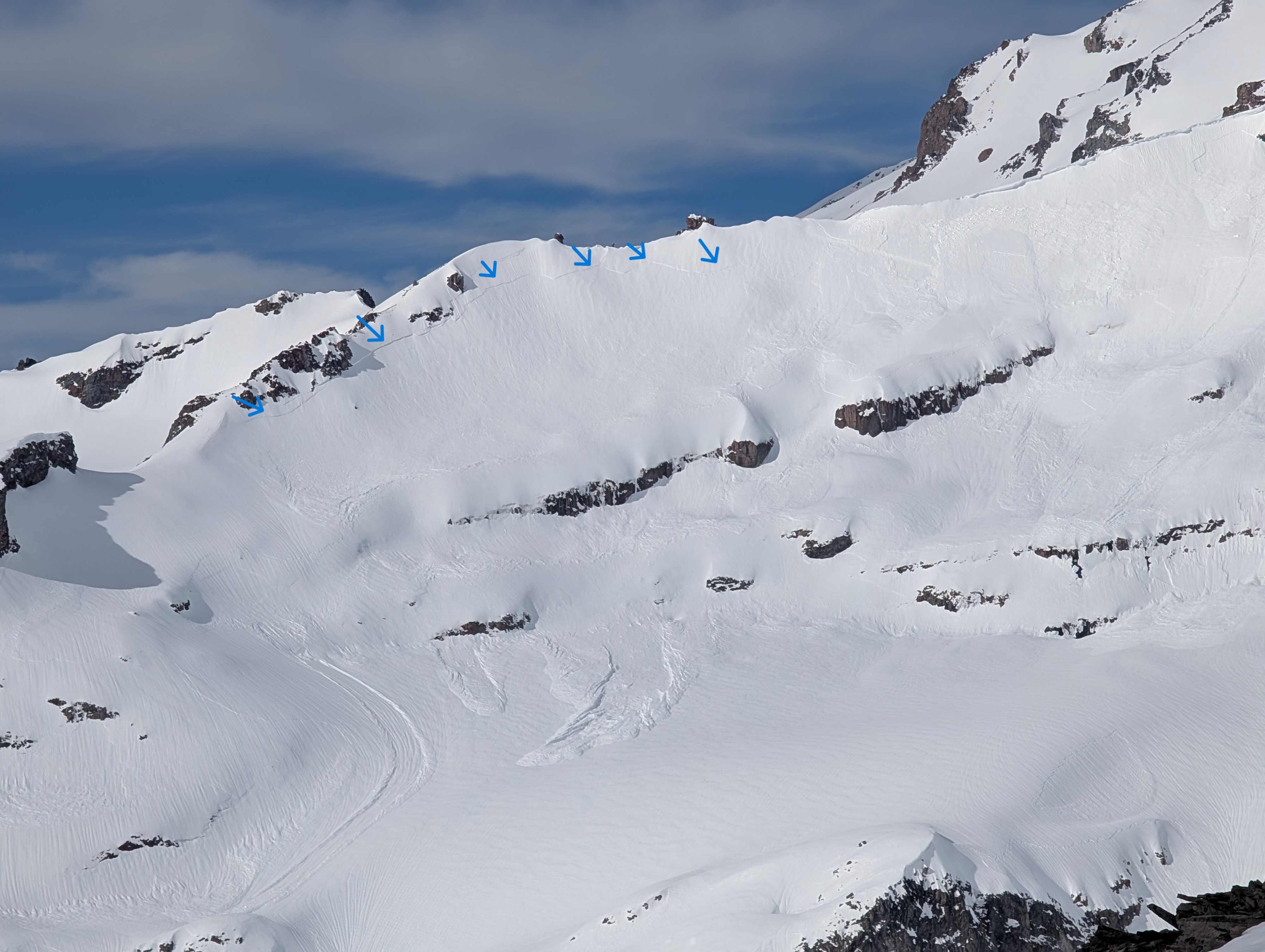
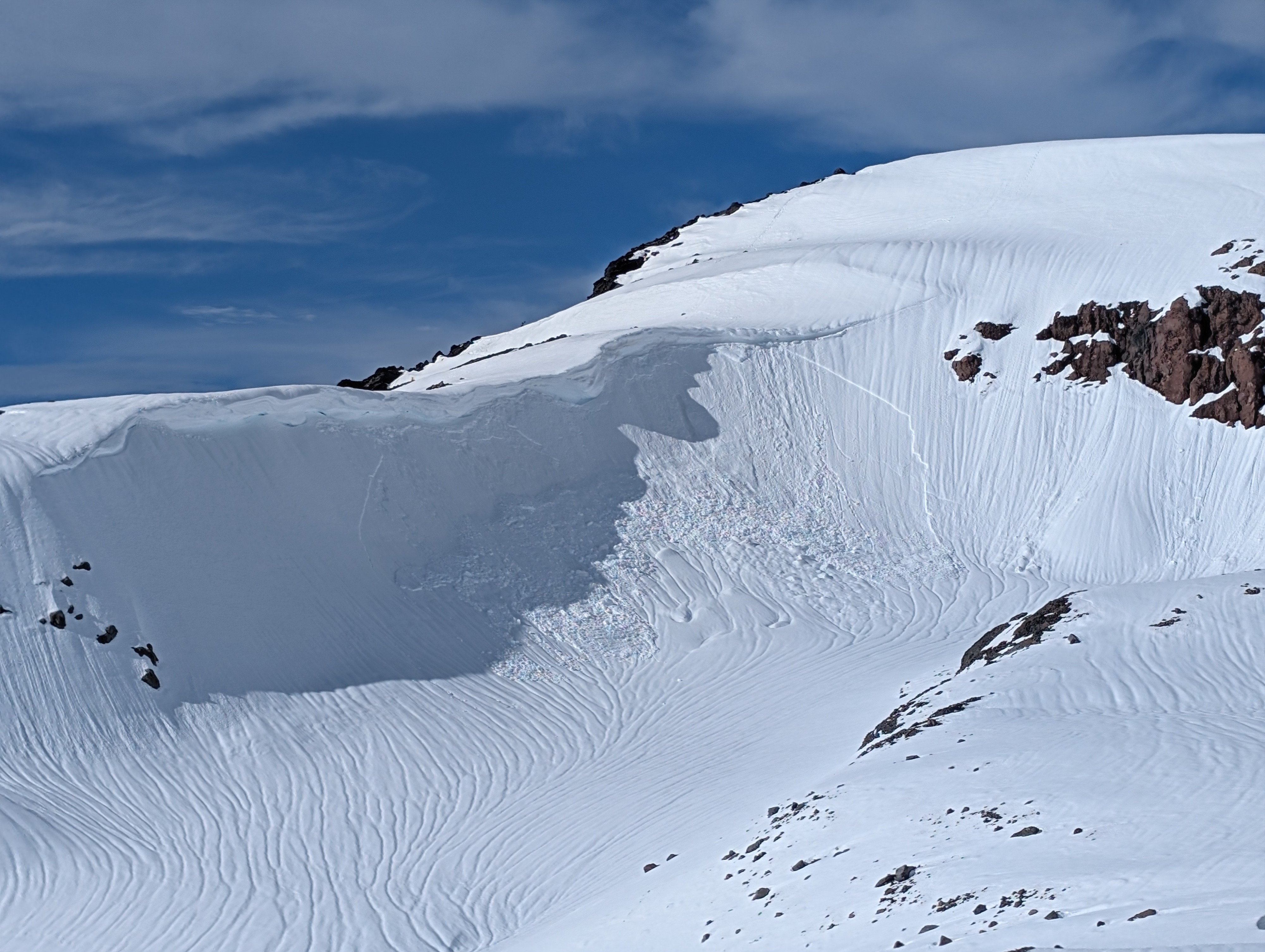
There was obviously a lot of wind in the last storm, because old wind slabs were easy to spot all around the terrain. Many were below cornice lines, which was surprising because I haven't really seen a cornice in a few weeks.
As the day progressed, the snow surface slowly broke down, and while I was able to push some small pockets of snow, I never got any true wet avalanches. By the time I was walking up the valley road back to the parking lot around 3:00, ski pen had increased to roughly 10-14cm.
Overall, good skiing, would recommend.
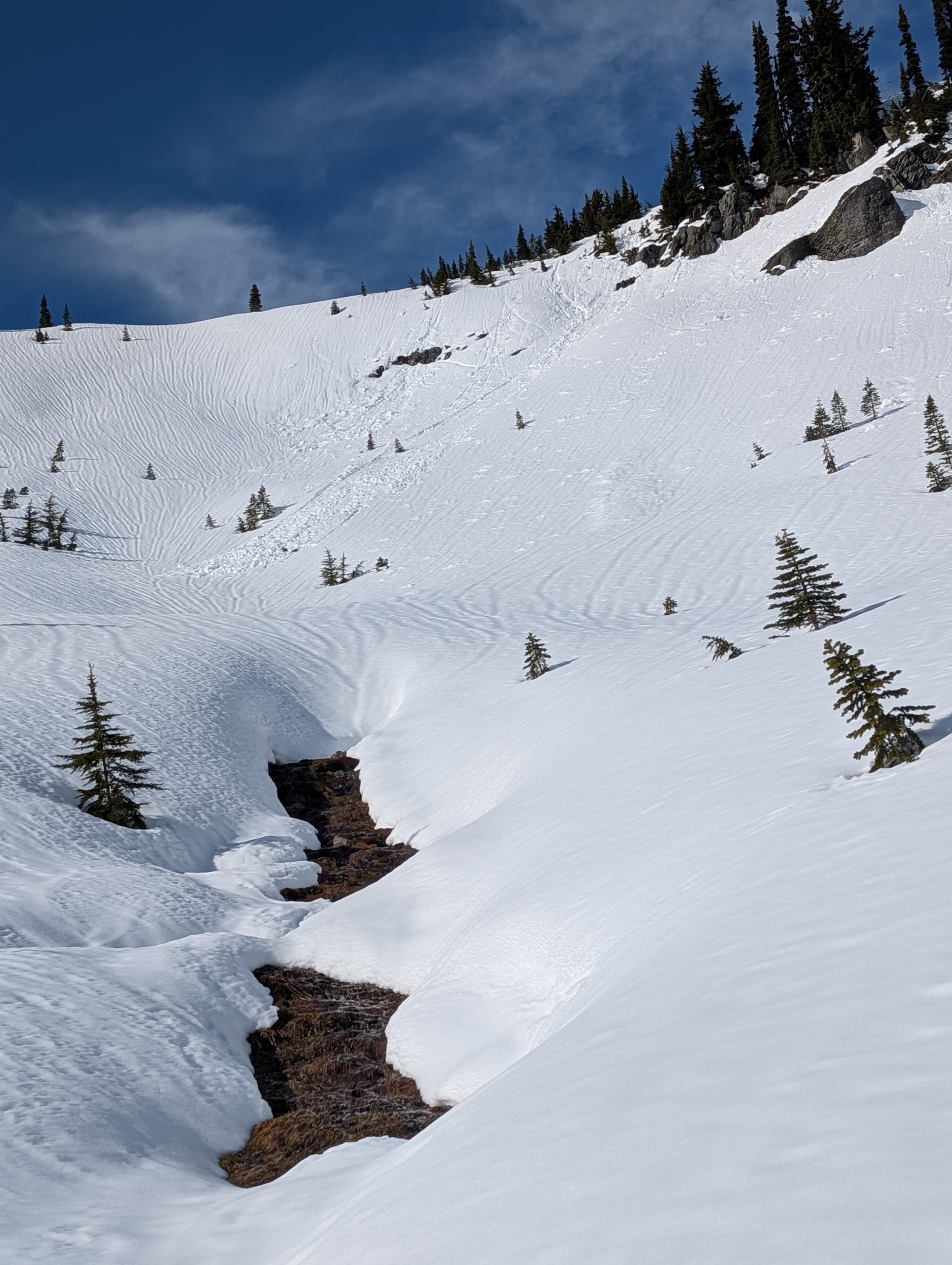
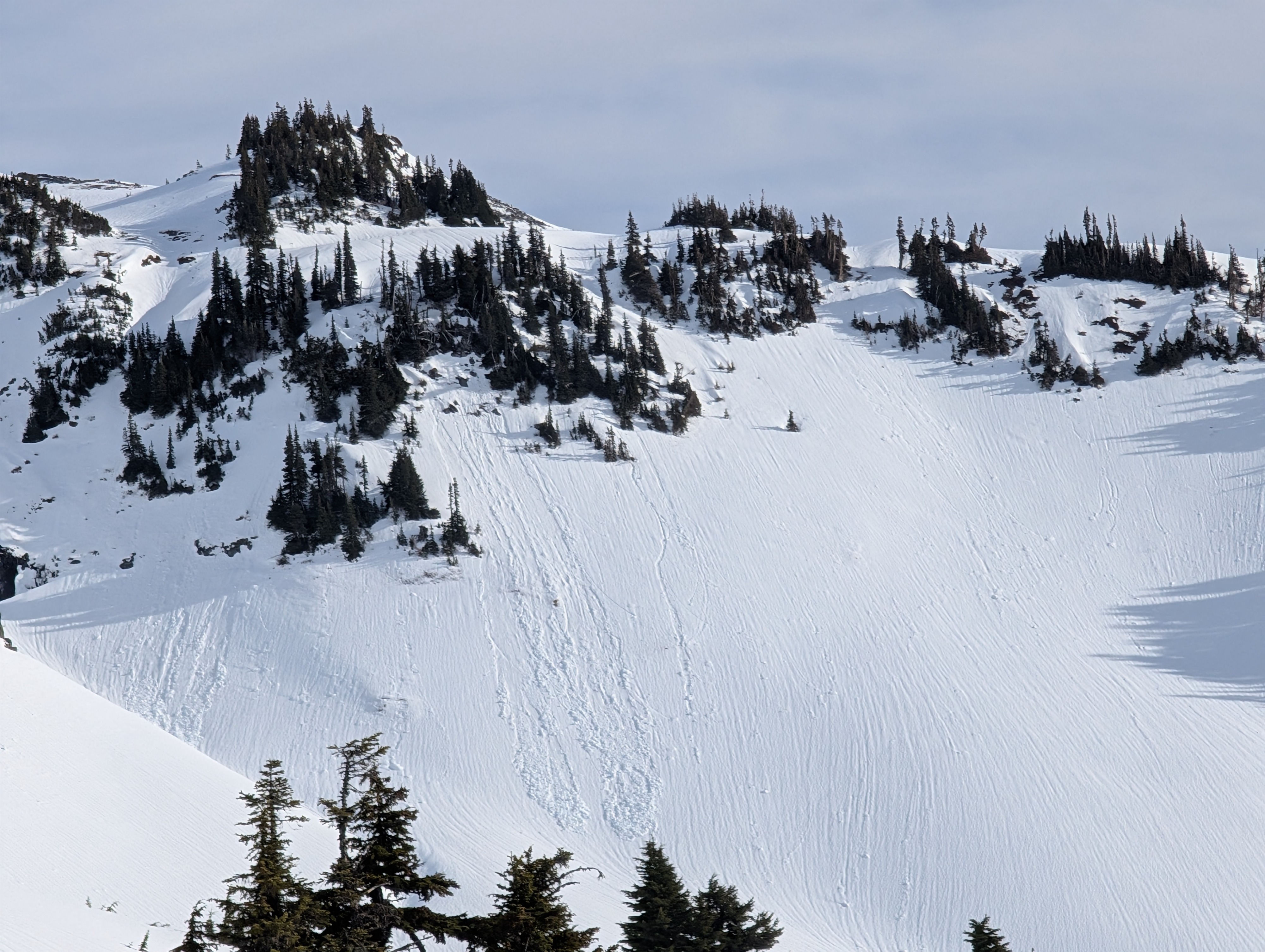
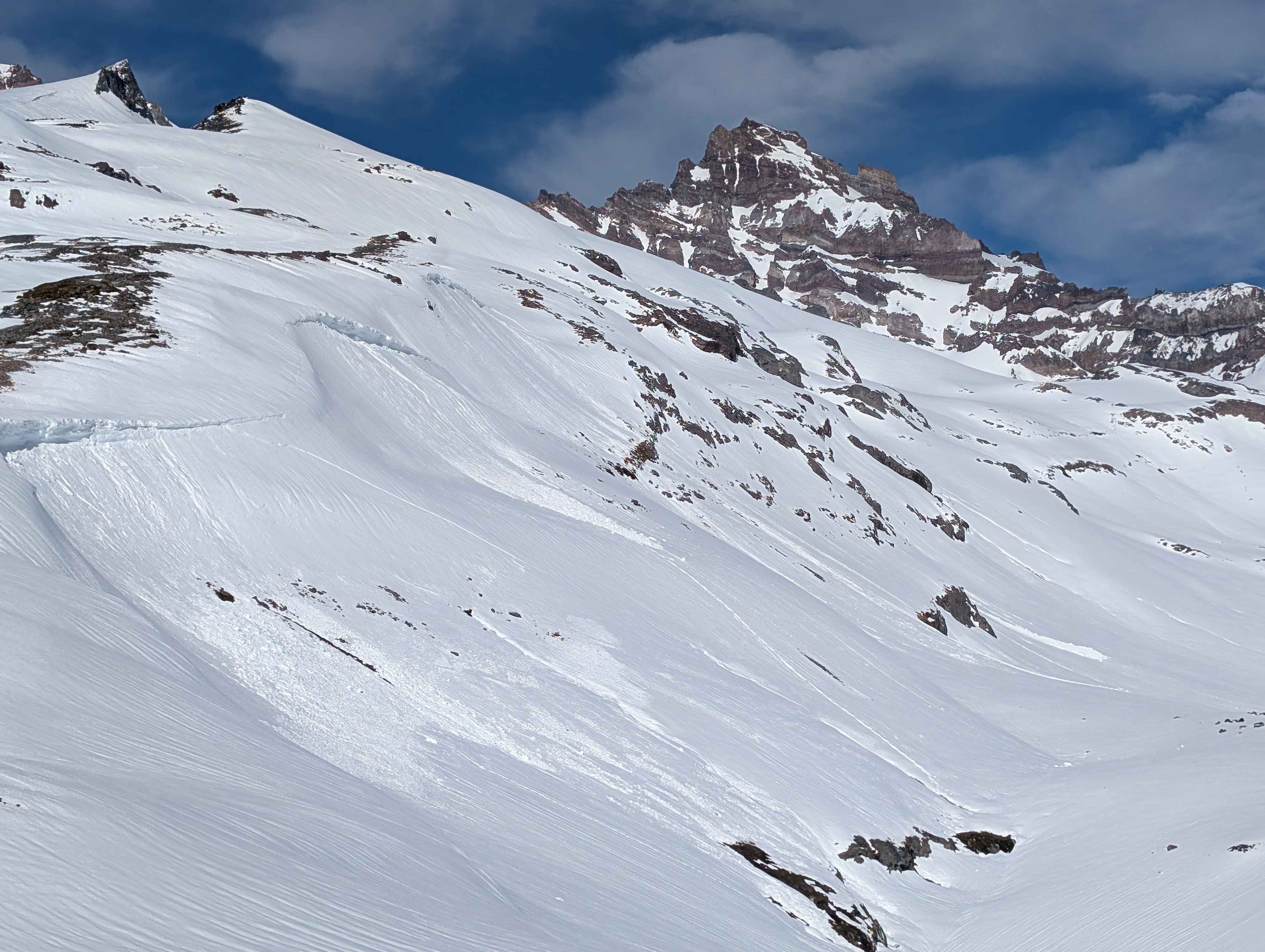
A handful of recent wet loose slides were spotted. Mostly originating in steep, rocky terrain on sun-exposed slopes.Weather
Mostly sunny with some high clouds. Unseasonably warm, but a cool SE breeze helped keep it manageably cool.
Snowpack
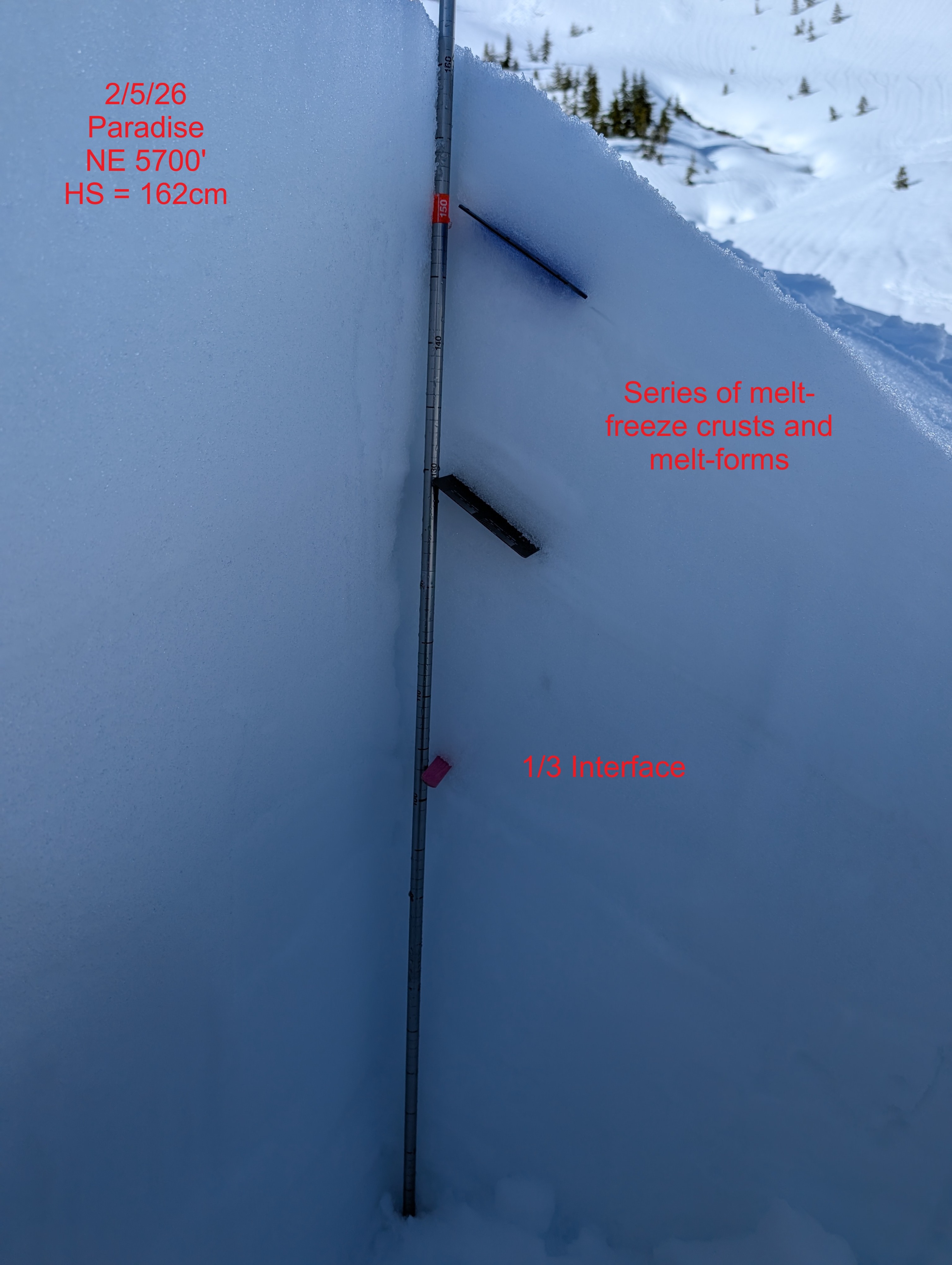
The snowpack is not very winter-like. Although it does contain layers and interfaces, it generally consists of many types of melt forms. Some of these interfaces appear to have been facets but are now wet and clumped into clusters of polycrystals.
The January Drought Interface was not observed to be a stout crust in either location I dug. Last night's surface crust did produce propagating test results in an ECT in the afternoon after it had softened. Not something to take to the bank, but store it away for this weekend.
Avalanche
Multiple old avalanches were spotted - both slabs and loose. Many are suspected to have failed over the weekend, either during the intense snow and wind or the ensuing warm-up and rain. A number of these slides involved cornices or were directly below cornice lines.