
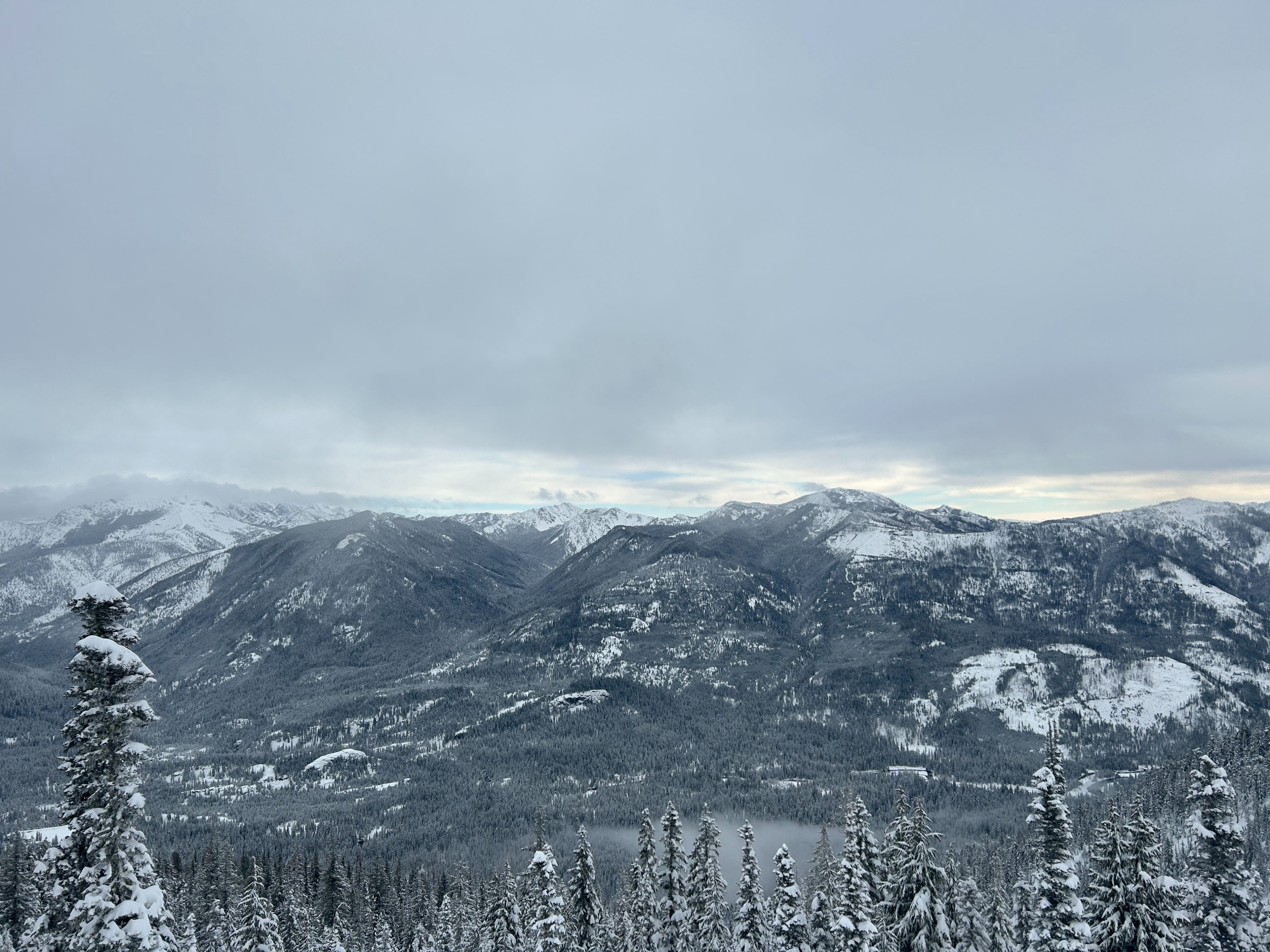
Quick report
- Cracking
- isolated
- Collapsing
- specific
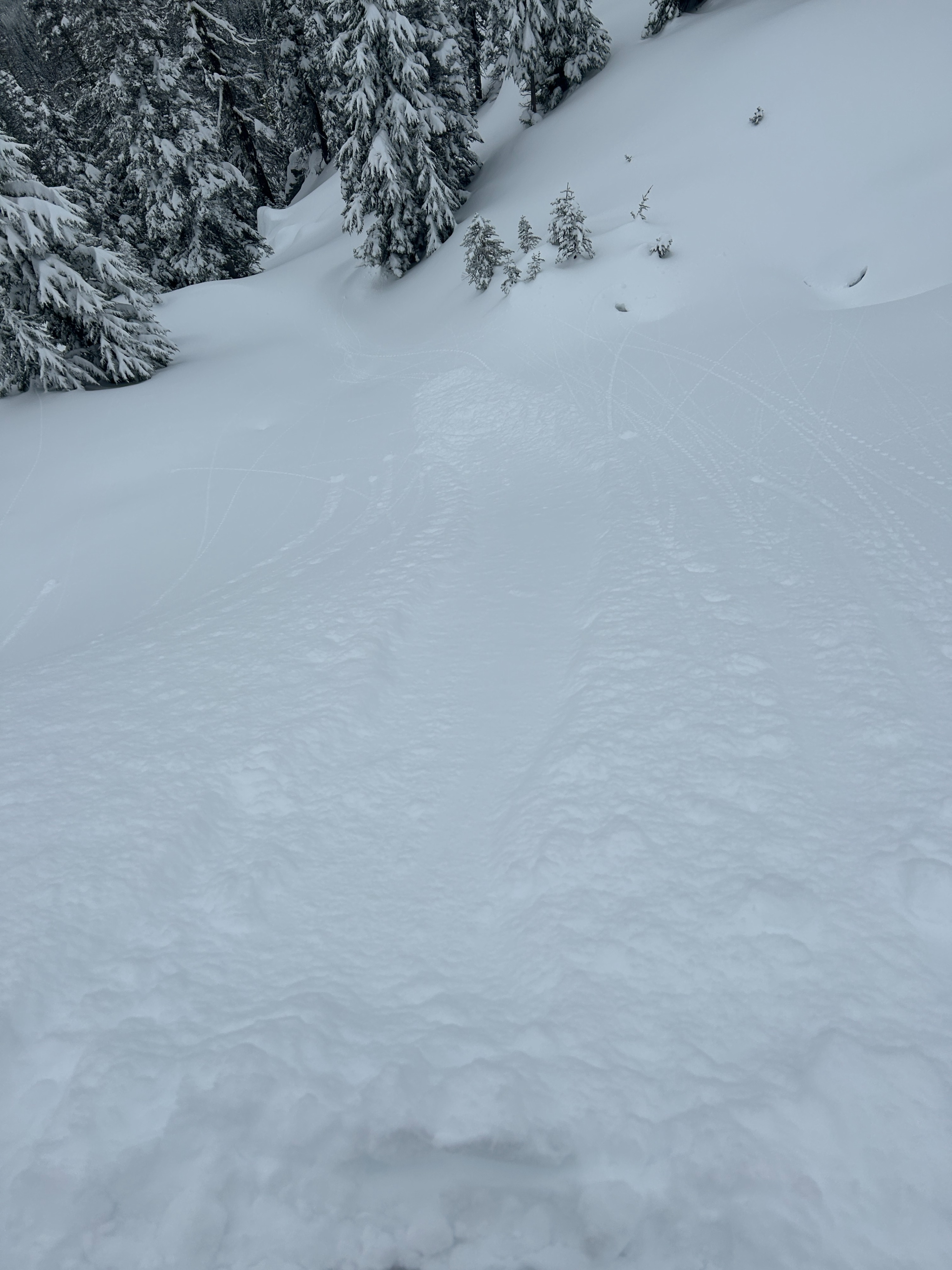
It's deep out there! And deep meant some trickier sledding conditions that ate up a good chunk of our time to explore terrain and make observations. Because of this, we were only able to travel up to 5300 ft. Along the way, we began finding signs of instability, but nothing was totally jumping out. I am highly suspicious that had we been able to travel higher up all the way to the top of Red Mountain, we might've found more unstable conditions.
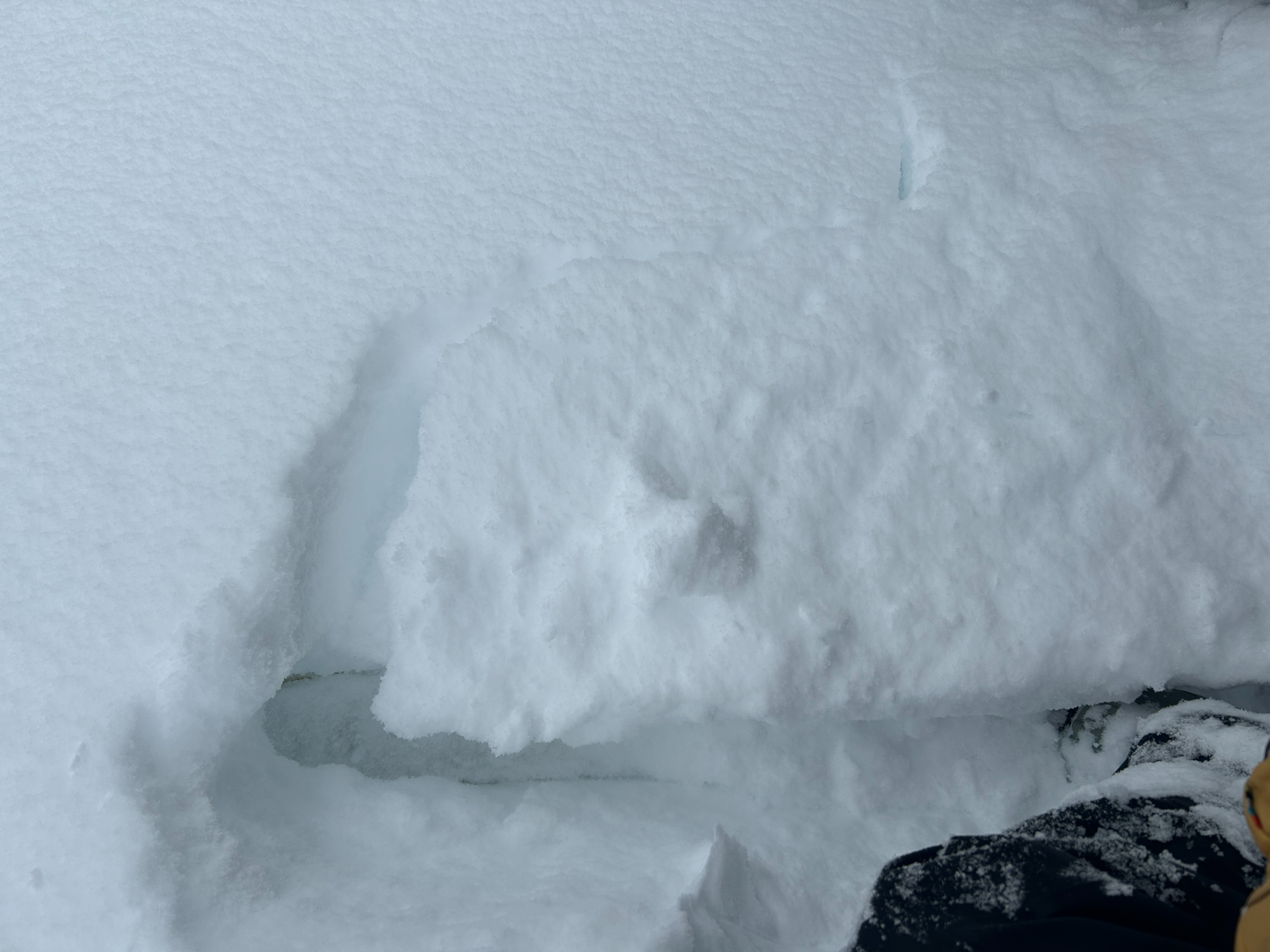
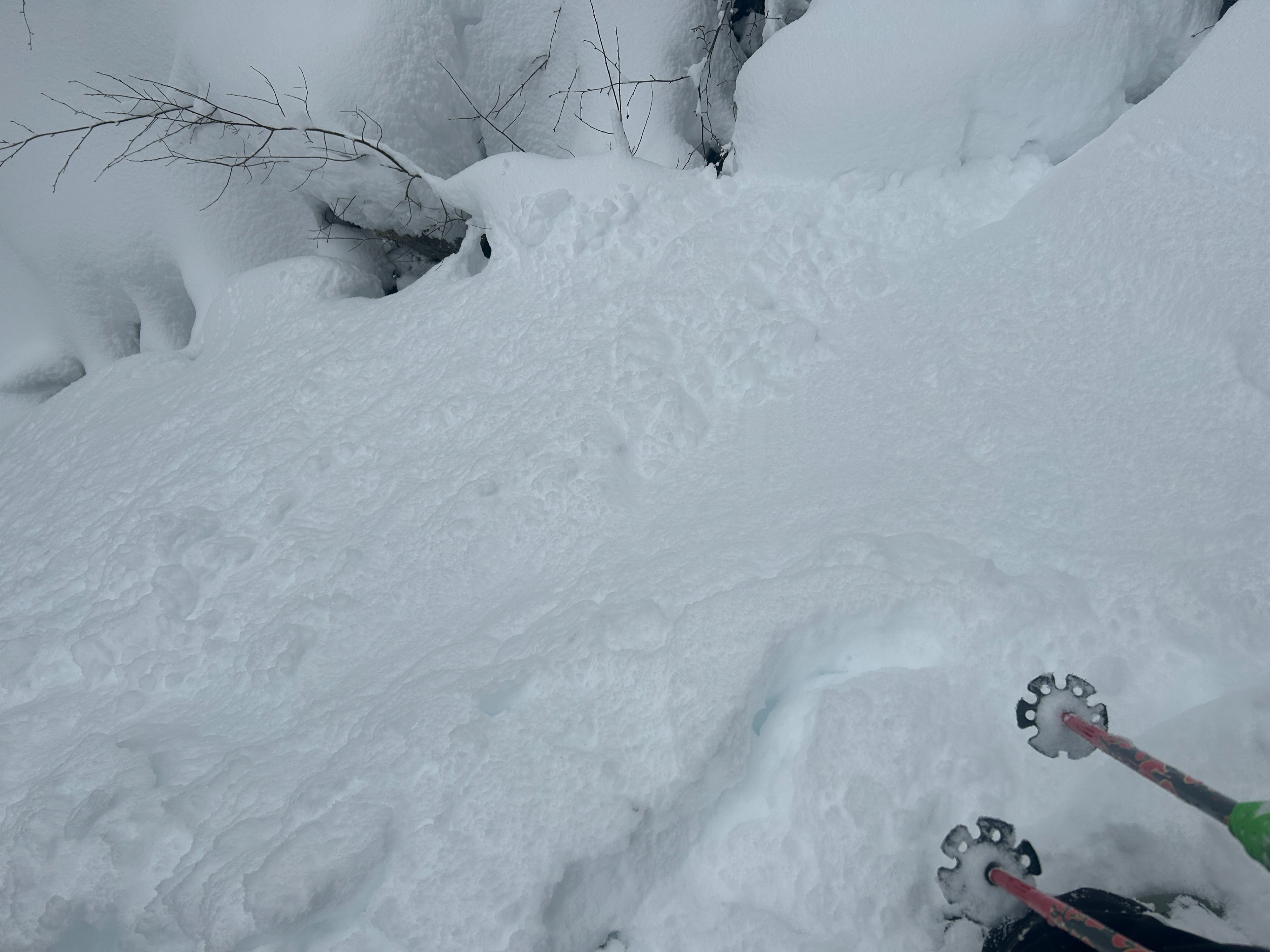
I triggered very small sluffs of loose dry snow on very steep slopes at lower and middle elevations. I was able to get some stubborn cracking in a few unsupported, wind loaded features. We experienced numerous, but very localized (right under our feet with every step) collapsing above 5000 ft. I triggered a larger collapse on a steep, wind loaded feature around 5200 ft. We also experienced one large whumpf at lower elevations, but this was in a willow-y area, so doesn't hold too much weight.Weather
- Air Temp
- 27
- Cloud Cover
- broken
- Wind Loading
- previous
- Recent Snowfall
- 25-54
- Snow Avail For Transport
- large amounts
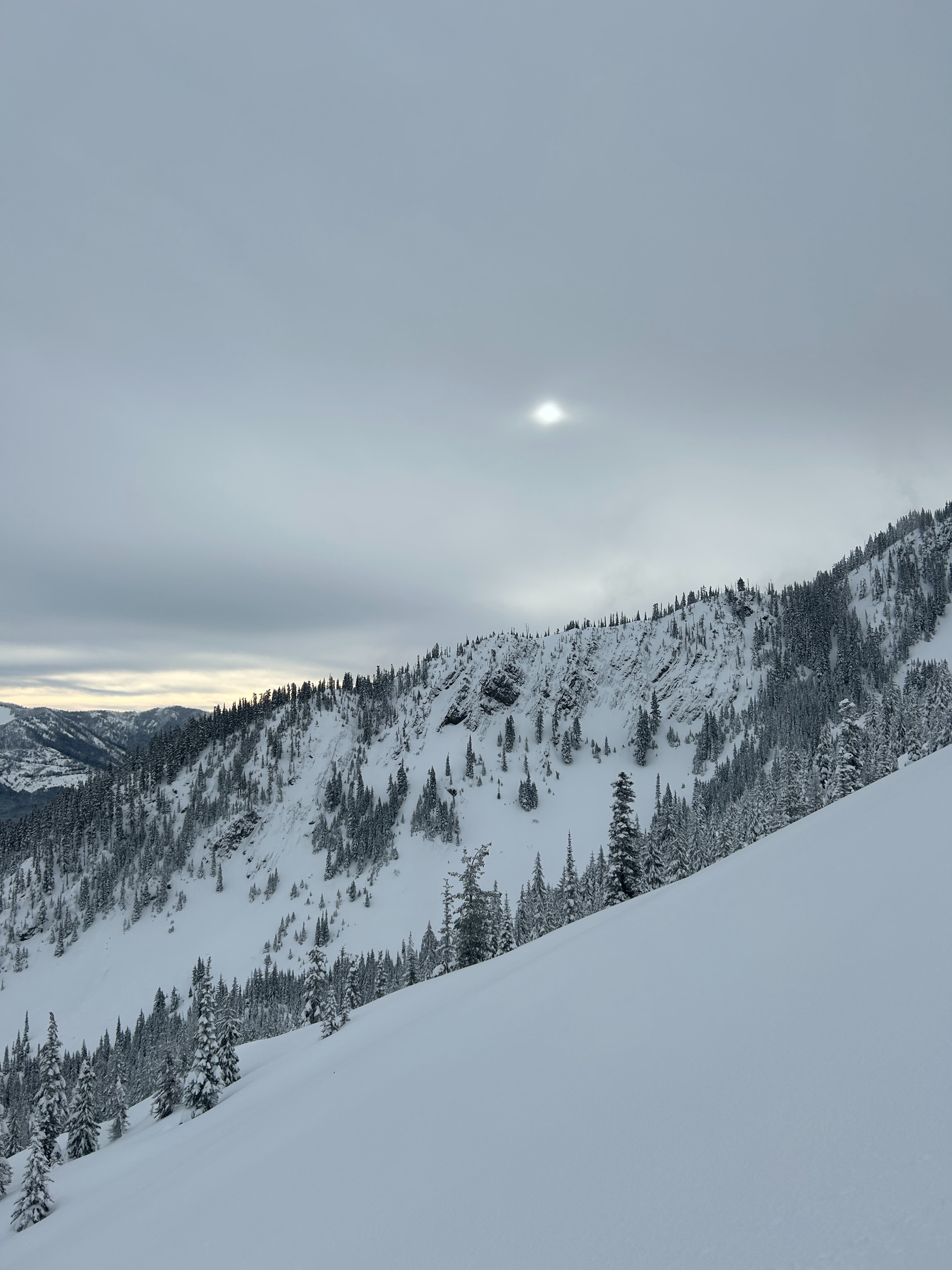
Flurries of light to moderate snowfall turned on and off throughout the day. Overall, the sky was overcast, but a pocket of blue sky was visible here and there. Temperatures remained below freezing at all elevations. The wind was calm and from the south.
Snowpack
At the trailhead, there was a midstorm crust underneath a few inches of snow. This crust quickly went away; by 2800 ft, it was gone.
I dug a pit on an east aspect at 5300 ft. The depth of this pit was 169cm (67in). I found 54cm (21in) of soft new snow at the surface. Below this was 15cm (6in) of more consolidated snow from a recent storm over the weekend. All of this overlays a hard crust formed on 01/02. Below this crust, I found a large slab of zipper crusts (melt freeze crusts with layers of rounded grains in between) all the way down to the robust AR crusts at the bottom of the snowpack. I performed compression tests and got the following results:
CT2RP down 22cm, CT4RP down 13cm, CT16SP down 46cm
I performed extended column tests and got an easy, then moderate non-propagating results within the storm snow as well (ECTN8 down 22cm, ECTN15 down 33cm).
Avalanche
Small sluffs of loose dry snow.