
Quick report
- Cracking
- isolated
I found overall stable conditions today, even in wind loaded terrain. I did not get propagation in extended column tests or any major cracking or collapsing. However, I did observe a clear distinction between a newer formed 1' thick wind slab at the surface and older slabs. The wind had obviously been strong and scoured west aspects at upper elevations. Lingering buried persistent weak layers and facet/crust combinations were still found today on north and southeast aspects but showed no reactivity either.
Isolated cracking in the top 1-2" of wind drifted snow.Weather
- Air Temp
- 11
- Cloud Cover
- broken
- Wind Loading
- light
- Recent Snowfall
- 45
- Snow Avail For Transport
- moderate amounts
In the morning, the sky was overcast and light wind was blowing from the south. At around 1pm, a quick storm began and moderate snowfall fell with moderate wind that was shifting directions but felt primarily from the east. By 2pm, the storm had ended and the clouds began to clear enough that the sun was shining through quite regularly.
Snowpack
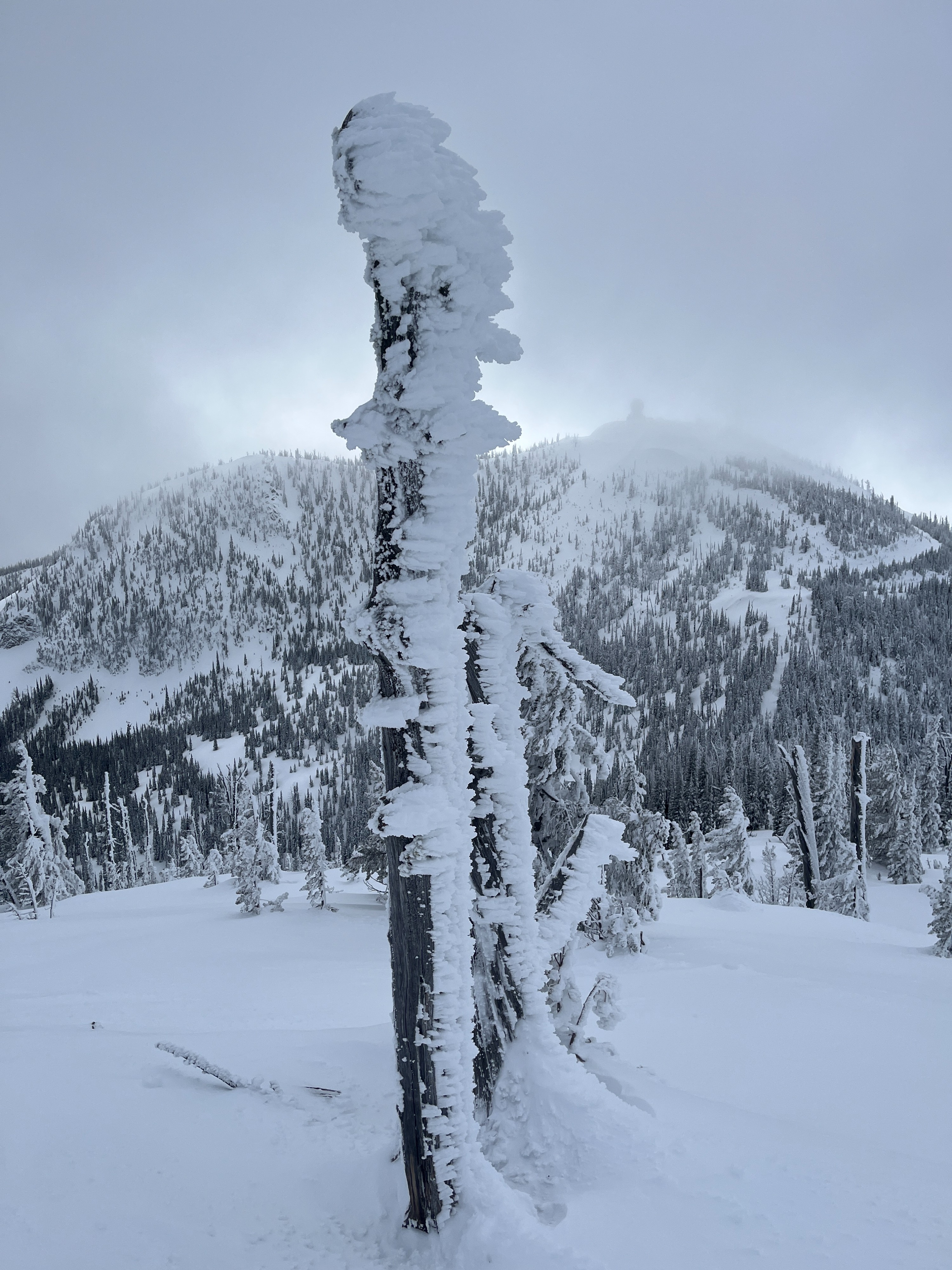
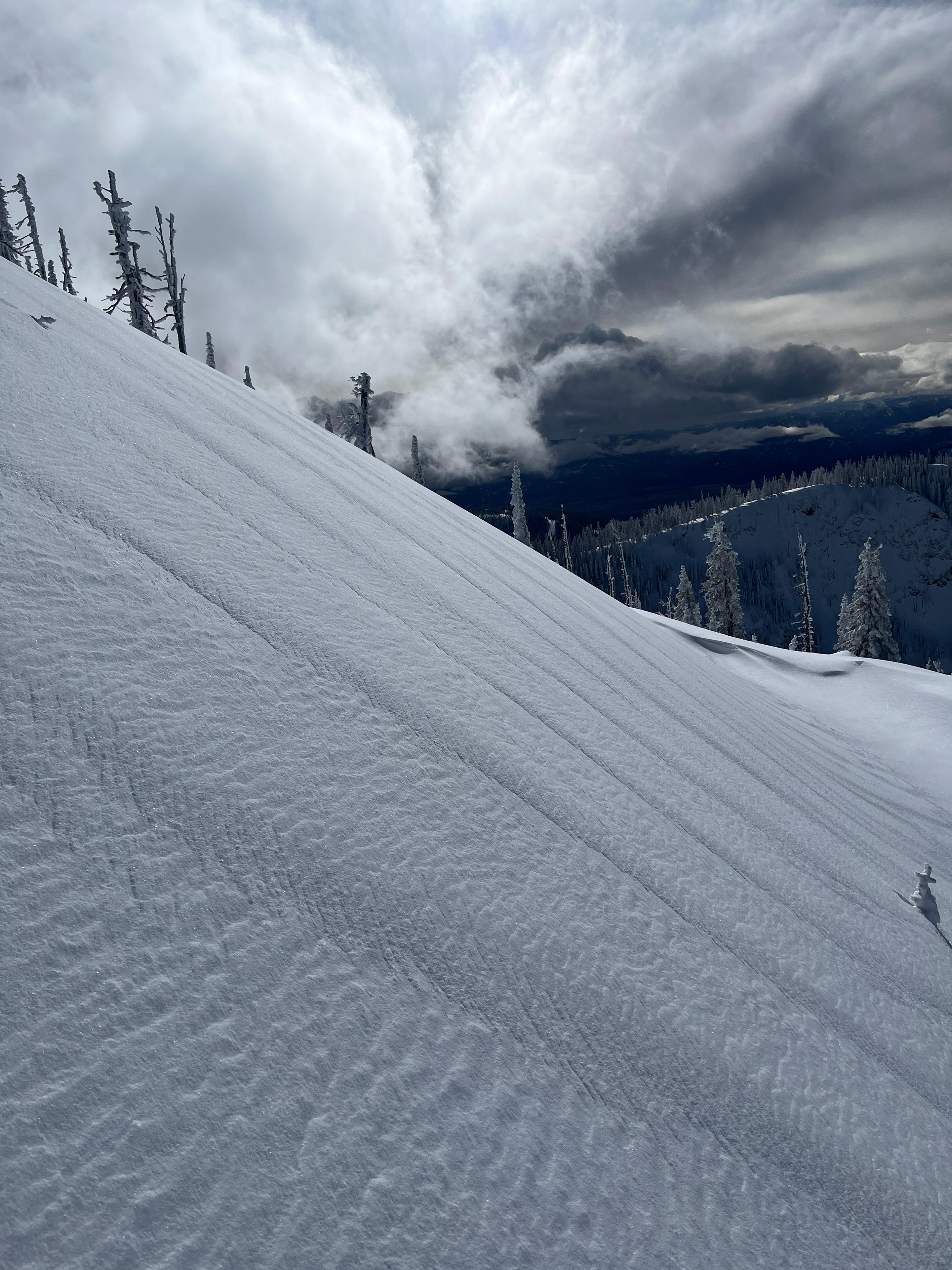
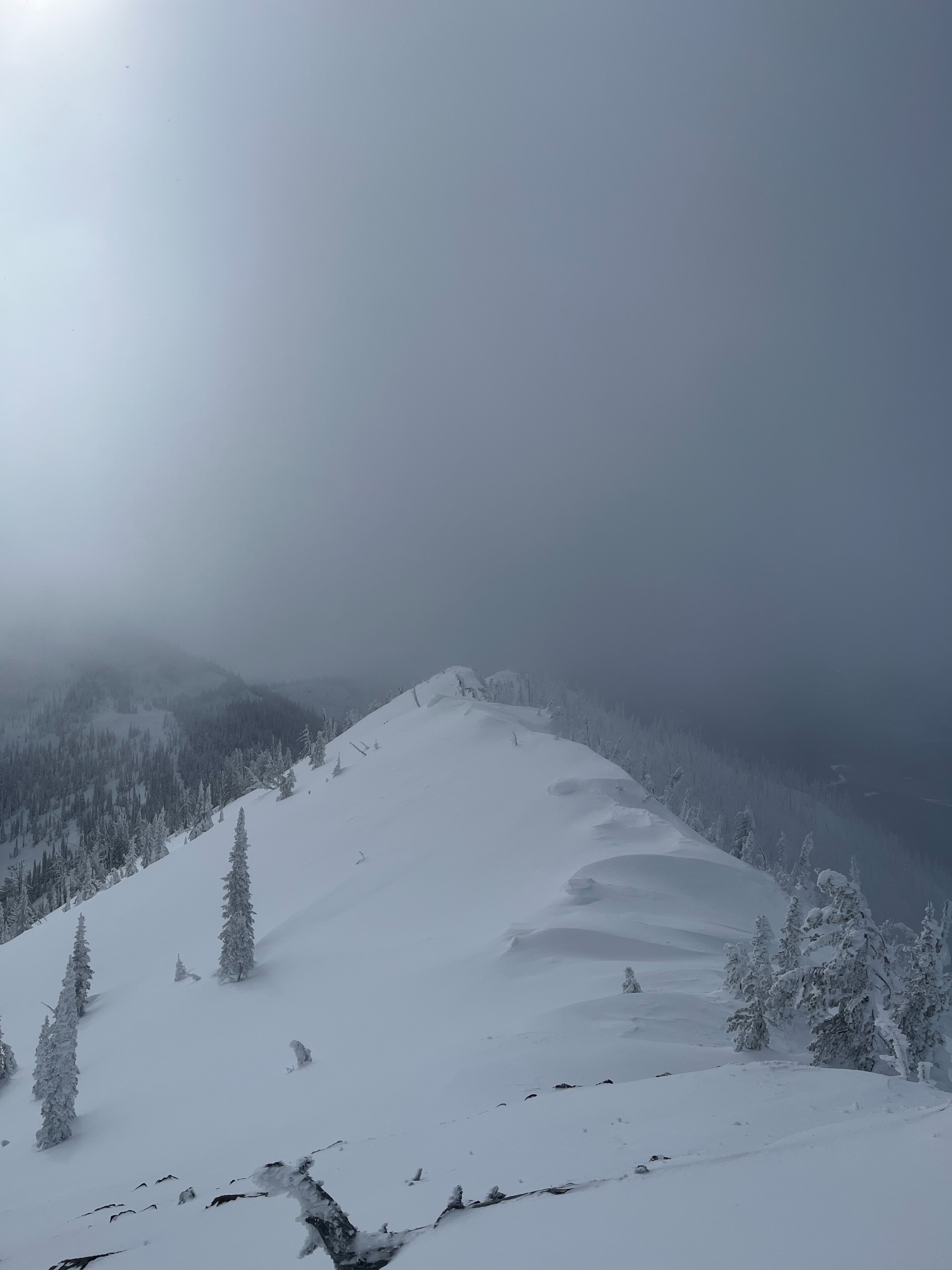
I observed wind scoured west aspects and wind loaded north and east aspects. Medium cornices have developed along the north and east sides of ridgelines. I observed shifting wind directions throughout the day but predominantly, the wind was from the southwest. Wind transport of snow was also observed today.
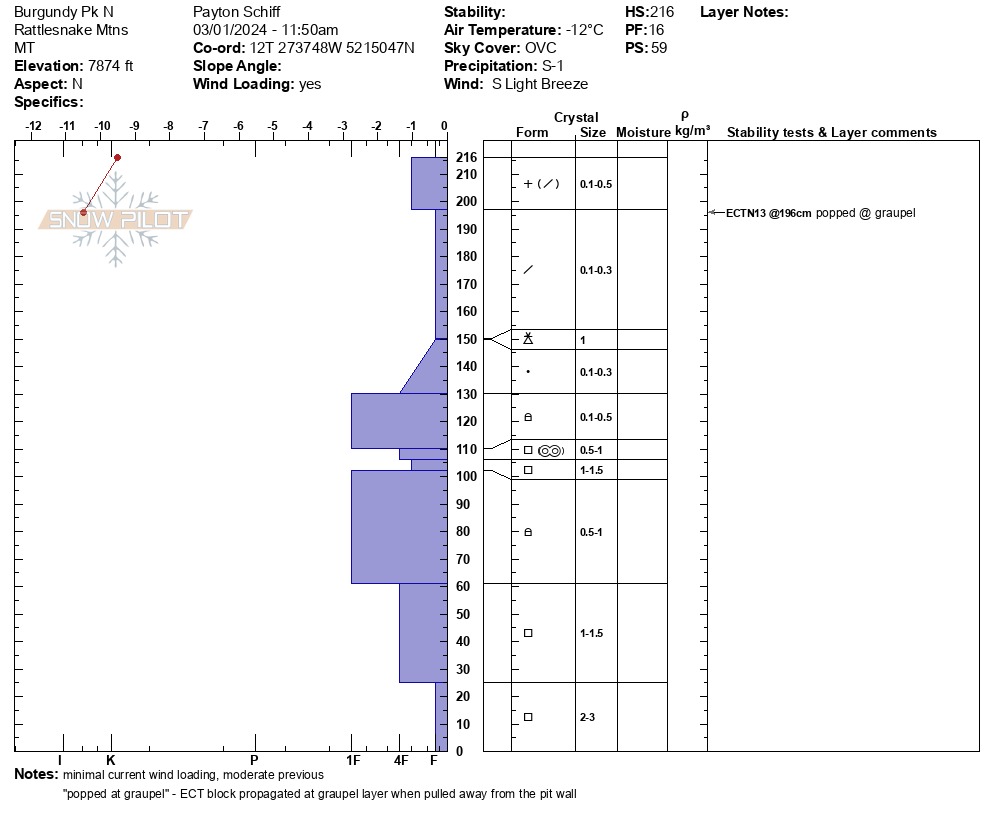
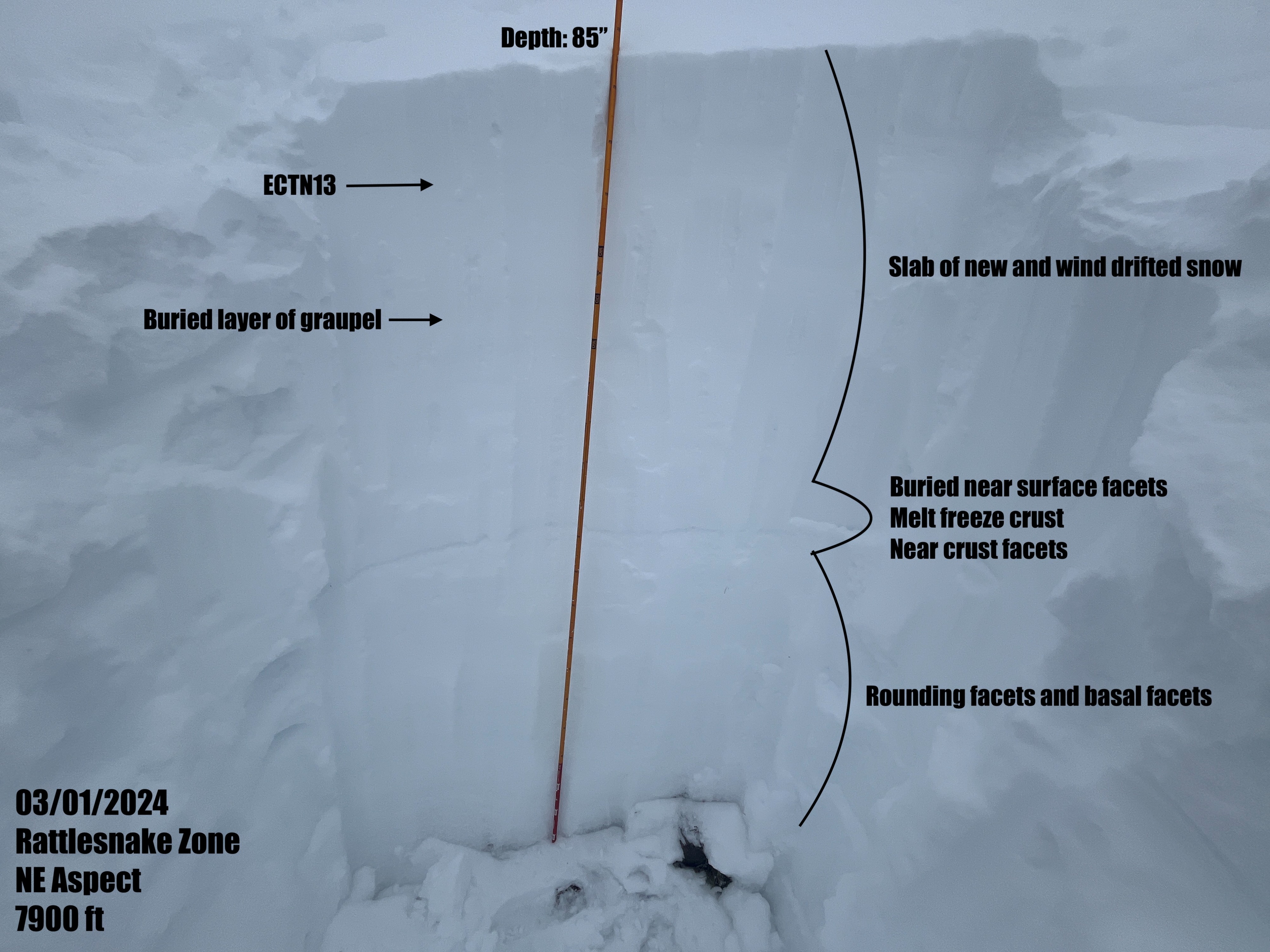
I dug my first pit on a N aspect at 7900'. The depth of this pit was a touch over 7' (216cm). I found a newer formed wind slab about 1' deep at the surface. Below this was a consolidated slab of recent and wind drifted snow. Within this slab was a preserved layer of graupel. I found buried near surface facets sitting above a melt freeze crust that was faceting, and near crust facets below. I did not find buried surface hoar like I have been in many other pits recently. At the ground was rounding facets and basal facets. I performed an extended column test and got a moderate non-propagating result at the interface of the new wind slab and older slab (ECTN13).
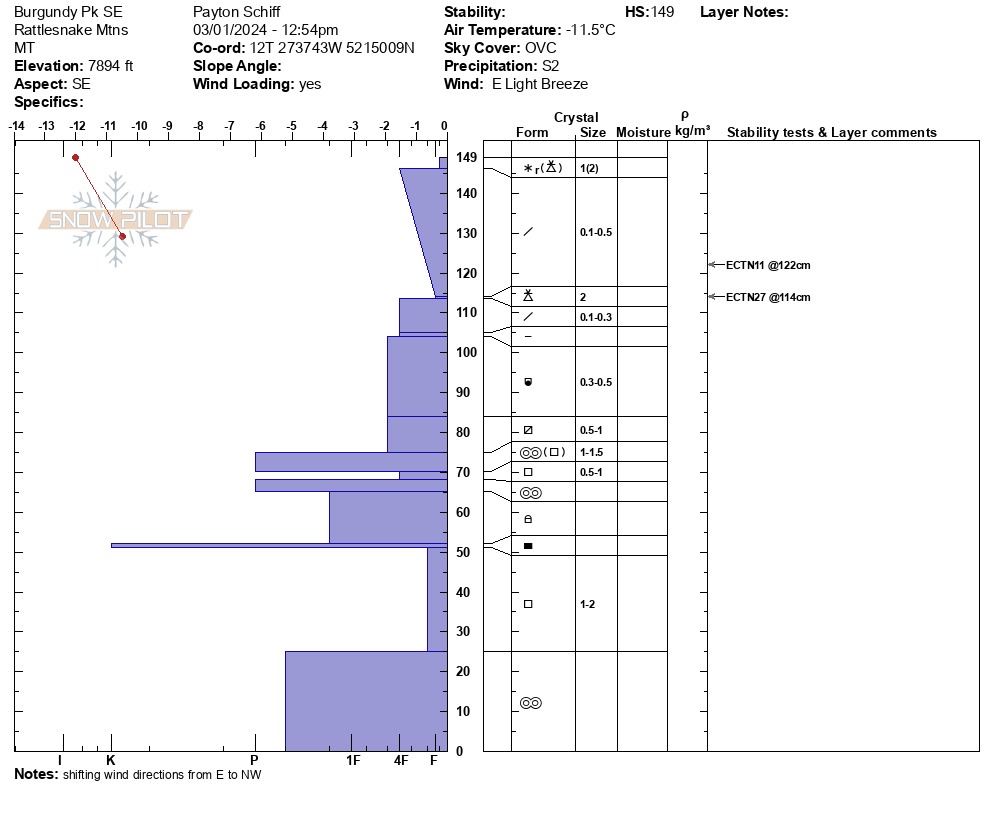
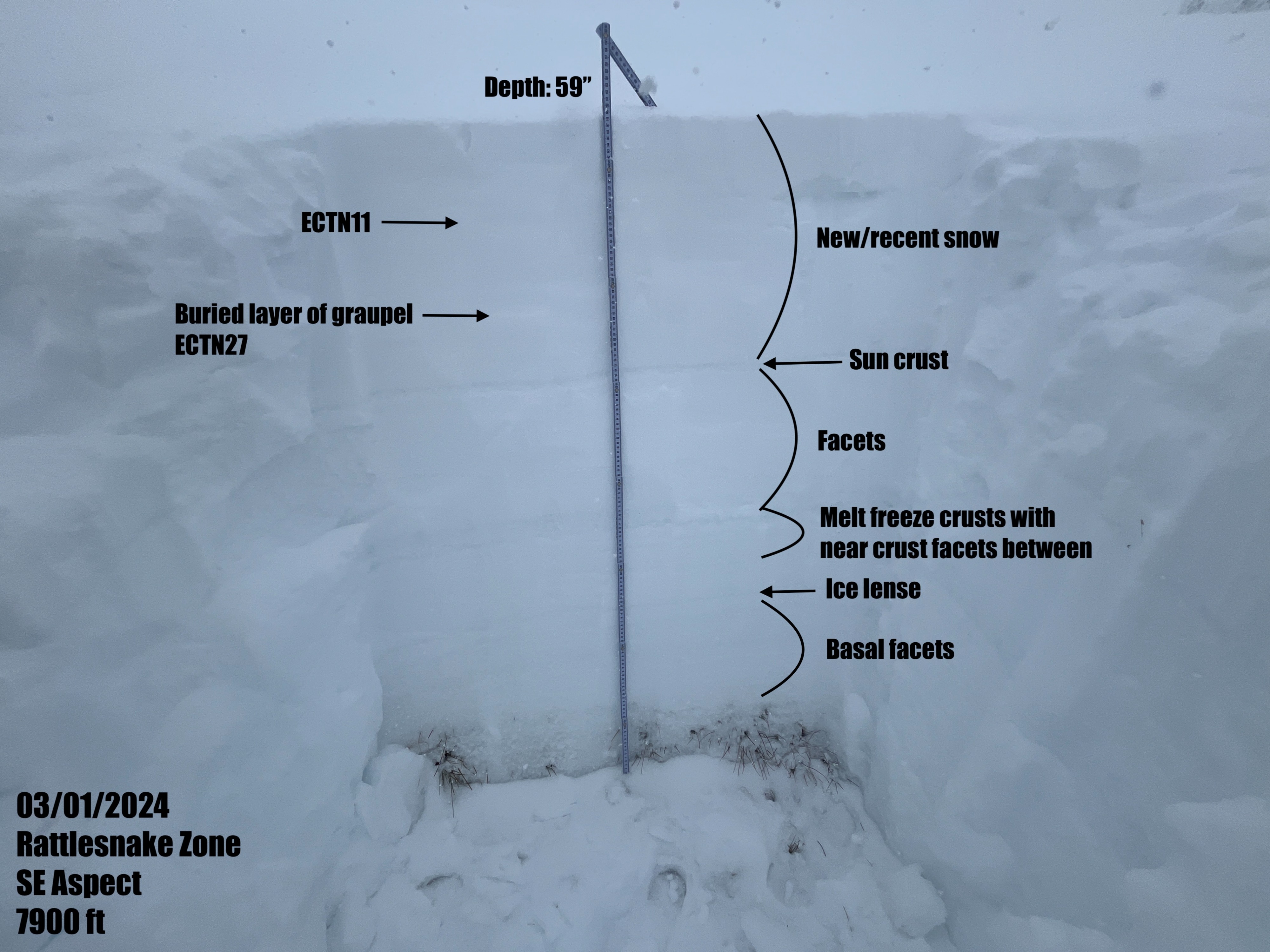
I dug my second pit on a SE aspect at 7900'. The depth of this pit was just under 5' (149cm). I found a similar newly formed wind slab at the surface sitting on an older slab with a layer of graupel within in. Below this slab was a thin sun crust. Moving down, I also found similar persistent weak layers; buried near surface facets, a faceting melt freeze crust, and near crust facets below it. Below a layer of rounding facets, I found a hard ice lense. Weak basal facets and a thick layer of melt freeze crust were at the ground. I performed an extended column test that first gave a moderate non-propagating result at the same new wind slab/older slab interface, then another hard non-propagating result at the layer of graupel (ECTN11, ECTN27).