
Quick report
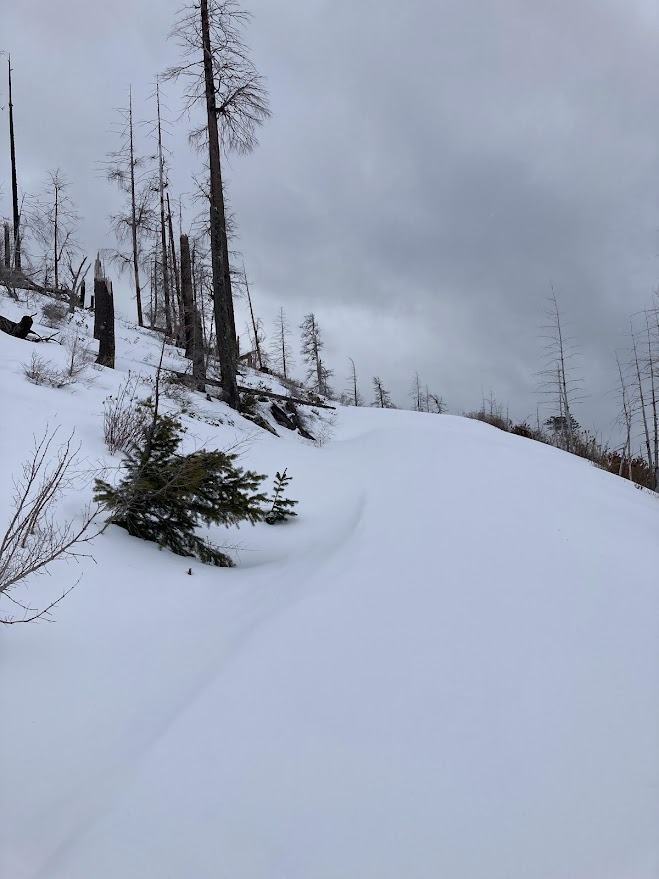
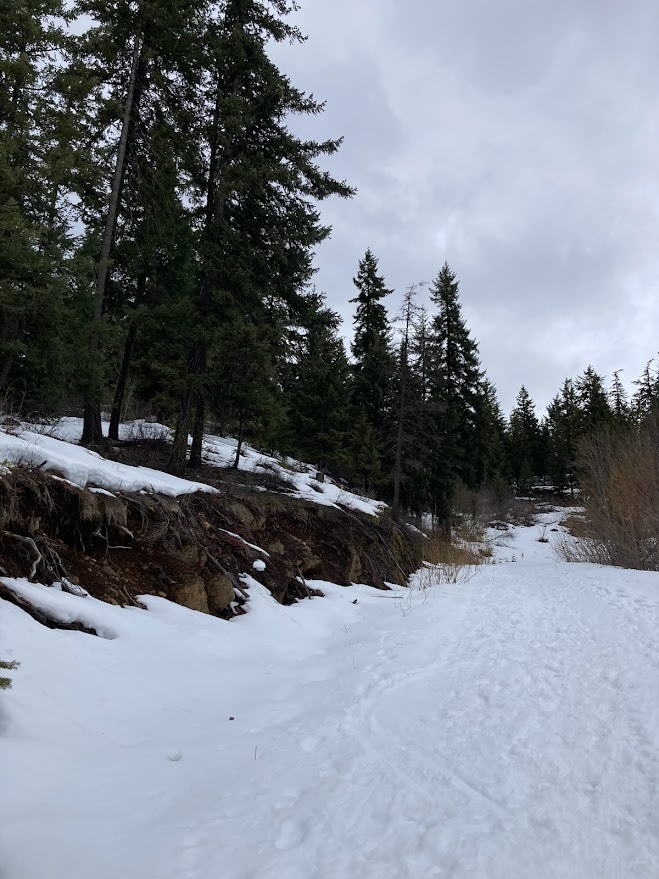
The goal of this particular outing was to investigate the snowpack in the Salmon la Sac area to see if it had similar weaknesses as found in other parts of the East Central zone, and also see how much snow was on the ground since the last obs in this area. We found a thin snowpack - below about 4400' lots of rock and shrub dodging was required to navigate on skis. Above 4400' a deeper snowpack existed, with evidence of prior wind transport, and some limited transport of the small amounts of new snow. In this deeper snowpack we found instabilities upon digging (see below), but did not observe any surface instabilities - wind slabs were stiff, stubborn, and capped with a crust on the aspects we travelled (mostly S and West aspects), and new wind drifts were kept very small by the fact that there was hardly any snow to blow around. We still stuck to the ridge and lower angle slopes given the weaknesses within the snowpack structure in this zone.
Surface conditions throughout the ascent were firm, with a ski supportable (but boot-breakable) crust with a few centimeters of new, moist snow on top of it. In the afternoon warming, this crust softened and we enjoyed some creamy skiing up high, and slushy skiing closer to the car. The one area we stepped into a N facing aspect, up near the summit of Hex at 4900', we did find dry (but heavy) snow without a crust.
We observed no signs of instability during our tour, although our views of surrounding peaks were limited by cloud cover.Weather
- Air Temp
- >32F
- Cloud Cover
- overcast
- Wind Loading
- previous
- Rain Elevation
- 3500'
- Recent Snowfall
- 1-2cm
- Snow Avail For Transport
- small smounts
There were some sun breaks at the trailhead and on the ascent (late morning) punctuated by light snow and rain. There were short periods of gusty winds, but also periods of calm and light winds, even at ridgeline. Exiting the field (around 3:30PM) precipitation rates increased.
Snowpack
Dug a pit on a S facing slope, and also on a N facing slope, both at 4900' just below the Hex Mountain summit ridge, both down to just below the Early February Crust (EFC).
In the S facing pit, I found weaker facets around a few crusts above the EFC, and also within the EFC itself. Between these crusts, the snow was strong and moist. None of these produced results in formal snowpack tests, however while prying a column with a shovel, a layer of decomposing crust 5cm below the surface of the EFC failed in a planar fashion.
In the N facing pit, I found drier snow and no surface crust. The EFC had some faceted snow above it, an interface 20cm down had weak snow around it, and a crust about 45cm down also had faceted snow near it. An extended column test failed on this layer 45cm down and suggested potential for propogation (ECTP 27).