
Quick report
Variation in 1/10 presentation on shaded aspects. Better structure observed at upper elevations (>5,600’). Poorest structure observed at 4,500’. Solars are well consolidated and vairable with generally strong MF and crusts. None. Even with warm temps and clear skies, not enough solar input even on steep South, South East and South West to fully break down the crusts near or at the surface.
Snowpack
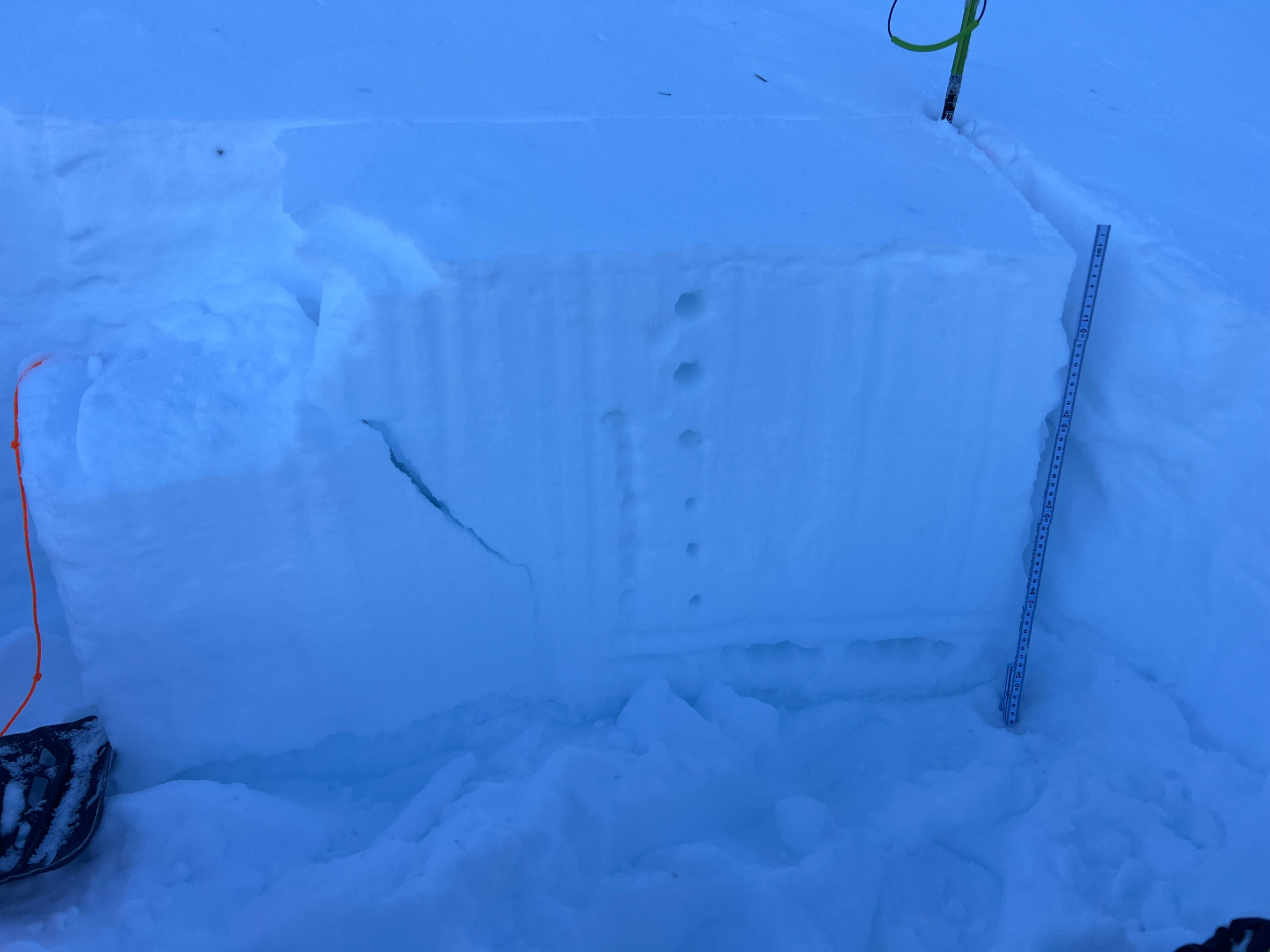
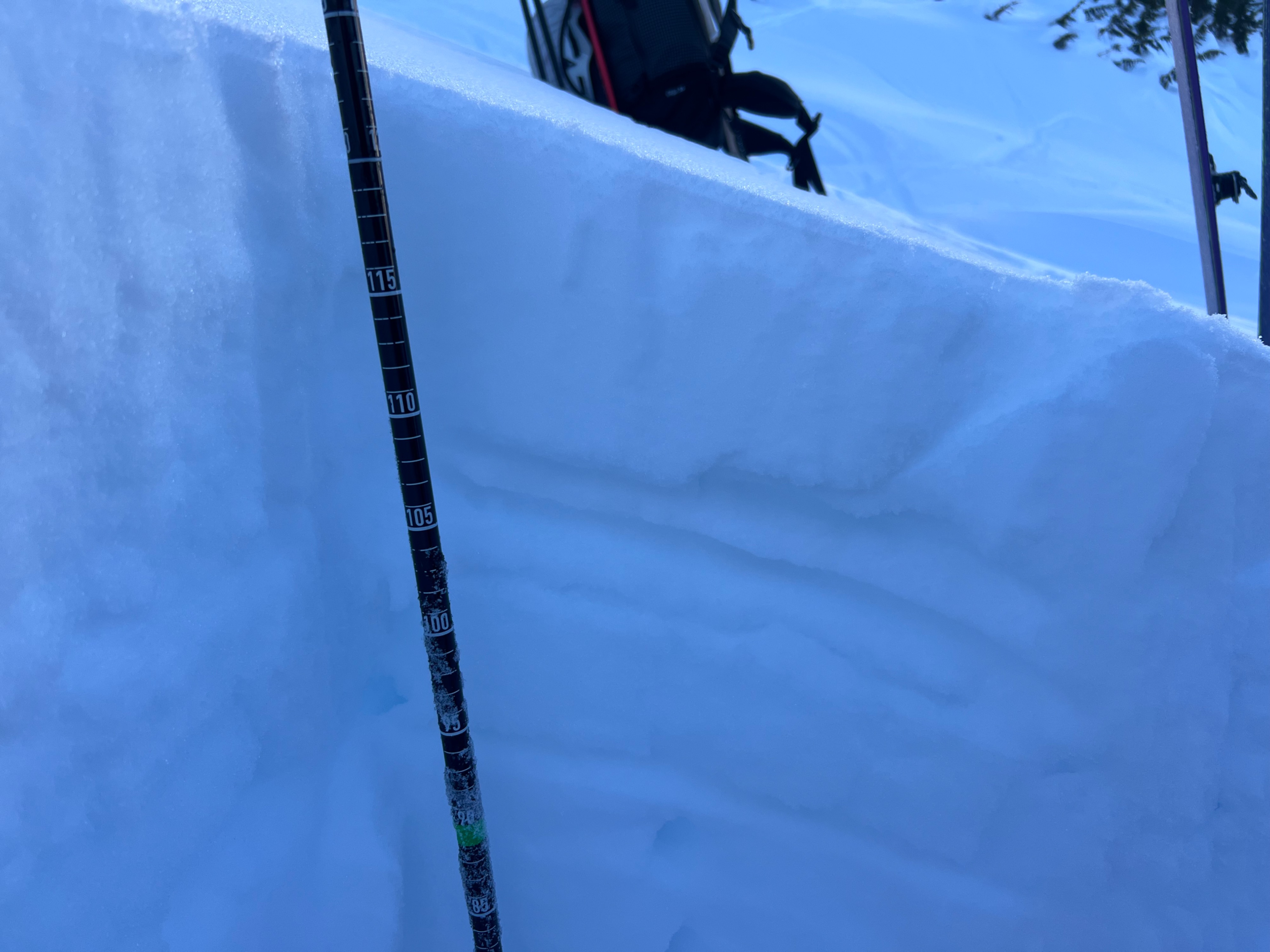
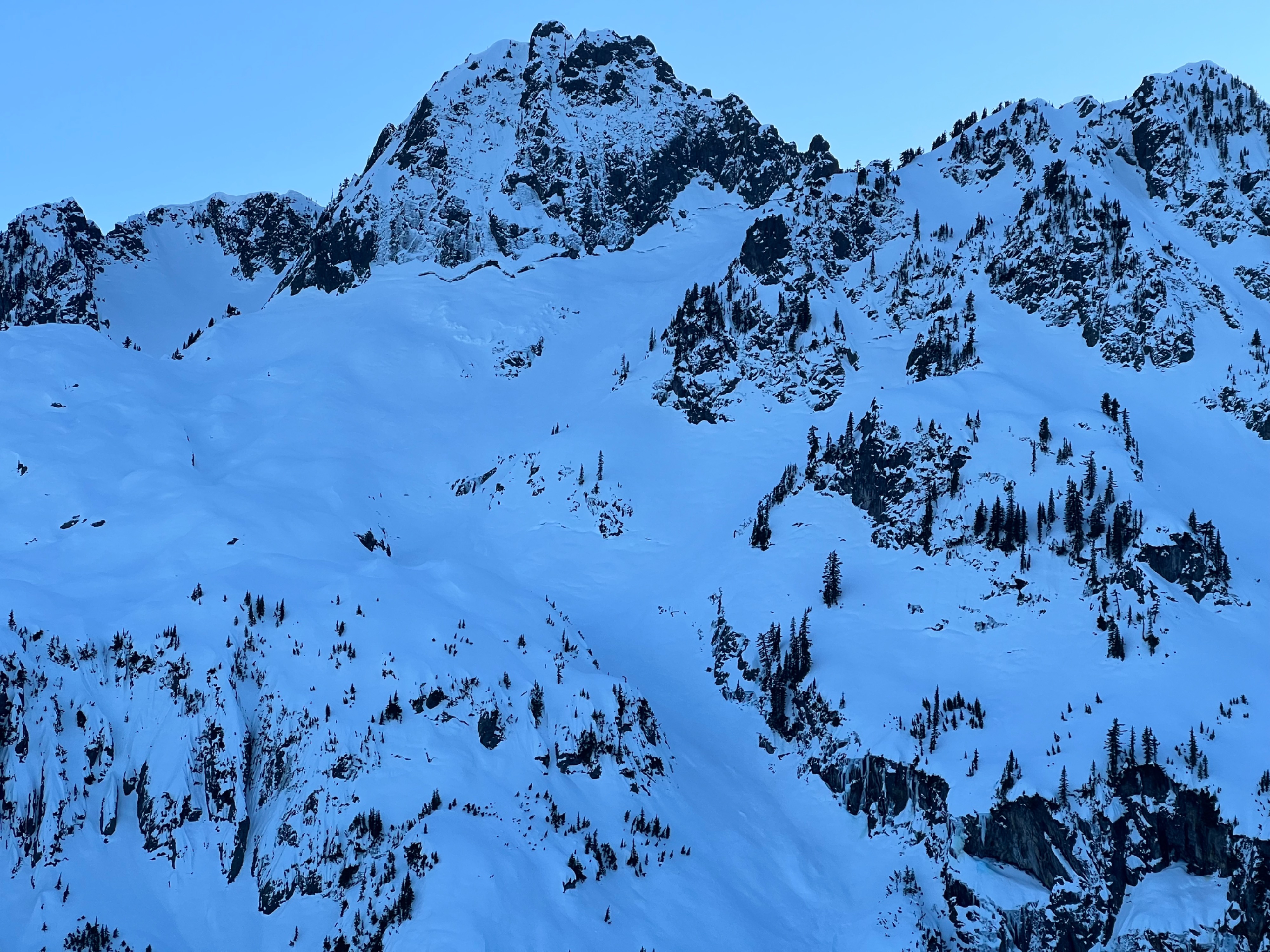
Solars at all elevations were skiing best, not quite corn, but we did not observe enough warming for any surface instabilities. We skied steep SW, S, and SE aspects between 4,500 and 6,000’ late morning and mid day. Dug down to observe the 1/10 on N and NE aspects and 4,600’, 5,700’, and 5,500’ on Bryant, Kaleetan, and Roosevelt. All open slopes with no vegetation nearby. At 4,500’ NE, middle of Great Scott Bowl. HS 125cm. Surface: 1mm NSF. We observed about 15cm of weak, F hard near sfc facets sitting on top of a thin, wafer-like crust. Below the thin crust was 2cm of F+, small faceted grains, with a stout 5cm crust below that. Below the 5cm crust, no notable observations and generally strong layers with a mix of rounded grains and meltforms. Did not perform any tests as there was no slab structure above the layers of concern. 5,800’, NNE, East Face of Kaleetan. Surface was variable wind skin and weak faceted grains. Below surface was a very stout crust that I could not dig past with my hand. 10-15cm thick. 5,600’, NE, East Face of Roosevelt. HS 300+cm, surface was small, wind packed rounded grains. 40cm of 1F to P small rg on top of thin wafer-like crust. 4cm of 4F+ small faceted grains between the thin crust and a very thick & stout crust. No notable weak snow below that. ECTX, but did continue with very hard taps and got failure with no propagation in the 4cm faceted layer between the crusts.