
Quick report
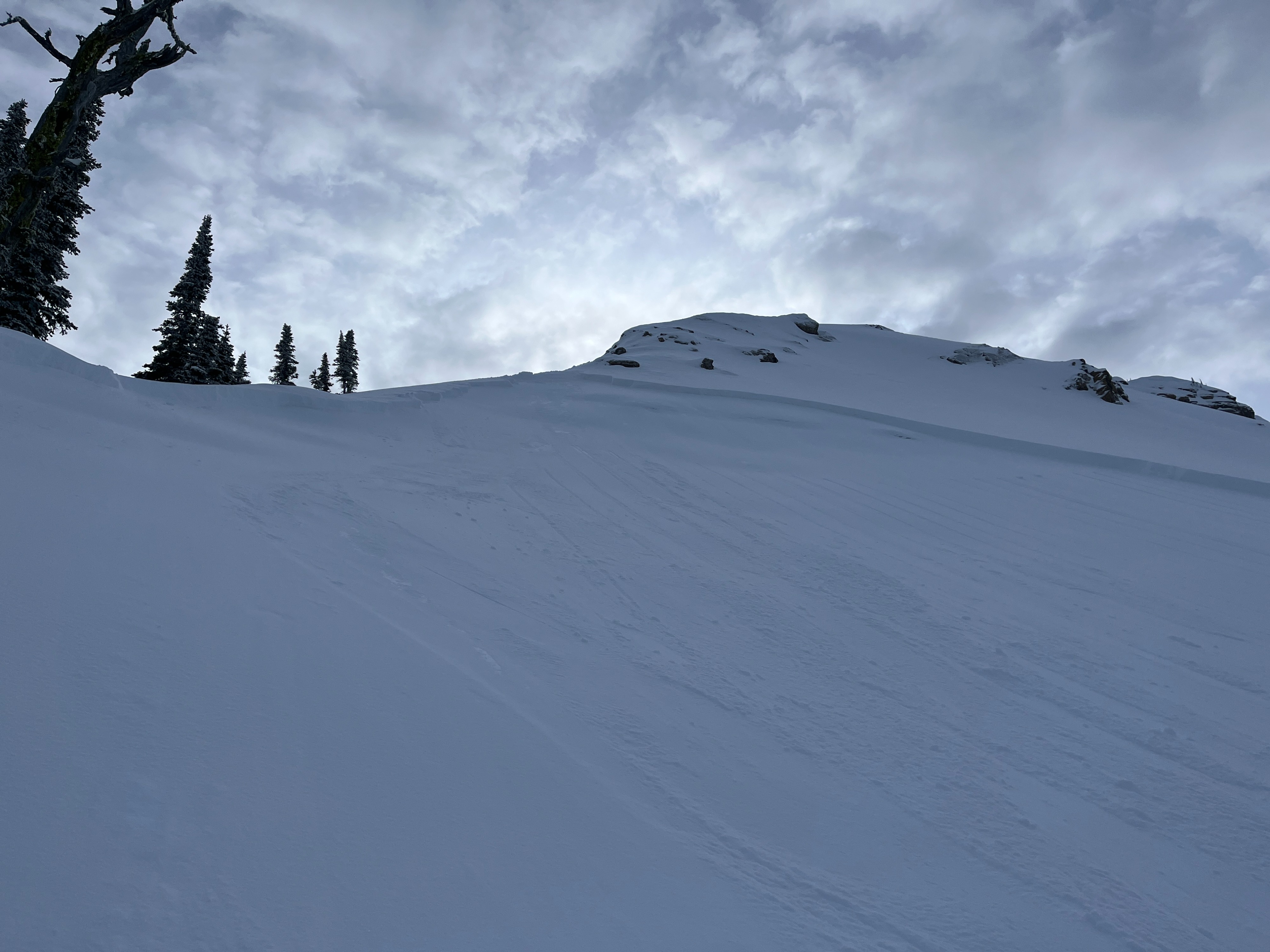
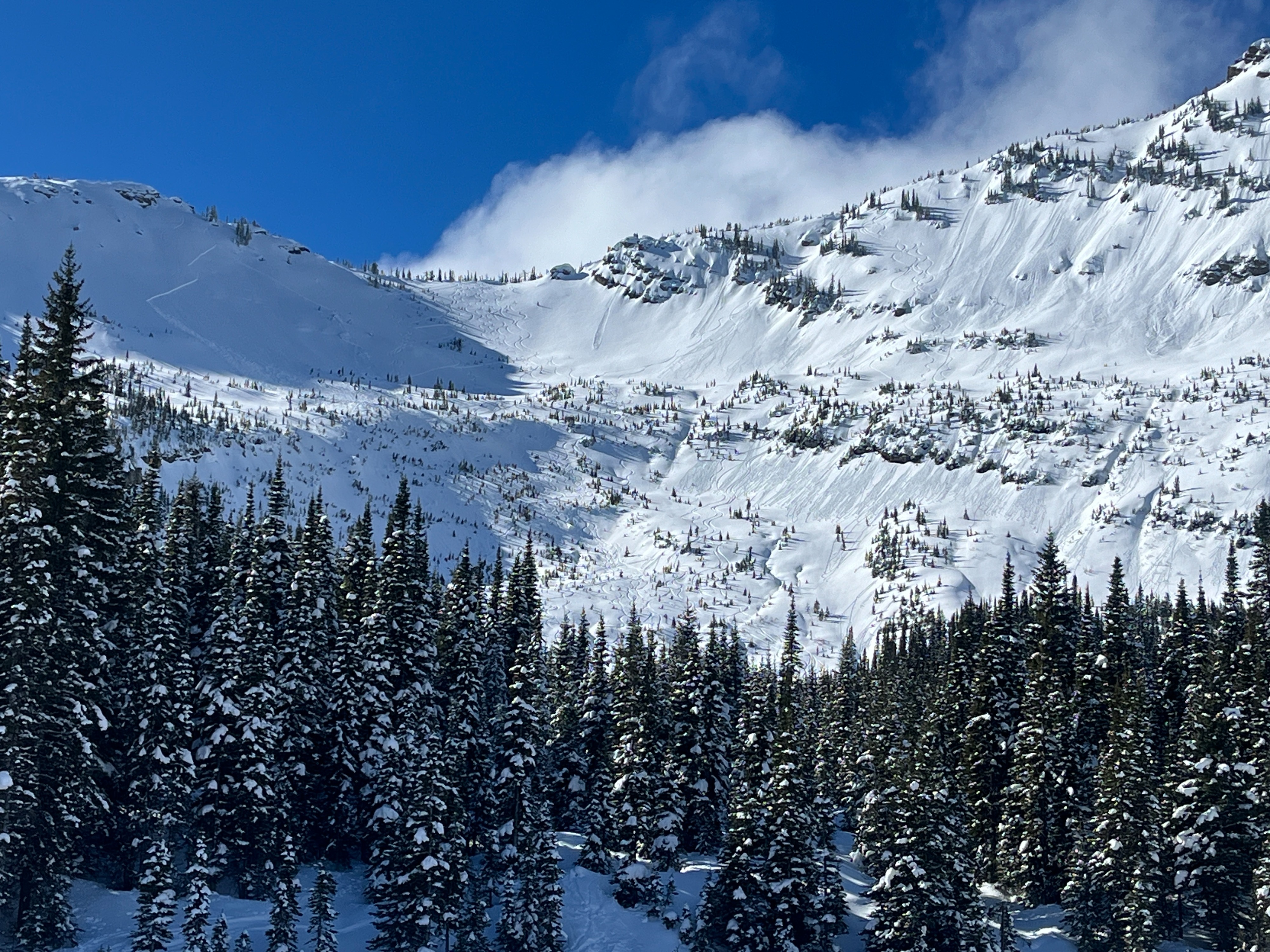
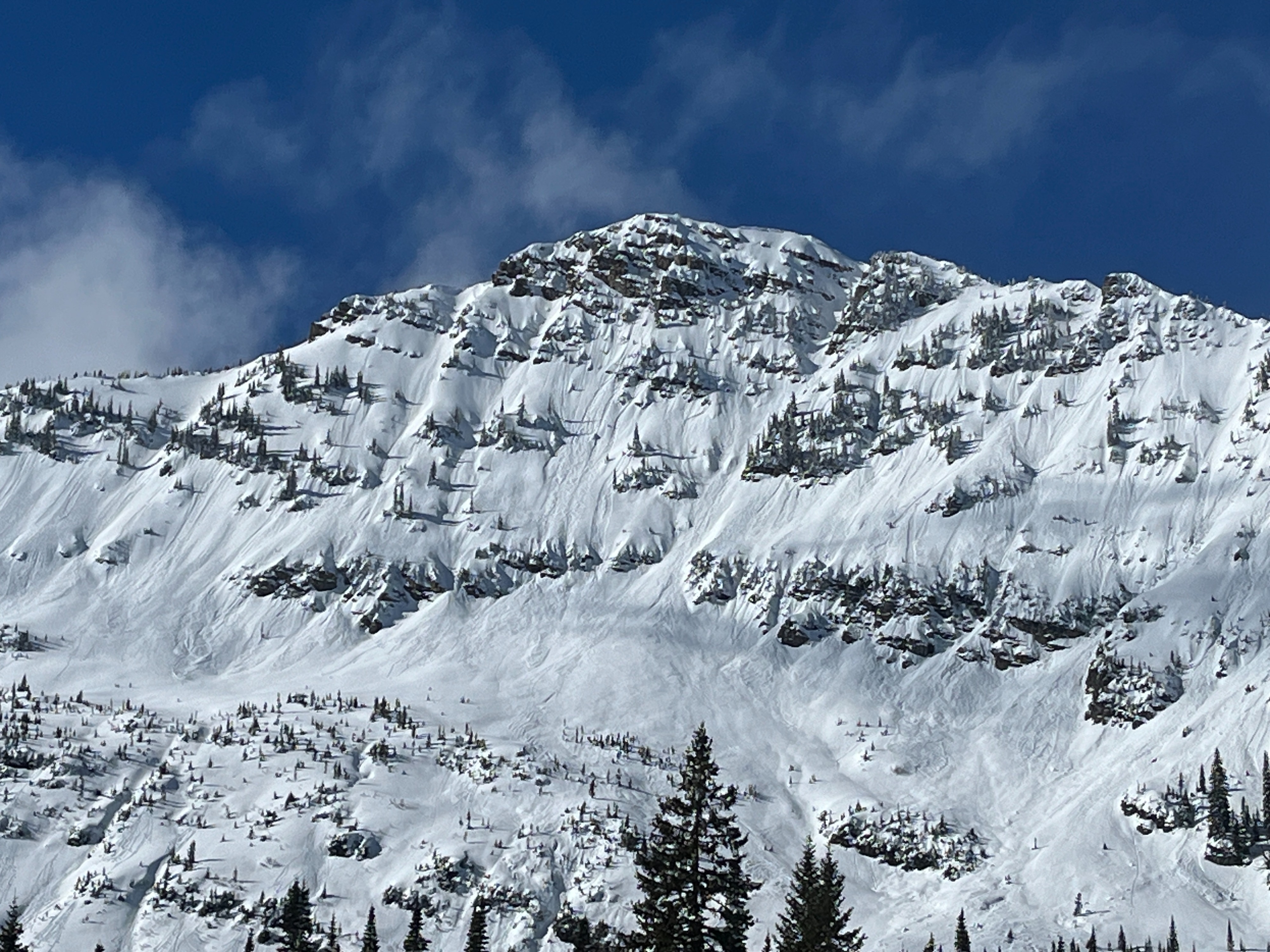
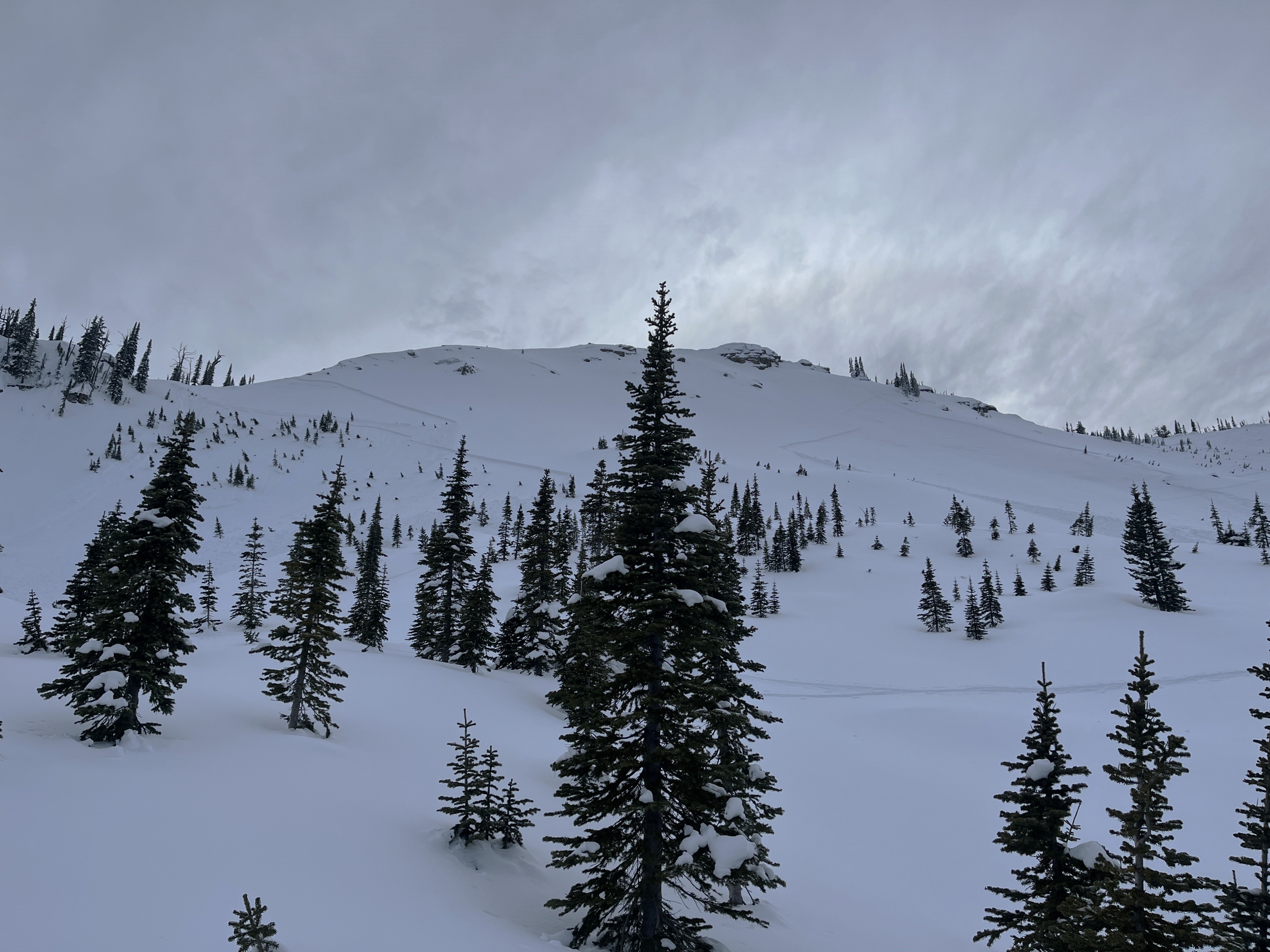
We investigated the crown of the avalanche accident that occurred above Marion Lake. Unfortunately, we added to the tally of large, human-triggered avalanches in that area when I triggered 2 large avalanches (SS-ASu-R2-D2-O) on our descent, one of which caught and carried me but did not bury me.
- The slide occurred on similar terrain as the nearby slide: a northeast-facing slope at 7000 feet.
- The start zone slope angle was 33-34*. It was adjacent to a steeper slope to the rider's left. It was roughly concave, except for a small convexity on the rider's right side, which also contained some small trees.
- The slide released almost immediately when I entered the slope. I tried to ski off the slab to the skier's right. Close, but not quite.
- The debris carried me about 200 vertical feet. I was under the snow for much of that but not buried. The debris continued another 100 vertical feet or so.
- I lost some equipment but was uninjured, apart from painful bruises and several small cuts.
- My partner and I self-evacuated.
Needless to say, I was surprised by the slide. The weak layer at the crown and slopes adjacent to the 2/17 slide looked unassuming - not much softer than the layer above, facets rounding, no propagation in tests.
Some factors contributing to the accident:
- It was late in the day and we were looking for a quick, easy way back to the TH. We were on top of the ridge when we finished our investigation. Instead of backtracking to the easterly slope with 16 tracks on it, we descended an east-facing ridge so we could stick to sunny slopes if conditions allowed, or find a low-risk entry to the shaded slopes above the lake.
- Complacency. We underestimated the slope we chose and did not leave an adequate margin for surprises. It was less steep than the terrain we'd been in during the investigation. While it was a mostly concave slope, it was still steeper than 30* and facing northeast.
- Recency bias: We over-emphasized our obs from that day - which included no signs of instability and unalarming test results. We underestimated the glaring but older crown 500 feet away.
It's been 14 years since I last took a ride. This better be the last one. It was a violent ride.
None, except recent avalanches. We traversed 35* slopes adjacent to the 2/17 slide without whumpfing or cracking. Skiing the ridge above the slope that released did not produce any shooting cracks on the adjacent 38* slopes.
Weather
- Cloud Cover
- few
- Wind Loading
- none
- Recent Snowfall
- 0.5
- Snow Avail For Transport
- small smounts
Mostly clear skies, warm but not hot in the sun, calm to light winds.
Snowpack
Snow surface on solar slopes affected by recent sun to varying degrees, depending on slope angle and aspect.
On shaded, upper elevation slopes:
- HS is roughly 200-250 cm.
- 2/3 crust buried 40-60 cm. Above is relatively innocent-looking layer of small (0.5-1 mm), rounding facets that are F+ or 4F-. This layer is only a half step softer than the slab above it. The weakest snow appears to be right at the top of this layer.
- The slab consists of 25 to 60 cm of new and recent snow that gets progressively harder with depth (F/ F+ to 4F). Theres's a storm interface about 20-25 cm down that scored ECTN, and occasionally, a thin stripe of surface hoar that did not react in our tests.
- Test results on facet layer: CTM20 SP, ECTN 28.
I misjudged the snowpack structure and terrain and got myself into a slide. However, this weak layer looks deceptively benign - small, obviously rounding facets that are only a half step softer than the slab above and that didn't propagate in our tests. I even commented to that effect prior to the slide. It is anything but benign.
Avalanche
- Size
- D2 R2
- Type
- SS
- Count
- 2
- Aspect
- NE
- Trigger
- AS
- Elevation
- 6900 ft
The debris from a triggered slide triggered a second slide as it ran over a convexity. The debris flowed together, though there was a distinct, seperate stuachwall above the crown of this slide. Crown thickness looked to have ranged from 20 t0 50 cm.