
Quick report
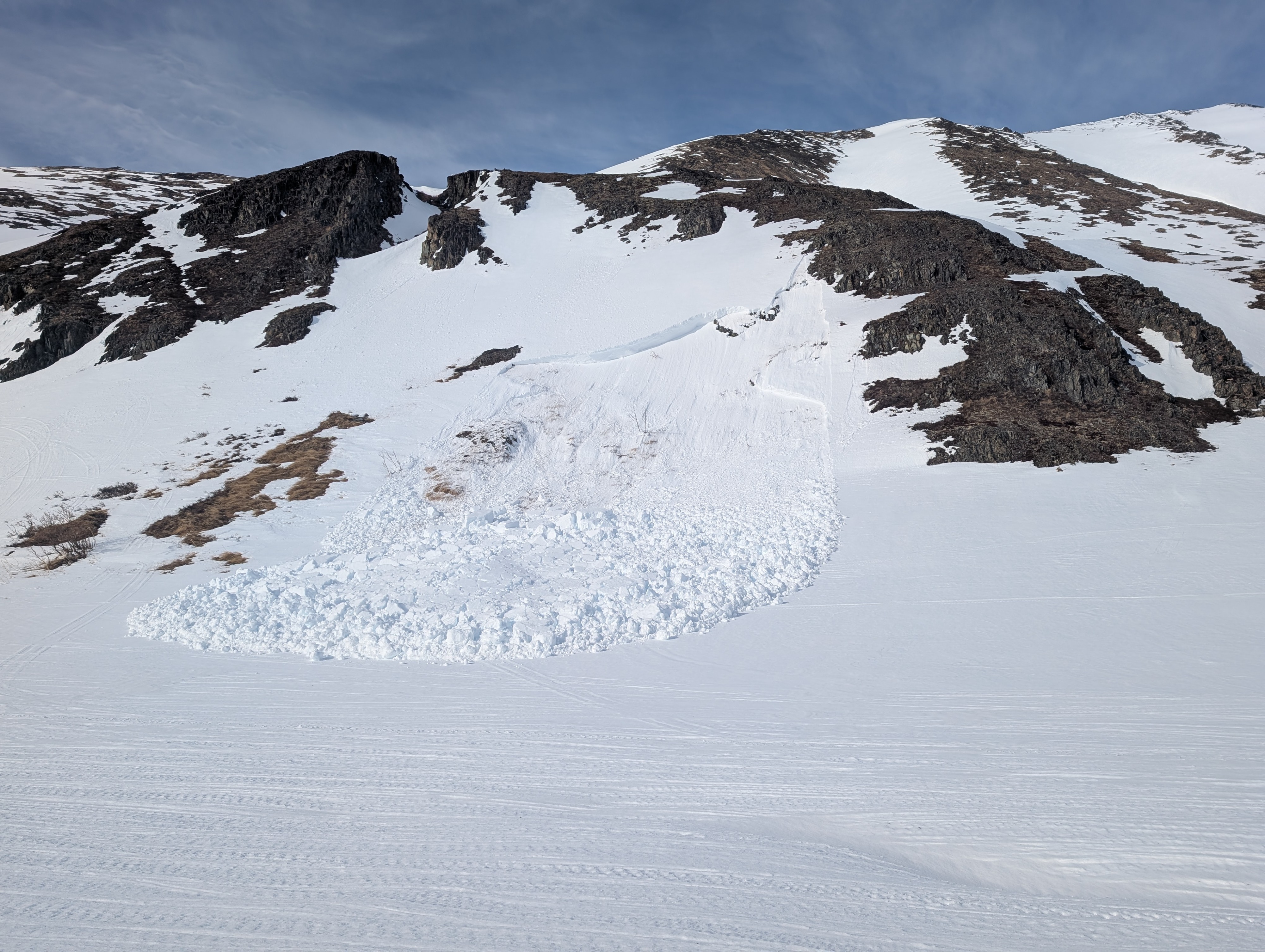
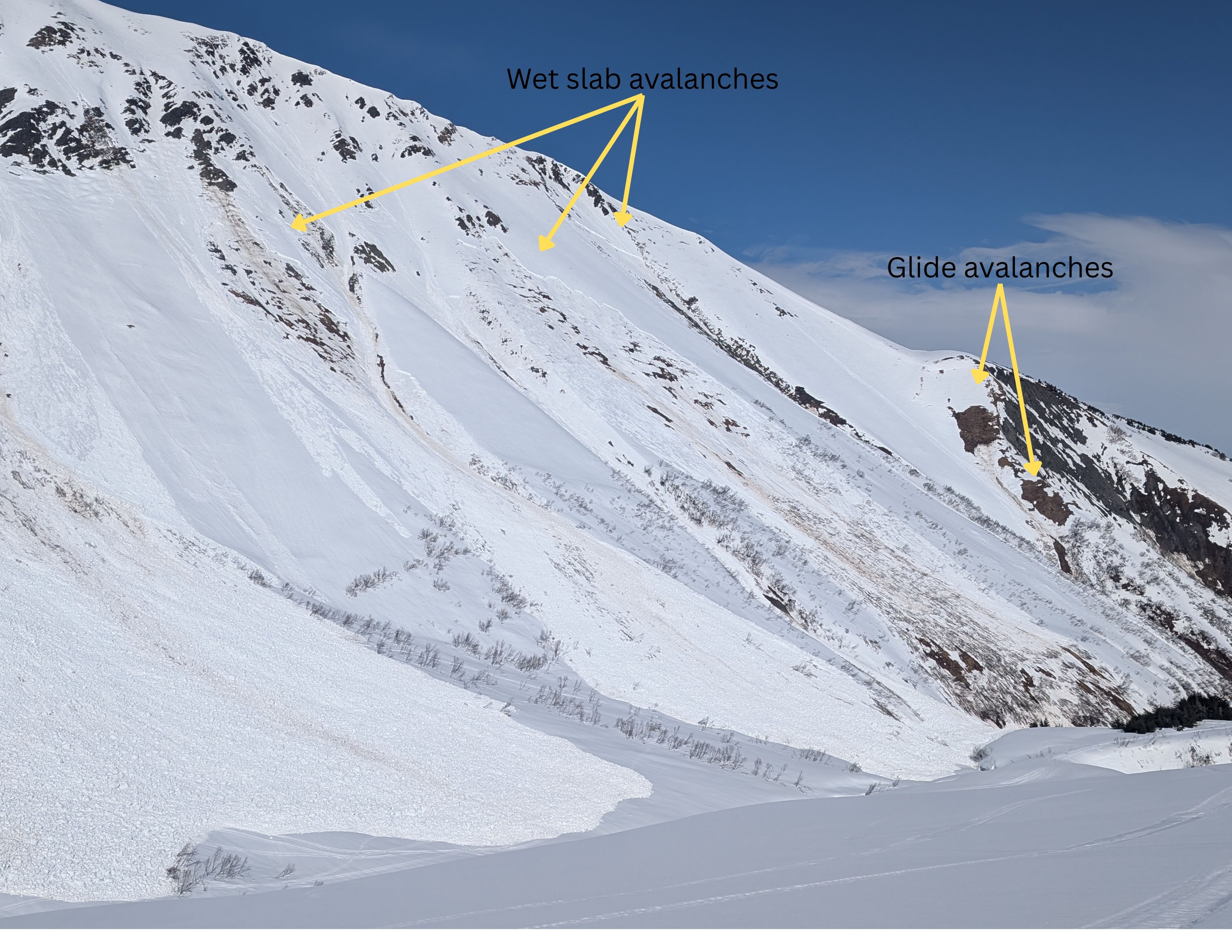
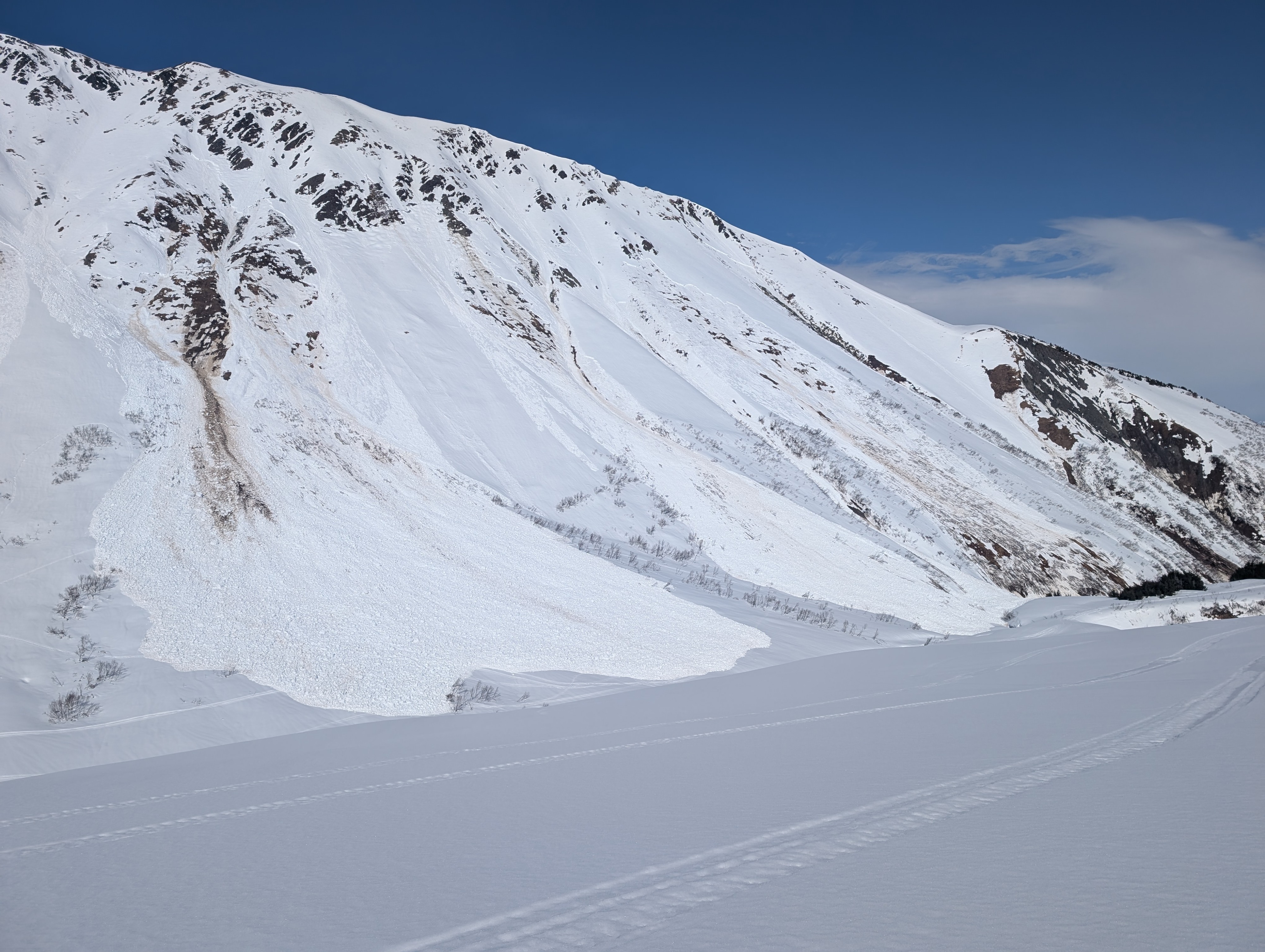
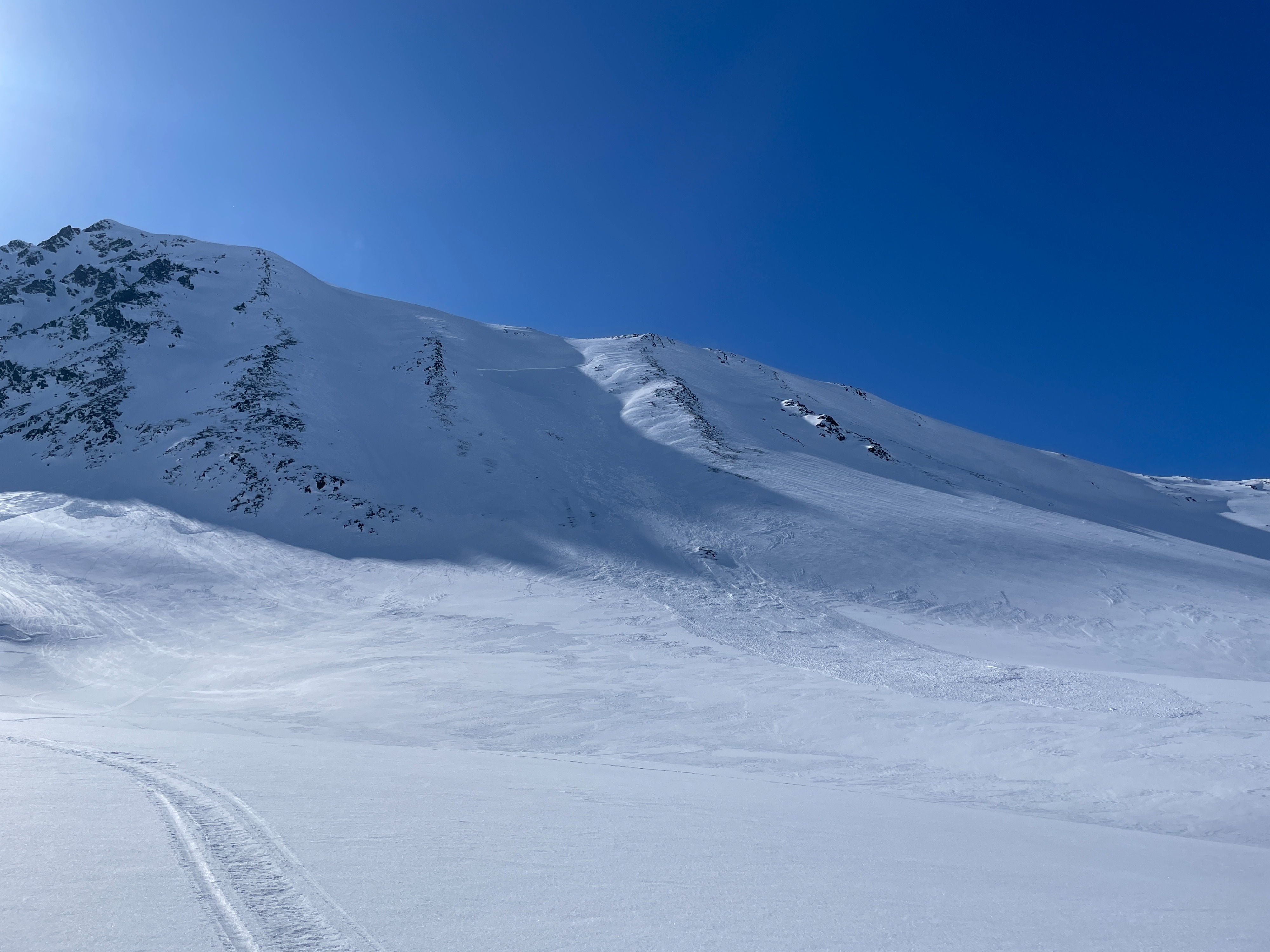
We rode from Snug Harbor to Lost Lake looking for avalanche activity and to check out the snowpack. We saw many avalanches, mostly wet slab avalanches and a few glide avalanches. They were on east, south and west slopes and likely released within the past few days due to warm weather. The snow did not seem like it had frozen overnight and we were up to our knees on southerly slopes by mid afternoon. Sinking up to your knees in wet snow is a sign that the slope you are on is unstable and capable of sliding. We also found a layer of surface hoar buried 2’ deep. We are still concerned about this layer on north aspects where the snow is dryer and on sunny slopes where melting water in the snow could cause this layer to release as a wet slab avalanche. We stuck to shady slopes in the afternoon. On Friday morning a storm is expected to arrive that may deliver an inch of rain to 2,000 or higher. This will increase the chances of natural and human triggered avalanches. Storm slab and wind slab avalanches will be a concern where snow falls.
Weather
- Air Temp
- Warm
- Cloud Cover
- scattered
- Wind Loading
- moderate
- Recent Snowfall
- 0
- Snow Avail For Transport
- small smounts
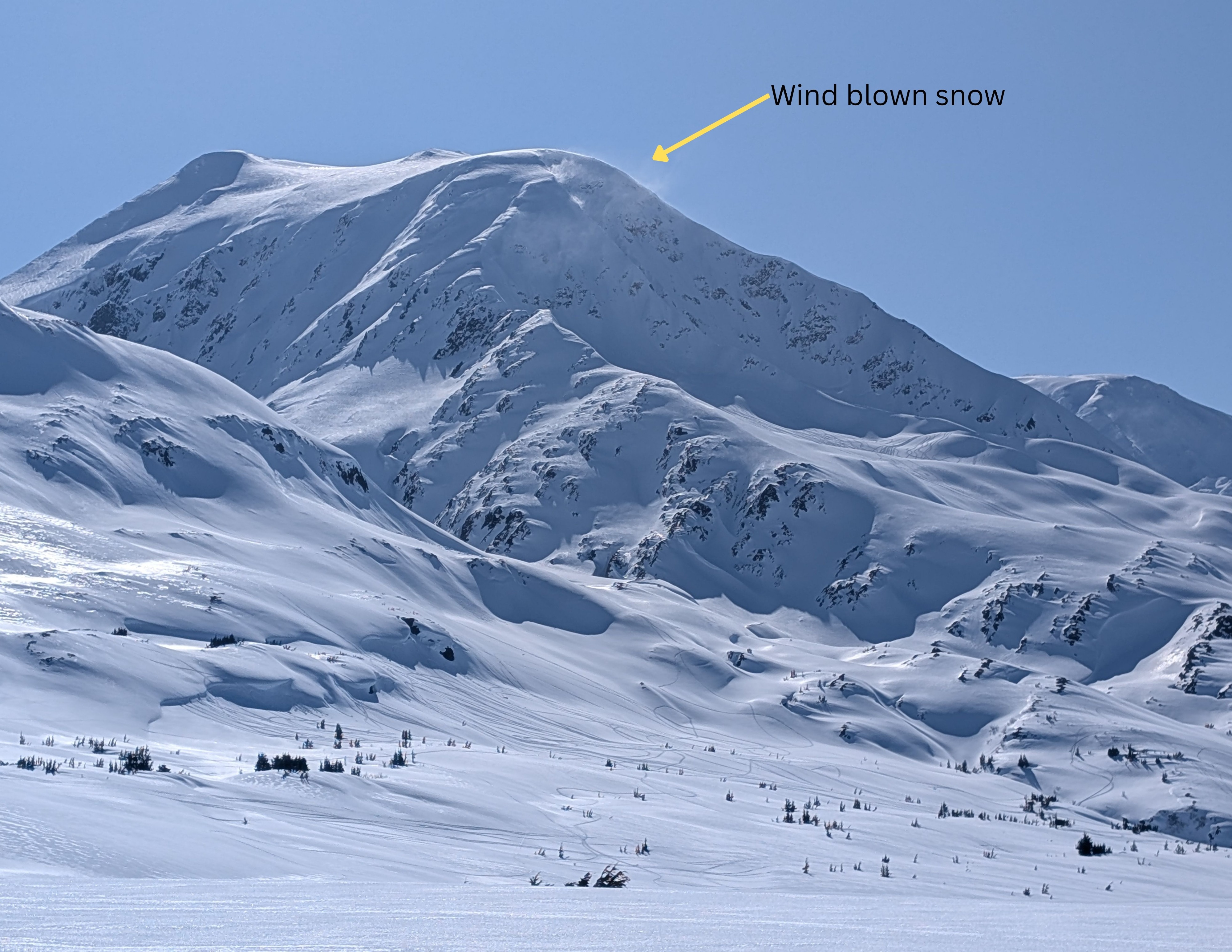
Sunny skies and warm temperatures. The winds were blowing snow off the ridges all day.
Snowpack
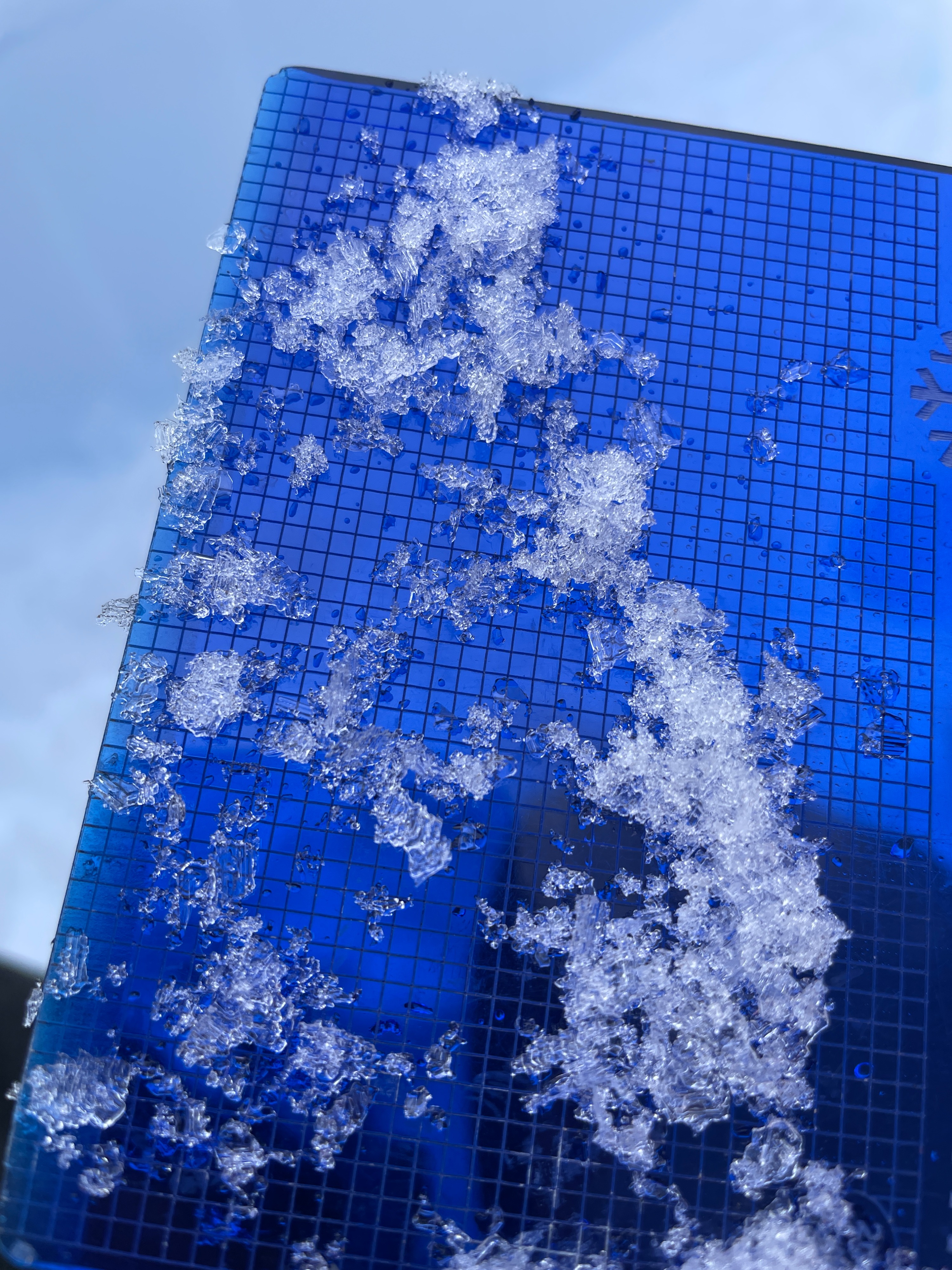
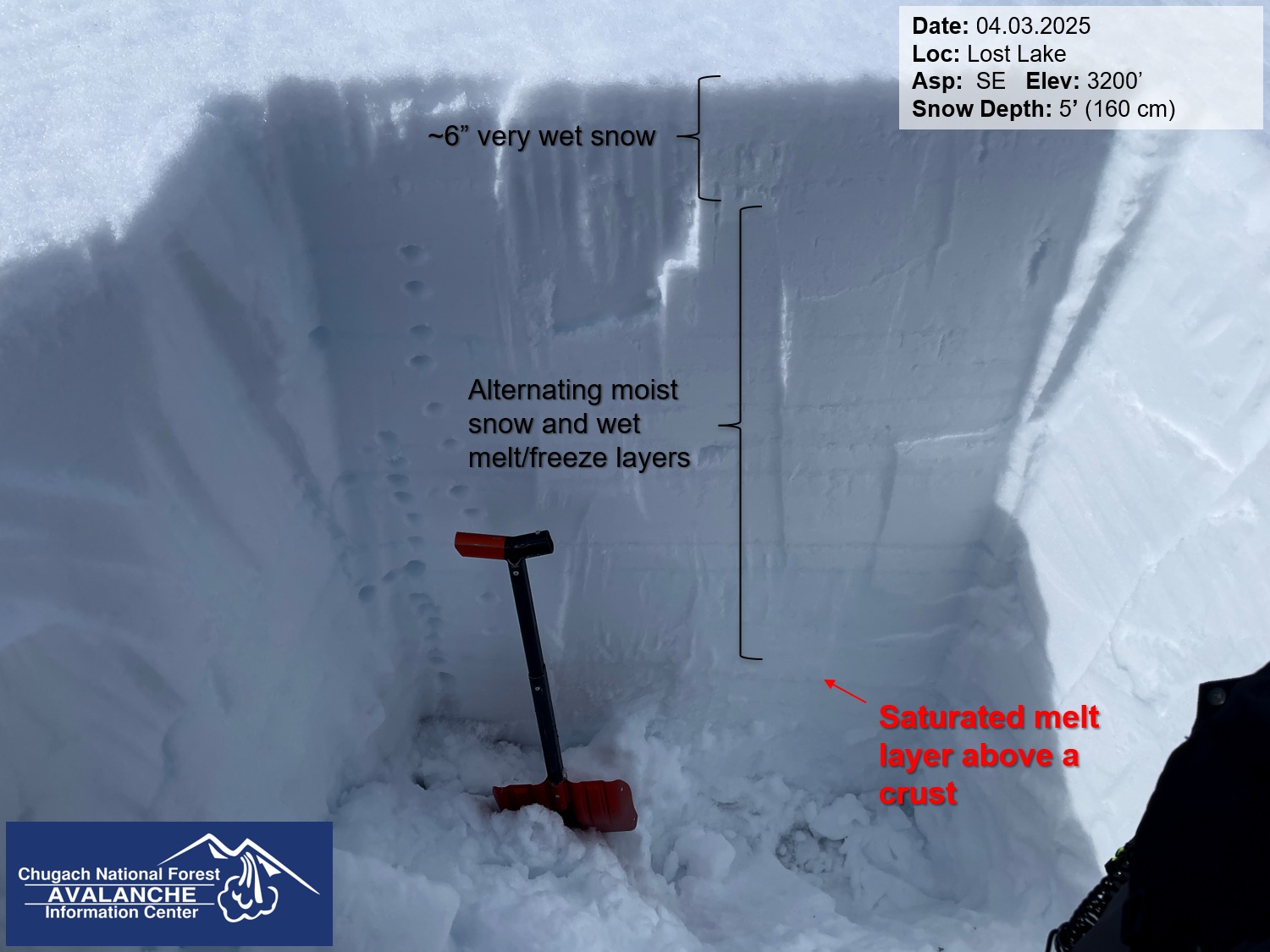
We noticed immediately that the surface did not freeze overnight. Southerly aspects were wet on the surface up to ridgetops. Northerly aspects had dry snow on the surface above around 3000'. We dug one pit on a north-facing slope on Mt. Ascenscion at 2650' and another pit on a south aspect on an unnamed peak between Ascenscion and Resurrection North at 3200'. They looked very different.
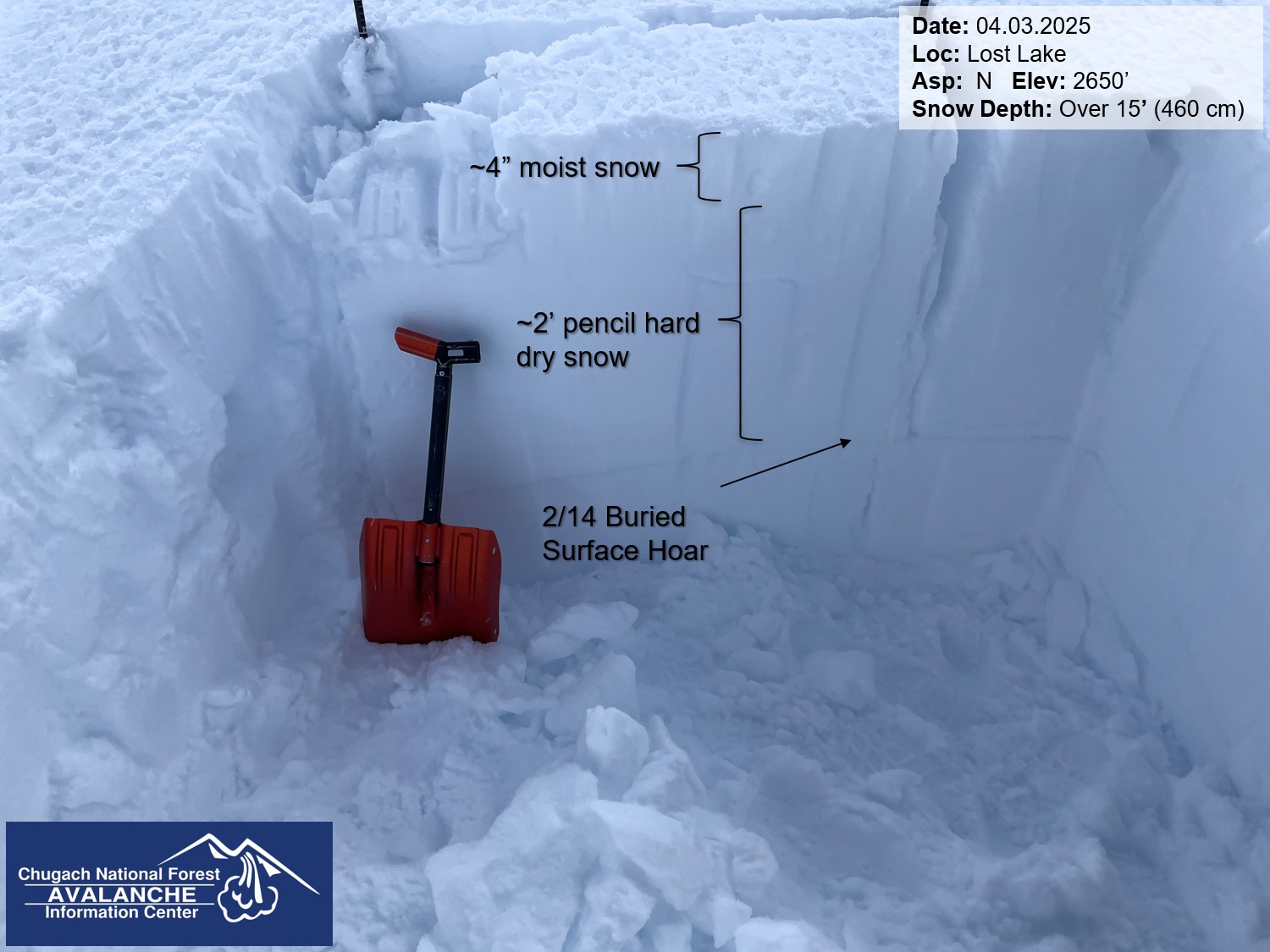
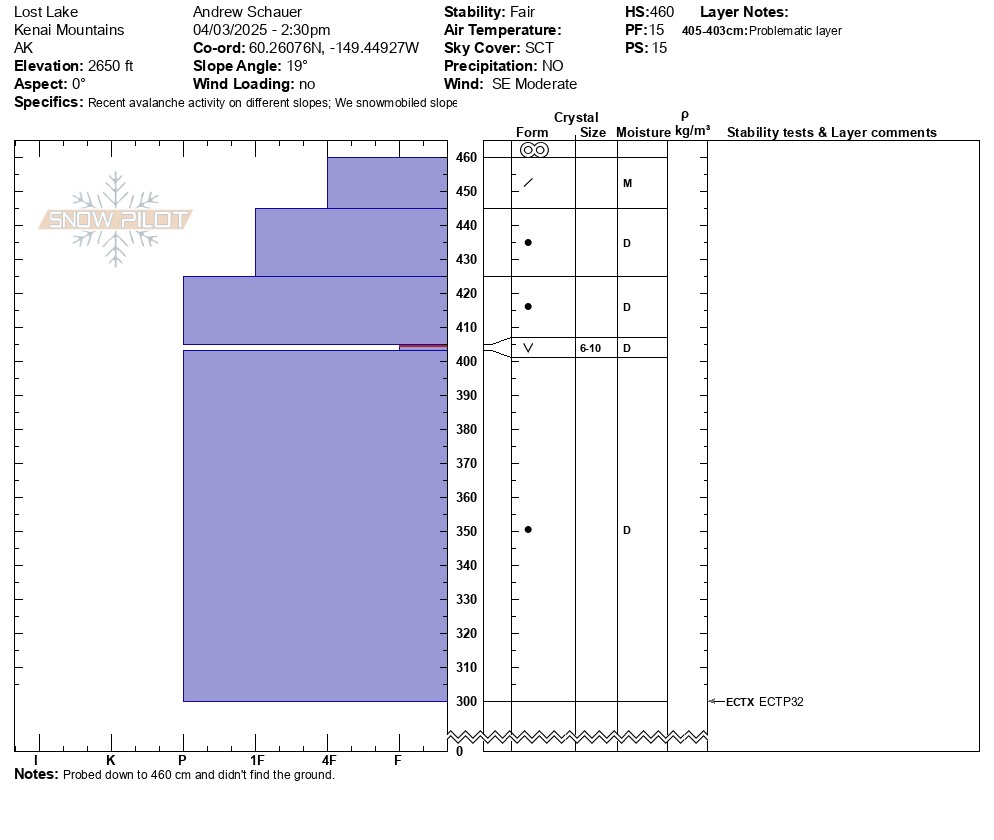
The snowpack on our north-facing pit was over 15' deep (we never found the ground), and the 2/14 surface hoar layer was buried about 2' deep and still very much intact. The snowpack was almost entirely dry, with about 6" moist snow on the surface. The buried surface hoar layer failed with two extra stout taps in an extended column test, and the fracture popped across the column.
The south-facing snowpit was only 5' deep to the ground. The entire snowpack was moist or wet, with several wet melt layers throughout the profile. The most concerning layer was a saturated layer above a crust about a foot off the ground. Looking at some of the wet slab activity in the area, it is very likely this was the culprit in at least some of the avalanches. In the big picture, water is pooling on multiple interfaces on solar aspects, and we are seeing wet slab avalanches as a result.
See attached photos for more detailed snowpack info.
Avalanche
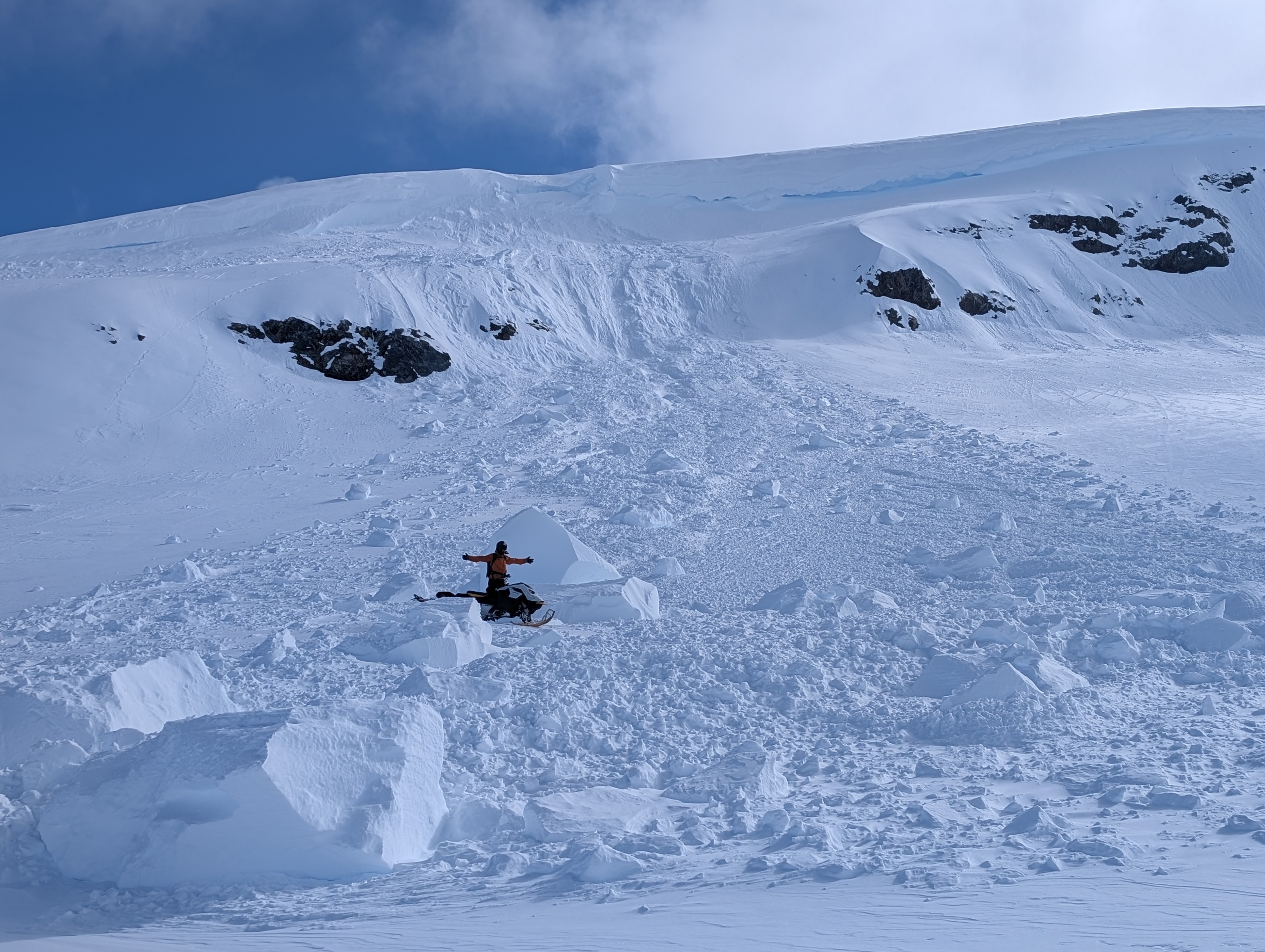
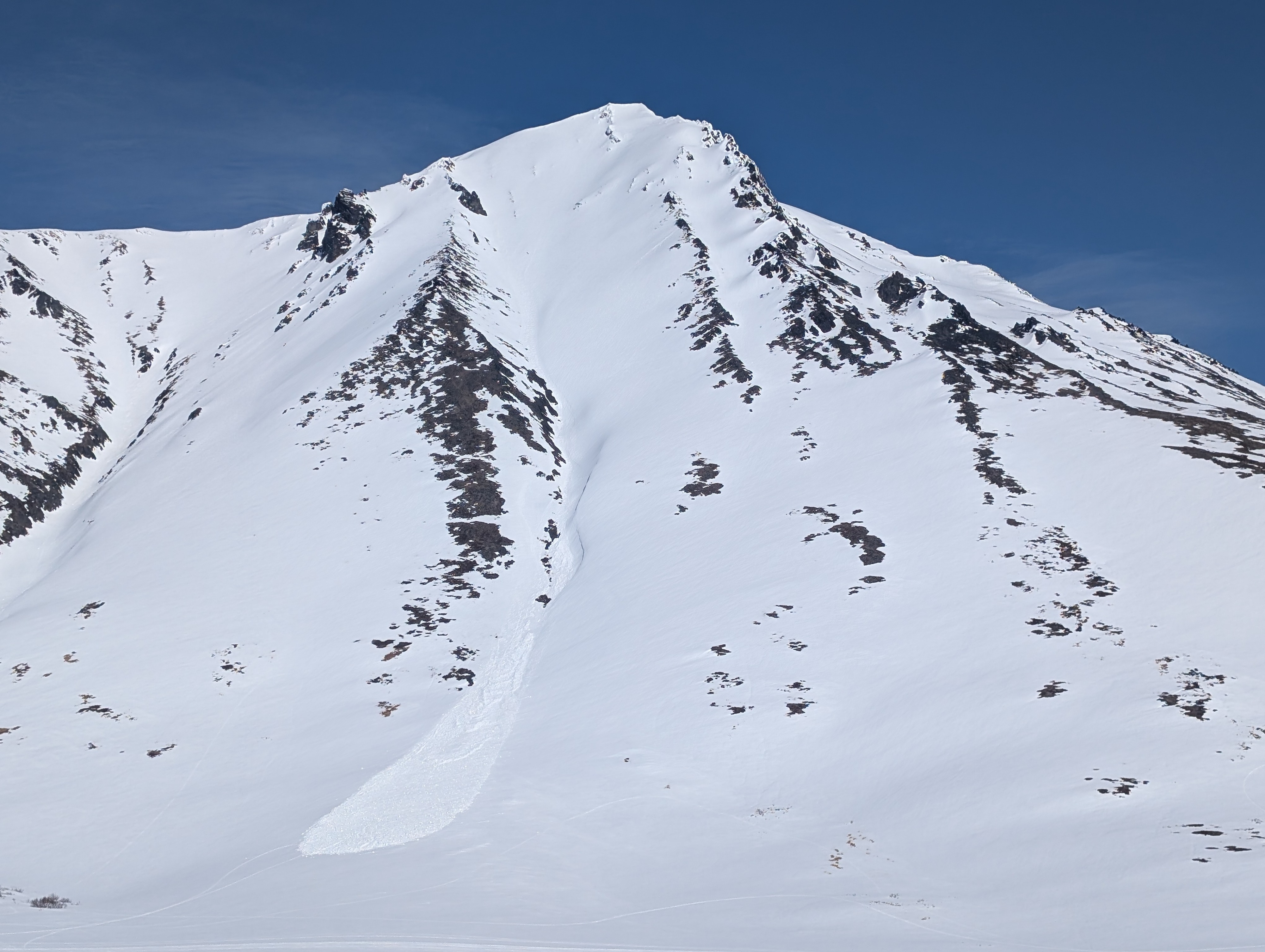
We saw many wet slab avalanches on southeast slopes that likely released over the past few days. We saw one avalanche that released this afternoon on a south slope. It was a small slope, but it failed about 2' deep. There were a few old slabs on northerly aspects near Mt. Ascenscion that may have released on a layer of buried surface hoar. We noticed at least one large wind slab avalanche between Snug harbor and Lost Lake that looked like it had released within the past two days, on a north aspect roughly 100' wide, 2' deep, and running 500 vertical feet.