
Quick report
- Cracking
- widespread
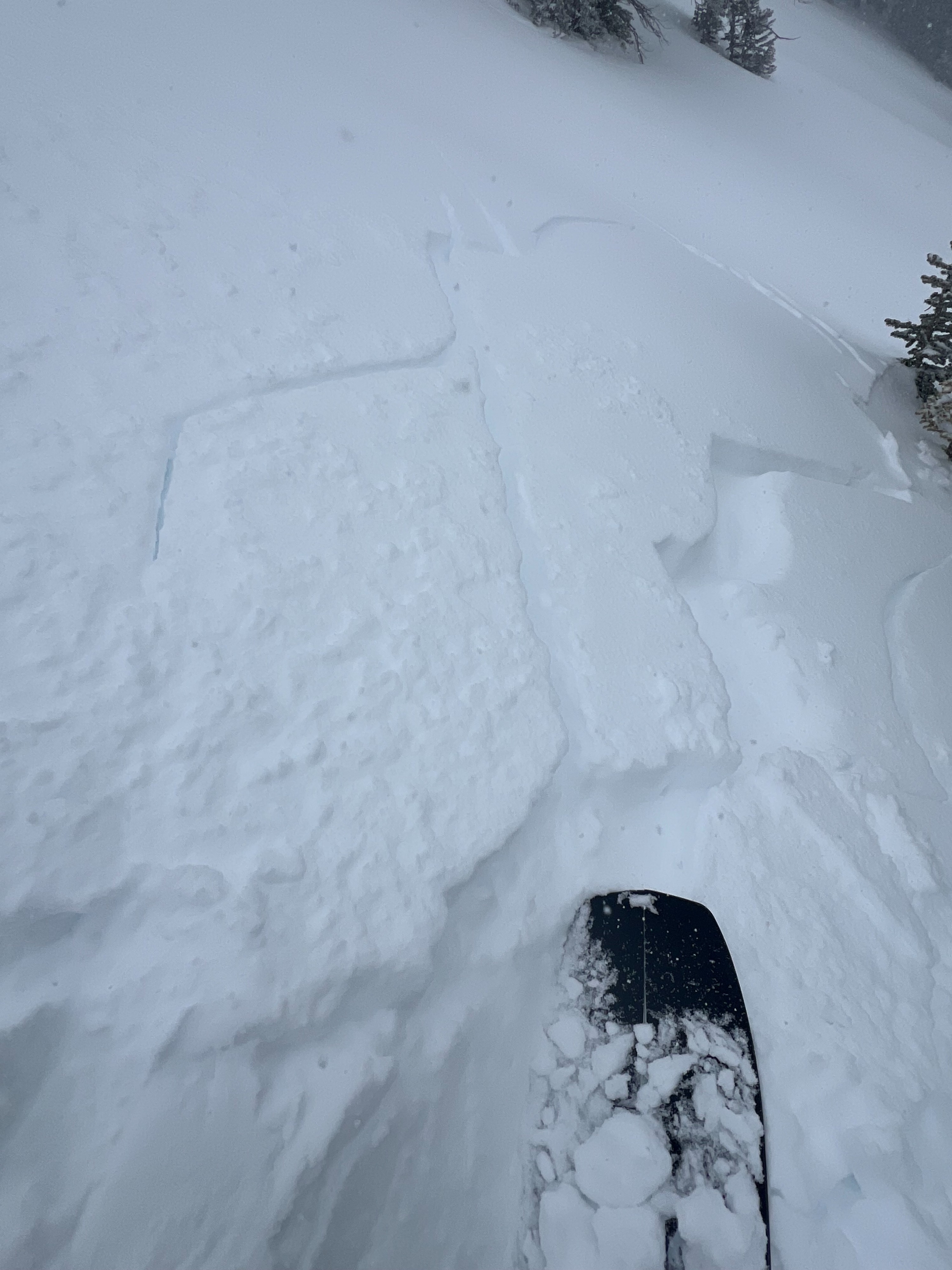
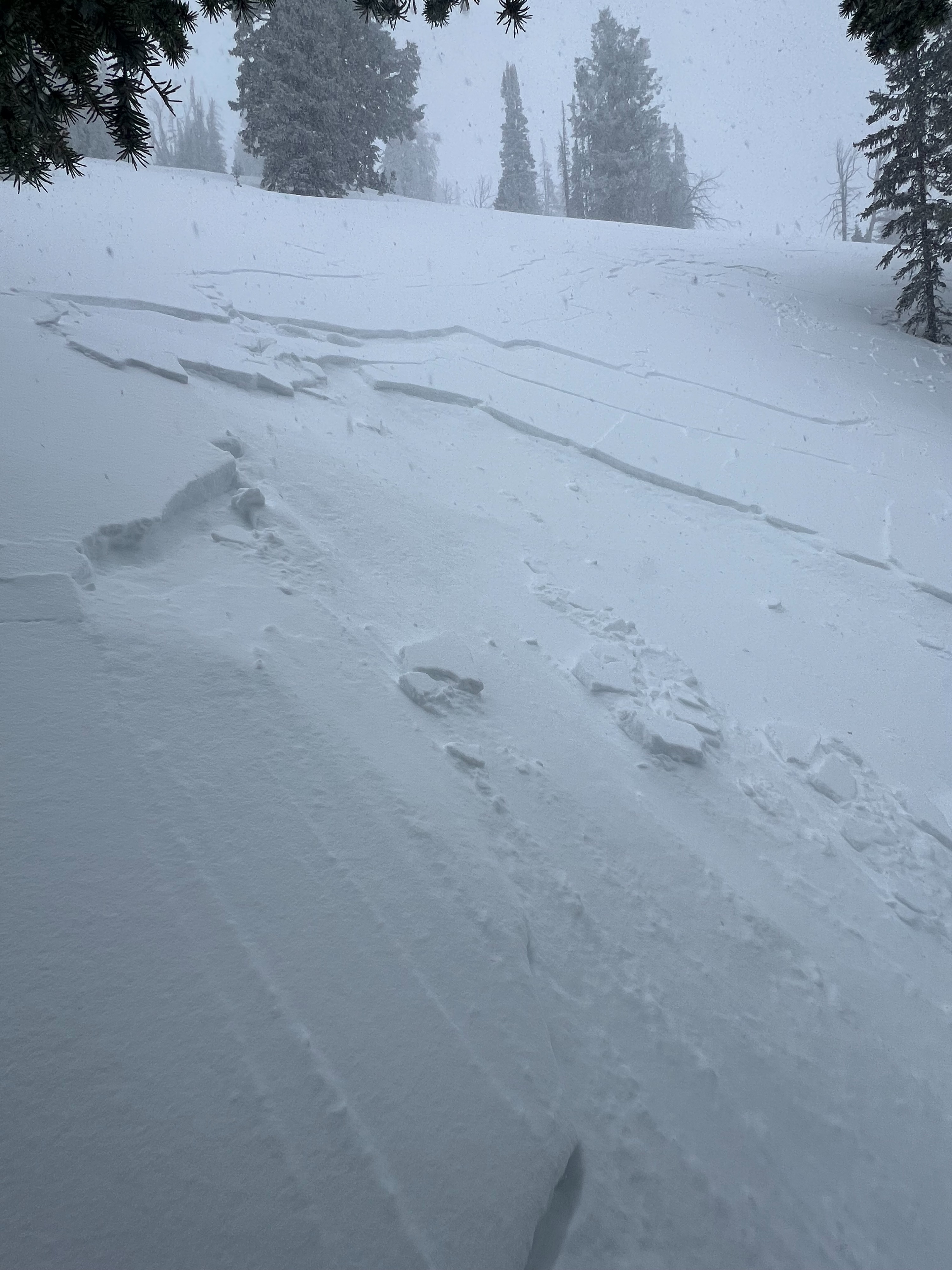
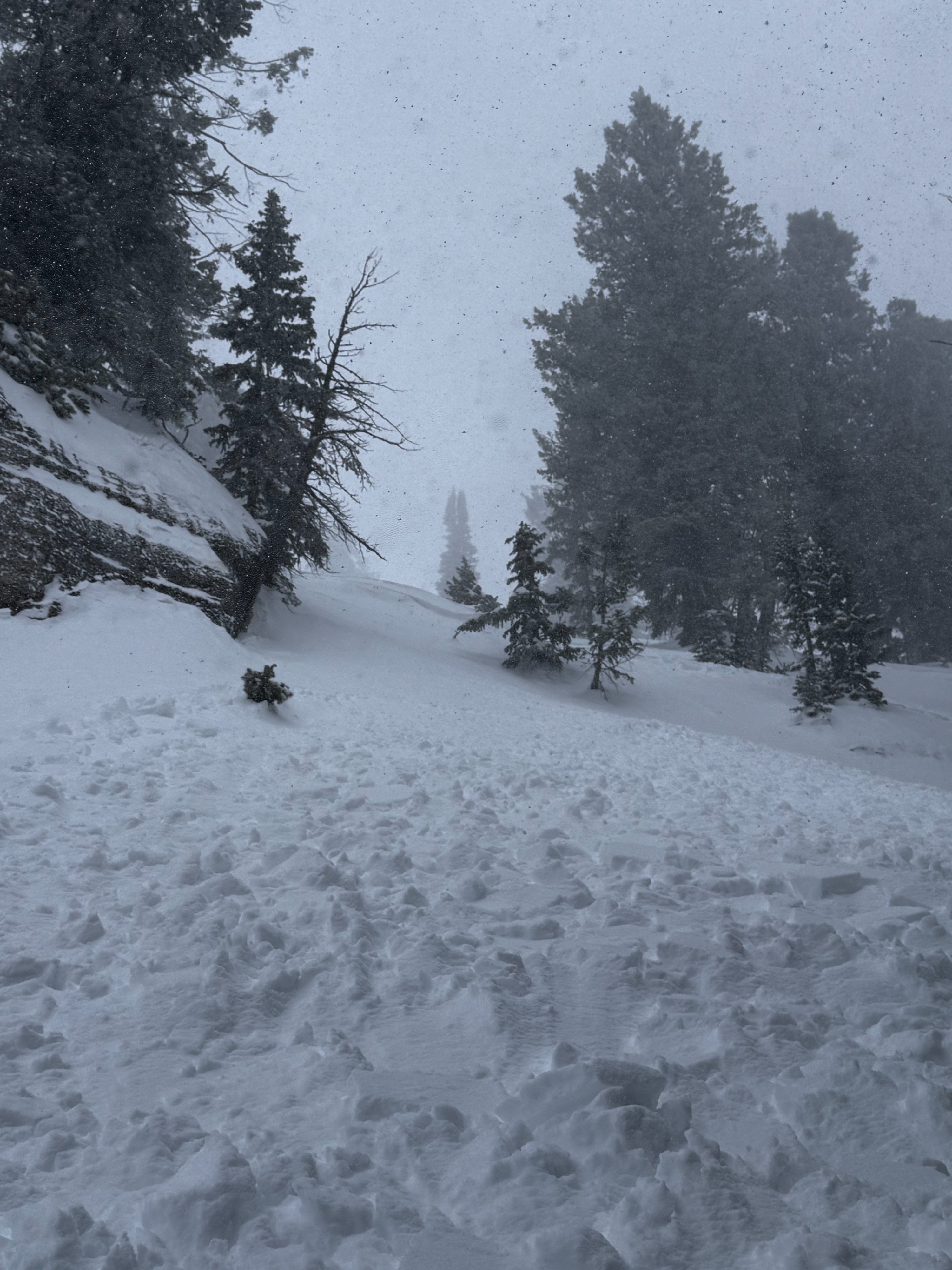
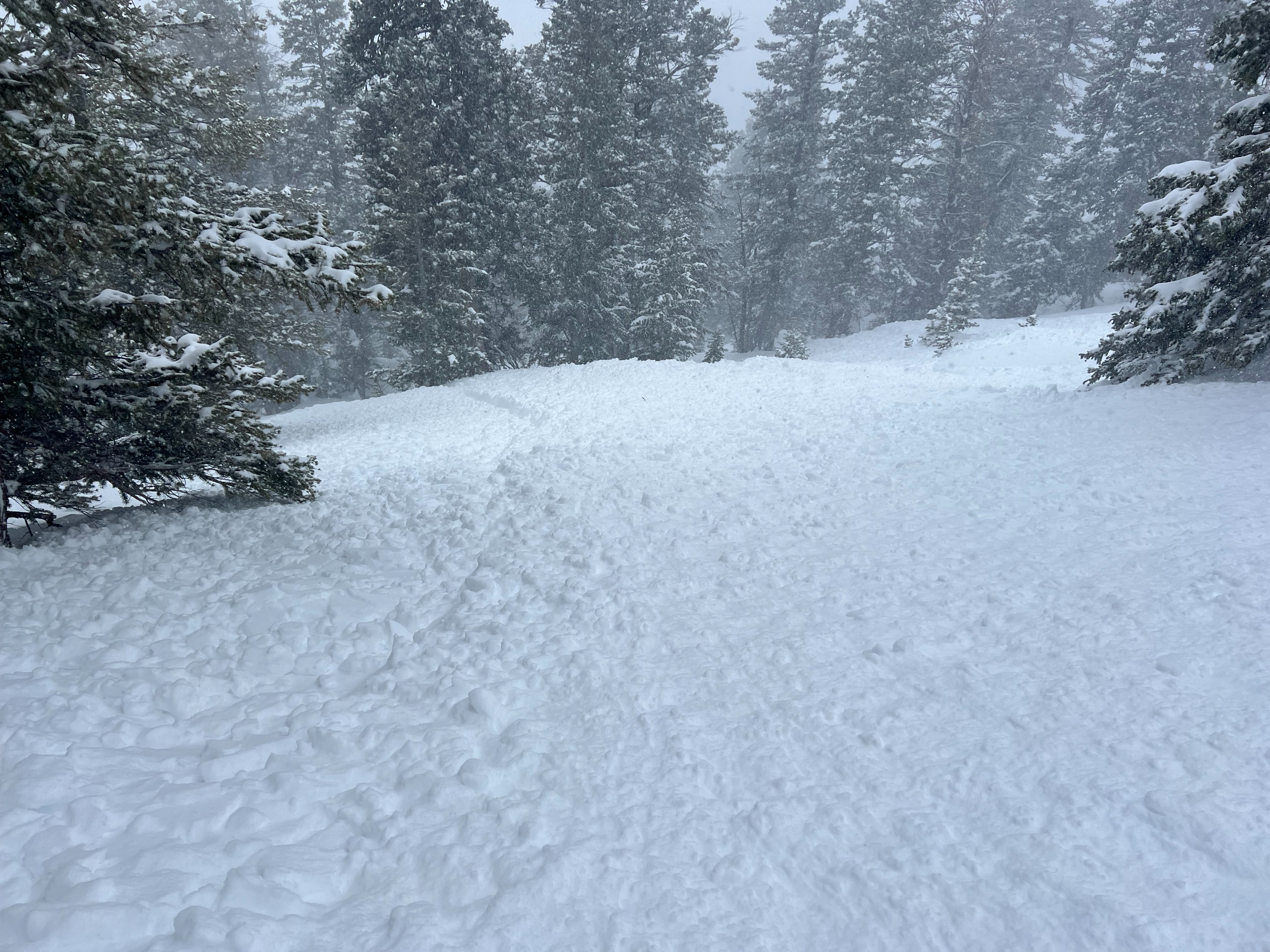
Widespread signs of instability on N-NE-E-SE aspects in both somewhat sheltered and exposed terrain above 8000' including shooting cracks, remotely triggered and natural D1 avalanches. The snowpack was talking. All slab depths were shallow, 12" or less, with sluggish character. Avalanches failed on an array of interfaces including midstorm density breaks (including graupel) and old snow surfaces comprised of facets and/or melt freeze crusts (capped w/ near surface facets). Avalanches and shooting cracks showed impressive propagation over 100 feet away (See photos). Shooting cracks occured on steep or gentle terrain.
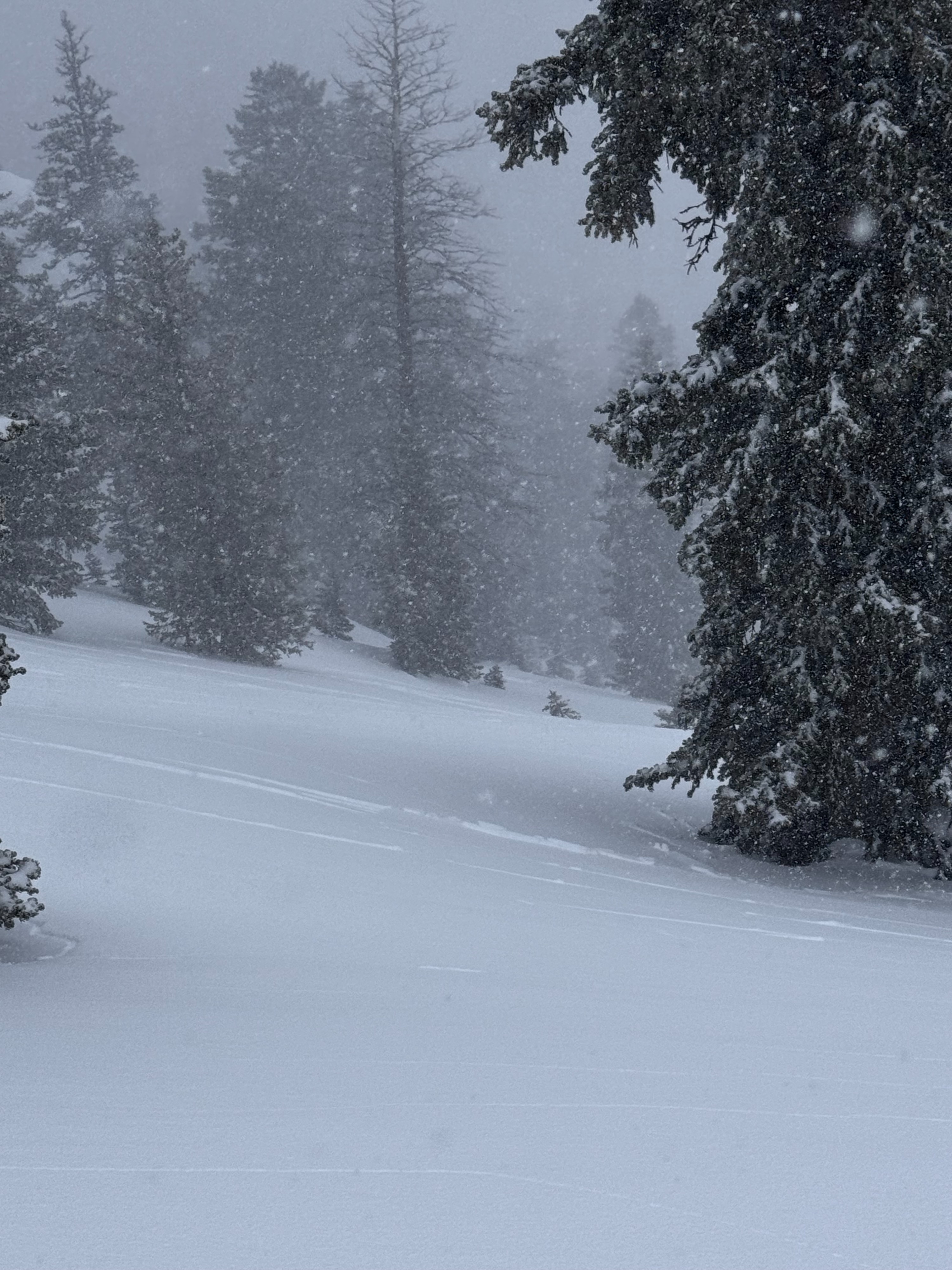
Strong SW wind (borderline gale above 30 mph) incrementally increased throughout the day. Impressively strong gusts. The visible wind transport of snow was very apparent. Based on these observations, slab depths off directly leeward terrain, such as ridgelines, were likely much deeper (24"+). Snowfall was heaviest in the AM before slowly tapering off by the afternoon. Dense snow thanks to the atmospheric river. Rain/snow level was roughly 7,000' and luckily precipitation had decreased when it transitioned to rain.
The reactivity of snow over the last 24 hours became more widespread and sensitive than yesterday. More snowfall is forecasted tonight into tomorrow and based on the previous two days of observations, I'd expect high reactivity and dangerous conditions to continue. The big change will be the increased slab depth and consequences of larger avalanches if forecasted snow totals pan out this evening. Warming temperatures, continued wind, and increased rain/snow levels will also add uncertainty and complexity to the equation. Bottom line: do not poke the dragon.
Avalanche
- Size
- D1 R2
- Type
- SS
- Aspect
- E
- Trigger
- N
- Elevation
- 9000 ft
Numerous natural or remotely triggered avalanches D1 or less with impressive propagation propensity. Bed surfaces were both mid storm density breaks and new to old snow interfaces. Slope angles were 30 degrees or steeper.