
Quick report
- Cracking
- specific
- Collapsing
- specific
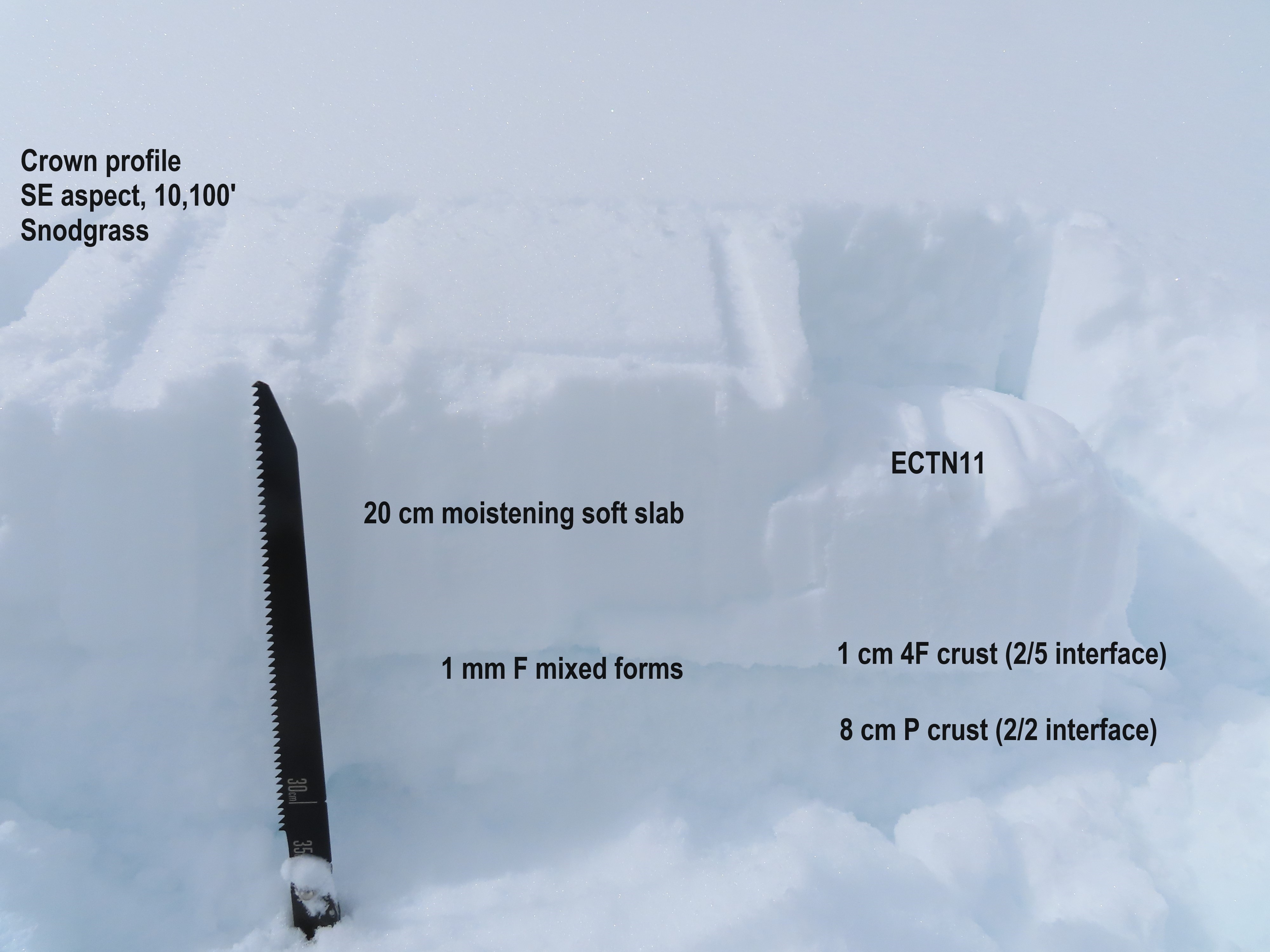
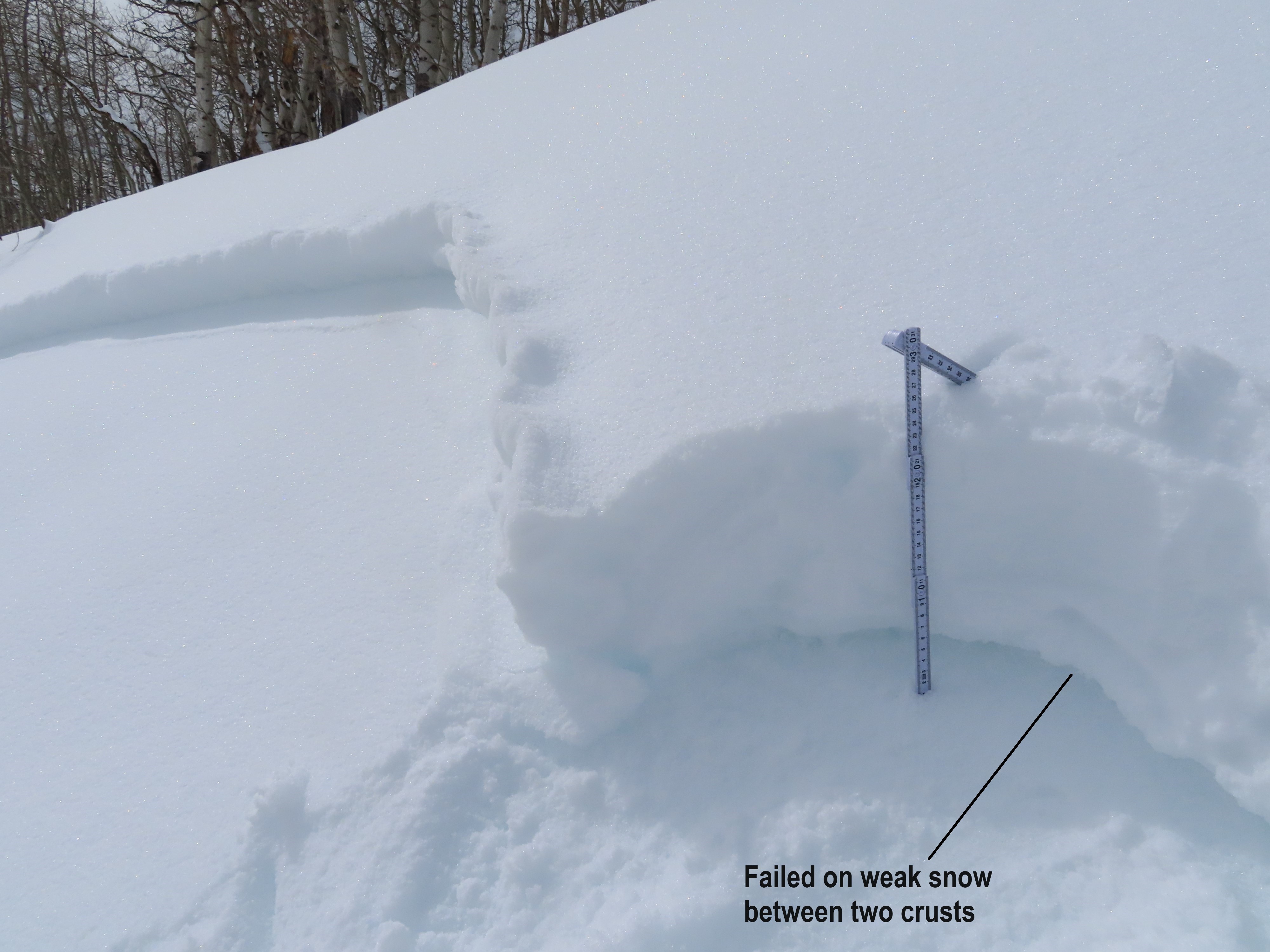
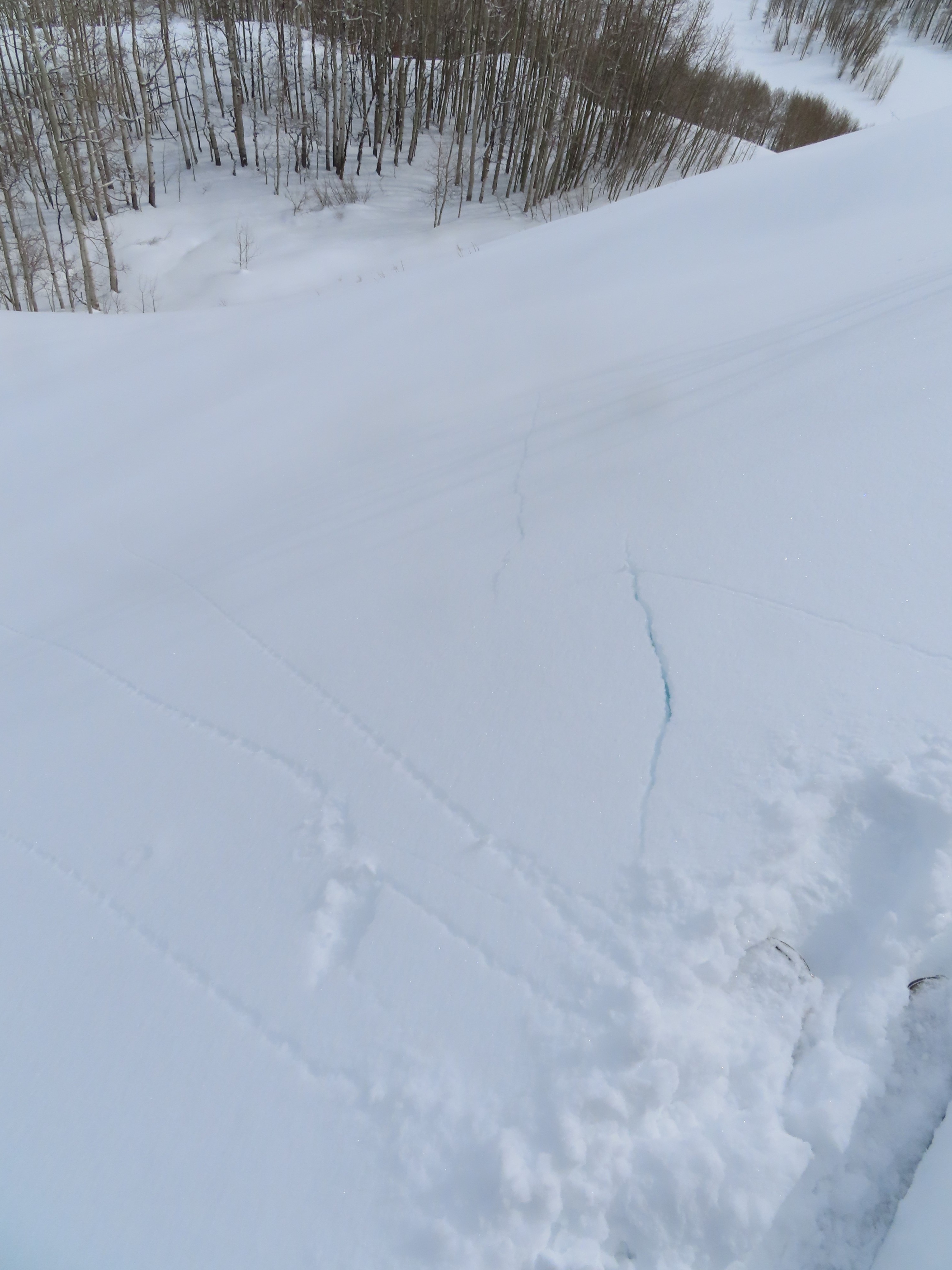
Went to examine the southeast-facing slabs on Snodgrass that ran yesterday because they didn't fit into our expected pattern. The issue is short-lived here now that the shallow slabs (8" thick) are getting cooked. The slabs failed on weak snow between the two early February crusts, something that could be a lingering problem on the same aspect at higher elevations, especially wind-loaded features. As soon as I rounded the corner to the north half of the compass, the snowpack gave frequent signs of instability: collapses and shooting cracks on the buried surface hoar layer.
Frequent collapses and shooting cracks on ENE and NE aspects, about 10 to 12" deep on the 2/2 surface hoar/facet layer.Weather
- Cloud Cover
- broken
- Wind Loading
- none
- Recent Snowfall
- 2
Snowpack
The SE-facing crowns failed on weak snow (1mm mixed forms, some faceting) between the 2/2 crust (thick, supportive) and 2/5 crust (1 cm, 4F). The slab was only 20 cm, and appeared to run naturally yesterday as the slab got moist, evidenced by moist-looking debris. I attempted to recreate this instability today with ski cuts on hangfire, similar slopes, and stability tests without anything notable. Anything north of due east was still reactive, slabs have remained dry there.
Avalanche
- Size
- D1
- Type
- SS
- Count
- 3
- Aspect
- E
- Trigger
- N
- Elevation
- 12500 ft
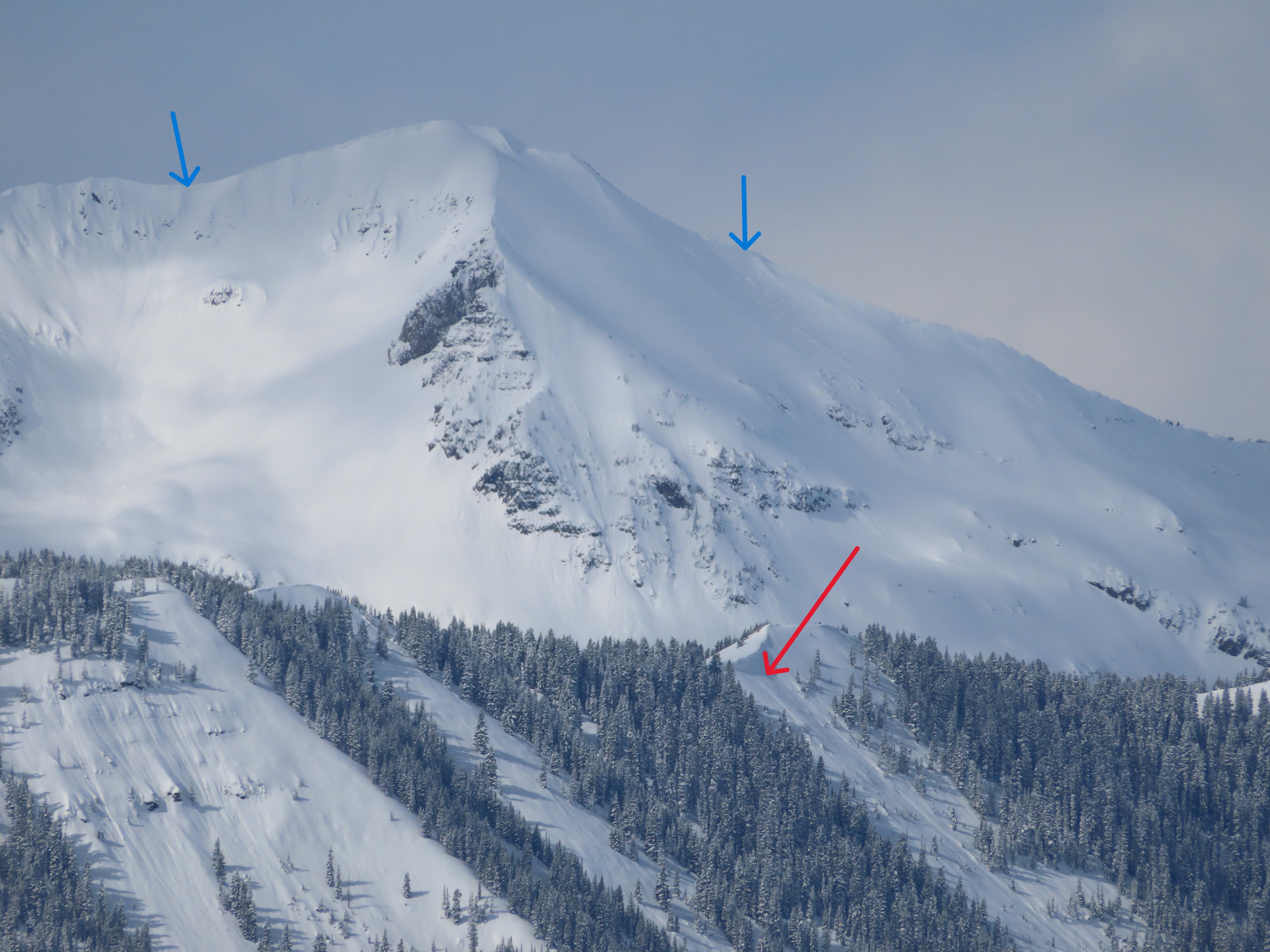
First day with good visibility looking out towards the Anthracites, East Beckwith, and Ruby Range. I could see a few D1-1.5 storm-related cornice falls, wind slabs, and a couple of relatively small slabs that looked like they broke on the 2/2 interface on a very steep slope. There was significantly less natural activity than we expected to see.