
Quick report
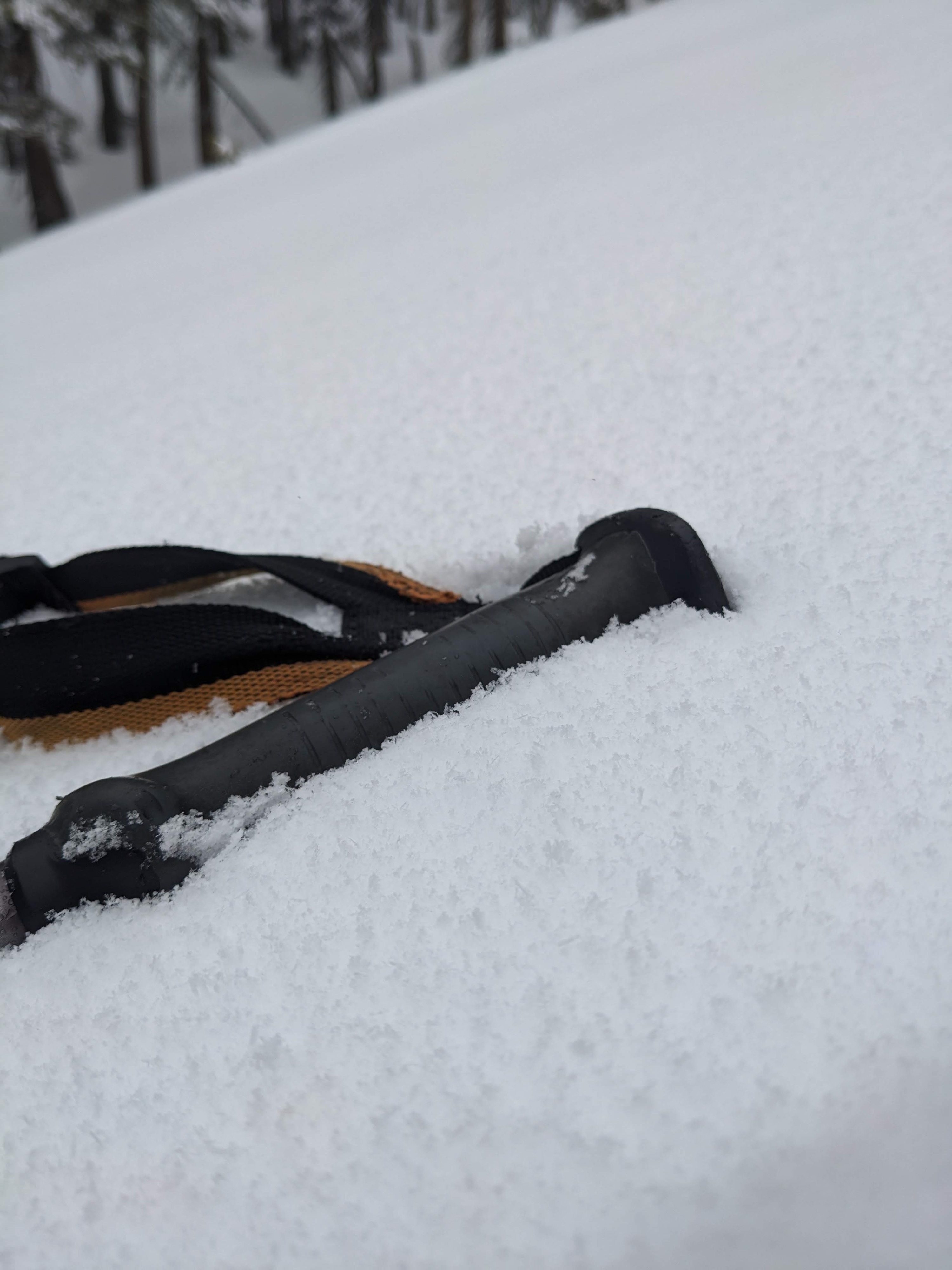
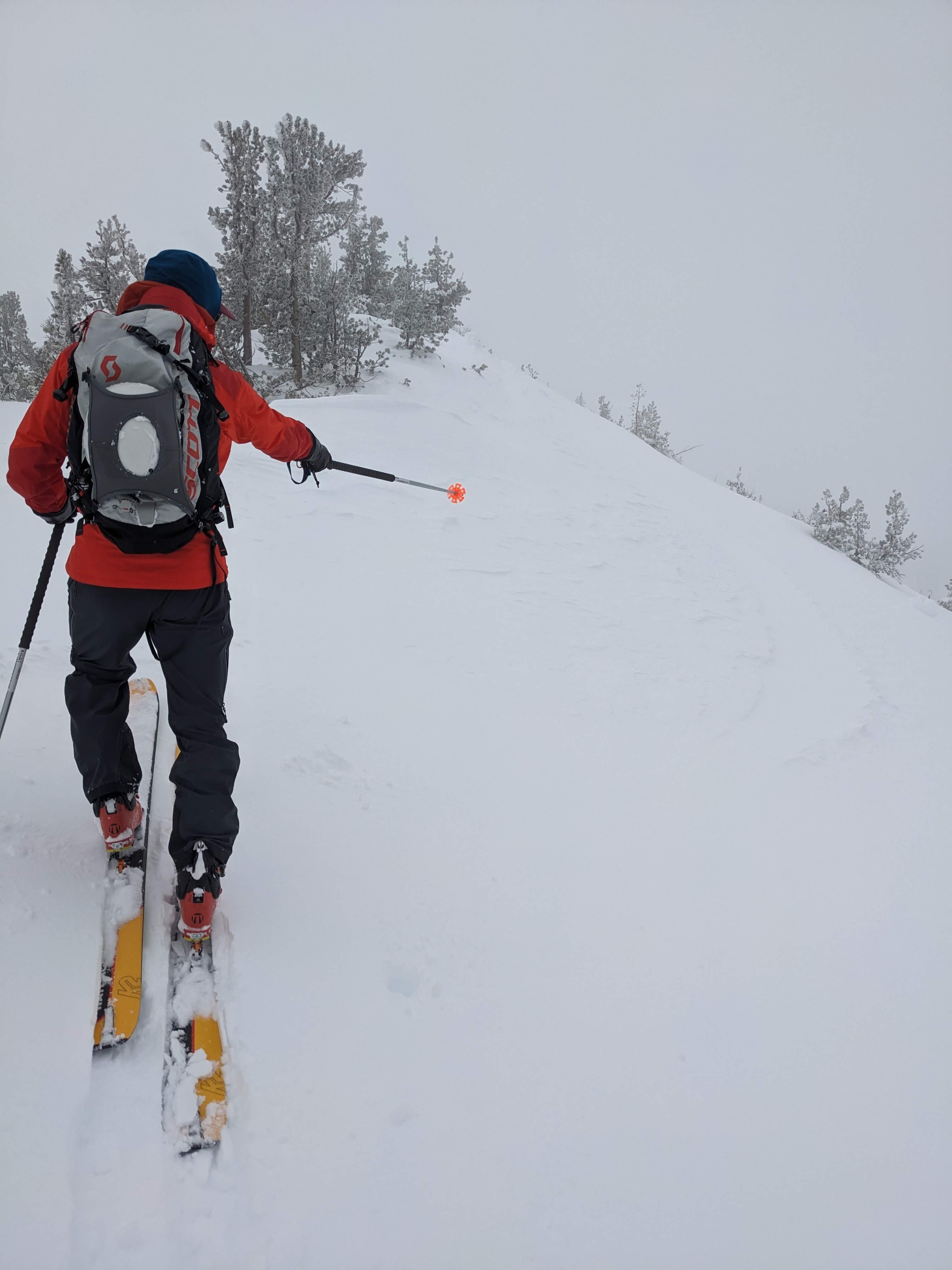
We went to Relay Peak to check on the buried weak layers we had seen there on previous visits. As we started skinning into Relay, we could still see yesterday's surface hoar sticking up through the light dusting of new snow that this area had gotten. If it continues to snow, this surface hoar could get fully buried and become a new weak layer. We made our way up the ridge, probing into the snow and looking for buried weak layers. In some areas, we could not feel them because the snowpack had gotten deeper than our poles. Still, there were several places where we could feel weak snow 80 to 110 cm below the surface (early season depth hoar layer). The snow above these layers has gotten much stronger. Tests targeting these weak layers at the bottom of the snowpack did not produce unstable results (see snowpack section for details).
Higher on the east ridge of Relay Peak, we could see small signs of shifting winds and minor wind-loading, like ripples in the snow surface and small cornices on both sides of the ridge. Ski kicks and ski cuts on several wind load test slopes only produced small, shallow cracks in the wind slabs.
Weather
- Cloud Cover
- obscured
- Wind Loading
- light
- Recent Snowfall
- .5-1 cm
- Snow Avail For Transport
- small smounts
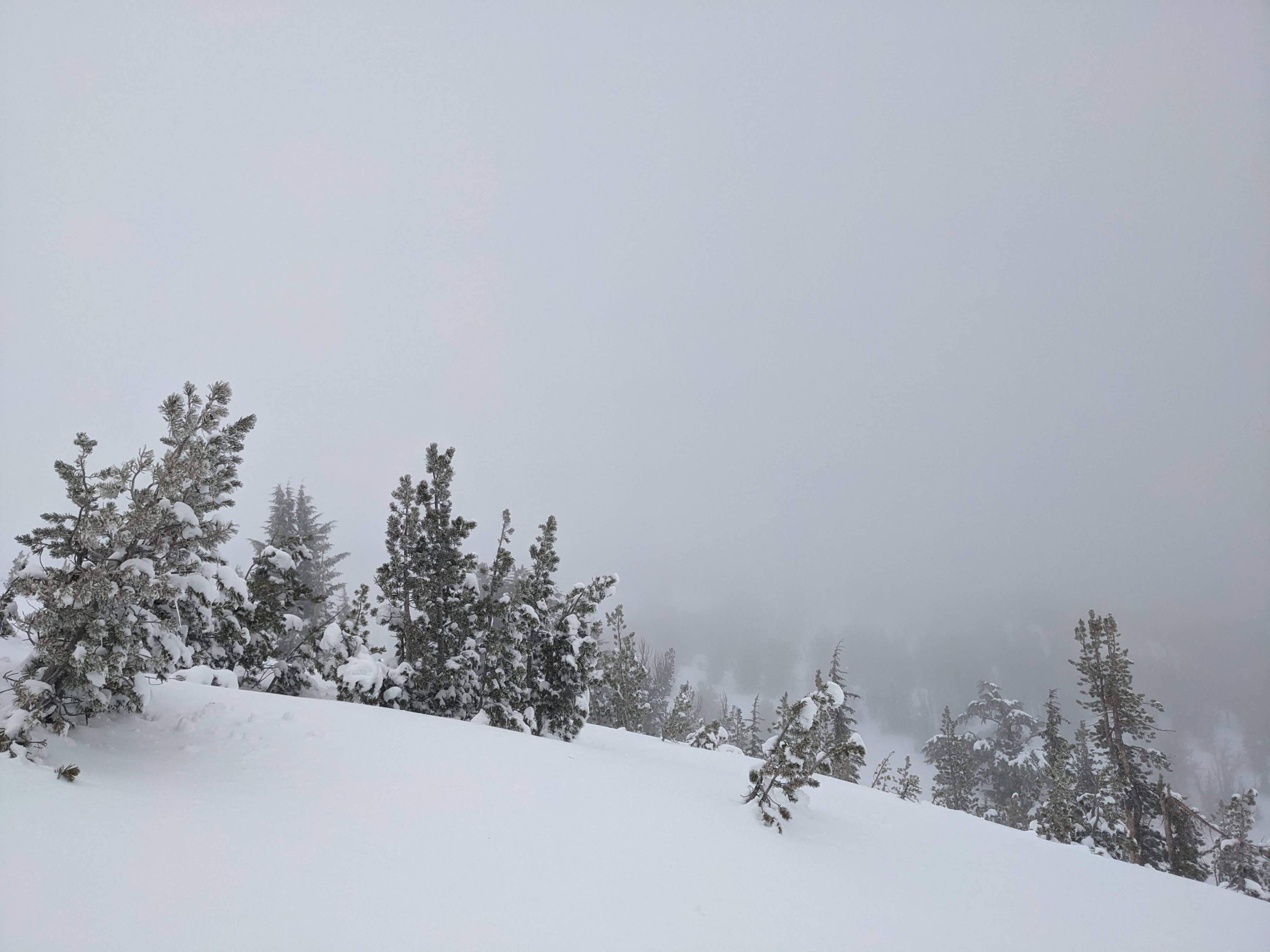
We experienced one 15-20-minute burst of S2 snowfall (2 cm/hr) around 10 am, but it produced little accumulation. Low clouds and fog obscured visibility between 9000 and 10000 ft on Relay Peak for much of the day. Winds remained light at all elevations on our tour.
Snowpack
We dug into the snow in the three places on N-NE aspects between 9000 and 10000 ft where the snowpack was shallower. Strong snow existed above the weak layers in all three spots. All of our snowpit tests indicated that it is getting more difficult to trigger this layer (3 x ECTN and 2 x DTN). One test indicated that if this layer did break, the resulting fracture could still travel along the weak layer.