
Quick report
- Cracking
- isolated
A loop around Darland Mountain revealed a healing persistent slab problem which is great news! I don't think we're out of the woods yet; buried surface hoar is still widespread and has a bit of reactivity in areas where the slab above is cohesive. Higher sensitivity can still be found in previously wind loaded areas. But it was good to see it's trending in the right direction. To summarize the rest, at middle and upper elevations, there is great riding to be had in dry snow powder!
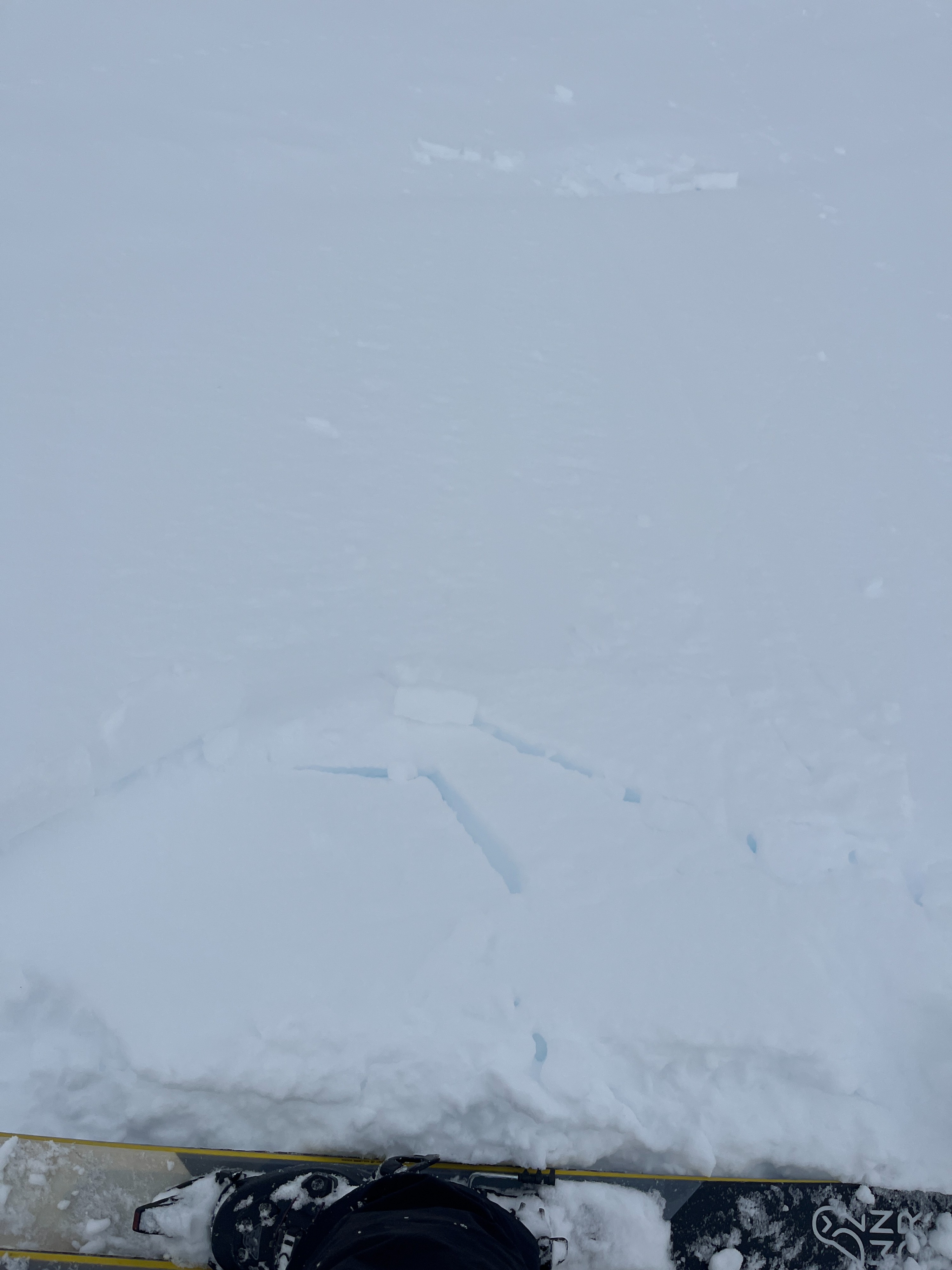
I got some stubborn cracking in 5in/12cm thick wind slabs. Other than old avalanches, I did not observe any signs of instability.Weather
- Air Temp
- 23
- Cloud Cover
- scattered
- Wind Loading
- none
- Snow Avail For Transport
- small smounts
We got up above the inversion around 4000 ft. The skies were mostly clear with some thin clouds creating filtered sunshine. As the day progressed, cloud coverage increased. The wind was calm with light ridge line gusts from the southwest. Temperatures stayed below freezing throughout the day.
Snowpack
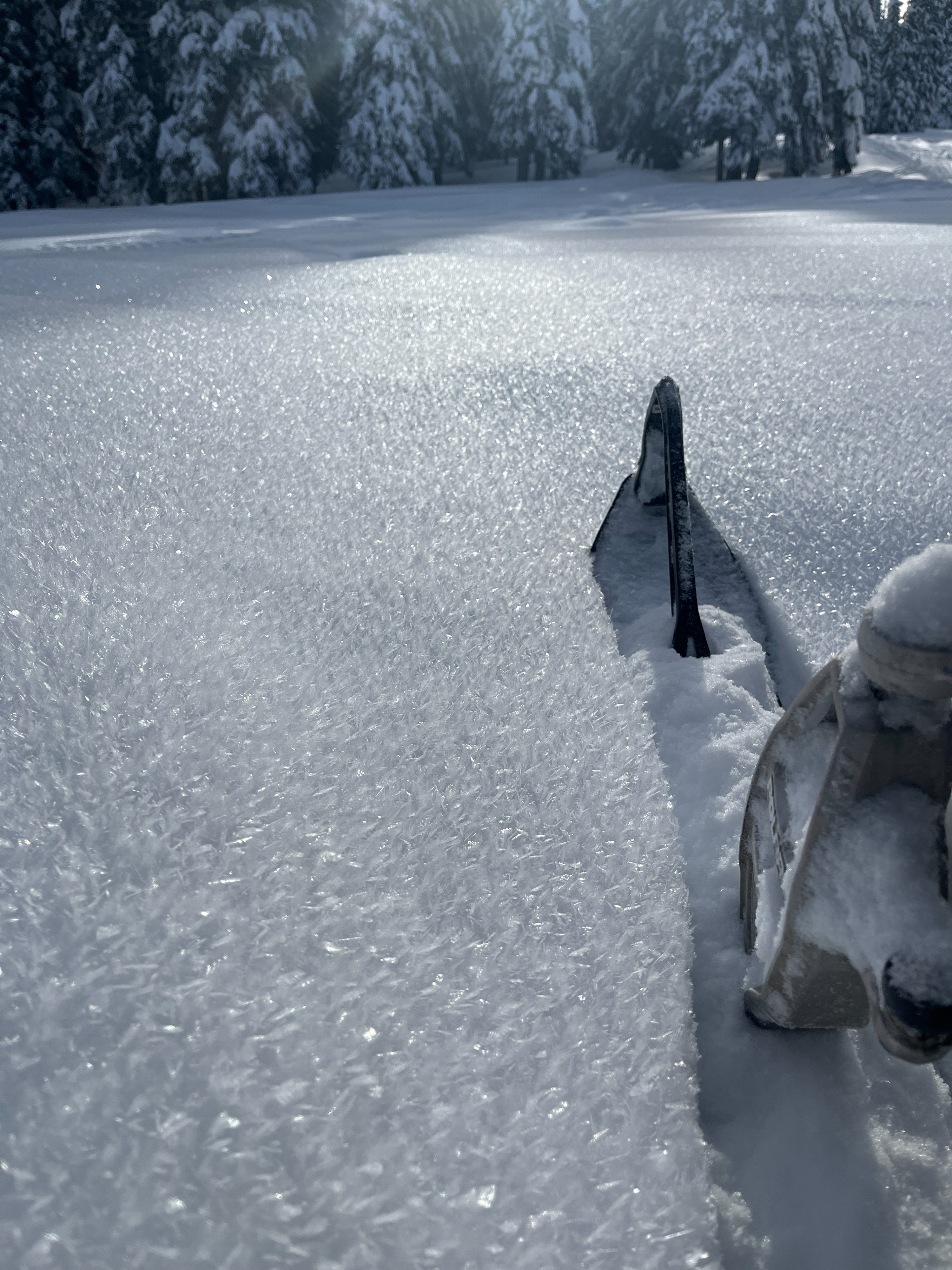
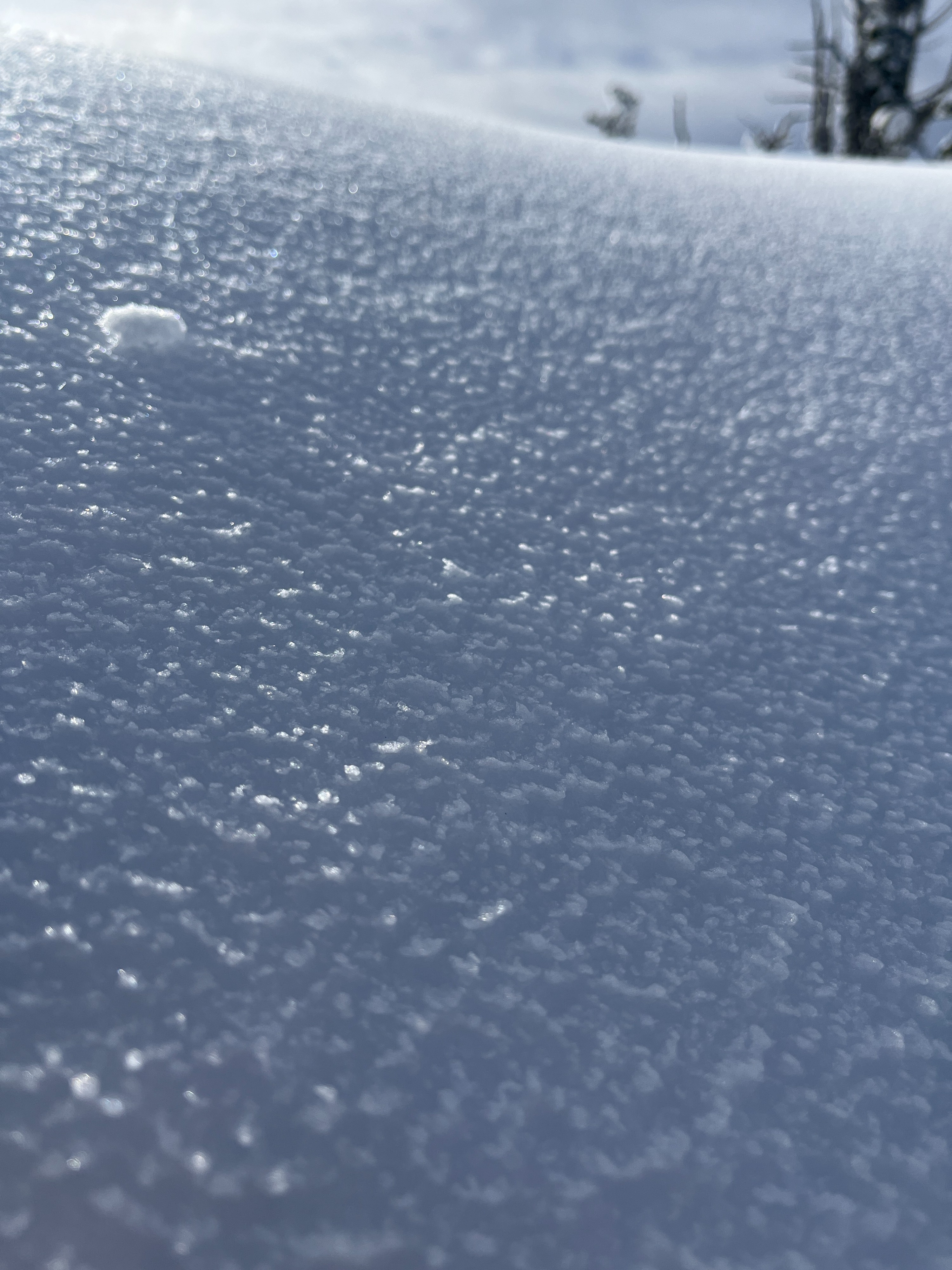
A melt freeze crust overlayed the snow surface everywhere up to around 4800 ft. At you moved higher, the snow turned into excellent dry powder snow. New and large surface hoar on the surface was observed on many aspects and elevations. At upper elevations, the surface hoar was rimed.
As we worked our way up, I stopped and dug a quick hand pit on a S aspect at 5800 ft. I did not find buried surface hoar in this pit but I did get some easy shovel shears in the top 12in/30cm of the snow.
I dug a full pit on an E aspect at 6785 ft. The depth of this pit was 68in/172cm. In this area, I was producing small cracking in wind affected snow at the surface. It became apparent in digging the pit that this snow was sliding on a tiny (1cm) pencil hard melt freeze crust buried 7in/18cm down. Below this was 4in/11cm of more decomposing fragments before I ran into the buried surface hoar (BSH). The BSH was rounding in this pit. The rest of the way down, I found overall good snowpack structure but did note about 3in/7cm of near crust facets buried 35in/92cm deep above the solstice crust. I performed some shovel shear tests and got either easy or moderate results on the BSH (STE, STM). An extended column test relieved a moderate non-propagating result on the BSH (ECTN16).
I dug another quicker pit on a NE aspect at 6662 ft in a more sheltered location. The depth of the snowpack at this location was 98in/250cm. I found the BSH 18in/47cm down in this pit and no small melt freeze crust nearer the surface. This BSH was not as rounded and considerably more easy to identify with the naked eye. An extended column produced a moderate non-propagating result on the BSH (ECTN15).
I dug one more even quicker pit on a S aspect around 6700 ft. I also found BSH about 12in/30cm down and it popped easily in shovel shear tests (STE).