
Quick report
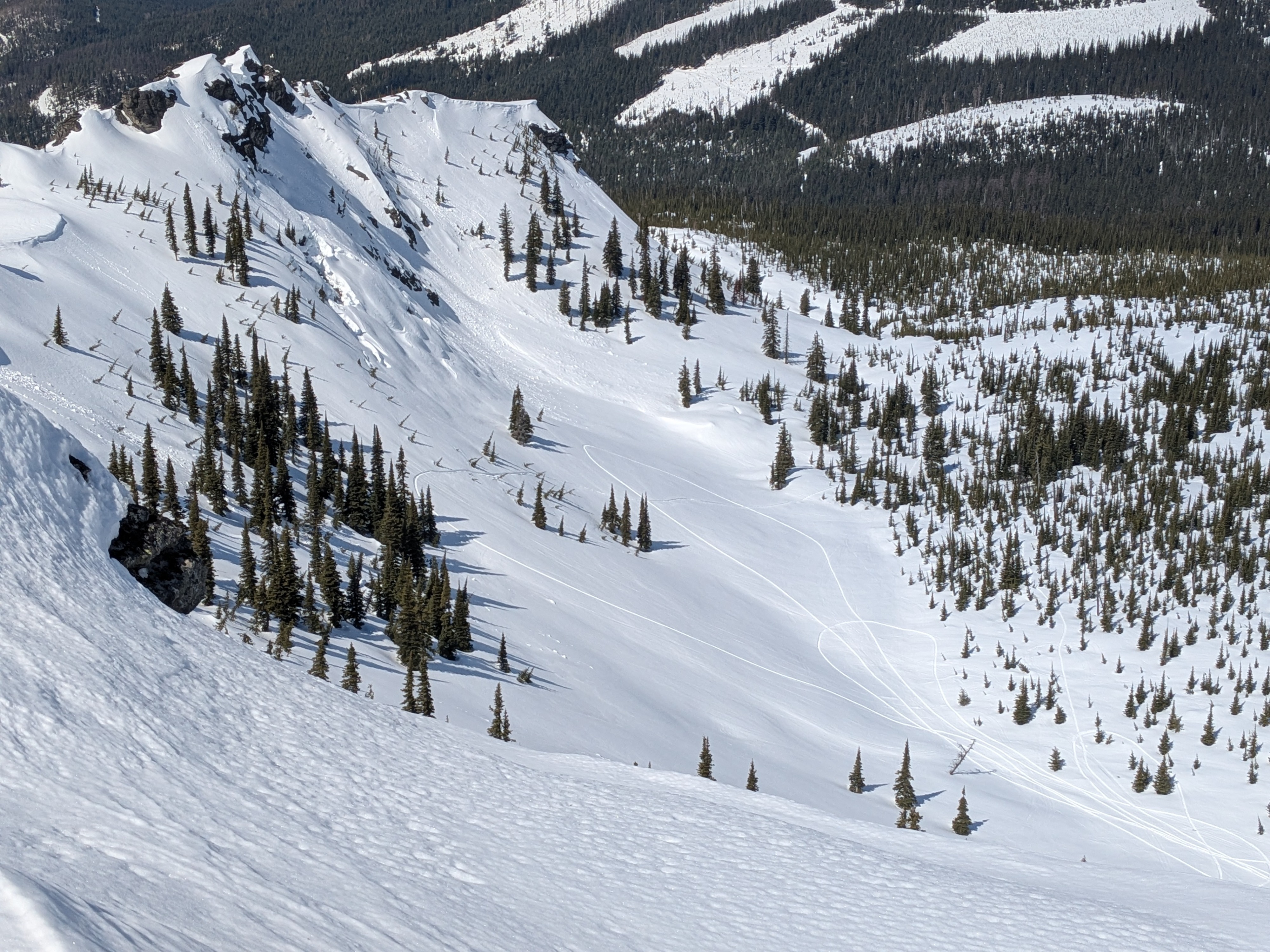
Today's wind kept widespread wet snow hazards above 6,500 in check - except on leeward slopes or areas sheltered from the wind. Places where the wind didn't keep surfaces cool, the snow surface rapidly softened and became punchy or trap-door. This was most noticable as we descended closer to 5,000 feet. While spring conditions offer the opportunity to travel in bigger, more complex terrain with overall less snowpack concerns or more predictable problems, safe backcountry protocol is still prudent to not only your group, but to other groups recreating around you. We observed a group of two snowmobilers traveling (high-marking and sidehilling) and snowboarding in steep avalanche terrain with NO avalanche rescue gear (beacon, shovel, probe) or backpacks, and descending avalanche terrain solo. This is irresponsible backcountry travel protocol...period.
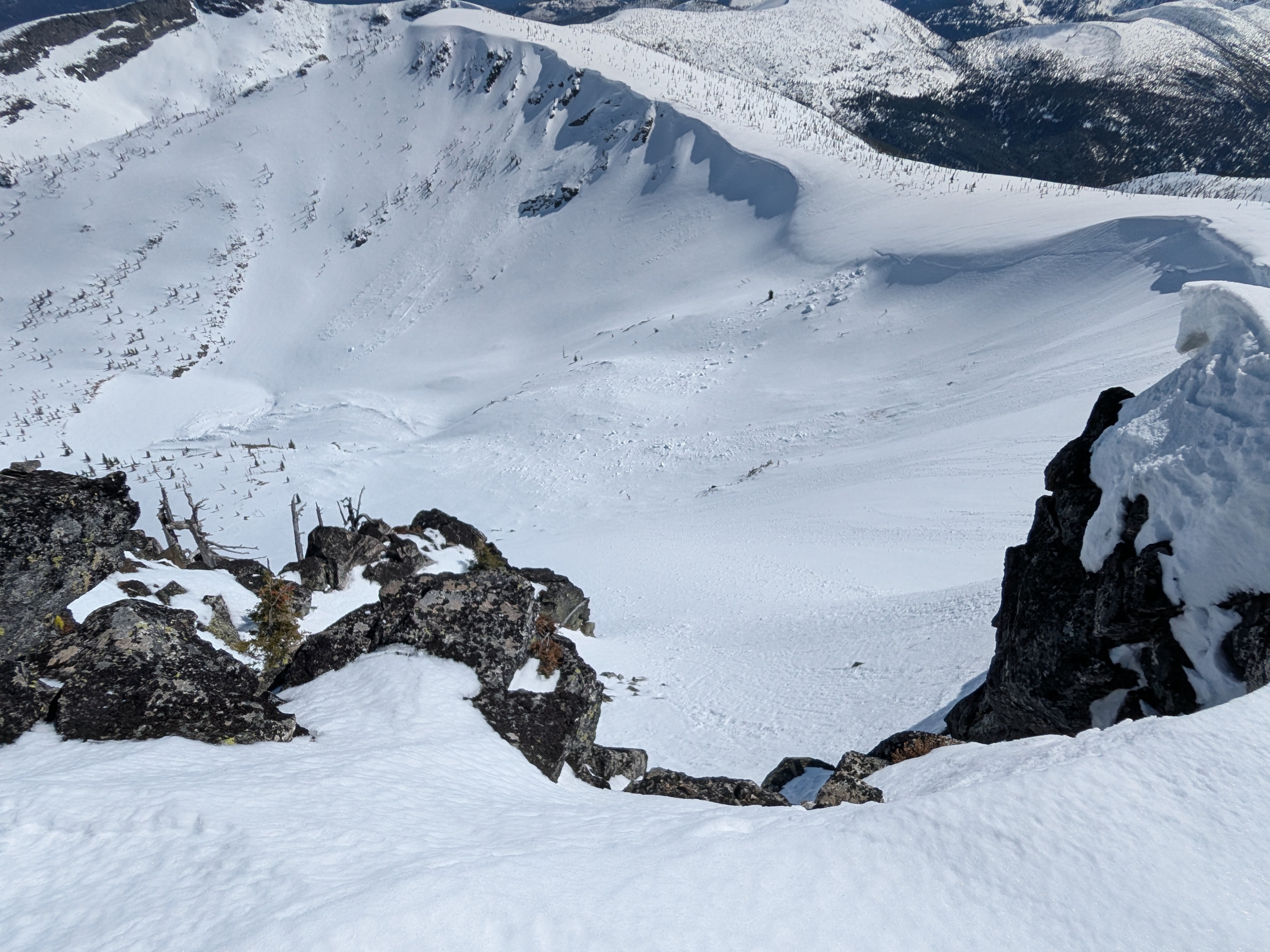
Numerous fresh Loose Wet avalanches from yesterday and earlier in the week, and several fresh Wet Slab avalanches likely triggered by Monday's rain (April 7).Weather
- Cloud Cover
- few
- Wind Loading
- none
- Snow Avail For Transport
- small smounts
Mostly sunny skies with a few clouds passing overhead. Winds were steady out of the west-southwest and borderline strong from about 6,000 feet and higher - especially on windward slopes. Temperatures were much warmer in sheltered areas.
Snowpack
Despite non-freezing temperatures last night, the snow surface started out firm and supportive across elevations. This quickly changed under the influence of sunny skies and rapidly warming temps. Windward-facing slopes took the longest to soften - especially those above 6,000 feet. Ascending a west-facing slope between 5,000 and 6,000 feet, boot penetration was 8 to 12 inches deep. There was an approx. 4 inch P- hard refrozen layer with thick 4F layer of melt-forms below. As we passed the 6,000 feet in elevation, boot penetration decreased to about ankle deep and the refrozen layer was closer to 6 inches thick - similar hardness. The same thickness of weak melt-forms existed below. Descending an east-facing slope around 12:30 pm, we could easily spray the wet surface snow with ski pressure, but struggled to push loose wet sluffs downhill - although we avoided steep convex rolls and rockier areas. On these more sheltered easterly slopes, ski penetration was 2 to 3 inches thick, and boot penetration was around 8 to 12 inches deep. The warmer temps are doing a good job stressing large, overhanging cornices along ridges. Several of these caved off recently and triggered Loose Wet avalanches. Remember to give these massive beasts a wide berth when traveling above to avoid an unexpected moment of falling off and trundling downhill with them!
Avalanche
- Size
- D1.5
- Type
- WL
- Count
- 5
- Aspect
- NW
- Trigger
- N
- Elevation
- 6400 ft