
Quick report
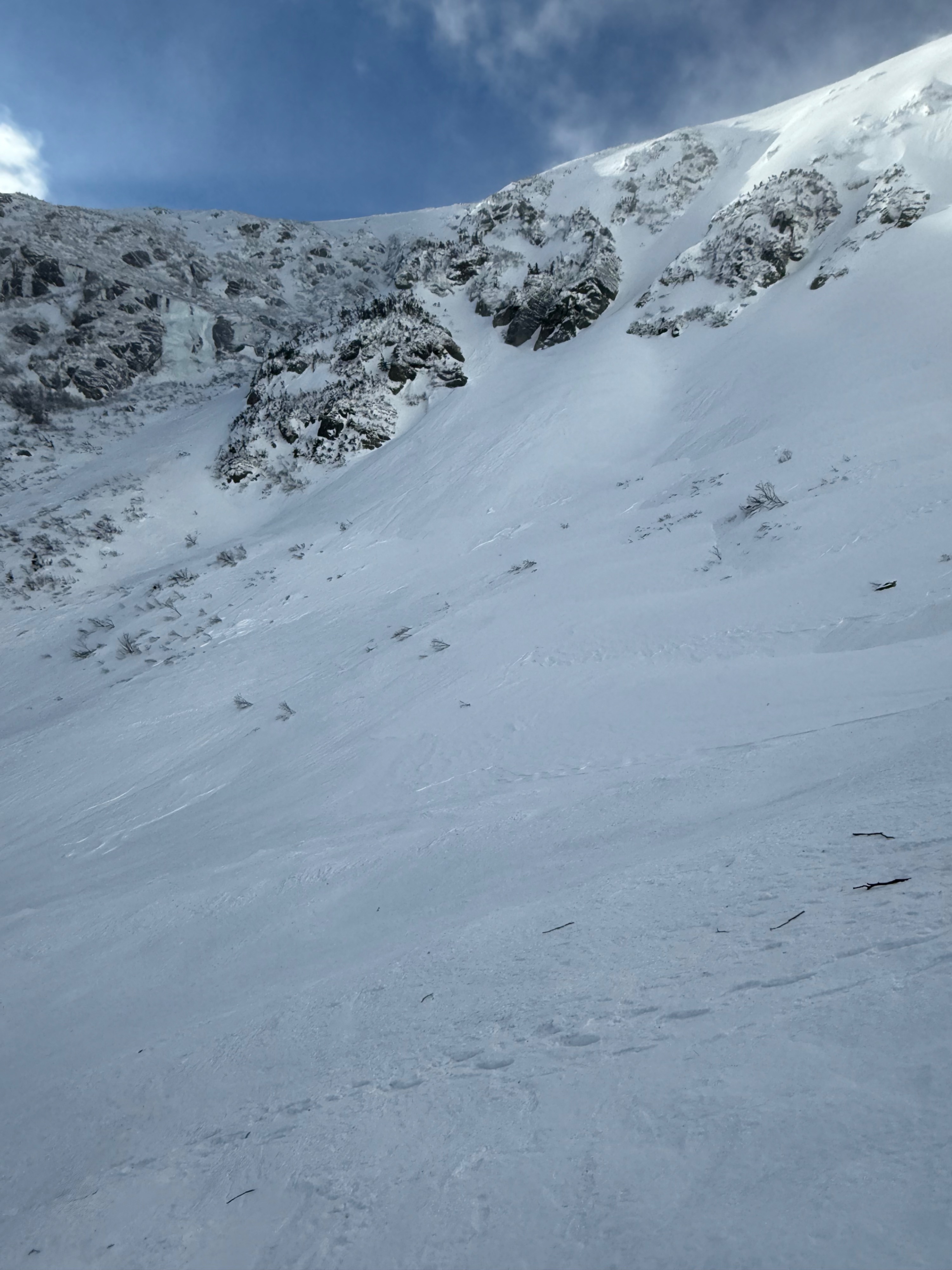
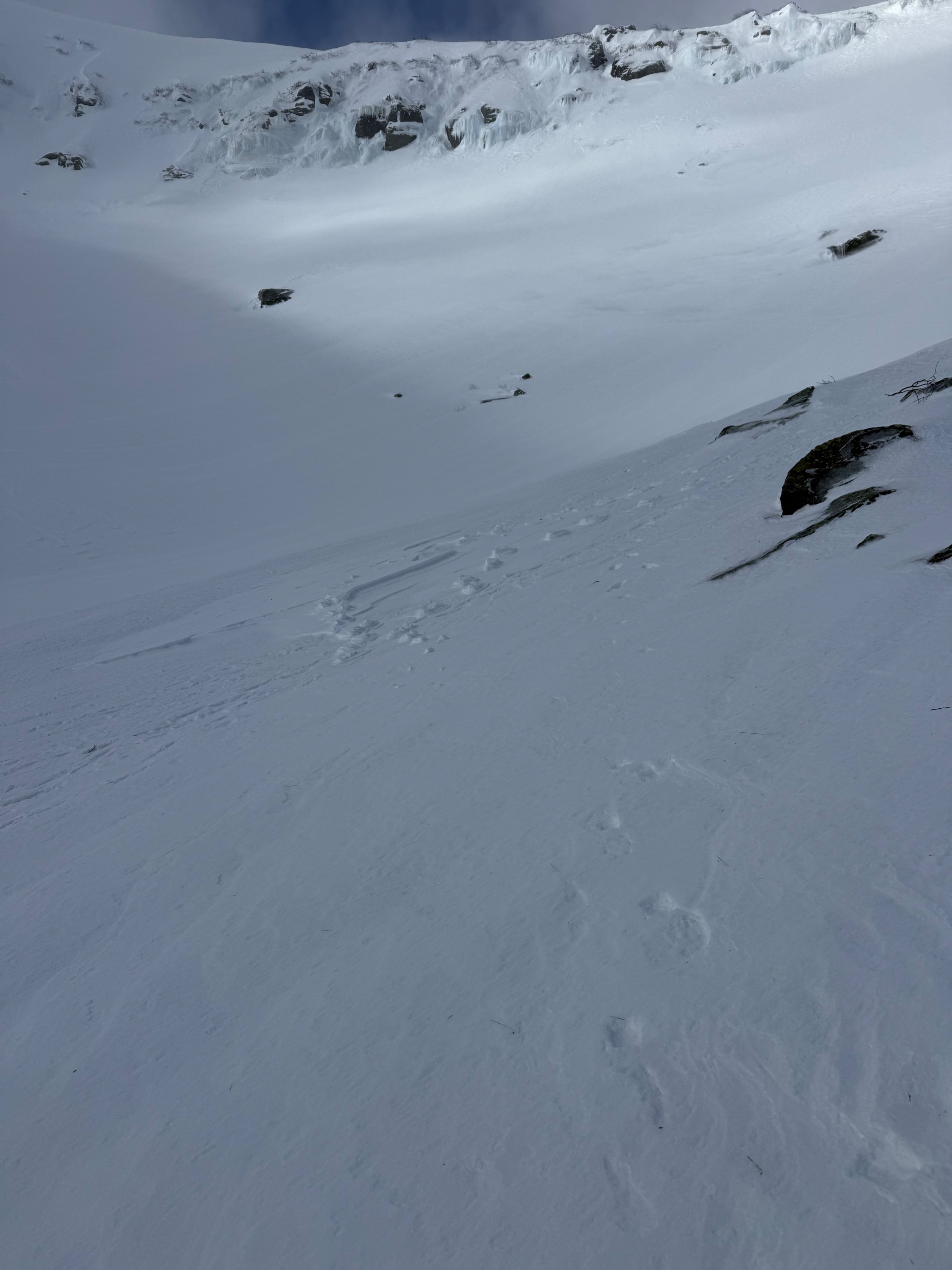
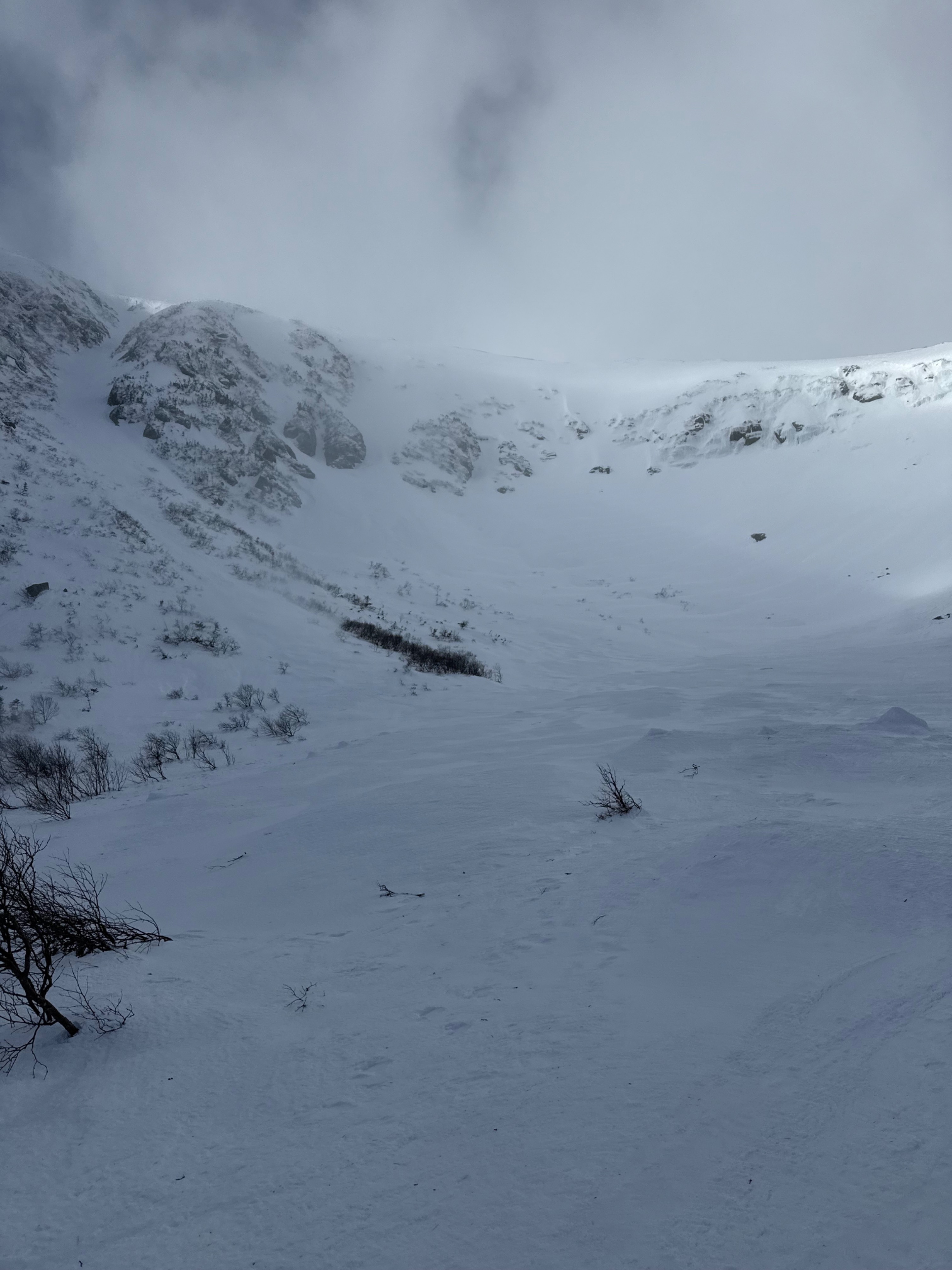
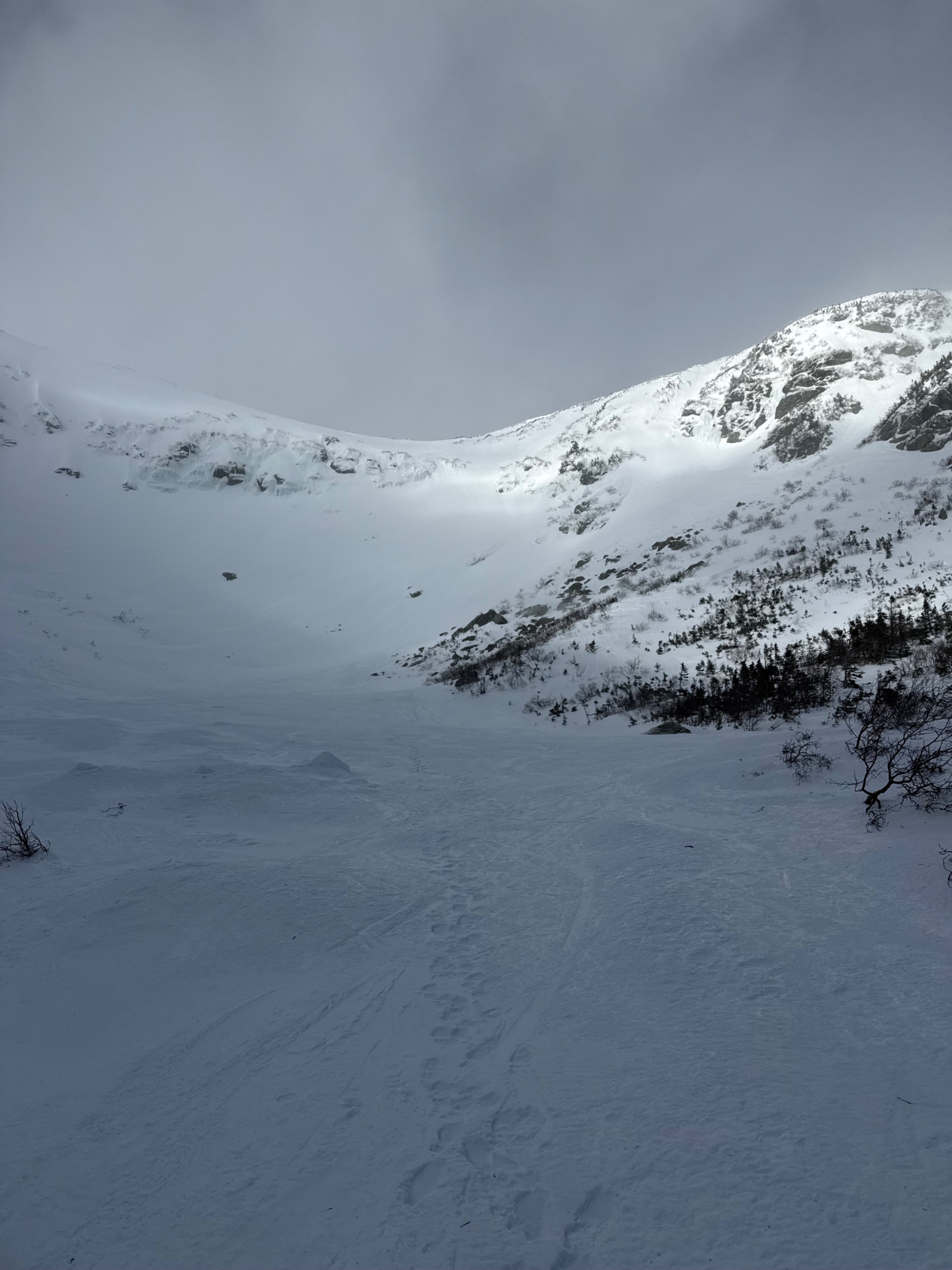
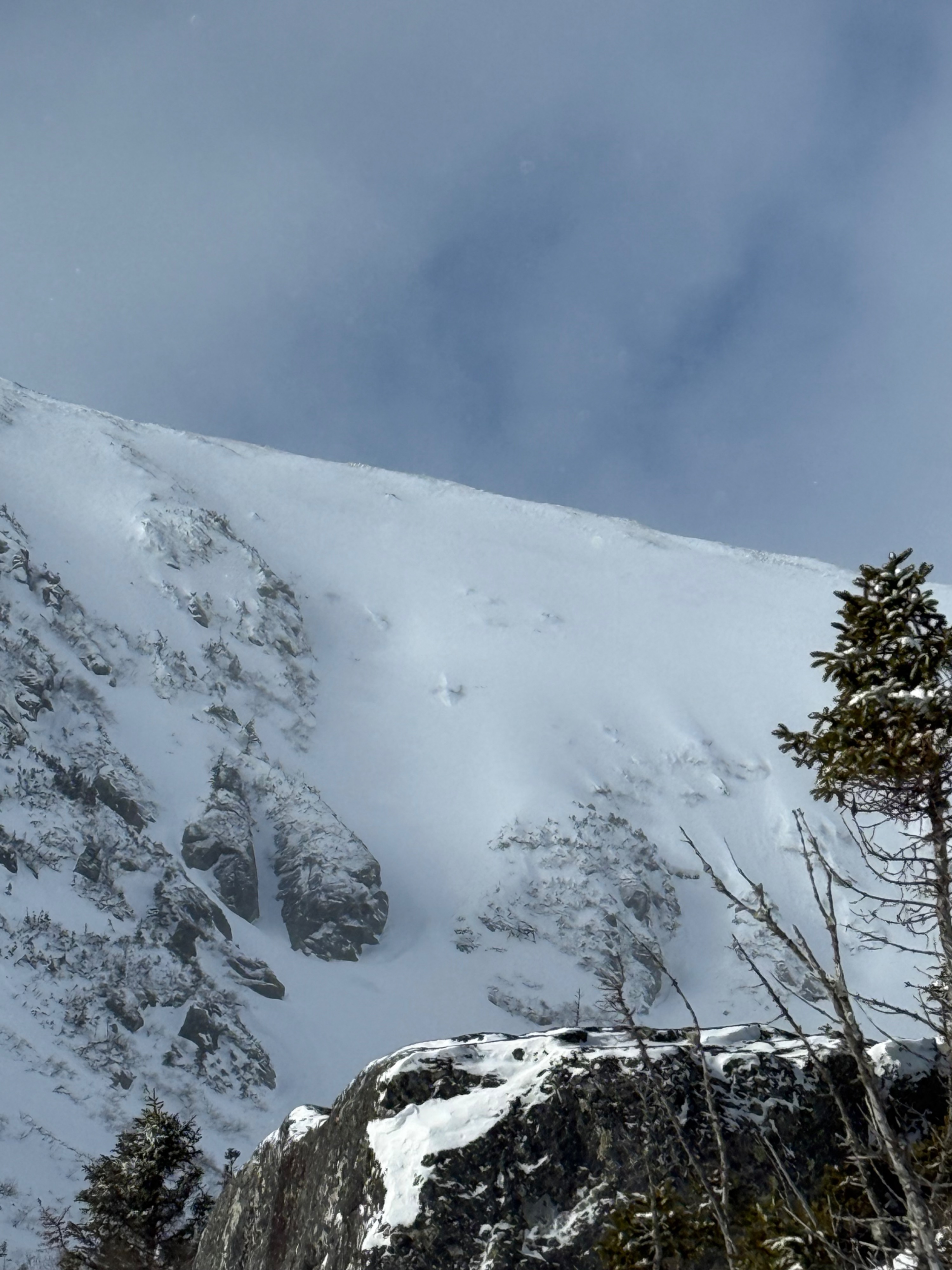
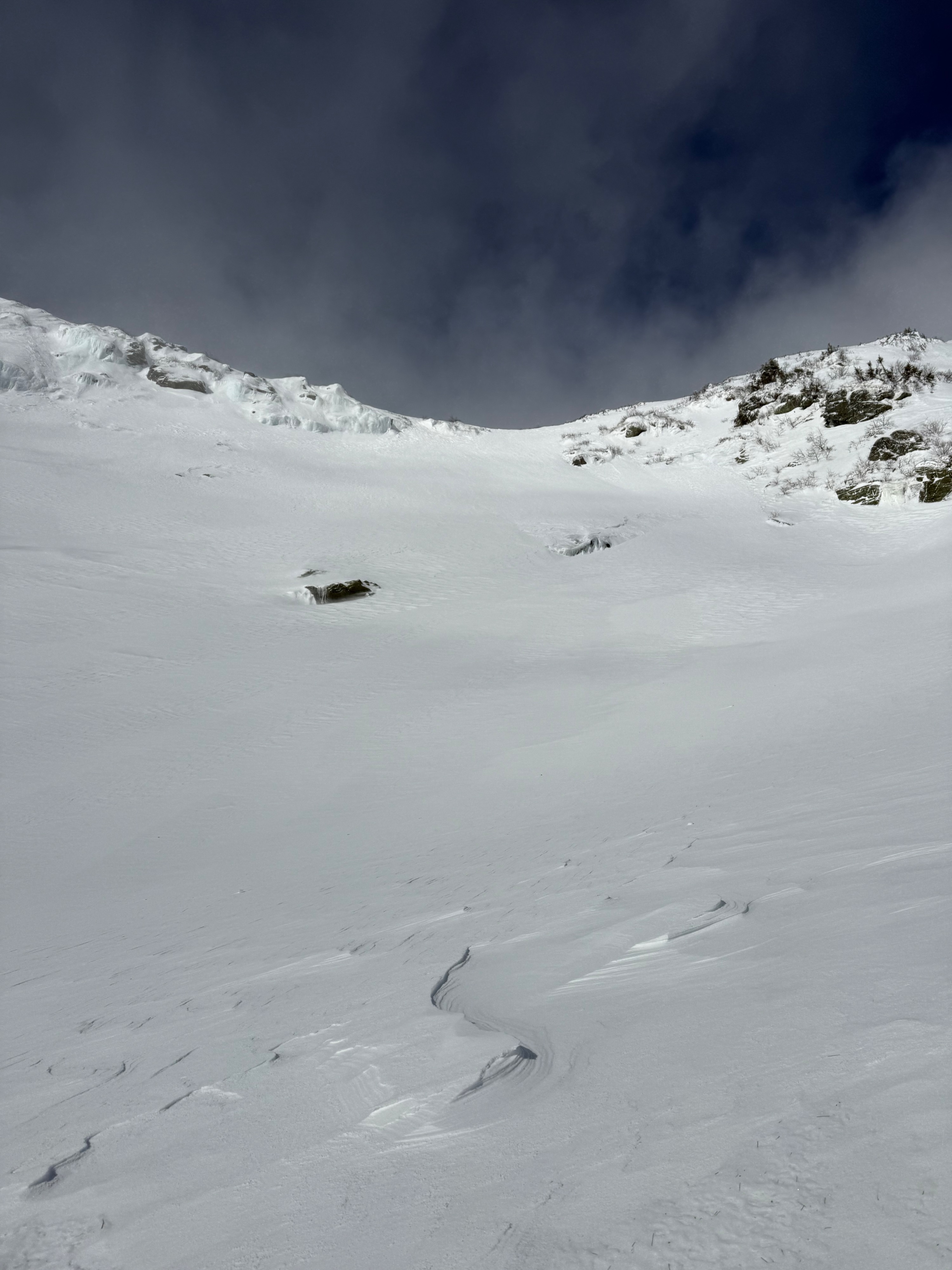
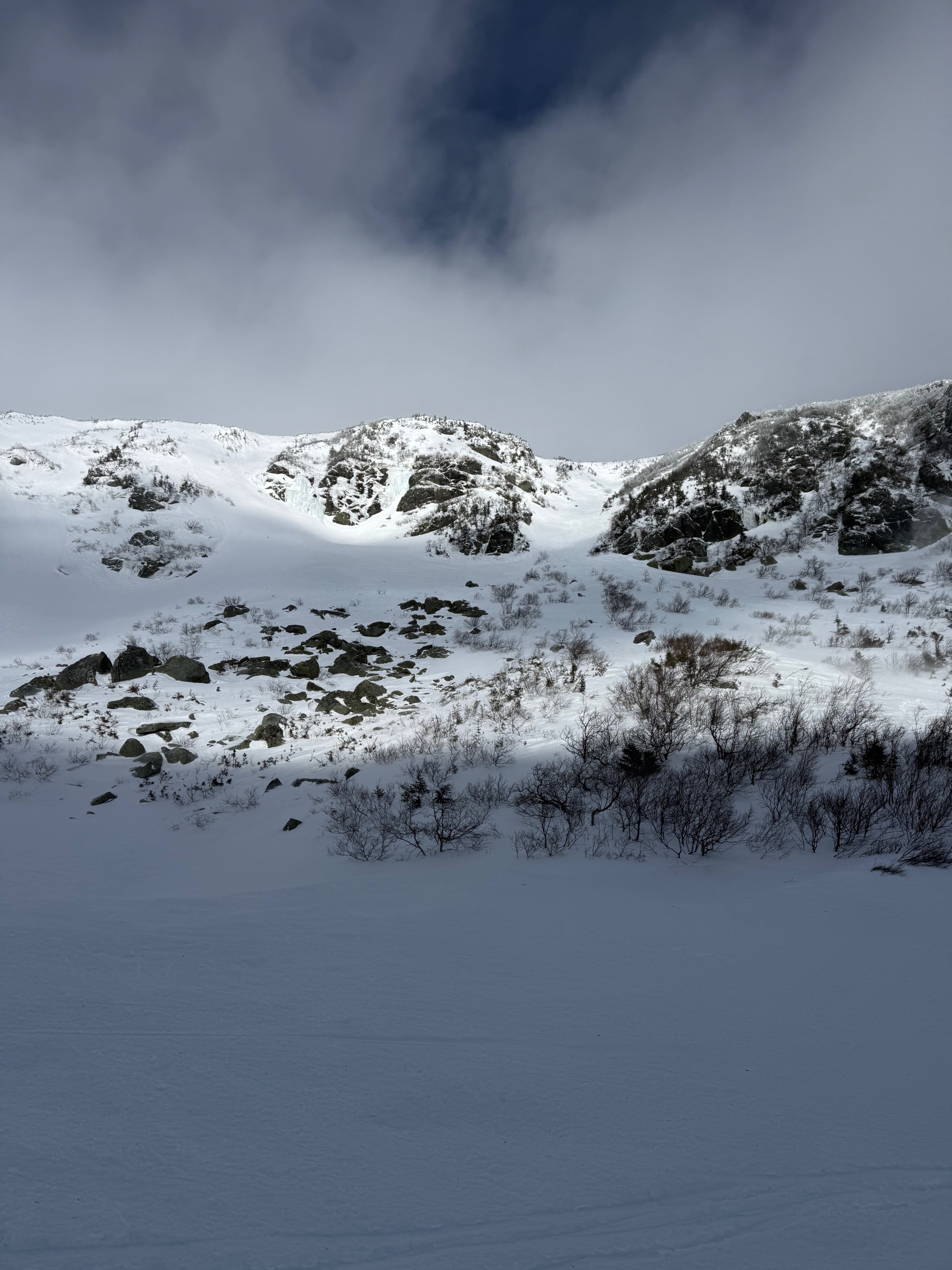
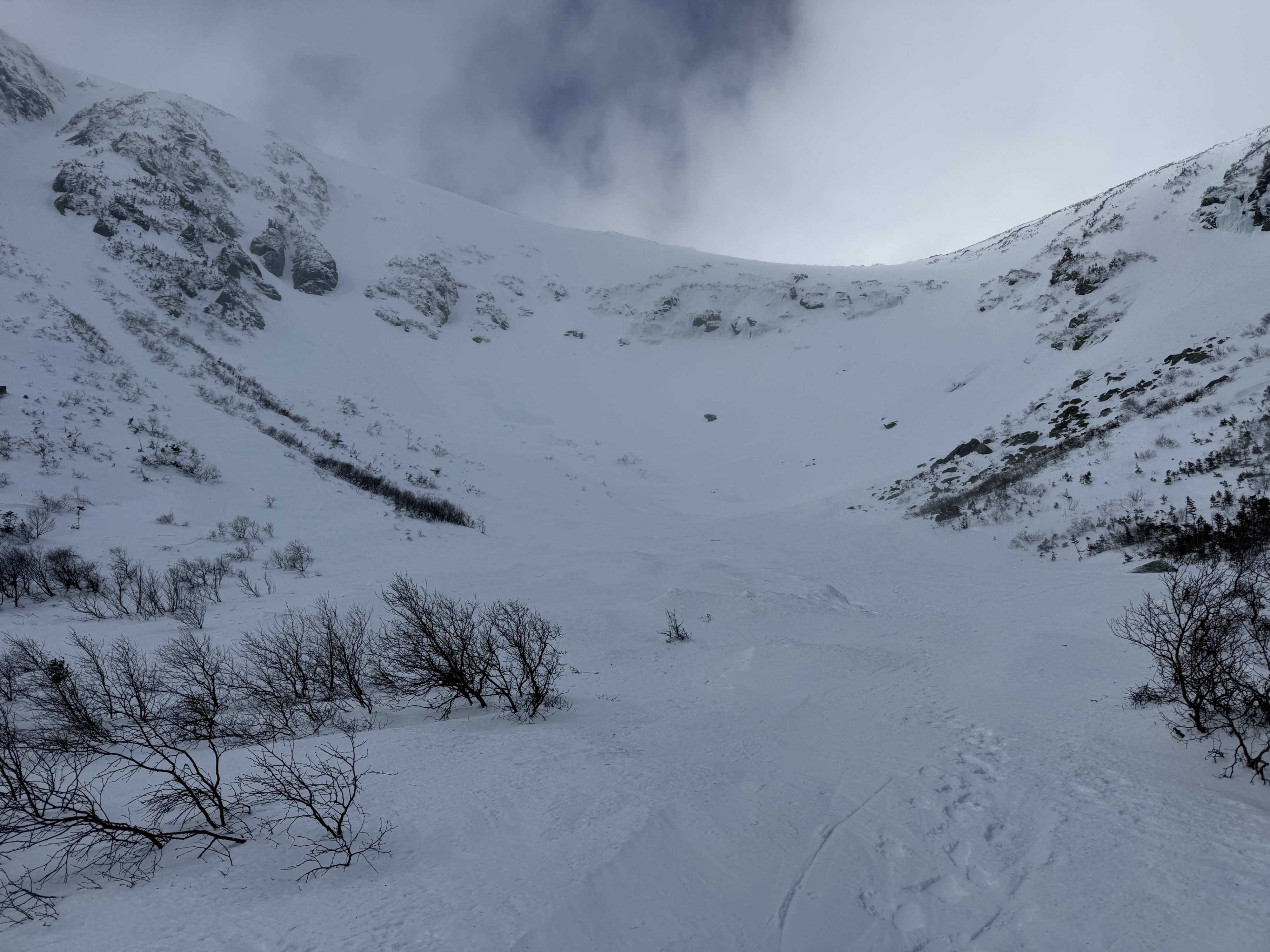
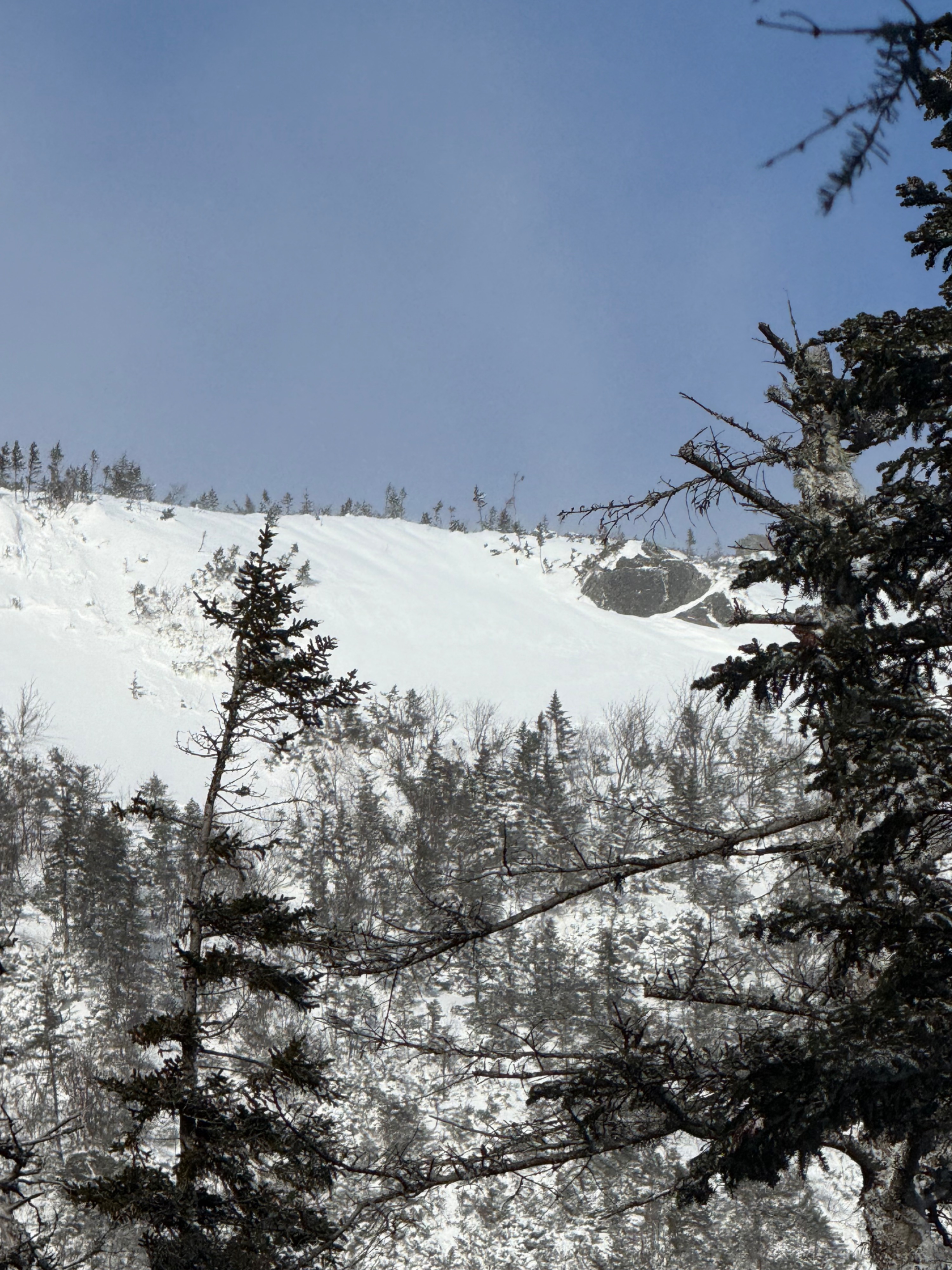
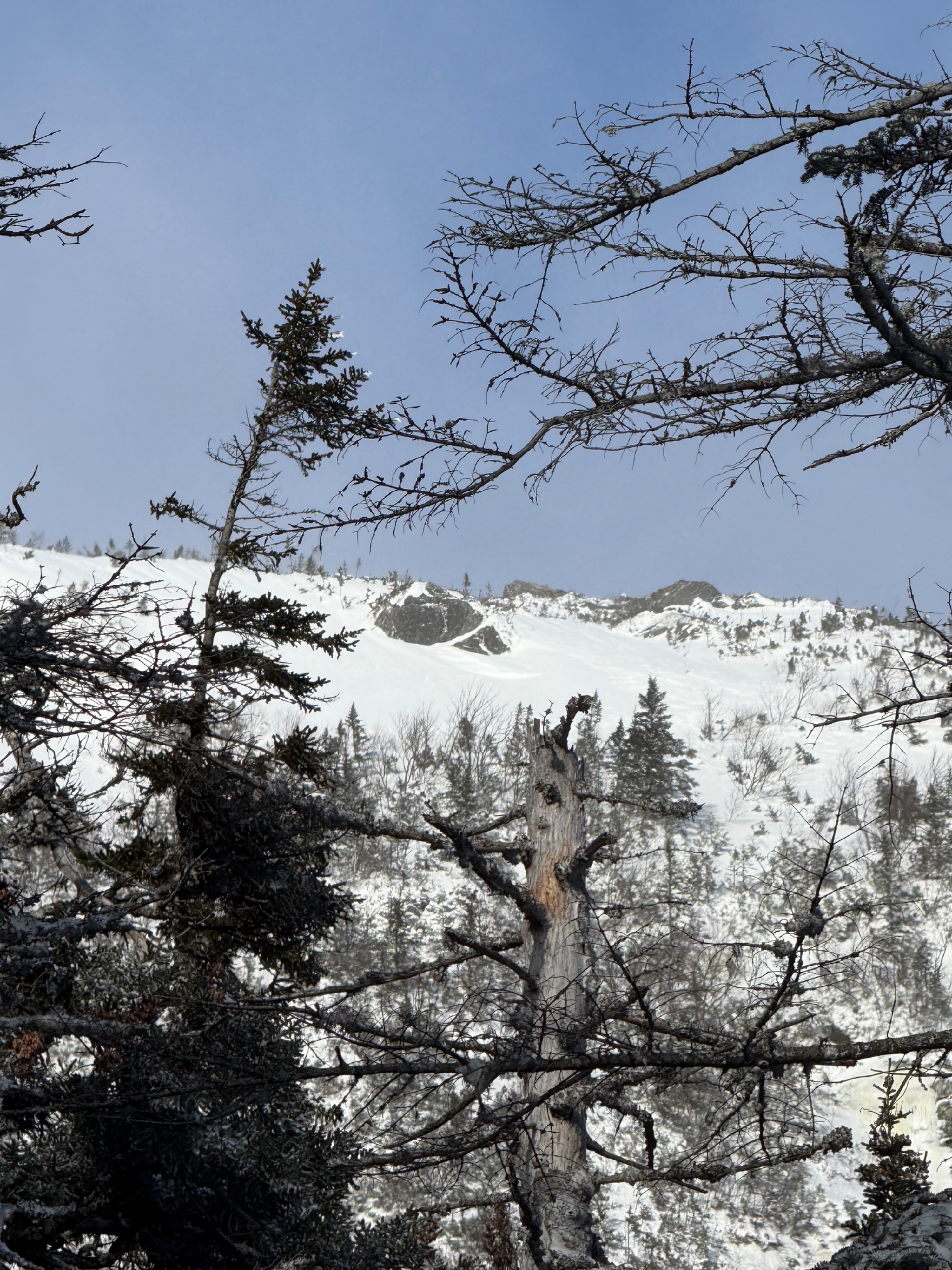
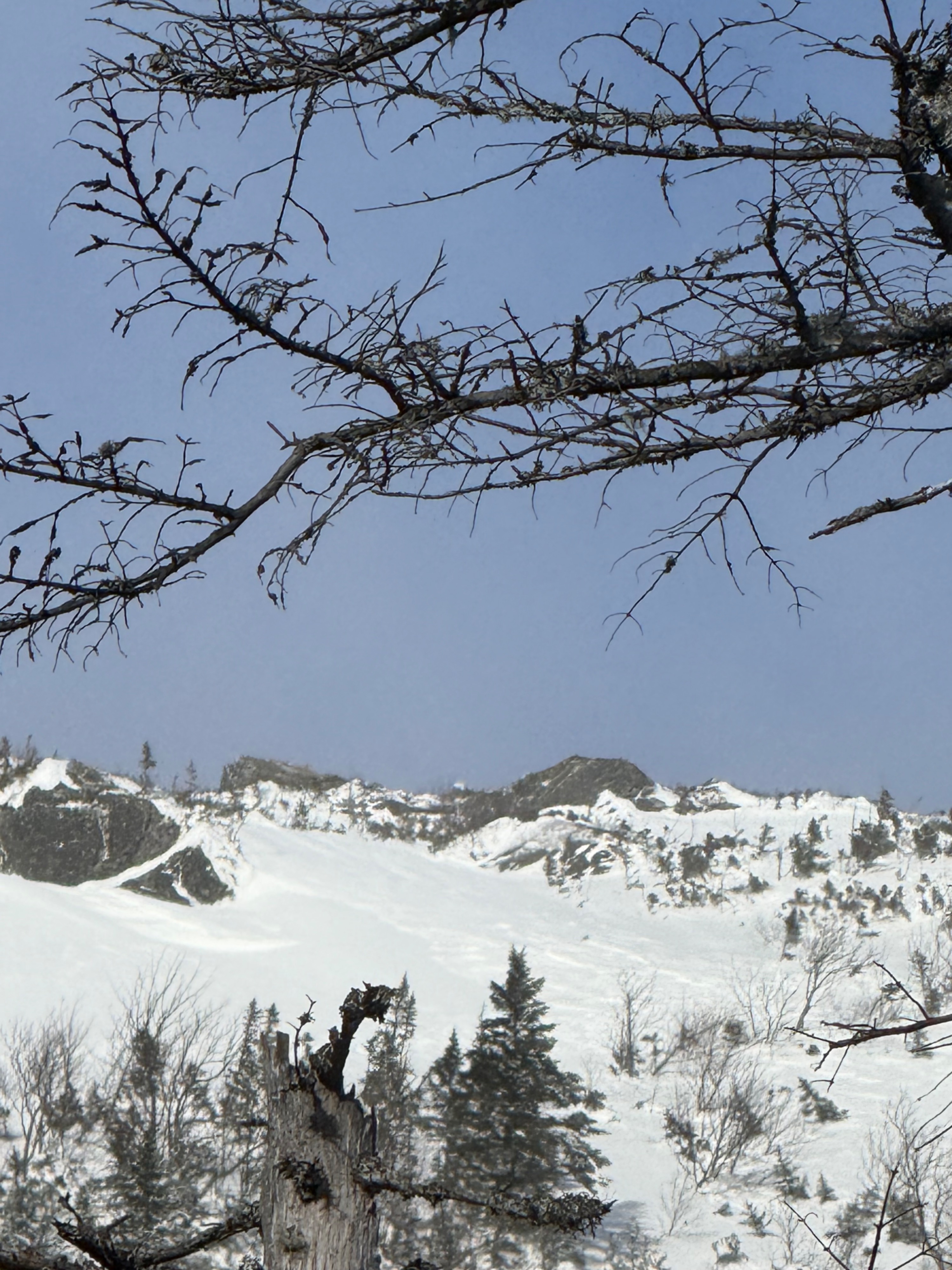
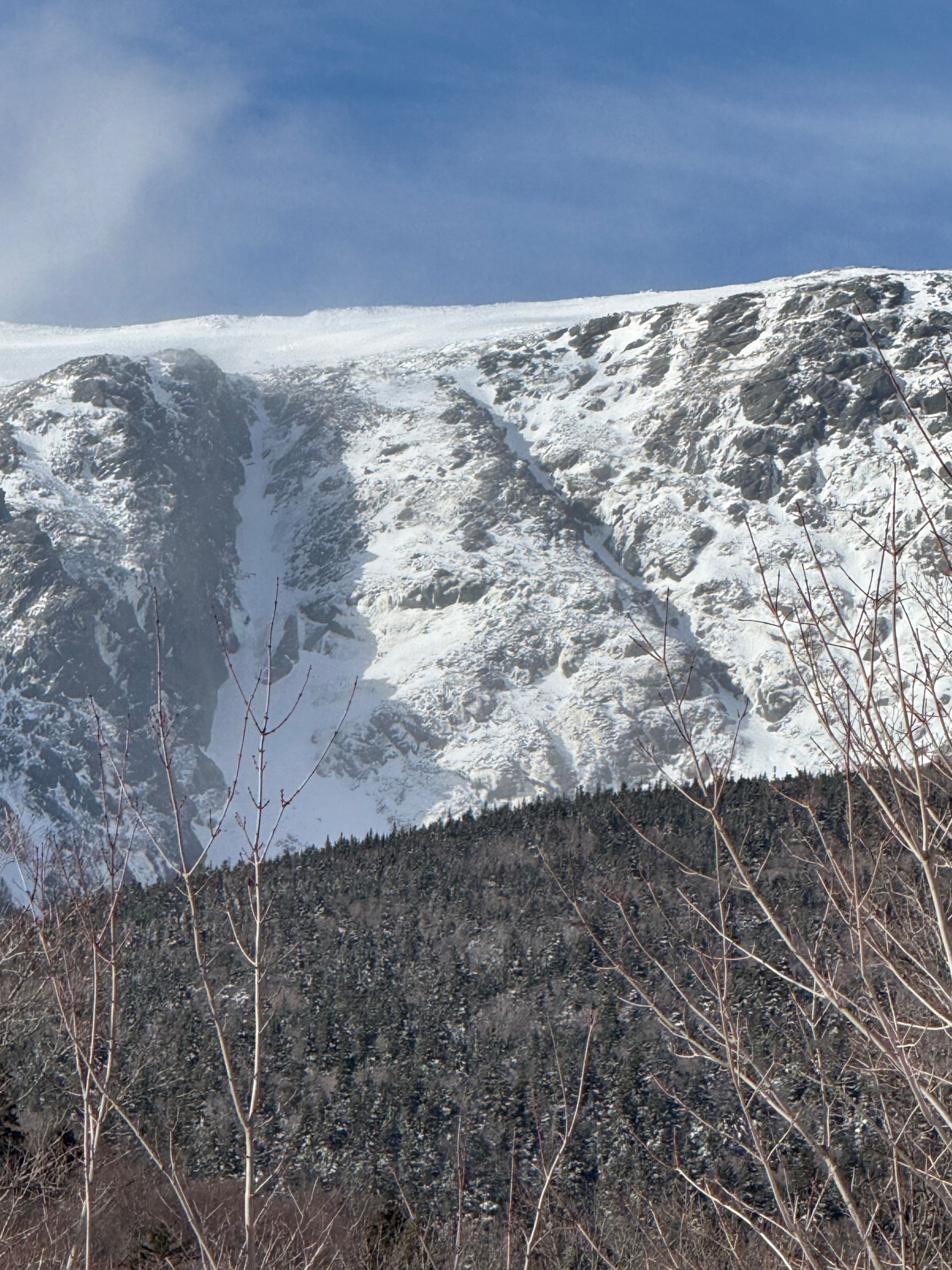
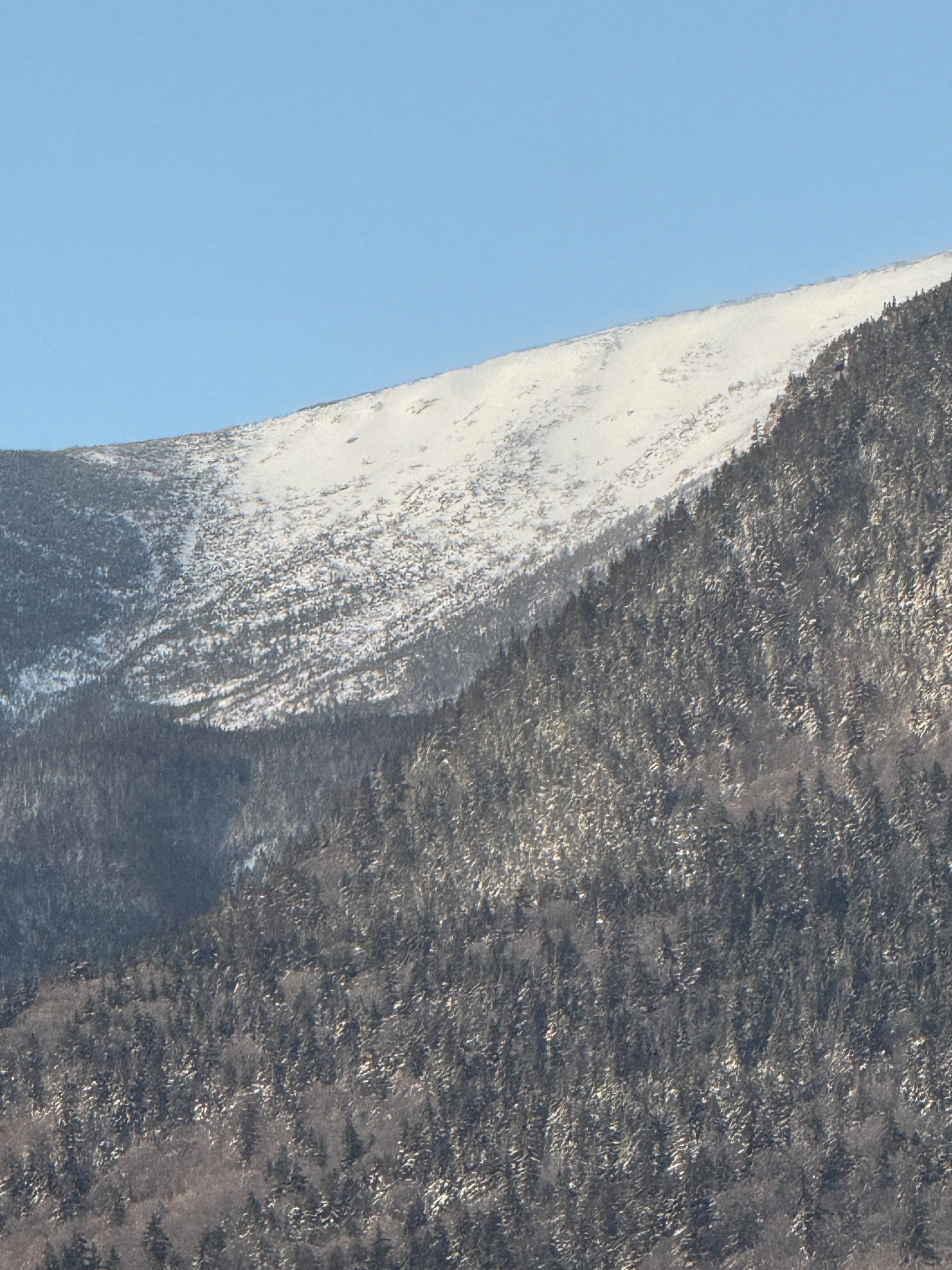
Went into Tuckerman Ravine to look at the distribution of 3 inches of snow that followed the warmup and rain on 12/29. Snow surfaces were variable, with areas of the 12/29 melt-freeze crust visible as well as pockets of wind-drifted snow.
Moving through these drifts, we did not encounter any evidence of reactivity. Structure was typically cohesive and the same all the way through, either pencil or 1F in hand hardness. Digging down to the interface, the snow was generally adhering well to the melt-freeze crust. This interface is one I would track and continuously assess, as the persistent cold temperatures are conducive for faceting.
Moving throughout the terrain, it was easy to discern from the snow texture where the melt-freeze crust was for firm, supportable travel. The drifts were wind-textured, but appeared bright white and boot penetration into softer snow was a clear indication.
In general, there is an avalanche problem, but it is small and isolated. It may be difficult to find areas of unstable snow, but the consequence of a small slide in exposed terrain could be large.
Weather
- Air Temp
- 0 F
- Cloud Cover
- scattered
- Wind Loading
- previous
- Recent Snowfall
- 5 cm (MWOBS summit)
- Snow Avail For Transport
- none
cold and windy!
Snowpack
We found variable snow surfaces, high in gullies, there was obvious wind scouring. Light was relatively flat at 10 AM, which made differentiating surfaces slightly difficult. In some areas you could see gray firm snow, which was the 12/29 metfreeze crust. There were also small pockets of sastrugi and fossilized steps from a previous bootpack. Other areas were smooth and chalky windboard, and some areas of softer (P and 1F hand hardness) drifted snow.
In general, there were more areas that were snow-covered opposed to scoured to the 12/29 melt-freeze crust. However, in many of these areas, it was only a thin (less than an inch) layer of snow.
Moving through these drifts, we did not encounter any evidence of reactivity, like cracks in the snow. Structure was typically cohesive and the same all the way through. In the ravine, drifts were either pencil of 1F in hand hardness. The depth ranged from boot top in the middle, to about 2 inches on the sides for the drifts.
We dug down to the melt-freeze crust, due to the high winds it did not seem productive to take out a loupe and crystal card to look at the snowgrains. However, we found really small wind-fragmented grains that due to their size tend to facet quickly. The combination of these lying on a firm melt-freeze crust and consistently cold temperatures will only speed this process up. While this snow is currently well attached to the melt-freeze crust, it will be a layer I am looking at to see how the snow grains change and how that impacts the sensitivity of that same interface.
We did not encounter a particularly slabby structure, more so saltated snow drifts that were well packed together, but did not have a ton of cohesive structure.