
Quick report
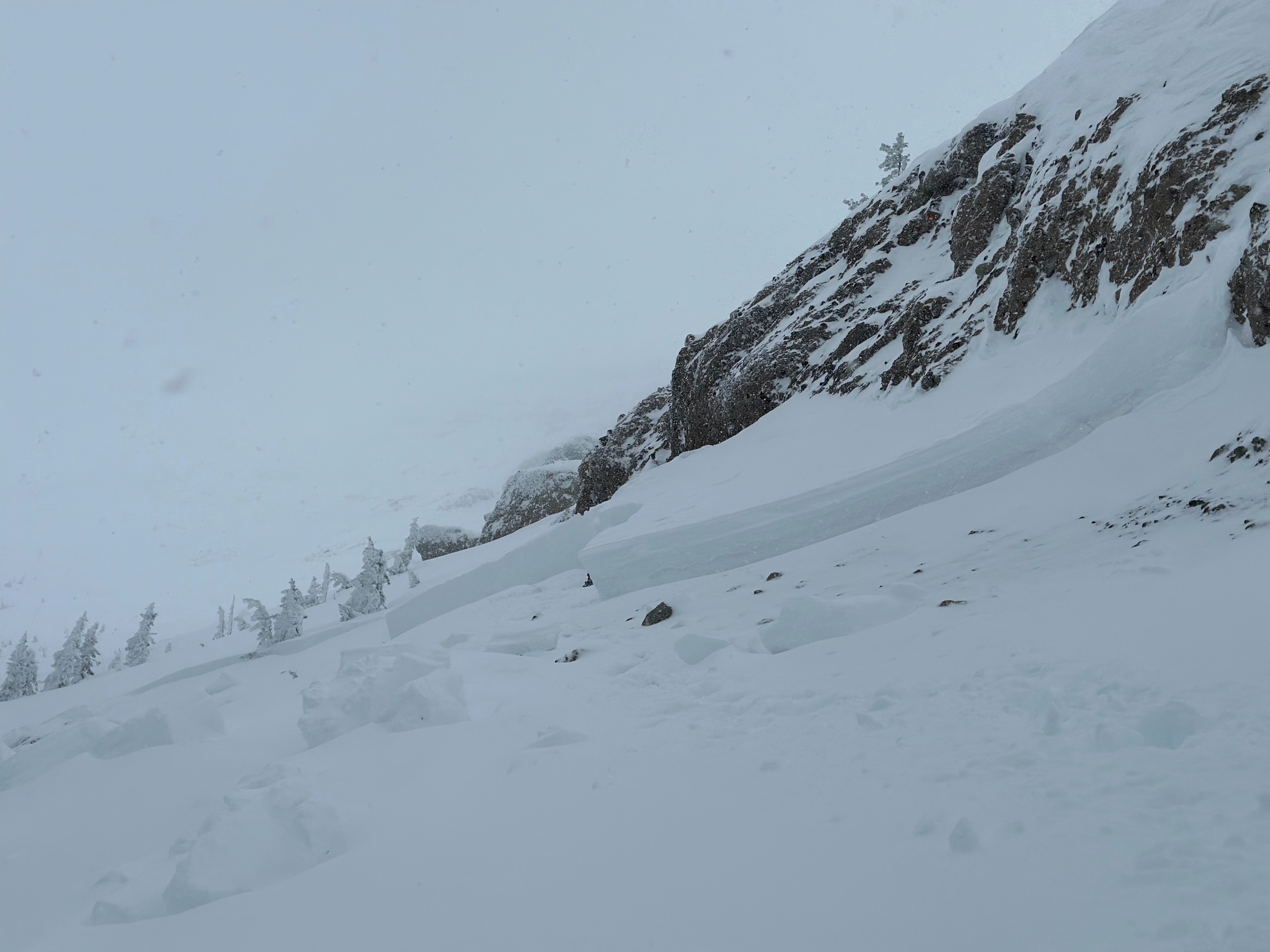
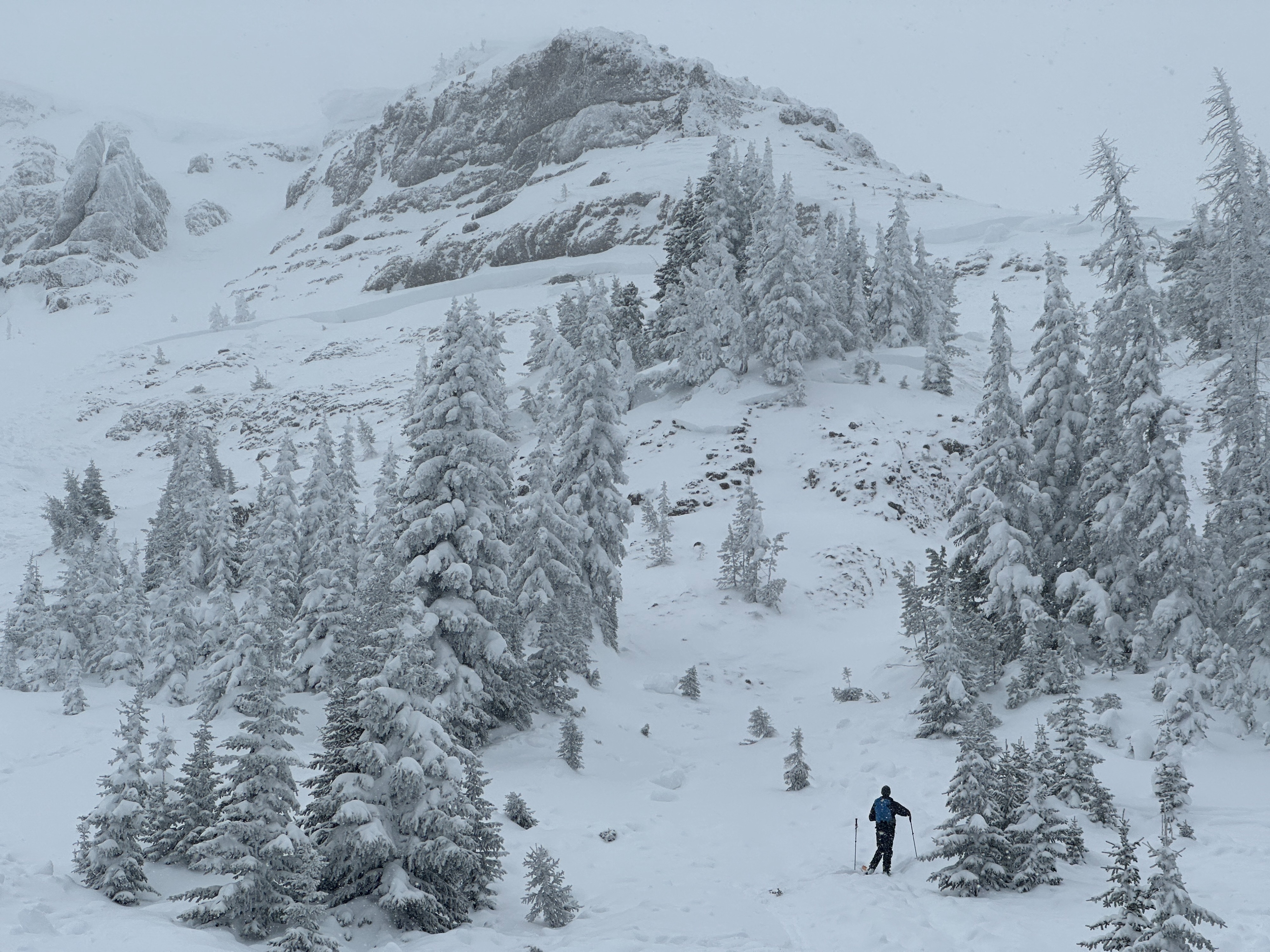
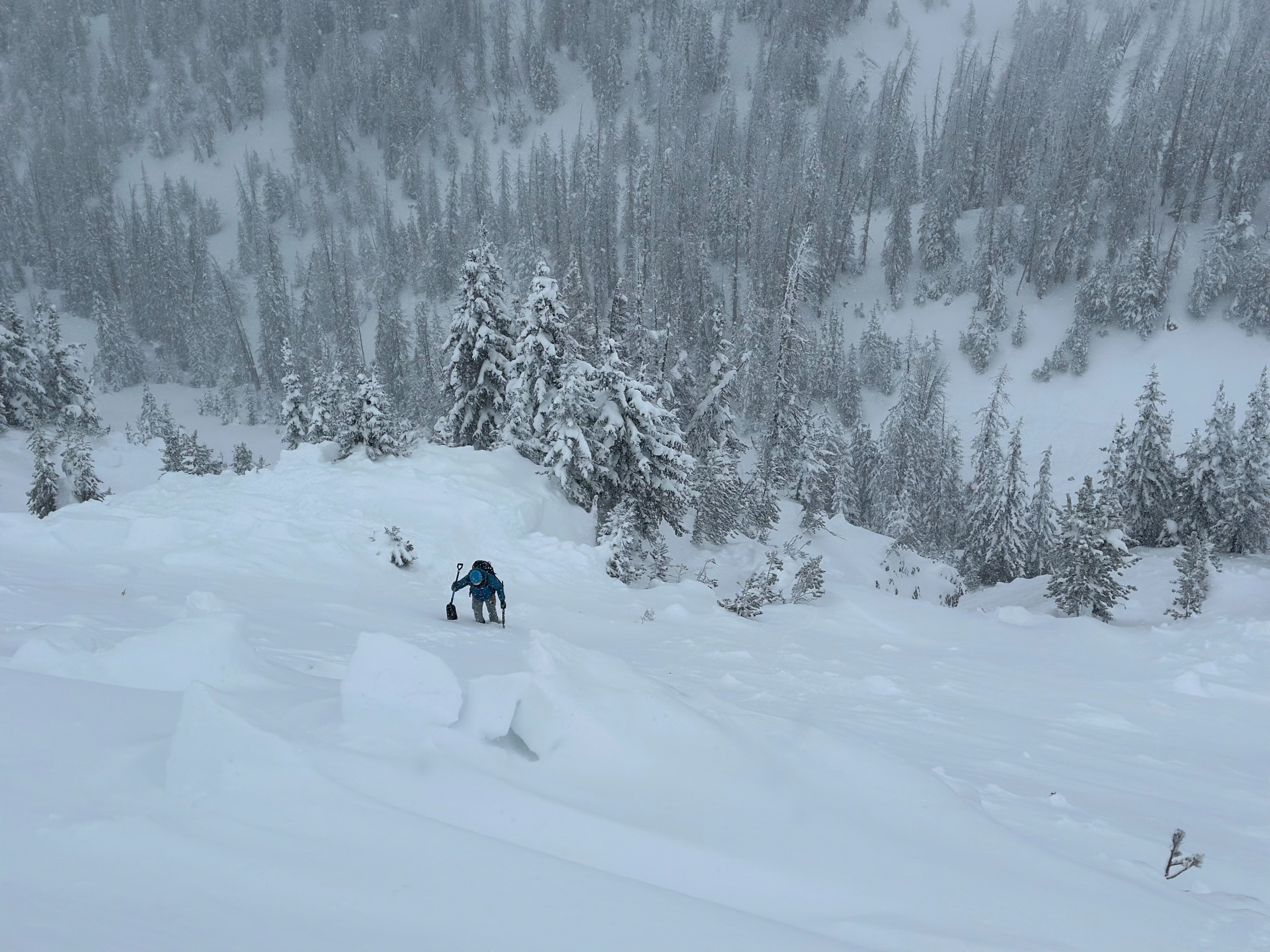
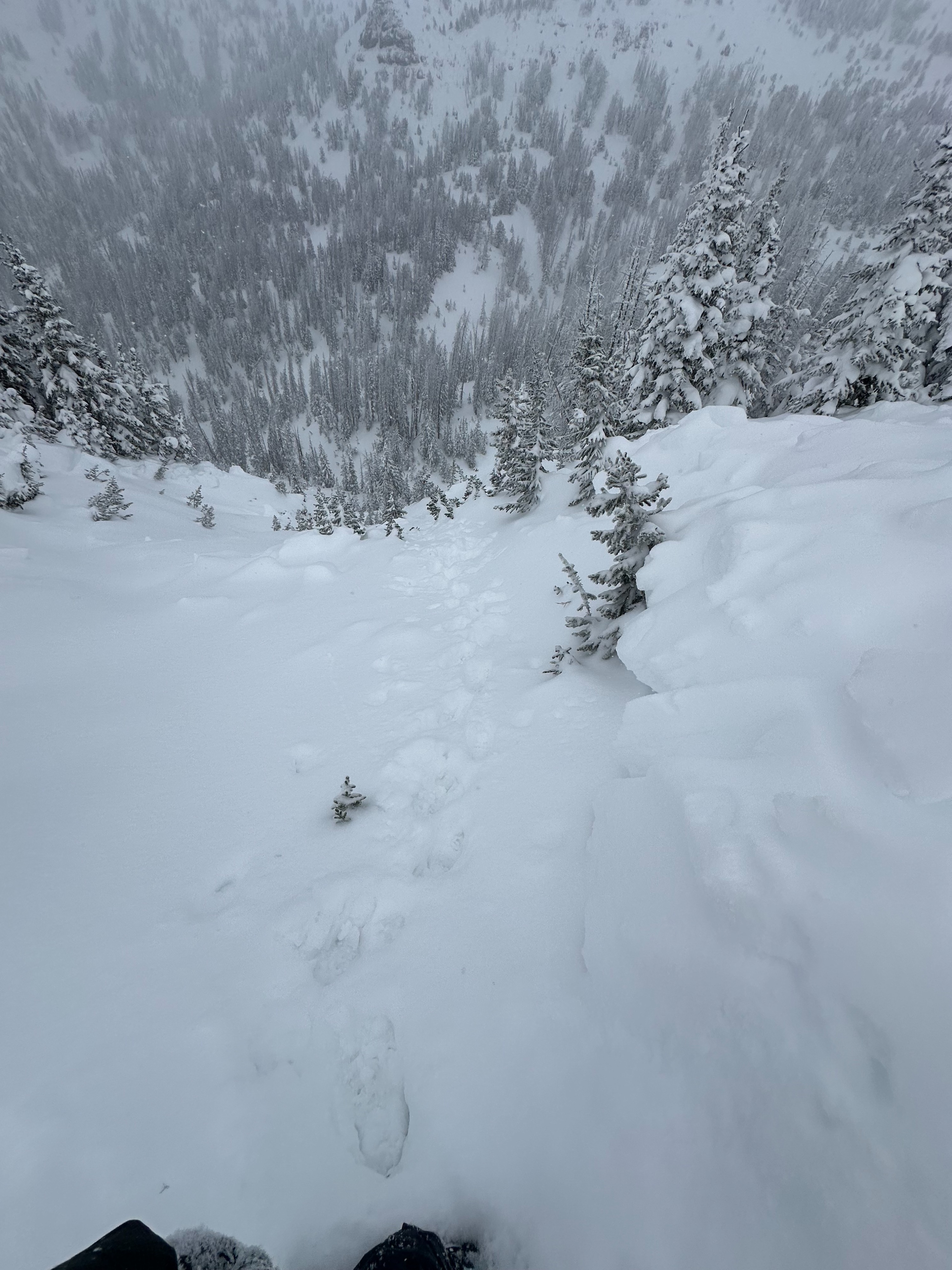
Initial Report: We toured to the site of an accident that occurred midday on January 4th, 2025. Portions of a summer trail route were used to access this zone by the party yesterday, as well as rescuers and forecasters today, which follows a moderate, treed ridgeline. Around 10,000', the trail breaks out of the treed slope and crosses between a steep, rocky ridge to one side and creek drainage on the other side. Around 200 feet into crossing a steep section of terrain, the party triggered a large avalanche that joined several treed avalanche paths. The individual leading the party was fully buried around 12 feet deep, and a second individual was partially buried and injured. Our deepest condolences go out to the Lander community, family, and friends to all involved.
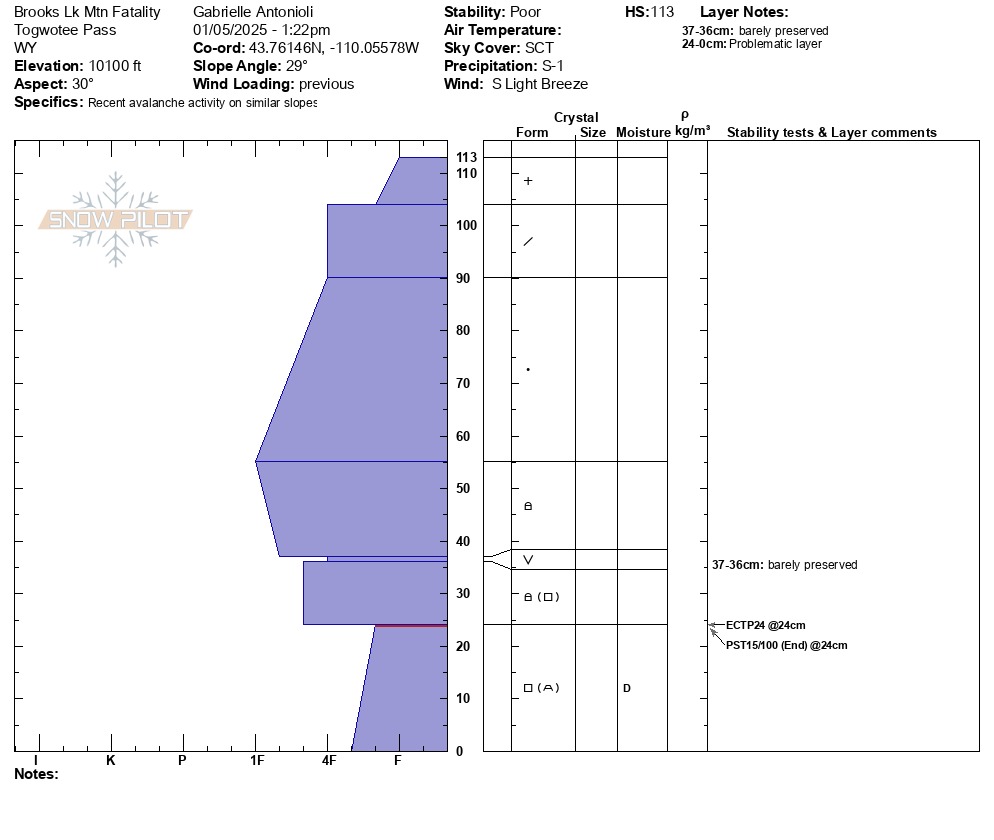
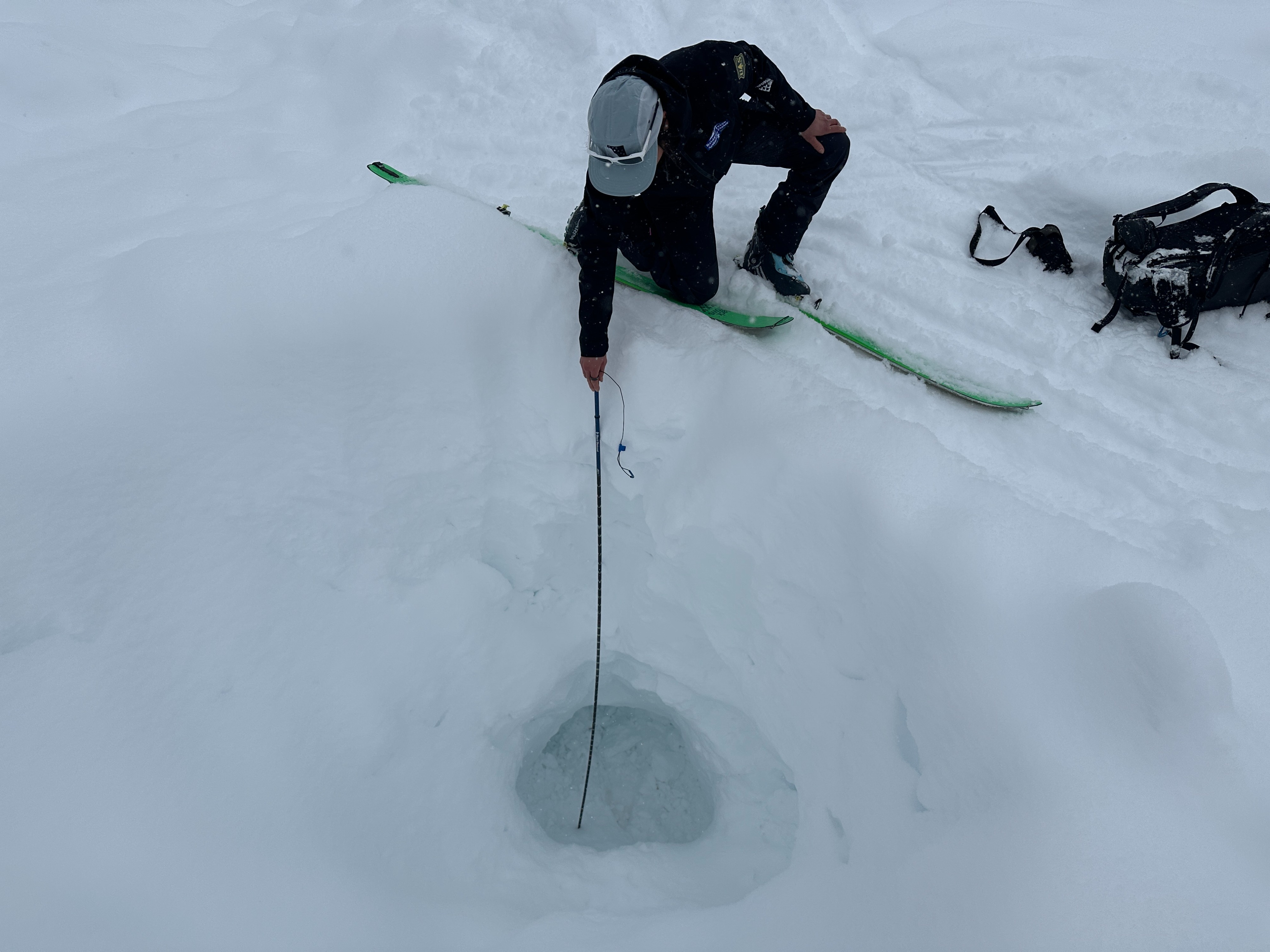
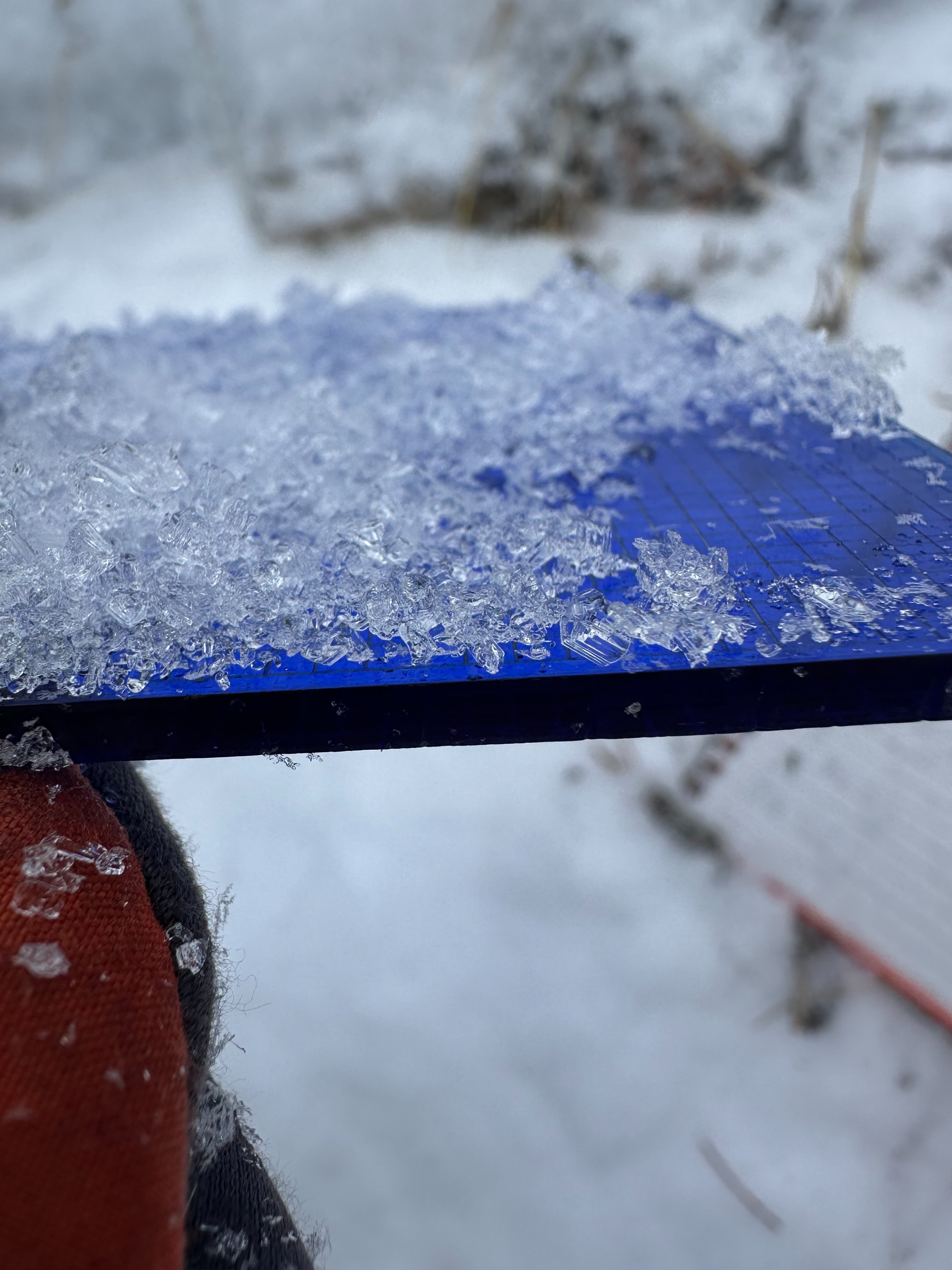
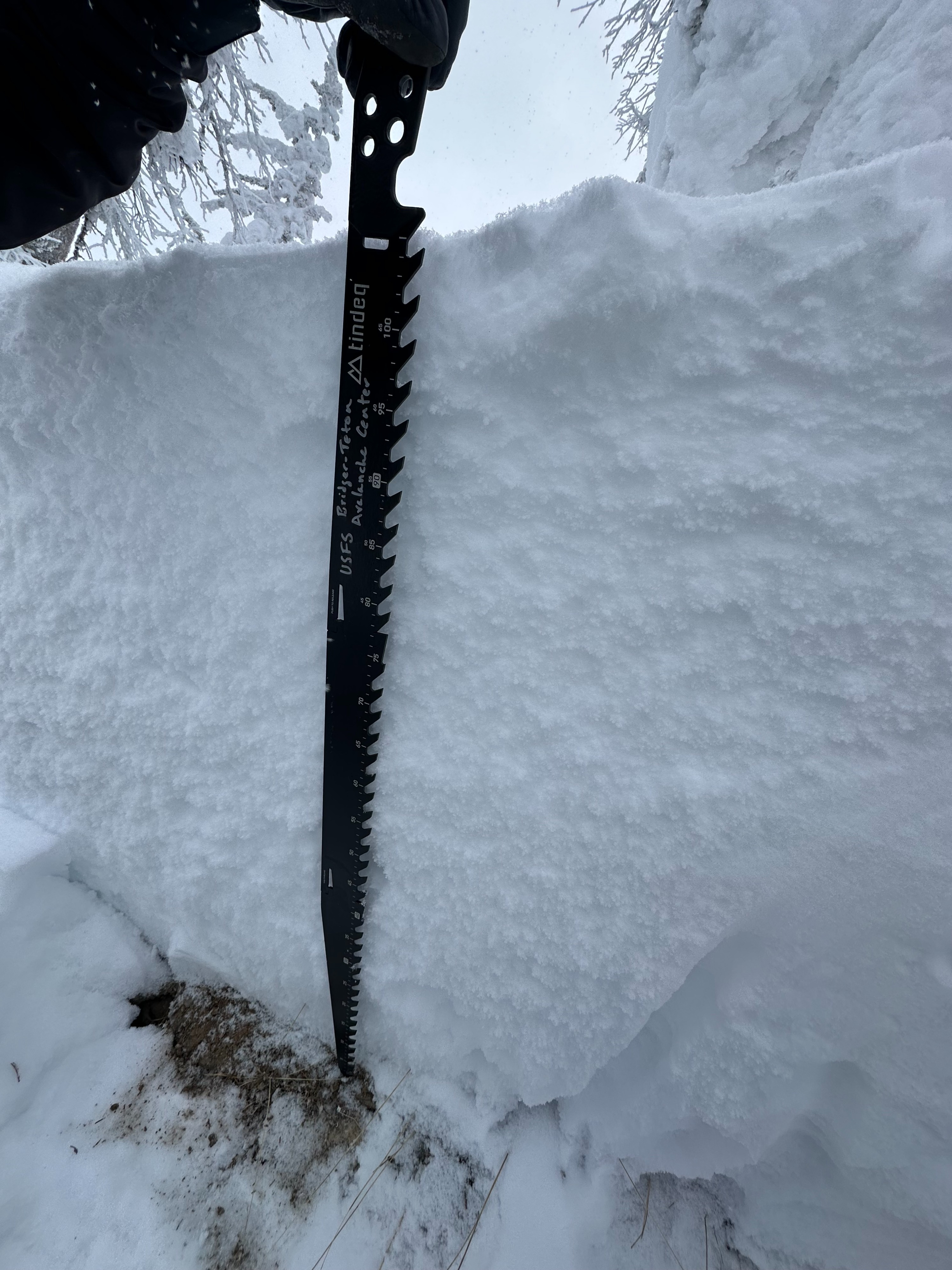
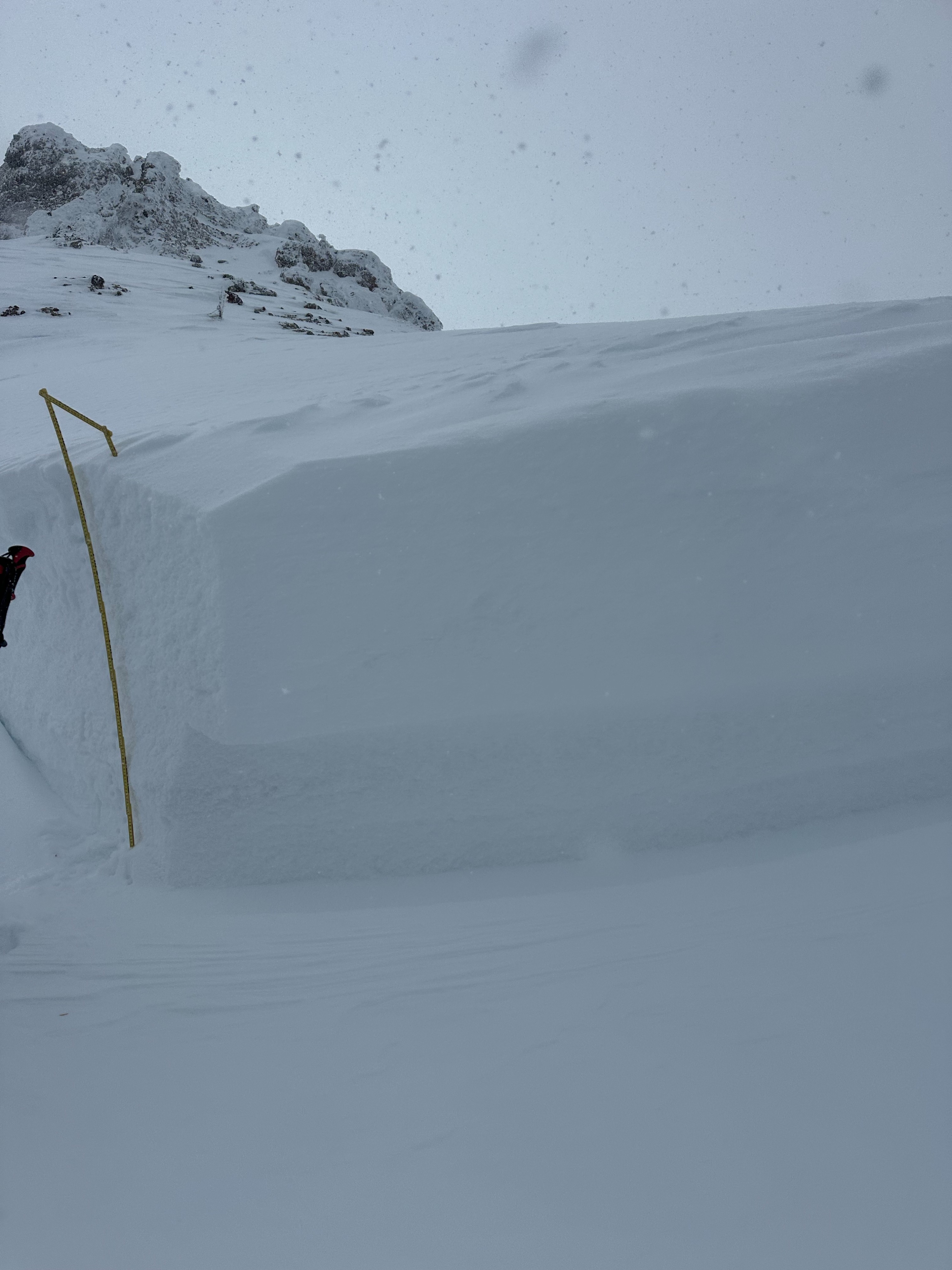
Crown Profile: The crown spanned ~400 feet and joined pockets of treed terrain; approximately four smaller avalanche paths connected above to one large, steep snowfield below a rocky ridgeline. The crown height ranged from 1-4 feet, composed primarily of a winded hard slab of older snow beneath the newest snowfall on top of F-4F well-developed, dry facets ranging 2-4+mm. Snowpit tests revealed hard failure results in an extended column test (ECTP24) likely due to the hardness of the slab and the depth at our location at the crown (~ 1 meter [3 feet] deep). Easy failure was observed in several propagation saw tests (PST 15/100 End). A secondary, smaller avalanche was sympathetically triggered in the creek drainage below and ran less than 50' from the toe of the primary avalanche debris.
Weather
- Cloud Cover
- broken
- Wind Loading
- previous
- Recent Snowfall
- 8
- Snow Avail For Transport
- small smounts
Snowpack
The snowpack at Togwotee Pass now ranges from ~1.5-4 feet. Most slopes, other than those facing due south at middle elevations that were bare ground in early December, hold around 1 foot of weak, faceted snow at the base of the snowpack. This snow has remained the primary cause of instability with each passing storm cycle and/or warm-up. Even small amounts of snow and wind can tip the scales here. This weak snow will also continue to be buried deeper, though the possibility of triggering it will remain. This means that the consequences of triggering an avalanche are increasing with each passing storm. Obvious signs of instability, like cracking or collapsing, are becoming more limited. The nature of the snowpack problem requires patience, snowpack investigation, and careful navigation around steep terrain. Wind-loaded slopes are particularly suspect, especially on steep, rocky features that may also hold shallow spots capable of triggering layers buried more deeply on other areas of a slope.
Avalanche
- Size
- D2.5 R4
- Type
- HS
- Aspect
- NE
- Trigger
- AS
- Elevation
- 10300 ft