
Quick report
- Cracking
- isolated
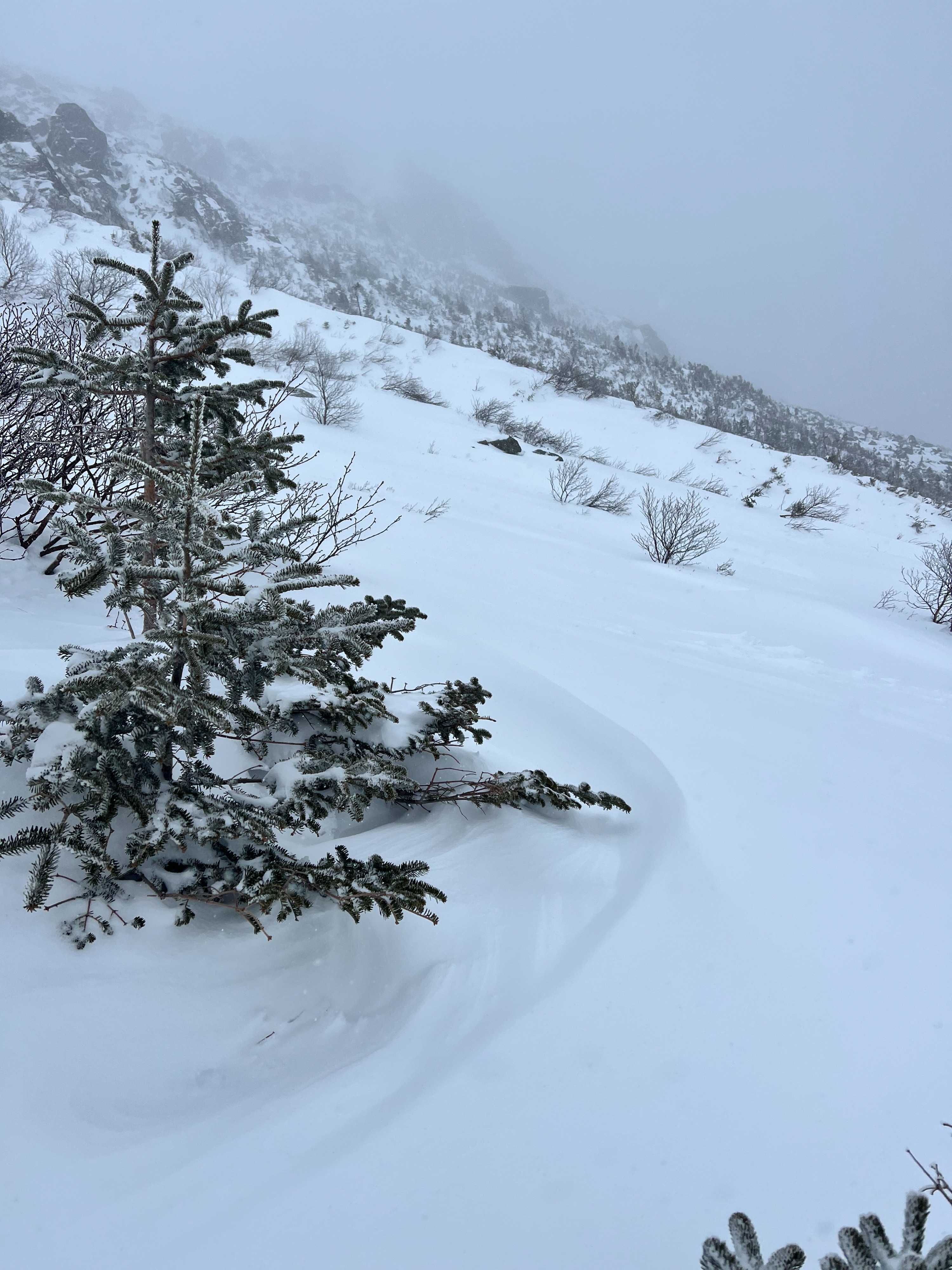
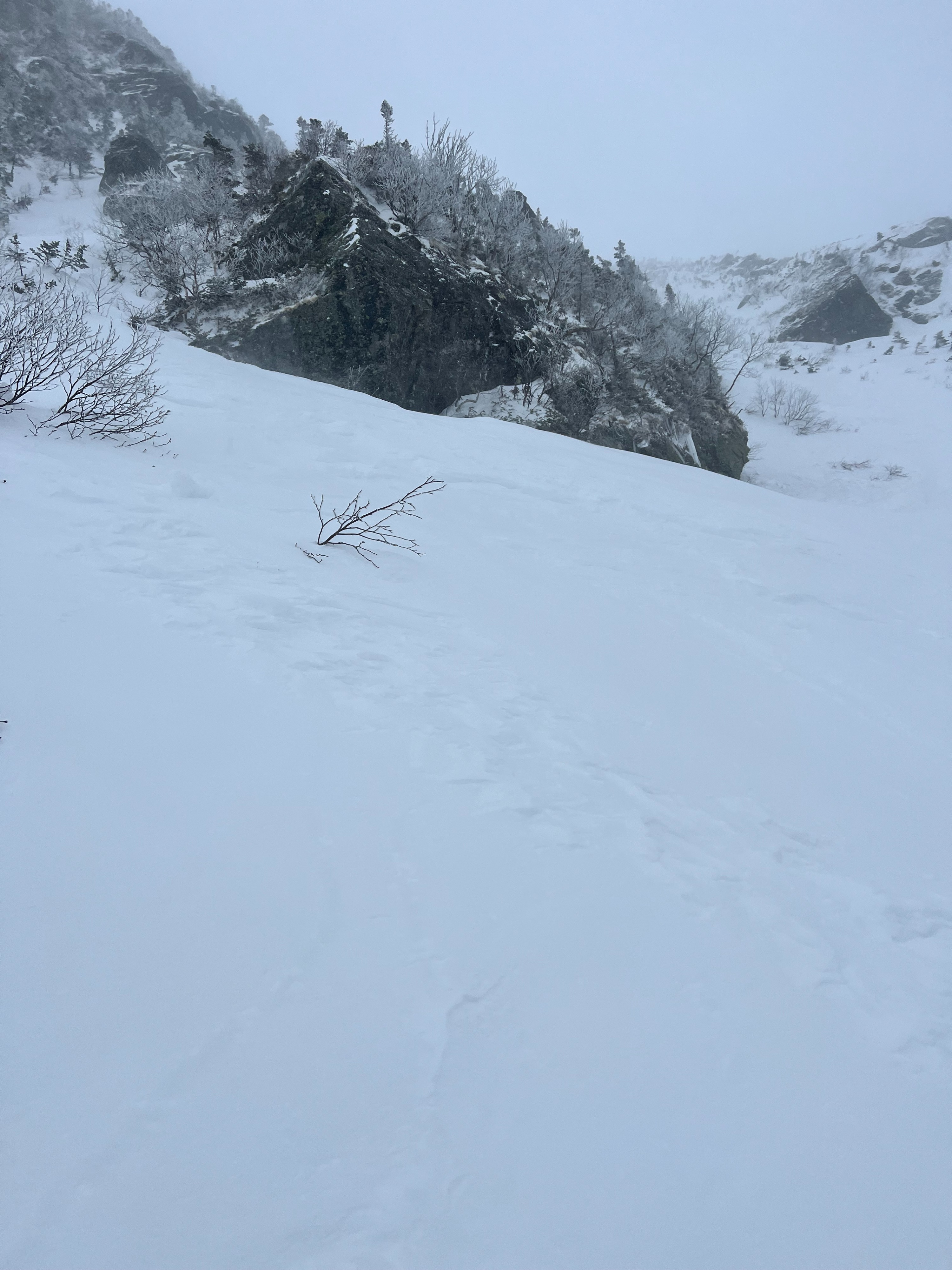
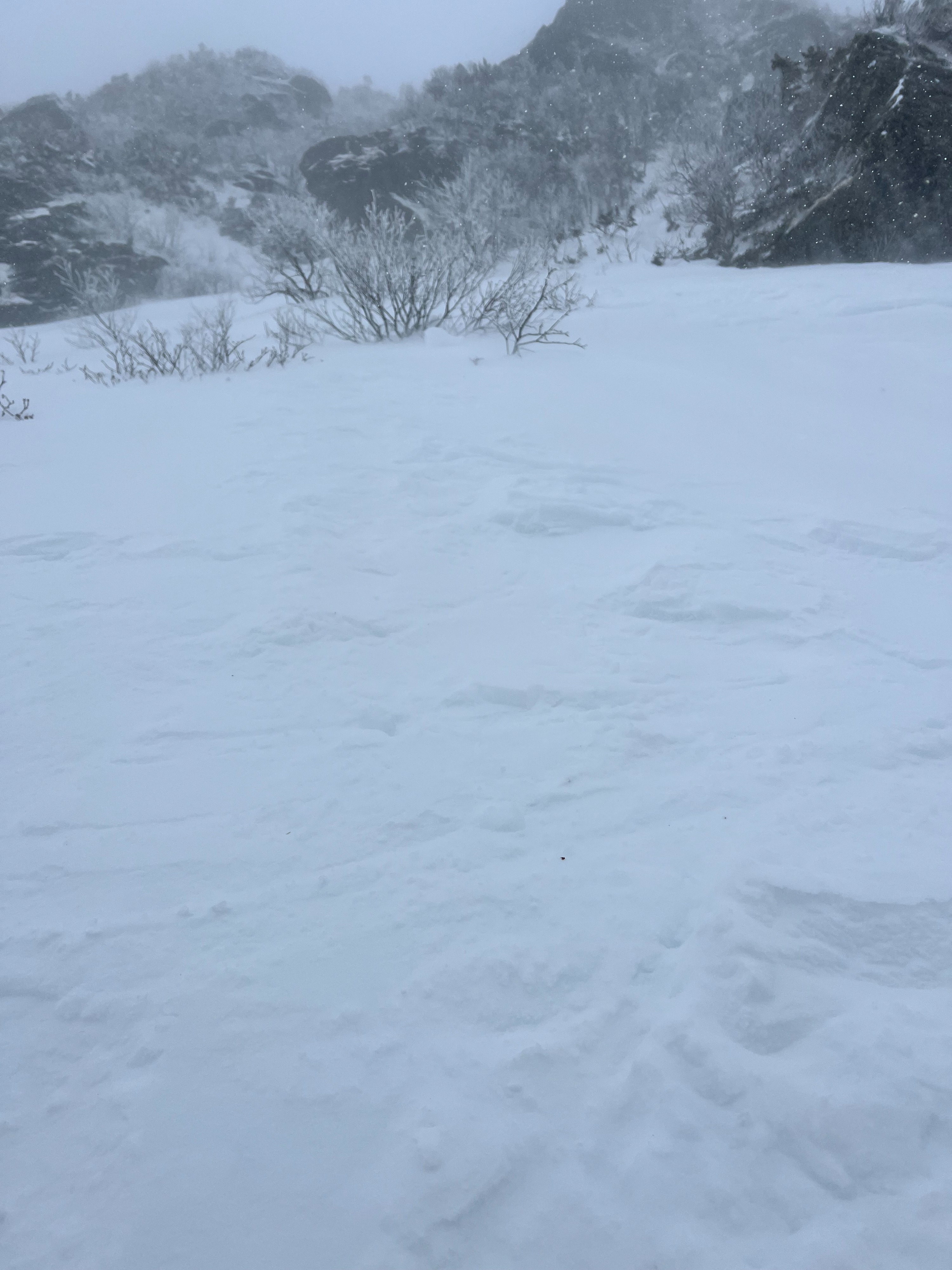
Objective of the day was to compare northeast and southeast aspects in Tuckerman Ravine ahead of winds shifting back north with high wind speeds, gust, and with rapid loading potential. SE was found to be very wind affected with variable snow depths and scouring down to the 3/12 melt freeze sun crust. Newly transported snow this evening may struggle to bond to this slick surface and may be a potential bed surface for natural avalanches. As start zones and run outs are now very defined, subsequent avalanches have the potential to be large in size. NE was observed to have storm slabs that were not very reactive- but in places that had a steeper slope we did observe shooting cracks. There is snow available for transport so hazard will be increasing as wind direction changes and wind speeds build.
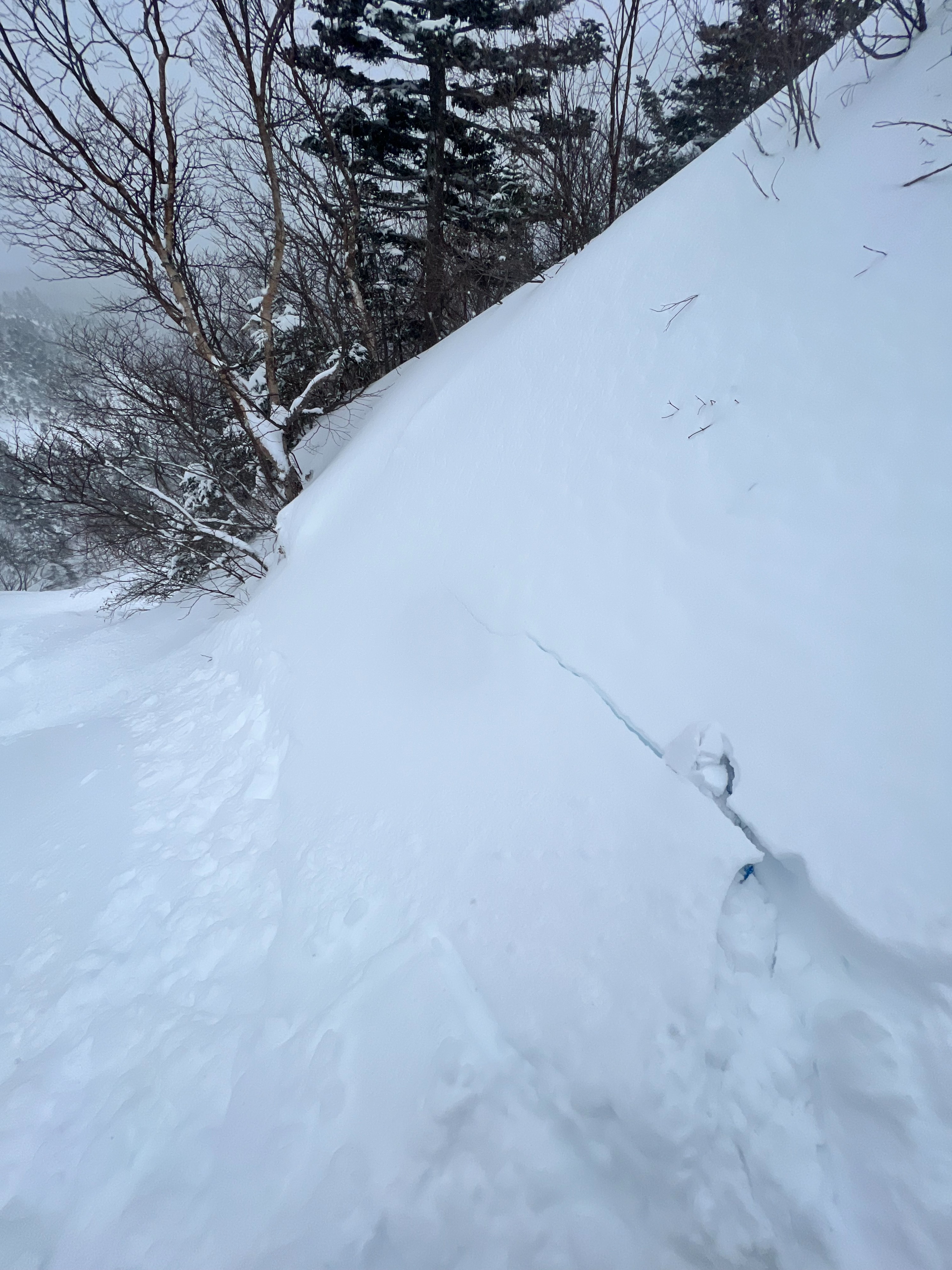
Experienced isolated cracking under skis and this was noted as a surface instability. This was isolated to a few places where the surface snow was slightly firmer and the snowpack was upside down (meaning that the surface snow was 4F and the snow underneath was softer at F hard- so stronger snow on top of weaker snow). The cracking was within the 4F snow and ranged from 2-4 in in depth. In southeast aspects in Tuckerman Ravine the most reactive snow we found was on an angle of 37 degrees, all the cracks were located underneath my skis and while there were some longer cracks they lacked energy to be truly concerning. Skiing out the Little Headwall we did observe a shooting crack that propagated laterally in a storm slab. This slab was located on a slope angle of 39 degrees, was northeast facing, and sheltered from the wind. This slab is on top of a slick melt freeze crust. While it the shooting crack was easy to cause, the slab was stubborn to move downhill (see picture below)Weather
- Air Temp
- 12
- Cloud Cover
- obscured
- Wind Loading
- moderate
- Rain Elevation
- Not Observed
- Recent Snowfall
- 25 cm
- Snow Avail For Transport
- moderate amounts
Had east winds that shifted to northeast during our time in the terrain. We observed moderate windspeed with moderate loading of snow. Snowfall started at S2 but slowed to S1.
Snowpack
Between Lobster Claw and Right Gully snow depth was very variable. At the time of observation this was a windward aspect that had a lot of wind affect and scouring, especially in the higher zones. Did not get a great look at the start zones as visibility was obscured by falling snow, transported snow, and fog.
In the most sheltered and treed places depths were 2.5 feet of soft snow. In the majority of the terrain the more sheltered depths were 1.5 feet, the average depth ranged 5-8 inches, and there were many places that was wind scoured to the 3/12 melt freeze crust or had trace amounts of snow on top. Ski penetration was 11 cm and boot penetration was 29 cm.
Observed riming in the new snow, this was found most prevalent in the snow with a HH of 4F.
Northeast aspects were not as wind affected and snow depths were far more consistent at 20-25 cm. While hand shears were stubborn, snow was most reactive in the top two inches. The snowpack was 4F on top of F on top of a slick Pencil hard surface. Northeast aspects were inline with the forecast’s secondary problem of storm slabs.