
Quick report
- Cracking
- specific
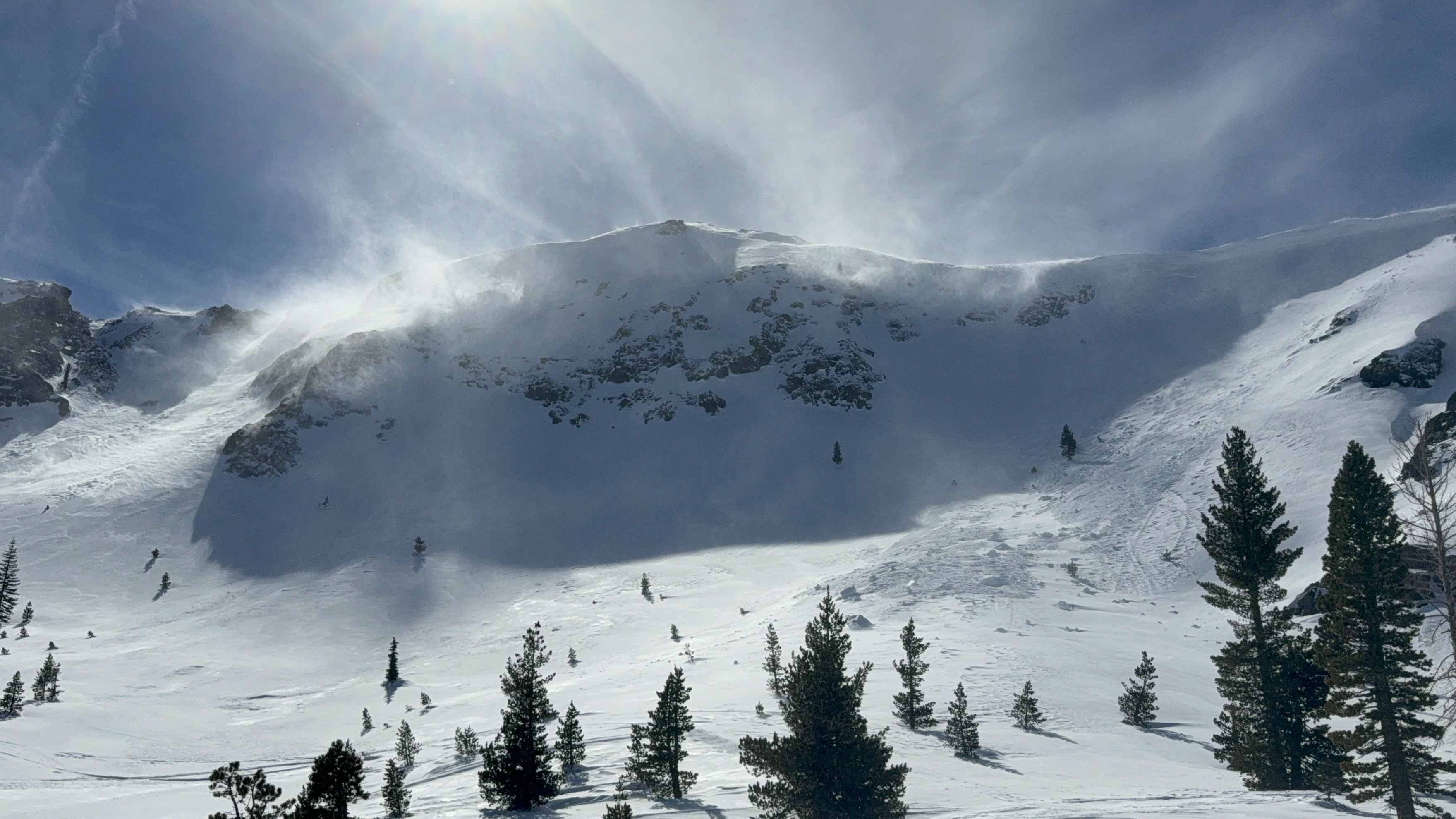
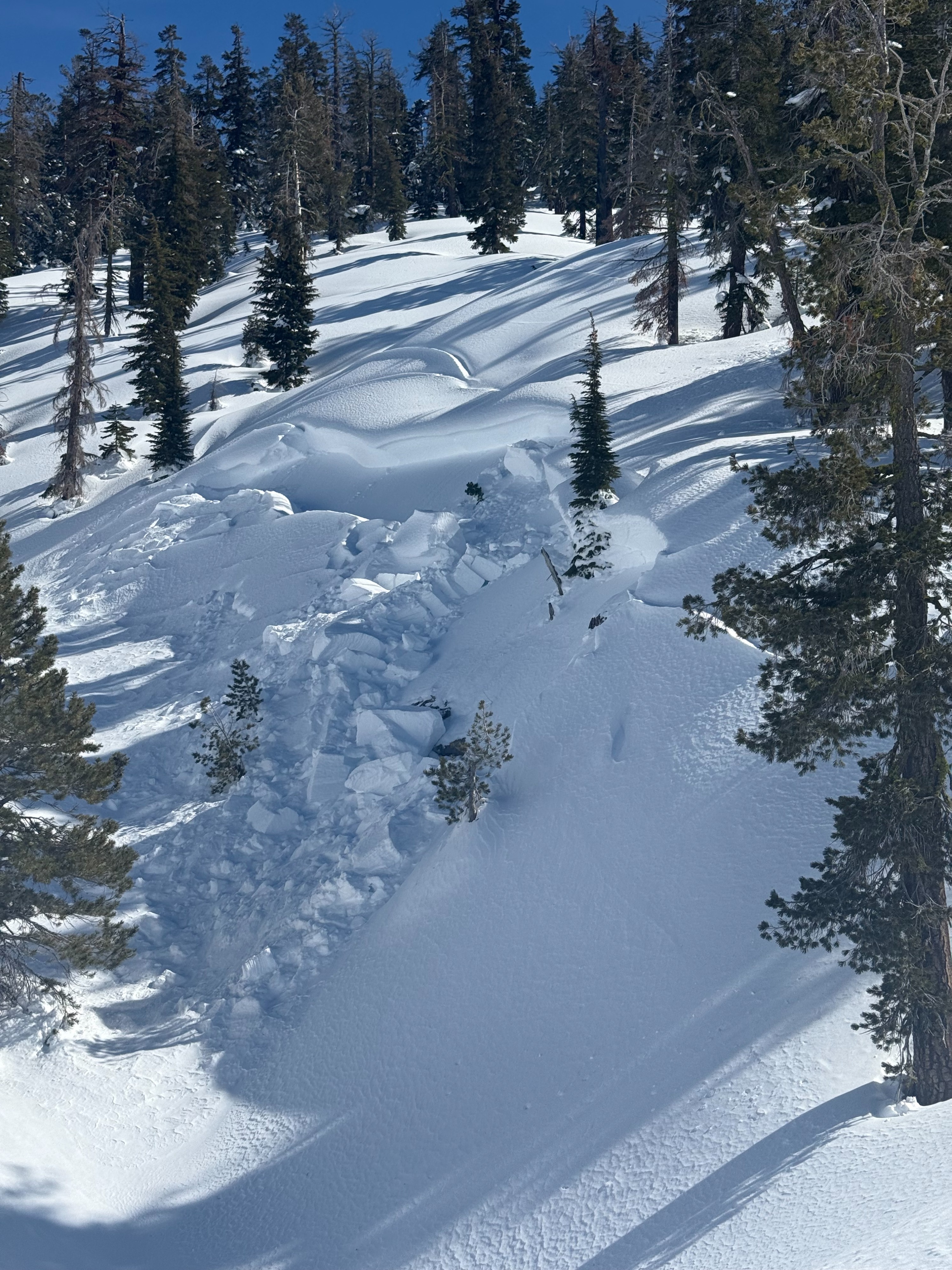
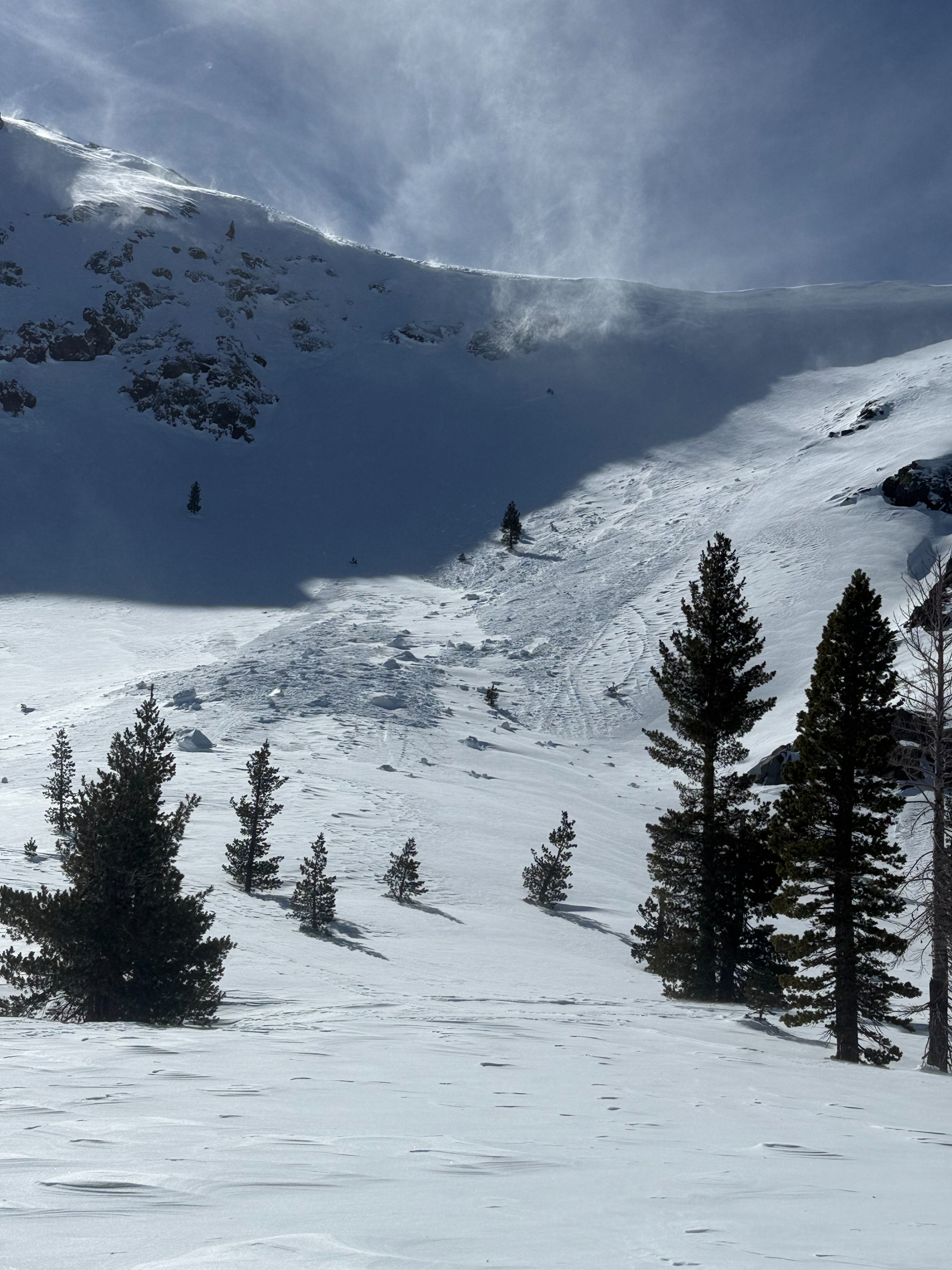
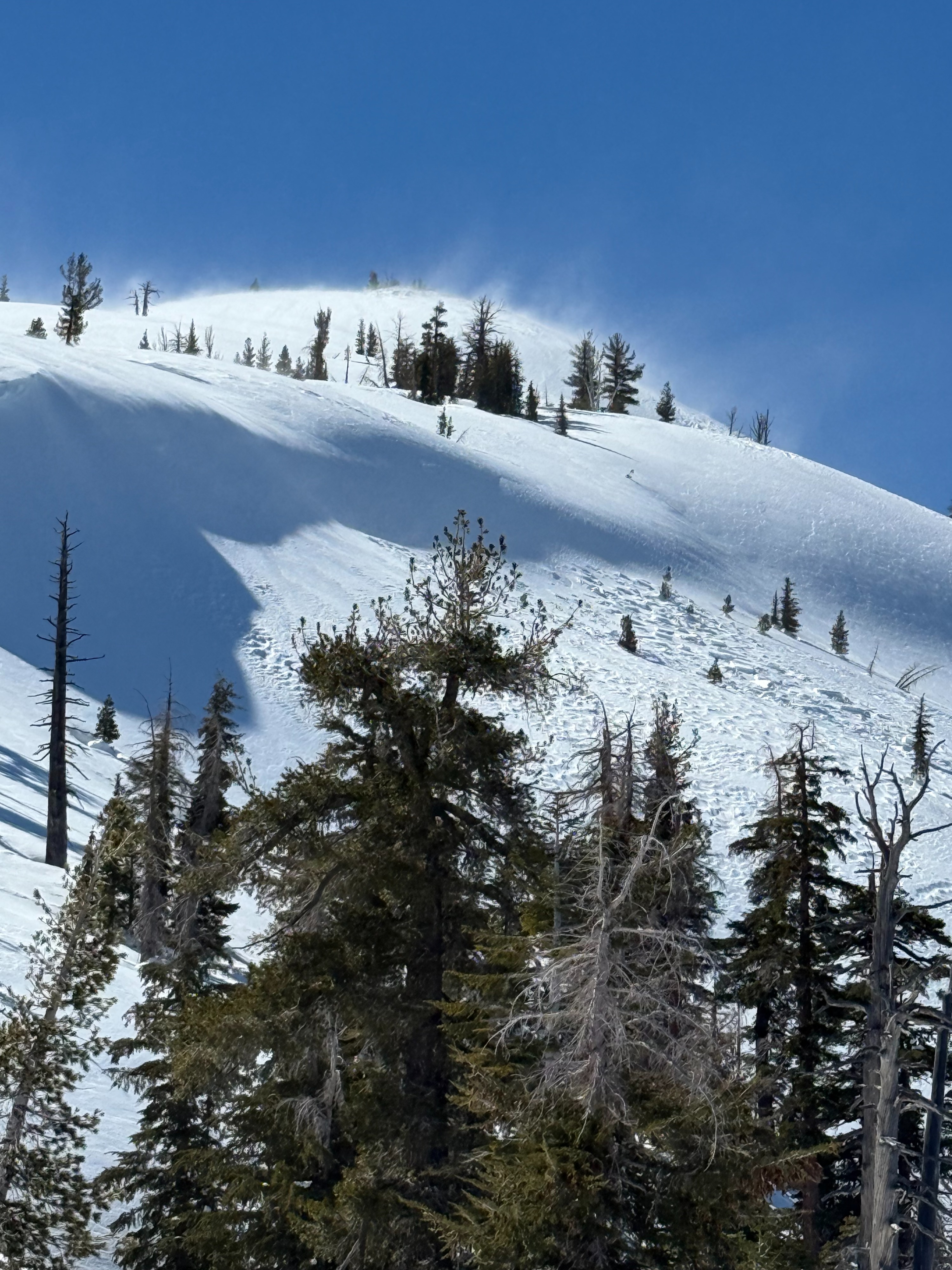
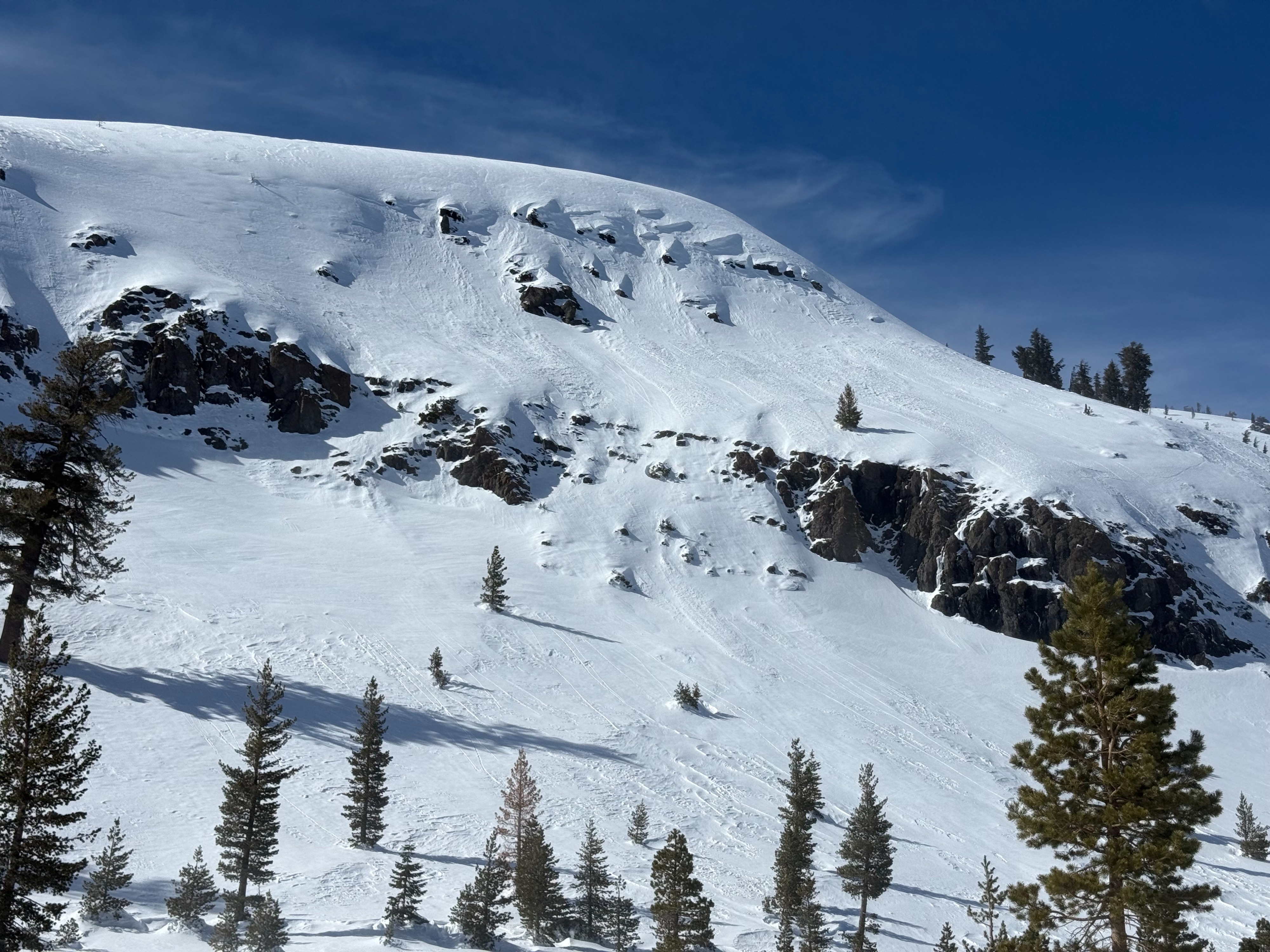
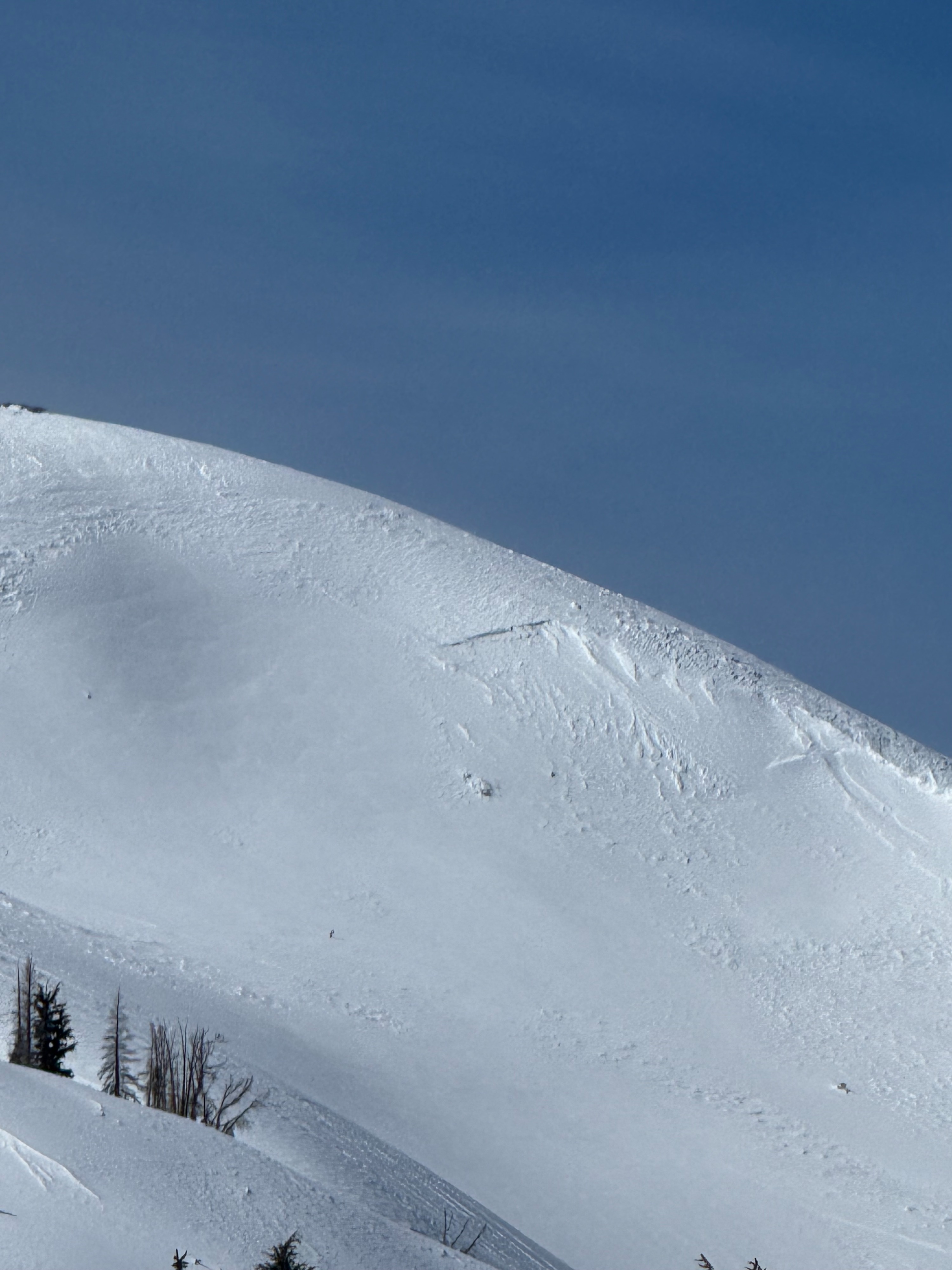
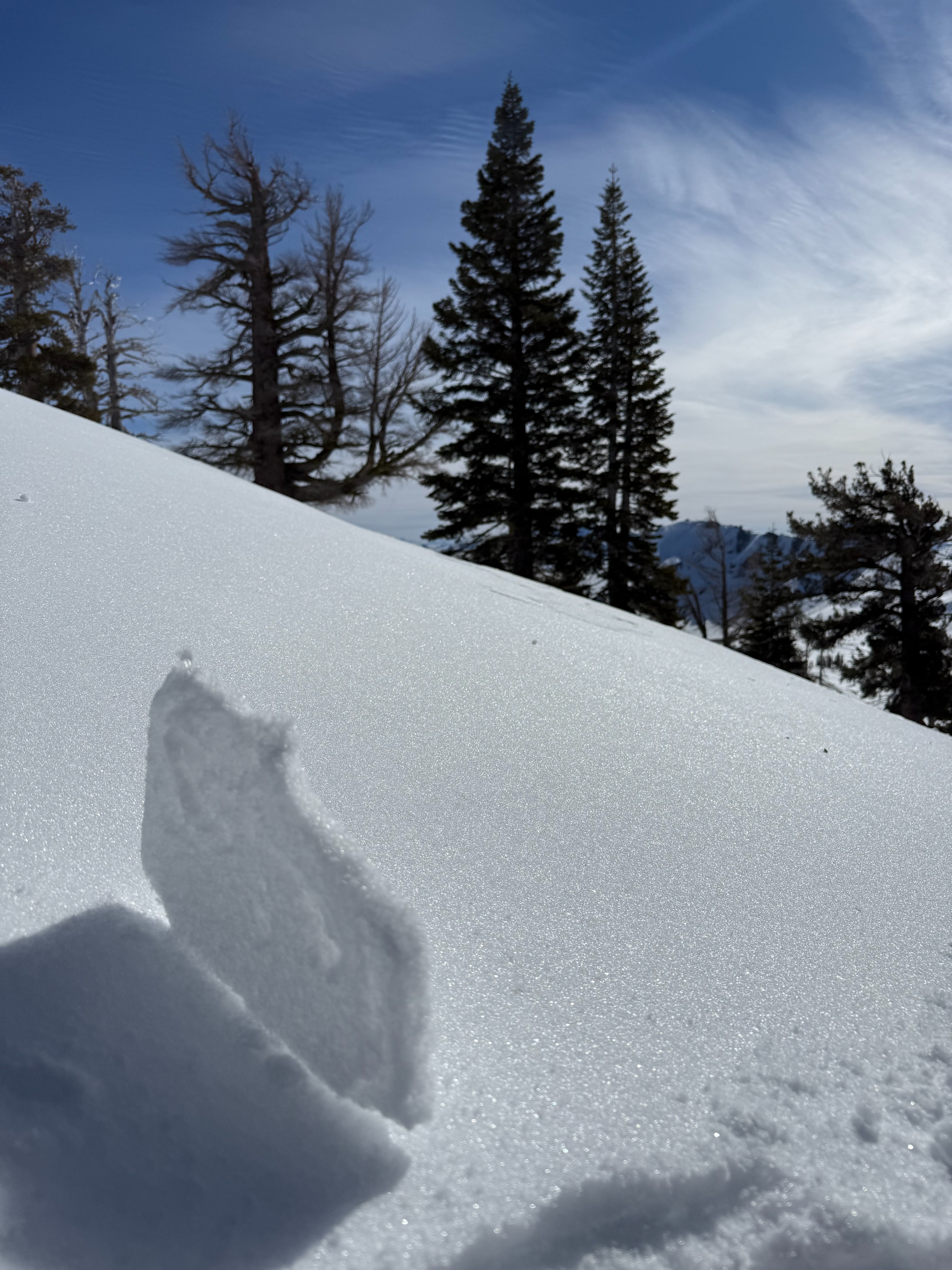
We went to the Blue lake's area to observe newly formed wind slabs and the avalanche that was reported on Blue Lakes Rd. There was a melt freeze crust on S-W aspects . North's held cold, soft snow Near and BelowTree Line. The alpine was wind hammered. The wind was sustained all day, with active turbulent suspension of the blowing snow. The closer to the crest, the more inconsisntent the wind direction became. All elevations and all aspects we saw had been touched, scoured or affected in one way or another. Skiing showed a widespread windboard. During our journey, we noted a natural D2 cornice collaspe that broke a wind slab below. We did not witness the avalanche, but the debri was new in the afternoon. Multiple natural wind slabs debri fields were seen on leeward slopes, NW-SE; matching the forecast. The wind was filling in tracks and covering debri piles within an hour. It was hard to get a sense of how old things were. My guess is that all wind slabs seen in the pictures are within the past 24 hrs. Observed wind slabs ranged from 10cm- 60cm in depth, 1 finger to pencil hard, 50-100 feet wide. There was clear wind deposition areas and cracking on the surface.
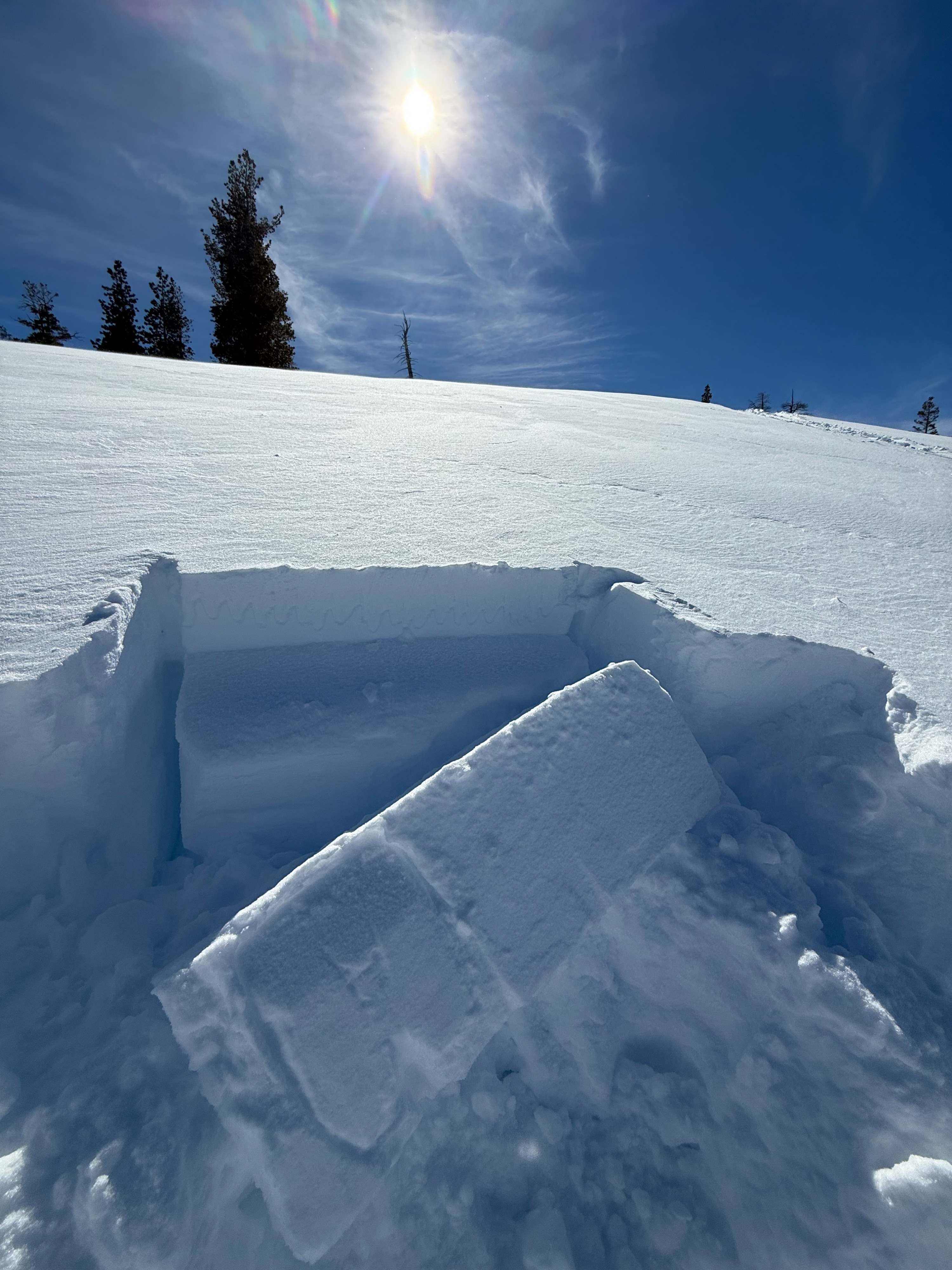
We dug a pit at 8,200' on a north facing slope that was being wind loaded. The wind slabs were reactive sitting ontop of fist soft snow. They showed a ECTP3 down 14cm, with Sudden Planner results down as far as 70cm during CT tests. The Feb 10th facet layer was down 160cm in this location. The facets were 4F soft, with a 1F+ slab above the crust. We did not observe any wind slabs that stepped down to the facet layer.
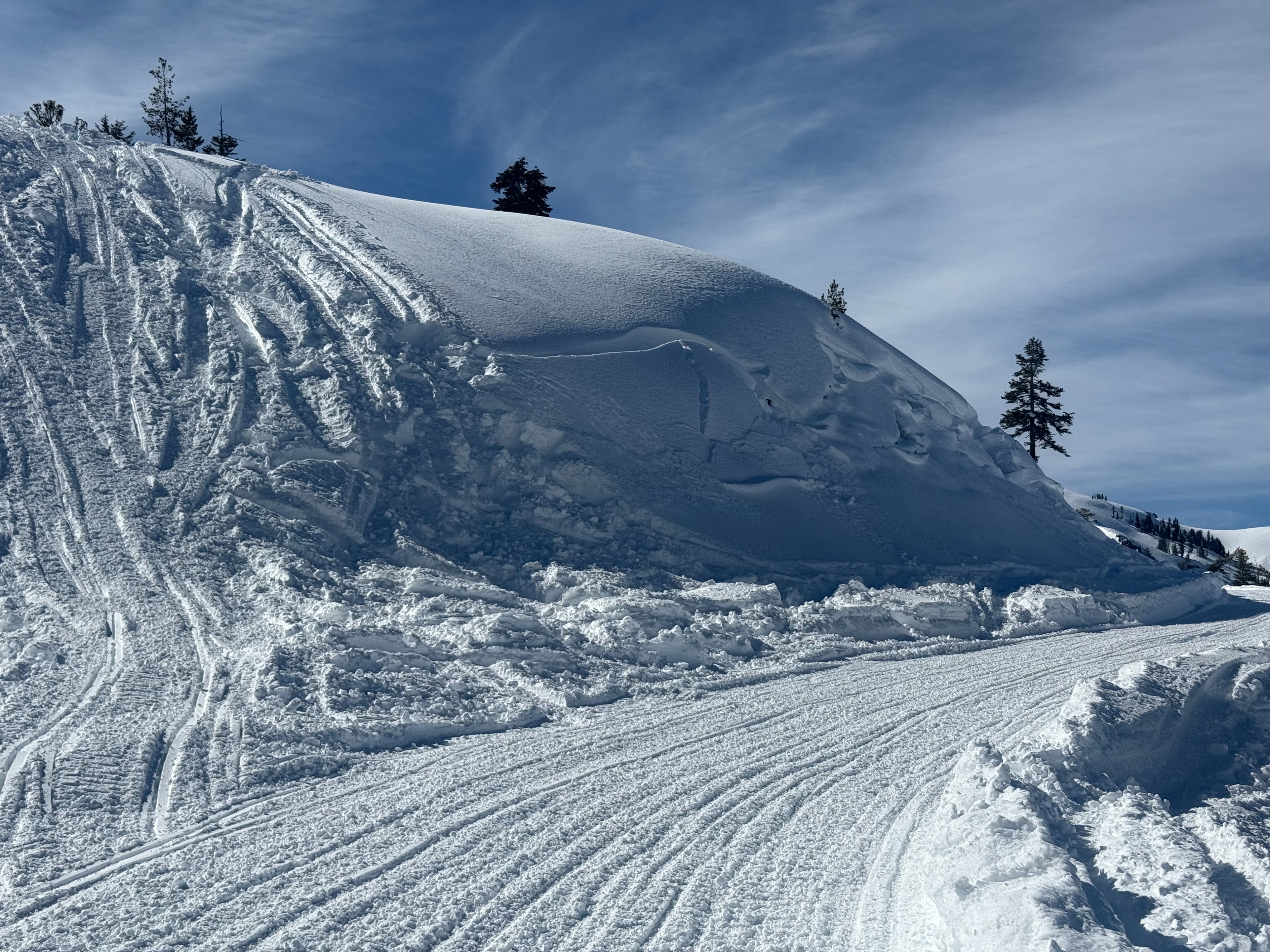
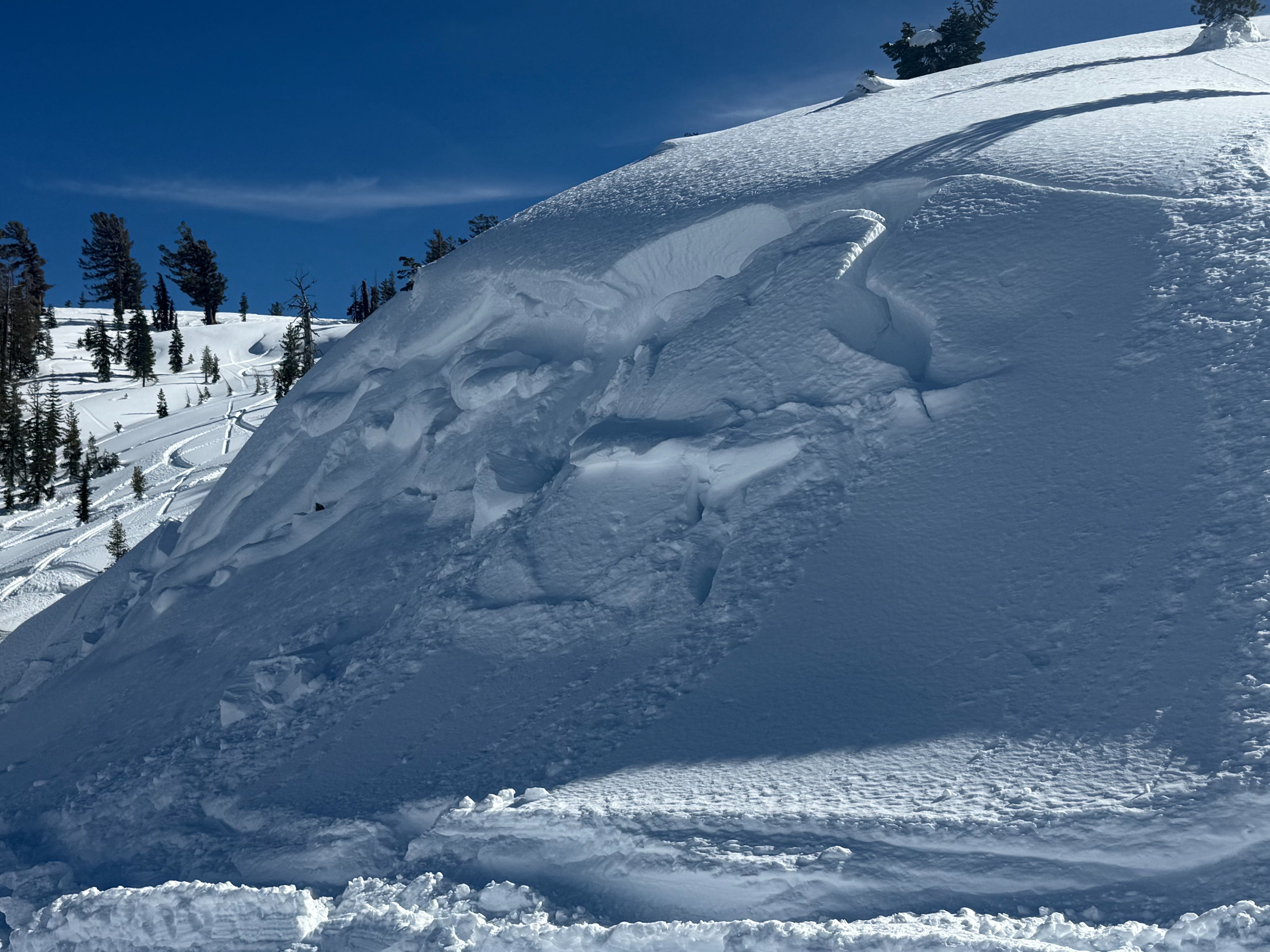
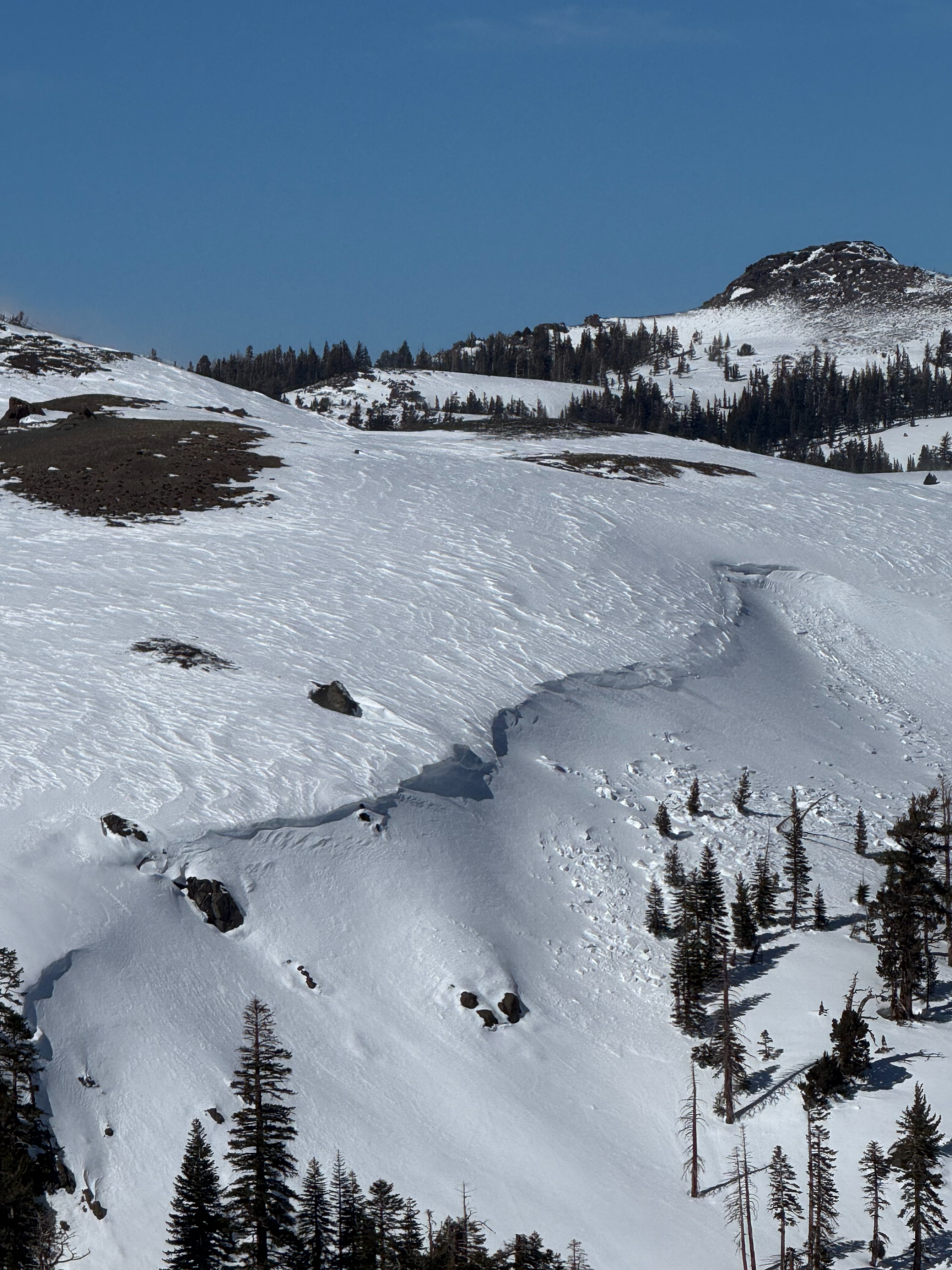
We checked out the avalanche reported on Blue Lakes Rd at 8,200' on a North facing aspect. This area is in a sheltered gully protected from the wind. The depth of the weak layer was 150cm down, which was 4F+ soft with a pencil are hard slab above. There were two avalanches, a natural release and snowmobile triggered slide nearby on similar terrain. Both avalanches showed propragation and cracking within the snow along the convex roll. These avalanches appeared to have failed on the Feb 10th buried facet layer. They are a humbling sign of the conseqeunces of triggering this persistent weak layer.
No wet loose was observed in the areas we visited.
Weather
- Air Temp
- 38
- Cloud Cover
- few
- Wind Loading
- intense
- Rain Elevation
- Not Observed
- Recent Snowfall
- 0
- Snow Avail For Transport
- large amounts
The winds were predominantly out of the SW. There was moderate to strong swirling winds on the leeward side of the crest. The temperature in the sun was 38 degrees, but in the shade including the wind chill it was reading 30. The winds were actively blowing snow and preventing the surface snow from melting. The sky was sunny and had few clouds. It felt cold and windy.
Avalanche
- Size
- D1.5 R2
- Type
- HS
- Aspect
- N
- Trigger
- N
- Elevation
- 8200 ft
Both of these avalanches are in the same location on also identical slopes. One was a natural trigger, the other was snowmobile triggered. Both show signs of significant propragation within the Feb 10th facet layer with is 150cm (5 ft) down from the surface. The facets were 4F+ hard under the crust, with a pencil hard slab above.