
Quick report
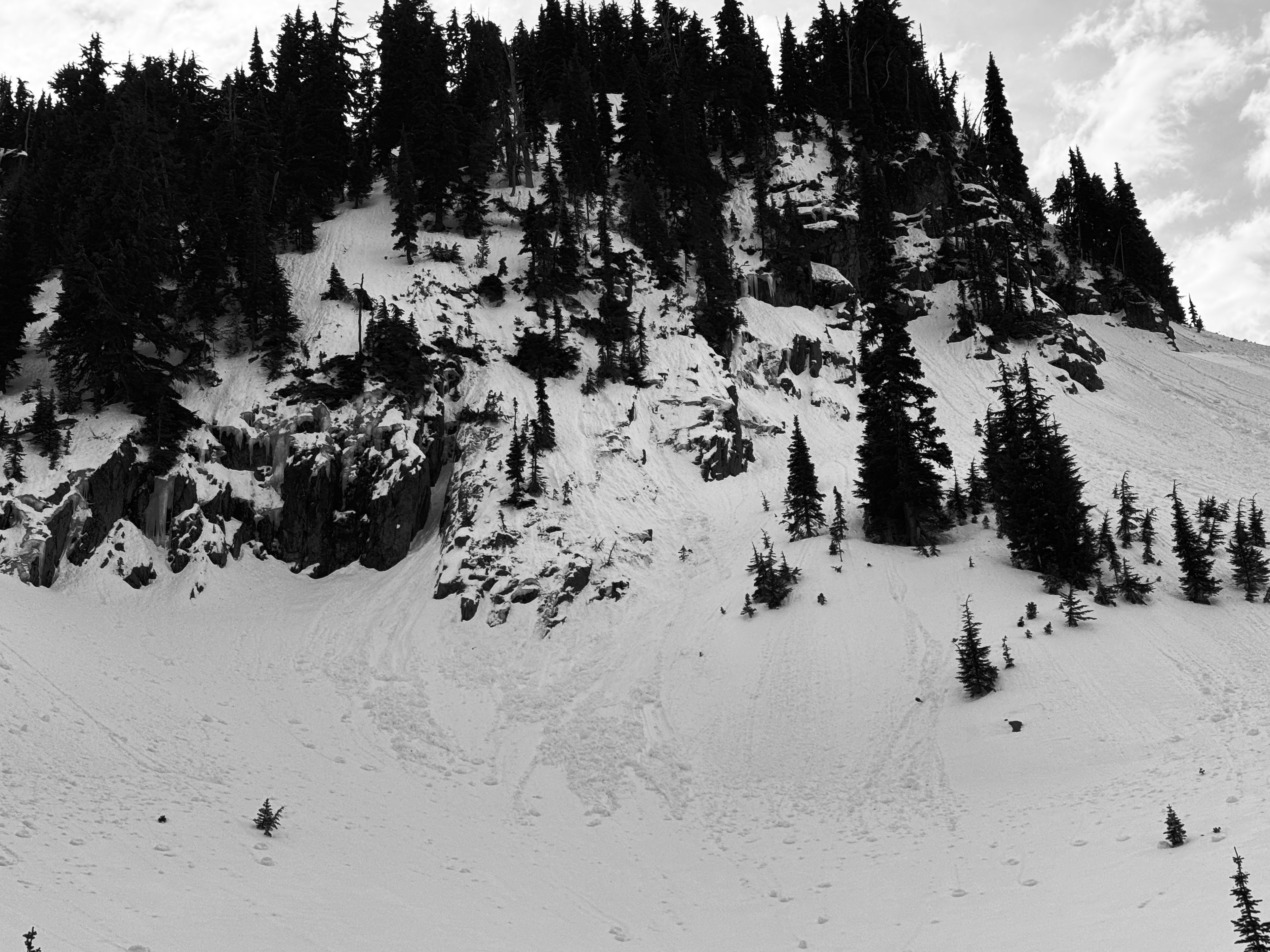
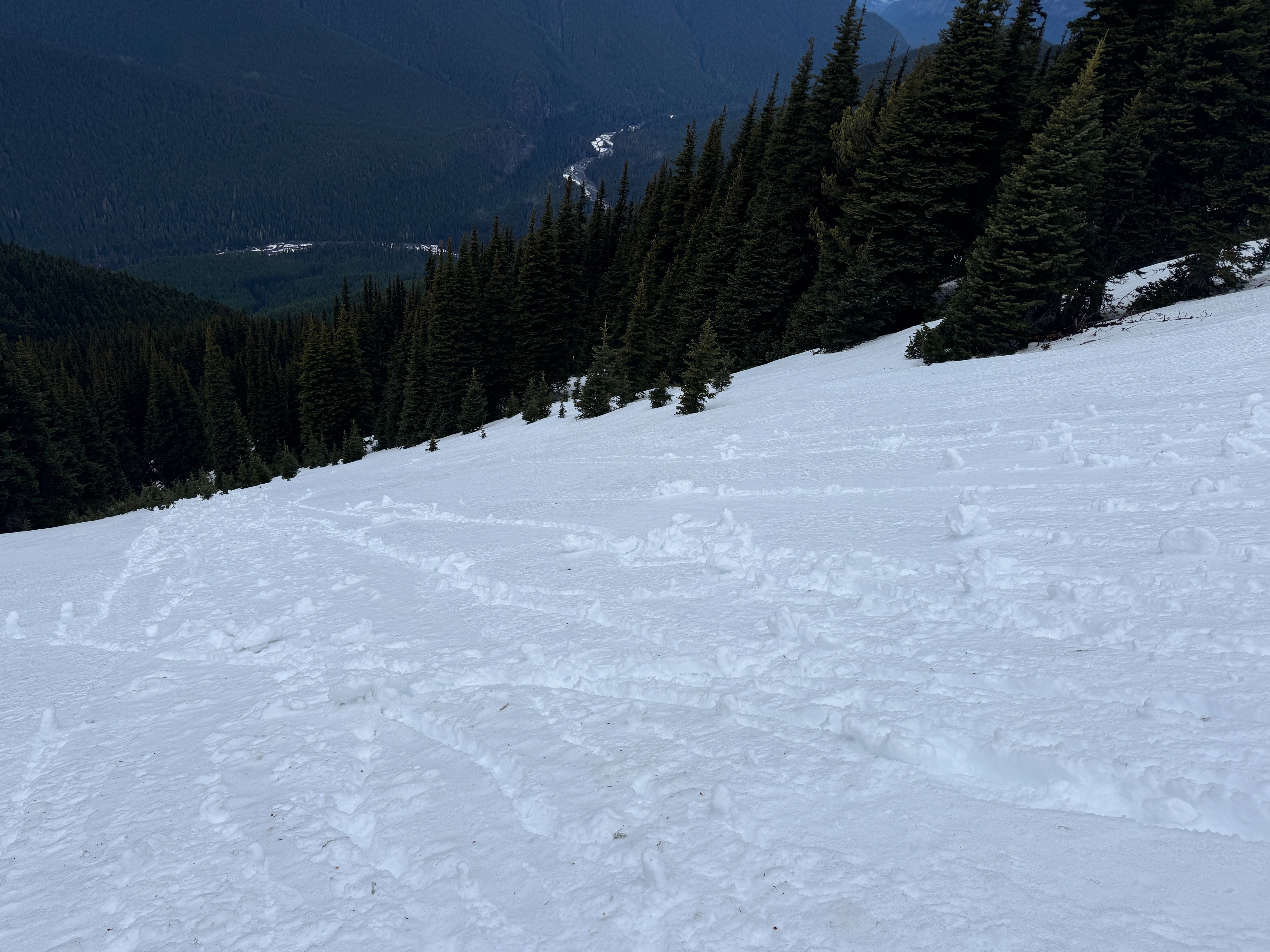
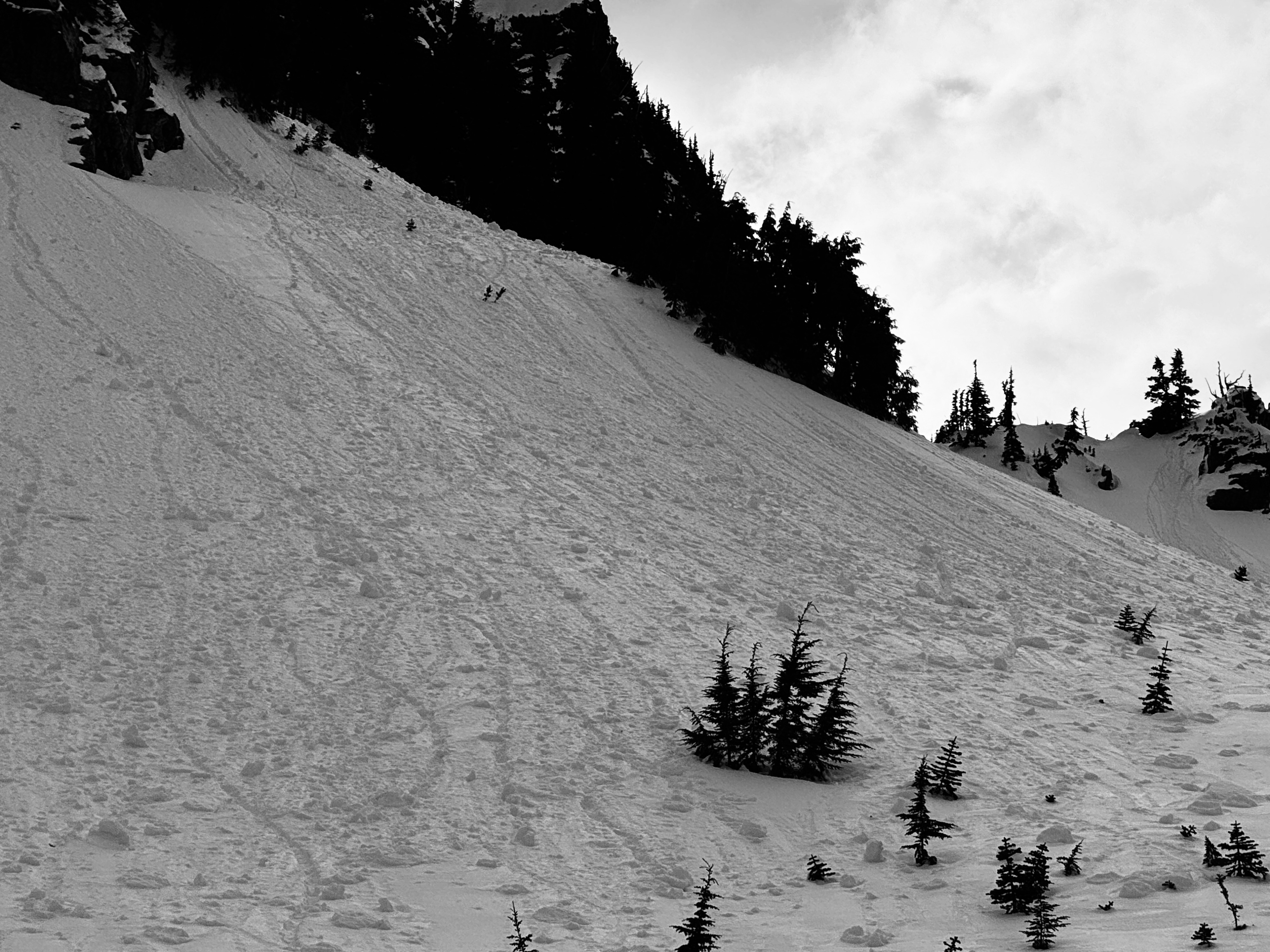
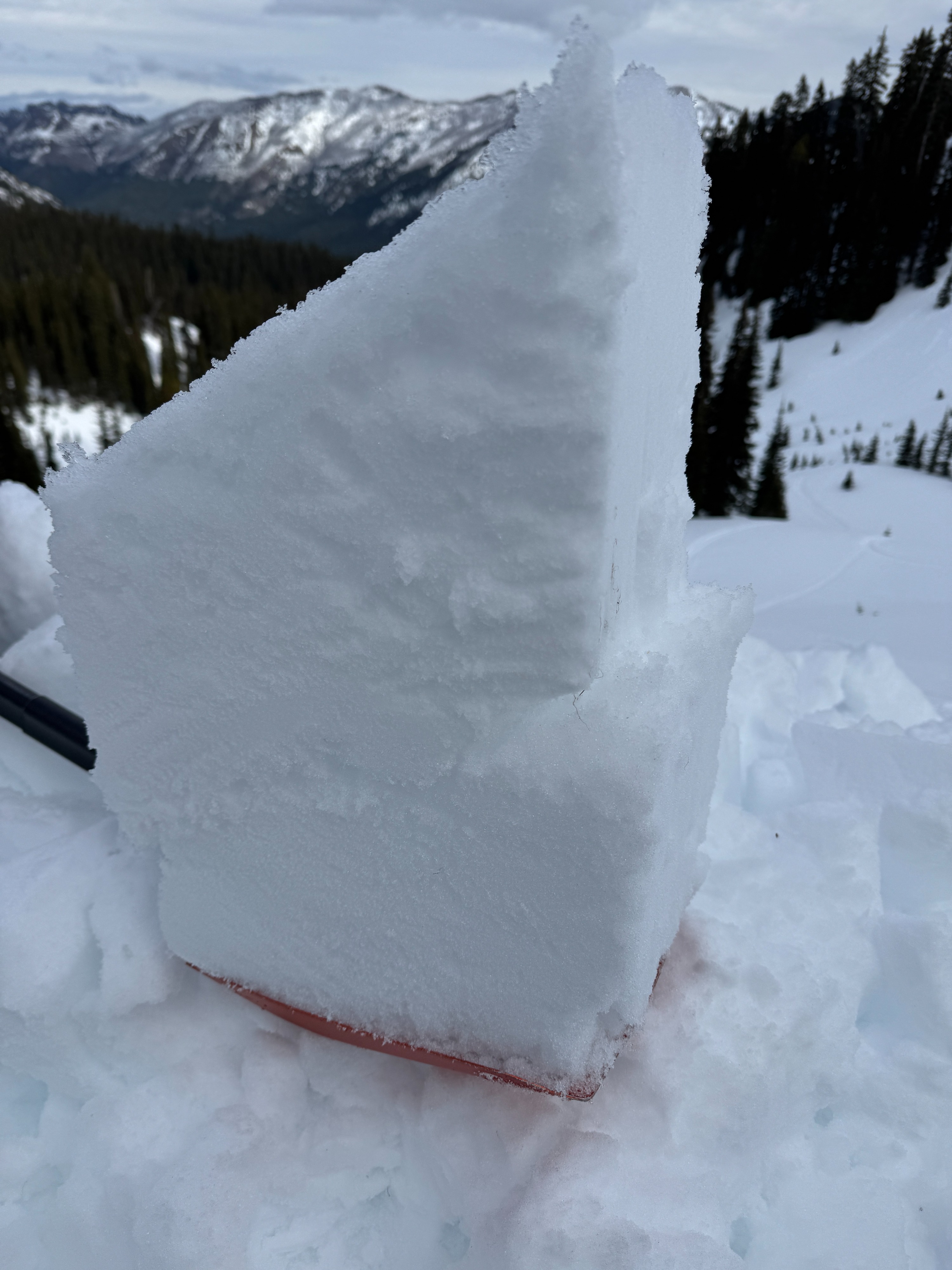
The Crystal backcountry recieved about 6 inches of snow last week. Sadly, the powder didn't last. Rain reached over the tops of the peaks in the areas, leaving 4-6 inches of wet, mushy snow over the old interface. In some places, moist facets sit below the recent snow, making it feel deeper. While we could trigger a few small rollerballs on a couple of steep slopes, they were generally small, didn't travel far, and never resulted in a wet loose avalanche.
No cracking or collapsing.Weather
- Air Temp
- 45
- Cloud Cover
- broken
- Wind Loading
- none
- Rain Elevation
- 7500
- Recent Snowfall
- 0
- Snow Avail For Transport
- none
Cloudy and drippy to start the day, but then the skies began to clear and things dried up. Moderate S-SSW winds were notable, but there is now soft dry snow to blow around.
Snowpack
Wet and mushy was the name of the game today. The recent rained on snow sat over the January Drought Interface. Today we were out looking for two major things: 1. Could we trigger and wet loose slides? and 2. Did any of the surface facets from prior to the storm survive?
While the snow surface was certainly wet, heavy, and sloppy, we weren't able to trigger any wet loose avalanches. However, if we'd tried slightly steeper terrain, maybe that would have changed.
Numerous snow profiles and hand pits routinely found the surface facets at the January Drought Interface. In all cases, they were moist and showing signs of rounding (gaining strength). None of our snowpack or small slope tests produced any significant results. Below the January Drought Interface, the snowpack is a brick! And we didn't see any layers of concern.
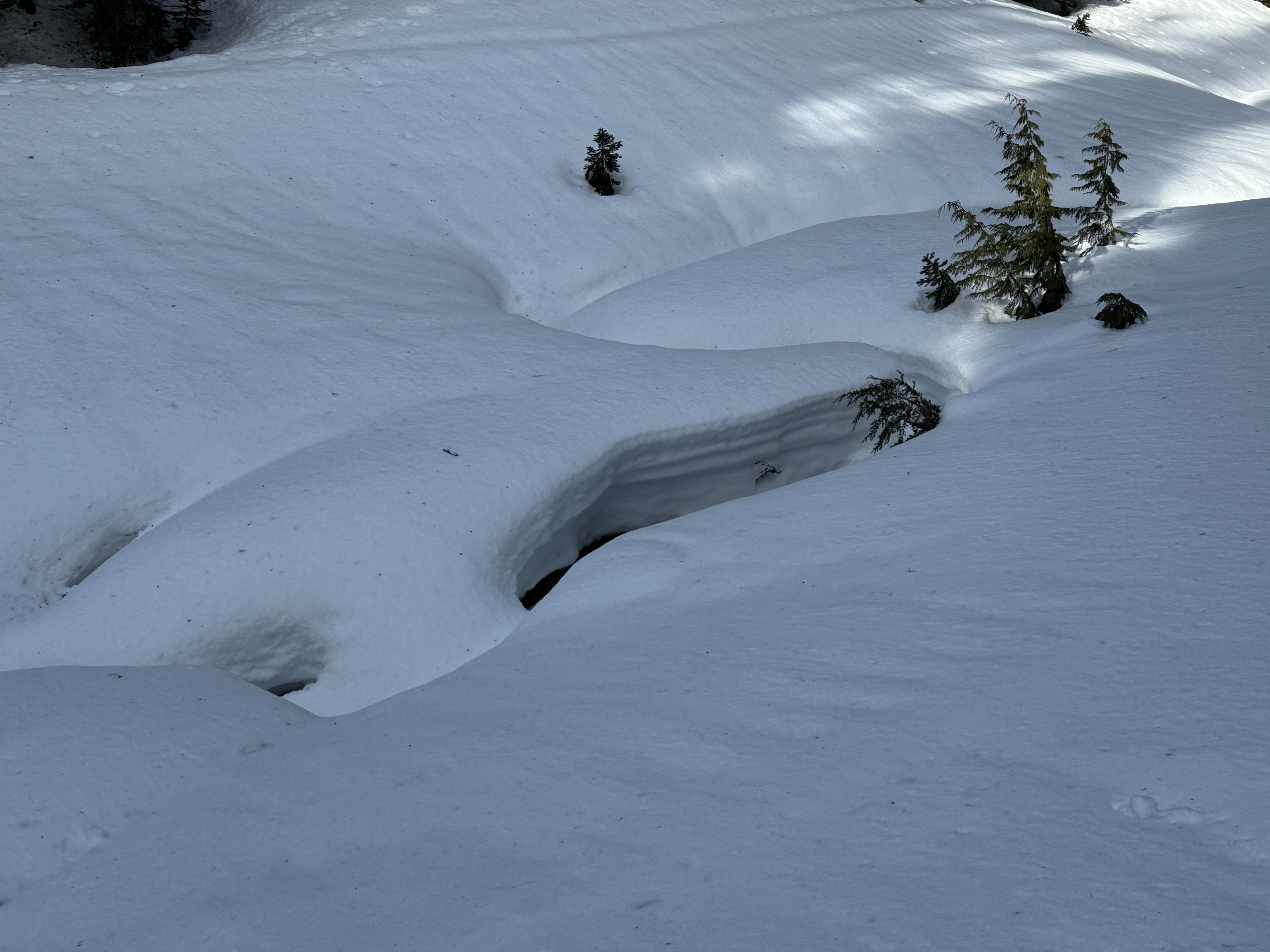
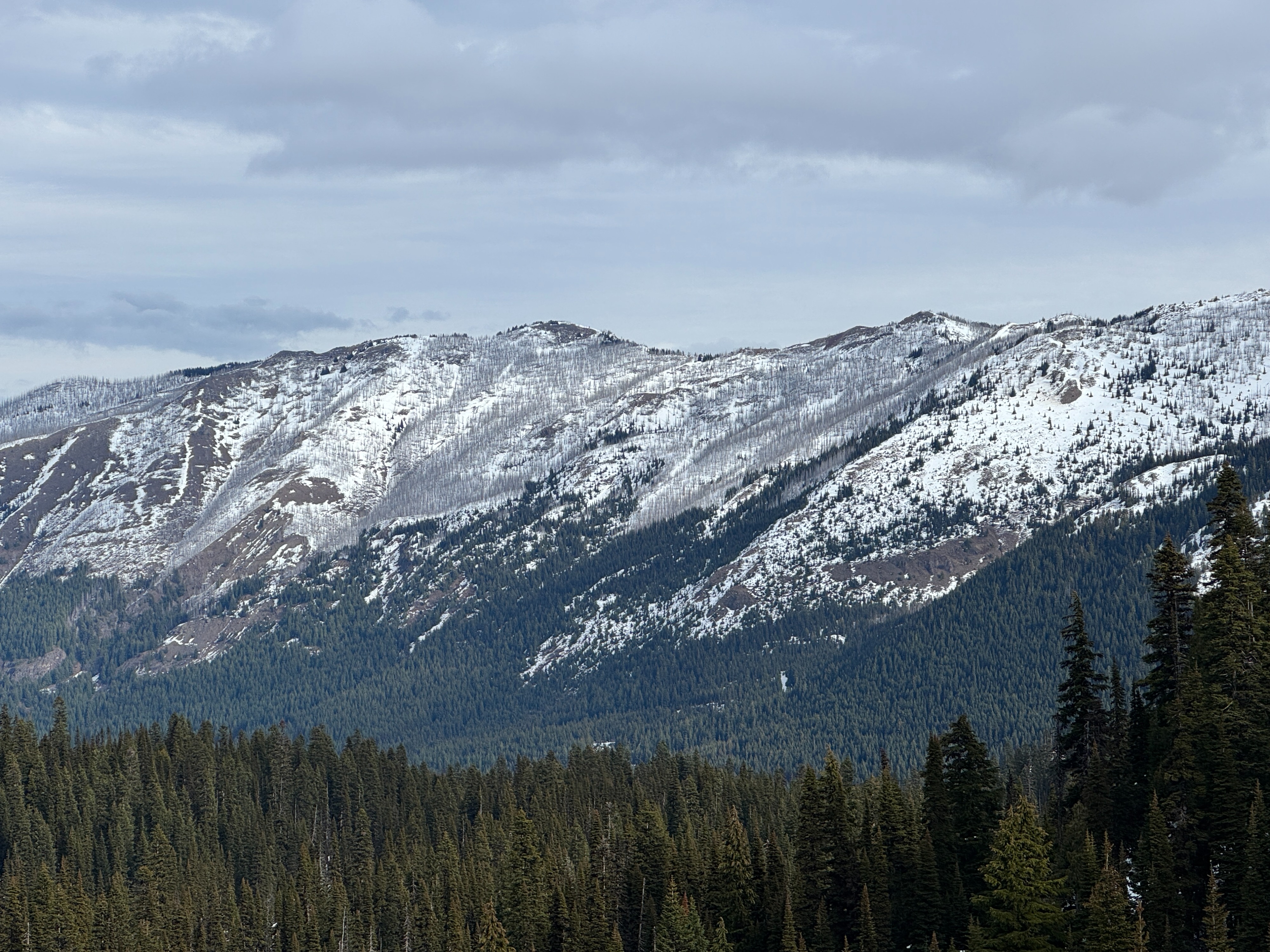
The snowpack certainly took a hit during the long, warm, dry spell. Snow depths at ~6000-6500ft were 2-2.5ft on W, 4 ft on E, and 5 ft on N. Looking across the valley, many S-SW slopes on East and Norse Peaks were bare or patchy.
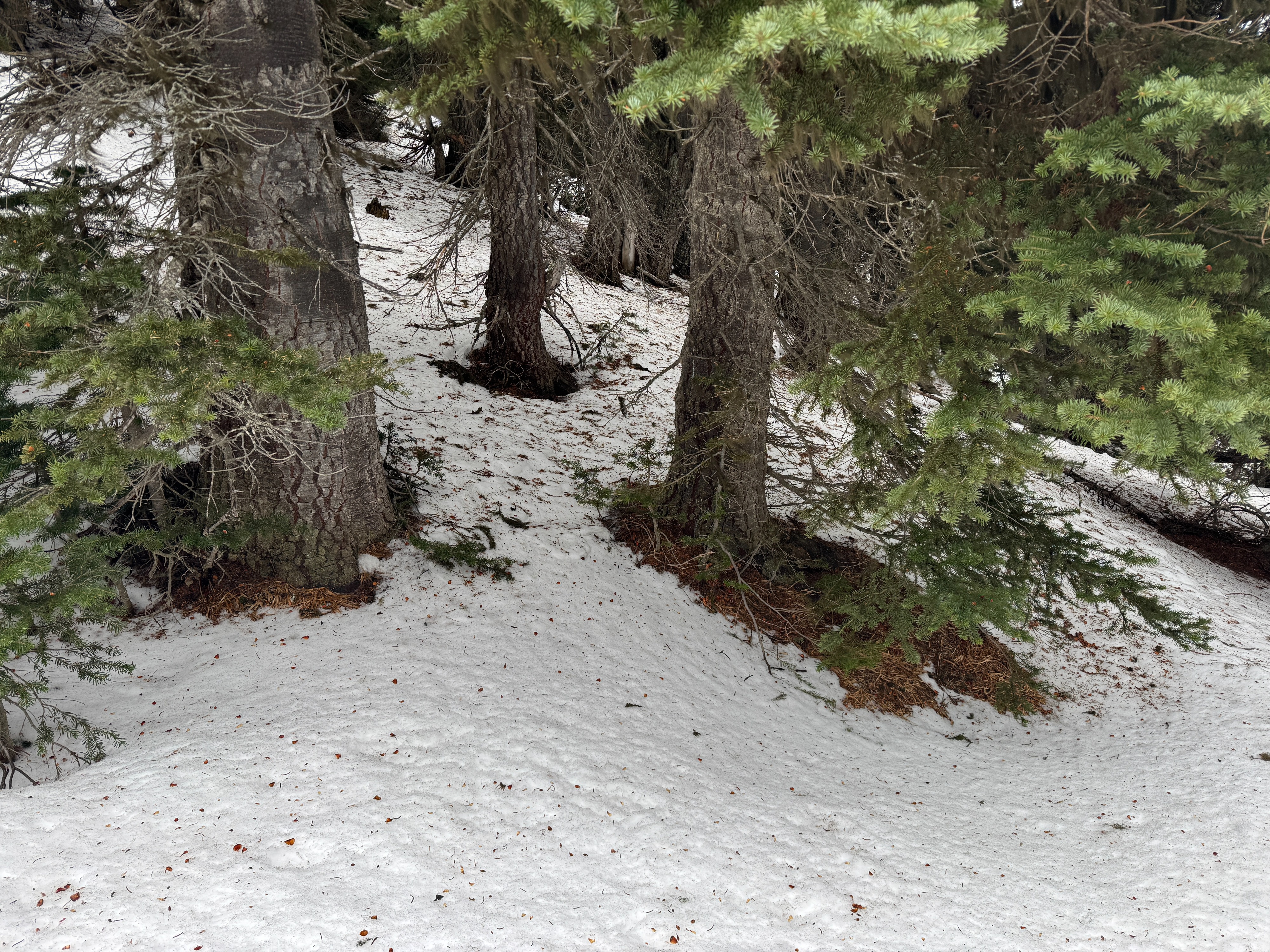
Lower elevations are also thin and patchy. Only an inch or two of snow fell below 5000ft despite the 1.2 inches of water. That's not a good ratio. Bare ground, rocks, creeks, and trees/bushes made travel in the forest a real challenge.
Avalanche
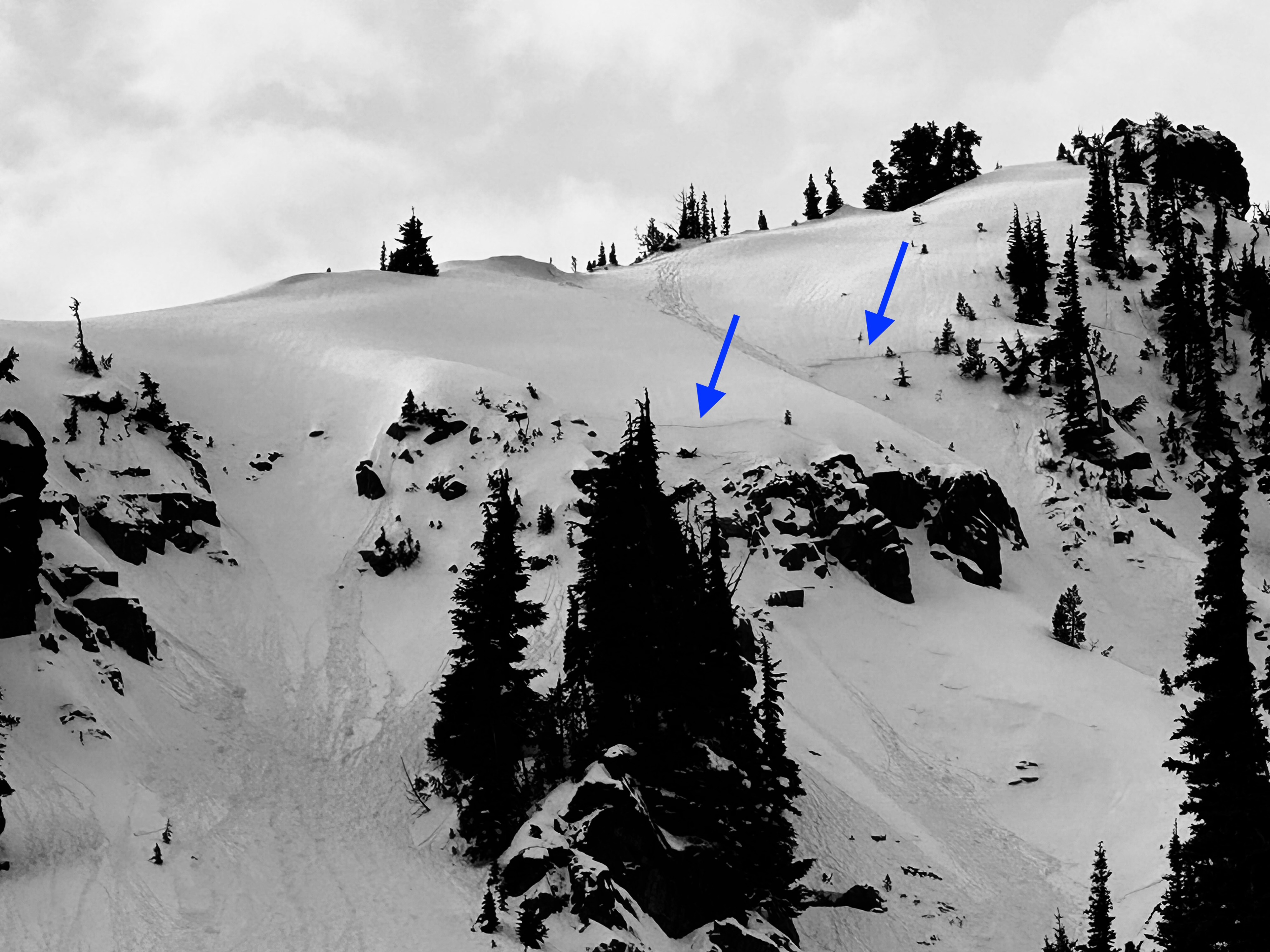
All the avalanches we observed were probably from Thursday or possibly Friday. While rollerballs were very prevalent, only a few small wet loose slides were recorded, mainly beneath cliffs and rocky faces. Two shallow crowns were seen higher on Three Way Peak. These likely released as temperatures warmed and rain reached above ridgecrest.