
Quick report
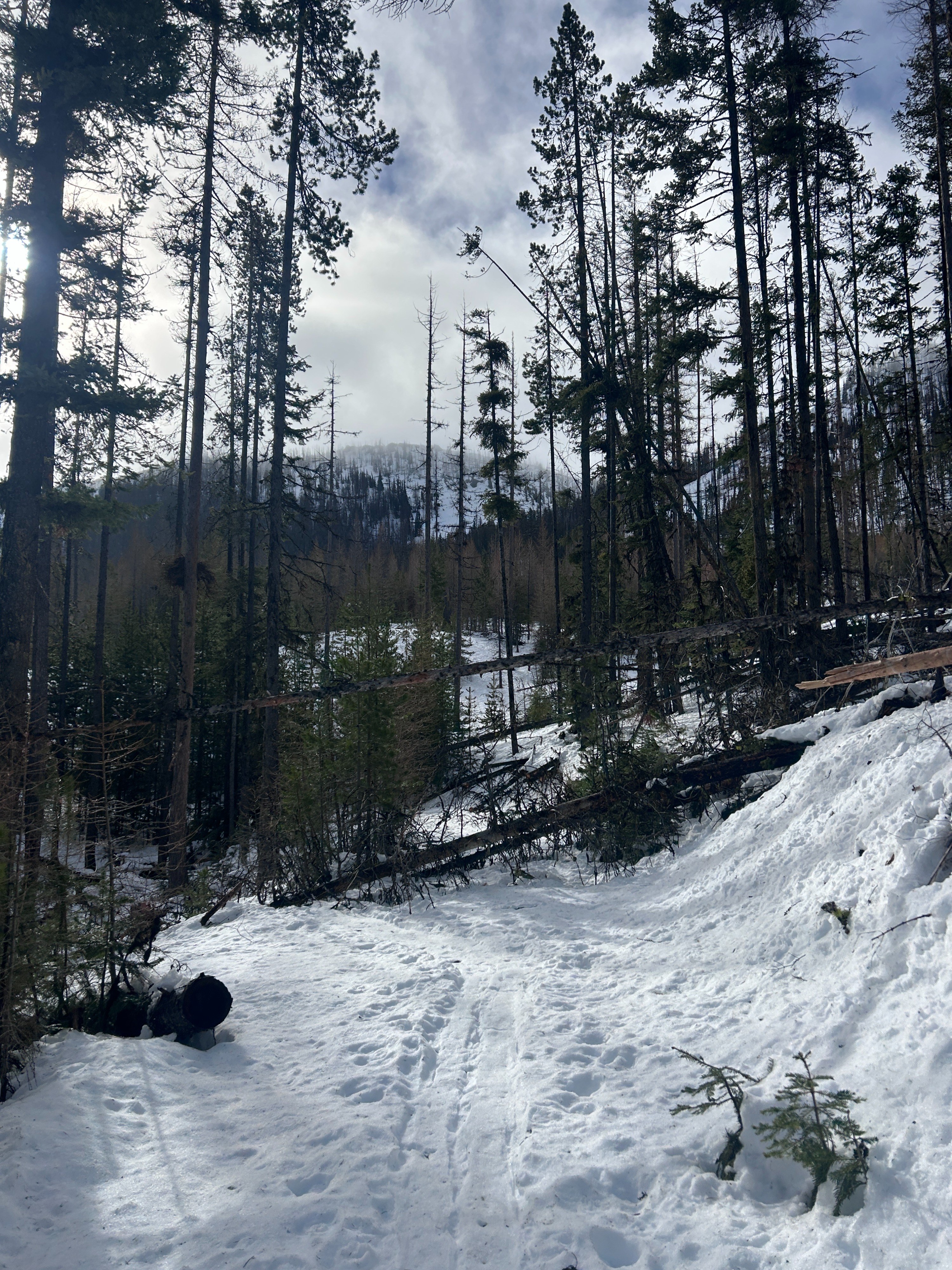
Blewett is skiable again for the first time nearly all season! We'll see how long it lasts though as this atmospheric river comes thru...
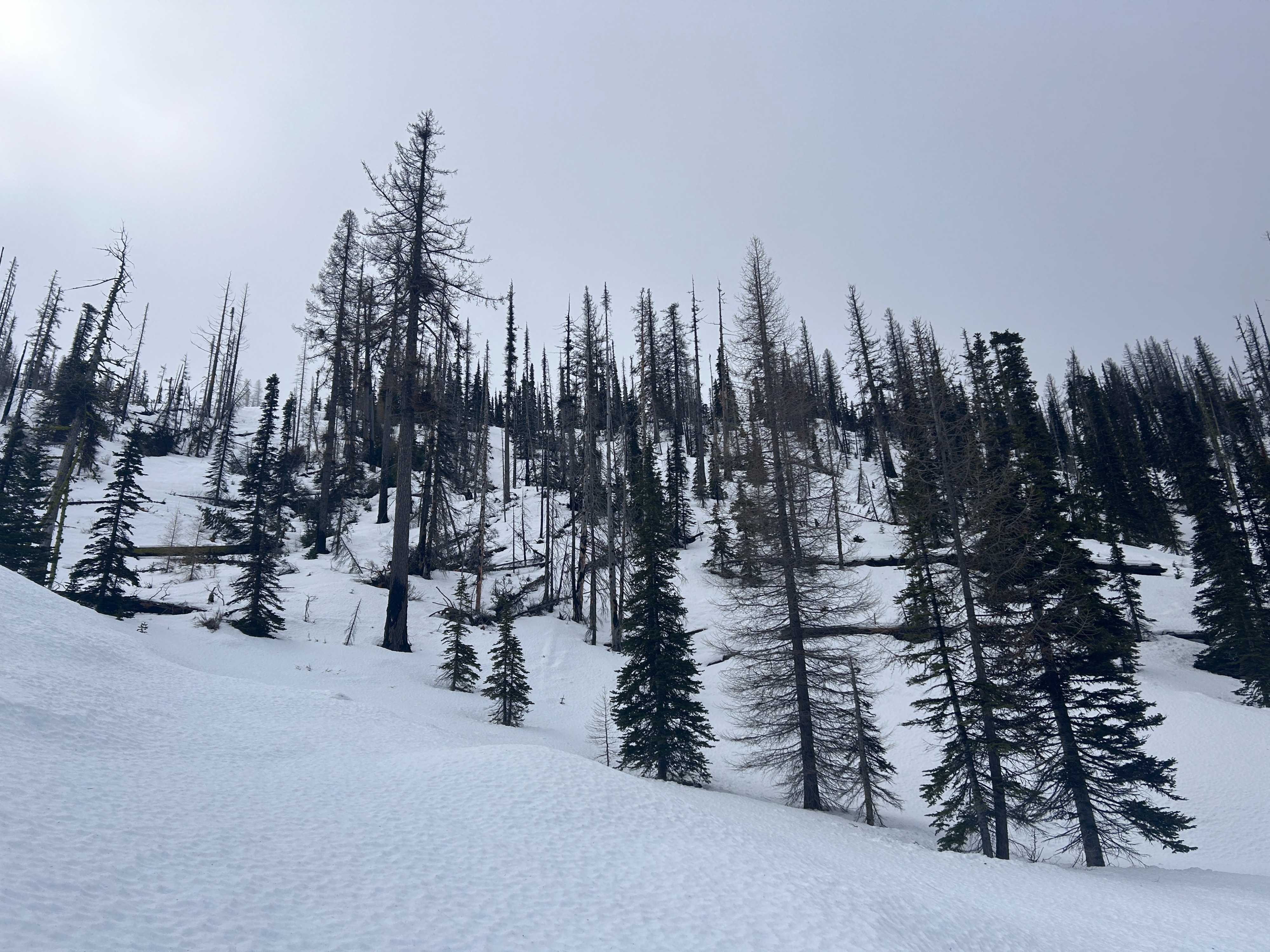
While the snowpack is getting wet thanks to warm temperatures and a bit of rain, there just isn't quite enough of it in this location to significantly increase avalanche hazard. In most places, recent snow fell on dirt. Where it didn't the old snow is hard, frozen, and supportable.
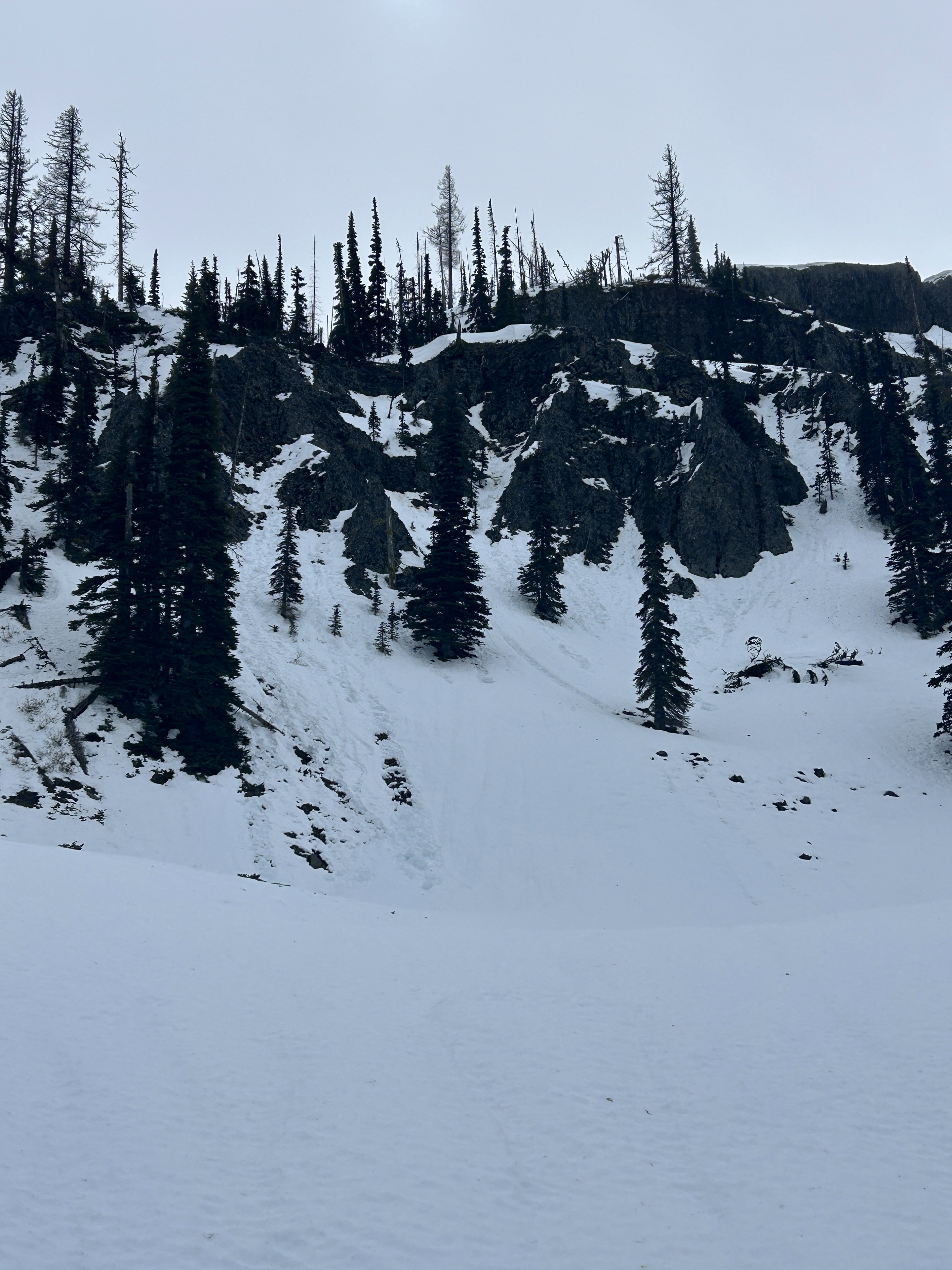
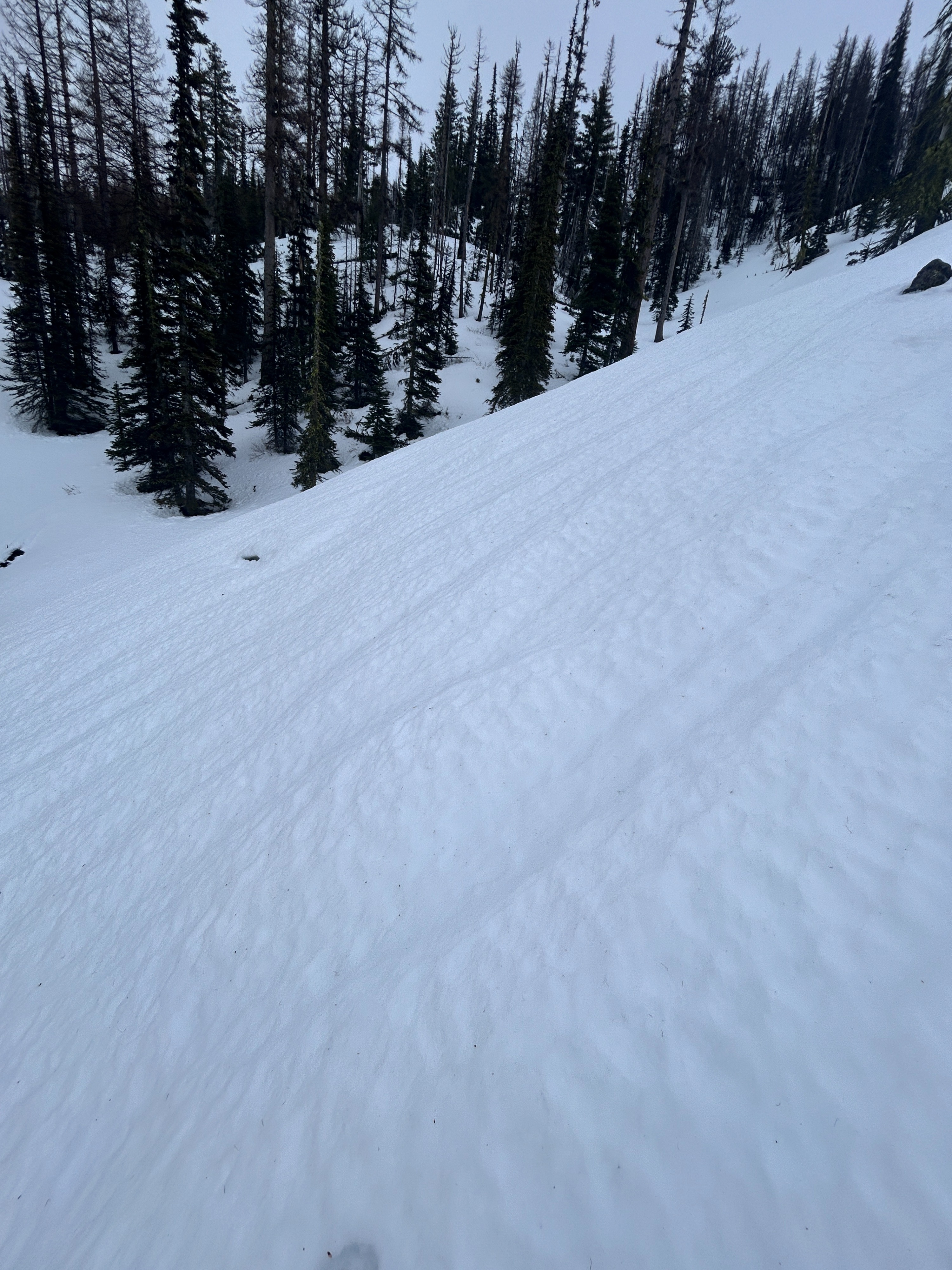
I observed old rollerballs and very small point releases from steep, cliffy terrain just below the ridgeline. Although not necessarily a sign of instability, I observed extensive runnelling within the snowpack, indicating water has flowed through.Weather
- Air Temp
- 45
- Cloud Cover
- broken
- Wind Loading
- none
- Recent Snowfall
- 0
- Snow Avail For Transport
- none
For the first few minutes of my tour, I was very lightly rained on. Then the clouds broke away, and the sun came out here and there for an hour or so. By 1100, full cloud coverage returned, but I was not rained on at any point. The wind was light with moderate gusts from the west, where I was just below the ridgeline.
Snowpack
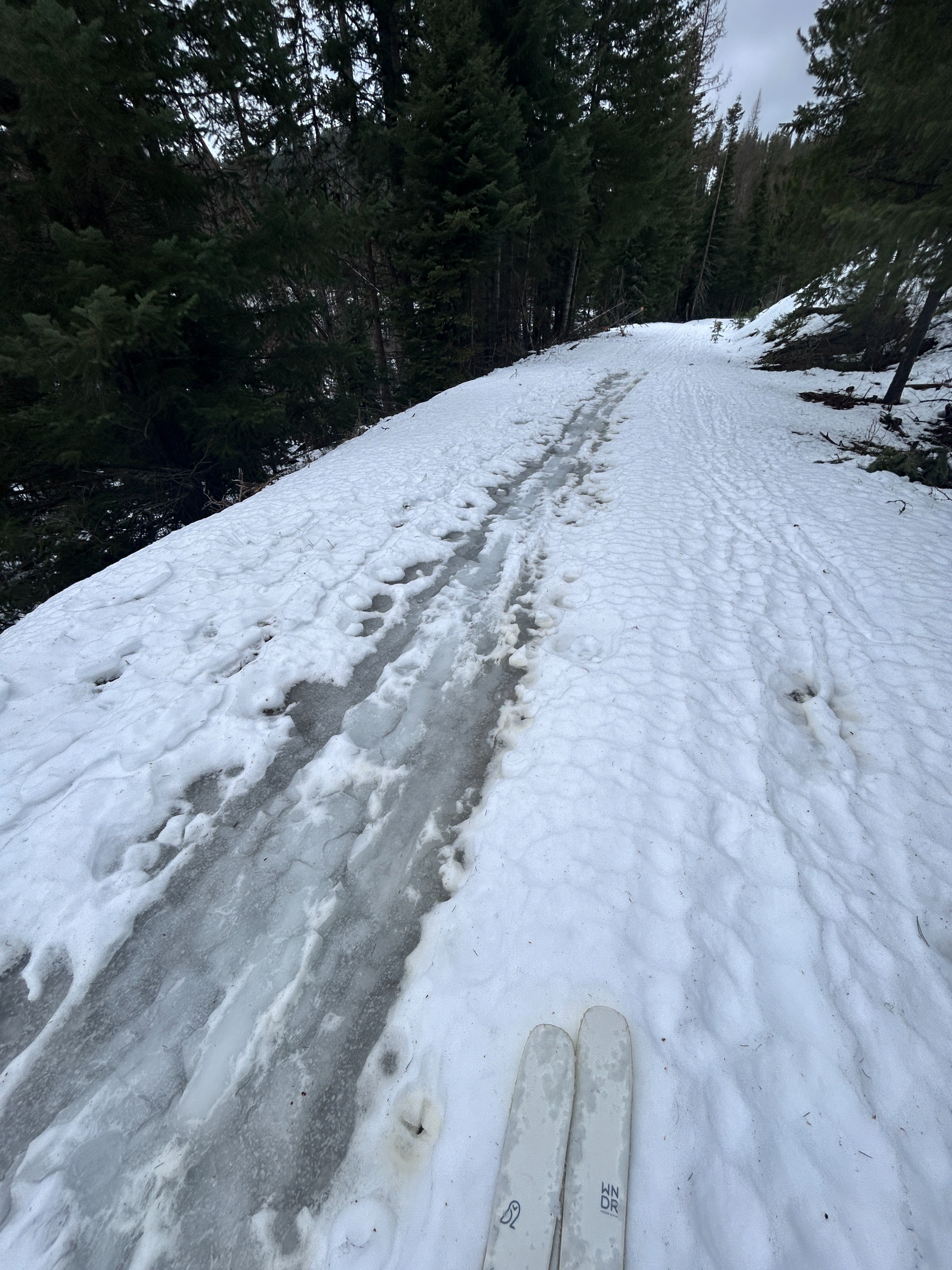
Average snowpack depths at lower elevations range from 15-40cm (6-16in), increasing as you gain elevation. The snow is saturated to the ground. It also fell on dry ground. Upon my return at the end of the day, some patches of snow had turned to slush on the trail.
At middle elevations, the average snowpack depth increases quite a bit, as there are patches were old snow was still hanging on prior to the big storm we got last week. Ski penentration was 13cm and boot penetration was 41cm. I dug a pit on a N aspect at 5500 ft. The depth of this pit was 111cm (44in). I found 53cm (21in) of recent snow sitting on 82cm (32in) of old snow. The recent snow was all moist, and there were a few small layers of slush where water had pooled in the upper portion. The old snow was mostly clustered rounded grains, but some grains looked to be old faceted snow. Around objects at the ground (rocks/downed trees), you could find weak faceted snow. I performed a small column test and got a moderate break at the first slush layer (CT13BRK down 19cm). I performed a large column test and got a moderate, non-progagating result at the same interface (ECTN12 down 19cm).